Costa Rica Rainforest Travel Guide
Costa Rica sells itself as one enormous rainforest, and for a country you can drive across in a single day, that's not far off. But treat it as one place and you'll miss the actual trip. This is a small country holding a cloud forest that spends half its life wrapped in an actual cloud, a Pacific-facing peninsula so dense with life that National Geographic once called it the most biologically intense place on Earth, and a Caribbean coast that runs on its own weather, its own culture and its own rhythm entirely. This is a working guide to Costa Rica's rainforest country — cloud forest, Pacific lowlands and the wild Osa Peninsula among the regions covered — with honest advice on when to go, how to get around, and where to base yourself for the trip you're actually after.
Costa Rica's rainforest, honestly
Costa Rica is small — about 51,100 square kilometers, roughly 28 percent of it under some form of protection, spread across more than 30 national parks. That's an unusually high number for a country you can cross by car in a few hours, and it's why this sliver of land holds an estimated 5 percent of the world's known species.
How it got there matters, because it shapes what you'll actually experience on the ground. Costa Rica abolished its army on December 1, 1948, after a brief civil war, and the money a standing military would have consumed was redirected over the following decades toward education, health care and, increasingly, conservation. That's why parks here are staffed by trained rangers, why some of the wildest places require a certified guide before you're allowed in, and why pura vida — heard constantly, meaning something closer to "that's life, and it's good" than a literal translation — is a genuinely held civic identity rather than a tourism slogan.
The honest part: "rainforest" covers a lot of different ground here, and it's worth knowing what you're actually booking. The Caribbean coast and the southern Pacific, including the Osa Peninsula, hold true lowland tropical rainforest — hot, humid, rain likely most days. The central highlands around Monteverde are cloud forest, cooler and mistier, shaped as much by mist condensing directly on the leaves as by rainfall. Guanacaste's northwest is tropical dry forest — deciduous, brown through the dry season, unrecognizable a few weeks after the rains start. None of these are lesser versions of "real" jungle; they're different ecosystems with different wildlife and different gear needs, and mixing them up is how people end up cold in Monteverde or disappointed by bare trees in Guanacaste in April.
It's also not one unbroken wilderness the way the Amazon can be. It's a patchwork — real, substantial blocks of protected forest connected by farmland, small towns and highways — which is exactly why the country works so well for travelers who want serious wildlife without weeks of logistics. You're rarely far from a town or a paved road, except in the one region on this list where you deliberately are, which is precisely its appeal.
The regions, and how they differ
"Costa Rica's rainforest" isn't one trip. Six areas do the heavy lifting below, and picking two or three of them — rather than chasing all six on a single loop — is the biggest factor in whether the trip feels unhurried or frantic.
Monteverde and the cloud forest highlands
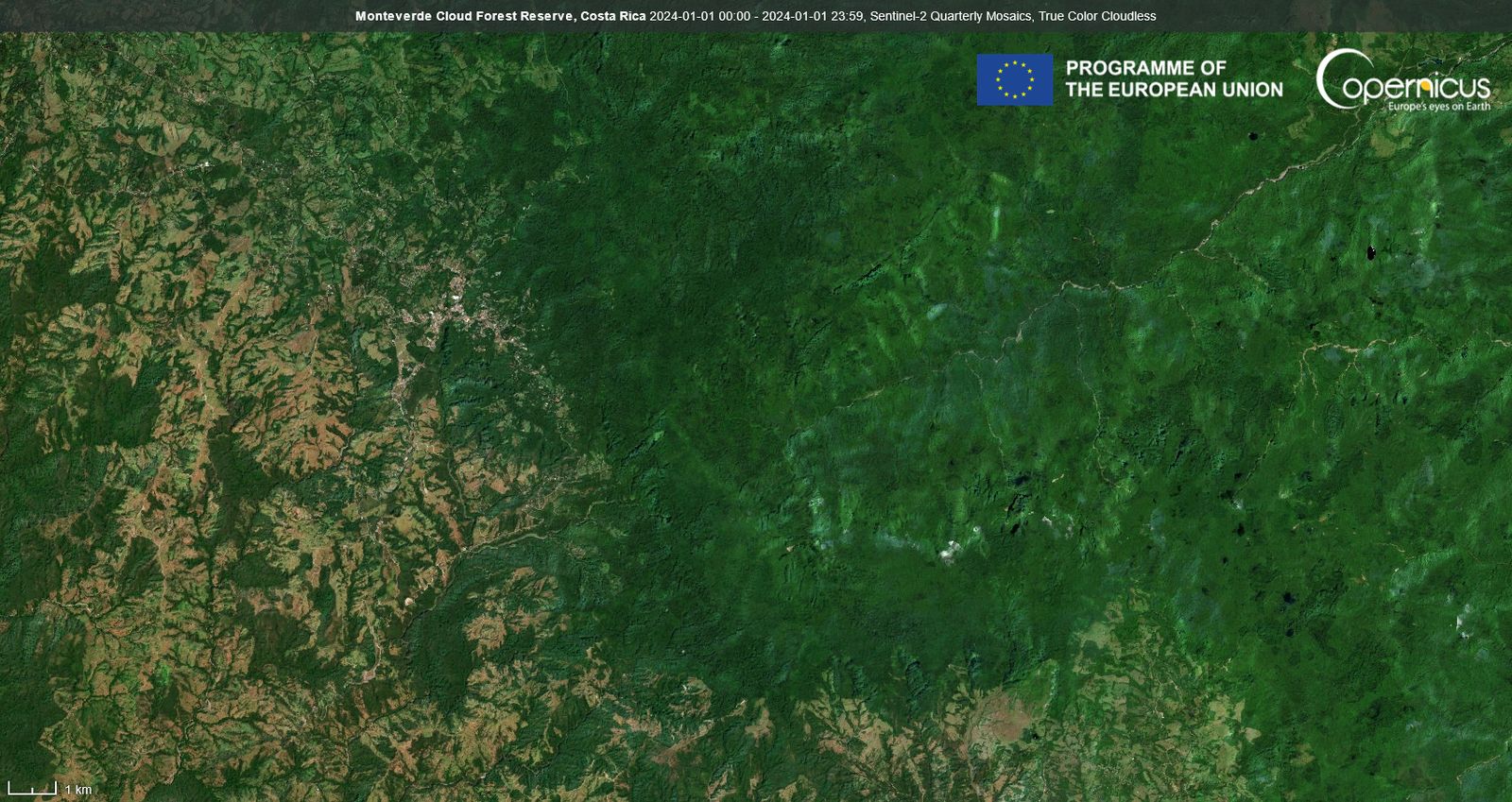
Monteverde sits high in the Tilarán mountain range, noticeably cooler and mistier than anywhere else on this list, with the town of Santa Elena as its base. Quaker families from Fairhope, Alabama settled here in 1950–51, partly drawn by Costa Rica's newly abolished military, and set aside the forested headwaters of the Guácimal River to protect their water supply — the preserve that grew into the Monteverde Cloud Forest Reserve, established in 1972 and now covering more than 10,500 hectares. The community-run Santa Elena Cloud Forest Reserve, higher and quieter, is a solid alternative when the main reserve feels crowded. Near-constant mist, rather than heavy rainfall, is what loads every branch here with epiphytes and orchids, and makes this the country's best region for the resplendent quetzal.
Arenal and La Fortuna
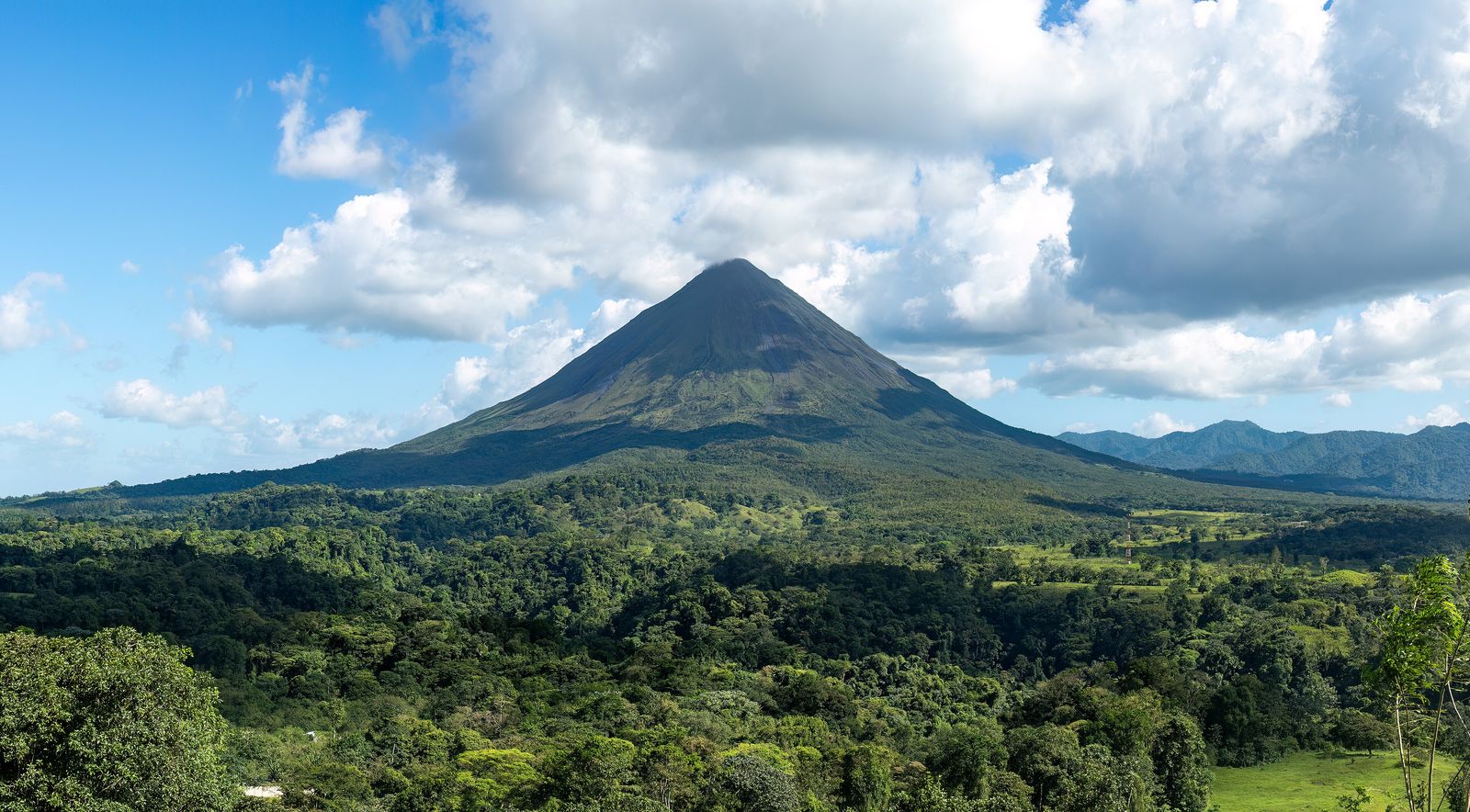
La Fortuna sits at the base of Arenal Volcano, a near-perfect cone that erupted almost continuously for decades before quieting starting around 2010. The summit stays off-limits due to lingering gas activity, but trails around its base cross old lava flows through lowland rainforest thick with howler monkeys and toucans. The Mistico Arenal Hanging Bridges Park strings roughly sixteen suspended bridges across a private reserve near the lake, and La Fortuna Waterfall drops 75 meters into a swimmable pool nearby. The same volcanic activity heats a run of natural hot springs, from the resort circuit at Tabacón down to simpler options like Baldi and Ecotermales.
Manuel Antonio and the central Pacific
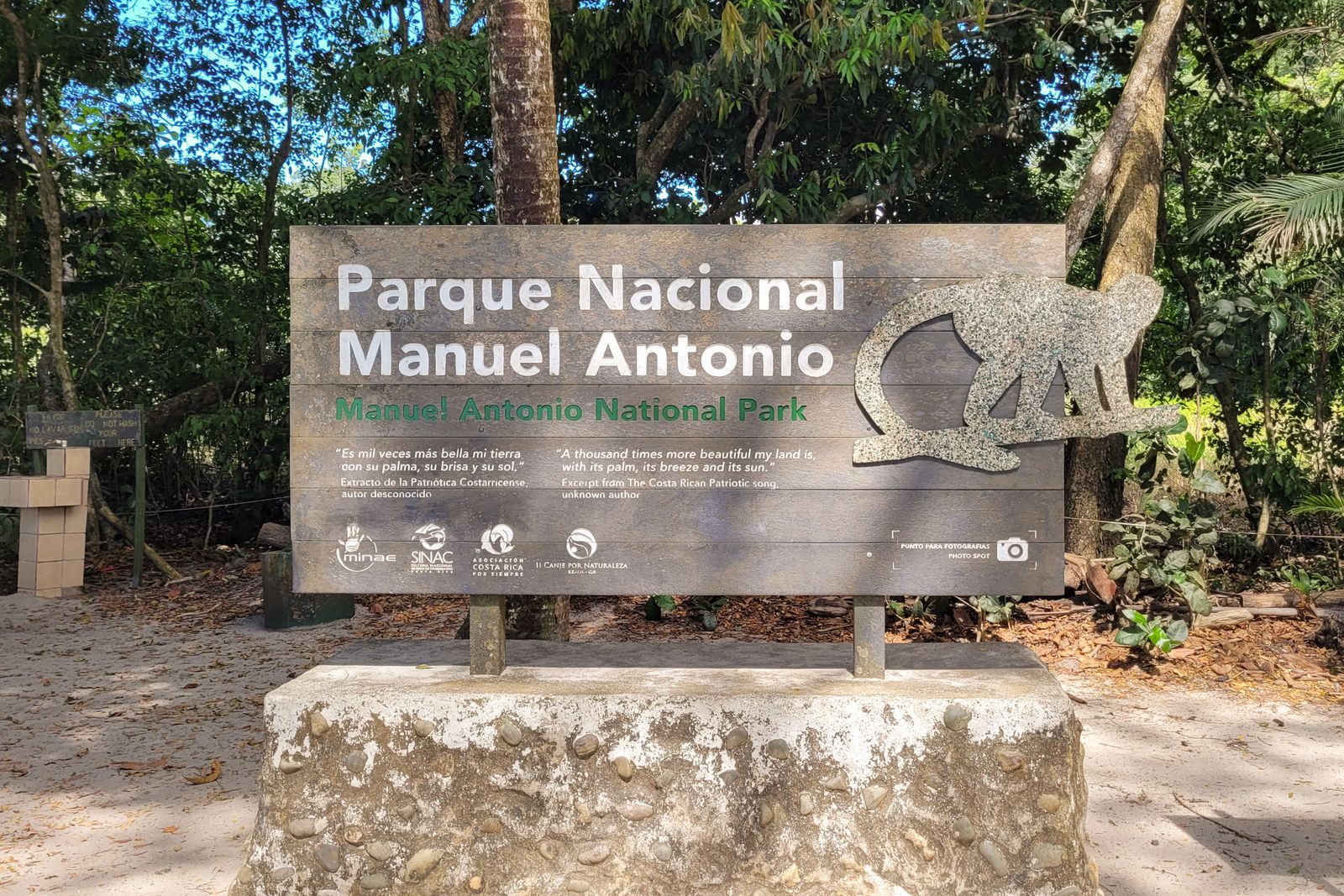
Manuel Antonio, just outside Quepos on the central Pacific coast, is one of the country's smallest national parks and its most visited by a wide margin, for good reason. A compact 2.4-kilometer trail connects four beaches, and the payoff-to-effort ratio is the best on this list: real rainforest and easy wildlife-watching without a serious hike. White-faced capuchin troops patrol the beaches most mornings, and sloths turn up regularly along the main trail. The park closes Tuesdays for ecological recovery and caps daily visitors — around 600 on weekdays, more on weekends — so arriving at opening time matters here more than almost anywhere else on this list.
The Osa Peninsula and Corcovado
The Osa Peninsula, in the far southern Pacific, is the wildest and least convenient corner of mainland Costa Rica — and that's the entire point of going. Corcovado National Park is why National Geographic called the peninsula "the most biologically intense place on Earth": it alone protects more than 500 tree species, some 400 bird species and 140 mammal species, and the peninsula as a whole is estimated to hold roughly 2.5 percent of the world's biodiversity. It's the one place with a realistic chance of seeing all four of Costa Rica's monkey species and all four sea turtle species, plus a small, wild population of jaguar and tapir. Since 2014, nobody enters Corcovado without a guide certified by the Costa Rican Tourism Board, and permits run around $15 per person per day with daily caps — Sirena, the most biodiverse interior station, fills fastest and is worth booking well ahead in dry season. Puerto Jiménez and Drake Bay are the gateway towns, and neither is a quick trip from anywhere else here, which is why the wildlife still behaves like wildlife.
The Caribbean coast: Tortuguero and Puerto Viejo
The Caribbean side splits into two pockets, both worth treating separately from the Pacific-side regions above. Tortuguero, in the north, has no road access at all — you arrive by boat from a launch near Cariari, or by small plane, and once there the forest's canals function as the local roads. It's the country's best-known sea turtle nesting site: green turtles nest July through October, peaking in August and September, while leatherbacks nest March through June. Puerto Viejo de Talamanca, well to the south, is a different world — an Afro-Caribbean and Bribri town with reggae and calypso brought by Jamaican-descended settlers over a century ago, small guesthouses rather than resort chains. Cahuita National Park and the Gandoca-Manzanillo Wildlife Refuge nearby are both reliable for sloths, howler and capuchin monkeys, and blue morpho butterflies.
Guanacaste's dry-forest edge
Guanacaste, in the northwest, technically isn't rainforest most of the year, but it's worth including because so many travelers land at Liberia and never register that the beach towns around it — Tamarindo, Nosara, Flamingo, the Papagayo Peninsula — sit beside a completely different ecosystem: tropical dry forest, gold and deciduous through the dry months, turning green fast once the rains arrive in May. Santa Rosa National Park protects one of the last large blocks of Pacific-side tropical dry forest anywhere in the world, and Rincón de la Vieja, built around its own active volcano, mixes dry forest with wetter forest higher on the slopes, plus mud pots, hot springs and decent odds on monkeys and coatis.
When to go
The Pacific side runs on two seasons: dry season from mid-December through April, green (wet) season from May through November. Locals call the dry season verano — summer — even though it falls in the Northern Hemisphere's winter, which trips up visitors packing for the wrong month.
- December–January: dry season settling in, landscape still green from recent rains, and overlapping with the holidays — peak crowds and prices at Manuel Antonio, Monteverde and any beach town. Book ahead for Christmas, New Year's or Easter week.
- February–March: the driest, sunniest stretch, with the best visibility for volcano views at Arenal and Rincón de la Vieja and easy underfoot hiking conditions. Also genuinely busy and priced accordingly.
- April: still dry and often the hottest month in the lowlands, with rains typically returning toward month's end.
- May–June: a shoulder window many repeat visitors quietly prefer — rains have usually started but haven't set in daily, the countryside greens up fast, and crowds and prices drop well below peak.
- July–August: a brief, locally known dry spell called the veranillo ("little summer") sometimes interrupts the wet season here, though it's inconsistent year to year and not something to plan a trip around.
- September–October: the wettest stretch on the Pacific side, when some rural roads and river crossings get genuinely difficult and a handful of remote lodges close for maintenance. It's also when prices drop the most — often 30 to 45 percent off peak — and parks are at their emptiest. Rain is rarely constant: sun in the morning, a downpour in the afternoon, clear again by evening is the typical pattern.
- November: the tail end of wet season and another shoulder-month sweet spot, with rain steadily easing as the month goes on.
The Caribbean coast doesn't follow this calendar. It's wetter overall with no clean dry season, though September and October — the Pacific's soggiest months — are often its comparatively better window, making Tortuguero and Puerto Viejo a reasonable swap if the Pacific parks are drenched.
Wildlife runs its own calendar on top of the weather. The resplendent quetzal's breeding season in Monteverde runs February through June, peaking in March and April, with 6 to 9 a.m. the best window and a guide tracking the current fruiting wild avocado trees making a real difference to your odds. At Tortuguero, green turtles nest July through October (peak August–September), leatherbacks March through June. The Ostional arribada, one of the largest mass nestings of olive ridley turtles anywhere in the world, runs roughly August through November, biggest September through November. Humpback whales pass the southern Pacific around Dominical, Uvita and the Osa Peninsula in two overlapping windows — December through March and July through October — giving Costa Rica one of the longest whale-watching seasons anywhere.
Good to know
Costa Rica's Pacific dry season lines up with the driest stretch across a lot of Central American and Caribbean jungle destinations, but not all of them run on the same clock. Our Tulum and the Maya Jungle guide and Colombia jungle guide both cover seasons that shift differently, worth checking if you're stitching Costa Rica into a longer regional trip.
Getting there and getting around
Costa Rica has two international airports, and which one you fly into should follow your itinerary. Juan Santamaría International Airport (SJO), near San José, is the main hub — more flights, lower fares, and the better choice for the Central Valley, the Caribbean side, Arenal, Manuel Antonio and Osa. Daniel Oduber International Airport (LIR), in Liberia, is the better pick if Guanacaste's beach towns — Tamarindo, Nosara, Flamingo, the Papagayo Peninsula — are the whole trip, with shorter immigration lines and a much shorter drive to the sand.
Getting to the Osa Peninsula deserves its own planning. Domestic carriers, mainly Sansa Regional and Costa Rica Green Airways, fly San José to Drake Bay (DRK) or Puerto Jiménez (PJM) in about 50 minutes, roughly $150–300 round-trip depending on season. The alternative is a six-plus-hour drive, followed by a boat for Drake Bay specifically, since the road doesn't fully reach it in wet season — most travelers fly at least one direction. Tortuguero is even more removed: no roads reach it at all, only a boat from a launch near Cariari or a short charter flight, which is why it's usually a deliberate multi-night add-on rather than a stop on a driving loop.
On the roads, a valid home-country license is legally sufficient for the first 90 days — no international permit required. The harder part is that mountain and rural roads are narrow, often unpaved, and turn to mud fast in green season; a 4x4 earns its extra cost for Monteverde, Osa, and back roads in Guanacaste and the Caribbean south. Distances that look short on a map take longer than expected once switchbacks and river crossings are factored in, so build slack into any itinerary rather than stacking long drives back to back. Rental car break-ins are a well-known risk — never leave anything visible inside a parked car, and use guarded lots where offered.
Without a car, private shared or exclusive shuttles connect the main tourist towns — La Fortuna, Monteverde, Manuel Antonio, Puerto Viejo — reliably, and are the default choice for most visitors. Public buses reach nearly everywhere for far less, but service thins out toward remote regions like Osa and the Caribbean coast, where flying or a private transfer usually makes more sense.
Where to stay
Where to base yourself should follow the regions you're prioritizing, not the other way around, and Costa Rica's range of jungle-adjacent stays is wide enough to match almost any style of trip. Around Monteverde and Santa Elena, expect small hotels, cabins and a growing number of treehouse-style stays built into the cloud forest's edge — pack a layer, since the cool, misty climate up here surprises people who only planned for the tropics. La Fortuna and Arenal have the widest range on this list, from simple in-town hotels to hillside villas and resorts with private hot-spring access and volcano views. Manuel Antonio and the hills above Quepos lean toward canopy-level villas looking down toward the park and the Pacific, the most beach-adjacent option here. On the Osa Peninsula, stays get more remote and often more rustic — open-air jungle lodges and treehouses built into private rainforest reserves where the wildlife on the property can rival what's inside the park itself. The Caribbean coast around Puerto Viejo, Cocles, Punta Uva and Manzanillo keeps things laid-back and small-scale, treehouses included, without the resort infrastructure that's grown up on parts of the Pacific side.
For an actual shortlist of vetted stays across these regions, see our Costa Rica destination page, and the wider directory if you're still weighing Costa Rica against another jungle destination before booking anything.
The best stays in Costa Rica don't sell you a view of the rainforest. They put you inside it, sounds and humidity and the occasional sloth included, which is the entire reason to come here instead of somewhere easier to reach.
The best things to do
The best of Costa Rica skews toward walking, water and patient looking rather than a checklist of attractions, and the list below reflects that.
- Walk Monteverde's reserve trails at first light: go before the mist burns off and the tour groups arrive, and hire a guide at least once — a trained eye and a spotting scope will show you species you'd otherwise walk straight past, quetzal included.
- Cross a hanging bridge near La Fortuna, then soak it off: the Mistico Arenal Hanging Bridges Park gives you lowland rainforest from above; Tabacón, Baldi or Ecotermales give you a soak in water heated by the same volcano.
- Get to Manuel Antonio at opening time: the trail and four beaches reward an unhurried morning far more than a rushed midday visit, and the wildlife is most active before the heat sets in.
- Hike Corcovado with a certified guide: the one place where the full wish list — tapir, scarlet macaw, all four monkey species, jaguar sign if not the animal itself — has a genuine shot at happening, whether you go in from Sirena, Los Patos or a shorter access point near Puerto Jiménez.
- Take an early or after-dark boat through Tortuguero's canals: caimans, sloths and birdlife are most active at dawn and dusk, and a certified guide can bring you to a nesting turtle on the beach after dark, if the season lines up.
- Slow all the way down around Puerto Viejo and Cahuita: rent a bike, watch the tree line through the Gandoca-Manzanillo refuge for sloths and monkeys, and resist the urge to move at the pace the Pacific side trains you into.
- Visit a coffee or chocolate farm in the highlands: the growing regions around Monteverde and the Central Valley produce genuinely good coffee, and most tours walk through the whole process rather than ending at a gift shop.
- See the crocodiles at the Tárcoles River bridge: a free, unfussy stop off the coastal highway near Carara National Park, where dozens of American crocodiles gather in the shallows below — worth five minutes if you're driving between the Central Pacific and Guanacaste.
- Add a half-day in Rincón de la Vieja or Santa Rosa if you're based in Guanacaste: mud pots, hot springs and a real block of tropical dry forest, a useful contrast if beach time is otherwise the whole trip.
The wildlife you'll actually see
Costa Rica's wildlife reputation is earned, but what you actually see depends heavily on where you go and whether you're walking with a guide. An untrained eye misses the large majority of what's genuinely there; a good local guide with a spotting scope routinely finds far more than an unaided visitor would on the same trail.
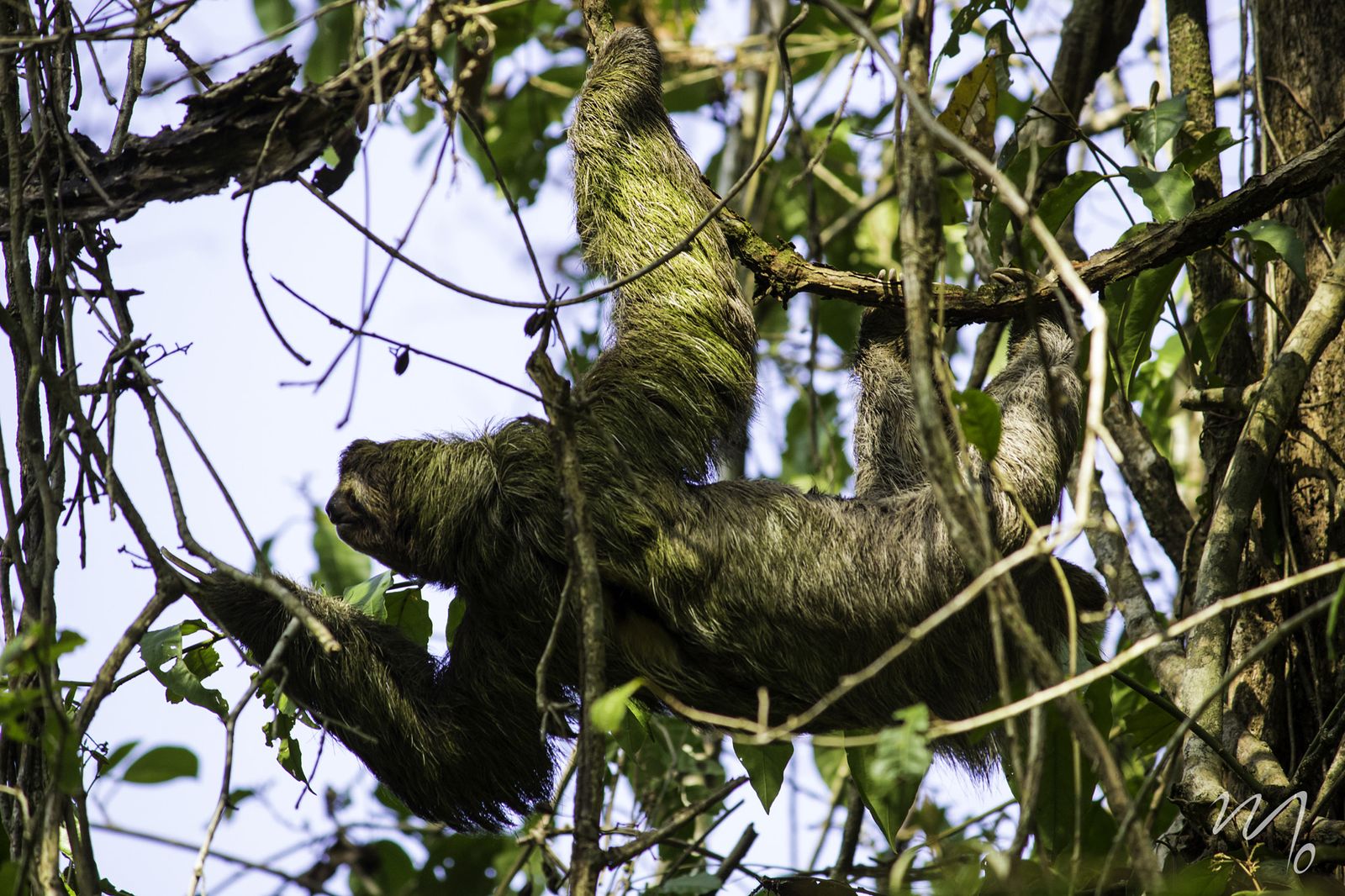
Sloths are more common than most people expect, and there are two species: Hoffmann's two-toed sloth (Choloepus hoffmanni) and the brown-throated three-toed sloth (Bradypus variegatus). Both turn up regularly on the Caribbean coast around Puerto Viejo and Cahuita, and around Manuel Antonio on the Pacific side. They move so little that a guide who spotted one yesterday is often your best bet for finding it again today, roughly where they left it.
Monkeys break down into four species countrywide. The mantled howler is the one you'll hear constantly at dawn, with a call that carries for kilometers and surprises everyone the first time. The white-faced capuchin is bold and common, and will try to take food from an unattended bag at Manuel Antonio. The Central American spider monkey is more forest-dependent, with better odds in large blocks of forest like Corcovado. The squirrel monkey, locally mono titi, is the country's smallest and most endangered, largely restricted to the central and southern Pacific — Manuel Antonio and Osa among the best places to look.
On birds: the resplendent quetzal in Monteverde's cloud forest, scarlet macaws concentrated around Carara National Park and Osa (loud and unmistakable once you know the call), keel-billed and chestnut-mandibled toucans widespread across lowland forest, and enough hummingbird species to keep any cloud-forest feeder busy. Big cats — jaguar, puma, ocelot, margay and jaguarundi — genuinely live in Costa Rica, concentrated in the least-visited wilderness, Corcovado above all, but actually seeing one is rare and shouldn't be the expectation; fresh tracks or a camera-trap photo from a guide is the realistic version of a cat story on most trips.
Reptiles and amphibians round it out: American crocodiles crowding the Tárcoles River below its famous bridge, red-eyed tree frogs and poison dart frogs in wetter regions, and green iguanas sunning on almost every beach trail at Manuel Antonio. Sea turtles nest at Tortuguero (green turtles July–October, leatherbacks March–June) and in the mass arribadas at Ostional on the northern Pacific coast (roughly August–November) — both worth seeing only with a certified guide who keeps the visit respectful of the nesting animal. Offshore, humpback whales pass the southern Pacific around Dominical, Uvita and Osa across two overlapping migratory seasons, giving Costa Rica one of the longest whale-watching windows anywhere.
One honest caution: if a sloth or monkey encounter is advertised as guaranteed and hands-on outside a legitimate rescue or rehabilitation center, treat it skeptically. The animals worth traveling for here are the wild ones, moving on their own schedule — which is most of the reason a guide matters as much as it does.
Costs and budgeting
Costa Rica isn't the cheapest country in Central America, and it shows in the numbers: better infrastructure, stronger environmental protections and a mature tourism industry all cost something. A backpacker-style budget runs roughly $45 to $90 a day — hostel dorms around $25 to $30, simple meals at a local soda for $5 to $15, intercity buses a few dollars up to about $20. A mid-range budget lands between $90 and $200 a day: eco-lodges and mid-range hotels at $80 to $200 a night, restaurant meals at $25 to $40, shared shuttles at $25 to $55, and one guided activity around $50.
Big-ticket days add up fast regardless of baseline budget. Whitewater rafting, canopy tours, volcano-and-hot-springs packages, and especially a full day in Corcovado (guide, permit and transport included) can each run $150 to $250 per person — budget those separately rather than folding them into a daily average. Costs vary by region too: Osa tends to be the most expensive to visit properly once flights, the mandatory guide and the daily permit are factored in; Manuel Antonio and Guanacaste's beach towns run at the higher end for lodging; the Caribbean coast around Puerto Viejo and Monteverde's highlands are generally more affordable for comparable comfort.
The national currency is the colón, though U.S. dollars are widely accepted for lodging and tours — small shops and sodas often prefer colones, so it's worth carrying some cash. Many restaurants already add a 10 percent service charge, so further tipping isn't expected, though guides customarily get around 10 percent for good service. ATMs are common in any real town and scarce in remote spots like Drake Bay, so withdraw before heading somewhere isolated.
Health, safety and practical tips
Costa Rica is one of the more straightforwardly safe countries in the region for travelers, and the realistic risk profile here is petty theft rather than violent crime.
Rental cars: break-ins are a genuine, well-documented risk, and rental vehicles are targeted specifically. Never leave anything visible inside a parked car, use guarded lots where offered, and take valuables with you rather than trusting a trunk.
Ocean safety: riptides are common and largely unmarked, and most beaches have no lifeguards. Rip currents cause a steady stream of drownings every year, and statistically the ocean is a bigger risk to visitors than crime is. If caught in one, swim parallel to shore rather than fighting the current, and ask locally about a beach's conditions before swimming somewhere unfamiliar.
Water and food: tap water is generally safe in San José and established tourist hotels; in more rural or remote areas, stick to bottled or filtered water as a matter of habit.
Mosquito-borne illness: dengue is present in warmer coastal lowlands, the Caribbean side around Limón among them. Use a DEET-based repellent, cover up at dawn and dusk, and mention any post-trip fever to a doctor since symptoms can appear after you're home.
Vaccinations: nothing is required for entry, but hepatitis A and typhoid are commonly recommended, and rabies vaccination is sometimes suggested for extended time in rural areas or close animal contact. A travel clinic visit a few weeks before departure is the right move if you're unsure.
Insurance: real travel insurance is worth having anywhere, and especially so for trips into Osa, Tortuguero or other remote regions, where evacuation logistics are slower and more complicated than near San José.
Sun and heat: the tropical sun is stronger at this latitude than it feels, including on overcast days, and reef-safe sunscreen is both a health and a conservation choice near coral or river ecosystems.
Wildlife etiquette: don't feed monkeys — Manuel Antonio's capuchins have learned that raiding bags works, and every fed animal makes the next visitor's encounter worse. Keep a respectful distance from anything in the forest, and treat any guaranteed hands-on encounter outside a legitimate rescue center with skepticism.
Roads: outside the main highways, expect narrow and sometimes unpaved roads, occasional river crossings in wet season, and slower travel than the distances on a map suggest. A 4x4 and a realistic schedule solve most of this before it becomes a problem.
Language: Spanish is the national language. English is common in tourism-heavy towns — Manuel Antonio, La Fortuna, Monteverde, Tamarindo — and considerably less so in smaller towns and rural regions, where a bit of Spanish goes a long way, particularly around Puerto Viejo and the Osa Peninsula.
A suggested route
Costa Rica is small on a map and slow on the ground, and that gap is the single most common planning mistake visitors make. Ten to fourteen days lets you cover a real cross-section of the country without feeling rushed; a week is enough to do two or three regions properly, not five.
- Days 1–2: land at SJO and transfer directly to Monteverde or Santa Elena (roughly three to four hours by shuttle). Use the first full day for a guided walk in the reserve, timed for early morning before the mist lifts.
- Days 3–4: move on to La Fortuna and Arenal — often faster by a jeep-boat-jeep transfer across Lake Arenal than by the direct road. Hanging bridges, the volcano's old lava-flow trails, and a hot-spring evening.
- Days 5–6: continue to Manuel Antonio, either driving back toward the Central Valley and down the coast, or flying to Quepos. The park in the morning, beach time after, a canopy-level stay in the hills above town.
- Days 7–9: fly from San José or Quepos to Puerto Jiménez or Drake Bay for the Osa Peninsula and Corcovado. This is the most remote leg on the route and deserves real time rather than a rushed day trip, given the guide-and-permit system governing access.
- Days 10–11 (optional extension): fly back to San José and cross to the Caribbean side — Tortuguero for the canals and, timed right, nesting turtles; or Puerto Viejo for a slower sloth-and-beach finish with a genuinely different culture from the rest of the country.
- Day 12 or later: return to San José for departure, or extend into Guanacaste's beach towns if the trip should end on sand rather than more forest.
This route crosses the country's mountainous spine more than once, which costs time. A tighter version drops either the Caribbean coast or the Osa Peninsula rather than fitting all six regions into one trip, especially under ten days. If Costa Rica is one leg of a longer trip, it pairs naturally with a Caribbean or Central American add-on: our guides to Tulum and the Maya Jungle and Puerto Rico and El Yunque both cover destinations commonly combined with a Costa Rica itinerary.
Common questions
Is Costa Rica's rainforest actually rainforest everywhere?
No, and it's worth knowing before you pack. The Caribbean coast, the central Pacific and the Osa Peninsula hold true lowland rainforest. Monteverde and the central highlands are cloud forest — cooler, mistier, shaped by condensation as much as rainfall. Guanacaste in the northwest is tropical dry forest, often bare through the dry season. All three are worth visiting, and none should be confused with the others when deciding what to pack.
How many days do you need to see Costa Rica's rainforest properly?
A week is enough for two or three regions done well — Monteverde and Arenal, say, or Manuel Antonio and the Caribbean coast. Ten to fourteen days lets you add the Osa Peninsula and Corcovado, which take real time to reach and justify, without the trip turning into a series of transfers.
Do I need a 4x4 to get around?
It's not legally required, and a standard car is fine for the main highways and larger towns. But a 4x4 earns its cost on the roads into Monteverde, around the Osa Peninsula and on back roads in Guanacaste and the Caribbean south, especially in green season when unpaved sections turn to mud.
Is Corcovado and the Osa Peninsula worth the extra effort and cost?
If genuine wildlife is the priority, yes. It's the one region with a real shot at all four native monkey species, all four sea turtle species, and animals like tapir and jaguar that are harder to find elsewhere. The trade-off is cost and logistics — a domestic flight or long drive, a mandatory certified guide, a daily permit — which push it toward the end of a longer trip rather than a quick add-on.
When's the best time to see sloths and monkeys?
Both are close to a year-round sight in the right regions — the Caribbean coast and Manuel Antonio for sloths, nearly anywhere forested for monkeys. Timing matters more for specific species: the resplendent quetzal is best February through June, peaking in March and April, and sea turtle nesting follows its own species-specific calendar at Tortuguero and Ostional.
Is Costa Rica expensive compared to other jungle destinations?
Generally, yes, relative to a lot of Central America and Southeast Asia — better infrastructure and stronger conservation funding both cost money, and it shows in lodging and tour prices. That said, the range is wide: a backpacker-style trip runs $45 to $90 a day, while a comfortable mid-range trip lands between $90 and $200 a day, so the country scales to different budgets more than its reputation suggests.
Where to go from here
Costa Rica rewards picking two or three regions and giving each real time, rather than chasing all six on a single tight loop. Start with our Costa Rica destination page for a shortlist of vetted jungle-adjacent stays, or browse the full directory if you're still weighing Costa Rica against somewhere else. If you're building a longer trip around this kind of travel, our guides to the Amazon rainforest and Colombia's jungle cover the two South American destinations most often compared to Costa Rica's biodiversity, and our roundup of the best jungle Airbnbs in the world is a good next stop if you're still comparing regions before committing to one.
- Visit Costa Rica — Climate: When Is Dry & Rainy Season? — dry/green season timing and month-by-month weather rhythm.
- Wikipedia — Corcovado National Park — Osa Peninsula biodiversity figures, park size and species counts.
- Wikipedia — Monteverde Cloud Forest Reserve — Quaker settlement history, reserve founding and size.
- GoCorcovado — Corcovado National Park Entrance Fee & Permits — mandatory guide requirement, permit cost and booking process.
- Earth Trekkers — Manuel Antonio National Park: Complete Guide — visitor caps, Tuesday closure, trail and beach layout.
- CDC Travelers' Health — Costa Rica — vaccination recommendations and health guidance.
- Tortuguero National Park — Turtle Nesting Season — green turtle and leatherback nesting windows.
- Enter Costa Rica — Costa Rica Airports: SJO & LIR International Hubs — airport locations and which to fly into by region.
More from the Journal.
 Photo: Philip Nalangan, CC BY 4.0
Bali Jungle Travel Guide
Everything you need to plan the interior of Bali — Ubud, Sidemen and the northern highlands — where to stay in the jungle, when to go and what it actually costs.
 Photo: Rushenb, CC BY-SA 4.0
Thailand Jungle Travel Guide
Beyond the beaches: Khao Sok's ancient rainforest, the northern hills around Chiang Mai and the karst jungle of the south.
 Photo: Alexander Gerst, CC BY-SA 2.0
The Amazon Rainforest: A Traveler's Guide
How to actually visit the Amazon — Brazil, Peru, Ecuador and Colombia — which gateway city, which lodge, and what a trip into the world's largest rainforest is really like.
 Photo: Derek Ramsey (Ram-Man), CC BY-SA 4.0
Find your own piece of the canopy.
Treehouses, bamboo houses and rainforest villas across 17 destinations — found, vetted and written up honestly.
Browse all destinations