How to Start a Jungle Airbnb
Almost everyone who has ever fallen asleep to the sound of a river in the dark has had the same half-thought on the flight home: what if I built one of these? A treehouse with the canopy at the window. A bamboo house over a gorge. A cabin so far into the forest that the loudest thing at night is the frogs. This guide is for the people who didn't let the thought die on the plane — and it is honest about the parts the dream leaves out.
Building and running a jungle stay is one of the most rewarding things you can do with a piece of land and a few years of your life. It can also be a fast way to lose money in a place where your phone doesn't work. The difference between those two outcomes is almost never the view. It's the planning, the legal homework, the off-grid engineering, and a clear-eyed read of who is actually going to fly across the world to sleep in your trees. We run a directory of the best jungle stays on earth, which means we spend our days looking at what the great ones get right and the failed ones got wrong. Here is the whole picture, start to finish.
What this guide covers
- Is it actually a good business?
- Choosing a country and a site
- The land, the law, and ownership
- Designing a stay worth the flight
- Off-grid: power, water, internet
- What it costs, what it earns
- How people pay for it
- Building without killing the trees
- Furnishing and the guest experience
- Photographing and listing it
- Getting booked
- Running it remotely
- Building responsibly
- The mistakes that sink hosts
- Frequently asked questions
- Where to start
Is a jungle Airbnb actually a good business?
Start with the demand, because the demand is real and it is not a fad. The global short-term rental market was worth roughly $134 billion in 2024 and is forecast to reach about $256 billion by 2030, growing more than 11% a year. Airbnb alone booked 491 million nights and experiences in 2024, on $81.8 billion of gross bookings. That is the ocean your small boat will float on.
The more interesting number, for you, is what is happening inside that ocean. The fastest-growing, most-wished-for category on Airbnb is not the city apartment — it's the unique stay. The company has reported that 55 of its 100 most-wishlisted homes in the world were "unique" properties — cabins, tiny homes, treehouses — and that hosts of unique stays earned close to a billion dollars in a single year. Searches for the strangest categories — treehouses, huts, earth houses — have grown by hundreds of percent. The treehouse-specific slice of the glamping market was worth around $332 million in 2024 and is climbing toward $473 million by 2030.
Underneath that sits a deeper current: people increasingly travel to feel something rather than to tick a box. The ecotourism market has grown to roughly $279 billion, and the trend reports all point the same direction. Hilton's 2026 research found that 67% of travelers want nature-immersion retreats and that "rest and recharge" is now the number-one reason people travel at all. Expedia found 62% of travelers say cozy, secluded "JOMO" stays reduce their stress. There are an estimated 40 million digital nomads looking for somewhere beautiful to work from. A well-built jungle stay sits directly in the path of every one of those trends.
A jungle stay isn't competing with the hotel down the road. It's competing with the idea of the trip — and that's a category buyers will pay a premium to live inside.The economics of unique stays
That premium is the whole point of the business model. A standard apartment competes on price with a hundred near-identical listings. A genuinely extraordinary treehouse competes with almost nothing, which is why unique properties consistently command higher nightly rates and book further ahead. In the US market, where the data is cleanest, luxury-tier nightly rates rose over 5% in 2025 while budget rates fell. The places people screenshot and send to their group chat are the places that hold their pricing power.
The honest version
The demand is real, but a jungle stay is a development project first and a hospitality business second. You will spend the first one to three years buying land, navigating permits, and building in a difficult climate before a single guest arrives. The people who succeed treat that period as the real job. The people who fail assume the view will carry them through it.
Choosing a country and a site
The single most consequential decision you'll make is where. Not just the country — the exact pocket of forest. Get this right and almost everything downstream gets easier: access, permits, staffing, the flight that brings your guests. Get it wrong and you will spend years fighting your own location.
Weigh five things, roughly in this order:
- Access. How far is the nearest serious airport, and how brutal is the last mile? A stay 90 minutes from an international airport on a paved road is a fundamentally different business from one that needs a 4x4, a boat transfer, and a prayer. Remoteness is part of the appeal — but every hour of difficulty thins out your potential guest list and raises your operating cost.
- The forest itself. Primary rainforest, cloud forest, dry tropical hammock and Atlantic forest are completely different products. Real canopy outside the window is the asset; "near the jungle" is not.
- Foreign ownership. Some countries let foreigners hold land outright. Others make it complicated, expensive, or quietly impossible. We get into this below — but it should shape your shortlist from day one, not surprise you after you've fallen in love with a plot.
- What's nearby. The best jungle stays double as base camps. A waterfall, a surf break, a national park, a town for dinner. Pure isolation appeals to fewer people than you think; isolation with a great day-trip thirty minutes away appeals to almost everyone.
- Builders and staff. Is there a local tradition of building in the forest, and people who know how to do it? In places like Bali and Costa Rica, an entire craft economy already exists. Start somewhere with no such tradition and you are importing expertise at a premium.
For most first-time builders, the smart move is to go where the path is already worn. Costa Rica took treehouses seriously before almost anywhere else and has the architecture, the builders, and the eco-tourism infrastructure to prove it. Bali is the bamboo-architecture capital of the world. Both have established legal routes for foreigners, real airports, and guests who already know to come. There's nothing wrong with pioneering a new jungle — but understand that you'll be paying the pioneer's tax in time and mistakes. Browse our destination pages and notice where the great stays actually cluster. That clustering is information.
The land, the law, and who's allowed to own it
This is the section people skip and the section that ends projects. Read it twice. And then — because none of what follows is legal advice and every rule here changes — pay a local property lawyer in your chosen country before you wire a cent. The cost of an attorney is a rounding error against the cost of buying land you can't legally build on.
Foreign ownership rules vary enormously, and they are the real reason to choose one country over another:
- Costa Rica lets foreigners own titled property outright, with the same rights as citizens — one of the reasons it's a default choice. The catch is the coast: under the Maritime Terrestrial Zone law, the first 200 meters from the high-tide line are restricted, with the first 50 meters in public ownership and the next 150 a concession zone with residency requirements. Build in the hills, not on the sand.
- Mexico bars foreigners from directly owning land within 50 km of the coast or 100 km of a border — the "restricted zone" that includes most of the Tulum jungle. The standard, legal workaround is a fideicomiso, a 50-year renewable bank trust that holds title with you as full-rights beneficiary.
- Indonesia (Bali) does not allow foreigners to own freehold land at all. You operate through a long-term lease (Hak Sewa) or a Right-to-Use title (Hak Pakai). The "nominee" arrangement, where a local holds title on your behalf, is illegal and people lose everything over it. Lease properly, with a proper notary.
- Thailand forbids foreign land ownership; foreigners buy condos (capped at 49% foreign ownership per building) or take 30-year leases. For a jungle build, that means a carefully structured lease.
- Brazil is open for urban property but restricts rural land: foreign buyers are capped per municipality and need INCRA authorization for larger parcels, with a hard border-strip restriction.
- Peru and Colombia both grant foreigners essentially the same property rights as nationals — a point in their favor — except within 50 km of an international border in Peru, where foreign ownership is constitutionally barred.
Then there's what you're allowed to build, which is a separate fight. Most jungle worth being in sits near a protected area, and protected areas come with buffer zones where development is restricted. In Costa Rica you'll need environmental viability from SETENA before construction. Brazil runs a three-phase environmental licensing system. Almost everywhere, building near a reserve can trigger extra permits or hard limits. And increasingly you'll also need to register as a tourism rental — Costa Rica offers a tourism declaration through the ICT; jurisdictions worldwide are tightening short-term-rental registration. Find out the rules for your exact plot, in writing, before you buy it.
Before you buy any plot, confirm in writing
- That a foreigner can legally hold this specific title (or the lease/trust structure that applies).
- That the land is not inside a protected zone or a no-build buffer.
- That you can get a building permit and environmental clearance for a guest structure.
- That there is legal access — a right of way you actually control, not a neighbor's goodwill.
- That water rights and any well or spring are yours to use.
Designing a stay worth the flight
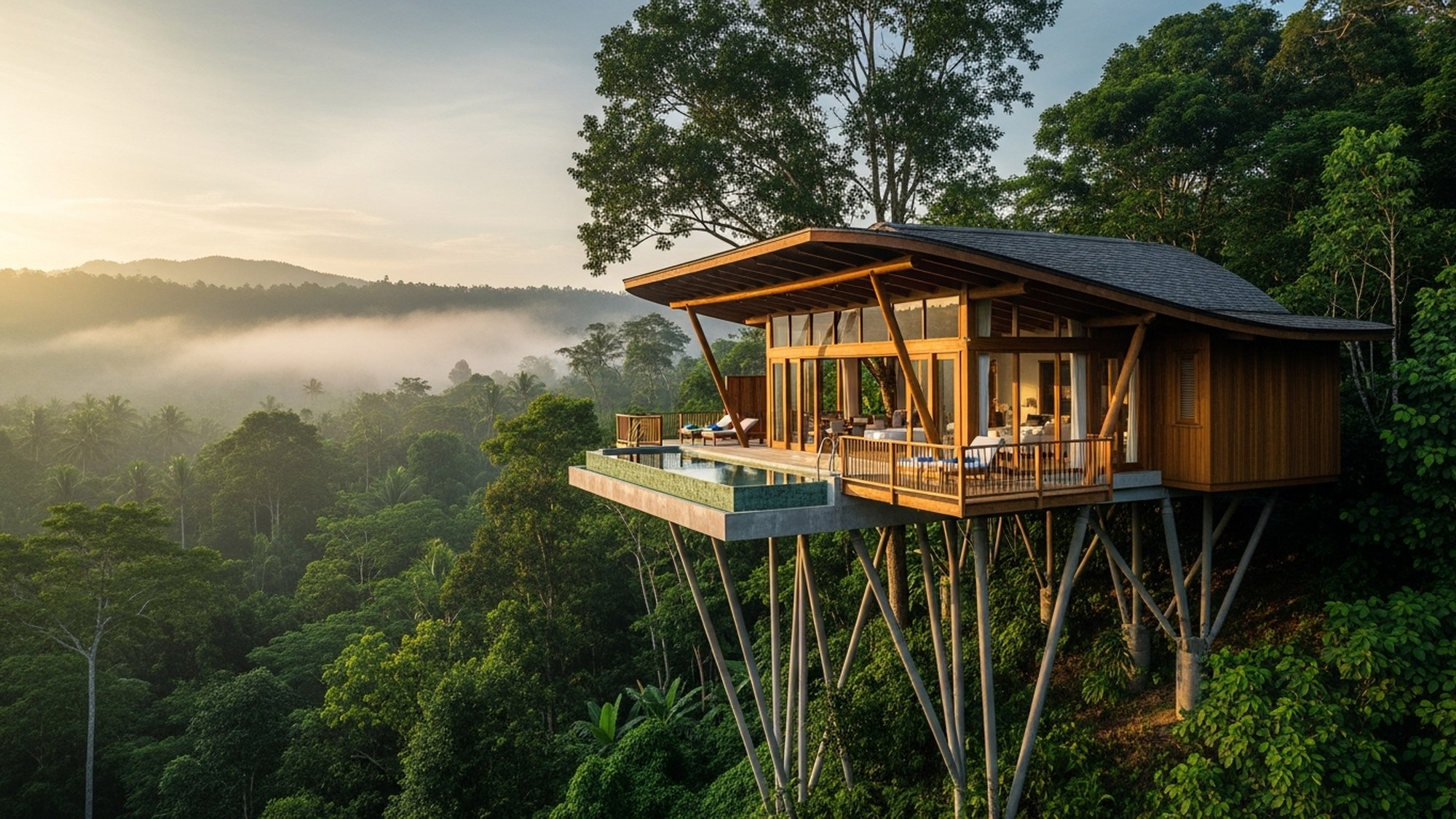
Here is the test every successful jungle stay passes and every forgettable one fails: is there a single image that stops a thumb mid-scroll? The bamboo houses of Bali have the spiraling staircase and the wall that opens onto a gorge. The famous Costa Rican treehouses have the platform that floats over the surf break. That one hero moment is not decoration. It is the entire marketing engine of the business, and you design the building around it.
That doesn't mean spending the most money. It means designing with the forest instead of against it. The best stays share a few principles:
- Frame one extraordinary view. Don't scatter small windows. Open an entire wall, or none. The drama comes from the contrast between a still interior and the wild green outside it.
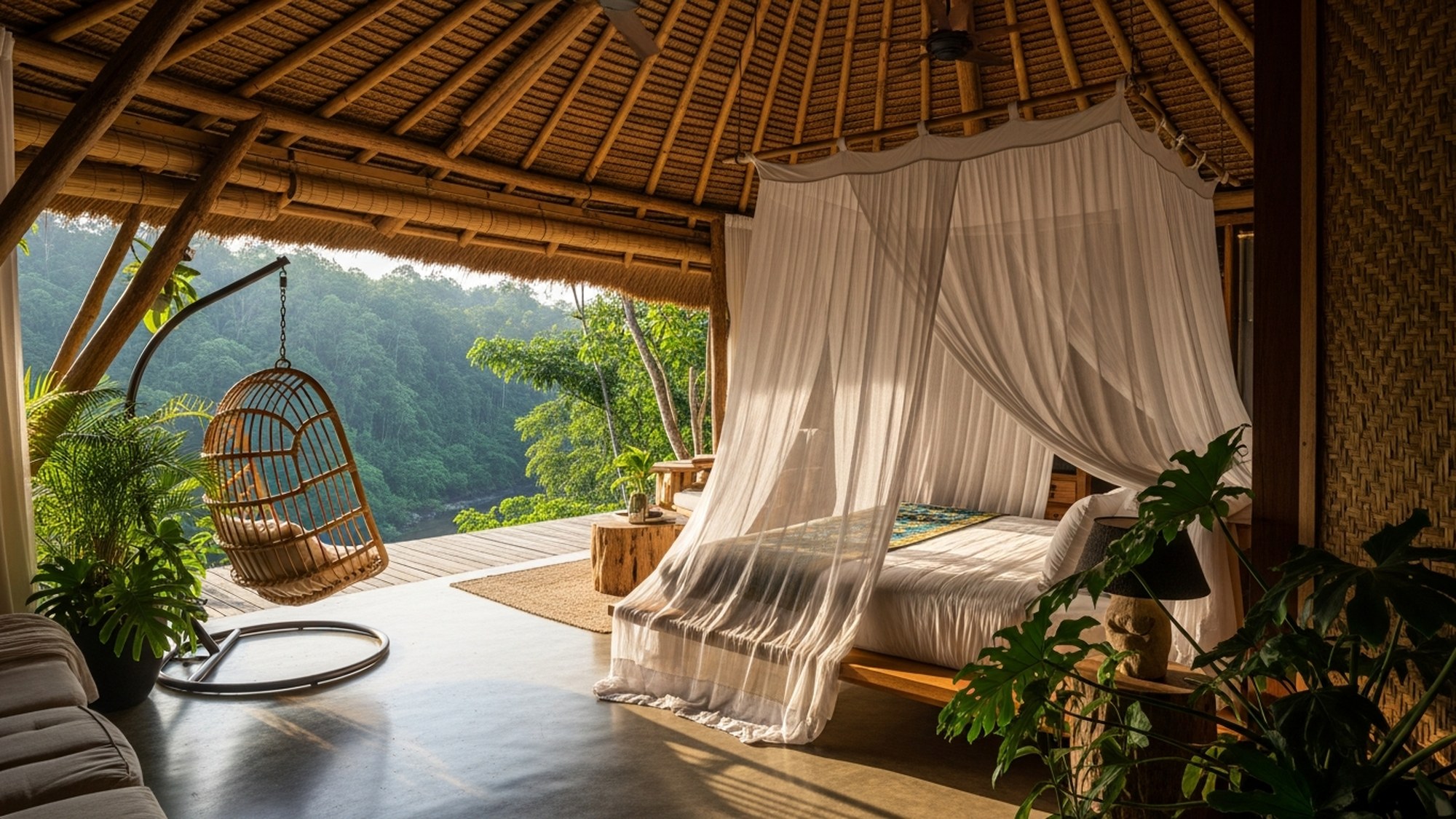
- Blur the line between inside and out. Open-air bathrooms, outdoor showers, decks that extend the floor into the canopy. People come to the jungle to be in it, not to watch it through glass.
- Use what grows there. Bamboo, local hardwood, thatch, stone. Local materials are cheaper, age correctly in the humidity, and look like they belong — because they do.
- Build up, lightly. Elevation is the jungle's magic trick: it puts you at canopy height with the birds, lifts you above the damp and the bugs, and barely touches the forest floor.
- Plan for the climate, not against it. Deep overhangs for the rain, cross-ventilation instead of air-conditioning where you can manage it, materials that shrug off mold.
Decide early what kind of stay you're building, because it changes everything downstream. A genuine treehouse, bolted into living trees, is the dream and the hardest engineering. A stilted villa gives you the elevation and the canopy view with a fraction of the structural risk. A bamboo house is somewhere between architecture and sculpture and needs craftsmen who specialize in it. Each is a different budget, a different permit, and a different guest. Pick one and commit.
Off-grid: power, water, internet
The thing that separates a jungle build from a normal one is that the grid usually stops well before your land does. You are not just building a house; you're building a tiny self-sufficient utility. Get this engineering right and guests never think about it. Get it wrong and your reviews fill with the three words that kill a remote listing: "lost all power."
Power
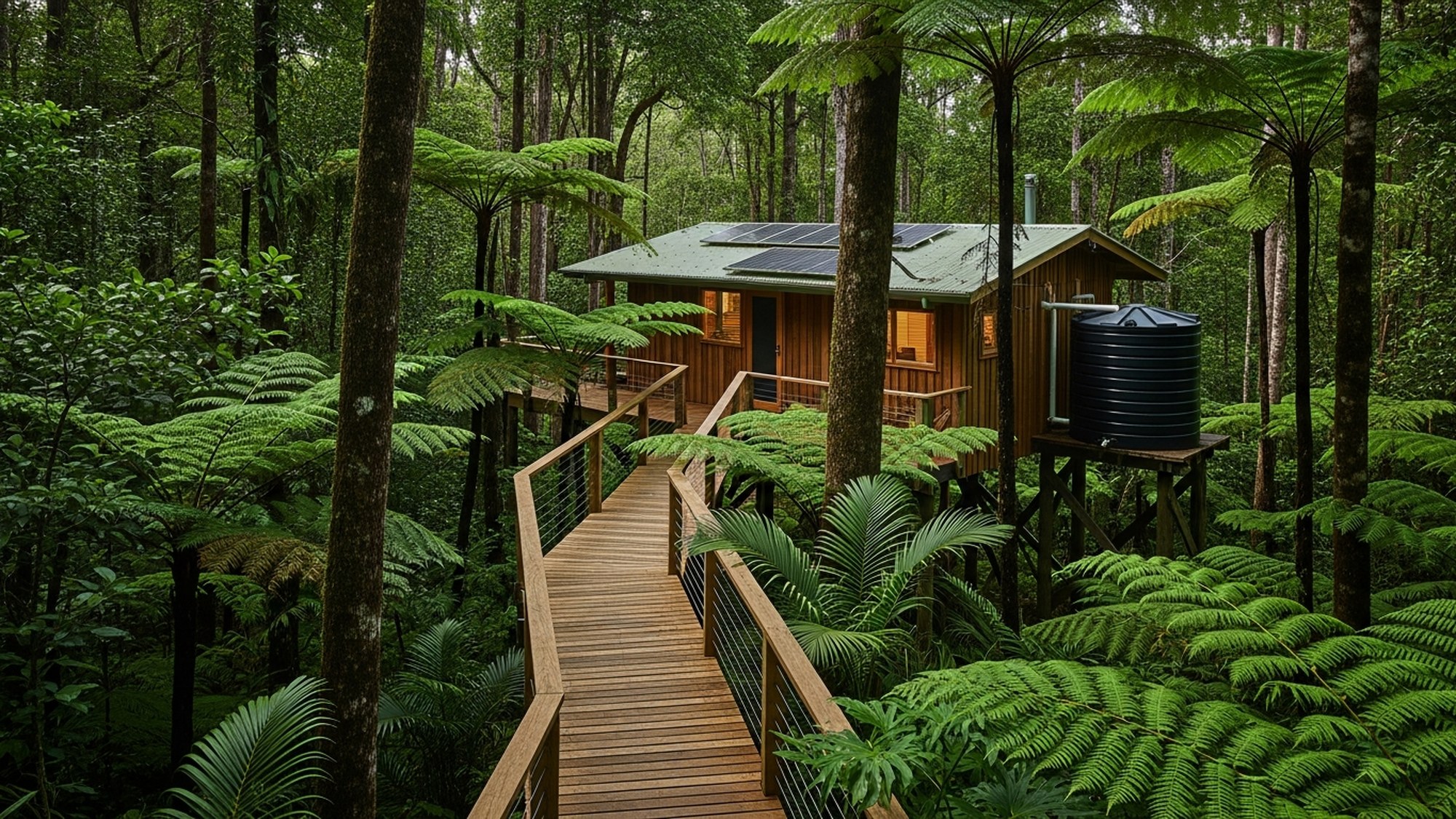
Solar is the default. A small cabin draws somewhere in the range of 1–8 kWh a day, and a system to cover that — panels, inverter, charge controller, and a battery bank — typically runs a few thousand to around $14,000, with batteries the biggest line item. Size it for your worst week, not your average, and keep a generator as backup. The temptation is to under-build the battery bank to save money; resist it, because a dead battery at 9 p.m. is a refund and a one-star review.
Water
If there's no municipal supply, you're catching rain, drawing from a well or spring, or trucking it in. Rainwater catchment is elegant in a place that gets 200 inches a year: a roof yields roughly 0.6 gallons per square foot per inch of rain, so a modest roof fills a serious cistern fast. But catchment water carries whatever was on the roof — the EPA is clear that it must be filtered and treated before anyone drinks it. Budget for proper filtration, not a hopeful assumption.
Internet
This one changed the entire game. A few years ago, "no signal" was a feature you apologized for. Today, with 40 million digital nomads looking for somewhere to work, reliable internet in the middle of nowhere is a competitive advantage — and Starlink delivers it almost anywhere on earth for a few hundred dollars of hardware and roughly $50–165 a month. Offer fast Starlink wifi and you unlock the remote-worker who books for a month, not a weekend. That single guest type can transform your occupancy math.
Waste
Septic, composting toilets, greywater systems — unglamorous, essential, and regulated. Do it properly and to code. The forest you're selling is the asset; the fastest way to destroy it (and your reputation) is to leak sewage into it.
What it costs, and what it earns
Numbers vary wildly by country and ambition, so treat these as a frame, not a quote. But you can build a realistic model from public figures.
The build. A fully livable, plumbed and powered treehouse in the US runs $80,000 to $300,000; a cabin costs roughly $125–175 per square foot. The advantage of building in the tropics is that construction is often dramatically cheaper. In Costa Rica, build costs run from about $850 per square meter for economical work up to $1,800–2,500+ for luxury. In Bali, hard-construction costs land around $600–2,000 per square meter depending on finish. A small, beautifully made jungle villa in those markets can come in well under six figures — before land.
Everything else. Land, legal and permit fees, the off-grid systems above, an access road or path, furnishing, and a contingency that should be much larger than you want it to be. Building in the jungle means weather delays, materials hauled in by hand, and surprises under every tree. A 20–30% contingency is not pessimism; it's experience.
What it earns. Be conservative. US short-term rentals average roughly 50–55% occupancy, and that's the mature market. A remote jungle stay will have a strong season and a wet, quiet one — model both. The good news is the rate: a distinctive stay commands a premium and defends it. Run the numbers on realistic occupancy at a realistic nightly rate, subtract real operating costs (cleaning, staff, maintenance, platform fees, utilities, insurance), and see how many years it takes to repay the build. If the project only works at 90% occupancy and peak-season pricing, it doesn't work. If it pencils at 45%, you have a business.
A sane way to model it
Take your realistic nightly rate × 45% occupancy × 365 for a conservative gross. Subtract 30–40% for operating costs and platform fees. Compare what's left to your all-in build cost. If the payback is under 7–8 years on conservative assumptions, the project is healthy. Anything that needs heroic occupancy to work is a hobby, not a business — go in knowing which one you want.
How people actually pay for it
Almost nobody walks a bank into a rainforest. Traditional mortgages rarely cover raw foreign land and unconventional off-grid structures, so jungle builds get financed in less conventional ways — and how you fund it shapes how much risk you're carrying.
- Cash and savings, in phases. The most common route: buy the land outright, then build in stages as funds allow. It's slow, but it means you owe nothing on an asset that takes time to start earning — and in a business with a long runway to first revenue, owing nothing is a real form of safety.
- Selling something at home. A surprising number of jungle stays are funded by downsizing or selling property in a high-cost country and redeploying the equity where land and construction are a fraction of the price. The arbitrage between a city apartment and a hectare of Costa Rican hillside is the whole financial engine for many builders.
- Partnerships. One person brings capital, another brings local knowledge, time on the ground, and the willingness to manage a build in a second language. Structure it properly and in writing — handshake partnerships in foreign jurisdictions are how friendships and projects end together.
- Local financing and developer terms. In some markets you can get seller financing on the land or local construction credit, though rates are usually higher than you'd accept at home. Read every line, and have your lawyer read it too.
Whatever the source, build a real budget with a real contingency and a real cash buffer for the months after opening, when the reviews — and the bookings — are still ramping. The projects that fail financially usually didn't fail at the build; they ran out of runway in the quiet first season before the listing gained traction. And factor in the unglamorous protections: liability insurance for guests, structural and weather cover where you can get it, and the cost of doing the permits and registrations properly rather than cheaply. Insurance on a remote, elevated, off-grid structure is its own puzzle — solve it before a guest is sleeping fifteen feet up, not after.
Building without killing the trees
The forest is the entire product, which makes "don't wreck it" both an ethic and a business strategy. The construction itself is the riskiest moment for the thing you're selling.
Find builders who have worked in the forest before — this is not the place for a crew whose experience is suburban houses. In established jungle markets, the right architects and craftsmen already exist; use them. For genuine treehouses, the structure must let the tree keep growing and moving: that means specialized, tree-friendly hardware (proper attachment bolts that the tree grows around) rather than lag screws and through-bolts that strangle it. A living tree is a moving foundation, and amateur attachment is how treehouses fail — slowly, then suddenly.
Plan the build around the weather. The wet season turns access roads to soup and stalls concrete; schedule the heavy work for the dry months. Choose materials that survive humidity — naturally rot-resistant hardwoods, properly treated bamboo, stainless fixings — because anything that can rust, warp, or mold in a rainforest eventually will. And touch the ground lightly: elevated structures on minimal footings disturb less forest floor, drain better, and read as more sympathetic to the very guests you want.
Every tree you keep is a tree your guest photographs. The cheapest luxury in the jungle is the forest you didn't bulldoze.
Furnishing and the guest experience
Once the structure is up, the job shifts from engineering to empathy. A jungle stay sells a feeling — immersion without discomfort — and the furnishing is where you deliver it or break the spell.
The balance to strike is comfort versus wildness. Guests want to feel they're in the forest, not that they're suffering in it. That means: genuinely good beds and proper bedding, because nobody romanticizes a bad night's sleep. Excellent mosquito nets and screening — the wildlife should be a feature, not an ambush. Hot water, even off-grid. A real coffee setup for the dawn-chorus mornings that are the best part of any jungle stay. Reading light that works on a battery system. Thoughtful touches that cost little and photograph well: a hammock on the deck, a hanging chair in the canopy, an outdoor bath with a view.
Then manage the wildlife honestly. Insects, geckos, the occasional monkey on the roof, frogs at full volume — these are part of the product, and the move is to tell guests what to expect rather than pretend it away. A short, warm "what lives here and how to coexist with it" note in your welcome book turns a potential complaint into part of the adventure. The guests who book a treehouse want the frogs. Your job is to keep the things they don't want — mosquitoes in the bed, ants in the sugar — firmly outside.
Photographing and listing it
You can build the best stay in the country and still fail here, because for the first year nobody will have seen it in person — they'll only see the photos. The listing photography is not a step at the end. It is the product, as far as the booking decision is concerned.
Hire a real photographer, ideally one who shoots architecture or travel, and shoot in the best light the forest gives you — the soft hour after dawn, mist still in the trees. Lead with the hero shot, the one image the whole building was designed around. Then tell a sequence: the approach through the forest, the wall opening onto the canopy, the bed, the bath, the deck at golden hour, a detail of the craftsmanship, the view from the pillow. Drone footage of a structure nestled in unbroken green is worth its weight; it's the shot that conveys "you will be in the jungle" better than any caption.
Write the listing the way the best ones read: specific and honest. Say exactly what it's like, what it costs, what to know before booking — the 4x4, the steep path, the frogs, the spotty signal if there is any. Honesty in a listing isn't a risk; it's what produces five-star reviews, because the guest arrives to exactly what they were promised. Vague, over-promised listings produce disappointed guests and the reviews that follow them.
Getting booked from the middle of nowhere
A remote stay can't rely on walk-ins or location-based discovery. You market it deliberately, on several fronts at once.
- Master the platforms. Airbnb, Vrbo and Booking.com are where most guests will find you. Strong photos, fast responses, a steady stream of five-star reviews and a complete listing push you up the rankings. Early on, price slightly low to win the first reviews — they're the flywheel.
- Lean into how photogenic it is. A striking jungle stay is, in marketing terms, a gift. Pinterest and Instagram were built for exactly this image, and a single viral post can fill a season. Open the accounts, post the hero shots, make it easy to share.
- Build a direct-booking path. The platforms take a cut and own the relationship. Over time, a simple website and an email list of past guests let you take direct bookings, repeat stays and referrals — and keep the margin. This is how a one-off rental becomes a durable business.
- Get listed where seekers look. Travelers actively hunting for this kind of stay use curated directories and "best of" guides to cut through the noise. Earning a place on those lists is some of the highest-quality, lowest-cost marketing you can get. (When your stay is ready and genuinely exceptional, tell us about it — that's literally what this directory is for.)
Running it: operations in the middle of nowhere
The build ends; the operation never does. Running a remote stay well is its own skill, and it's where many beautiful properties quietly fall apart.
Cleaning and turnover are harder when the nearest town is an hour off. You'll need reliable local staff — a cleaner, a caretaker, ideally someone who can fix a pump or a panel — and you'll need to pay and treat them well, because in a remote place your team is the business when you're not there. Maintenance is relentless in the tropics: humidity, insects, and fast-growing plants work against your structure every day, so budget for constant upkeep rather than occasional repairs. Keep critical spares on site, because "we've ordered the part" means a week of dark rooms when the part is three transfers away.
Take guest safety seriously and visibly: first-aid kits, clear emergency plans, a way to reach help when the phone doesn't, well-lit paths, sturdy railings on everything elevated. And protect your reviews like the asset they are. In a remote stay, a single power failure or plumbing problem can turn a dream trip into a one-star story, so over-invest in the systems that prevent those moments. The reviews are your ranking, your pricing power, and your reputation, all at once.
Building responsibly — it's also the selling point
The travelers who book jungle stays care, demonstrably, about sustainability. Three-quarters of global travelers say they want to travel more sustainably, and a majority say they'll pay more for a stay that genuinely is. Building responsibly isn't a tax on the business — it's a feature your exact customer is shopping for.
Do it for real: minimize your footprint on the land, keep the mature trees, run on solar, manage water and waste properly, and work with the local community rather than around it. The best jungle operators — the community-owned lodges of the Peruvian Amazon are a good model — hire locally, source locally, and treat conservation as the core of the offer. That's not just ethics; it's a story guests want to be part of, and a moat competitors can't easily copy.
The mistakes that sink jungle hosts
Most failures rhyme. Avoid these and you've dodged the common graves:
- Falling for the land before checking the law. Buying a plot you can't legally own as a foreigner, or can't get a build permit for. This ends more dreams than money does.
- Under-engineering the off-grid systems. A too-small battery bank or untreated water turns the dream into refunds and bad reviews.
- Designing without a hero shot. A comfortable, generic cabin in the trees is invisible online. No stopping image, no bookings.
- Ignoring the wet season. Modeling income on peak occupancy and forgetting the months it rains every afternoon.
- Skimping on the contingency. Jungle builds always cost more and take longer than the plan. Always.
- Treating staff as an afterthought. In a remote stay, the local team is the operation. Underpay or under-train them and the whole thing wobbles the moment you leave.
- Bulldozing the asset. Clearing too much forest to make construction easy, and erasing the exact thing guests came for.
Frequently asked questions
How much does it cost to build a jungle Airbnb or treehouse?
It ranges enormously. A fully livable, plumbed and powered treehouse in the US runs roughly $80,000 to $300,000. Building in the tropics is often far cheaper — construction in Costa Rica starts around $850 per square meter and in Bali around $600, so a small, well-made jungle villa can come in under six figures before land. On top of the structure, budget for land, legal and permit fees, off-grid power and water systems, access, furnishing, and a 20–30% contingency, because jungle builds reliably cost more and take longer than the plan.
Can foreigners own land to build a jungle Airbnb?
It depends entirely on the country, and it should drive your shortlist. Costa Rica, Peru and Colombia let foreigners own property with essentially the same rights as citizens (with border-zone and coastal-zone exceptions). Mexico requires a bank trust (fideicomiso) in the coastal restricted zone. Indonesia (Bali) and Thailand don't allow foreign land ownership at all — you use long-term leases or specific use-rights titles. Always confirm the rules for your exact plot with a local property lawyer before buying, and never use an illegal "nominee" arrangement to get around ownership limits.
How much can a jungle Airbnb actually earn?
Model it conservatively. US short-term rentals average roughly 50–55% occupancy, and a remote jungle stay will have a strong season and a quiet wet one. The advantage is rate: distinctive, "unique" stays command a premium and hold it, and unique-stay hosts collectively earn close to a billion dollars a year on Airbnb. A healthy project pencils out at conservative occupancy (think 45%) and a realistic nightly rate, with payback under seven or eight years. If it only works at 90% occupancy and peak pricing, it's a hobby, not a business.
Do you need a permit to build a treehouse?
Almost always, yes — and often more than one. Beyond a standard building permit, jungle plots near protected forest frequently need environmental clearance (Costa Rica's SETENA viability, Brazil's three-phase IBAMA licensing) and increasingly a tourism or short-term-rental registration to operate legally. Buffer zones around reserves can add restrictions or rule out building entirely. Confirm, in writing and before you buy, that you can get a permit for a guest structure on that specific piece of land.
Where is the best country to build a jungle Airbnb?
For first-time builders, the smart choice is somewhere with an existing path: Costa Rica and Bali both have established legal routes for foreigners, real airports, a craft economy that knows how to build in the forest, and guests who already come. Pioneering a brand-new jungle is possible but you'll pay for it in time and mistakes. Weigh access, the forest itself, ownership law, nearby attractions and the availability of skilled builders — and notice where the great stays already cluster, because that clustering is information.
How do you get internet and power in the jungle?
Power is usually solar — panels, an inverter and a battery bank sized for your worst week, with a generator as backup; a small-cabin system runs a few thousand to about $14,000. Water comes from rainwater catchment, a well or a spring, with proper filtration before anyone drinks it. Internet changed the game: Starlink delivers fast satellite broadband almost anywhere for a few hundred dollars of hardware and roughly $50–165 a month, which lets you sell month-long "workations" to remote workers, not just weekends.
How long does it take to build one?
Plan in years, not months. Finding and buying land, clearing legal and environmental permits, and building in a difficult, often seasonal climate typically takes one to three years before your first guest arrives. The wet season stalls construction, materials may be hauled in by hand, and remote sites throw surprises. The builders who succeed treat that long runway as the real job rather than an inconvenience on the way to opening night.
Is a remote jungle stay safe for guests?
It can be, with deliberate effort. Remote and elevated means you over-invest in the unglamorous protections: sturdy railings on everything off the ground, well-lit paths, first-aid kits, a clear emergency plan, and a reliable way to reach help when the phone doesn't work. Tell guests honestly what to expect — the wildlife, the access road, the systems — so the adventure never tips into a nasty surprise. Good safety practice also protects your reviews, which in a remote stay are your entire reputation.
Do you need to live there to run it?
No, but you need a great local team. Most successful remote hosts rely on a trusted on-the-ground crew — a cleaner, a caretaker, someone who can fix a pump or a solar panel — because when you're not there, that team is the business. Pay and treat them well, keep critical spares on site, and put strong systems in place. Plenty of owners run beautiful jungle stays from another country entirely; the ones who struggle are the ones who treated staffing as an afterthought.
Where to start
If you've read this far, you're more serious than most people who have the half-thought on the plane. So here's the honest sequence. Decide on a region using the five criteria above. Spend real time there before you buy anything — a wet season and a dry one if you can. Hire a local property lawyer and confirm, in writing, that you can own and build on the specific plot. Then design around one extraordinary moment, engineer the off-grid systems like your reviews depend on them (they do), and build lightly with people who've done it before.
And steal shamelessly from the people who've already done it brilliantly. That's what our directory is for: the bamboo masterpieces of Bali, the architect-built treehouses of Costa Rica, the off-grid fern-forest cabins of Hawai‘i, the river lodges of the Amazon. Study what the great ones frame, how they touch the ground, what they promise and what they deliver. The dream is buildable. It just rewards the people who plan it like the serious project it is — and then, when it's ready and it's genuinely one of the best in the world, we'd like to see it.
- Grand View Research — Short-Term Vacation Rental Market Report & Treehouse Glamping Market.
- Airbnb Newsroom — Q4 2024 financial results, unique-stay demand & unique-stay host earnings.
- Radical Storage — Ecotourism & sustainable tourism statistics 2025.
- Hilton — 2026 Trends: Hushpitality. Expedia — Unpack '25 travel trends. MBO Partners — 2025 Digital Nomads report.
- AirDNA via StayFi — vacation rental statistics; AirDNA 2025 Outlook.
- Build costs — Angi treehouse costs, Costa Rica, Bali.
- Off-grid — off-grid solar guide, Starlink Roam, rainwater catchment math, US EPA on rain barrels.
- Ownership & permits — Costa Rica maritime zone, Mexico fideicomiso, Bali leasehold, Thailand, Brazil INCRA, Costa Rica SETENA.
- Sustainability demand — Booking.com sustainable travel data, Expedia sustainable travel study.
This guide is general information, not legal, financial or construction advice. Property, building and tax rules vary by country and change often — always confirm the current rules for your specific location with qualified local professionals before buying land or building.
More from the Journal.
Why Jungle Stays Are Booming
The data behind the treehouse boom: four shifts in how the world travels are all converging on the forest — and it looks structural, not a fad.
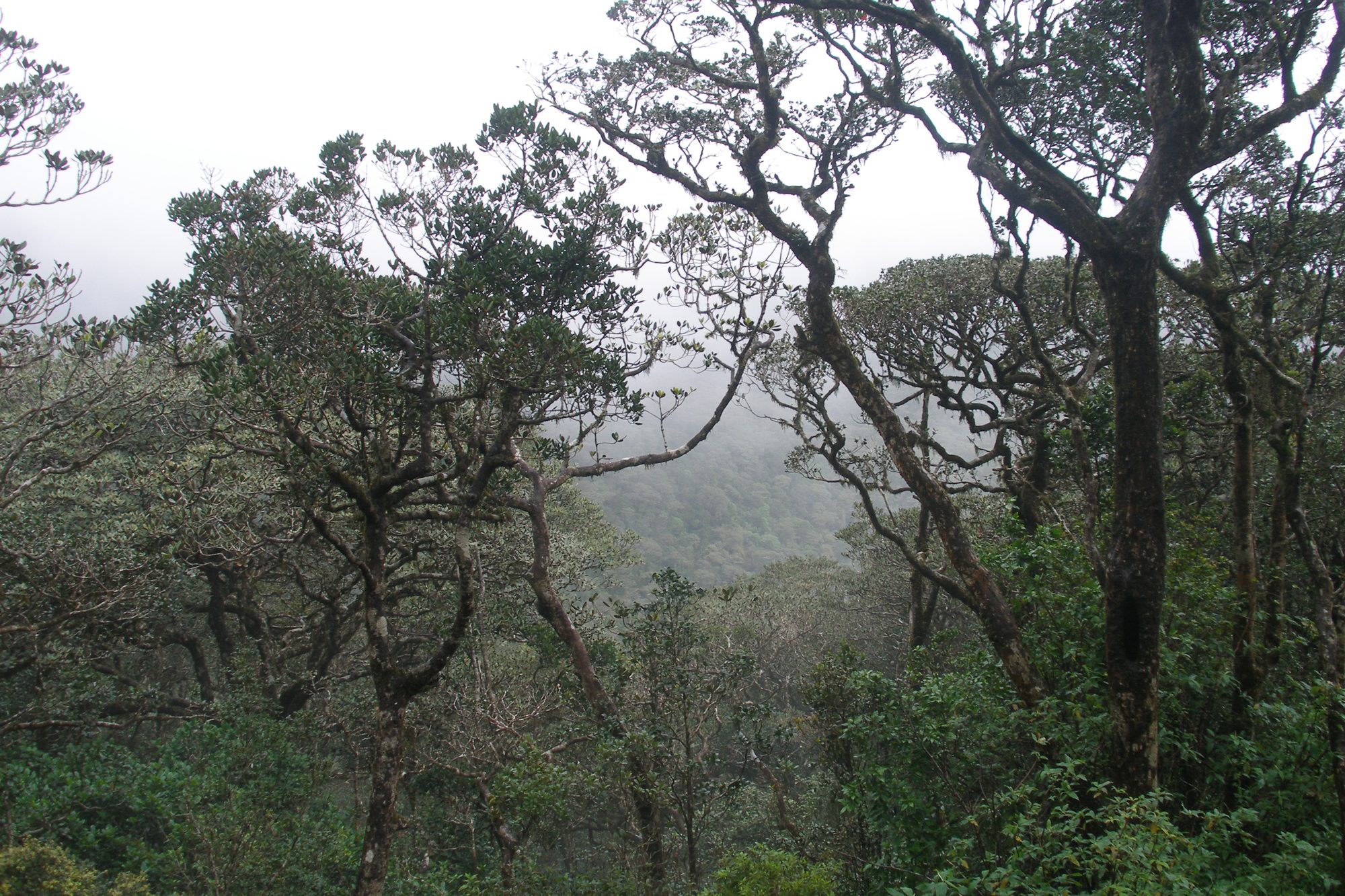
When to Visit the Jungle: A Season-by-Season Guide
There's no single best time to visit 'the jungle' — because it isn't one place. Here's when to go, region by region, with a month-by-month cheat sheet.
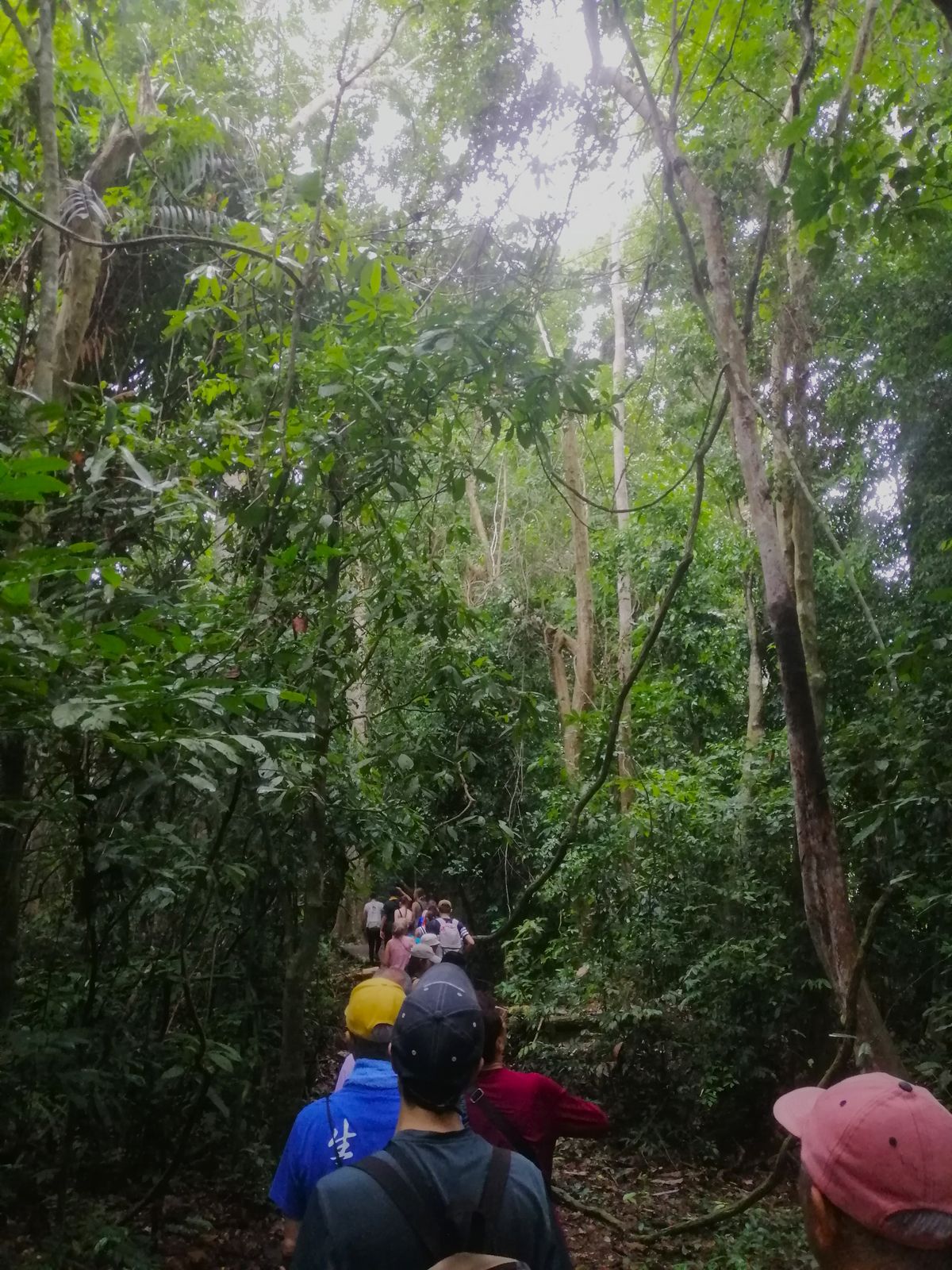
What to Pack for a Jungle Trip
The complete jungle packing list from people who have made every mistake — what actually matters, what to leave home and what nobody tells you.
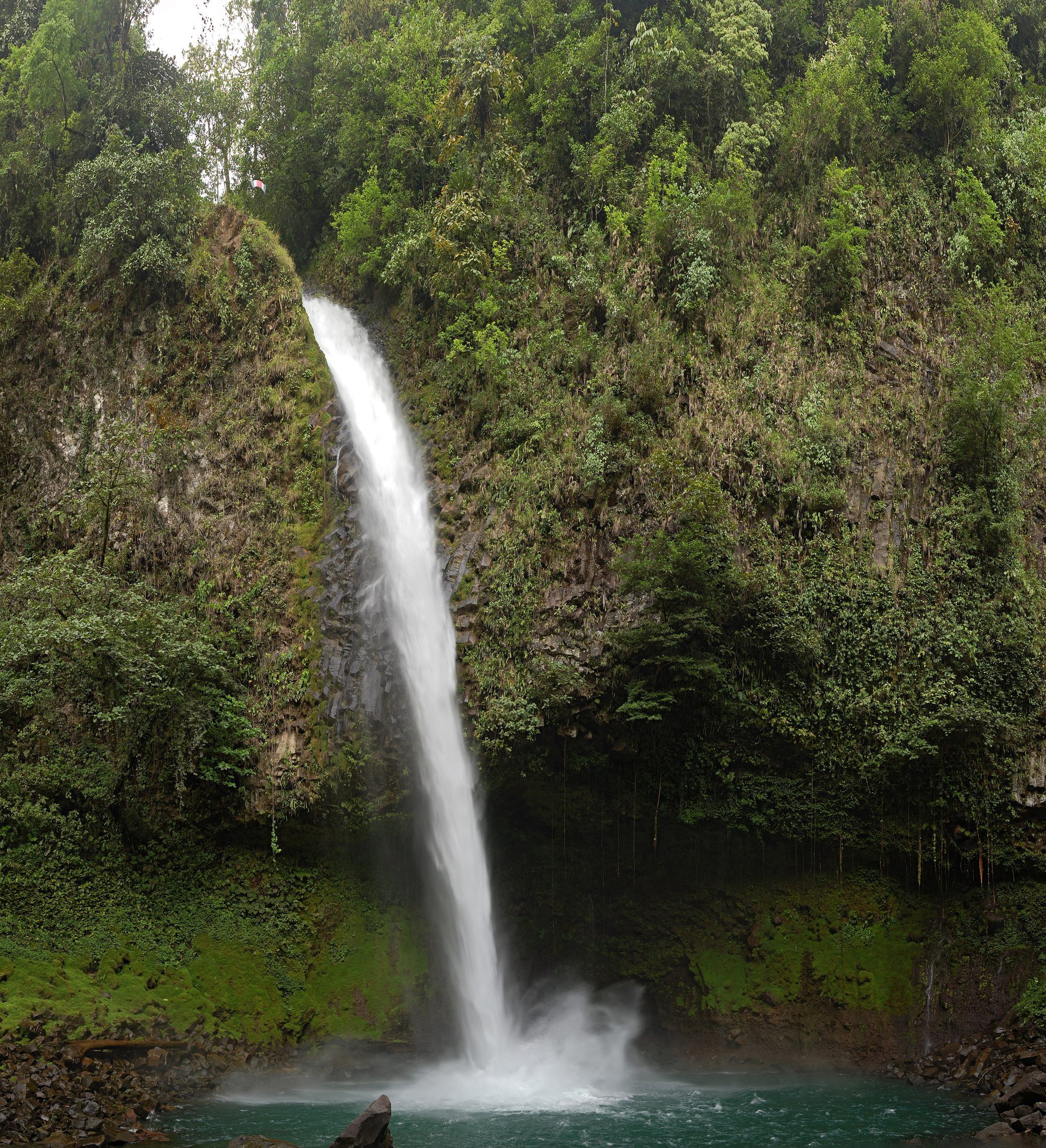
Find your own piece of the canopy.
Treehouses, bamboo houses and rainforest villas across 17 destinations — found, vetted and written up honestly.
Browse all destinations