Bali
Nowhere else builds like this — five-story bamboo houses over river gorges, for the price of a city hotel room.
Bali's jungle interior is where the world's most photographed Airbnbs actually live. The bamboo houses around Ubud — many built by craftsmen trained on the Ibuku projects — are genuine architecture: spiraling staircases, woven roofs, whole walls that open onto river gorges. Nothing else in this directory looks like them.
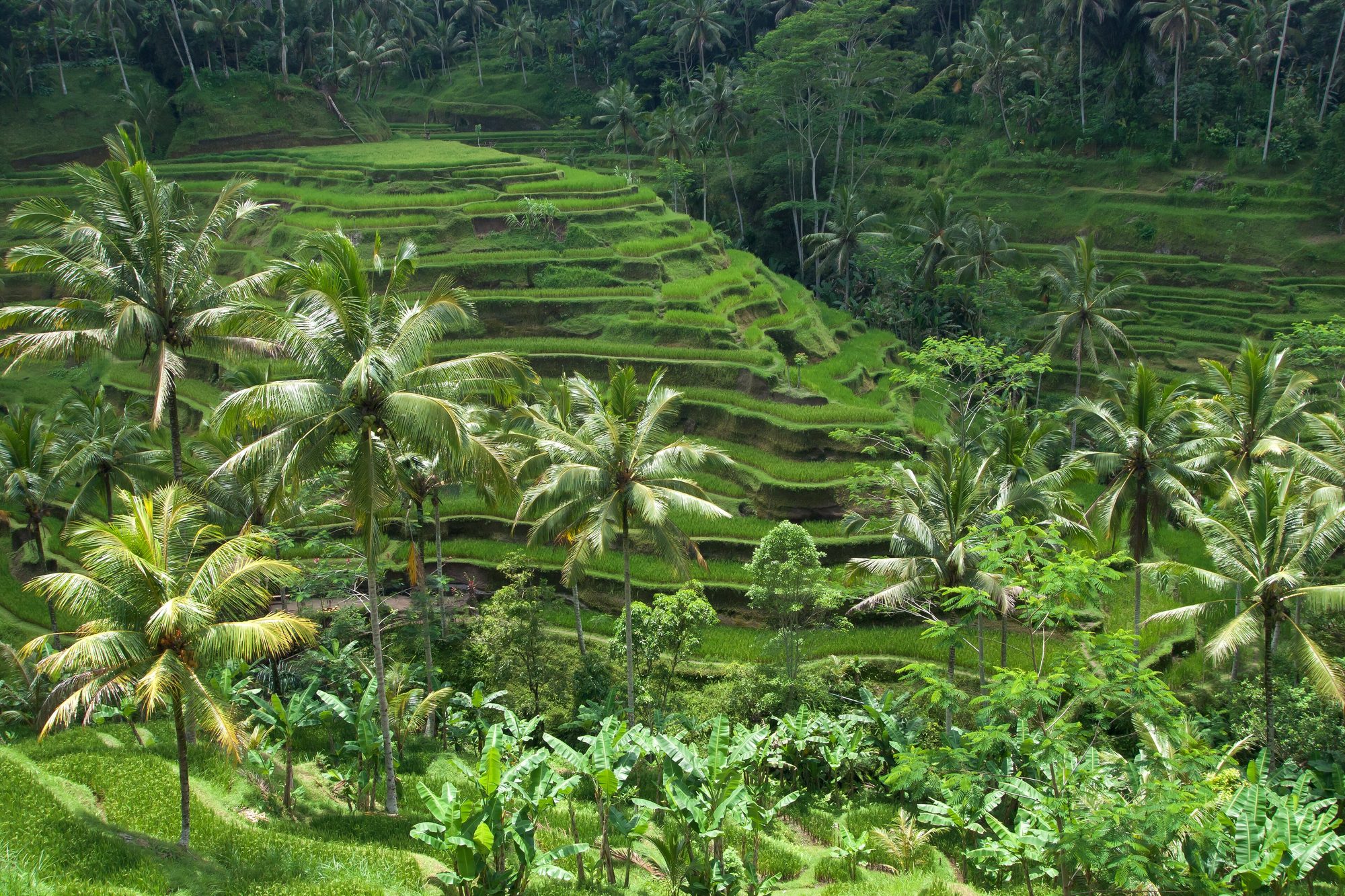
Ubud is the hub, but the better stays sit twenty to forty minutes out — Tegallalang past the rice terraces, Sidemen under Mount Agung, Munduk up in the cooler hills. You'll share the garden with geckos, the occasional monkey, and a soundtrack of running water. Open-air living is the default: expect outdoor bathrooms, mosquito nets that get used, and a scooter or driver for everything.
Prices are the quiet shock. Houses that would cost four figures a night in Costa Rica run $80–250 here, breakfast often included, staff often included. Dry season is April through October. The rainy months still give you clear mornings — and the gorges at full volume.
Where Bali's jungle stays are
The six Bali stays in this directory fall into four areas, and the drives between them are long enough that it pays to pick one or two. East Bali, around Selat and Sidemen under Mount Agung, holds three: Hideout, Camaya's Suboya house and Veluvana's Owl house. Our records put them roughly an hour to 90 minutes from Ubud, and Hideout's host gives about two hours from the airport.
Tegallalang, about 20 minutes north of central Ubud, has Jungleight's Nest, the easiest of the six to reach at about 35 km in a straight line from Denpasar's airport (DPS). Aura House sits in Abiansemal in the Ayung River valley, roughly 40 minutes from both Ubud and Canggu. Munduk Cabins are the outlier, up in the northern highlands about two hours from Ubud, where the evenings turn cool.
Five of the six are bamboo houses or bamboo treehouses; Munduk's are timber cabins. Veluvana's Owl house has its own plunge pool and The Nest its own infinity pool and hot tub, Camaya has a pool, Munduk a shared infinity pool, and Hideout's water is the stream outside. Hideout and Munduk are the least expensive, with rates in our records starting between $100 and $130 a night; Aura House and The Nest start around $400.
Our month planner marks April through October as Bali's prime season, March and November as shoulder months, and December through February as the wettest.
Bali charges international visitors a tourist levy of IDR 150,000, set by provincial regulation and paid online through the province's Love Bali portal, which emails a voucher. Pay it before you fly. Most of these hosts arrange drivers, and a scooter or a hired driver is how you get around once you are there.
- Love Bali, Bali Province tourist levy portal: levy amount and how to pay, read 15 October 2026
- OurAirports: I Gusti Ngurah Rai International Airport (DPS): airport coordinates
- Hideout Bali on Airbnb: host's drive times, read 15 October 2026
 Bamboo architecture capital
Photo: Bex Walton from London, England, CC BY 2.0