Panama
Caribbean island jungle in Bocas del Toro, cloud forest in Boquete, and sloths in the trees of the capital.
Panama is the country Costa Rica regulars move on to. The forest is just as real, the prices are lower, and the crowds are thinner. Sloths live in ordinary city trees on Ancon Hill in Panama City, and the canal itself runs through protected rainforest. But the jungle stays worth flying for sit at the two ends of the country: the Bocas del Toro archipelago on the Caribbean side, and the cool coffee highlands around Boquete in the west.
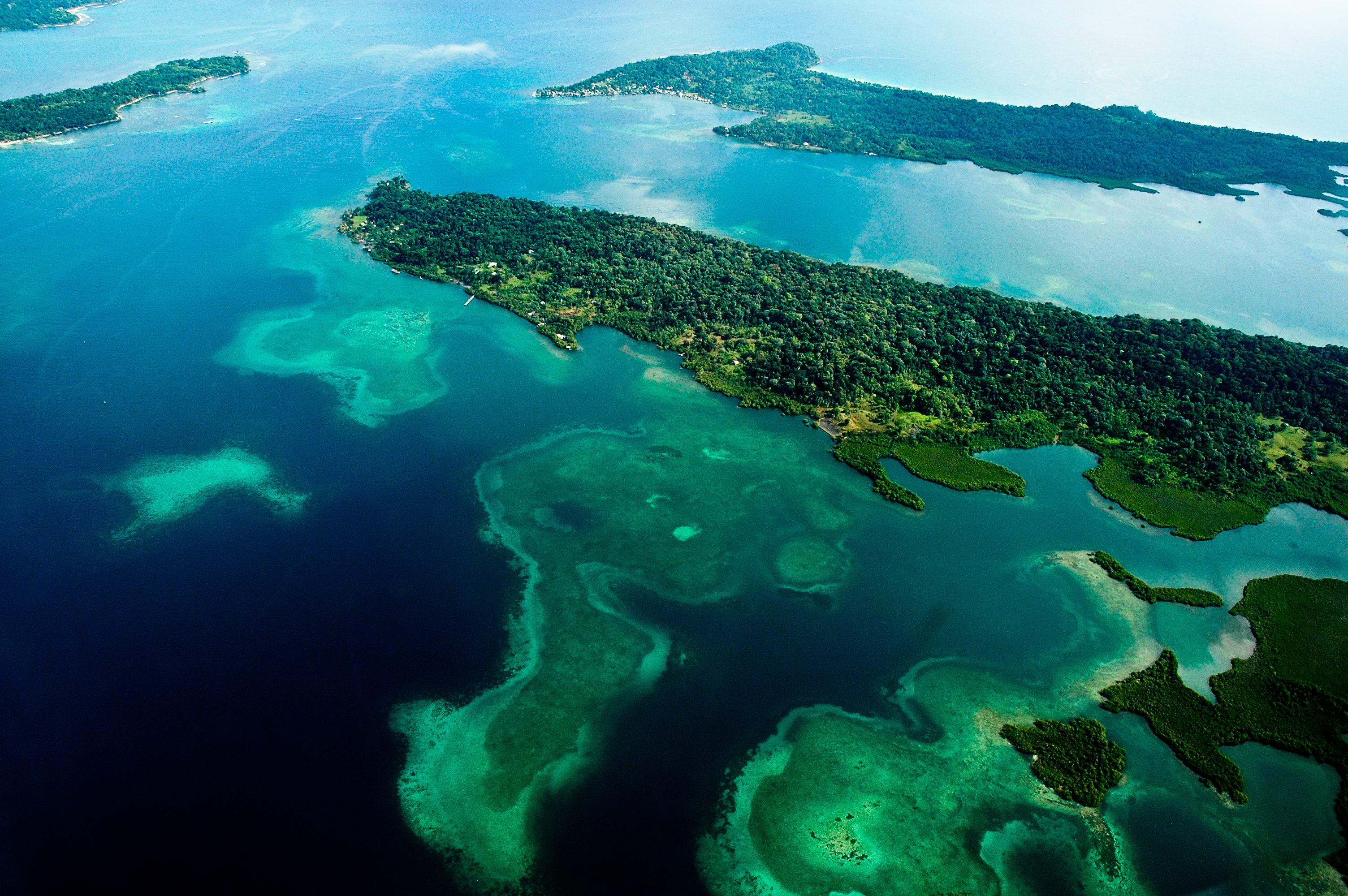
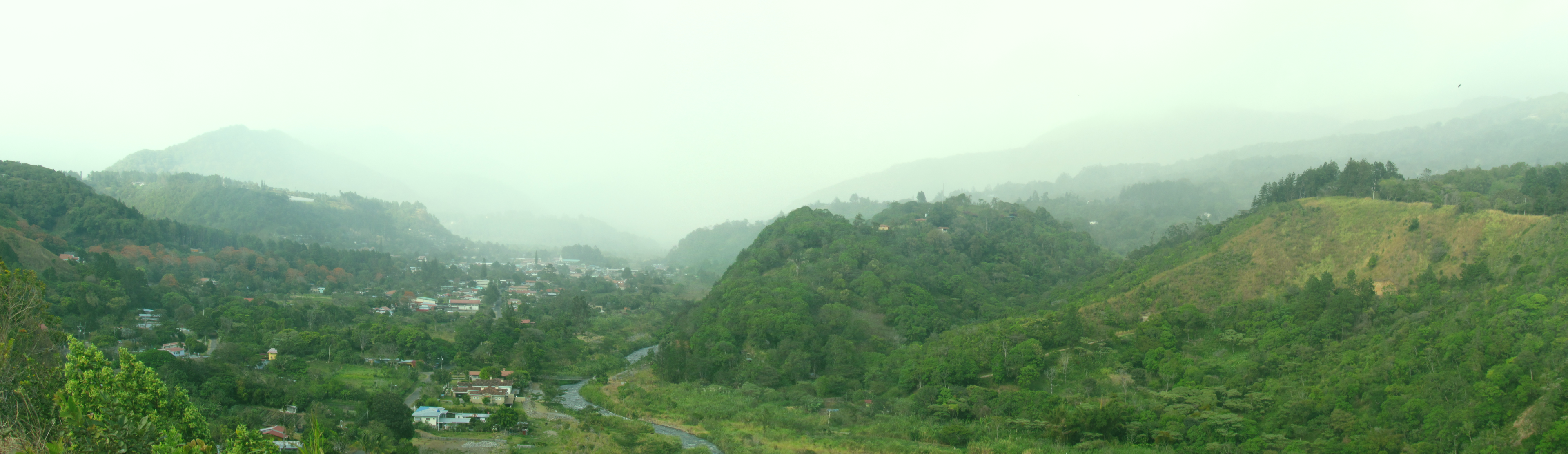
Bocas del Toro is island jungle. Isla Colón's north shore, around Bluff Beach, Paunch and Big Creek, is where the cabins and treehouses in this directory stand, most of them a few minutes' walk from surf breaks and empty beaches, with howler monkeys, toucans and sloths passing through the canopy overhead. Everything arrives by boat or by the one road out of Bocas Town, and the pace is slow on purpose. Boquete, at about 1,200 meters in the shadow of Volcán Barú, is the opposite climate: cloud forest, rivers running cold off the volcano, coffee farms, and mornings that call for a sweater.
The dry season, which Panamanians call verano, runs December through April; the wet season runs May through November and is heaviest in October and November. Bocas keeps its own Caribbean calendar and can be sunny in September when the Pacific side is soaked. Fly into Panama City, then take the short domestic flight to Bocas or the hour-long hop to David for Boquete.
Choosing between Bocas del Toro and Boquete
The six Panama stays in this directory are in two places that feel nothing alike. Four are on Isla Colón, the main island of the Bocas del Toro archipelago on the Caribbean. Two are in the Chiriquí highlands around Boquete. Each area has its own airport for the domestic flight from Panama City: Bocas del Toro's Isla Colón airport (BOC) and Enrique Malek in David (DAV).
On Isla Colón the stays are a short ride from the runway. Jungle Casitas is about 3 km from BOC in a straight line and shares a pool among a few casitas. The Jungle House on Bluff Beach, about 7 km out on the far side of the island, is the one for a family or a small group, with two bedrooms for up to five guests and the sand 200 m away. Jungle Paunch Cabins are two minutes' walk from the sea and four from the Paunch and Tiger Tails surf breaks, and the Big Creek treehouse has a bedroom whose glass doors fold open onto the forest. All four rate above 4.8 on Airbnb; Paunch is highest, at 4.97 from 138 reviews.
Boquete is the cooler choice, and both of its stays are for two. The Boquete Nature Bungalow is in Jaramillo on the hill above the village, with a covered stairway down to town in 15 to 20 minutes on foot. Rio Verde Isabella is a studio casita on the Palo Alto river, six minutes from town by our record, and the one of the two with air conditioning. David's airport is about 43 and 45 km from them in a straight line.
Above Boquete is Volcán Barú National Park, which Panama's environment ministry, MiAmbiente, describes as 14,322 hectares of cloud forest and páramo around the country's highest point, 3,475 m above sea level. Off Bocas del Toro the ministry's rangers look after Isla Bastimentos National Marine Park, and the ministry calls its Playa Larga one of the main sea turtle nesting sites on Panama's Caribbean coast.
Our month planner marks December through April as Panama's prime season, May through September as shoulder months, and October and November as the wettest. The Panama rainforest guide covers the wildlife, the trails and the routes in more detail.
- MiAmbiente: boundary signs reinforced in Volcán Barú National Park (11 July 2025): park area, forest types and Panama's highest point, read 22 October 2026
- MiAmbiente: Isla Bastimentos National Marine Park and Ocean Month (21 September 2025): Playa Larga as a sea turtle nesting site, read 22 October 2026
- OurAirports: Bocas del Toro Isla Colón International Airport (BOC): airport coordinates
- OurAirports: Enrique Malek International Airport (DAV): airport coordinates
 Two oceans, one forest
Photo: Dr. Ariel Rodríguez-Vargas, CC BY-SA 4.0
Two oceans, one forest
Photo: Dr. Ariel Rodríguez-Vargas, CC BY-SA 4.0