The Monkeys of the Rainforest
You will hear the jungle's monkeys before you see them. Usually it's a howler, somewhere out past the tree line at first light, producing a sound so low and so loud that first-timers assume it's a jaguar, or a chainsaw, or thunder with a grudge. Then a branch snaps directly overhead, a face appears upside-down in the canopy, and you realize the jungle has been watching you the whole time. Monkeys are the animal most people actually come to a jungle stay hoping to see — more reliably than a jaguar, more charismatic than a beetle, more active by day than most of the rest of the rainforest's cast. This is a working field guide to who you're likely to meet, where each species actually lives, how to tell them apart, and how to watch them without becoming the reason the next traveler doesn't get to.
What actually makes a monkey a monkey
Before any of the species accounts, one distinction is worth getting straight, because it trips up more travelers than anything else in this guide: not every primate you meet in the jungle is a monkey. Orangutans, gorillas, chimpanzees and gibbons are apes, not monkeys — a separate branch of the primate family tree, generally larger-brained, tailless, and (with the exception of gibbons) built for a slower, more deliberate style of movement than the monkeys covered here. If you're chasing orangutans in Borneo or Sumatra, that's a genuinely different trip and a different guide; this one sticks to true monkeys.
Among true monkeys, the split that actually matters for travel planning is New World versus Old World. New World monkeys live only in Central and South America, and most (though not all) have a prehensile tail capable of gripping a branch like a fifth limb — a feature no Old World monkey has. Old World monkeys, the macaques and langurs of Africa and Asia, generally lack that grasping tail and tend to be more terrestrial, more comfortable on the ground and around people, which is exactly why you'll meet them at temple courtyards and forest-edge sanctuaries in Bali or Sri Lanka rather than deep canopy. Keep that split in your head as you read on — it explains a lot about why a spider monkey vanishes into the treetops the moment it senses you, while a Balinese macaque will walk straight up and go through your bag.
One more honest note before the species accounts: nobody bats a thousand on monkeys. Troops move through large home ranges, weather and fruiting cycles shift daily patterns, and a guide's promise of "guaranteed sightings" should always be read as "very good odds." The species below are picked because the odds, done right, are genuinely good — not because they're a sure thing.
Howler monkeys — the alarm clock of the jungle
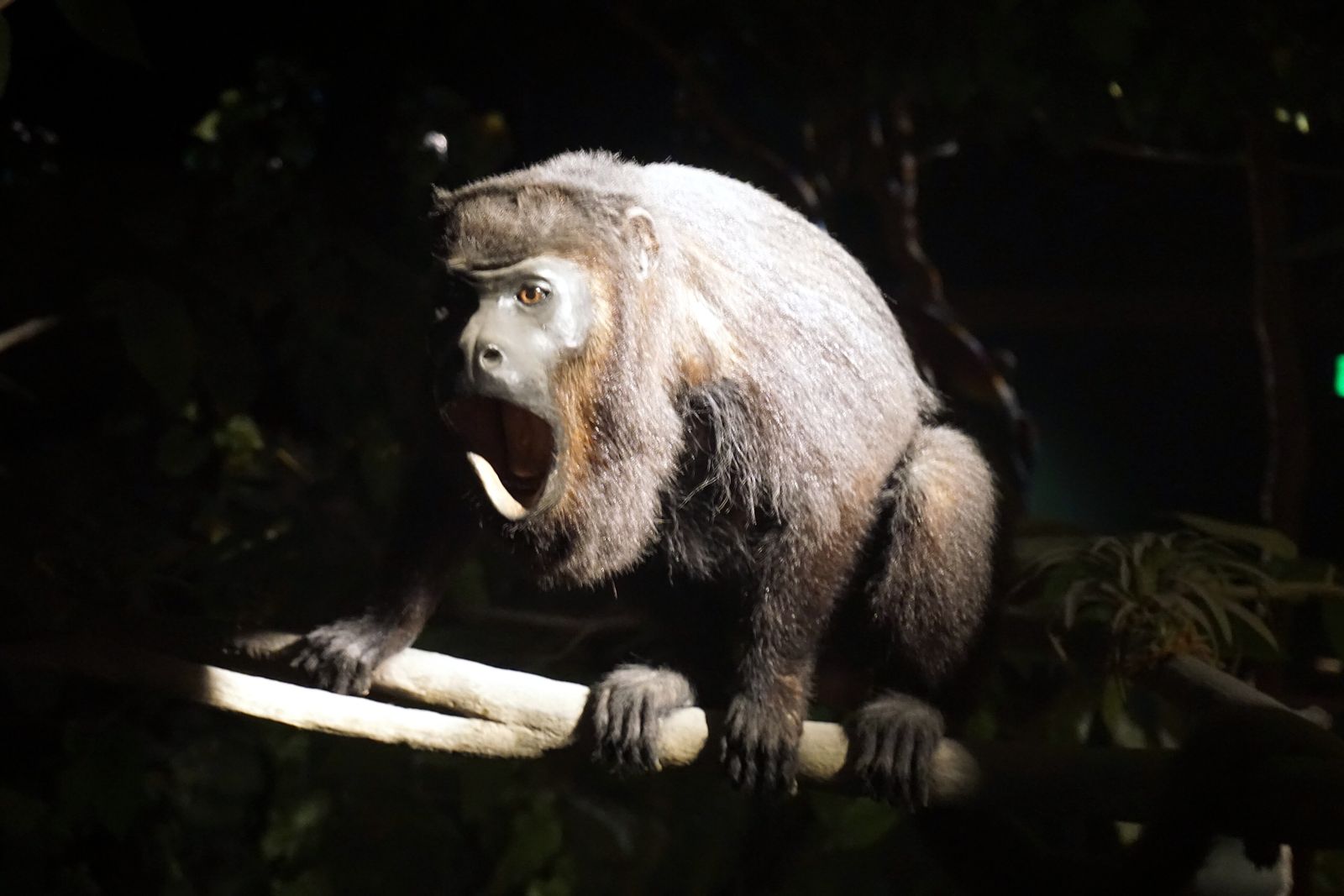
If you stay anywhere in the Neotropics — Costa Rica, the Yucatán jungle around Tulum, the Brazilian Amazon — a howler monkey will very likely be the first wild animal to make itself known to you, usually before you've had coffee. The roar is the reason: howlers are widely regarded as the loudest land animal on Earth, and their call can carry for several kilometers through dense forest. The mechanism is a genuinely strange piece of anatomy — an enlarged, hollow hyoid bone in the throat that acts as a resonating chamber, amplifying a bellow that starts as a deep, guttural rumble and builds into something closer to a roar. Troops call mainly at dawn and dusk, partly to declare territory to neighboring troops without the energy cost of an actual confrontation, which is a fairly elegant solution to a problem most animals solve by fighting.
Several howler species divide up the region. The mantled howler is the one most visitors to Costa Rica and Nicaragua will meet, moving in troops through the canopy at a slow, unhurried pace that makes them easier to actually watch once you've located one — unlike spider monkeys, howlers don't flee at speed, they mostly keep doing what they were doing. The black howler holds the Yucatán and much of Belize and Guatemala; a community-run reserve at Punta Laguna in the Yucatán, not far from Tulum and the Maya jungle, was built specifically around protecting its resident black howler and spider monkey populations and is one of the more straightforward places in the region to see both from the ground with a local guide. Red howlers take over through much of the Amazon basin in Peru and Brazil, with a coppery coat that's genuinely striking in good light.
The howler's roar isn't a warning that something is coming — it's the sound of a boundary being redrawn between two troops that have no intention of meeting.
Howlers are also, in a practical sense, the easiest jungle monkey to find without much effort, because they find you first. Learn the call before you go — it's distinct enough that once you've heard it, you'll never mistake it for anything else — and use it to walk toward the troop rather than waiting for the sound to come to you.
Capuchins — the camp raiders and tool users
Capuchins are the monkey most likely to actually interact with your stay, for better and for worse. White-faced capuchins, common through Costa Rica and Panama, are intelligent, curious, and have a well-earned reputation among lodge staff for working out how to open a zipper, a latched cooler, or an unattended backpack. They're also genuinely fun to watch precisely because of that intelligence — capuchins problem-solve visibly, testing an obstacle several ways before committing, which is rare to see in the wild at this close a range.
The species' cleverness goes well beyond raiding camps. In Brazil's Serra da Capivara National Park, researchers have documented wild bearded capuchins using stone tools — selecting rocks of a specific weight and shape to crack open palm nuts on a stone anvil, a behavior passed down through generations and one of the clearest examples of tool culture in a non-ape primate anywhere in the world. It's a reminder that "monkey" and "simple" are not the same word, and that some of the more remarkable animal behavior science has documented in the last two decades has come out of a capuchin troop with a rock and a nut, not a laboratory.
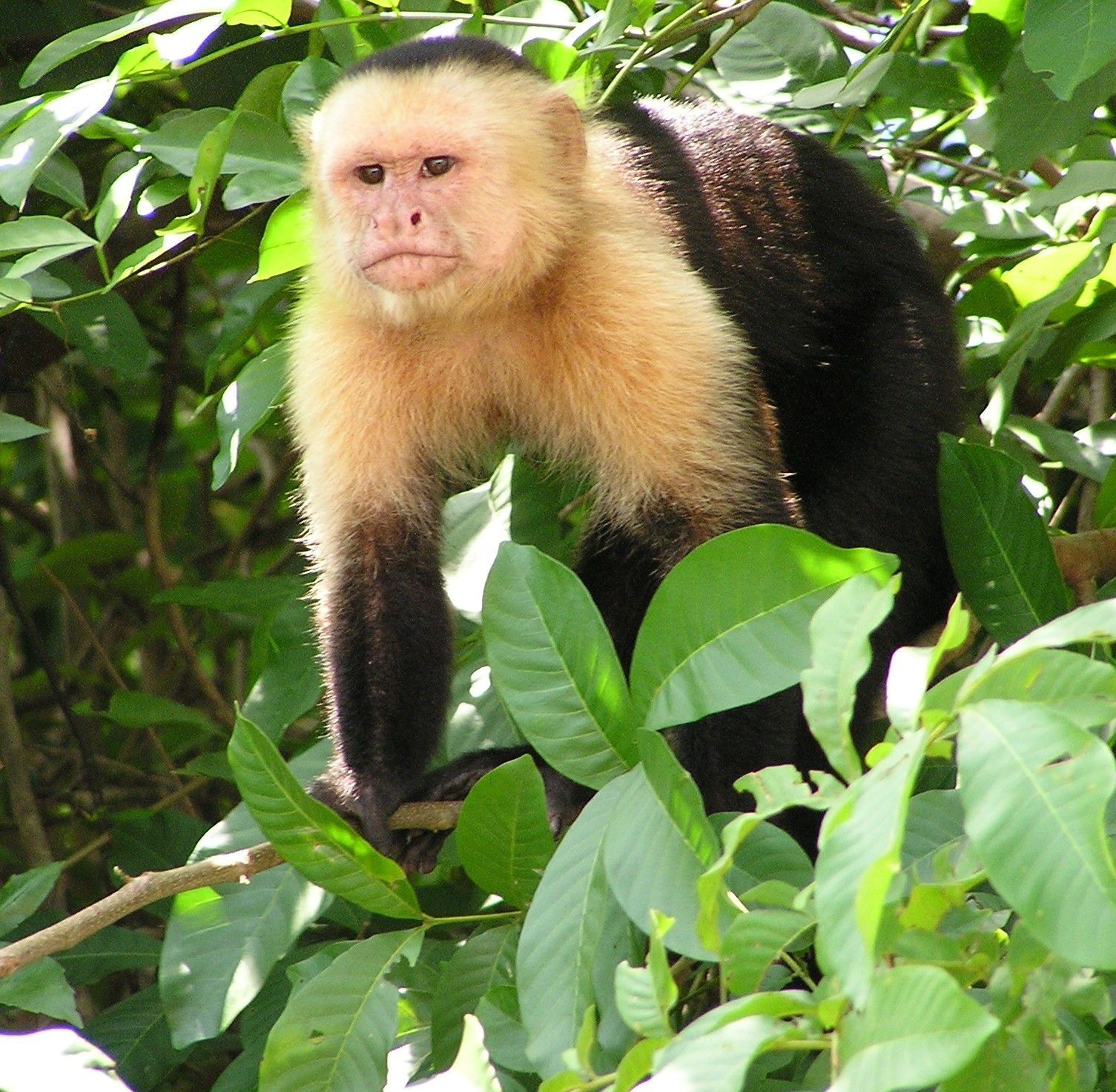
The trade-off for that intelligence is that capuchins habituate to humans faster and more thoroughly than almost any other jungle primate, and a habituated troop around a lodge is a genuine management problem, not a charming one — more on why that matters in the responsible-viewing section below. If you're staying somewhere with a resident capuchin troop, expect firm rules about closed windows, latched food storage and no exceptions, and treat those rules as being for the monkeys' benefit as much as yours.
Spider monkeys — the acrobats of the canopy
Spider monkeys are, by most measures, the most purely spectacular movers in the Neotropical canopy. Long-limbed and thumbless — an adaptation that trades a gripping thumb for a longer, hook-like hand better suited to swinging — they cover distance through the high canopy using a prehensile tail with a bare, friction-padded underside that functions almost like a fifth hand, capable of supporting the animal's full weight while both arms reach for the next branch. Watching a troop move through continuous canopy at speed, tail-first into a gap, is one of the more genuinely thrilling things a jungle stay delivers, and it happens fast enough that you'll want binoculars pre-focused rather than reaching for them mid-sighting.
Geoffroy's spider monkey ranges through Costa Rica and much of Central America, including the Yucatán populations protected around Calakmul and the Punta Laguna reserve near Tulum. Black spider monkeys take over through the western Amazon in Peru and Brazil, where reserves like Tambopata National Reserve and Manu National Park are considered some of the more reliable places in the entire basin to find them.
Good to know
Spider monkeys are unusually sensitive to hunting pressure and forest fragmentation — they need large, continuous tracts of mature canopy and a varied fruit supply, and they're typically among the first primates to disappear from a forest that's being logged or hunted before almost anything else visibly changes. Conservationists use them as an indicator species for exactly this reason: a healthy spider monkey population is a decent proxy for a healthy forest. The black spider monkey has been classified as endangered since 2014, driven mainly by habitat loss across its Amazon range in Peru, Brazil and Bolivia.
That sensitivity cuts both ways for travelers. Seeing spider monkeys at all is a reasonably good sign about the forest you're standing in — and a protected reserve with a resident troop is generally protecting a lot more than just the monkeys.
Squirrel monkeys — the smallest troop
Squirrel monkeys are the smallest monkeys most travelers will meet in the Americas, weighing in at around a kilogram, with a wiry frame, a black-and-white face mask, and a habit of moving through the forest in large, noisy, fast-moving troops that can number in the dozens. Where capuchins investigate deliberately and spider monkeys move with acrobatic purpose, squirrel monkeys move like a single restless organism — a troop arrives, strips a fruiting tree in a burst of activity, and is gone within minutes.
The Central American squirrel monkey is the rarer and more geographically pinned-down of the two you're likely to encounter. It survives only along a narrow strip of Costa Rica's southern Pacific coast and a small adjoining stretch of Panama, making it the most range-restricted monkey in Central America — its entire global population is concentrated around Manuel Antonio and Corcovado National Parks, which are also, not coincidentally, the only two easily accessible places on Earth where all four of Costa Rica's monkey species — howler, capuchin, spider and squirrel — can realistically be seen in the same stretch of forest. The species was rated endangered by the IUCN for decades before a 2008 reassessment moved it to vulnerable; current estimates put the total wild population at under five thousand individuals, threatened historically by habitat loss, roadside power lines and pesticide use around the plantations that once fragmented its range.
The common squirrel monkey, by contrast, is genuinely common — spread widely across the Amazon basin in Peru, Brazil and neighboring countries, and one of the more frequently encountered monkeys along Amazon river routes and reserve trails precisely because of how large and mobile its troops are.
Beyond the Americas: Bali, Sri Lanka and Thailand
Step outside the Neotropics and the whole primate cast changes — different family, different tail (or none), and, in the case of a few famous sites, a completely different relationship with people.
Bali's long-tailed macaques
The long-tailed macaque, also called the crab-eating macaque, is the monkey most visitors to Bali will actually meet, and the Ubud Monkey Forest — formally Mandala Suci Wenara Wana, in the village of Padangtegal — is the best-known place to do it. Roughly 1,260 macaques live across the reserve's twelve and a half hectares in seven distinct social groups, managed under a Hindu conservation philosophy called tri hita karana that frames the sanctuary as a shared space between people, nature and the sacred; the forest also holds three working temples. Macaques here are fed on a set schedule and are thoroughly habituated to visitors, which makes for close, easy viewing but also means bag-snatching and grabby hands are a real and constant risk — leave loose sunglasses, snacks and dangling jewelry at the hotel. For a quieter, less commercial version of the same experience, Sangeh Monkey Forest, about thirty minutes west of Ubud, holds a similarly wild but less crowded troop under a canopy of towering old nutmeg trees.
Sri Lanka's three primates
Sri Lanka punches well above its size on primates, with three species found nowhere else in quite the same combination: the toque macaque, a reddish-capped species endemic to the island and the subject of one of the longest-running primate behavior studies anywhere in the world at Polonnaruwa; the purple-faced langur, also endemic and now endangered as lowland forest around Colombo and the wet zone has shrunk; and the gray langur, a paler, long-limbed leaf-eater found across the island's drier zones. All three turn up with reasonable regularity in the national parks of the southern and central interior, including Sinharaja's rainforest and the drier woodland at Yala and Wilpattu.
Thailand's macaques, and an ethical footnote
Long-tailed and pig-tailed macaques are common through Thailand's forests, coasts and even temple grounds, and are usually an easy, low-effort sighting rather than something you need to plan a trip around. One footnote worth knowing before you shop: in parts of southern Thailand, pig-tailed macaques have historically been trained to harvest coconuts, a practice that's drawn sustained criticism from animal welfare organizations over how the animals are trained and kept, and that led a number of international retailers to drop "monkey-picked" coconut products from their shelves. It's a small thing, but it's the kind of detail that separates informed jungle travel from the postcard version — worth knowing even if it never comes up on the trail.
The rare ones: golden lion tamarins, muriquis and cotton-top tamarins
A handful of species are worth knowing about specifically because they are rare, and because seeing one at all is a genuinely different kind of encounter than the more common monkeys above.
Golden lion tamarin
Small, fox-faced and startlingly orange, the golden lion tamarin survives only in a shrinking pocket of Atlantic Forest in Brazil's Rio de Janeiro state, centered on the Poço das Antas Biological Reserve. Centuries of clearing wiped out roughly 98 percent of its original habitat, and the species dropped to a few hundred individuals in the wild before becoming the subject of one of the more genuinely successful primate conservation programs anywhere — a combined captive-breeding and reintroduction effort that had rebuilt the wild population to around 3,700 animals across some 41,400 hectares of protected and reconnected forest by 2014. It remains endangered, and a series of yellow fever outbreaks in the Atlantic Forest in the years since has been a serious setback, a reminder that recovery in conservation is rarely a straight line.
Muriqui
Sharing that same Atlantic Forest range is the muriqui, or woolly spider monkey — the largest primate in the Americas, and one most travelers outside Brazil have never heard of, largely because it survives in so few places. The northern muriqui is critically endangered, and the same yellow fever outbreaks that hit the golden lion tamarin caused what researchers have described as catastrophic declines in some muriqui populations through the middle of the last decade. Seeing one, in a handful of protected forest fragments in southeastern Brazil, is a genuinely rare wildlife encounter by any global standard.
Cotton-top tamarin
Smaller still, and just as restricted, the cotton-top tamarin is instantly recognizable for the sweep of white hair that runs back from its forehead like a static-charged crest. It's found nowhere on Earth except a small area of tropical dry and moist forest in northern Colombia, around the country's Caribbean lowlands, and it's classified as critically endangered — a genuine Colombian endemic, and one of the rarer primates most travelers will ever have a realistic chance of seeing in the wild.
The oddities: Puerto Rico's Monkey Island and Florida's wild macaques
Two of the stranger monkey stories in this guide have nothing to do with a native rainforest at all, and both are honest enough to be worth including precisely because they complicate the tidy picture above.
Off the coast of Humacao in Puerto Rico sits Cayo Santiago, a small island better known by its nickname: Monkey Island. In 1938, a colony of rhesus macaques was introduced there for primate behavior research, and their descendants — several hundred animals, organized into distinct, closely studied social groups — have lived on the island ever since under the management of the Caribbean Primate Research Center. The island is closed to the public; there's no dock, no visitor program, and no legal way to set foot on it. The most you'll get, from a licensed boat tour working the coastline near Punta Santiago, is a distant look at monkeys moving along the shore — genuinely wild-behaving animals on an island most travelers to Puerto Rico never even hear about.
Florida's story is stranger still. A population of rhesus macaques has lived wild along the Silver River near Ocala for decades, descended — as the enduring local story goes — from a small group released onto an island in the river in the 1930s by a boat-tour operator staging a "jungle cruise" attraction, on the assumption that monkeys couldn't swim. They could, they left the island, and the population spread and established itself permanently along the river inside what's now Silver Springs State Park. It's the only wild-breeding population of monkeys in the continental United States, and it's a genuinely odd thing to encounter on a Florida paddle — but state wildlife officials have also flagged the population for the same reasons any feral wildlife raises concern, including that some individuals have tested positive for herpes B virus, and visitors are asked not to approach or feed them.
Neither story belongs in a "best places to see monkeys" ranking. Both belong in an honest one — they're real, they're verifiable, and they say something true about how far monkeys travel, by accident or design, once people get involved.
Seeing monkeys responsibly
Monkeys are, unfortunately, one of the easiest jungle animals to see irresponsibly, precisely because they're often curious enough to approach you rather than the other way around. A few rules hold across every region in this guide.
- Never feed a wild monkey. It's the single most damaging thing a well-meaning traveler can do. Habituated troops lose their natural wariness of people, become more aggressive toward the next visitor who doesn't have food, and are far more likely to raid villages and lodges, which usually ends badly for the monkeys, not the people.
- Keep real distance, even from habituated troops. Rhesus macaques and other Old World species can carry herpes B virus, transmissible through bites and scratches and dangerous to humans; the risk runs the other way too, since several primate species are susceptible to human respiratory illnesses. A bite or scratch from any wild monkey should be treated as a medical issue, not a story.
- Be skeptical of any facility offering guaranteed selfies with a monkey on your shoulder. Legitimate sanctuaries manage habituated wild populations at a distance; places that hand you a restrained or drugged animal for a photo are a different, and worth avoiding, business entirely.
- Support reserves and community-run sanctuaries over roadside attractions. Places like Punta Laguna in the Yucatán or the community-managed sections of many Costa Rican and Peruvian reserves put entry fees directly into the forest and the people protecting it.
- Secure your own space. Closed windows, latched bags, no food left visible — the rules lodges set around capuchins and macaques exist because a habituated troop that learns to open a cooler once will keep trying, and every successful raid makes the problem worse for the next guest and for the monkeys themselves.
Field tips: how to actually spot them
Most of what separates a good monkey sighting from a frustrating morning of craned necks and rustling leaves comes down to a handful of habits any guide will tell you, if you ask.
Go out at dawn and dusk
Nearly every jungle primate is most active in the first hour or two after sunrise and the last one or two before dark, both because it's cooler and because that's when fruiting trees and insects are most active. Howler troops in particular call heaviest at first light — use it to navigate toward them rather than waiting passively.
Listen before you look
A troop moving through the canopy is rarely silent. Falling fruit husks, cracking twigs, and the specific rustle of branches bending under weight (as opposed to wind, which moves a whole canopy layer at once rather than one branch) are all giveaways experienced guides read constantly. Learn to distinguish a monkey-caused sound from a bird or a falling leaf and you'll start finding troops well before you can see them.
Watch the birds
Mixed flocks of insect-eating birds sometimes follow monkey troops through the canopy, picking off insects the monkeys flush out as they move and feed. A sudden burst of bird activity in one spot is often worth a look upward.
Hire a local guide
This is the single biggest lever on your odds, full stop. Guides working a reserve daily know which troops range through which section of trail on a given week, track fruiting cycles that pull monkeys to specific trees, and can spot movement in the canopy that untrained eyes miss entirely. On a guided walk in Costa Rica or Peru, it's common to see three or four species in a single morning; on a solo walk with no local knowledge, it's common to see none.
Bring binoculars you've actually practiced with
Spider monkeys in particular move fast, and fumbling with unfamiliar binoculars is how sightings get missed. Pre-focus at a middle distance before you set out, and practice the motion of raising them to your eyes without looking away from the animal first.
Common questions
What's the difference between a monkey and an ape?
Apes — gorillas, chimpanzees, orangutans and gibbons — are a separate branch of the primate family, generally tailless and larger-brained than monkeys. Everything covered in this guide, from howlers to macaques, is a true monkey; orangutans in Borneo or Sumatra are a different trip entirely.
Is it safe to be near wild monkeys?
Generally yes if you keep distance and don't feed them, but bites and scratches are a real risk with any habituated troop, particularly Old World macaques that can carry herpes B virus. Treat any bite or scratch as a medical issue and seek care promptly.
What's the best time of year to see monkeys in the jungle?
It varies by region, but dry seasons generally mean thinner understory foliage and better sightlines, while fruiting seasons — which don't always line up with the dry months — concentrate monkeys around specific trees. A local guide will know the current fruiting calendar far better than any general rule.
Which jungle destination has the best odds of seeing multiple monkey species?
Costa Rica's Manuel Antonio and Corcovado National Parks are the standout answer — they're the only easily accessible places where all four of the country's monkey species, including the range-restricted Central American squirrel monkey, can realistically be seen in one trip.
Can I feed or touch monkeys at a sanctuary like Ubud's Monkey Forest?
Feeding is generally managed by staff on a set schedule at reputable sanctuaries, and visitors should follow posted rules rather than feeding or touching the animals themselves. Bag-snatching is common in habituated troops, so secure loose items before you go in.
Are all monkeys endangered?
No — long-tailed macaques, common squirrel monkeys and mantled howlers are all classified as species of least concern or otherwise stable across much of their range. But several of the monkeys in this guide, including the golden lion tamarin, the muriqui, the cotton-top tamarin and the Central American squirrel monkey, are genuinely endangered or vulnerable, and worth treating with proportionate care.
Monkeys are, in the end, the jungle's best introduction to itself — active by day, vocal enough to find, varied enough that a single trip can turn up four or five genuinely different species without much luck involved. If this guide has you planning around them specifically, the destinations above are the ones to build a trip on: Costa Rica for the fullest reliable lineup in one park, Peru and Brazil for Amazon and Atlantic Forest specialists, Bali and Sri Lanka for Old World primates and temple-forest sanctuaries. For the rest of what shares that canopy with them, our guides to where to see sloths in the wild and toucans and the tropical birds you'll see cover the jungle's other daytime regulars, and night walks in the rainforest picks up where the monkeys leave off once the troops settle down for the night. Or browse the full JungleBnB directory and let the wildlife you want to see decide where you stay next.
- List of Costa Rican monkey species — Wikipedia — the four native species and their general ranges.
- Costa Rica Monkeys: Expert Guide to All 4 Species — Private Costa Rica — Manuel Antonio and Corcovado as the only parks where all four species overlap, and Central American squirrel monkey conservation status.
- Ubud Monkey Forest — Wikipedia — population, social groups, temples and the tri hita karana conservation framework.
- Ubud Sacred Monkey Forest Sanctuary — Bali Macaque Project — background on the long-tailed macaque troops and sanctuary management.
- Peruvian spider monkeys: an endangered species that has found refuge in Tambopata — Tambopata Lodge — spider monkey status and range in Peru's Amazon reserves.
- Golden Lion Tamarin — New England Primate Conservancy — Atlantic Forest range, population recovery and ongoing threats.
- The next great threat to Brazil's golden lion tamarin: Yellow fever — Mongabay — yellow fever's impact on golden lion tamarin and muriqui populations in the Atlantic Forest.
- New monkey species from Brazilian Amazon's "arc of deforestation" — Re:wild — context on Amazon primate conservation status and endangered listings.
More from the Journal.
 Photo: shankar s. from Dubai, united arab emirates, CC BY 2.0
Where to See Sloths in the Wild
The internet's favourite animal is real, wild and findable — where to reliably see sloths, how to spot them, and the stays that put you closest.
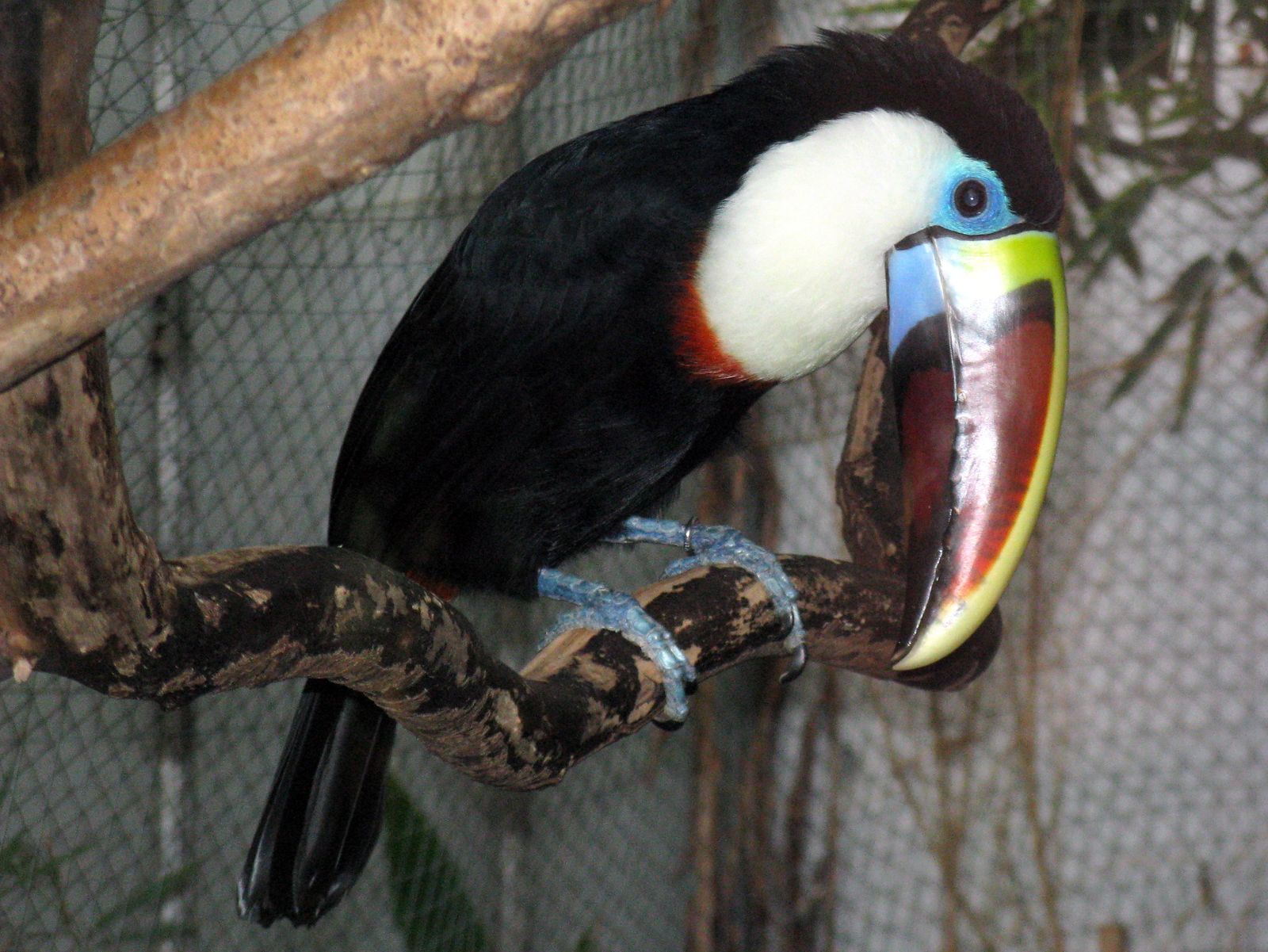 Photo: Charles Miller from Basingstoke, United Kingdom, CC BY 2.0
Toucans & the Tropical Birds You'll See
The rainforest is the richest bird habitat on earth. Toucans, macaws, quetzals and hummingbirds — what to look for, and the best places to look.
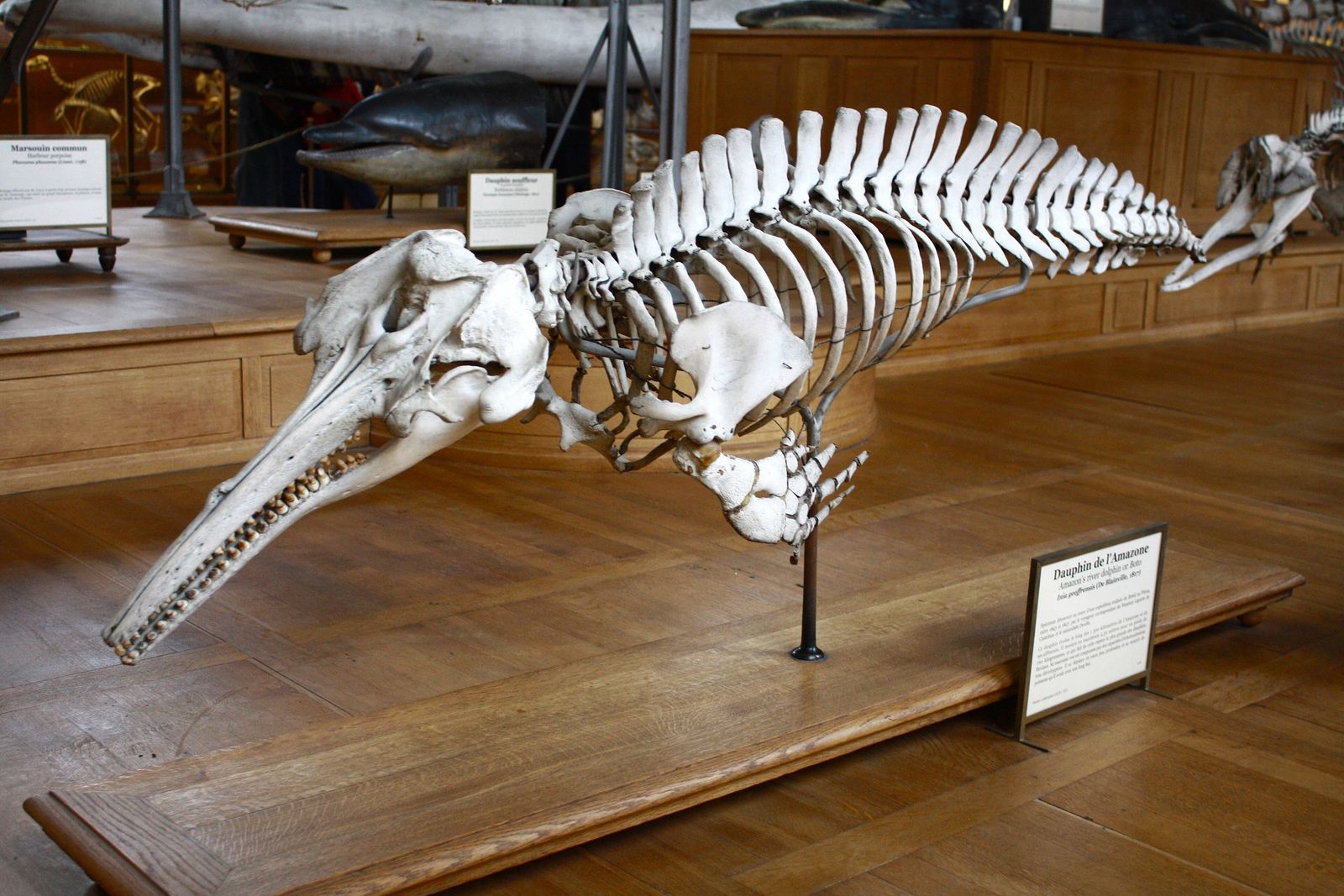 Photo: Titlutin, CC BY-SA 4.0
Pink River Dolphins of the Amazon
One of the strangest animals in the rainforest — the pink dolphin of the Amazon. Where to see them, the folklore around them, and how to do it ethically.
 Photo: Derek Ramsey (Ram-Man), CC BY-SA 4.0
Find your own piece of the canopy.
Treehouses, bamboo houses and rainforest villas across 17 destinations — found, vetted and written up honestly.
Browse all destinations