
Where to See Sloths in the Wild
Sloths have become such a fixture of internet culture — the slow-motion memes, the permanent half-smile, the "just a lil guy" energy — that it's easy to forget they're a real, wild animal living in real forests, doing a real job in that ecosystem, and genuinely tricky to find if you don't know where to look. This is a practical guide to where sloths actually live, which countries and parks give you a realistic shot at seeing one on your own terms, how to spot one once you're standing under the right tree, and how to do it without stressing out an animal that has spent millions of years evolving to be left alone.
What a sloth actually is
"Sloth" isn't one animal — it's a name for two separate families that arrived at the same slow-motion lifestyle by entirely different evolutionary paths, which is why the two groups look and behave more differently than most first-time visitors expect. The three-toed sloths (family Bradypodidae, genus Bradypus) include the brown-throated sloth, the pale-throated sloth, the maned sloth of Brazil, and the pygmy sloth of Panama's Escudo de Veraguas island. The two-toed sloths (family Megalonychidae, genus Choloepus) are represented by Hoffmann's two-toed sloth and Linnaeus's two-toed sloth. Six species in total, spread from southern Honduras and Nicaragua down through Central America and across most of tropical South America as far as northern Argentina.
The two families split apart on diet as much as anything. Three-toed sloths are close to strict folivores — leaves, and not much else, which is a genuinely poor energy source, low in calories and hard to break down. Two-toed sloths eat a broader menu that can stretch to fruit, flowers, and occasionally insects, small reptiles or bird eggs, which is part of why they tend to be a little faster, a little bulkier, and a little more willing to move around at night than their three-toed cousins. Both families solve the low-calorie-diet problem the same way: an extremely slow metabolism, a body temperature that drifts up and down with the surrounding air rather than staying fixed the way most mammals' does, and a level of stillness that would be fatal for almost any other animal that size, but that keeps a sloth's daily energy needs remarkably low.
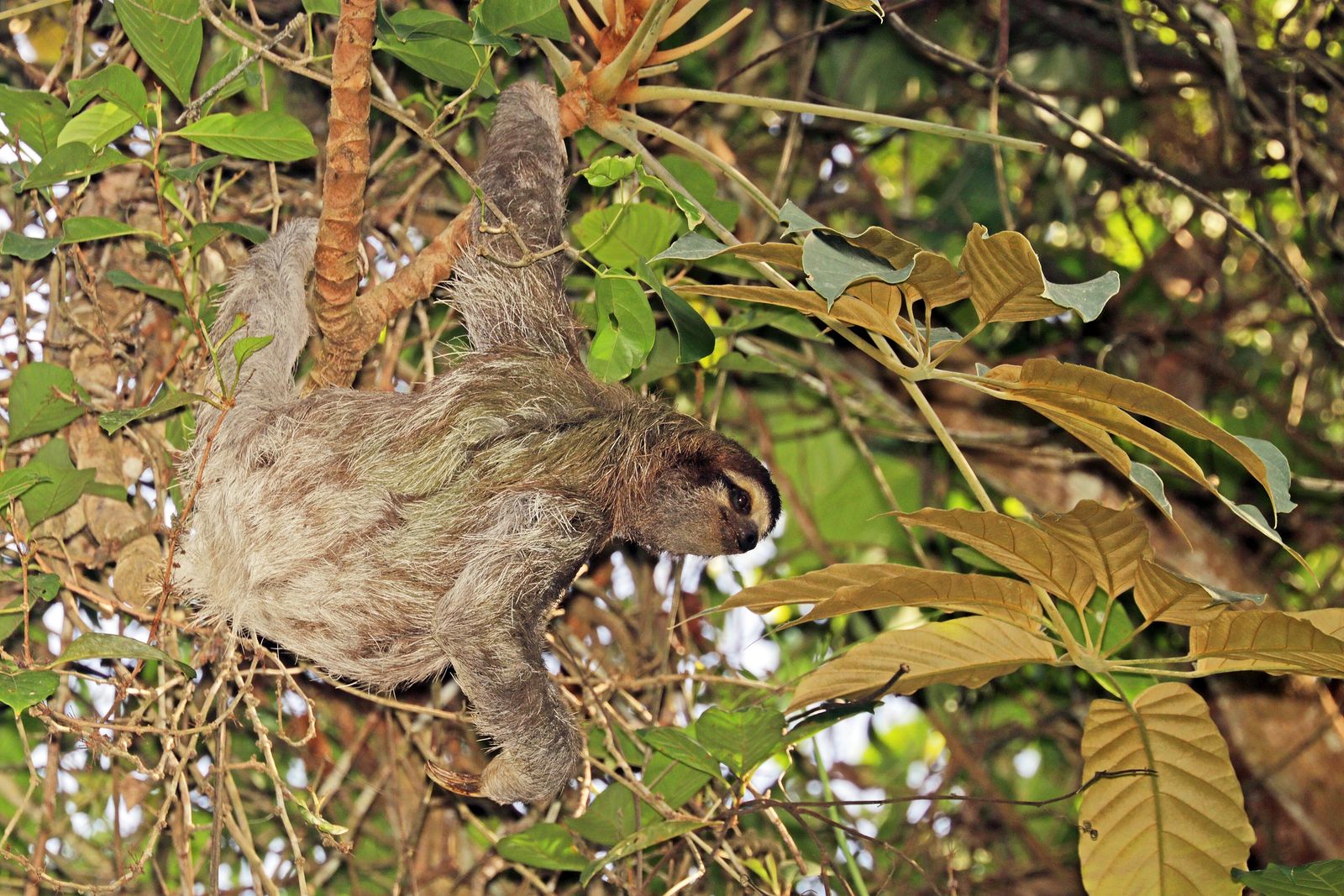
That stillness has consequences most visitors don't expect. A sloth's grip is largely passive — long, curved claws that hook over a branch and hold there with almost no muscular effort, which is why a sloth can hang motionless for hours without tiring and why dead sloths have occasionally been found still hanging in a tree. Three-toed sloths carry an unusual number of neck vertebrae for a mammal, up to nine in some individuals against the seven that almost every other mammal has, including giraffes, and it lets them rotate their heads through close to 270 degrees without moving their body at all — useful when turning your head is far cheaper, energy-wise, than turning your whole self.
The fur itself is close to its own ecosystem. Grooves running along each hair shaft trap moisture and give algae somewhere to grow, which is why sloths — three-toed sloths especially — often carry a faint greenish tint, particularly in the wet season. That algae isn't just along for the ride: research has found it may supplement a sloth's diet in small amounts, and it almost certainly helps with camouflage against the mottled green of a rainforest canopy. Moths live in that fur too, entire species that complete their whole life cycle nowhere else, and a widely cited piece of research on the relationship — covered by the Royal Society — found that sloths carrying more moths in their coats also carried more nitrogen-fixing algae, a genuine mutualism rather than a coincidence.
Sloths are also, famously, ground-shy. The traditional account, repeated in most sloth writing, is that they climb down to the forest floor only about once a week, to defecate at the base of a tree rather than doing it from the canopy — a habit biologists still don't fully agree on the reason for, though theories range from fertilizing a favored tree to signaling territory to feeding the moths that lay eggs in the dung. What's not in dispute is that the ground is the most dangerous place a sloth goes. Their claws and metabolism are built for hanging, not walking, and on the forest floor a sloth is slow, exposed, and an easy target for a jaguar, ocelot, or — from above — a harpy eagle, one of the few predators capable of lifting a sloth straight out of the canopy.
Good to know
Sloths are strong swimmers, better in water than on land — their slow metabolism lets them hold their breath for long stretches, and a paddling sloth can move faster across a river than it ever will across open ground. If you're on a jungle river tour anywhere in their range, a sloth crossing open water is a genuine, if rare, sighting worth watching for.
Costa Rica: the reliable country
If there's one country where "go see a sloth" is a realistic day-trip goal rather than a hopeful long shot, it's Costa Rica. Both families are present — Hoffmann's two-toed sloth and the brown-throated three-toed sloth — and the country's mix of protected lowland rainforest, well-maintained trail networks and a tourism industry built around wildlife guiding means your odds here are better than almost anywhere else in their range.
Manuel Antonio National Park
Manuel Antonio, on the central Pacific coast, is routinely cited as the single best bet for a reliable sloth sighting in the country. The park is small, its trails are accessible, and sloth density here is high enough that local guides report success rates in the 80 to 95 percent range on a guided walk — go early, before the midday crowds and heat, and let a guide who works the same trails daily do the spotting.
Corcovado National Park
On the remote Osa Peninsula, Corcovado is widely considered the most biodiverse single stretch of protected forest in the country, and both sloth species turn up here regularly. It's a bigger commitment than Manuel Antonio — a day hike at minimum, more often a guided multi-day trek with a naturalist — but the payoff is a wilder, less-visited forest where a sloth sighting sits alongside a real chance at tapir, scarlet macaw, or one of the country's resident cats.
Cahuita National Park and the Caribbean coast
On the Caribbean side, Cahuita National Park runs an easy coastal trail that parallels the beach for most of its length, shaded and flat enough to walk in a couple of hours, with a reasonable chance of sloths in the trees overhead. Further south, the Gandoca-Manzanillo wildlife refuge protects the last unbroken stretch of Caribbean coastline before the Panama border, and a local guide on its trails turns a "maybe" sighting into a near-certain one.
La Fortuna and the sloth trails of Arenal
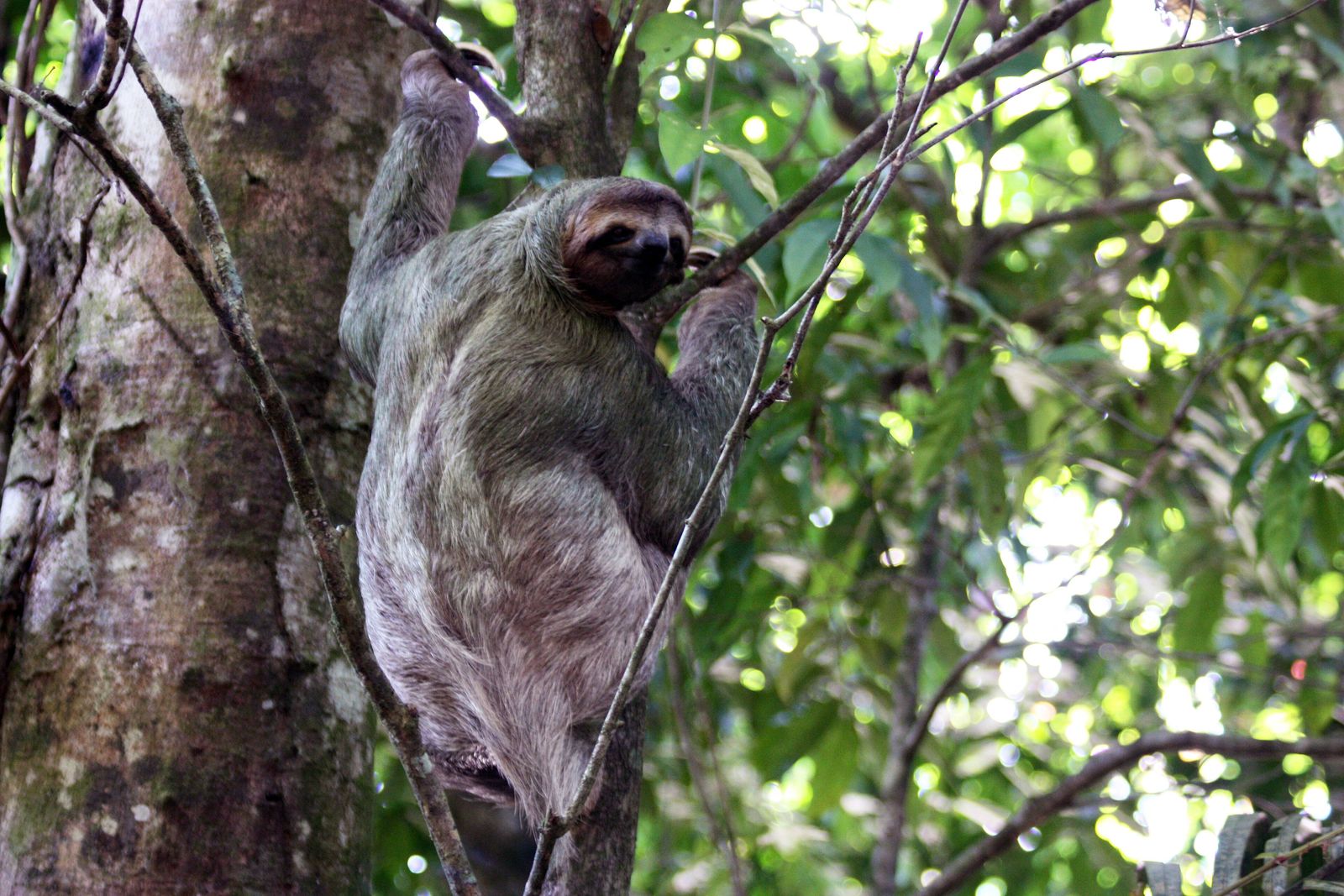
Near the town of La Fortuna, in the shadow of Arenal Volcano, a handful of privately run reserves have built dedicated "sloth trails" through forest known to hold resident, trackable individuals — a more curated experience than a national park hike, but one that delivers close to guaranteed sightings for visitors on a tight schedule.
Sanctuaries and rescue centers
Costa Rica is also home to the country's best-known sloth rehabilitation work, on the Caribbean coast near Cahuita, where an organization has been rescuing, treating and — where possible — releasing injured and orphaned sloths since the early 1990s, and became internationally known partly through television coverage of its work. Further inland, Proyecto Asís near La Fortuna runs its own rescue and rehabilitation program open to visitors, and Selvatura Park, in the Monteverde highlands, keeps a walk-through sloth habitat with around twenty resident two-toed and three-toed sloths. These are worth telling apart from roadside "hold a sloth" photo-op operations, which are a different thing entirely — more on that distinction below.
Panama: sloths in the city, and the pygmy sloth story
Panama doesn't market itself around sloths the way Costa Rica does, which makes it a pleasant surprise for anyone who assumes you need a remote jungle lodge to see one. Both Hoffmann's two-toed sloth and the brown-throated three-toed sloth are common enough here that they turn up in ordinary city trees.
Ancon Hill, Panama City
Ancon Hill, a forested rise inside Panama City itself, is regularly named one of the best places in the country to see a wild sloth without leaving the capital — a short, accessible trail through remnant forest where both species are sighted with some regularity, alongside toucans, sloths' more vocal canopy neighbors.
Gatun Lake and the canal-side forest
Boat tours out of Gatun Lake, often combined with a stop at the aptly named Monkey Island, run through flooded forest edges where sloths and several monkey species are visible from the water — an easy, low-effort way to add a wildlife morning onto a trip built mostly around the Panama Canal.
Bocas del Toro
The Bocas del Toro archipelago, on Panama's Caribbean side, sits inside the sloths' broader range too, its mangroves and lowland forest holding both species across the main islands.
The pygmy sloth, and why it isn't a tourist stop
One island in the Bocas del Toro region deserves a separate mention, and a separate warning. Isla Escudo de Veraguas, a small offshore island, is the only place on Earth the pygmy three-toed sloth exists — a species distinct from, and smaller than, the mainland three-toed sloths, confined entirely to the island's fringing red mangroves. It's been listed as Critically Endangered since 2006, and a 2017 field study counted only 48 individuals left in the wild. Conservation teams visit the island periodically to survey the population, but this is not a destination to add to a jungle itinerary — it has no tourism infrastructure, the population is dangerously small and inbred, and any uncontrolled visitor traffic works directly against the research and protection efforts trying to keep the species alive. If you want to help, that support goes to the conservation organizations working the island, not a boat charter.
The pygmy sloth is a reminder of how narrow a margin some of these animals live on — an entire species reduced to a few dozen individuals on one small island, while its mainland cousins hang, unbothered, in trees a few hundred kilometers away.
Brazil: the maned sloth of the Atlantic Forest, and the Amazon
Brazil holds two very different sloth stories, and it's worth keeping them separate. The first is the maned sloth, Bradypus torquatus, found nowhere else on Earth and instantly recognizable by the ring of long, dark hair around its neck and shoulders that gives it its name. It's a species of the Mata Atlântica, Brazil's Atlantic Forest — one of the most reduced tropical forest systems in the world, with only a small fraction of its original extent still standing, most of it in fragmented reserves along the coast of Bahia and Espírito Santo. The maned sloth's entire existence is tied to what's left of that forest, and it's considered a species of real conservation concern precisely because its habitat is so fragmented and so small to begin with. Seeing one isn't a casual day-trip activity the way a Manuel Antonio sloth sighting is — it means visiting the specific reserves protecting that remnant forest, with a guide who knows the terrain, and treating a sighting as the genuinely uncommon event it is.
The second story is the Amazon itself. Both Linnaeus's two-toed sloth and the pale-throated three-toed sloth range across Brazil's Amazon lowlands, part of the same population that stretches into the Amazon basins of Peru, Colombia and beyond. But lowland Amazon rainforest is a taller, denser, more continuous canopy than Costa Rica's patchwork of parks and reserve trails, and that works against visibility — there's more forest for a sloth to disappear into, and fewer trail networks built specifically around close-range wildlife viewing. Amazon lodges with canopy towers or platforms improve your odds by putting you at the right height rather than looking straight up from the forest floor, and river cruises give a similar advantage by opening a wider, better-lit sightline into the trees along the bank. It's a real possibility on any proper Amazon trip through Brazil, just a less concentrated one than Central America's smaller, more trail-dense parks.
Colombia, Peru and the wider range
Sloths occur across most of tropical South America, and Colombia and Peru are both squarely inside that range without either country marketing itself as a sloth destination the way Costa Rica does. In Colombia, both Hoffmann's two-toed sloth and the brown-throated three-toed sloth turn up across the country's Caribbean lowlands and into the Amazon basin in the south — and Colombian sloths have their own minor fame, with local news stories of individuals found crossing roads or wandering into towns turning up regularly enough that they've become something of a national in-joke. That says more about how fragmented some lowland forest has become, forcing sloths onto the ground and into contact with people more than any local population boom, but it does mean sloths are a real, if unpredictable, part of a Colombia jungle trip rather than a rumor.
Peru's Amazon region — the lodges and reserves around the country's rainforest lowlands — carries the same two-toed and three-toed sloths found across the wider Amazon basin, under the same conditions as Brazil's stretch of the same forest: tall, continuous canopy that rewards a canopy tower, a good pair of binoculars and a guide who already knows where the resident animals tend to sit, over a flat trail walk. A Peru Amazon trip built around a lodge with elevated viewing platforms is a genuinely reasonable way to add sloths to a longer wildlife list that's more likely to be led by monkeys, macaws and — if you're very lucky — a jaguar print in the mud.
The honest summary across this wider range: sloths are present almost everywhere their habitat is intact, but presence and visibility are two different things, and nothing outside Central America's trail-dense parks comes close to matching Costa Rica or Panama for a reliable, planned sighting.
Best time and conditions
Sloths aren't migratory and don't have a breeding season that concentrates sightings the way, say, a quetzal's does — they're present in the same patch of forest more or less year-round, which takes some of the calendar pressure off a sloth-focused trip. What actually changes with the season is access and visibility, not the animals themselves.
Across most of Central America's Pacific and Caribbean sloth country, the dry season — roughly December through April on the Pacific side, with the Caribbean coast running on its own, wetter, less predictable pattern — brings firmer trails, less rain to plan around, and in some forests a thinner leaf canopy that makes it marginally easier to pick a sloth-shaped silhouette out of the branches. The wet season, by contrast, means a lusher, greener forest and fewer other visitors on the trail, but muddier ground and a denser leaf cover working against you.
Time of day matters more than time of year. Three-toed sloths are cathemeral, meaning they're active in short bursts across both day and night rather than sticking to one, while two-toed sloths lean more nocturnal and are more likely to be curled up motionless during a midday walk. Early morning and late afternoon are the practical sweet spots for both — cooler temperatures, more movement, and guides who know a park's trails tend to schedule their best wildlife walks around exactly those windows rather than the midday heat that sends most animals, sloths included, into stillness.
Good to know
Because sloths barely move, "when" matters less than "who's looking." A guide who walks the same stretch of forest daily and knows which fork in which tree a particular sloth has been favoring for the past week will outperform a lucky first-timer nine times out of ten — this is one of the rare wildlife sightings where local knowledge beats good timing.
How to actually spot one
Sloths are, by design, hard to see. They move so little that your eye — built to catch motion — has almost nothing to latch onto, and their fur is built to blend into exactly the mottled green-brown of a rainforest canopy. A few habits make a real difference.
Look for shape, not motion
Scan the forks where branches meet the trunk, at mid-canopy height rather than high in the crown. A resting sloth reads as a rounded, slightly asymmetric lump that can look a lot like a termite nest, a clump of dead epiphytes, or a knot of vines — the giveaway is usually a slightly too-regular curve, or a limb hanging at an angle no branch would naturally take.
Watch for the wrong kind of stillness
A sloth in motion is almost comically slow, but it is moving, and on a windless day a single branch swaying when nothing else around it is moving is one of the most reliable tells in the forest. So is the faint sound of leaves or small debris falling — a feeding sloth working through a branch will drop bits of leaf and twig well before you can see the animal itself.
Read the fur color
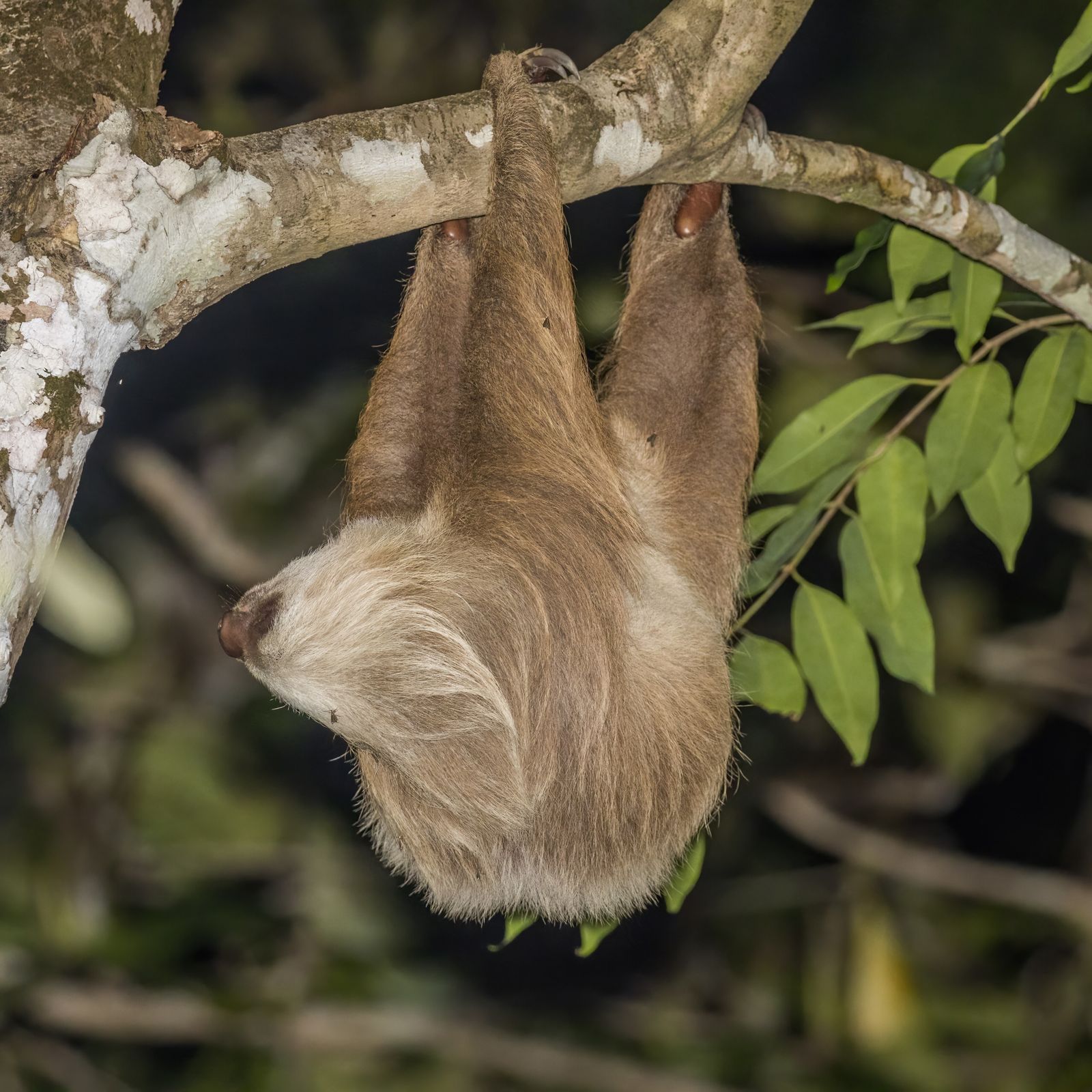
Three-toed sloths often carry a greenish cast from the algae living in their fur, especially in the wet season, which can make them blend almost perfectly into damp foliage — but that same tint is sometimes the very thing that catches your eye against a drier brown branch. Two-toed sloths tend to run a paler, more uniform brown or tan, without the algae tint, and are more often found curled into a tighter ball than stretched along a limb.
Bring binoculars and trust your guide
A decent pair of binoculars turns "there's something up there" into an actual identification, and it's worth having your own pair rather than relying entirely on a shared scope. But the single biggest factor in whether you see a sloth on any given walk is whether you're with someone who does this daily. Local guides in sloth country develop a genuine specialty for it, tracking known individuals' territories the way a birder tracks a resident owl, and a good one will spot in seconds what an untrained eye could walk past for an hour.
The rare ground sighting
Because sloths descend to the forest floor only occasionally — commonly said to be around once a week, to defecate at the base of a tree — a ground-level sighting is both rarer and more dramatic than a canopy one. If you're fortunate enough to see it, keep your distance and stay quiet; this is the single most vulnerable moment in a sloth's life, and it's not an invitation to approach.
Seeing sloths responsibly
The single most important thing to know before you go looking for a sloth is what not to do once you find one: don't touch it, don't hold it, and be wary of anywhere that offers to let you. In Costa Rica, handling wild animals — sloths included — is against the law, and legitimate rescue centers and sanctuaries operate on a strict no-touch policy specifically because handling causes real, measurable stress to an animal that has no way to signal distress the way a barking dog or a hissing cat can. A sloth that looks calm while being passed around for photos may simply be too slow, and too used to captivity, to show you it's struggling.
That makes it worth learning the difference between a genuine sanctuary and a roadside photo-op operation. Accredited rescue and rehabilitation centers exist to treat injured or orphaned animals and release them back into the wild wherever possible; the ones worth supporting are transparent about their release rates, don't charge for physical contact with the animals, and will tell you plainly that a healthy wild sloth should be left alone. Operations built around guaranteed selfies with a sloth draped over a visitor's shoulders are a different business entirely, and supporting them — even unknowingly — keeps that market alive.
In the wild, the responsible version of a sloth sighting is a quiet one: keep your distance, skip the flash photography, don't shake branches or make noise to provoke movement for a better photo, and don't play recorded calls to try to draw an animal out. None of this is likely to make the sloth do anything dramatic anyway — that's rather the point of the animal — but it matters for the same reason it matters with any wild species: the goal is to observe a life that was already happening before you arrived, not to interrupt it for a better shot.
The bigger threat to sloths, across their whole range, isn't tourism — it's habitat fragmentation. Roads, power lines and cleared land force sloths to travel on the ground or across live wires far more often than they would in unbroken forest, and ground crossings and electrocutions are a leading cause of injury and death in populated sloth country. Conservation groups working in Costa Rica's Caribbean lowlands run programs to insulate power lines and build canopy bridges across roads specifically to cut down on this, and it's a more concrete way to support sloth conservation than any single sighting ever will be.
Which jungle stays put you closest
None of this requires an expedition-grade trip. The parks and reserves with the best sloth odds — Manuel Antonio, Cahuita, the forests around La Fortuna and Corcovado's edge in Costa Rica, or Ancon Hill and the Gatun Lake shoreline in Panama — sit close enough to real towns and real jungle stays that a sloth walk is a morning activity, not a full detour. Basing yourself inside or right at the edge of the forest, rather than commuting in from a beach resort further down the coast, makes an early guided walk far easier to actually pull off, and it's the difference between one rushed attempt and two or three unhurried mornings to improve your odds.
If sloths are just one stop on a longer wildlife-focused trip, they pair naturally with a few other guides in this Journal — our guide to the monkeys of the rainforest covers the noisier canopy neighbors you'll hear before you see, toucans and the tropical birds you'll see rounds out the daytime canopy list, and night walks in the rainforest is worth doing on the same trip if you want a shot at a more nocturnal two-toed sloth once the day-trip crowds have gone home. For the wider forest context behind all of it, our explainer on cloud forests is useful background if your trip is stacking a highland stop onto a lowland sloth search.
For picking an actual stay, browse vetted jungle properties by country on our full destinations directory, or jump straight to the pages for Costa Rica, Brazil or Colombia if one of those is already the country you're building a trip around. JungleBnB doesn't hold inventory or take payment for placement, so what you'll find there is the same shortlist we'd hand a friend — not a sponsored list.
Common questions
What's the difference between a two-toed and three-toed sloth?
They're not closely related despite the shared name — two families that evolved a similar slow lifestyle independently. Three-toed sloths (genus Bradypus) are near-total leaf eaters, have that extra neck flexibility, and are active across both day and night. Two-toed sloths (genus Choloepus) eat a broader diet that can include fruit and occasional small animals, tend to be a bit larger and faster, and lean more nocturnal.
How fast can a sloth actually move?
Painfully slow by any normal standard — a sloth can cover as little as a few dozen meters in an entire day of activity on the ground. In water, though, they're surprisingly capable swimmers, and can move faster paddling across a river than they ever will crossing open land.
Can you hold or pet a wild sloth?
No, and you shouldn't want to. Handling wild sloths is illegal in Costa Rica and discouraged everywhere else in their range, and it causes real stress to an animal with almost no way to visibly protest. Treat any operation offering guaranteed sloth selfies with real skepticism.
Which country gives you the best odds of seeing a wild sloth?
Costa Rica, by a real margin — its combination of protected lowland forest, dense trail networks and experienced local guides makes parks like Manuel Antonio and Cahuita the most reliable sloth-watching in the world. Panama, particularly around Panama City and Gatun Lake, is a close and often overlooked second.
Is it true sloths only come down from the trees once a week?
That's the traditional account, tied to how infrequently they descend to defecate at the base of a tree, and it's still the figure most commonly cited. It's less a hard rule than a rough pattern — the exact frequency varies between individuals and species — but the underlying point holds: sloths spend the overwhelming majority of their lives off the ground, and a ground sighting is genuinely rare.
Are sloths endangered?
Most sloth species are currently listed as species of least concern, but two are real exceptions worth knowing: the maned sloth of Brazil's Atlantic Forest is considered vulnerable due to how fragmented its habitat has become, and the pygmy sloth of Panama's Isla Escudo de Veraguas is critically endangered, with a wild population that field surveys have put at only a few dozen individuals.
- Mytanfeet — Where to See Sloths in Costa Rica — best national parks and success rates for wild sloth sightings, including Manuel Antonio and Corcovado.
- Costa Rica Travel Blog — How, When, And Where To See Sloths In Costa Rica — La Fortuna sloth trails and regional sighting spots.
- Travel Excellence — Where to See Sloths in Costa Rica: Sanctuaries & Rescue — legal protections and the no-touch, no-handling rule for wild sloths in Costa Rica.
- Quirky Travel Guy — Ancon Hill: The Best Place to See Sloths in Panama City — sloth sightings in Panama City's Ancon Hill forest.
- WWF — Top 10 Facts About Sloths — general sloth biology, movement, and sleep patterns.
- The Royal Society — The Sloth and the Moth: A Mutually Beneficial Relationship — the fur ecosystem of algae and moths living on sloths.
- Pygmy Sloth Conservation Project — status and habitat of the pygmy three-toed sloth on Isla Escudo de Veraguas, Panama.
- Animal Welfare Institute — Pygmy Three-Toed Sloths — critically endangered status and 2017 wild population survey.
More from the Journal.
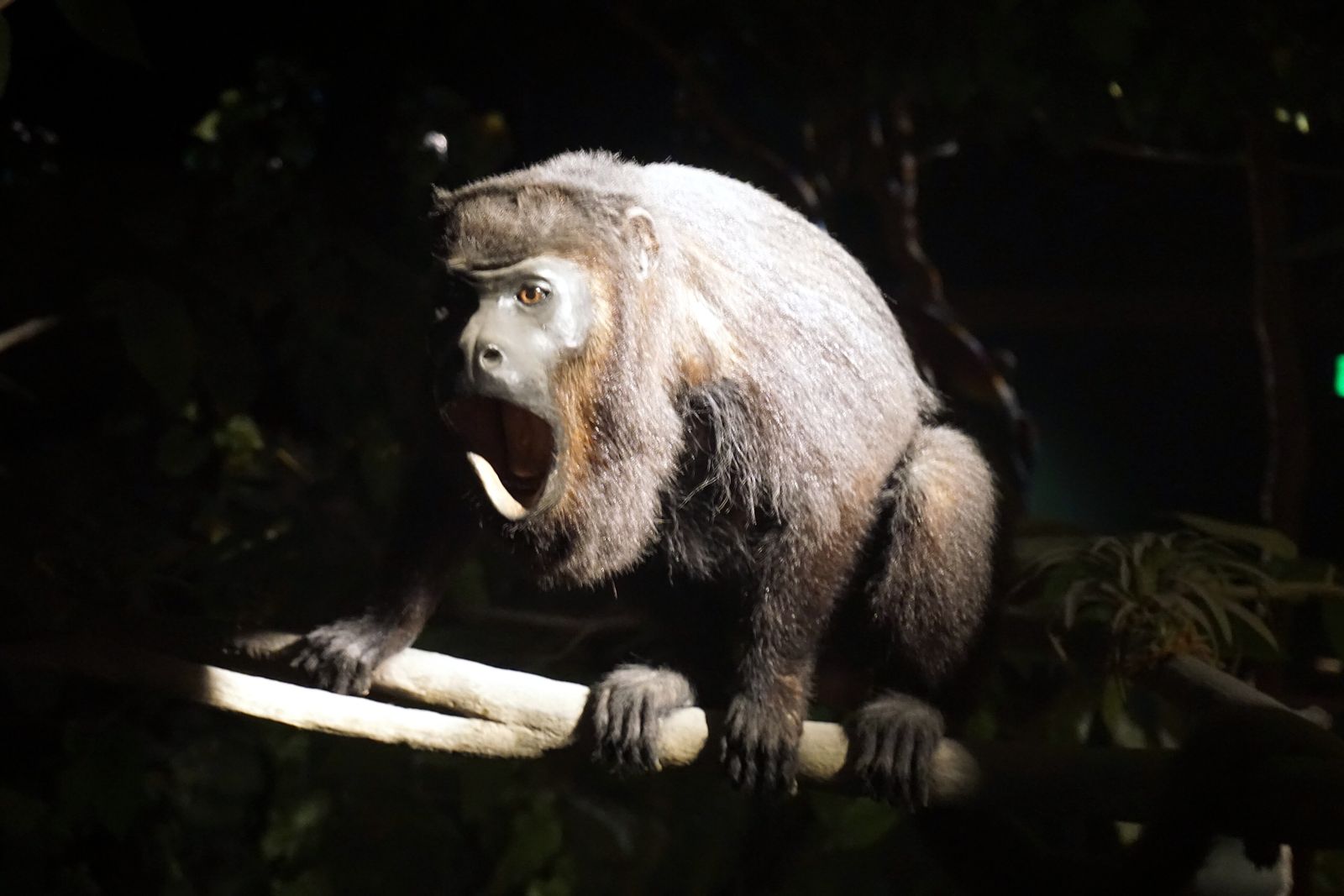 Photo: Michael Barera, CC BY-SA 4.0
The Monkeys of the Rainforest
Howlers waking you at dawn, capuchins raiding the deck — a field guide to the primates you will meet on a jungle stay, and where to meet which.
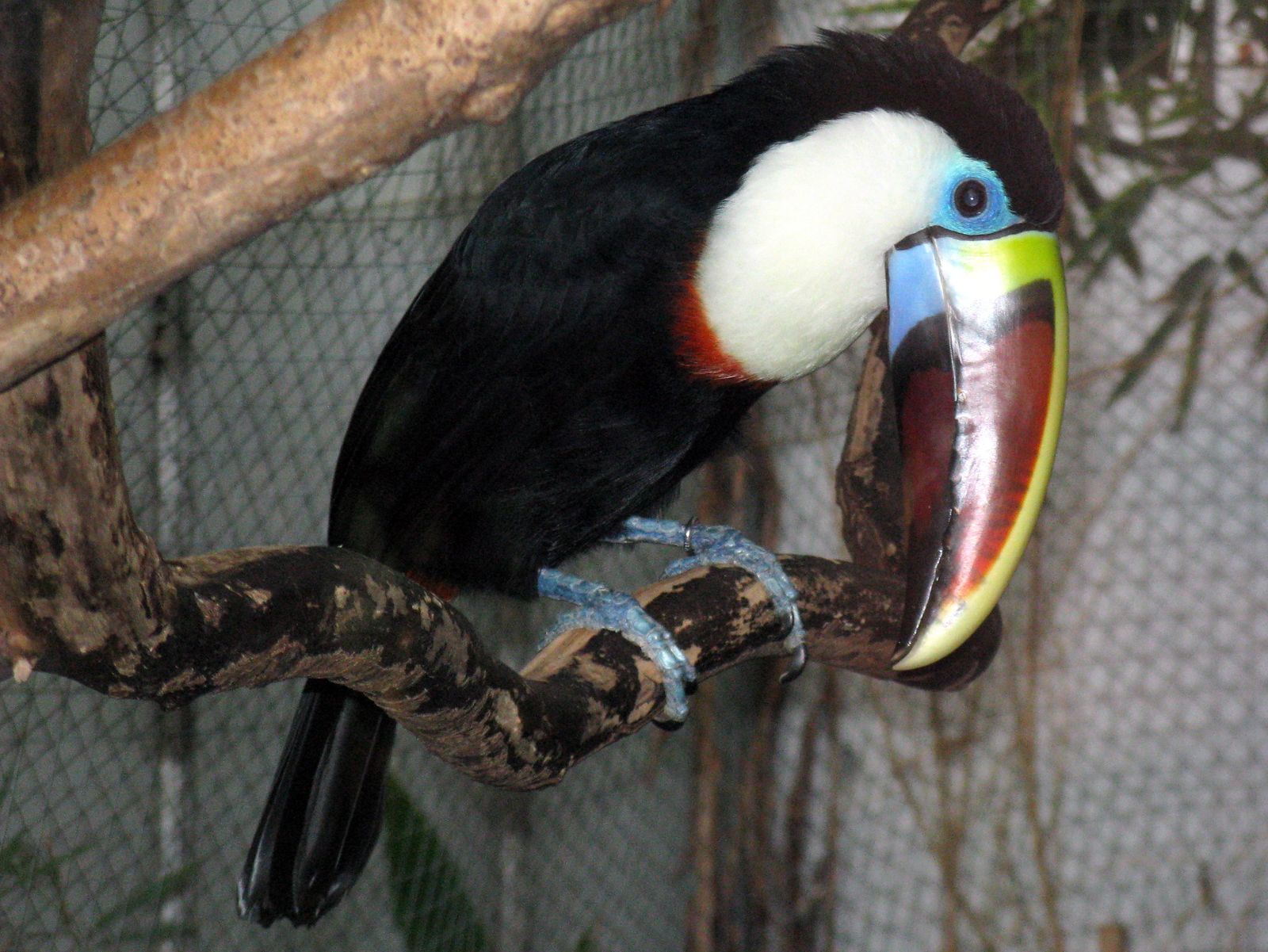 Photo: Charles Miller from Basingstoke, United Kingdom, CC BY 2.0
Toucans & the Tropical Birds You'll See
The rainforest is the richest bird habitat on earth. Toucans, macaws, quetzals and hummingbirds — what to look for, and the best places to look.
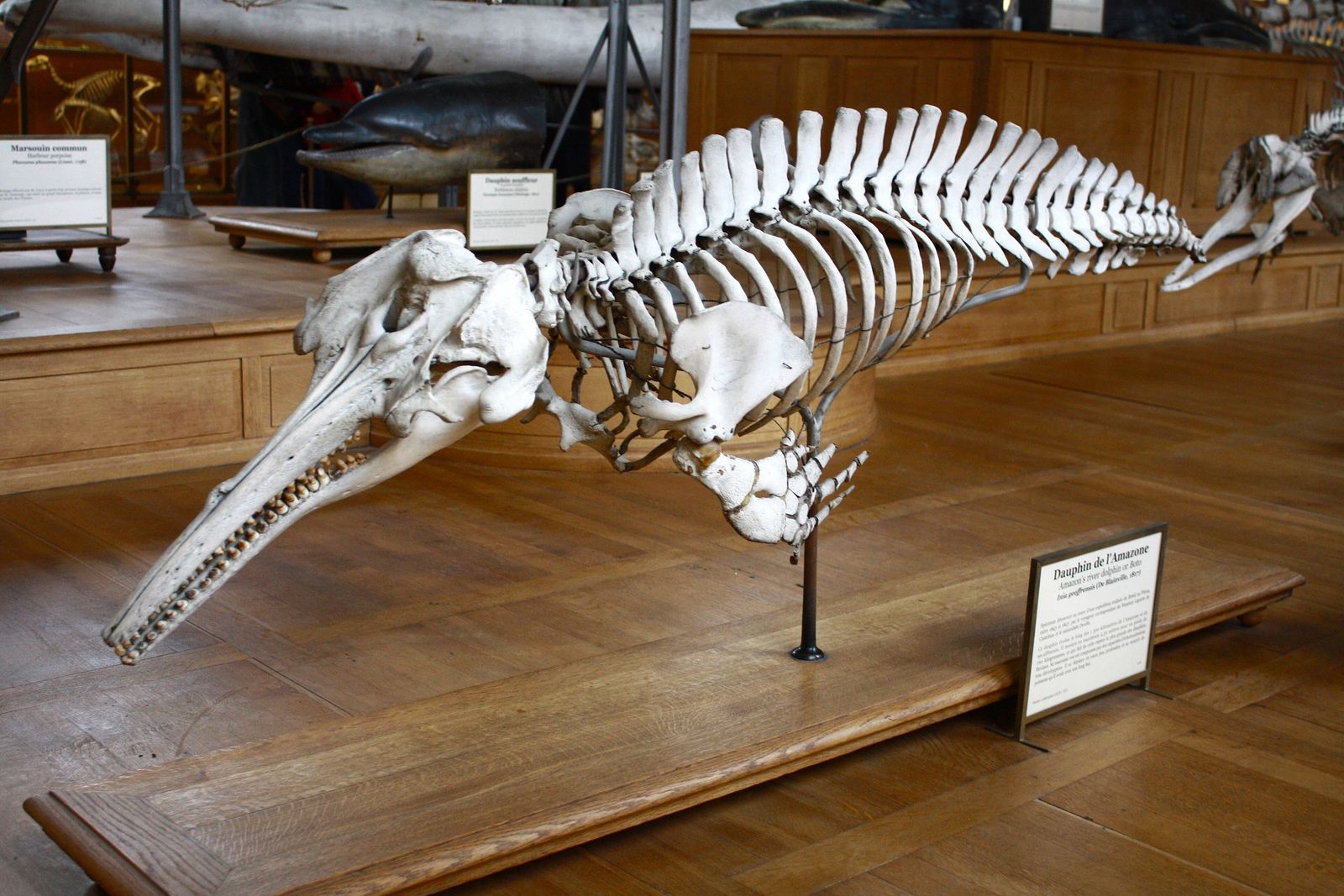 Photo: Titlutin, CC BY-SA 4.0
Pink River Dolphins of the Amazon
One of the strangest animals in the rainforest — the pink dolphin of the Amazon. Where to see them, the folklore around them, and how to do it ethically.
 Photo: Derek Ramsey (Ram-Man), CC BY-SA 4.0
Find your own piece of the canopy.
Treehouses, bamboo houses and rainforest villas across 17 destinations — found, vetted and written up honestly.
Browse all destinations