Pink River Dolphins of the Amazon
Most people who go looking for wildlife in the Amazon are hunting for something camouflaged — a jaguar print, a sloth-shaped lump in a fork of branches, a caiman's eyes catching a flashlight beam. The pink river dolphin is the opposite problem. It's bright, it's large, it surfaces loudly enough to hear before you see it, and it still manages to be one of the strangest, least understood animals most travelers will ever get close to. This is a practical guide to what the boto actually is, where in the Amazon basin you have a genuine shot at seeing one, the folklore that's kept people wary of the water for centuries, and how to watch a wild dolphin in a flooded forest without becoming part of its problem.
What a pink river dolphin actually is
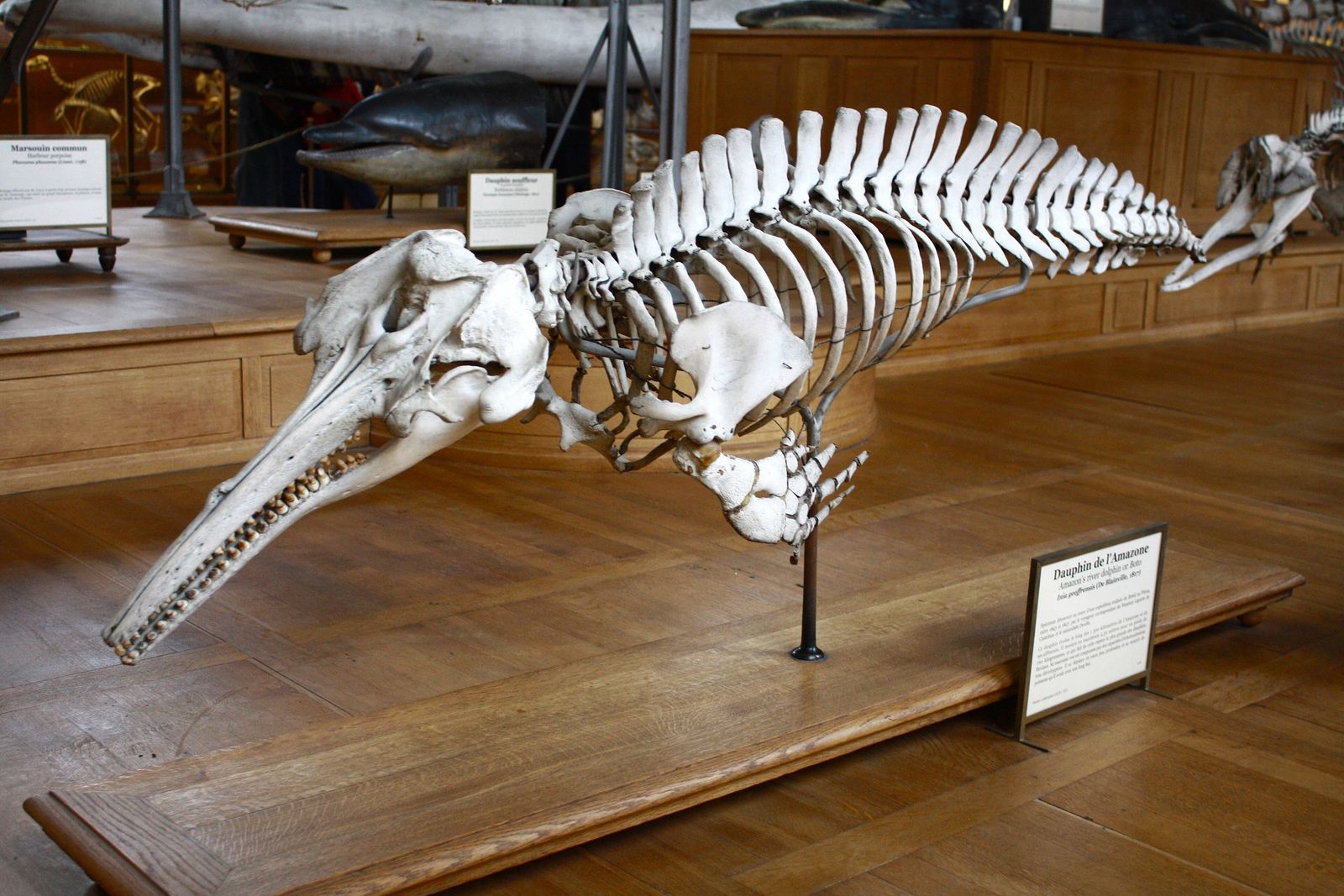
The animal most people call the "pink dolphin" is the Amazon river dolphin, Inia geoffrensis, known across the basin by its Portuguese name, boto, or in Spanish-speaking countries as bufeo colorado or delfín rosado. It isn't a pink-tinted relative of the bottlenose dolphins you'd see off a beach — it belongs to a different, much older family entirely, Iniidae, one of a small handful of river dolphin lineages that split off from the ocean-going dolphins tens of millions of years ago and never went back. Marine biologists sometimes describe river dolphins as living fossils for exactly this reason: they preserve body plans and behaviors that disappeared from the ocean-dwelling dolphin family long ago.
Adult botos run roughly 1.8 to 2.5 meters long and can weigh anywhere from about 80 to 185 kilograms, with a real size gap between the sexes — males typically grow noticeably larger than females, which is unusual among dolphins generally, where the two sexes are usually closer in size or females have the edge. The head carries a long, narrow beak lined with a mix of conical and molar-like teeth, built for grabbing and then crushing prey, since a boto's diet runs to more than 40 species of fish along with the occasional freshwater crab, turtle or crustacean.
Two features set the boto apart from anything in the open ocean. The first is the neck: unlike marine dolphins, whose neck vertebrae are fused into a rigid block, a boto's cervical vertebrae stay unfused, giving it the ability to turn its head independently of its body — a genuine advantage when you're hunting through a flooded forest thick with tree trunks rather than open water. The second is the dorsal fin, or rather the lack of one in the usual sense: instead of a tall triangular fin, botos carry a low, ridge-like hump running along the back, low-profile enough to slip beneath submerged branches without catching on anything.
Then there's the color, which is the whole reason anyone is reading this guide. Boto calves are born a uniform slate gray and most individuals lighten as they age, but how much, and how pink, varies enormously between individuals and seems to be tied less to age alone than to scarring, activity level, and blood flow close to the skin. Researchers and guides generally agree that older, more socially active males — the ones that spend the most time sparring with rivals — tend to run the pinkest, their skin flushed and crossed with the pale scar tissue left by those fights, while females and calves often stay a duller pewter-gray for life. It means the single most photogenic, bubblegum-pink individual in any given stretch of river is very likely to be an old, battle-scarred male, not a young or particularly healthy one.
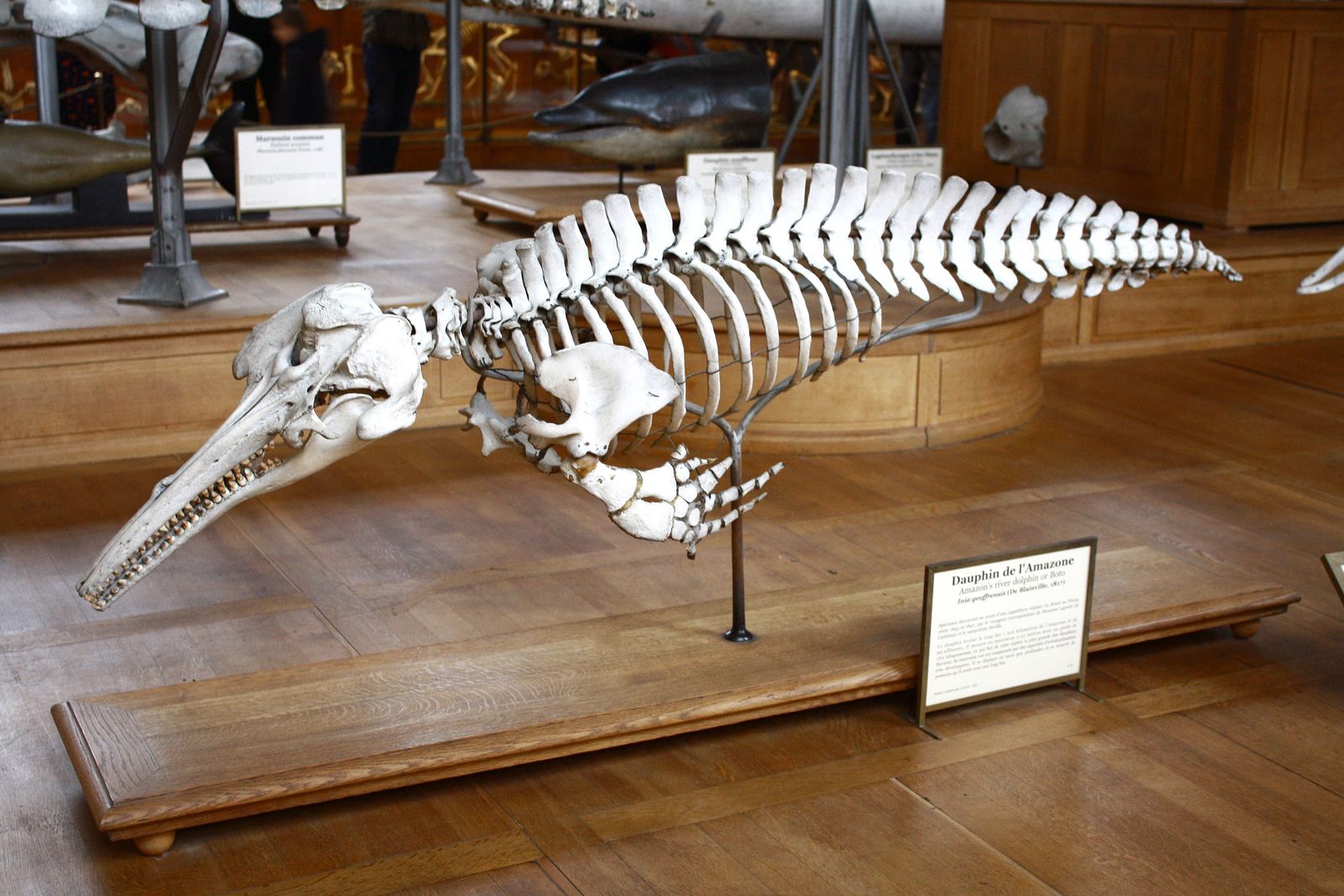
Botos aren't the only dolphin in the Amazon, either, and it's worth knowing the difference before you go. The tucuxi, Sotalia fluviatilis, shares the same rivers and often the same stretches of water, but it belongs to the ocean dolphin family, Delphinidae, and looks the part — smaller, grayer, with a proper curved dorsal fin and the quicker, more acrobatic surfacing style of a marine dolphin. Guides in Brazil, Peru and Colombia will usually point out both species on the same boat trip, and telling them apart on sight — a low pink hump versus a gray fin cutting the water — is one of the easier pieces of Amazon wildlife identification you'll pick up.
Where they live: the river systems
The boto's range covers most of the Amazon basin plus two other river systems that don't drain into it at all: the Orinoco basin, largely in Venezuela and Colombia, and the Tocantins-Araguaia system in central Brazil, which is hydrologically separate from the Amazon proper. Altogether that puts wild pink dolphins in parts of Bolivia, Brazil, Colombia, Ecuador, Guyana, Peru and Venezuela — a footprint most people underestimate, assuming the species is confined to the main stem of the Amazon River itself.
What matters more than the country border, though, is the kind of water. Botos favor slow-moving lowland rivers, oxbow lakes, river confluences and, critically, seasonally flooded forest — the igapó and várzea habitats that fill with water during the high-water months and drain back into narrower channels during the dry season. That flooded-forest habit is genuinely unusual among dolphins: for part of the year, a boto is quite literally swimming between tree trunks a few meters from where a sloth or a howler monkey is sitting in the canopy above, hunting fish that have moved into the flooded understory to feed on fallen fruit. No marine dolphin does anything close to this, and it's a large part of why the boto's story is so distinct from any coastal wildlife-watching trip.
Confluences matter for a more practical reason: where two rivers of different color and temperature meet, fish tend to concentrate, and so do the dolphins hunting them. That's the underlying reason nearly every reliable dolphin-watching spot in this guide — in Brazil, Peru and Colombia alike — is built around a river junction, a lake mouth, or the edge of a flooded-forest channel rather than an open stretch of river with nothing to concentrate the fish.
Good to know
Some researchers treat the Amazon river dolphin population isolated above the rapids of Bolivia's Madeira River system as its own species, Inia boliviensis, rather than a subspecies of the wider boto. The rapids act as a real physical barrier that's kept that population genetically separate for a very long time — one more reason the Amazon basin's dolphins are more varied, and less understood, than the single "pink dolphin" label suggests.
Brazil: Mamirauá, Anavilhanas and the meeting of the waters
Brazil has the largest share of the Amazon basin and, correspondingly, the most developed dolphin-watching infrastructure anywhere in the boto's range, most of it built around the city of Manaus.
Mamirauá Sustainable Development Reserve
Reached from the town of Tefé, several hours upriver from Manaus, Mamirauá is a várzea floodplain reserve widely regarded as one of the best wildlife destinations in the Brazilian Amazon, and its lakes and flooded-forest channels hold a substantial resident boto population alongside the far rarer maned three-toed sloth's Amazonian cousins, giant otters and an exceptional density of birdlife. Access takes real planning — it's a genuine expedition destination rather than a day trip — but the reserve's research-driven management, built around one of the longest-running boto study programs in the basin, makes it a place where sightings come with real context rather than just a passing boat wake.
Anavilhanas National Park
Anavilhanas, on the Rio Negro north of Manaus, protects one of the largest freshwater archipelagos on Earth — hundreds of low, forested islands laced with channels that flood and drain with the river's seasonal pulse. It's a shorter run from Manaus than Mamirauá and correspondingly more visited, with boto and tucuxi sightings reported regularly along the park's channels, especially where they open into the main river.
The meeting of the waters and Novo Airão
Just outside Manaus, the Rio Negro's near-black, tannin-stained water runs alongside the pale, silty Solimões for several kilometers without fully mixing — a genuine, visible phenomenon known as the Encontro das Águas, the meeting of the waters, and one of the most photographed sights in the Brazilian Amazon. Dolphins, both boto and tucuxi, are regularly seen working the current lines where the two rivers meet. Further north, the small town of Novo Airão on the Rio Negro has built a tourism identity almost entirely around dolphin encounters, including a floating platform where dolphins that have become accustomed to human contact approach boats closely. It's worth knowing before you book: this is also the most debated dolphin-watching experience in the Amazon, for reasons covered in the ethics section below.
Peru: Pacaya-Samiria and the Iquitos river routes
Peru's Amazon dolphin-watching is concentrated in the country's northern lowlands, reached almost entirely through the river city of Iquitos, which has no road connection to the rest of Peru and functions as the gateway for essentially every Amazon trip in this part of the country.
Pacaya-Samiria National Reserve
Pacaya-Samiria is Peru's largest protected Amazon area, covering more than 20,000 square kilometers of flooded forest, oxbow lakes and braided river channels — precisely the mix of habitat botos favor, and the reserve is widely considered the premier pink dolphin destination in the country. Reaching it means a multi-day riverboat trip from Iquitos, typically two or more hours downriver just to reach the reserve boundary before the wildlife-focused travel even starts, which keeps visitor numbers lower and the experience considerably wilder than the Manaus-area day trips in Brazil.
The Amazon's literal starting point, near Nauta
A short way from Iquitos, near the town of Nauta, the Ucayali and Marañón rivers converge to form what's officially considered the start of the Amazon River itself. It's a working confluence in exactly the way described above — different water, concentrated fish, and a reliable draw for both botos and tucuxis — and most Iquitos-based river lodges and cruise itineraries route through or near it.
What an Iquitos-based trip actually looks like
Because there's no road network to speak of, a Peru dolphin trip means either a river lodge reached by boat from Iquitos or a multi-day riverboat cruise that sleeps aboard and pushes further into the reserve system each day. Both formats build dolphin-watching into the daily boat excursions rather than treating it as a single dedicated outing, which tends to produce more relaxed, better-spaced sightings than a single hired boat racing to a known dolphin spot and back.
Bolivia, Colombia, Ecuador and the wider range
Outside the two dominant countries, three others are worth knowing about specifically.
Bolivia
The Bolivian Amazon, particularly the Beni and Mamoré river systems, holds the genetically distinct dolphin population sometimes classified as its own species, discussed above. Bolivia's dolphin tourism is far less developed than Brazil's or Peru's, without the concentrated infrastructure of Manaus or Iquitos, but river trips out of towns like Trinidad or Rurrenabaque do reach the right habitat, and sightings here come with none of the crowd or feeding-tourism issues found elsewhere in the range.
Colombia
In the far south of Colombia, the city of Leticia sits on the Amazon River itself at the tri-border point where Colombia, Brazil and Peru meet. Amacayacu National Park, a short boat ride from Leticia, protects a stretch of Amazon floodplain forest where both botos and tucuxis are regularly sighted, and the park's position — genuinely remote, but with real tourism infrastructure built around Leticia — makes it one of the more accessible ways to add pink dolphins onto a wider Colombian Amazon itinerary.
Ecuador
Ecuador's Amazon region lies mostly in blackwater habitat rather than the wide whitewater rivers that dominate in Brazil and Peru, and the Cuyabeno Wildlife Reserve in the country's northern Amazon is generally considered the best of the country's options, with its network of blackwater lagoons offering a reasonable, if less concentrated, chance of a sighting alongside caimans, giant otters and an exceptional range of birdlife.
The honest picture across the wider range
Guyana and Venezuela both fall inside the boto's range on paper, but neither has built dolphin-specific tourism to match Brazil, Peru or even Colombia, largely down to a combination of remoteness, weaker tourism infrastructure and, in Venezuela's case, years of political and economic instability that have hit the tourism sector broadly. If a trip is built specifically around seeing a pink dolphin rather than dolphins being a welcome bonus on a broader Amazon itinerary, Brazil and Peru remain the two countries actually set up for it.
Best time and conditions
The Amazon's flood pulse — the dramatic seasonal rise and fall of the rivers, which can vary by several meters between wet and dry extremes — shapes dolphin-watching more than almost anything else in this guide, and it cuts both ways.
During the high-water season, roughly the first half of the calendar year across much of the basin though the exact timing varies by river and by year, flooded forest opens up and dolphins disperse deep into it to hunt, following the fish that scatter into the newly submerged understory. It's the moment the boto's strangest habit — swimming among standing trees — is actually happening, but that same dispersal makes dolphins harder to find in any single spot, since there's simply far more water for them to be in.
During the low-water season, roughly the second half of the year, rivers shrink back into their main channels, flooded forest drains, and dolphins concentrate in the remaining deep water — river confluences, the mouths of oxbow lakes, the channels around archipelagos like Anavilhanas. This is when sightings tend to be most reliable and most repeatable, because there's simply less water for the animals to disperse across, and the deep, reliable pools where they gather don't move much year to year.
Time of day follows a simpler pattern than the season does. Botos surface to breathe every so often no matter the hour, but activity — and surfacing frequency — tends to climb around dawn and dusk, when many of the fish species they hunt are also most active. A guide who knows a particular stretch of river will typically time an outing around those windows rather than the flat light and heat of midday.
A boto swimming between the trunks of a flooded forest, a few meters below where a sloth is hanging in the canopy, is one of the only overlaps in the entire animal kingdom between a forest and an open-water hunt happening in the same place at the same time.
The encantado: folklore that may have saved the species
No Amazon wildlife story carries more folklore than the pink dolphin's. Across the river communities of Brazil, Peru and beyond, the boto is central to the legend of the encantado — a shapeshifter said to rise from the river at night in the form of a strikingly handsome, well-dressed man, always in white, always wearing a hat, that hat serving in the story to hide the blowhole on top of his head that would otherwise give away his true nature. In the traditional telling, the encantado appears at riverside dances and festivals, seduces or courts a local woman, and either disappears before dawn or draws her down into an underwater city where the dolphins live in human form.
The counterpart legend warns against swimming alone at night, on the belief that a dolphin might pull a solitary swimmer down into that same underwater world — a warning that, practically speaking, has also long doubled as ordinary river safety advice in a region with real currents, real caimans, and real risk in swimming alone after dark, whatever the supernatural framing around it.
What's notable is how directly this folklore has functioned as informal conservation. Killing a boto, in traditional river-community belief, invites serious bad luck, and that taboo has been credited — by researchers and conservation organizations working in the region — with genuinely slowing direct hunting of the species in communities where the belief runs strong, in a way that has nothing to do with any government protection or park boundary. It's a rare case of folklore doing measurable ecological work, and it's part of why so many guides across the basin will tell you the encantado story unprompted, treating it as a genuine piece of local culture rather than a tourist flourish.
Good to know
The encantado myth isn't unique to the boto in the sense of being one fixed story — variations exist up and down the basin, with different details about the underwater city, the seduction, and what happens to those who are taken. What stays consistent almost everywhere is the core idea: the dolphin that looks harmless from a boat is, in the old telling, far more than it appears.
Seeing them responsibly
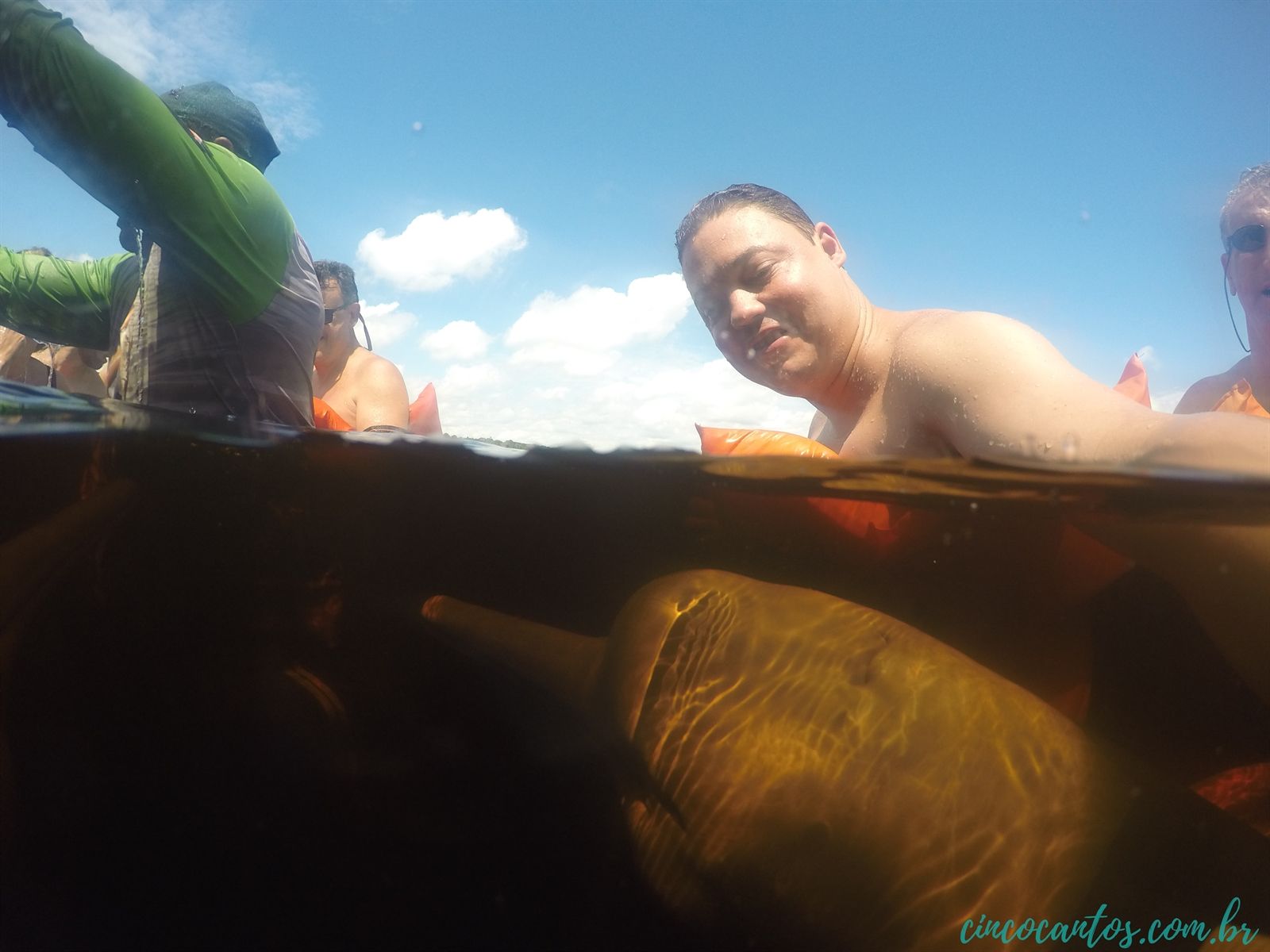
The clearest ethical line in pink dolphin tourism runs straight through Novo Airão, the Brazilian town mentioned earlier that's built its identity around close-contact dolphin encounters, including hand-feeding from a floating platform. It's an experience that draws real visitor numbers precisely because it delivers something few wildlife encounters anywhere can — a genuinely wild dolphin approaching within arm's reach — and it's also the encounter that draws the most consistent criticism from conservation researchers and organizations working elsewhere in the basin.
The concerns are the same ones raised about habituated wildlife feeding almost anywhere: animals that learn to associate boats and humans with food change their natural behavior, spend less time on normal hunting and social patterns, and become more vulnerable to boat strikes, entanglement and conflict with fishers once they've lost their usual wariness. It's also worth being clear-eyed about the asymmetry — a boto is a large, powerful wild animal with a mouth full of teeth built for crushing fish bone, and close hand-feeding carries a real risk to people as well, not just to the dolphins.
None of that means avoiding Brazil, or even avoiding Novo Airão's broader dolphin-watching entirely — it means choosing the version of the encounter that keeps the animal wild. A boat-based sighting where the dolphins surface and move naturally, without being drawn in by food, gives you the same animal without the same behavioral cost, and it's the version offered by most operators working Mamirauá, Anavilhanas and the meeting-of-the-waters routes around Manaus. In Peru, Pacaya-Samiria's remoteness and lack of any comparable feeding-tourism scene makes the observation-only approach close to the default rather than a choice you have to seek out.
A few habits travel well across every country in this guide: don't ask a guide to chase or corner a surfacing dolphin for a better photo, don't support any operation offering guaranteed physical contact, keep noise and boat speed down around a pod that's actively surfacing, and treat a close, unprompted pass by a wild dolphin as the genuine privilege it is rather than something to try to repeat by feeding it. The broader threats facing the species — entanglement in fishing nets, mercury contamination from small-scale gold mining upstream, dam construction fragmenting river systems, and the ongoing use of dolphin meat as bait in some regional fisheries, a practice that has driven direct bans and enforcement efforts in parts of Brazil — all have far more to do with the health of the wild boto population than a single respectful, no-touch boat trip ever will.

Field tips for actually spotting one
Listen before you look
A boto's exhale at the surface is a distinct, sharp puff, often audible before the animal itself is visible, especially over the quiet hum of a paddled canoe rather than a motorboat. Guides working these rivers daily frequently spot a dolphin by ear first, catching the sound and only then turning to find the surfacing point.
Work the confluences and channel mouths
Given the choice between scanning open river and watching a spot where two currents meet, a lake mouth, or the entrance to a flooded-forest channel, take the confluence every time — that's where the fish concentrate, and the dolphins with them. This is the single most reliable pattern across every country in this guide.
Low light, low boat speed
Dawn and dusk outings, on a boat moving slowly enough not to push a bow wave, consistently outperform a fast midday run to a known dolphin spot and back. Slower boats are quieter, and quieter boats let dolphins surface naturally near you instead of being startled off at a distance.
Don't expect a leap
Unlike the acrobatic bottlenose dolphins most people picture, botos surface low and roll rather than breach, and a "sighting" is much more often a curved back and a low dorsal ridge breaking the surface for a second or two than a dramatic full-body jump. Set that expectation before you go and the actual sighting reads as a genuine thrill rather than a letdown.
Bring a guide who knows the river's memory
Because sightings cluster so heavily around confluences and channel mouths that don't move much from year to year, a guide who works the same stretch of river regularly will often know, within a rough window, where a resident pod tends to surface at a given hour and season — the same kind of local knowledge that separates a lucky sighting from a near-certain one anywhere in this guide.
Which jungle stays put you closest
Pink dolphin country doesn't require choosing between wildlife and comfort — the best-positioned stays sit inside or right at the edge of exactly the habitat described throughout this guide, rather than requiring a long separate transfer to reach it. In Brazil, river lodges around Mamirauá and Anavilhanas build dolphin-watching directly into their daily boat excursions, and a Manaus-based trip that includes the meeting of the waters can add a dolphin sighting onto a single morning without a dedicated day set aside for it. In Peru, an Iquitos-based river lodge or multi-day cruise into Pacaya-Samiria treats dolphin sightings as one thread in a broader wildlife itinerary that's just as likely to turn up giant otters, macaws and, if the trip runs long enough, a jaguar track along the bank. And in Colombia, basing a trip out of Leticia puts Amacayacu's flooded forest and its resident dolphins within a short, manageable boat ride rather than a full expedition.
If dolphins are one stop on a longer Amazon wildlife trip, a few other guides in this Journal pair naturally with this one — our guide to the monkeys of the rainforest covers the canopy neighbors you'll hear from the same riverbank, toucans and the tropical birds you'll see rounds out the daytime wildlife list on the same boat trips, and night walks in the rainforest is worth adding if your itinerary includes any land-based lodge time between river excursions.
For picking an actual stay, browse vetted jungle properties by country on our full destinations directory, or go straight to the Brazil, Peru or Colombia pages if one of those is already the country anchoring your trip. JungleBnB doesn't hold inventory or take payment for placement, so what you'll find there is the same shortlist we'd hand a friend planning the same river.
Common questions
Are pink river dolphins actually pink?
Some are, but it varies enormously between individuals. Calves are born gray, and while many botos lighten with age, the brightest pink coloring tends to show up in older, more socially active males — a pattern researchers link to scar tissue from fighting and blood flow close to the skin, rather than color simply deepening with age across the board.
Are pink dolphins dangerous to swim near?
Wild botos aren't considered a serious threat to people under normal conditions, and in several parts of their range guided, low-contact swims do take place. That said, they're large, powerful wild animals with a mouth built for crushing fish bone, and any swim should happen only with an experienced local guide, never through a feeding or contact operation, and never alone.
Is the pink river dolphin endangered?
The species is classified as Vulnerable by the IUCN, and conservation groups including WWF have documented steep declines across river dolphin populations more broadly, driven by entanglement in fishing gear, dam construction fragmenting river systems, mercury pollution from small-scale gold mining, and, in some regions, direct killing for use as fishing bait.
What's the difference between a boto and a tucuxi?
They're not close relatives despite sharing the same rivers. The boto belongs to an ancient, separate river-dolphin family and has a low ridge instead of a dorsal fin, a long beak, and that variable pink coloring. The tucuxi belongs to the same family as ocean dolphins, stays gray for life, and has a proper curved dorsal fin along with quicker, more visibly acrobatic surfacing.
When is the best time of year to see one?
Low-water season, when rivers shrink back into their main channels and dolphins concentrate around confluences and channel mouths rather than dispersing into flooded forest, generally offers the most reliable sightings. The exact months vary by river and by year, so it's worth checking current conditions with a local operator before booking around a specific date.
Why do river communities tell stories about dolphins turning into people?
That's the encantado legend, found in different versions across Brazil, Peru and the wider basin, in which a boto is said to transform into a charming man who hides his blowhole under a hat. Beyond its role as folklore, researchers and conservation groups credit the taboo around harming an encantado with genuinely discouraging direct hunting of the species in communities where the belief remains strong.
- Wikipedia — Amazon river dolphin — taxonomy, range across the Amazon, Orinoco and Tocantins-Araguaia basins, and the Bolivian population's distinct classification.
- National Geographic — Amazon River Dolphin (Boto) Facts — size, diet, echolocation and general biology.
- WWF — Pink River Dolphin — IUCN Vulnerable status and the threats driving river dolphin population declines.
- Natural Habitat Adventures — Protecting the Amazon's Pink River Dolphins — encantado folklore and modern conservation challenges.
- Fertur Peru Travel — Where to See Pink Dolphins in Peru — Pacaya-Samiria National Reserve and Iquitos-based river routes.
- Aventura do Brasil — Pink Dolphins in Brazil: Where & How to See Them — Mamirauá, Anavilhanas, the meeting of the waters and Novo Airão's dolphin-feeding tourism.
- SA Vacations — Myths and Legends of the Amazon's Pink River Dolphin — the encantado legend and its role in local dolphin protection.
More from the Journal.
 Photo: shankar s. from Dubai, united arab emirates, CC BY 2.0
Where to See Sloths in the Wild
The internet's favourite animal is real, wild and findable — where to reliably see sloths, how to spot them, and the stays that put you closest.
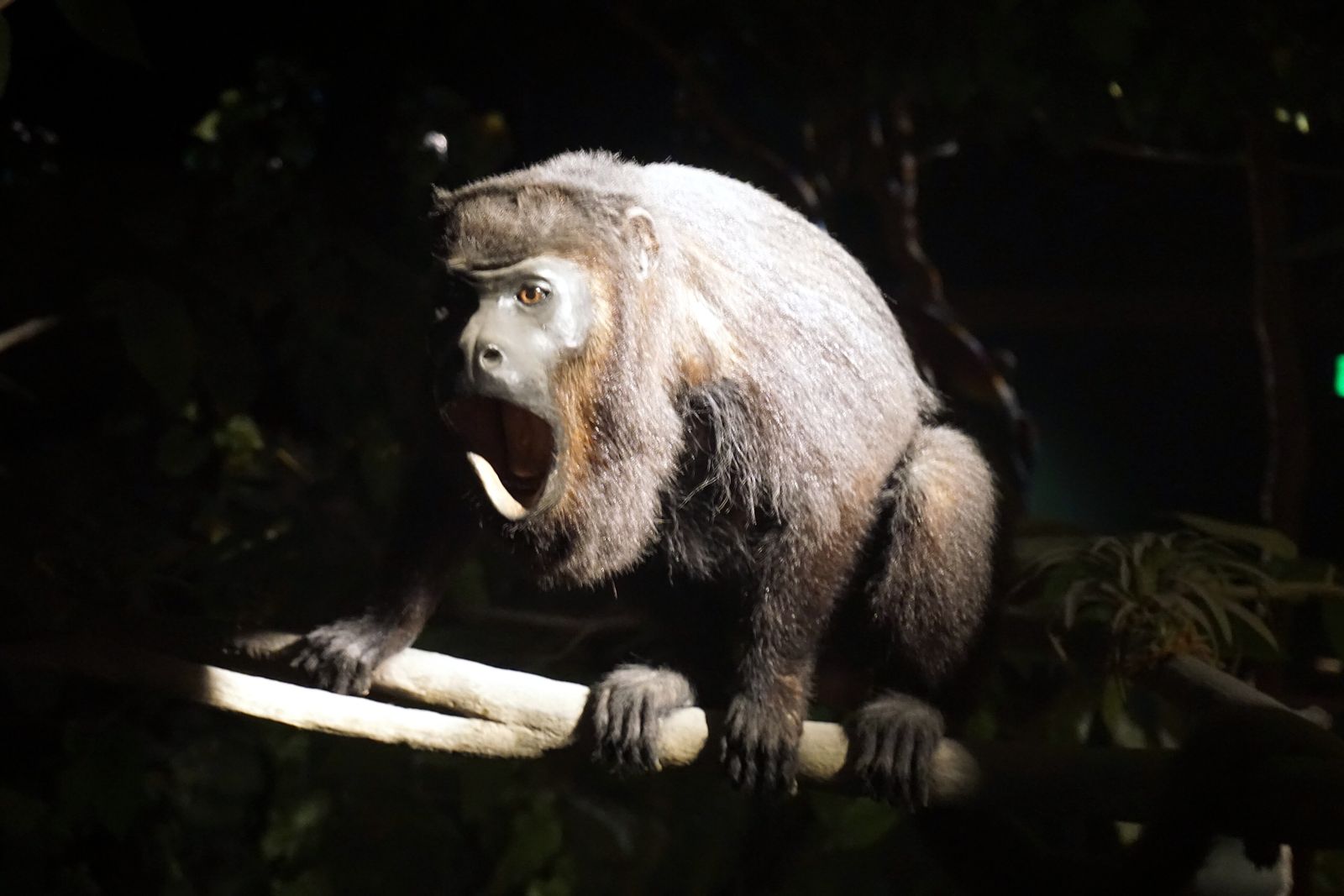 Photo: Michael Barera, CC BY-SA 4.0
The Monkeys of the Rainforest
Howlers waking you at dawn, capuchins raiding the deck — a field guide to the primates you will meet on a jungle stay, and where to meet which.
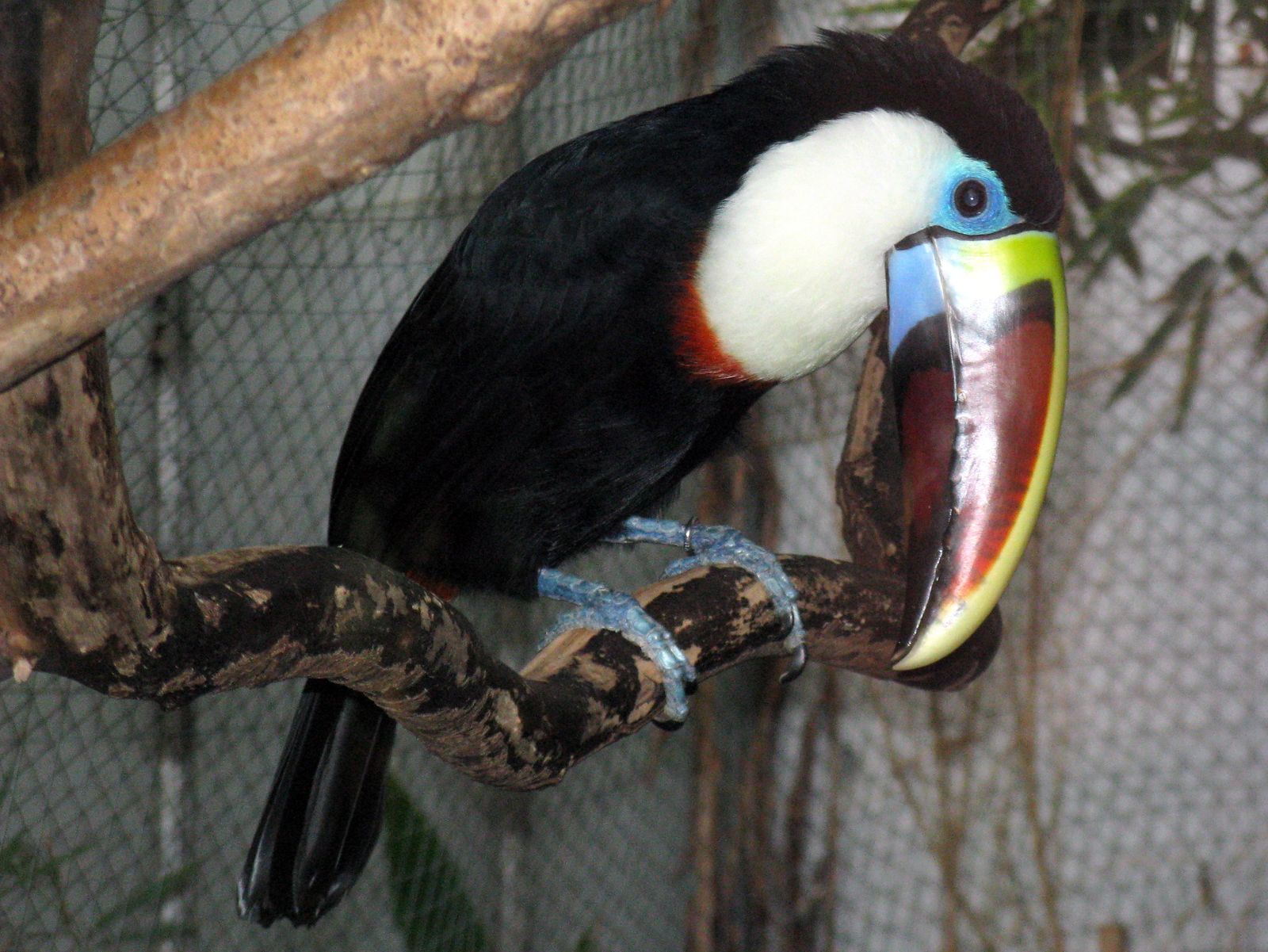 Photo: Charles Miller from Basingstoke, United Kingdom, CC BY 2.0
Toucans & the Tropical Birds You'll See
The rainforest is the richest bird habitat on earth. Toucans, macaws, quetzals and hummingbirds — what to look for, and the best places to look.
 Photo: Derek Ramsey (Ram-Man), CC BY-SA 4.0
Find your own piece of the canopy.
Treehouses, bamboo houses and rainforest villas across 17 destinations — found, vetted and written up honestly.
Browse all destinations