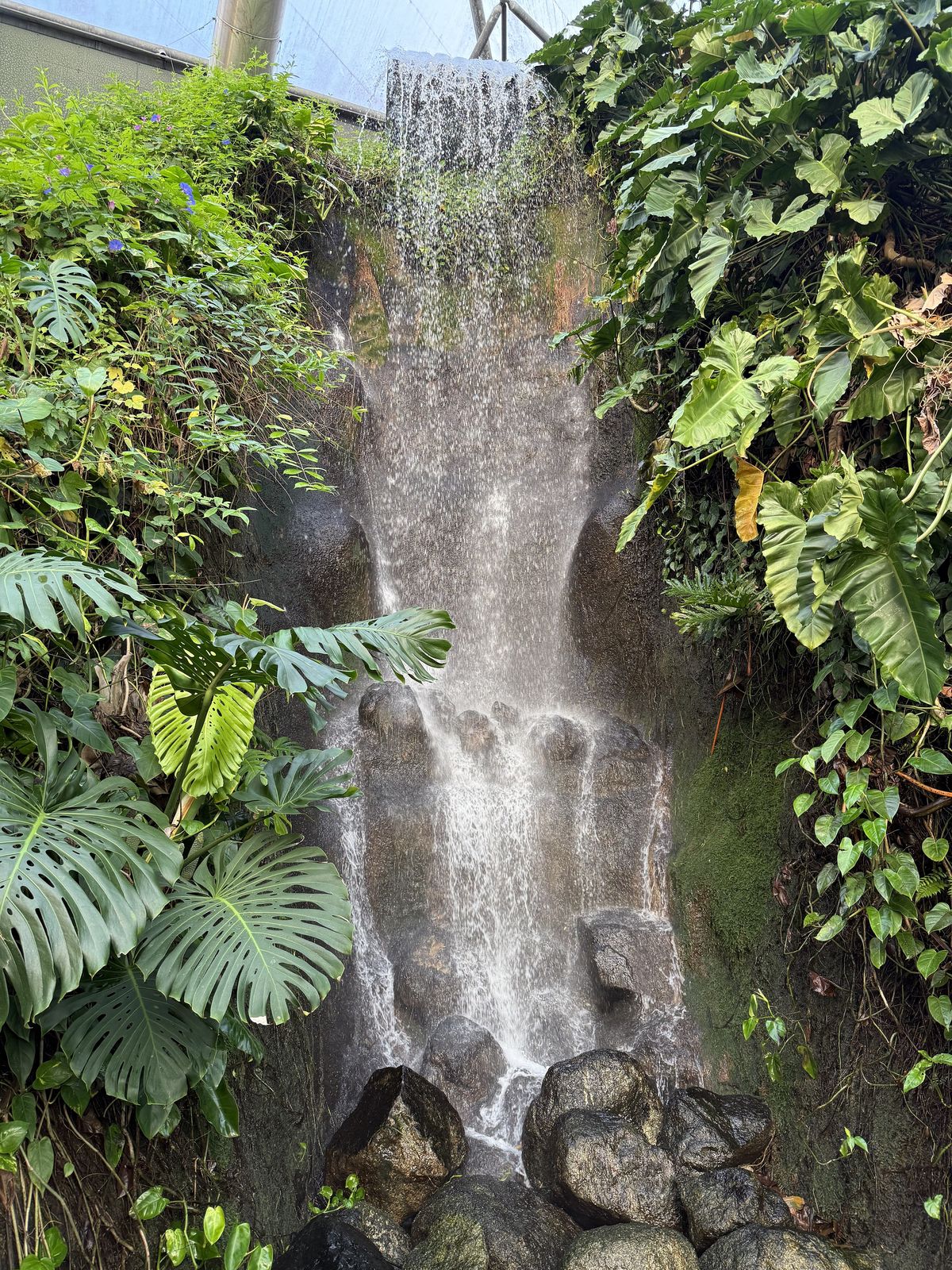
The Great Waterfalls of the Jungle
Every good jungle trail seems to end the same way: the path narrows, the air cools a few degrees, the sound builds from a rumor to a roar, and then the trees open onto a waterfall dropping into a pool the color of nothing you've seen out of a tap. It's one of the most reliable payoffs in travel, and also one of the most misunderstood — people plan around a single famous waterfall photo without knowing that the best jungle falls in the world are wildly different from each other, that timing can make or break the trip, and that a genuinely stunning waterfall can also be a genuinely dangerous one if you don't respect it. This is a guide to the real ones: where they are, what makes each worth the hike, when to go, how to see them without hurting yourself or the place, and which jungle stays put you close enough to actually go.
What actually makes a jungle waterfall
Every waterfall is, mechanically, the same thing: water moving over a change in elevation faster than the rock beneath it erodes, usually because a harder rock layer sits on top of a softer one and the softer one wears away first, undercutting the ledge until it eventually collapses and the falls migrates upstream. That's true whether you're looking at Niagara or a fifteen-foot cascade behind a lodge in Costa Rica. What separates a jungle waterfall from any other kind isn't the physics, it's everything growing around it.
Tropical rainforest sits on some of the oldest, most heavily weathered land on Earth, and a lot of it is limestone or volcanic rock cut by rivers that never freeze and rarely run dry. That combination produces two waterfall types you'll see constantly in this guide. The first is the tiered limestone cascade — think stepped pools separated by short drops, the water often an improbable turquoise or milky blue because of dissolved calcium carbonate suspended in it, the same mineral chemistry that builds cave formations. The second is the tall single-drop plunge, usually where a river crosses a fault line or the edge of a volcanic plateau and falls clean off it into a jungle gorge below. Both types cut their own microclimate: constant spray keeps the surrounding rock and understory permanently damp, which is why the plants immediately around a jungle waterfall are often noticeably different from the forest a hundred meters away — more ferns, more moss, more epiphytes clinging to wet rock faces that would dry out anywhere else.
That microclimate matters ecologically, not just scenically. Waterfall spray zones support species that don't turn up elsewhere in the same forest, from moisture-loving amphibians to filter-feeding invertebrates adapted to fast, oxygen-rich water. Many tropical rivers also carry migratory fish that use waterfalls as natural checkpoints, and the pools below larger falls are often genuine wildlife magnets — birds fishing the shallows, mammals coming down to drink at dawn and dusk before the day's first hikers arrive. None of this is why most people show up. Most people show up because a waterfall in a rainforest, unlike almost any other landscape feature, gives you a payoff you can hear before you can see it, and a place to actually get in the water at the end of a hot trail. Both of those are real reasons. This guide is built around them.
Southeast Asia: Laos, Bali and Thailand
Southeast Asia's limestone geology produces some of the most photogenic tiered waterfalls anywhere, and three countries in particular have built genuine travel circuits around them.
Kuang Si Falls, Laos
Just outside Luang Prabang, Kuang Si is a multi-tiered limestone waterfall that stacks a series of turquoise pools on the way down to a final, taller plunge into a wide swimming pool at the base. The color comes from dissolved limestone, the same reason the water looks almost unnaturally saturated in photographs without being edited. The lower and middle pools are open for swimming and get busy by midmorning; the upper falls and the trail that climbs beside them to a viewpoint above the main drop are steeper and thin out the crowd considerably. A bear rescue sanctuary run by Free the Bears sits right at the entrance, home to Asiatic black bears (moon bears) confiscated from the illegal wildlife trade, and it's worth the ten minutes it takes to walk through on your way in.
Bali's jungle waterfalls: Sekumpul and Nungnung
Bali's volcanic interior, especially the northern highlands around Buleleng, cuts a series of jungle waterfalls that are a different trip entirely from the island's beach towns. Sekumpul is usually named the best of them — technically a cluster of falls dropping through dense tropical jungle rather than a single cascade, reached by roughly a 45-minute hike in from the car park down and across a river valley. Nungnung, further south, trades the multi-fall spectacle for a single, powerful 50-meter-plus drop into a jungle canyon, reached by descending more than 500 concrete steps that turn the return climb into the real workout of the day. Both are best attempted in Bali's dry season, roughly April through October, since the trails turn slick and the rivers can rise fast once the rains set in. Basing a few nights around Bali's jungle interior rather than only the coast is the difference between squeezing in one rushed waterfall and building a whole quiet stretch of the trip around two or three of them.
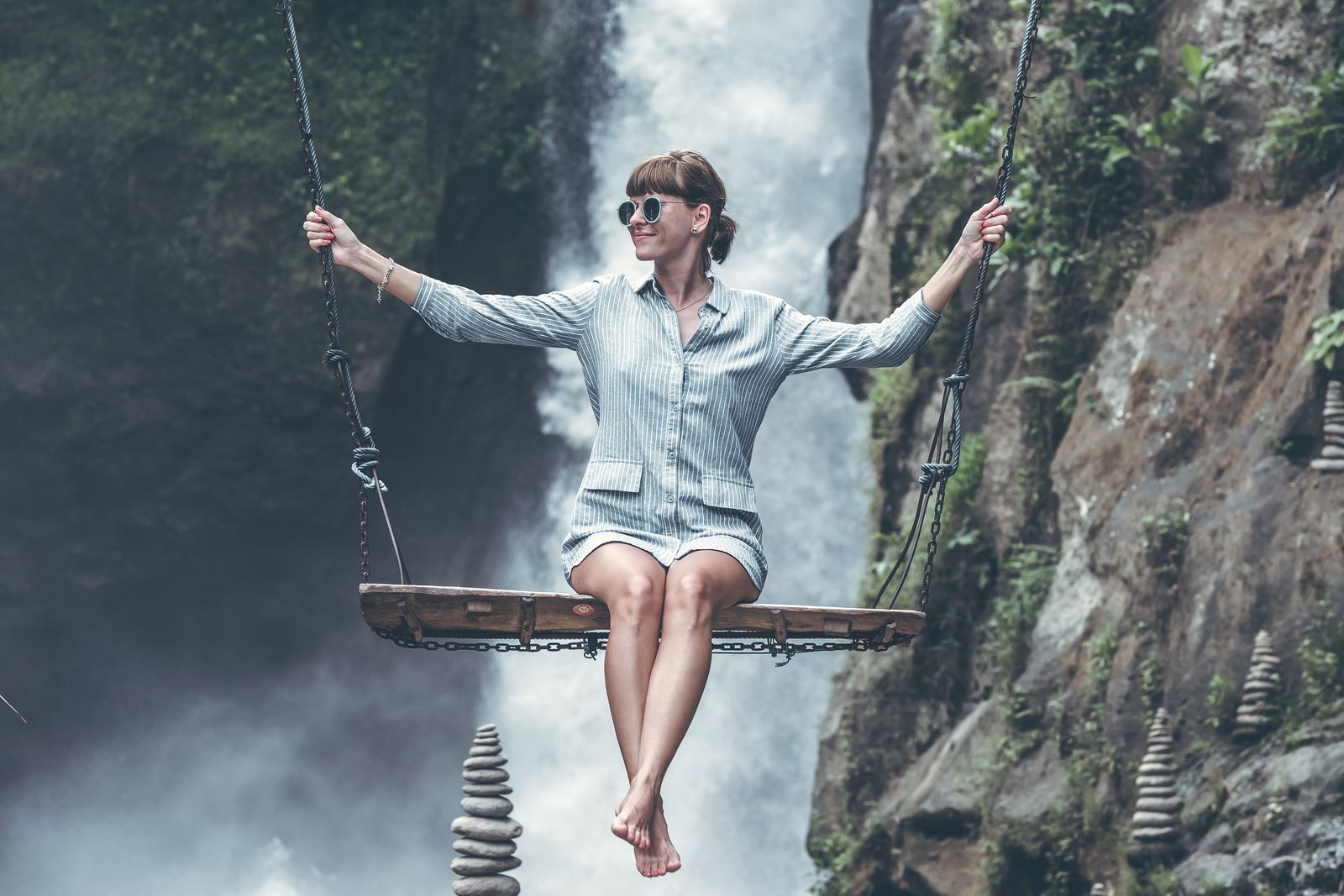
Erawan Falls, Thailand
In Kanchanaburi province, west of Bangkok, Erawan National Park protects a seven-tiered waterfall that climbs through the forest rather than dropping in one place, so a visit here is really a hike from pool to pool rather than a single stop. The lower tiers are easy and crowded; the upper tiers take real effort and thin the crowd out fast. Several of the pools are home to small fish that will nibble at your feet and ankles if you stand still long enough — the same species used in commercial fish spas, here doing it for free in the wild.
Central America and Mexico
Central America's volcanic spine and karst limestone belts do a version of the same trick as Southeast Asia, and Costa Rica in particular has built an entire tourism identity around it.
Nauyaca Waterfalls, Costa Rica
Near Dominical on the Pacific coast, Nauyaca is actually twin waterfalls on the same river, dropping into a wide pool at the base that's become one of the country's most popular swimming spots. It's reached by a rough dirt road that most visitors cover on a guided horseback or 4x4 tour rather than on foot, which keeps it more accessible than the terrain around it would suggest.
La Fortuna Waterfall and the Arenal region
Near the town of La Fortuna, in the shadow of Arenal Volcano, a single 70-meter waterfall drops into a jungle canyon and a cold, deep pool that's a genuine swim rather than a wade. It's one of the most visited falls in the country precisely because it's so close to a town with a well-developed lodge scene, and the surrounding rainforest around Arenal is thick with the kind of eco-lodge infrastructure — canopy towers, hanging bridges, guided night walks — that turns a single waterfall stop into a multi-day base.
Semuc Champey, Guatemala
In Guatemala's Alta Verapaz region, Semuc Champey is a genuinely unusual formation: a natural limestone bridge roughly 300 meters long carries a series of stepped turquoise pools above the main channel of the Cahabón River, which mostly runs underground beneath it. The pools themselves aren't a single tall waterfall so much as a staircase of them, connected by short cascades, and the jungle canyon around Lanquín that you pass through to reach it is reason enough for the trip on its own.
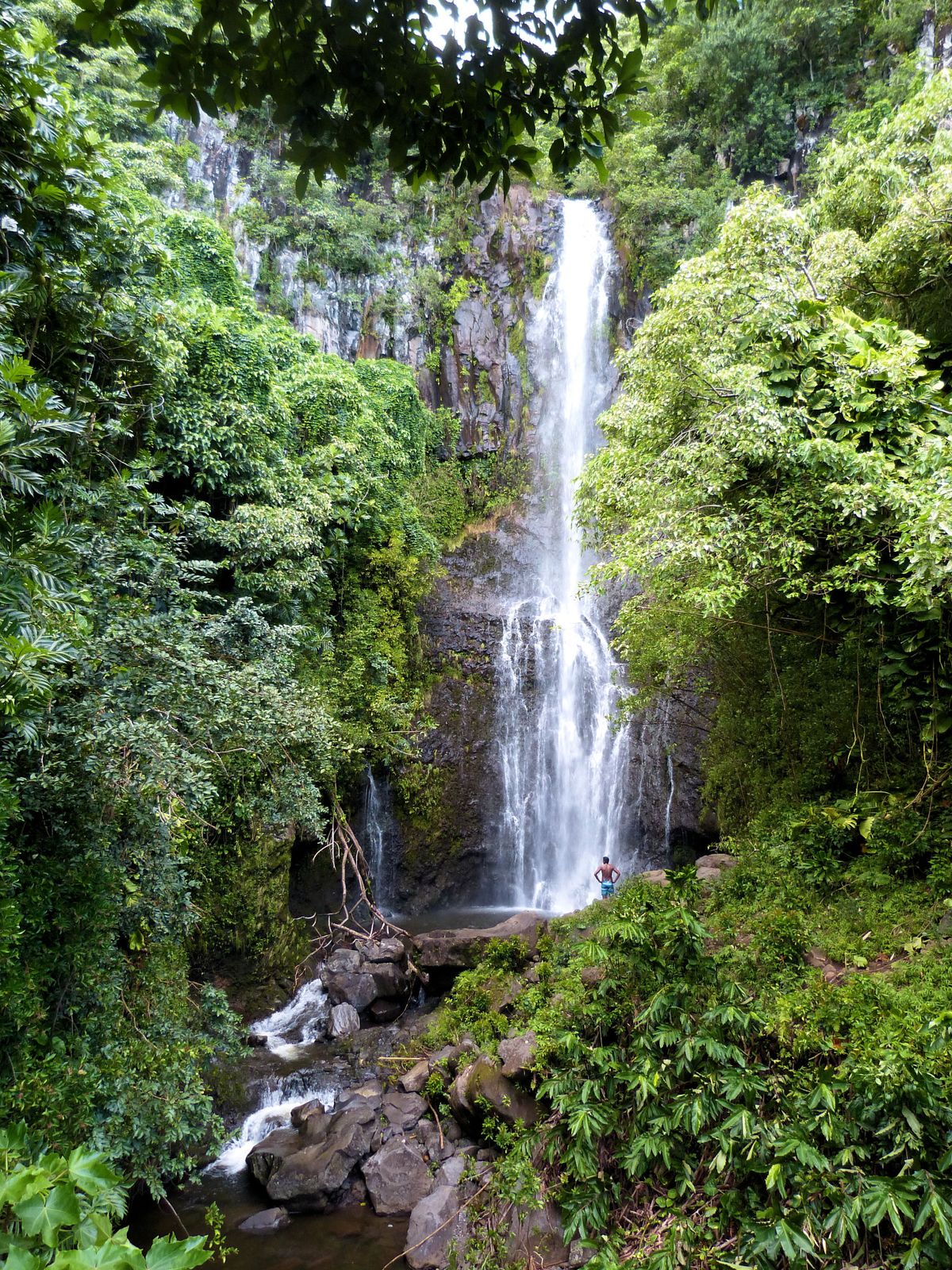
Agua Azul, Mexico
In Chiapas, in the jungle lowlands near Palenque, the Agua Azul cascades run for kilometers along a single river, dropping in a long series of small limestone shelves rather than one dramatic plunge — the same mineral-rich water chemistry as Kuang Si and Semuc Champey, producing the same startling blue-white color. It's usually visited as a stop between Palenque's Maya ruins and San Cristóbal de las Casas, which makes it an easy add to a Tulum and Maya jungle itinerary further east, even though Agua Azul itself sits well inland from the coast.
South America's giants
If Southeast Asia and Central America specialize in the tiered, swimmable jungle waterfall, South America is where the scale changes entirely.
Iguazu Falls, Argentina and Brazil
Iguazu isn't one waterfall but a system of roughly 275 individual cascades spread across nearly two miles of the Iguazu River, straddling the border between Argentina and Brazil where the river cuts through subtropical Atlantic Forest. The centerpiece is the Devil's Throat, a U-shaped drop of more than 80 meters that the whole system funnels toward, and both the Argentine and Brazilian national parks protecting it are UNESCO World Heritage Sites in their own right, as much for the forest as for the falls themselves. The Argentine side gets you closer, with walkways that put you almost inside the spray; the Brazilian side gives you the wide panoramic view that actually shows you the scale of the whole system at once. Most visitors who can manage it do both.
Angel Falls, Venezuela
Angel Falls, in Canaima National Park, is the tallest waterfall on Earth, an uninterrupted drop of roughly 979 meters off the edge of Auyán-tepui, one of the flat-topped sandstone plateaus that give this part of Venezuela its otherworldly look. It's named for Jimmie Angel, the American aviator who landed a plane on top of the tepui in 1933 and brought the falls to wider attention, though the Indigenous Pemón people who live in the region had their own name for it long before. Getting there is genuinely remote — a flight to Canaima followed by a river journey by traditional canoe — and the falls are at their most dramatic in the wetter months, when the flow is heaviest; in the driest stretch of the year the drop can thin to little more than mist before it reaches the bottom.
Kaieteur Falls, Guyana
Kaieteur, on the Potaro River in Guyana's interior, is a single sheer drop of roughly 220 meters, and by volume of water it's considered one of the most powerful waterfalls in the world — several times the flow of Angel Falls, dropping in one uninterrupted plunge rather than a broken cascade. It sits inside Kaieteur National Park, one of the oldest protected rainforests in South America, and it's typically reached by a short domestic flight from Georgetown rather than any road, which keeps visitor numbers low and the surrounding forest close to untouched.
Colombia's jungle rivers
Around San Gil, in Santander department, Colombia's adventure-travel hub has its own jungle waterfall in Juan Curi, a roughly 180-foot cascade a short hike from the road that's popular enough with local guides to combine easily with the region's rafting and canyoning trips. Further into Colombia's Amazon basin, waterfalls are harder to reach and less mapped for casual tourism, but the country's mix of Andean cloud forest and lowland jungle means the waterfall list here is really just getting started for anyone willing to go looking.
A tiered pool in Bali and a single 979-meter drop off a Venezuelan tepui are both, technically, "jungle waterfalls." The category is doing a lot of work — and that's exactly why it's worth knowing which kind you're actually planning a trip around.
The Caribbean and the Pacific islands
Islands with real elevation and real rainfall build waterfalls fast, and a handful of them sit inside protected tropical forest that's easy to reach from a beach vacation.
El Yunque, Puerto Rico
El Yunque National Forest, the only tropical rainforest in the US National Forest system, holds several accessible waterfalls, most famously La Mina Falls, a roughly 35-foot drop reached by a paved-then-rocky trail that's popular enough to require a permitted timed-entry system on weekends and holidays. It's an unusually easy jungle waterfall to fold into a short trip: about an hour from San Juan, no visa, no long flight, and a genuinely wet, dense tropical forest despite being a US territory. Puerto Rico's combination of accessibility and real rainforest is part of why El Yunque punches so far above its size for a first jungle trip.
Hawai'i
Across the Hawaiian islands, steep volcanic terrain and heavy windward rainfall produce waterfalls close enough to towns to visit in an afternoon. Manoa Falls, a short hike from Honolulu on O'ahu, runs through a dense, dripping forest of introduced and native rainforest species and is one of the most-hiked trails on the island precisely because of how little effort it takes to reach a genuine jungle waterfall. On Kaua'i and the Big Island, wetter and less developed, waterfalls are more numerous and less crowded, though many of the best are visible only from designated overlooks or require a licensed guide, since flash flooding on Hawaiian streams is a real and fast-moving danger. Hawai'i's rainforest is younger, ecologically speaking, than anything in Southeast Asia or South America, but it's no less dramatic standing under one of its falls.
Florida's cypress swamp, for comparison
It's worth a quick honest note here: Florida's subtropical wetlands and cypress swamp are genuinely worth visiting for wildlife, but true waterfalls are essentially absent from the state's flat topography. If a waterfall specifically is the goal, it belongs on a different leg of the trip.
Sri Lanka and South Asia
Sri Lanka's central highlands, where tea country gives way to rainforest, produce a concentration of waterfalls that's unusual for an island this size.
Diyaluma Falls
Near the town of Koslanda, Diyaluma is Sri Lanka's second-tallest waterfall, dropping roughly 220 meters down a rock face, with a series of natural rock pools at the top that have become a genuine swimming destination for hikers willing to make the steep climb up beside the falls rather than only viewing it from below. The approach passes through a mix of tea estate and remnant rainforest that's characteristic of Sri Lanka's hill country more broadly.
Sinharaja and the wet zone
Sri Lanka's Sinharaja Forest Reserve, a UNESCO World Heritage rainforest in the island's southwest, is wetter and denser than the hill-country tea zone, and its streams cut smaller, less-visited waterfalls throughout the reserve, seen mostly by hikers on guided forest walks rather than crowds arriving by tour bus. It's a quieter, more ecologically focused counterpart to the bigger-name falls further inland, and pairs naturally with time in Sri Lanka's hill country if a trip is built around the island's wet-zone rainforest rather than its beaches.
Best time and conditions
Every one of these waterfalls runs on the same basic tradeoff, and it's the single most important planning fact in this whole guide: wet season means more water and a more dramatic falls, and dry season means safer trails, clearer pools, and a real chance of actually getting in the water rather than being turned back by a ranger.
In most of the tropics, the dry season is when swimming holes are at their calmest and clearest — river levels drop, current eases, and the milky-turquoise color that makes places like Kuang Si and Semuc Champey so photogenic is at its most saturated, since heavy rain upstream muddies limestone-fed rivers fast. Wet season, by contrast, is when a waterfall is at its most powerful and often its most photogenic from a distance — Angel Falls in Venezuela is a good example, thinning to a comparative trickle in the driest months and roaring back to life once the rains return. The tradeoff is real: a wet-season waterfall might be more spectacular to look at and a genuinely bad idea to swim in, with currents strong enough to be dangerous even in pools that look calm on the surface.
Regional timing varies enough that it's worth checking per destination rather than assuming a single global "dry season." Bali and much of Southeast Asia run dry roughly April through October; Costa Rica's Pacific side follows a similar window from December into April; Sri Lanka's monsoon patterns are more complex, with the island's southwest wet zone and hill country on different rainfall cycles from each other. The practical rule that holds everywhere: call ahead or check locally before a hike to any waterfall you haven't visited before, since trail closures after heavy rain are common and for good reason.
Good to know
Time of day matters almost as much as season. Arriving at opening time, before tour buses and midday heat, gets you calmer water, better light for photos, and a real shot at having a famous pool mostly to yourself — a genuine advantage at popular stops like Kuang Si or La Fortuna, where the crowd builds steadily from mid-morning on.
Seeing them safely and responsibly
Waterfalls are one of the more dangerous things a normal, cautious traveler will do on a jungle trip, and it's worth being straightforward about that rather than treating it as a minor footnote. Wet rock is far more slippery than it looks, currents in plunge pools are often stronger below the surface than they appear from the bank, and flash flooding is a real, sudden risk on tropical rivers — a storm well upstream, out of sight and out of mind, can raise a water level at the base of a falls within minutes with no local warning at all. Rescues and fatalities at popular jungle waterfalls happen most often to people who underestimated exactly these conditions: swimming in a closed or unofficial pool, climbing wet rock beside a falls for a better photo, or ignoring a guide's call to get out of the water. None of that is a reason to skip these places. It's a reason to treat the posted rules, the seasonal closures, and a local guide's judgment as the real safety system they are, rather than bureaucratic caution to work around.
The environmental side of the ethics is more familiar but no less important. Sunscreen and insect repellent rinse straight off skin into these pools, and reef-safe, biodegradable versions matter here just as much as they do in the ocean, since many of these waterfalls feed directly into rivers that support fish, amphibians, and downstream drinking water for local communities. Pack out everything you bring in, stay on marked trails rather than cutting across fragile wet-zone vegetation for a shortcut, and resist the urge to move rocks or build cairns, which sounds harmless and genuinely isn't for the small invertebrates and amphibians that live under them.
Access and ownership are worth a beat too. A meaningful number of the waterfalls in this guide sit on land that belongs to, or is managed jointly with, Indigenous or local communities — the Pemón near Angel Falls, Balinese village cooperatives that maintain and charge entry for trails like Sekumpul and Nungnung, communities around Lanquín that run the guiding economy at Semuc Champey. Entry fees and required local guides at these sites aren't tourist tax in the cynical sense; in a lot of cases they're the actual mechanism by which the community that lives alongside the falls gets any benefit at all from the visitors coming to see it. Paying them, and hiring the local guide rather than trying to skip the fee via a back trail, is a genuinely material part of doing this responsibly.
Field tips for actually getting there
Footwear over fashion
Wet rock, muddy trail sections and river crossings are the norm, not the exception, at almost every waterfall in this guide. Closed-toe water shoes or a genuine trail shoe with real grip beats sandals every time — the number of turned ankles and cut feet on the last slick stretch before a waterfall is a running joke among guides for a reason.
Go early, go on a weekday if you can
The single biggest lever you have over crowd size at any famous jungle waterfall is arrival time. First entry of the day, before tour groups arrive from the nearest town, routinely means the difference between a packed pool and an empty one, especially at well-known stops like Kuang Si, Erawan, or La Fortuna.
Protect your camera and your phone
Spray zones are wetter than they look from a distance, and a phone or camera dropped in a plunge pool is one of the most common ways a waterfall trip goes wrong. A simple dry bag or waterproof phone pouch is cheap insurance, and it's worth having your hands free for the scramble over wet rock rather than holding a phone out for one more photo.
Hire the local guide
Beyond the ethical case made above, a local guide genuinely improves the trip — they know which pools are safe to swim on a given day, which trail sections wash out after rain, and often which quieter waterfall nearby doesn't make the top-ten lists but is worth the detour anyway.
Build in a rest day
Waterfall hikes, especially the steeper ones like Nungnung's 500-step descent or the upper tiers at Erawan, are more physically demanding than they look in photos. Spacing them across a trip rather than stacking two or three big hikes back to back keeps the experience a pleasure rather than a grind.
Which jungle stays put you closest
Basing a trip right at the edge of the forest, rather than commuting in each day from a beach town or a city hotel, is what actually turns "we saw a waterfall" into a trip built around several of them. In Costa Rica, the lodge scene around La Fortuna and the wider Arenal region sits close enough to both the La Fortuna waterfall and the trailheads into the surrounding rainforest that an early swim is a before-breakfast activity rather than a full day's commitment — La Tigra Rainforest Lodge places its rooms inside the forest itself rather than at its edge, while Finca Luna Nueva Lodge, a regenerative farm and rainforest lodge about 25 minutes from town, and Heliconias Nature Lodge both put you inside the same rainforest belt without the drive. On the Osa Peninsula, further south, basing near Dominical shortens the trip out to Nauyaca considerably.
In Bali, the calculation is similar: staying in the island's northern or central highlands, rather than only the southern beach towns, cuts the Sekumpul and Nungnung drive down to something manageable before or after the hike rather than tacking hours onto an already demanding day. A trip through Peru's Amazon lowlands or Colombia's San Gil region works the same way — basing inside the forest rather than the nearest city puts a waterfall morning within easy reach instead of turning it into the day's single planned activity.
If waterfalls are one stop on a longer wildlife-and-forest trip, a few other guides in this Journal round it out well — the monkeys of the rainforest and toucans and the tropical birds you'll see cover the canopy life you'll likely spot on the hike in, and our explainer on cloud forests is useful background for anywhere a waterfall trip climbs into higher, cooler terrain, as several of the ones in this guide do. For picking an actual stay, browse vetted jungle properties by country on our full destinations directory. JungleBnB doesn't hold inventory or take payment for placement, so what's there is the same shortlist we'd hand a friend, not a sponsored one.
Common questions
Which jungle waterfall is the tallest in the world?
Angel Falls in Venezuela's Canaima National Park, with an uninterrupted drop of roughly 979 meters off the edge of Auyán-tepui. It's also one of the hardest on this list to reach, requiring a flight to Canaima followed by a river journey.
Is it safe to swim at jungle waterfalls?
Often yes, but not always, and not everywhere on a given falls. Stick to designated swimming pools rather than climbing to unofficial spots, follow local guides' and rangers' calls on whether conditions are safe that day, and treat flash flooding as a real risk on any tropical river, even when the sky above you looks clear — storms upstream can raise water levels with no local warning.
What's the best time of year to see jungle waterfalls?
It depends what you want. Dry season brings calmer, clearer, more swimmable pools and safer trails; wet season brings a more dramatic, higher-volume falls but often rougher, more dangerous water and muddier access. Check the specific region's dry season dates rather than assuming a single global calendar.
Do I need a guide to visit these waterfalls?
It's required at some sites and strongly recommended at nearly all of them. Guides know current trail and water conditions, and at many locations — including several in this guide — the entry fee and guide fee are also the main way the local community that maintains the trail benefits from tourism.
Which jungle waterfall is easiest to combine with a short trip?
El Yunque's La Mina Falls in Puerto Rico is one of the most accessible on this list: about an hour from San Juan, no long-haul flight required, inside the only tropical rainforest in the US National Forest system.
Are these waterfalls good for kids or less experienced hikers?
Some are. La Fortuna and the lower tiers at Kuang Si and Erawan involve short, well-maintained trails suitable for most fitness levels. Others — Nungnung's 500-step descent, the climb up beside Diyaluma, anything requiring a boat and small-plane approach like Angel Falls or Kaieteur — are genuinely demanding and worth researching in detail before committing a family itinerary to them.
- Rainforest Cruises — The Ultimate Guide to Tat Kuang Si Falls, Laos — tiered pool layout, swimming areas and the Free the Bears sanctuary at the entrance.
- Chris and Wren's World — Visiting Nungnung Waterfall in Bali — trail length, the 500-step descent, and dry-season timing.
- The Trip Guru — Sekumpul Waterfall — trek length and the multi-fall cluster layout in Bali's jungle interior.
- iguazufalls.com — 9 Facts About Iguazu Falls — the roughly 275 cascades and the Devil's Throat's height and shape.
- La Tigra Rainforest Lodge — rainforest lodge property near La Fortuna, Costa Rica.
- Finca Luna Nueva Lodge — regenerative farm and rainforest lodge near Arenal, Costa Rica.
- Heliconias Nature Lodge — family-run nature lodge in the La Fortuna area, Costa Rica.
More from the Journal.
 Photo: shankar s. from Dubai, united arab emirates, CC BY 2.0
Where to See Sloths in the Wild
The internet's favourite animal is real, wild and findable — where to reliably see sloths, how to spot them, and the stays that put you closest.
 Photo: Michael Barera, CC BY-SA 4.0
The Monkeys of the Rainforest
Howlers waking you at dawn, capuchins raiding the deck — a field guide to the primates you will meet on a jungle stay, and where to meet which.
 Photo: Charles Miller from Basingstoke, United Kingdom, CC BY 2.0
Toucans & the Tropical Birds You'll See
The rainforest is the richest bird habitat on earth. Toucans, macaws, quetzals and hummingbirds — what to look for, and the best places to look.
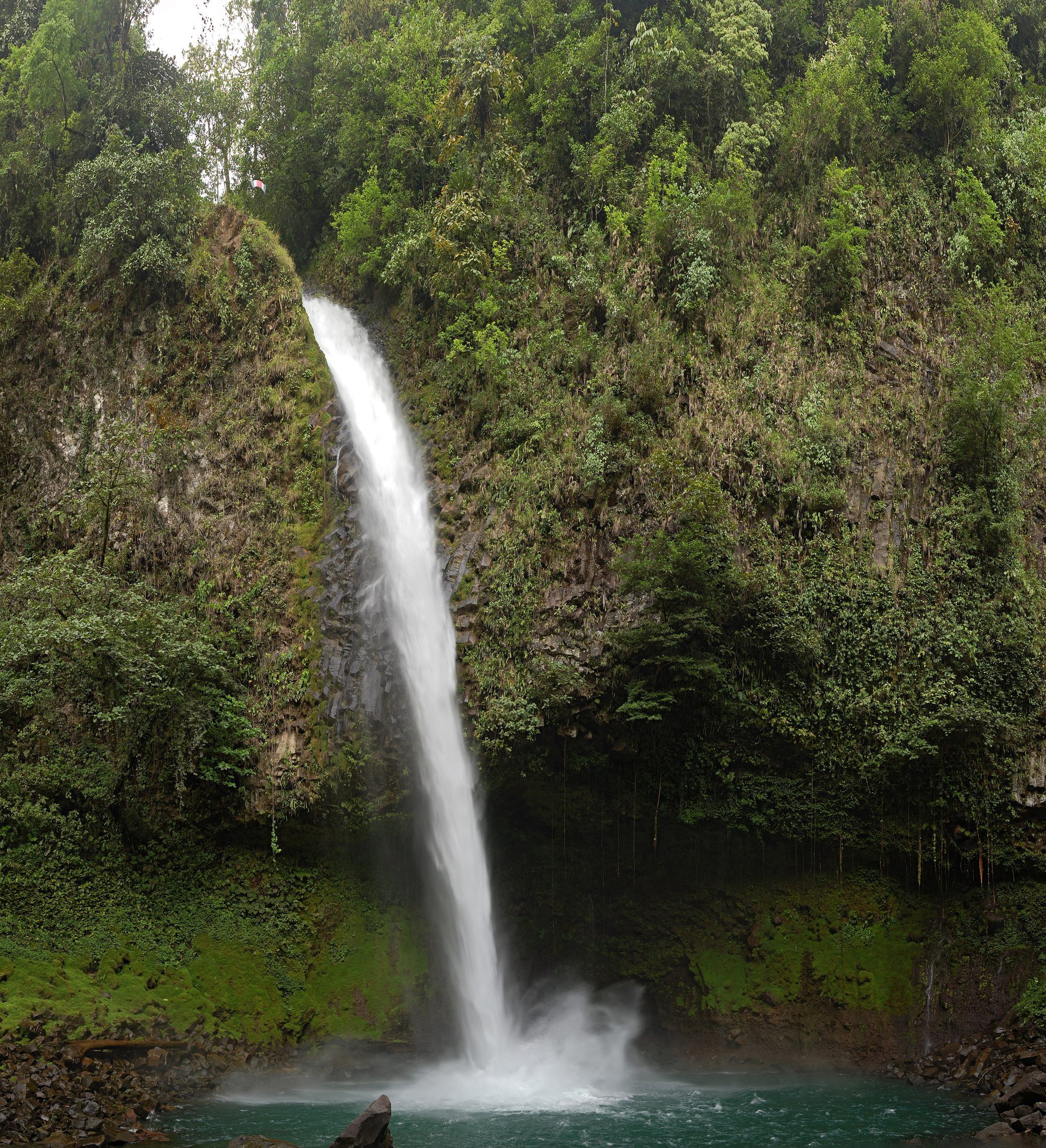 Photo: Derek Ramsey (Ram-Man), CC BY-SA 4.0
Find your own piece of the canopy.
Treehouses, bamboo houses and rainforest villas across 17 destinations — found, vetted and written up honestly.
Browse all destinations