The Best Bamboo Houses in the World
Ask ten people what makes a house count as a bamboo house and you'll get ten different answers, most of them wrong. A deck railing woven from bamboo doesn't count. Neither does a resort lobby with a few bamboo poles bolted to a concrete frame for the photos. A real bamboo house is built of the stuff — walls, floor structure, roof trusses, the works — which turns out to be a genuinely small and genuinely interesting list once you throw out everything that's just decorating a normal building. We went looking for the real ones: whole homes you book for yourselves, and a handful of boutique lodges built the same way, each checked against its own listing or a source we trust before it made this page.
How we picked these
Two tests, applied the same way every time. First, the material: the house had to be substantially built of bamboo — structural walls, a woven or slatted floor, a bamboo roof frame — not a concrete villa with bamboo trim on the deck. That ruled out a lot of gorgeous jungle stays that belong on our other lists instead; if you want the full spread of jungle architecture rather than just this one material, start with our wider ranking of the best jungle Airbnbs. Second, it had to be real and bookable now. Every whole-home rental here is checked against its own listing, and every lodge against its official site or a source we trust; if we couldn't confirm a place was still open, it isn't on this page, however good the photos were.
Most of what follows are whole-home rentals — you book the entire house, the same way you'd book any of the stays in our own destination directory. A few are boutique lodges with multiple houses or rooms and a shared front desk, and we've flagged every one of those, because staying in a nine-room bamboo hotel is a different trip than having the whole place to yourselves.
Why bamboo, and why now
Bamboo has been used to build houses across Asia and Latin America for centuries, but it spent most of that time as the material you used because you couldn't afford timber, not because you wanted to. Two things changed that. The first is the plant itself: certain species can shoot up something like 15 metres in under two years and be ready to harvest for construction in about three, against decades for a hardwood tree, which makes bamboo one of the fastest-renewing building materials on the planet — reason enough for architects hunting for genuinely sustainable materials to take it seriously again.
The second was an engineering problem, and it was solved in Colombia, home to guadua — a thick, fast-growing Andean bamboo species builders there have worked with for generations. Bamboo's weak point has always been the joint: nail through a hollow culm and it splits, which capped how tall or how loaded a bamboo structure could safely be. The architect Simón Vélez spent decades developing a fix — packing the joints with mortar and pinning them with steel rather than nailing through the cane — and proved it could carry real weight on pavilions shown everywhere from Hannover to Arles. He won the Prince Claus Award for it in 2009, and versions of his jointing method are behind most of the tall, dramatic bamboo buildings on this list.
Bali is where that engineering met hospitality. John and Cynthia Hardy built Green School — a campus constructed almost entirely of bamboo — outside Ubud in 2008, and the design studio that grew out of that project, Ibuku, went on to build Green Village and its showpiece house Sharma Springs, plus the boutique hotel Bambu Indah, all in the same Ayung River valley. Those projects put bamboo architecture in front of a design-magazine audience, and within a few years smaller operators across East Bali were building their own version at a domestic scale — the whole-home bamboo rentals that make up most of this list. From there the idea kept traveling: to hill country in Thailand, the North Shore of Maui, a jungle valley in Chiapas.
Good to know
"Open-air" is not a marketing word on this list — take it literally. Most of these houses have partial or no glass in their window openings, so insects, geckos and night sounds are simply part of what you're booking. Altitude fools people, too: Sidemen, Pai and Hawai'i's upcountry stays all sit high enough that nights run cool even when the jungle around them reads properly tropical. Pack a light layer for every one of these, even the ones that look like a beach trip in the photos.
East Bali's bamboo belt: Selat and Sidemen
Drive about ninety minutes east of Ubud into rice-terrace country under Mount Agung and you hit the highest concentration of rentable bamboo houses anywhere on earth — a loose cluster of small, independently run properties around the villages of Selat and Sidemen. None of these are part of a resort. Each is a single house, built by hand, usually with the owner or a caretaker living close by.
Widely credited as the house that started Bali's bamboo-rental boom in the first place. It's a two-storey home built almost entirely of bamboo beside a small river at the foot of Mount Agung, about ninety minutes from Ubud: an open-air ground floor with a hammock, bean bags and a real kitchen, and a king bed upstairs behind a triangular window framing the stream. Most openings have no glass at all, so the river noise, and the odd gecko, comes with the room. You'll want a scooter or a driver, since the nearest warung is a ride away, but Sidemen's rice terraces and the Agung water temples make an easy day trip. Rates run $100–170 a night, it books out months ahead, and it earns that.
Camaya is a small hillside cluster of handmade bamboo houses near Selat, and Suboya is the two-bedroom flagship: a curved bamboo shell with a hanging net suspended over the living space, built to be lounged in with a view of rice terraces dropping toward Mount Agung. There's a pool, real bathrooms, and staff who cook breakfast and arrange drivers, which softens what is otherwise a genuinely rural stay — nothing is walkable and phone signal is patchy in spots. Sunrise from the net, coffee in hand, is the entire point of booking this one. At $290–520 a night it's the splurge version of East Bali's bamboo scene, and it works for a couple or a comfortable split among four friends — see the full listing.
Veluvana is a small row of animal-shaped bamboo houses on the edge of Sidemen, and the Owl is the one everyone photographs: a swooping two-level build with a roofline like folded wings. Inside is one open-plan bedroom, two bathrooms despite the compact footprint, and a private plunge pool stepping straight off the deck into paddy-field views with the volcano behind. Breakfast is included, and Sidemen itself — an hour from Ubud's traffic, with weaving workshops in the village and salak farms up the road — is worth building a slow day around. It's built for two, the open design means insects are part of the deal, and evenings get cool enough to want a layer. Rates float between $150 and $280 a night — full details here.
This is the bamboo house with the giant egg-shaped window you've almost certainly seen on a screen without knowing its name — a two-storey, two-bedroom shell above the Ayung River in Abiansemal, roughly forty minutes from both Ubud and Canggu. The entire front opens to the river gorge, a spiral bamboo staircase and woven roof do most of the architectural talking, and there's a small plunge pool on the riverside deck. Be realistic about what you're paying for: it's open-air living, so expect humidity, insects around the lights at night and a steep walk down to the house. At $400–500 a night, it's better understood as a one- or two-night photo splurge than a base for exploring the island — see it here.
The architects who scaled it up: Green Village and Bambu Indah
Not every bamboo house on this list is a small, owner-run rental. A short drive from East Bali's cluster, closer to Ubud in the same Ayung River valley, two developments took the material and applied real architectural ambition — a design team, not a single builder — to it.
Green Village is a community of individually designed bamboo houses by the studio Ibuku, connected to the bamboo-built Green School and its own bamboo factory, and several of its houses can be rented on their own. Sharma Springs is the one to know: six storeys, currently the tallest bamboo structure on the island, with four en-suite bedrooms, a soaring open living room, a private plunge pool and a separate guest house. It's engineering as much as architecture — the kind of spiralling, cantilevered bamboo form that wouldn't stay standing without the jointing methods Colombia's guadua builders pioneered. This is the splurge end of the list, priced like a small luxury villa, and it's as close as most travelers will get to sleeping inside a genuine piece of contemporary architecture.
Bambu Indah is the hotel version of the same idea: about twenty individual houses on a bluff above the Ayung River, some built of bamboo and others of reclaimed antique Javanese wood, from the same Hardy family and Ibuku team behind Green Village. It's less about any single showpiece house and more about the range — thatched roofs, open bathing pavilions, river views — and about staying somewhere with a proper front desk, restaurant and pool rather than a lone rental miles from anywhere. It shows up on most serious rundowns of Bali's bamboo hotels for good reason. If Green Village is the architecture pilgrimage, Bambu Indah is the comfortable long weekend — see more of the island in Bali.
A bamboo house doesn't insulate you from the jungle. Most of them barely have glass in the windows. That isn't a design failure — for the good ones, it's the entire design.
Thailand: hill-tribe cottages to a private-island resort
Thailand's bamboo scene runs the full width of the price range, from a rice-country cottage that costs about what a decent dinner would at home to one of the most expensive resorts in Southeast Asia.
Technically a treehouse, and built almost entirely of bamboo, which earns it a spot here rather than forcing a strict either/or. It stands three storeys on a farm sanctuary about an hour southwest of Chiang Mai, where a fenced garden is home to 59 vaccinated rescue cats who will very likely visit your terrace — the wider 300-rai property is orange and longan orchards plus a reforestation area, and your stay helps fund the cats' care. Inside is a king floor mattress, a big terrace with real wifi, a basic kitchen and an outdoor bathroom with a hot-water tub, plus a proper Thai breakfast each morning. Skip it if you're allergic to cats, and know it isn't set up for toddlers. Rates start around $100 a night with breakfast included — full listing here.
"Tum-ma-da" means ordinary in Thai, which undersells this hand-built, woven-bamboo house in the rice-field countryside outside Pai — the backpacker valley reached by three hours of switchbacks north of Chiang Mai. There's a porch facing paddies and mountains, and the kind of quiet you only get a few kilometres outside a town center. The walls genuinely breathe, so you'll hear roosters and frogs along with the wind, and cool-season nights in December and January drop further than the daytime jungle heat suggests. At around $30 a night it's the least expensive stay on this entire list, and a good, characterful base for a week in the valley. See it here.
The other end of the Thai bamboo spectrum entirely. Soneva Kiri sits on a Thai island reached by seaplane from Bangkok or a charter boat from Trat, and its 36 pool villas, some running up to six bedrooms, are built largely from bamboo, dressed up with every resort amenity you'd expect at this price. It isn't subtle and it isn't cheap, and it's the only property on this list we'd call a genuine luxury resort rather than a lodge or a rental. If the East Bali houses above are proof that bamboo can be humble, Soneva Kiri is proof it can be theatrical too — see more of the country in Thailand.
Hawai'i and Chiapas: bamboo a long way from Bali
Neither Hawai'i nor southern Mexico has anything like Indonesia's bamboo tradition, but that hasn't stopped a handful of properties from building genuinely serious bamboo houses in both places — and one of them holds a real title.
A bamboo house standing on fourteen-foot stilts in the fern forest near Volcano, with a spiral staircase winding up to a lanai that wraps the entire structure in 360 degrees of canopy. Bamboo makes practical sense at this elevation — it's light, it shrugs off the near-constant humidity, and it looks at home among the tree ferns — but the house doesn't make you rough it: there's wifi and a smart TV alongside the jungle setting. Hawai'i Volcanoes National Park is a short drive, and Volcano village has a general store and a couple of decent restaurants. It sits around 3,700 feet up, so nights are cool and misty even though the forest below reads pure tropical. From $150 a night — see it here.
The title-holder: the Bamboo Temple, on the cliffs at Huelo where the Hana Highway starts getting interesting, was the first permitted bamboo structure in the United States, built in a nautilus spiral. A prism skylight crowns the bed so you fall asleep looking at stars, and the windows face the ocean down the Hana coastline. It's part of Maui Eco Retreat, a small off-grid property running on solar with its own gardens, so expect eco-lodge systems rather than hotel ones — nothing here is walkable, and Paia's restaurants are half an hour back toward town. Around 170 reviews sit at 4.8 stars, which for a stay this unusual says a great deal. From $250 a night — full listing here.
The roomiest bamboo house on this whole list: a two-bedroom villa in upcountry Haiku with about a thousand square feet indoors and another 800 spread across three covered lanais, each bedroom opening to its own deck. There's a deep two-person jacuzzi tub, a full kitchen and tropical gardens with a pool and hot tub — and, unusually for Maui's jungle-rental scene, it's a licensed, permitted property, with the permit number printed right in the listing. Haiku is a working green-belt town above the north shore, so expect passing rain and mud on your shoes; Ho'okipa Beach is fifteen minutes downhill, and you're well positioned for both the Road to Hana and a pre-dawn Haleakala sunrise run. From $250 a night — see it here, and more of the islands in Hawai'i.
The adventure pick on this list, and not far behind Pai for the least expensive stay here. This bamboo A-frame sits inside a small off-grid eco-project deep in the Chiapas jungle, about ninety minutes from the Palenque ruins, near indigenous villages on the Chacamax River. Solar power, spring-fed showers, no air conditioning and wifi that barely reaches — you come to swim in the river's clear pools, walk the forest with the property's resident guide, join a cacao workshop or a temazcal sweat lodge, and eat vegetarian meals grown mostly on site. At around $47 a night it undercuts almost everything else on this list, and it pairs naturally with a dawn visit to the ruins the next morning. Full listing here, and more of Mexico.
What actually makes a bamboo house worth the trip
Once you've looked at enough of these, three things separate the bamboo houses worth the flight from the ones that are just decorating a normal building.
The joints are the whole engineering problem
Bamboo is a hollow grass, not solid timber, and its weak point has always been where two pieces meet — nail through a culm the ordinary way and it splits. That's why load-bearing, multi-storey bamboo building is a fairly recent development rather than an ancient one: it took architects working in the guadua tradition, packing joints with mortar and steel rather than nails, to make tall or heavily loaded bamboo structures genuinely safe. The best houses on this list, from Sharma Springs' spiralling six storeys down to a small East Bali rental, all use some version of that jointing. If a bamboo house looks structurally ambitious, there's real engineering under the curves, not just craft.
Open-air is the design, not a missing feature
Almost nothing on this list has air conditioning, and most don't have full glazing either. That isn't corner-cutting — sealing a bamboo structure defeats the point of building with a material chosen for how well it breathes, and every house here instead leans on airflow, deep roof overhangs and shade. If you've never stayed somewhere that asks you to make peace with the outdoors coming in, treat it as part of the trip: bring a headlamp for when solar power runs low, real insect repellent, and a realistic expectation about hot water.
Ask how the bamboo was treated
Untreated bamboo is an easy target for rot and borer beetles and can fail within a few years; treated with borax or properly cured, it can hold up for decades. Well-run properties are usually upfront about this if you ask, because it's the difference between a house that gets rebuilt every few seasons and one that's a genuine long-term structure. It's also, honestly, the difference between a place designed to be sustainable and one that's just using bamboo for the look — the whole point of the material's growth speed is wasted if the house it becomes only lasts a season or two.
Common questions
What actually makes a house a "bamboo house" instead of just a jungle villa with bamboo trim?
The structure itself has to be bamboo — load-bearing walls, floor framing, roof trusses — not a concrete or timber building with bamboo fencing or furniture added for the photos. Every property on this list clears that bar, which is also why we left off some very good jungle stays that only use bamboo as decoration.
Are bamboo houses actually safe in storms and heavy rain?
The well-engineered ones are. Modern jointing methods, developed largely in Colombia, let bamboo carry real structural loads and hold up to wind and rain far better than the old nail-through-the-cane approach ever could. Quality still varies a lot between builders, though, so a property's track record and reviews are a reasonable proxy for how seriously it was engineered.
Do any of these have air conditioning?
Almost none. Bamboo houses are built to breathe, and sealing them up for air conditioning generally defeats that purpose, so expect fans, cross-ventilation and shade instead. A few of the pricier lodges, like Soneva Kiri, run closer to resort-standard climate control — check the specific listing rather than assuming.
Is Bali really the best place to see bamboo architecture?
For bookable jungle stays, yes — nowhere else comes close to the concentration of rentable bamboo houses in East Bali and the Ayung River valley. For the engineering that made ambitious bamboo building possible in the first place, credit goes to Colombia, where architects have worked in guadua bamboo for generations, even though the country doesn't yet have nearly as many bamboo houses set up for travelers.
How long do bamboo houses last before they need rebuilding?
It depends entirely on treatment. Untreated bamboo can be compromised by insects or rot within a handful of years; properly cured and borax-treated bamboo, maintained by an owner who knows what they're doing, can last decades. It's a fair question to ask a host directly before you book, and a good one has an answer ready.
Which of these is the cheapest, and which is the splurge?
Baanmaiphai Tum-ma-da in Pai, Thailand runs from around $30 a night, with Chiapas's A-Frame Bamboo Cabin close behind at about $47. At the other end, Aura House in Bali runs $400 and up for a couple of nights, and Sharma Springs and Soneva Kiri are priced like the small luxury properties they are.
The pattern, and where to go from here
Look back across all thirteen of these and the pattern holds: the best bamboo houses never hide the material or apologize for what it can't do. They let the walls breathe, they build the staircase out of the same cane as the roof, and they treat the lack of glass as a feature of the design rather than something to work around. The ones that try to have it both ways — bamboo looks with sealed, air-conditioned comfort — are rarely the memorable ones on this list.
If this has you thinking about a jungle trip more broadly, a few places to go next. For the other end of jungle architecture, see the best treehouse Airbnbs in the world — a couple of stays, like Jungleight Bali's bamboo-built Nest, could arguably belong on either list. If off-grid living is the part that appealed to you rather than the material itself, the best off-grid jungle cabins covers that ground directly. And if you're planning this as a couple's trip, most of the houses above sleep two by design — see more in the best jungle Airbnbs for couples. Otherwise, start with the full directory and go find the bamboo house that's actually yours.
- Green Village Bali — Sharma Springs, official site — house count, floor count and amenities for Sharma Springs.
- Archello — Sharma Springs Residence — architectural detail on Sharma Springs and Ibuku's design work.
- Finn's Beach Club — Bali's bamboo hotels guide — context on Bambu Indah among Bali's bamboo hotel scene.
- CNN Travel — Soneva Kiri — Soneva Kiri's villa count and bamboo-heavy construction.
- CNN Style — bamboo and the sustainable-building movement — bamboo's growth rate and role as a construction material.
- Cathay Pacific — bamboo hotels, a growing trend — background on bamboo hotel design and material properties.
- Wikipedia — Simón Vélez — Vélez's jointing method, career and the 2009 Prince Claus Award.
- The City Paper Bogotá — the man who went "bamboo" — background on Vélez and Colombia's guadua bamboo tradition.
More from the Journal.
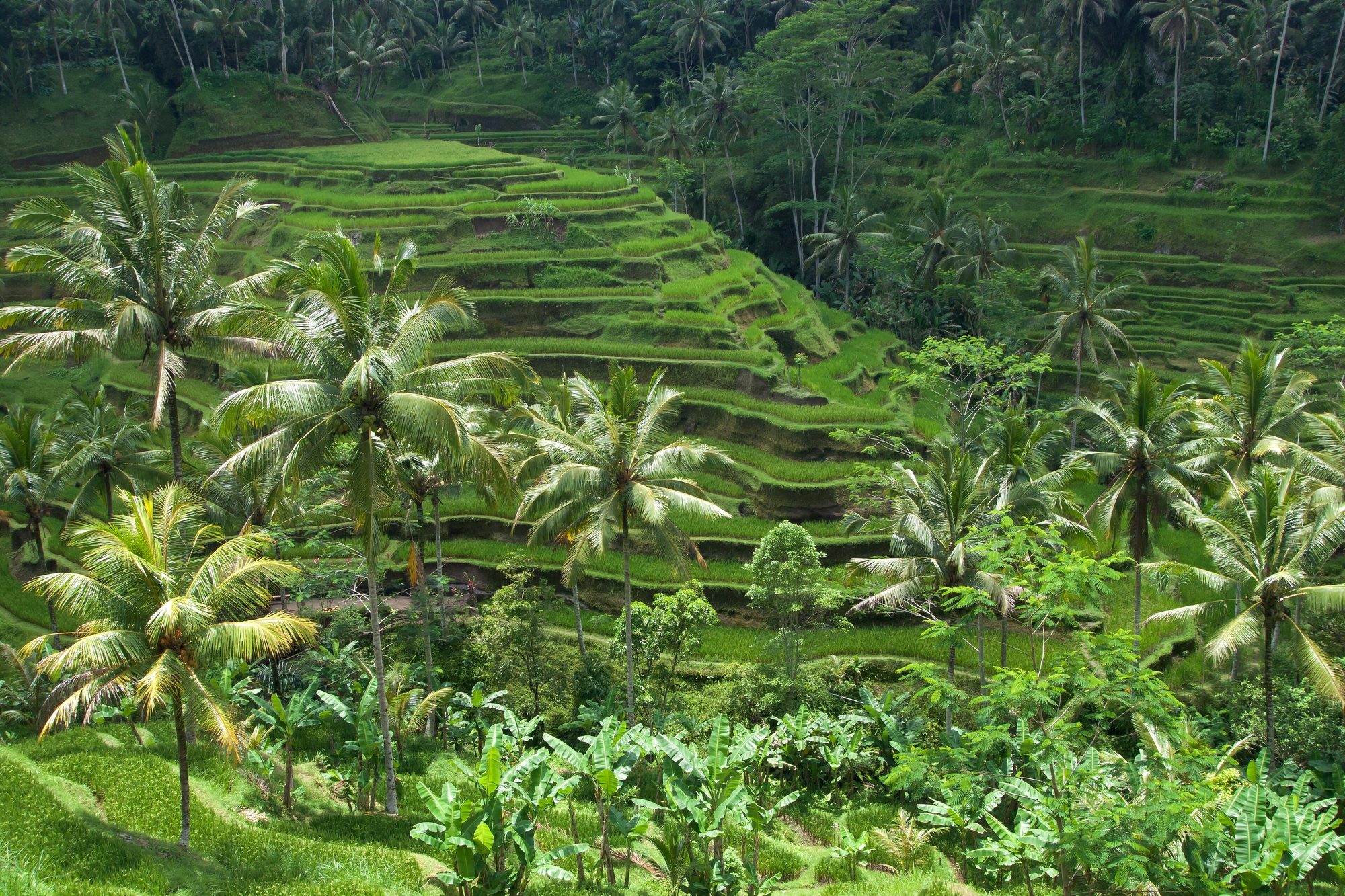 Photo: Vyacheslav Argenberg, CC BY 4.0
The Best Jungle Airbnbs in the World
Our honest, unpaid ranking of the jungle stays that changed what a night in the forest can be — from Bali's bamboo masterpieces to the floating bungalows of Thailand.
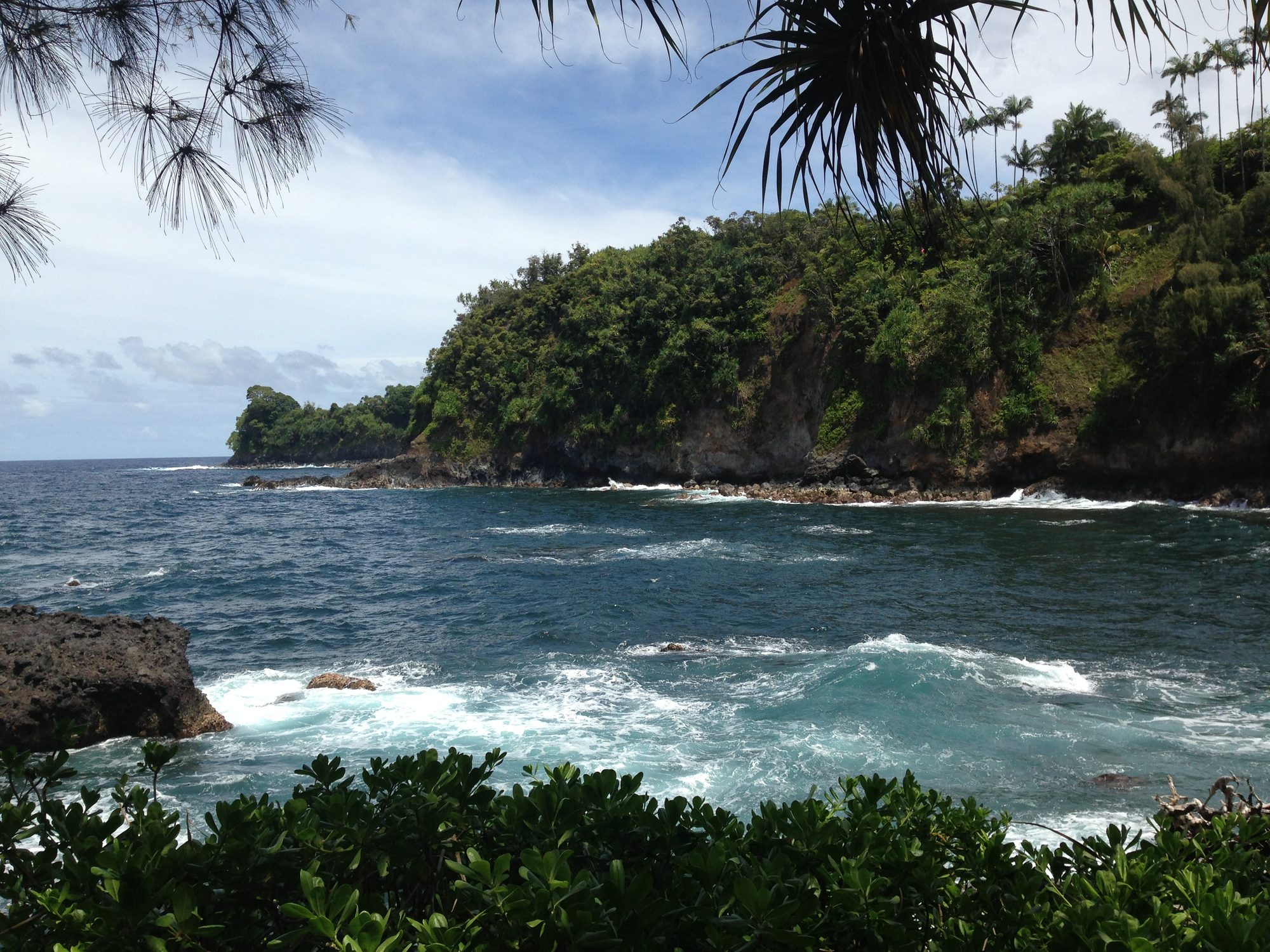 Photo: AlaskaDave, CC BY-SA 3.0
The Best Jungle Airbnbs in the USA
Real rainforest, no passport required — the best treehouses and bamboo houses across Hawai‘i, Puerto Rico and Florida.
 Photo: Bernard DUPONT from FRANCE, CC BY-SA 2.0
The Best Treehouse Airbnbs in the World
Our honest ranking of the treehouses worth crossing an ocean for — from canopy platforms in the Amazon to stilted glass boxes above the rainforest floor.
 Photo: Derek Ramsey (Ram-Man), CC BY-SA 4.0
Find your own piece of the canopy.
Treehouses, bamboo houses and rainforest villas across 17 destinations — found, vetted and written up honestly.
Browse all destinations