The Best Off-Grid Jungle Cabins in the World
"Off-grid" gets stamped on jungle listings the way "authentic" gets stamped on restaurants — mostly by places that have never actually lost power. This list only counts the real thing: cabins and small lodges genuinely running on solar panels and batteries, rainwater catchment or a spring line, often with no grid connection for miles in any direction. Some of these are simple to the point of stubborn. Others run fast wifi, a private plunge pool and a proper kitchen off the same solar array and would suit someone who has never once thought about where their electricity comes from. What they share is a silence at night that has nothing to do with soundproofing, and a system somewhere on the property — a panel, a battery bank, a tank — that you will actually notice during your stay.
What off-grid actually means
Every jungle listing site uses "off-grid" somewhere in the description, and most of the time it means nothing more than "there's a tree in the photo." For this list, off-grid had to be true in a specific, checkable way: the property runs its own power, generally solar with a battery bank, sometimes backed up by a generator for the days the sun doesn't cooperate, and it manages its own water, whether that's a rainwater cistern, a spring line or a well. No grid hookup, or one so far away that the property built its own system rather than wait for a line to reach it. We didn't require total isolation — several of these run Starlink now, which changes what "unplugged" even means in 2026 — but we did require the power and water to be genuinely self-contained, not a listing photo of a single decorative panel bolted to a shed that's really running off the same circuit as the main house.
That standard ruled out a lot of gorgeous jungle stays we've covered elsewhere on the site, including most of Bali's bamboo houses and Thailand's canopy villas, which look every bit as remote as anything here but are, in practice, wired to the same grid as the nearest village. It also means Costa Rica shows up just once on this list rather than four or five times, which surprised us — the country popularized the modern jungle treehouse, but a lot of its stays run on a diesel generator behind a hedge rather than a true solar system, which is a perfectly reasonable way to power a remote lodge and simply not what this particular list is about.
Most of what follows are whole-home rentals, the kind you book entirely for your own group, the sort you'll find throughout our destination directory. A handful are small boutique lodges with a few rooms or chalets and a shared dining setup rather than a private kitchen — we've flagged every one of those, because choosing between your own cabin and a lodge with staff and a set dinner hour changes the whole trip.
Hawai'i and Puerto Rico: the American outliers
These are the two easiest off-grid jungle stays for American travelers to reach, no passport required, and both ended up off-grid for the same practical reason: it's often cheaper and faster to run a solar array and a water tank out to a remote rainforest property than to trench in a power line and a water main.
The most photographed off-grid stay on this whole list, and it earns the attention honestly. This treehouse stands about fifteen feet up in the ohia and fern jungle of Fern Forest, roughly ten miles from Hawai'i Volcanoes National Park, and it runs entirely on its own systems: solar panels for the lights — leave something on when you head out for the day and you'll come home to dead batteries — and rainwater catchment for the shower and toilet, with bottled water left out for drinking. Underneath the main floor hangs a covered, swinging bed that guests reliably disappear into for entire afternoons, and the outdoor shower has rotating glass panels open straight to the jungle, as one detailed write-up of the property lays out. Know what you're booking before you commit: the final stretch of road is bumpy red cinder, this is rural lava-zone Puna with no shops for miles, and it rains most days, which is exactly why everything around the house is this green. It books out months ahead. See more of the islands in Hawai'i.
A farm-stay retreat up in the Toro Negro highlands at the spine of the island, about as far from resort Puerto Rico as the map allows, and genuinely self-sufficient: solar power, spring water, and its own river frontage with secluded waterfalls the hosts have built outdoor soaking tubs around, as the listing itself spells out. Fast Starlink wifi runs alongside all of that, which is the honest modern version of off-grid — you can post the waterfall photo the same afternoon you took it. Resident peacocks wander the grounds, which guests either find charming or a little loud at dawn; consider yourself warned either way. The mountain roads in are narrow, so arrive before dark on your first drive up. From here you're positioned for Toro Negro State Forest's cloud-forest trails, which most visitors to Puerto Rico never make it to.
Costa Rica's Osa Peninsula
Costa Rica gets one entry on this list rather than the four or five you might expect from the country that made the jungle treehouse famous, and the reason is specific to the Osa Peninsula: this corner of the country is remote enough, and its infrastructure thin enough, that going solar is often the practical choice rather than the eco-conscious one.
Set across roughly 185 acres on the ridges above the Osa's wild Pacific beaches, El Remanso runs its cabins and platform tents entirely on solar power with enough battery capacity that you won't spend the trip rationing electricity — a detail confirmed by a recent survey of the peninsula's off-grid lodges, not just the property's own brochure. The peninsula around it is the reason people fly this far south in the first place: a large share of the country's biodiversity crammed onto one finger of land, with Corcovado National Park close enough for a proper day trip. Trails run straight from the property down to the beach, and the lodge leans into surf and yoga alongside the wildlife-watching, so it isn't a purely rustic outpost. Budget real time and a 4x4 to get here; nothing about the Osa is a quick stop. See more of Costa Rica, including the country's other jungle stays, most of which run on more conventional power.
Mexico: solar in cenote country
The jungle around Tulum and inland toward Chiapas runs on a strange mix of fiber-optic wifi and honest rusticity, and the genuinely off-grid stays tend to sit further from the beach road, where a solar setup is simply more sensible than paying to extend the grid through limestone and jungle.
The cheapest stay on this entire list, and one of the most genuinely off-grid. This bamboo A-frame sits inside a small eco-project deep in the Chiapas jungle, about ninety minutes from Palenque's Mayan ruins near indigenous villages on the Chacamax River, running on solar power with spring-fed showers, no air conditioning and wifi that's more theoretical than practical. You come here to swim in the river's clear swimming hole, walk the forest with the property's resident guide, sit in on a cacao workshop or a temazcal sweat lodge, and eat meals grown mostly on site. There's one bed, one bath, and a nightly rate that undercuts nearly everything else here by a wide margin. Pair two nights with a dawn visit to the ruins and you've done Chiapas properly.
A dome-roofed treehouse built on the edge of the Mayan jungle a few minutes outside Tulum, with public cenotes about 150 meters from the door and more reachable by bike. It runs off-grid, cooled by fans and night air rather than AC, and the hosts carry breakfast out to the treehouse every morning along with purified drinking water. The trade-off is stated upfront rather than buried: no air conditioning in a genuinely hot part of the world, and a jungle that gets loud at dawn with monkeys and toucans, which is either exactly what you came for or worth knowing in advance. Rent bikes or a car for the beach and town runs. For two people who'd rather have cenotes and canopy than a beach club, it's one of the better-value stays anywhere in the Maya jungle.
Brazil's Atlantic coast
Brazil's Mata Atlântica, the Atlantic rainforest running down the coast between Rio and São Paulo, produces two very different kinds of off-grid stay: architect-built houses with every modern comfort running on solar, and places you can only reach by boat or a multi-hour trail, where going off-grid was never really a choice.
Praia do Bonete is the wild side of Ilhabela, a fishing-village beach on the island's south coast with no road in at all — you arrive by boat or walk a three-to-four-hour rainforest trail past waterfalls, and that filter is exactly why it stays uncrowded. The house itself won first prize for Built Work from Brazil's Institute of Architects: recyclable materials, permaculture systems, bedrooms that open up to merge with the living space by day, and a bio-septic loop that feeds a banana grove. It runs on solar with satellite internet, and electricity is deliberately limited, so pack accordingly. Days here are surfing, hiking in the state park, diving and birdwatching. Plan your boat transfer with the host in advance; this isn't a turn-up-whenever kind of place.
The proof that off-grid doesn't have to mean roughing it. Casa Arca is an architect's house in the forest, designed by Atelier Marko Brajovic, set inside Aldeia Rizoma, an ecological community about twenty minutes from Paraty's colonial center. The arched timber structure sleeps six across two bedrooms plus a convertible living room, and runs on solar power alongside Starlink internet fast enough for video calls, a sauna and an EV charger — the everyday details are as sorted as any conventional villa. What you're actually paying for is outside: a natural waterfall and swimming hole within walking distance, monkeys and toucans moving through the canopy, and trails straight from the gate. You'll want a car, since the access road is forest track and restaurants are a drive away. More of Brazil is worth exploring beyond this one bay.
Off-grid doesn't mean unplugged from comfort anymore. It means the comfort has to travel through a battery first, and somebody on the property has to actually think about where the water and the electricity come from — which, it turns out, is most of what makes these places feel different from a hotel.
Peru and Colombia: deep South America
Get far enough into the Amazon or the Colombian Pacific and off-grid stops being a design choice and becomes the only option; there's no grid within reach to opt out of, so every lodge out here has run its own power from the day it opened.
Run by Rainforest Expeditions, Refugio Amazonas sits in its own reserve in the Tambopata buffer zone, reached by a boat run of around four hours up the Tambopata River from Puerto Maldonado — deeper in than most of the region's lodges, which is exactly why the wildlife shows up closer to camp. The thirty-two rooms are built from local timber and palm thatch with one wall left open to the forest, and power comes from solar panels backed by a generator for the days the sun doesn't deliver, which is the honest, common-sense version of off-grid rather than a purist one. The draw is the clay lick nearby, where macaws and parrots arrive in noisy waves at first light, best seen from the property's canopy tower. It's sold as a multi-day, all-inclusive package rather than a nightly rate, transfers and guiding included. More of Peru's Amazon lodges work the same way.
Good to know
Several of the remotest stays on this list, particularly the Amazon and Chocó lodges, sell by the multi-day package rather than the night — Refugio Amazonas and El Cantil both bundle transfers, meals and guiding into one price instead of quoting a nightly rate. Read the fine print before comparing costs across this list; a three-day, all-inclusive Amazon package and a $47-a-night cabin in Chiapas aren't really being measured against each other, even though they'll sit side by side in your browser tabs.
The most stripped-down stay on this entire list. El Cantil is seven simple wooden cabins set exactly where the Chocó rainforest runs out and the Pacific begins, each with a private bath, mosquito nets and a hammock veranda, and none of them wired for electricity at all; the generator lives over in the dining kiosk, so evenings are lit by whatever you brought and the sound of the surf. Getting here is its own commitment: a fifty-minute flight from Medellín to Nuquí, then about forty minutes by motorboat up the coast, with no other way in. The all-inclusive rate covers jungle hikes, surfing and, from July to October, humpback whales offshore. It's wet, remote and deliberately unplugged, for travelers who consider the lack of a power socket in the room a feature rather than an inconvenience. Explore more of Colombia's jungle coast.
Sri Lanka: three ways to unplug
No single country on this list packs in more genuinely self-sufficient jungle stays than Sri Lanka, split between the wet-zone rainforest around Sinharaja and the dry-zone forest near Yala and Sigiriya, and the three below cover a real range of comfort levels.
An off-grid camp about ten kilometers from Buttala and eight from the quieter northern block of Yala, where the safari trucks thin out. There are only three tented chalets at Tree Tops, raised on platforms with a king bed and en-suite bath each, run entirely on solar power with candlelit dinners after dark — small enough that it never feels like a hotel and doesn't try to. You walk the forest straight from camp with a guide, then head into Yala for the headline cast: leopard, elephant, sloth bear, deer, wild boar. Rates include all your meals, the only sensible arrangement this far from a restaurant. It's deliberately stripped-back and better for it.
Tucked among tea plantations and old forest near Sinharaja, running on its own water source and solar power, this is the off-grid option for a group rather than a couple: the two-room Forest Villa sleeps up to six, with a loft slung over the jungle and a private veranda where the morning belongs to the birds. Jackfruit and other large trees press right against the structure, giving it a treehouse feel without the rope ladders or the trap door. Rates aren't published, so plan to ask directly rather than book instantly. The wildlife and birding along Sinharaja's edge are the reason to make the trip, and having the whole villa to your own group is the reward for coming this far off the main road.
The low-impact counterpart to the other two, and proof you don't need much beyond a good site to make an off-grid stay work. Back of Beyond sits on about seven acres between Sigiriya and Dambulla, where two streams meet at the base of a hill, and the treehouse itself is the real thing: a sleeping platform built high in a Kon tree with a base cottage below, taking up to five guests, alongside boulder cottages and a family longhouse if you'd rather keep your feet on the ground. It runs on natural light and ventilation with rainwater harvesting and deliberately no air conditioning, which makes for a hot, honest sort of place rather than a polished one. Set expectations correctly: this is dry-zone forest, not the wet rainforest further south, and the elephant gatherings at Minneriya and Kaudulla national parks are within reach for a day trip. More of Sri Lanka's forest stays sit within a few hours of here.
Good to know
Off-grid systems run on rules that don't apply anywhere else you've stayed. Solar batteries recharge during the day and drain overnight, so a light left on by accident, or a laptop charging while you're out on a hike, can leave you without power by dinner. Rainwater tanks are finite too — a long shower after a muddy trail feels reasonable until you're the third guest that week to take one. None of the properties on this list expect you to arrive knowing this, and hosts are generally quick to explain the specifics on arrival, but reading a listing's house rules before you go saves an awkward evening by candlelight that wasn't actually part of the plan.
What the best off-grid cabins have in common
Look across all twelve of these and a few patterns hold up in every country, tea estate and cenote we found them in.
The power system is sized for the honest version of your stay, not the brochure version
The properties that work well tell you what the solar array can and can't do before you arrive. Dreamy Tropical Tree House warns you outright that leaving a light on will drain the batteries by evening, and Refugio Amazonas is upfront that a generator backs up the panels rather than pretending the sun alone covers thirty-two rooms. The stays that disappoint are usually the ones that oversold the system on the listing page and undersold it in person. If a property won't tell you roughly how the power works before you book, that's worth asking directly rather than finding out at nine at night with a dead phone.
Water is the part people forget to ask about
Everyone asks about wifi before booking an off-grid stay. Almost nobody asks about the water, and it matters more. Rainwater catchment, like Dreamy Tropical's or Back of Beyond's, depends on how much it's rained recently, which in a rainforest is usually a lot but not always predictable. Spring-fed systems, like the ones at the Chiapas A-frame and the Orocovis retreat in Puerto Rico, tend to be steadier but still finite. None of this is a reason to avoid these stays. It's a reason to take a shorter shower than you would at home and not think twice about it.
Remoteness is usually the reason, not a side effect
Praia do Bonete and El Cantil are off-grid because there's no practical way to run power to them, not because the owners made a statement by refusing a grid connection. That's true across most of this list: the properties went solar because the alternative was no power at all, not because solar was the trendier choice on a moodboard. It's a useful test for any jungle listing that claims to be off-grid: ask why, and if the honest answer is "because it's the only option out here," you've probably found the real thing.
Common questions
Is off-grid the same as no wifi?
No, and increasingly not even close. Starlink has changed what off-grid means in practice — several stays on this list, including Casa Arca in Brazil and the Orocovis retreat in Puerto Rico, run fast satellite internet off the same solar system that powers the lights. Off-grid describes where the power and water come from, not whether you can get online.
Will I have air conditioning?
Rarely, and that's mostly a physics problem rather than a design choice. Air conditioning draws far more power than a modest solar array and battery bank can comfortably supply, so most off-grid jungle stays lean on fans, cross-ventilation, elevation and shade instead. A few of the larger lodges on this list, like Refugio Amazonas, skip AC in the rooms by design even with a generator available, because open walls and screens do the job in that climate.
How much should I expect to pay?
This list runs from about $47 a night for the Chiapas A-frame to several hundred dollars a night for a lodge package in the Amazon or Chocó, with plenty of the whole-home rentals landing in the $100–250 range. Off-grid isn't automatically cheaper or pricier than a grid-connected jungle stay; it mostly tracks how remote the property is and whether meals and transfers are bundled in.
What should I pack that I wouldn't normally bring?
A headlamp or flashlight, since several of these run on batteries that go quiet late at night. A dry bag for phones and cameras if your stay involves a boat, a river or an outdoor shower, which more of these do than you'd expect. A portable battery pack for your own devices is smart insurance, along with a genuine willingness to take a shorter shower than usual.
Are these safe to book without much Spanish, Portuguese or Sinhala?
Generally yes. Every property on this list either communicates in English directly or books through Airbnb or a platform with English support, and hosts who run off-grid operations tend to be practiced at explaining their systems clearly to guests who've never dealt with a rainwater tank before. The bigger language gap tends to show up with drivers and boat operators on the final leg, so it helps to have your host confirm those arrangements in writing before you travel.
Can families with young kids stay at these?
Some, with the right expectations. Group-sized options like Natural Mystic Sanctuary's Forest Villa in Sri Lanka work fine for families who don't mind rustic systems. Others, particularly adventurous access points like El Cantil's flight-and-boat routing, suit adults and older kids better than toddlers. Read the access details on any listing before assuming it works for your group.
The pattern, and where to go from here
Twelve stays, eight countries, and the same basic bargain everywhere: you trade a guaranteed, unlimited power supply for a quieter, more honest relationship with where your electricity and water actually come from. None of these are pretending to be something they're not, which is rarer on a best-of list than it should be — plenty of jungle stays put a single solar panel in a listing photo and call it a day, and we left every one of those off. What made the cut all run real systems, sized for the place they're in, with hosts who'll tell you the limits before you find them yourself at ten at night.
If this has you planning rather than just reading, a few places to go next. For the treehouse-specific version of this list, with more properties and a wider price range, see the best treehouse Airbnbs in the world. If Casa Arca or El Remanso caught your eye more than the stripped-back camps did, the best luxury jungle villas in the world covers that end of the spectrum properly. Curious why stays like these keep filling up months in advance, we get into that in why jungle stays are booming. And if you've read this whole list wondering whether you could build something like it yourself, we wrote the practical version in how to start a jungle Airbnb. Otherwise, start with the full directory and find the corner of forest that's actually yours to unplug in.
- The Mandagies — Dreamy Tropical Tree House — off-grid solar and rainwater catchment details, Fern Forest, Hawai'i.
- Villagio Musca — Costa Rica Off-Grid Stays — El Remanso and other solar-powered lodges on the Osa Peninsula.
- Airbnb — A-Frame Bamboo Cabin, Palenque — solar power, spring-fed showers and off-grid systems on the Chacamax River.
- Airbnb — Off-Grid with Secluded Waterfalls & Jungle Baths, Orocovis — solar power, spring water and Starlink in Toro Negro, Puerto Rico.
- Airbnb — Award-winning Jungle Beach Ecohouse, Praia do Bonete — architecture prize, boat/trail-only access and solar systems.
- Rainforest Expeditions — Refugio Amazonas — solar-and-generator power, room design and Tambopata access.
- Tree Tops Jungle Lodge — official site — off-grid tented chalets and solar power near Yala National Park.
- Back of Beyond Nature Retreats — official site — Dehigaha Ela treehouse design, rainwater harvesting and no air-con policy.
- El Cantil Ecolodge — official site — cabin construction, no in-cabin electricity and access via Nuquí.
More from the Journal.
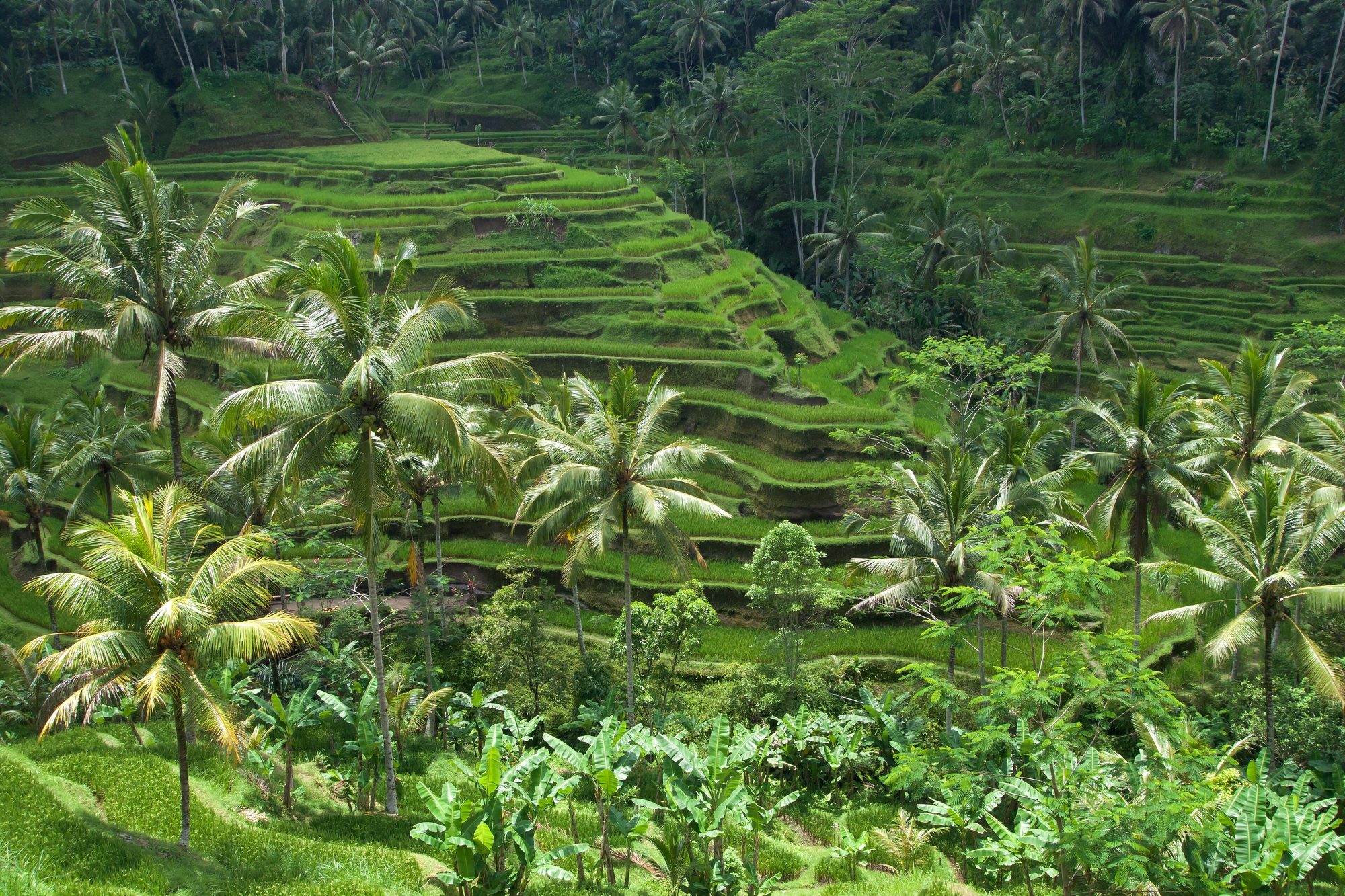 Photo: Vyacheslav Argenberg, CC BY 4.0
The Best Jungle Airbnbs in the World
Our honest, unpaid ranking of the jungle stays that changed what a night in the forest can be — from Bali's bamboo masterpieces to the floating bungalows of Thailand.
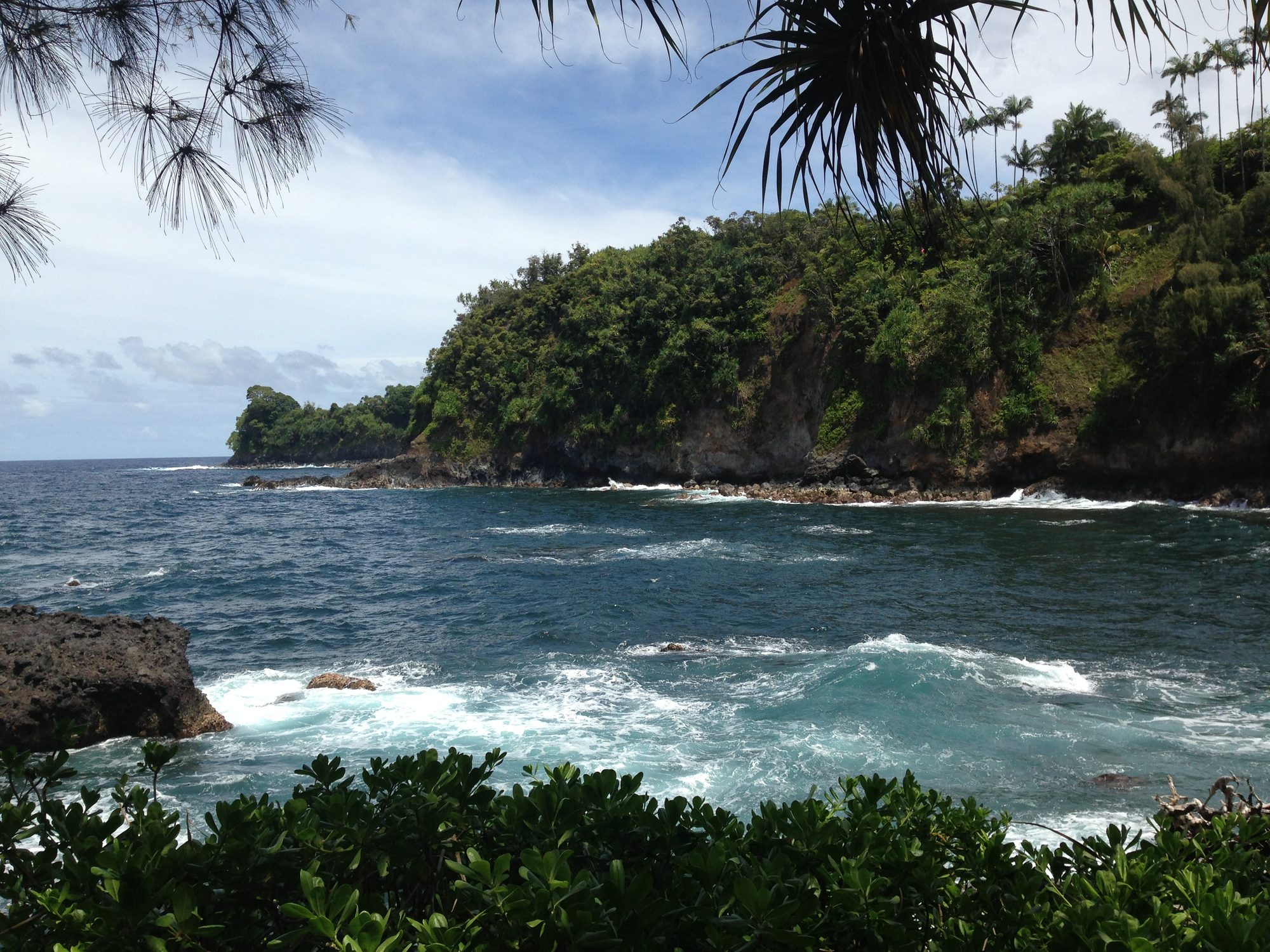 Photo: AlaskaDave, CC BY-SA 3.0
The Best Jungle Airbnbs in the USA
Real rainforest, no passport required — the best treehouses and bamboo houses across Hawai‘i, Puerto Rico and Florida.
 Photo: Bernard DUPONT from FRANCE, CC BY-SA 2.0
The Best Treehouse Airbnbs in the World
Our honest ranking of the treehouses worth crossing an ocean for — from canopy platforms in the Amazon to stilted glass boxes above the rainforest floor.
 Photo: Derek Ramsey (Ram-Man), CC BY-SA 4.0
Find your own piece of the canopy.
Treehouses, bamboo houses and rainforest villas across 17 destinations — found, vetted and written up honestly.
Browse all destinations