Dominica: The Nature Island Guide
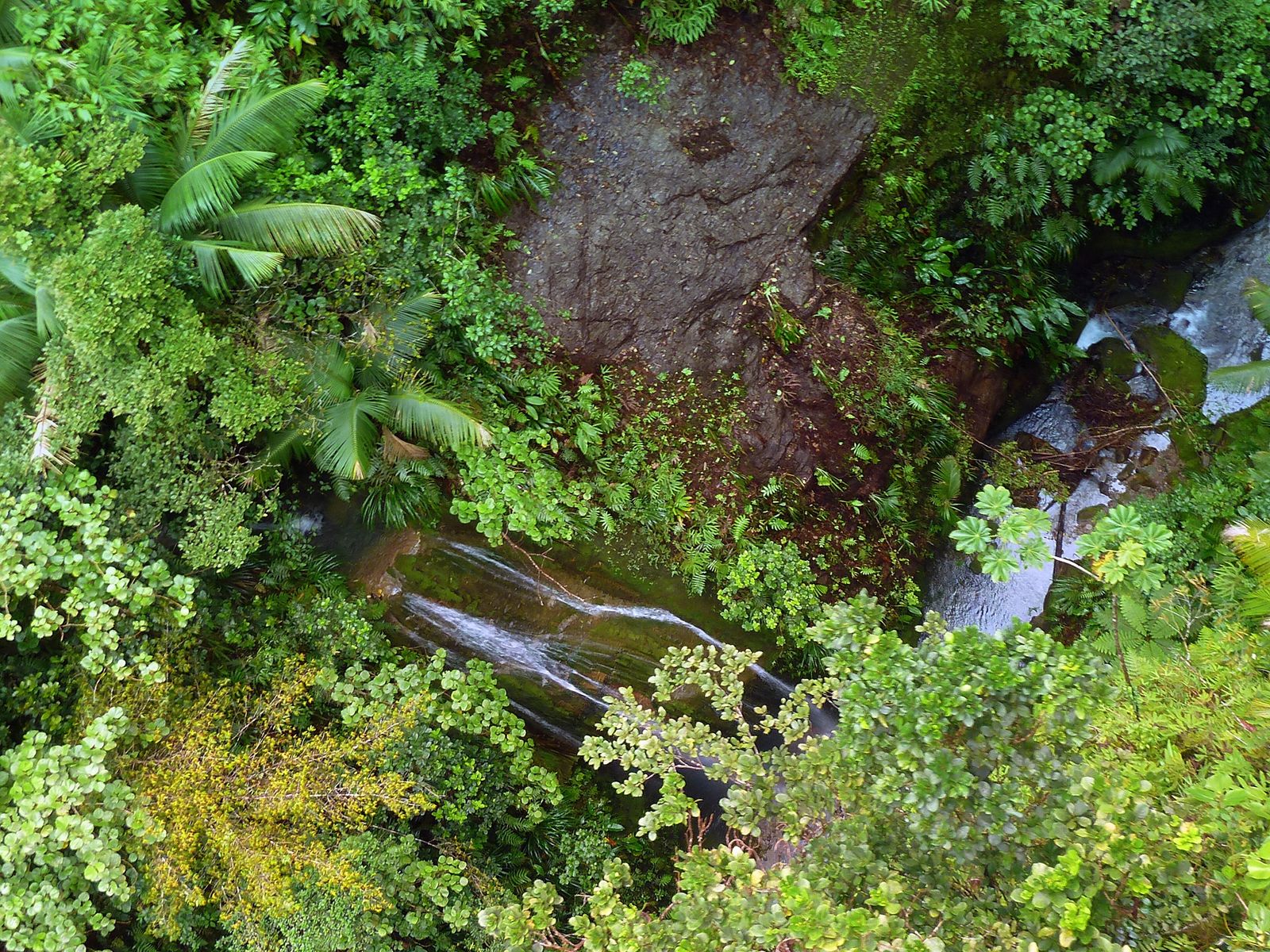
Dominica gets confused with the Dominican Republic often enough that the tourist board has spent decades trying to fix the spelling in people's heads, and the confusion does the smaller island a disservice — because Dominica isn't a beach destination with some jungle attached, it's a volcanic, rainforest-covered mountain rising straight out of the sea with a coastline as an afterthought. This is the Commonwealth of Dominica, a former British colony in the Lesser Antilles between Guadeloupe and Martinique, nicknamed the Nature Island by its own government and, unusually for a tourism slogan, more or less accurate. Roughly sixty percent of the country is still forested, a boiling lake sits inside a national park that UNESCO has listed for its volcanic and biological rarity, sperm whales work the deep water offshore year-round, and the island's only real sand beaches worth mentioning are a handful of dark volcanic ones on the east coast. This is a working guide to traveling Dominica's rainforest interior — the national parks, the regions, when to go, how to get around an island with no direct long-haul flights, and where to actually stay.
Dominica's jungle, honestly
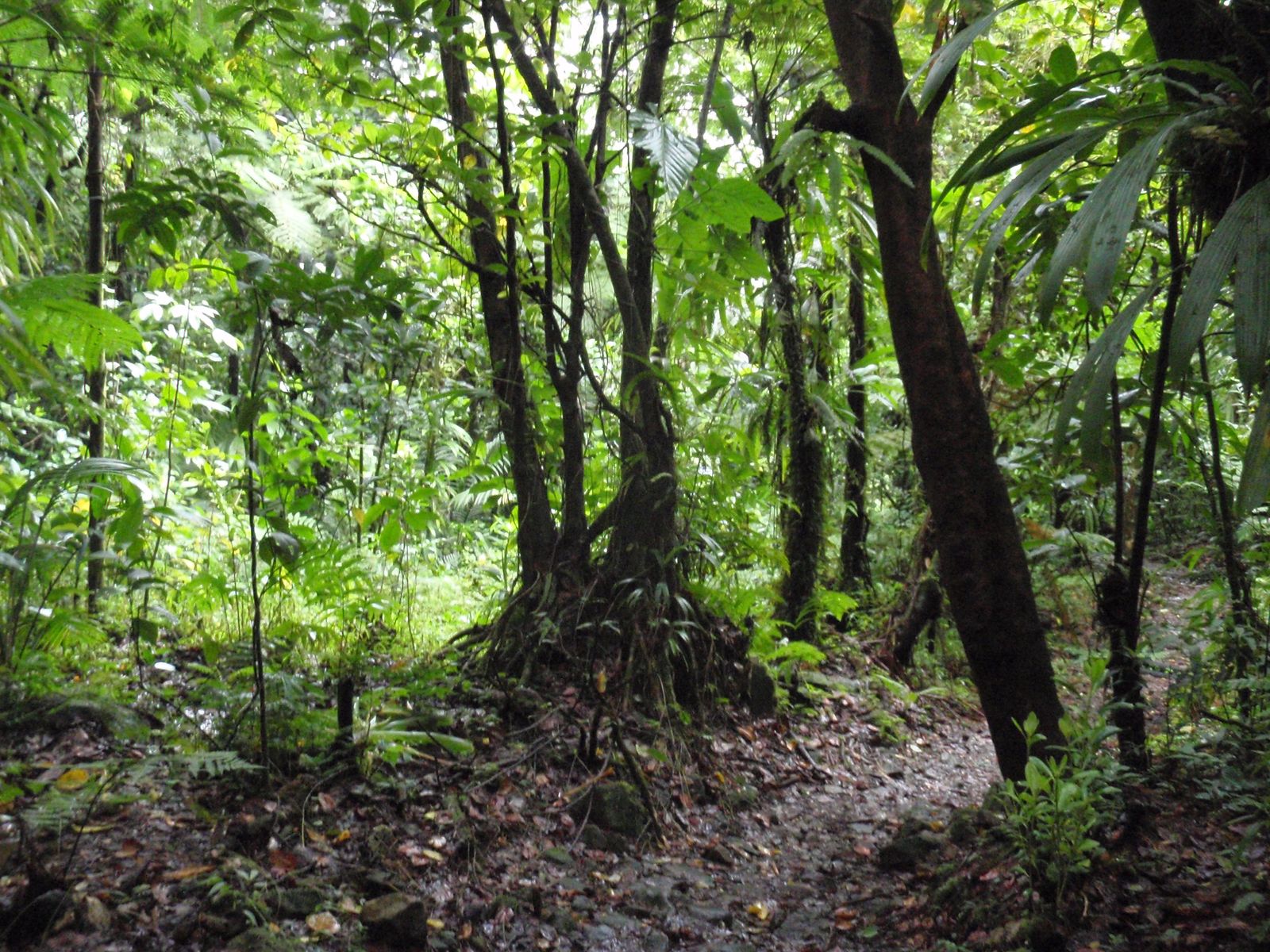
Dominica is small — about 290 square miles, twenty-nine miles long — and almost entirely mountainous, the visible tip of a volcanic chain that never stopped being active. Nine volcanoes are strung along its spine, and the highest, Morne Diablotins, tops out at nearly 4,750 feet, tall enough to hold cloud forest and to snag rain out of nearly every passing weather system the Atlantic sends its way. That rain is the whole story here: Dominica gets soaked, some interior peaks receiving well over 300 inches a year, and the result is a rainforest that has never been meaningfully cleared for plantation agriculture the way most of its Caribbean neighbors were. Where islands like Barbados or Antigua were flattened for sugarcane centuries ago, Dominica's terrain was simply too steep and too wet to farm at scale, and the forest that would have been cut down elsewhere is still standing.
The honest caveat, and it matters: Dominica doesn't have the beach that most Caribbean trips are built around. The coastline is mostly black volcanic sand, cliffs and rocky coves rather than the white-sand postcard image, and cruise ships that stop in Roseau tend to funnel passengers toward hiking and river trips rather than beach clubs, because there mostly aren't beach clubs. That's the trade, and it's a good one if what you actually want is rainforest — Dominica offers a density of accessible jungle, waterfalls and volcanic features that's hard to match anywhere else in the Caribbean, all within a landmass you can drive across in a few hours. It also carries real, still-visible history: Hurricane Maria struck the island directly in September 2017, causing catastrophic damage to homes, infrastructure and forest canopy across nearly the whole country. The island has spent the years since rebuilding with a stated goal of becoming the world's first climate-resilient nation, and the forest itself has largely recovered — canopy regrows fast in a place this wet — but it's worth knowing the backstory behind the newer roofs and the government's resilience messaging you'll see around the island.
Dominica also holds something almost no other Caribbean island can claim: a living Indigenous community. The Kalinago Territory on the northeast coast is home to the descendants of the Kalinago people — the group early European colonizers called Caribs, and the namesake of the Caribbean itself — who hold roughly 3,700 acres under a degree of self-governance that goes back to an 1903 land grant, one of very few places in the region where Indigenous Caribbean culture survived colonization in place rather than being displaced or erased. A visit here is a genuinely different layer to add to a jungle trip, not a roadside curiosity.
The regions, and how they differ
Dominica is small enough that most visitors base themselves in one or two spots and day-trip the rest, but the island still breaks into distinct zones worth knowing apart before you book anything.
Roseau and the central rainforest interior
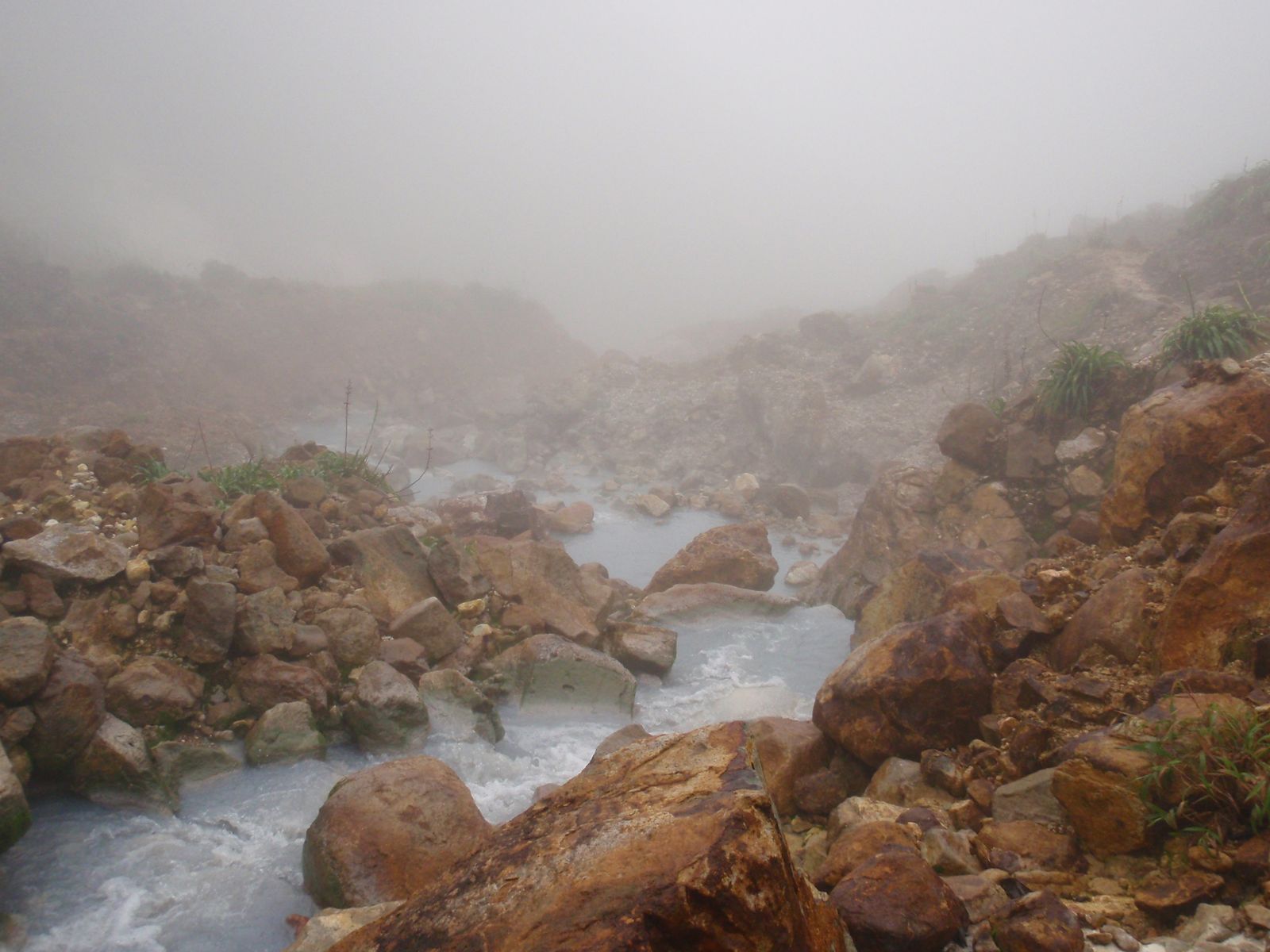
Roseau, the capital, sits on the southwest coast and is where most inter-island flights and cruise ships arrive relative to the rest of the country. Inland and uphill from Roseau, within a few miles, the terrain climbs fast into rainforest, and this is where the island's headline attraction sits: Morne Trois Pitons National Park, a UNESCO World Heritage Site covering close to 7,000 hectares around the 4,400-foot volcano of the same name. The park holds an unusual concentration of volcanic features in a small area — fumaroles, hot springs, three freshwater lakes and the Boiling Lake itself — layered over largely intact tropical forest that UNESCO's listing specifically cites as one of the last such areas in the insular Caribbean. Trafalgar Falls, Titou Gorge and Emerald Pool all sit inside or near the park's boundary, and most of them are reachable as half-day trips from a Roseau-area base.
The Soufrière and Scotts Head coast, south
South of Roseau, the road runs down to Soufrière and Scotts Head, where the Caribbean Sea and the Atlantic technically meet at a narrow spit of land. This stretch is Dominica's best-known base for whale watching and diving — the water drops off steeply just offshore into a marine reserve — and it's also where the Waitukubuli National Trail begins its 115-mile run north across the island. Jungle Bay, one of the country's best-known eco-resorts, sits above Soufrière Bay on this coast, and the pairing of steep rainforest hillside dropping straight to volcanic-reef water is fairly particular to this part of the island.
The Kalinago Territory and the windward east coast
The east coast, exposed to the Atlantic rather than sheltered in the Caribbean Sea, is wetter, wilder-feeling and far less developed than the Roseau side. The Kalinago Territory sits along this coast, centered on the village of Salybia, with the Kalinago Barana Autê cultural village offering an entry point for visitors to learn about Kalinago history, craft and food. Further south along the same coast, the Rosalie River valley cuts through dense rainforest down to a black-sand beach that's a documented nesting site for endangered sea turtles, and this pocket — genuinely remote by Dominica standards — holds the island's most concentrated stretch of proper eco-lodges.
Portsmouth, Cabrits and the north
Portsmouth, Dominica's second town, sits on the northwest coast near Douglas-Charles Airport and Cabrits National Park, a smaller and very different park from Morne Trois Pitons — a forested peninsula holding the ruins of Fort Shirley, an 18th-century British garrison, wrapped in secondary rainforest and bordered by coral reef. The Indian River, a slow tidal waterway lined with buttressed bloodwood trees near Portsmouth, is one of the most photographed jungle-boat experiences in the Caribbean and doesn't require the fitness that Boiling Lake or the interior trails do. The far north around Morne Diablotins National Park, home to the island's highest peak, holds the best odds of spotting Dominica's endangered national parrot species and sees a fraction of the visitor traffic the central park does.
When to go
Dominica runs on a two-season year that's typical of the eastern Caribbean, with the added wrinkle that it's one of the wettest islands in the region even in its driest months, so "dry season" here is relative.
- January–May (dry season): the driest, most reliable stretch of the year, with February through April generally considered the sweet spot — clearer trails, lower humidity by Dominica's standards, and calmer conditions for boat trips and diving. This is also the busiest and priciest window, particularly around the Dominica Carnival period, which typically falls in February.
- June–November (wet season): rainfall builds steadily through these months, with heavier and more sustained downpours than the brief afternoon showers common elsewhere in the Caribbean. Interior trails, including the route to Boiling Lake, can become genuinely difficult or get closed after heavy rain, and river levels rise fast.
- June–November (Atlantic hurricane season): runs concurrently with the wet season, and Dominica sits squarely in the hurricane belt — Hurricane Maria's direct hit in 2017 is still a living memory across the island. August through October carries the highest regional risk. Travel here during these months is entirely normal and lodges stay open, but flexible dates and hurricane-inclusive travel insurance are worth having.
- December: a genuine shoulder month — rains tapering off, the island greener than at any point in the dry season, and prices still reasonable before the January rush.
Whale watching off the Soufrière and Scotts Head coast runs closer to year-round than most Caribbean marine encounters, since Dominica's deep, steep offshore trench holds a resident population of sperm whales rather than only seasonal migrants, though calmer sea conditions in the dry season generally make for better viewing days.
Good to know
The Waitukubuli National Trail and the Boiling Lake hike are both best attempted in the dry months — trail surfaces that are merely muddy in February can become genuinely hazardous river crossings after a wet-season downpour. If a trip has to land in the wet season, build in flexible days rather than a single fixed date for either hike. Travelers stitching Dominica into a wider Caribbean or Latin American jungle circuit will find its dry season overlaps reasonably well with Puerto Rico's and with the Pacific dry season in Costa Rica.
Getting there and getting around
Dominica has no direct long-haul international flights from North America or Europe, which keeps it quieter than islands with a straight shot from a major hub, but does mean planning a connection. Douglas–Charles Airport (DOM), on the northeast coast near Marigot, handles the country's regional and inter-island traffic, with connections most commonly routed through hubs like San Juan, Antigua, Barbados or Miami on carriers serving the wider Caribbean. A second, smaller airstrip, Canefield Airport, sits just outside Roseau and handles limited regional traffic; most visitors land at Douglas-Charles. Some travelers also arrive by ferry from Guadeloupe or Martinique, a practical option if Dominica is one stop on a multi-island Lesser Antilles trip.
From Douglas-Charles, it's roughly an hour to ninety minutes by road down to Roseau, depending on traffic and which coastal or interior route a driver takes — the island's roads are narrow, switchbacked and slower than the mileage suggests, cut into steep terrain rather than running flat. Taxis and pre-arranged transfers are the standard way to get from the airport to a lodge, and most accommodations can arrange this directly. Renting a car is entirely workable for a confident driver and opens up the island considerably, particularly for reaching trailheads and the east coast independently, but Dominica drives on the left, roads are frequently one-lane-effective in the mountains, and a valid local driving permit — purchased on arrival or through the rental company — is required in addition to a home license.
Buses exist and are cheap, running as shared minivans along set routes radiating out from Roseau, but schedules are informal and infrequent enough that most visitors without a rental car rely on taxis or guided tours for anything beyond the capital itself. Given how much of Dominica's best territory — Boiling Lake, the Waitukubuli Trail, the Kalinago Territory, Cabrits — sits well outside Roseau, a rental car or a series of arranged transfers is worth the added cost for most itineraries longer than a couple of days.
Where to stay
Dominica's accommodation scene leans small and independent rather than resort-branded, which fits an island that markets itself on nature rather than luxury infrastructure. The Roseau area and its rainforest hinterland hold the widest range, from simple in-town guesthouses to Papillote Wilderness Retreat, a few miles above Roseau near Trafalgar Falls, generally recognized as the island's first eco-lodge, set inside a botanical garden with natural hot mineral pools on the property — a genuinely different kind of stay from a standard hotel room.
On the east coast, the Rosalie River valley is Dominica's most concentrated pocket of proper jungle lodging. Rosalie Bay Eco Resort & Spa sits on a black-sand beach that's a documented sea-turtle nesting site, roughly forty-five minutes from Douglas-Charles Airport and about an hour from Roseau, and runs on renewable energy with organic gardens on-site. A short distance inland, 3 Rivers & Rosalie Forest Eco Lodge is a smaller, deliberately off-grid operation — solar-powered cottages, a dormitory and camping options set directly in the Rosalie rainforest valley at the confluence of three rivers, with free access to an on-site zip line for guests. It's about as close as Dominica gets to true jungle-immersion lodging.
On the south coast, Jungle Bay is the island's best-known eco-resort by reputation, its villas built on stilts on a forested hillside above Soufrière Bay, positioned for both rainforest hiking and the whale-watching and diving that this stretch of coast is known for. Near the Kalinago Territory on the northeast coast, lodging is sparser and skews toward small guesthouses and homestays connected to the community itself, a good fit for travelers more interested in Kalinago culture than in resort amenities. Portsmouth and the north hold a smaller set of options oriented around Cabrits National Park and the Indian River, useful as a base for arriving or departing travelers given the proximity to Douglas-Charles Airport.
For a shortlist of vetted jungle stays, see the wider JungleBnB directory, and compare Dominica against other Caribbean and Latin American rainforest trips before booking — Puerto Rico and Costa Rica are both worth weighing if you're still deciding where a jungle-first Caribbean or Central American trip should land.
Dominica doesn't try to be a beach island with a rainforest attached. It's a rainforest island that happens to touch the sea, and once you stop expecting the postcard beach, the boiling lake, the black-sand turtle coast and the whale-filled water off Soufrière start to look like exactly the trip you came for.
The best things to do
Dominica's best experiences run toward genuine physical effort — steep trails, river crossings, boat trips through mangrove — rather than drive-up sightseeing, and the list below reflects that.
- Hike to the Boiling Lake: a demanding, roughly six-to-seven-hour round trip through the Valley of Desolation's active fumaroles to the edge of the second-largest hot lake in the world. A licensed local guide is standard practice and genuinely necessary — the trail crosses unmarked volcanic terrain and the valley's steam vents are not a place to improvise a route.
- Swim at Emerald Pool and Titou Gorge: both inside Morne Trois Pitons National Park and considerably more accessible than Boiling Lake — Emerald Pool is a short rainforest walk to a waterfall-fed pool, while Titou Gorge involves a swim through a narrow volcanic-rock channel to a small waterfall, made briefly famous as a filming location for the second Pirates of the Caribbean film.
- Take a boat trip up the Indian River: a slow, engine-off paddle through a tidal river near Portsmouth lined with buttressed bloodwood trees whose exposed roots give the waterway its distinctive, faintly primordial look.
- Go whale watching off Soufrière and Scotts Head: Dominica's deep offshore water holds a resident population of sperm whales rather than only seasonal visitors, making it one of the more reliable whale-watching bases in the Caribbean, alongside regular sightings of dolphins and other whale species.
- Walk a segment of the Waitukubuli National Trail: the Caribbean's longest hiking trail, 115 miles across fourteen segments from Scotts Head in the south to Cabrits National Park in the north. Few travelers walk the whole thing; a single segment, tackled with a local guide, is a realistic and rewarding day out.
- Visit the Kalinago Territory: the Kalinago Barana Autê cultural village on the northeast coast offers a genuine, community-run introduction to the culture and craft of the region's Indigenous people, in a country where that history is still visibly present rather than confined to a museum.
- Explore Cabrits National Park and Fort Shirley: restored 18th-century British garrison ruins wrapped in secondary rainforest on a peninsula near Portsmouth, with coral reef just offshore for anyone wanting to pair the history with a snorkel.
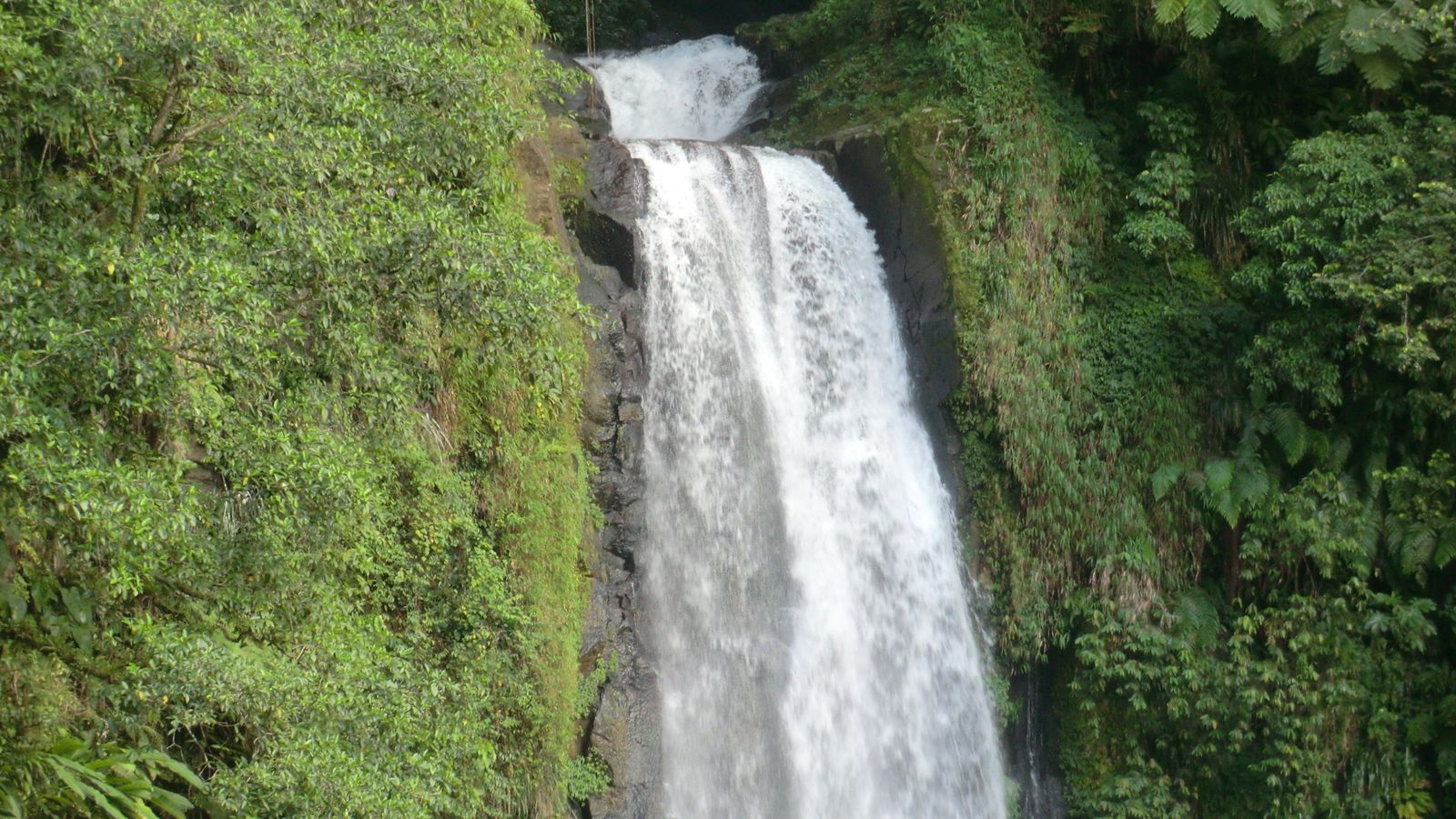
- Soak at Trafalgar Falls and the nearby hot mineral springs: twin waterfalls a short walk from a rainforest visitor center outside Roseau, with several nearby operators offering natural hot-spring soaking pools as a low-effort add-on after a harder hike elsewhere in the park.
The wildlife you'll actually see
Dominica's headline wildlife story is offshore rather than in the canopy: the island is one of the most reliable places in the Caribbean for whale watching, with a resident population of sperm whales working the deep water off the southwest coast near Soufrière and Scotts Head year-round, joined at times by pilot whales, various dolphin species and, more occasionally, other whale species passing through. Few Caribbean islands can offer a whale encounter with this kind of regularity, and it's as much a part of a Dominica trip as anything in the forest.
On land, birdlife is the draw for anyone who knows to look. Dominica's national bird, the Sisserou parrot, is found nowhere else on Earth and is critically endangered, with the island's remaining old-growth forest — particularly around Morne Diablotins National Park in the north — its last real stronghold. The smaller, more numerous red-necked or Jaco parrot shares the same forest and is somewhat easier to spot, especially early in the morning with a local birding guide who knows current roosting and feeding areas. Both species took a serious hit from Hurricane Maria's canopy damage in 2017, and their continued recovery is part of the reason conservation messaging is visible across the island's parks.
Beyond the parrots, Dominica's rainforest holds a fairly typical, low-drama Lesser Antilles wildlife list rather than the big-mammal draw of a mainland jungle: agouti, a large ground-dwelling rodent, turns up on quieter trails; several snake species including boa constrictors are present but rarely encountered; and the forest is loud with smaller birds, tree frogs and insects rather than anything larger. This is a genuine contrast with mainland Central and South American jungle destinations, and worth setting expectations around — Dominica's wildlife story is about volume and endemism in birds and marine life, not about jaguars or monkeys, since the island never had land connections to a mainland fauna the way Costa Rica or Brazil did.
The east coast adds one more seasonal layer: the black-sand beaches around Rosalie are documented nesting sites for endangered sea turtles, and several of the area's eco-lodges, including Rosalie Bay, are directly involved in monitoring and protecting nests during the season. It's worth asking a lodge directly about current nesting activity rather than assuming a sighting, since timing and access are tightly managed to protect the turtles.
Costs and budgeting
Dominica sits toward the more affordable end of the Eastern Caribbean, generally cheaper than islands with heavier resort development like Antigua or St. Barts, though it isn't a budget destination by regional standards either — the lack of direct international flights and the small scale of the tourism economy keep prices from racing to the bottom. The Eastern Caribbean dollar is the local currency, pegged to the US dollar, and USD is widely accepted in tourist areas, which makes budgeting relatively straightforward.
A no-frills trip built around guesthouses, local food and public minivans can run in the range of a modest Caribbean daily budget, with simple guesthouse rooms and inexpensive local meals keeping costs down; a comfortable mid-range trip staying at one of the island's eco-lodges, eating at a mix of local and lodge restaurants, and adding a couple of guided activities lands considerably higher once a rental car or private transfers enter the picture. Guided hikes and tours carry their own separate line items worth budgeting outside a daily average — a full-day guided Boiling Lake hike, a whale-watching excursion, or an Indian River boat trip each typically run a per-person fee that reflects the guide licensing and small-group nature of Dominica's tourism model, and it's worth booking these through a licensed local operator rather than an informal arrangement.
National park access on Dominica generally runs through a site pass system covering Morne Trois Pitons and several other major attractions, purchased once and used across multiple sites during a visit — worth asking about at the first park entrance rather than paying separately at each stop. The Waitukubuli National Trail has required a paid trail pass since 2013, also worth arranging in advance through the trail's own office or a guide who includes it. Car rentals and fuel both run higher than mainland US or European prices, typical for a small island economy that imports most of its vehicles and fuel, and that's worth factoring in if a rental car is part of the plan.
Health, safety and practical tips
Dominica is broadly considered a safe destination for travelers, with the standard precautions around petty theft in and around Roseau's busier areas applying rather than any elevated concern.
Water: tap water in Roseau and most developed areas is generally considered safe, sourced from the island's abundant rainfall and mountain streams, though bottled or filtered water is a reasonable default in more remote lodges and during heavy rain events when water systems can be affected.
Trail conditions and guides: the Boiling Lake hike and the more remote segments of the Waitukubuli National Trail are genuinely strenuous, involve scrambling and river crossings, and have resulted in injuries and, on rare occasions, fatalities among unguided hikers who underestimated the terrain or pushed on through worsening weather. A licensed local guide is the standard, sensible approach for both, and most lodges can arrange one directly.
Hurricane season: runs June through November, with August through October carrying the highest regional risk, and Dominica's direct experience with Hurricane Maria in 2017 means the island takes storm preparedness seriously. Travel insurance that covers weather-related disruption is worth having for any trip planned in these months, and it's sensible to build flexibility into a wet-season itinerary rather than a single fixed hiking date.
Sun and heat: strong even under the frequent cloud cover the interior generates, and the combination of steep trail effort and high humidity makes dehydration a more realistic risk than most visitors expect — carry more water than feels necessary on the longer hikes.
Vaccinations and mosquito-borne illness: nothing is required for entry from most countries, but a pre-trip check with a travel clinic is sensible, and standard mosquito precautions — repellent, covering up at dawn and dusk — are worth following given the presence of mosquito-borne illness across the wider Caribbean region.
Language and currency: English is the official language, alongside a French-derived Kwéyòl creole still spoken across the island, a legacy of Dominica's history under both French and British colonial rule. The Eastern Caribbean dollar is the currency, with US dollars widely accepted in tourist-facing businesses.
A suggested route
Dominica's small size makes a focused week entirely workable, though ten days lets the pace breathe, particularly if the Boiling Lake hike and a full day on the east coast are both on the list.
- Days 1–2: land at Douglas-Charles Airport and transfer to a Roseau-area base, roughly an hour to ninety minutes by road. Use the first full day for an easier introduction — Trafalgar Falls, Titou Gorge and Emerald Pool, all reachable within Morne Trois Pitons National Park without the effort the Boiling Lake demands.
- Day 3: the Boiling Lake hike, with a licensed guide, ideally scheduled early with a weather-flexible backup day if traveling outside the dry season.
- Day 4: a rest day built around Roseau itself, or a soak at the hot mineral springs near Trafalgar Falls after the previous day's effort.
- Day 5: travel south to Soufrière and Scotts Head for a whale-watching trip, weather permitting, and an afternoon exploring the point where the Caribbean Sea meets the Atlantic.
- Days 6–7: relocate to the east coast and the Rosalie River valley, basing at one of the area's eco-lodges, with a day for the Kalinago Territory and the Kalinago Barana Autê cultural village further up the coast.
- Day 8: a segment of the Waitukubuli National Trail, chosen with a guide based on fitness level and current trail conditions.
- Days 9–10 (optional extension): head north to Portsmouth for the Indian River boat trip and Cabrits National Park, with Douglas-Charles Airport close by for a departure that avoids doubling back across the island.
This route deliberately treats Dominica as two distinct halves — the volcanic interior anchored on Roseau, and the wetter, wilder east coast around Rosalie and the Kalinago Territory — rather than trying to compress everything into a single base. A tighter week drops the east-coast extension rather than rushing the Boiling Lake hike, which genuinely rewards a full, unhurried day. If Dominica is one stop on a longer Lesser Antilles or wider Caribbean trip, it pairs well by ferry with Guadeloupe and Martinique, and its rainforest-first character makes a useful contrast if the same trip also includes a more beach-oriented island like Puerto Rico.
Common questions
Is Dominica the same as the Dominican Republic?
No, and it's a common mix-up. The Dominican Republic is the larger, Spanish-speaking country sharing the island of Hispaniola with Haiti, far to the northwest. Dominica is a small, English-speaking former British colony in the Lesser Antilles, hundreds of miles away, between Guadeloupe and Martinique. They share a Latin root in the name and essentially nothing else in size, language or geography.
Does Dominica have good beaches?
Not in the classic white-sand sense. The coastline is mostly volcanic black sand, rocky coves and cliffs, with the beaches around Rosalie on the east coast — also a sea-turtle nesting area — among the more notable stretches. Travelers coming for a beach-first trip should look elsewhere in the Caribbean; travelers coming for rainforest, waterfalls and volcanic landscape are in the right place.
How many days do I need in Dominica?
A week covers the essentials — Morne Trois Pitons National Park, the Boiling Lake hike, and a day on the south coast for whale watching — with room to spare. Ten days lets you add the east coast's Rosalie valley and Kalinago Territory without the pace feeling rushed.
Do I need a guide for the Boiling Lake hike?
It isn't always legally mandatory, but it's the standard and sensible approach. The trail crosses active volcanic terrain with unmarked sections through the Valley of Desolation, and conditions change quickly after rain. Most visitors, including experienced hikers, go with a licensed local guide.
Will I see whales?
Good odds, though never guaranteed. Dominica's deep offshore water off the southwest coast holds a resident population of sperm whales year-round, which makes it one of the more reliable whale-watching destinations in the Caribbean, with calmer sea conditions in the dry season generally improving viewing odds.
Is Dominica affected by hurricanes?
Yes — it sits within the Atlantic hurricane belt, and Hurricane Maria caused severe damage in 2017. Hurricane season runs June through November, with August through October the highest-risk stretch. The island has rebuilt substantially since 2017 and travel during these months is normal, but weather-flexible planning and hurricane-inclusive travel insurance are sensible.
Where to go from here
Dominica rewards travelers who come for the rainforest rather than the beach, and a trip that pairs the volcanic interior around Roseau with a few days on the wetter, wilder east coast gets closer to what makes the island genuinely distinct in the Caribbean. Browse the full JungleBnB directory for vetted jungle stays here and elsewhere, or compare Dominica against Puerto Rico if you're weighing a Caribbean jungle trip against a US-territory option with easier flight connections. For a mainland comparison, our Costa Rica Rainforest Travel Guide covers a jungle destination with a much larger land-mammal list, and our piece on why jungle stays are booming is useful context if you're still deciding whether an island rainforest trip like this one is the right call before booking anything.
- UNESCO World Heritage Centre — Morne Trois Pitons National Park — park size, volcanic features, forest significance and World Heritage listing.
- Wikipedia — Boiling Lake — size, temperature and global ranking of the lake.
- Wikipedia — Waitukubuli Trail — trail length, segment structure, route and trail-pass requirement.
- Wikipedia — Douglas–Charles Airport — airport location and role as Dominica's main international gateway.
- Responsible Travel — Best time to visit Dominica — dry/wet season timing and travel conditions.
- Rosalie Bay Eco Resort & Spa — real Rosalie-area eco-resort, sea-turtle nesting site and sustainability practices.
- 3 Rivers & Rosalie Forest Eco Lodge — off-grid eco-lodge in the Rosalie rainforest valley, accommodation types and amenities.
- Discover Dominica — Dominica Tourism — Nature Island positioning, Kalinago Territory and general island orientation.
More from the Journal.
 Photo: Philip Nalangan, CC BY 4.0
Bali Jungle Travel Guide
Everything you need to plan the interior of Bali — Ubud, Sidemen and the northern highlands — where to stay in the jungle, when to go and what it actually costs.
 Photo: Rhododendrites, CC BY-SA 4.0
Costa Rica Rainforest Travel Guide
The definitive guide to Costa Rica's rainforests — cloud forest, Pacific lowlands and the wild Osa Peninsula — with where to stay and when to go.
 Photo: Rushenb, CC BY-SA 4.0
Thailand Jungle Travel Guide
Beyond the beaches: Khao Sok's ancient rainforest, the northern hills around Chiang Mai and the karst jungle of the south.
 Photo: Derek Ramsey (Ram-Man), CC BY-SA 4.0
Find your own piece of the canopy.
Treehouses, bamboo houses and rainforest villas across 17 destinations — found, vetted and written up honestly.
Browse all destinations