Ubud Jungle Guide
Ubud gets called the cultural heart of Bali so often that it's easy to forget it's also a genuinely jungled place. The town sits on a plateau cut clean through by two river gorges, which means you can be standing in traffic outside a yoga studio and see dense green canopy dropping away twenty feet from the curb. This is a guide to that side of Ubud: the ridges and ravines, the rice terraces stepping down toward the rivers, where to actually stay if a jungle view matters to you, and how to get out of the town center to the waterfalls and temples that make the day trips worth the drive.
What Ubud's jungle actually is
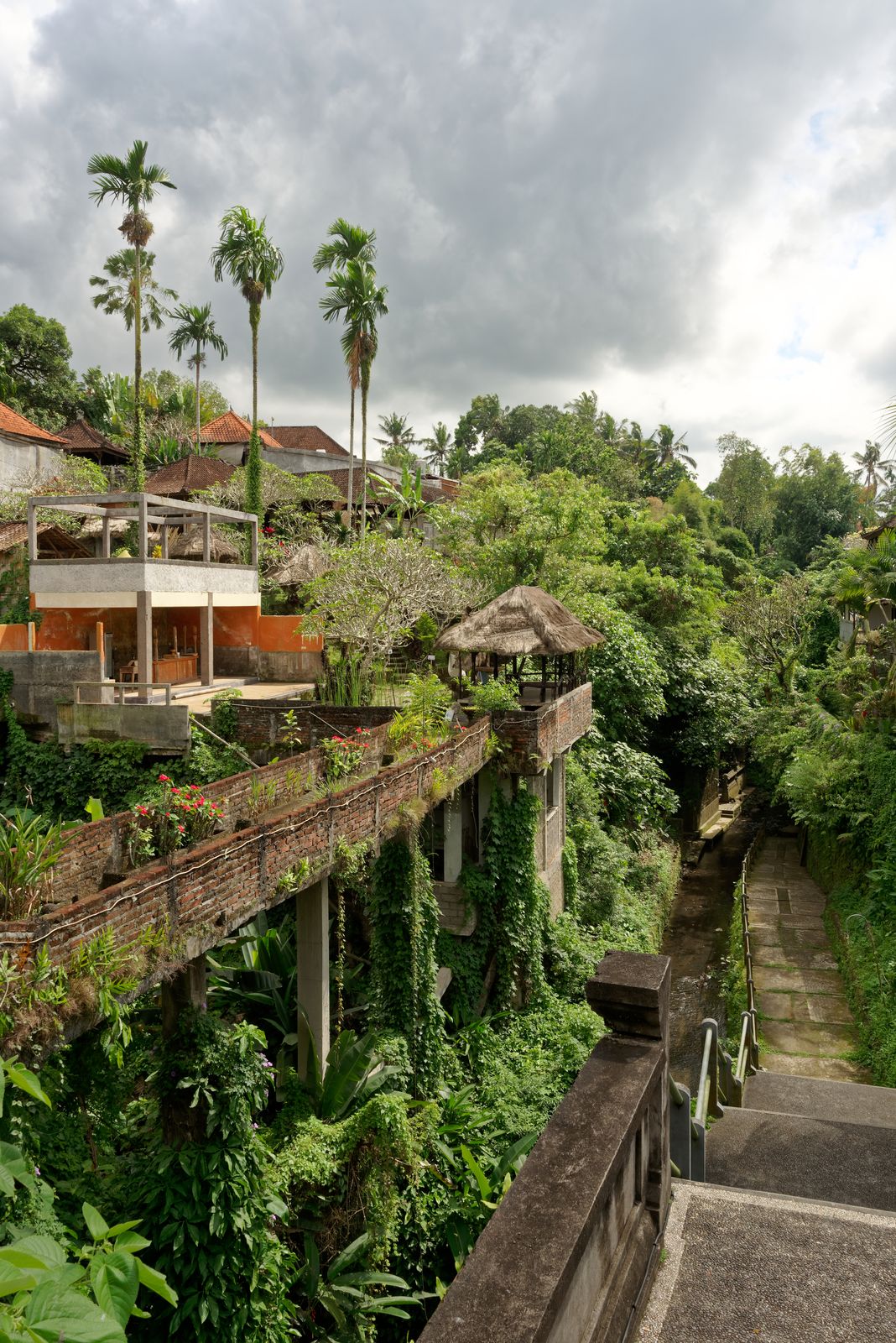
Start with the geography, because it explains everything else. Ubud sits on a plateau in Gianyar Regency, in the foothills below Bali's volcanic spine, and that plateau is sliced through by the Wos River in two branches — the West Wos and the East Wos — which meet at a confluence called Campuhan, meaning roughly "the meeting of two rivers" in Balinese. Where those rivers have cut down through the plateau over centuries, you get steep-sided ravines packed with palm, banana, bamboo and old-growth trees, dropping thirty or more meters below street level in places. That's the jungle you're actually here for: not an unbroken forest stretching to a horizon, but a town built along the lip of two river gorges, with the green starting the moment the road ends.
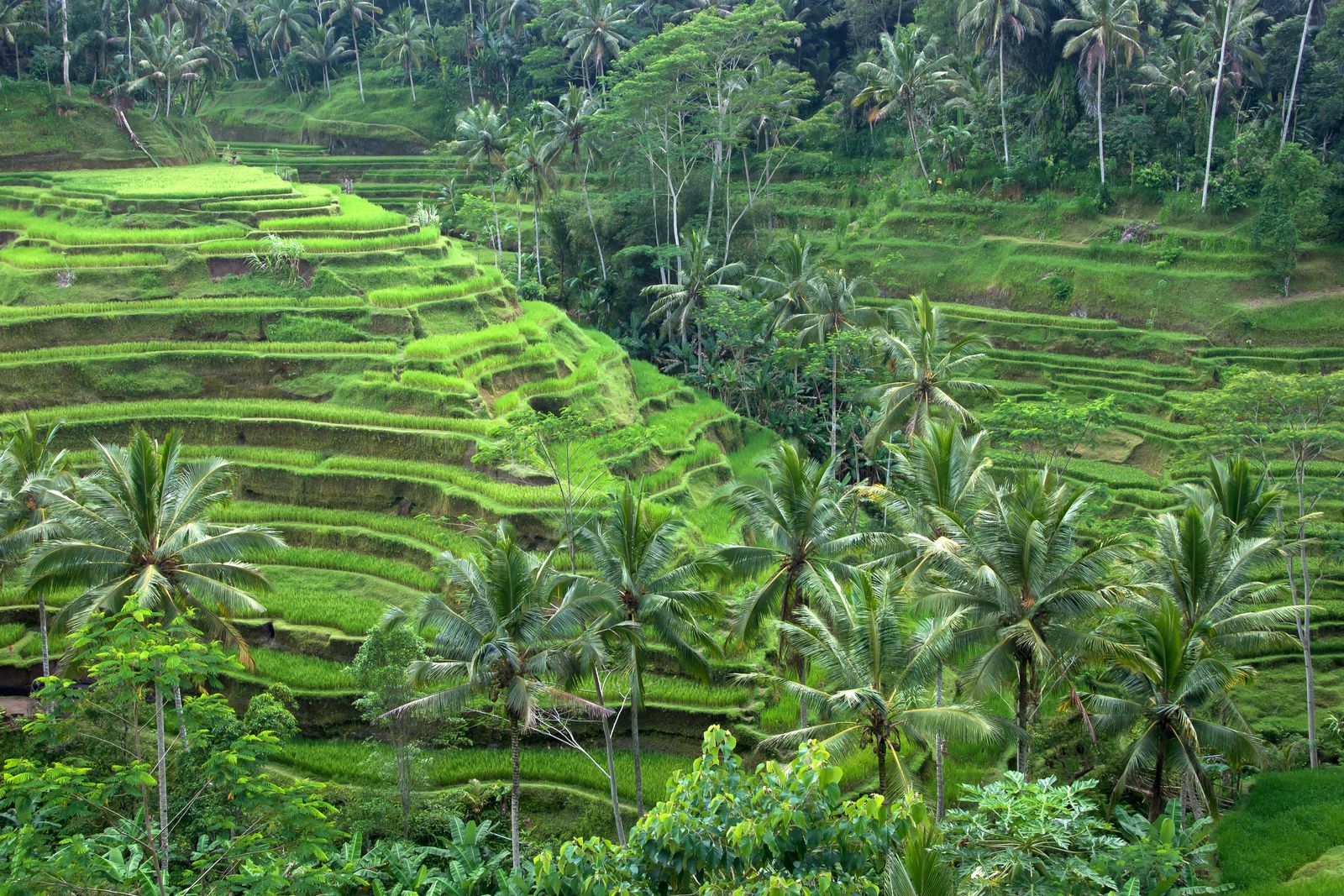
Beyond the gorges, the land north of town rises gently toward Tegallalang and Ceking, where centuries of rice farming have carved the hillsides into terraces that read as pure geometry from above and pure jungle-green up close, thanks to the palms and forest fringe that farmers have always left standing along the steepest banks and irrigation channels. The whole system — terraces, channels, temples — runs on subak, the traditional Balinese communal irrigation cooperative that's kept these hillsides productive and green for more than a thousand years. It's a farmed landscape, not a wild one, and it's worth saying that plainly before you arrive expecting rainforest wilderness. What you get instead is something more specific to Bali: temples tucked into ravine walls, monkeys living inside a forest sanctuary at the edge of downtown, and rice terraces that are as much infrastructure as scenery.
Ubud has been the island's spiritual and artistic center since well before tourism arrived — it's where Balinese painting, woodcarving and dance schools took root in the twentieth century, and where the royal family's palace still stands at the town's main crossroads. That layered history is why the jungle here feels inhabited rather than empty: shrines sit at river crossings, offerings appear daily at the mouth of every ravine trail, and the Sacred Monkey Forest Sanctuary is a functioning religious site with three working temples, not a zoo. If you're weighing Ubud against Bali's other jungle regions, our broader Bali destination page covers how it compares to the quieter valley of Sidemen and the cooler highlands around Munduk — both good pairings if Ubud alone doesn't scratch the itch.
Getting there and getting around
Every international arrival lands at Ngurah Rai International Airport (DPS) on Bali's south coast, in Denpasar. Ubud sits roughly 35 to 40 kilometers north of the airport, and the drive covers a lot of ground in traffic terms even though the distance looks modest on a map — expect somewhere between 45 minutes on a clean run and close to two hours if you land during the afternoon or early-evening crunch, which is common in high season. There's no direct public bus route from the airport to Ubud, so practically speaking you're choosing between a metered taxi, a pre-booked private transfer, or a ride-hailing app.
Airport taxis and standard transfers run roughly IDR 300,000–400,000 (about $20–30) to Ubud, and a private car with meet-and-greet service costs a bit more but takes the guesswork out of a long-haul arrival, which matters if you're jet-lagged. Ride-hailing apps like Grab and Gojek are usually the cheapest option and have a designated pickup point at the airport, though pickup can be slower during peak hours. If your flight lands after dark, book a driver in advance rather than hunting for one — the airport curb gets chaotic and Ubud's narrow lanes are not fun to navigate blind at 11pm.
Once you're in Ubud, the town center is genuinely walkable, and that's one of its real advantages over Bali's other jungle regions — you can cover the Campuhan Ridge, the Monkey Forest, the palace and the main dining streets on foot. For anything outside the center — Tegallalang, the waterfalls, the temple circuit — you're back to hiring a car with a driver for the day or renting a scooter. A full-day driver typically runs somewhere in the $35–55 range split among a group, which is the low-stress way to do a multi-stop day trip without navigating unfamiliar roads yourself. Scooters are cheap, usually $5–7 a day, and genuinely useful for short hops within a few kilometers of the center, but Ubud's roads outside the main tourist strip narrow fast, lose their shoulders, and mix motorbikes, trucks and pedestrians with very little separation. An International Driving Permit alongside your home license is a legal requirement, not a suggestion — more on why that matters in the caveats section below.
The best areas and where to stay
Where you base yourself in Ubud changes the trip more than people expect, because the town's jungle views are concentrated on specific ridges rather than spread evenly across it.
Central Ubud
The area around the palace, the market and Monkey Forest Road is the most convenient base — everything is walkable, restaurants and shops are dense, and you're a short stroll from the Campuhan Ridge trailhead. It's also the busiest and least jungle-immersed part of town; you'll get glimpses of the gorges rather than a full view from your room.
Sayan and Campuhan ridges
West of the center, the land along the Sayan and Campuhan ridges looks straight down into the river gorge, and this is where most of Ubud's jungle-view villas and higher-end stays cluster. Expect steep access roads and a short drive or ride back into town for dinner, in exchange for genuine ravine-and-canopy views from the room.
Penestanan and Nyuh Kuning
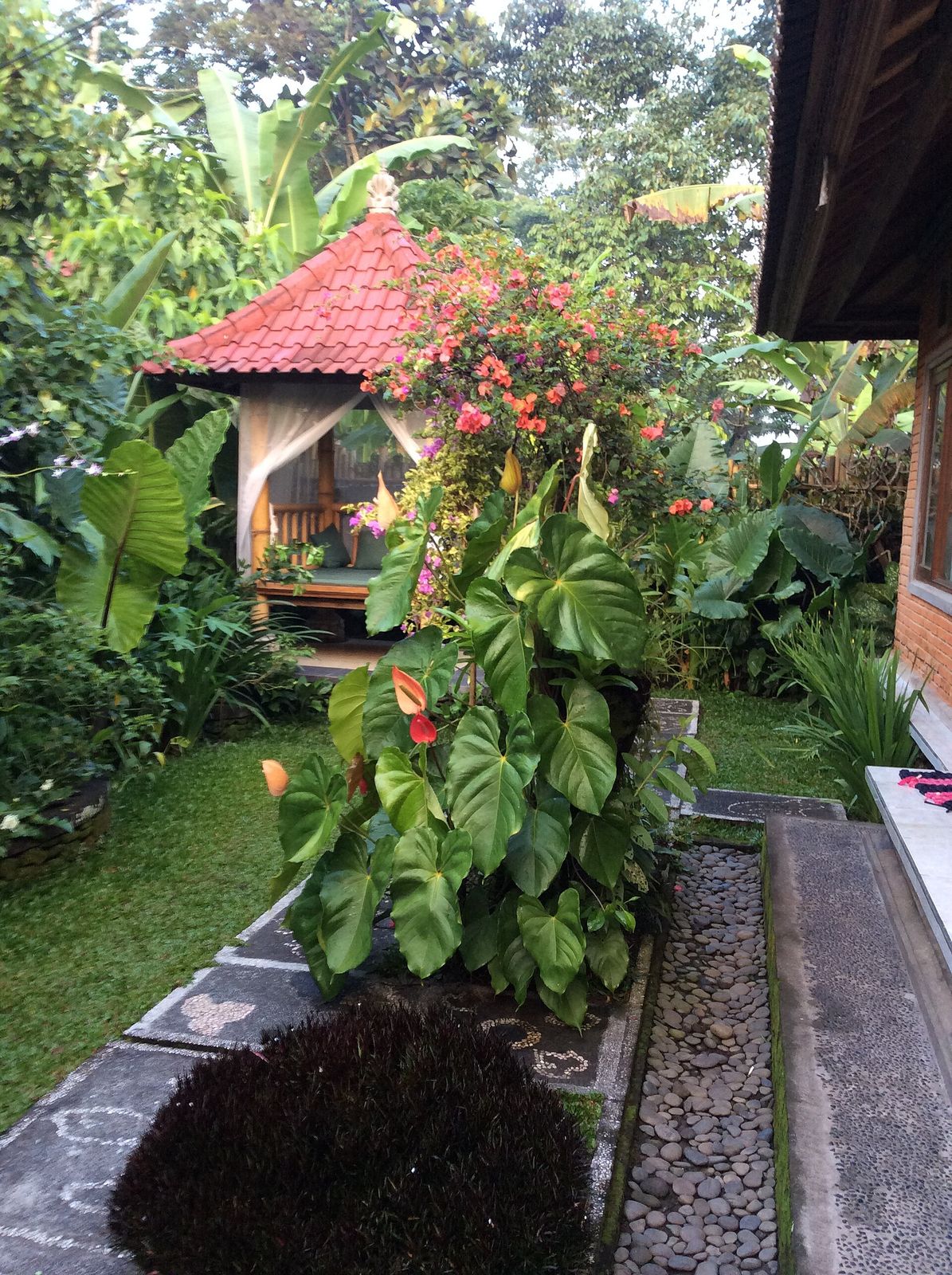
Penestanan, up a steep set of stairs on the western edge of town, is quieter and more residential, with rice-paddy views mixed in among the jungle. Nyuh Kuning, just south of the Monkey Forest, is a genuine village — a working banjar with a temple, a football field and guesthouses tucked among the trees — and it's an easy walk into the forest sanctuary from there.
Tegallalang
North of the center, up toward the famous rice terraces, the land opens into steeper jungle slopes with fewer crowds and a real sense of remove from town, at the cost of needing wheels for everything. This is where you'll find a small but growing cluster of treehouse and bamboo-house stays built directly into the hillside canopy — Jungleight Bali's woven bamboo treehouse, The Nest, is one example, sitting on a jungle slope facing the Ubud valley with an on-site restaurant and pools, which makes it one of the easier car-free bases in this part of town.
For a fuller, vetted shortlist across all of these pockets — the stays that actually deliver a jungle view rather than just advertising one — see our Bali destination page, or browse the wider directory if you're comparing Ubud against other jungle destinations before committing to dates.
You can be standing in traffic on Monkey Forest Road and see a river gorge full of palms and old trees drop away twenty feet from the curb. That's Ubud's jungle: not wilderness, but a town built along the lip of it.
The top things to do and see
Ubud's activity list leans toward walking, temples and rice terraces rather than adventure sports, and the best of it costs little or nothing.
- Walk the Campuhan Ridge: a roughly two-kilometer trail along the spine between the two Wos river valleys, starting near Pura Gunung Lebah at the river confluence that gives Campuhan its name. It's flat, wide and easy — genuinely suitable for a range of fitness levels — with open views into forested ravines on both sides. Go at sunrise or in the last hour before sunset, both for the light and to avoid the midday heat and the crowds that build through the day.
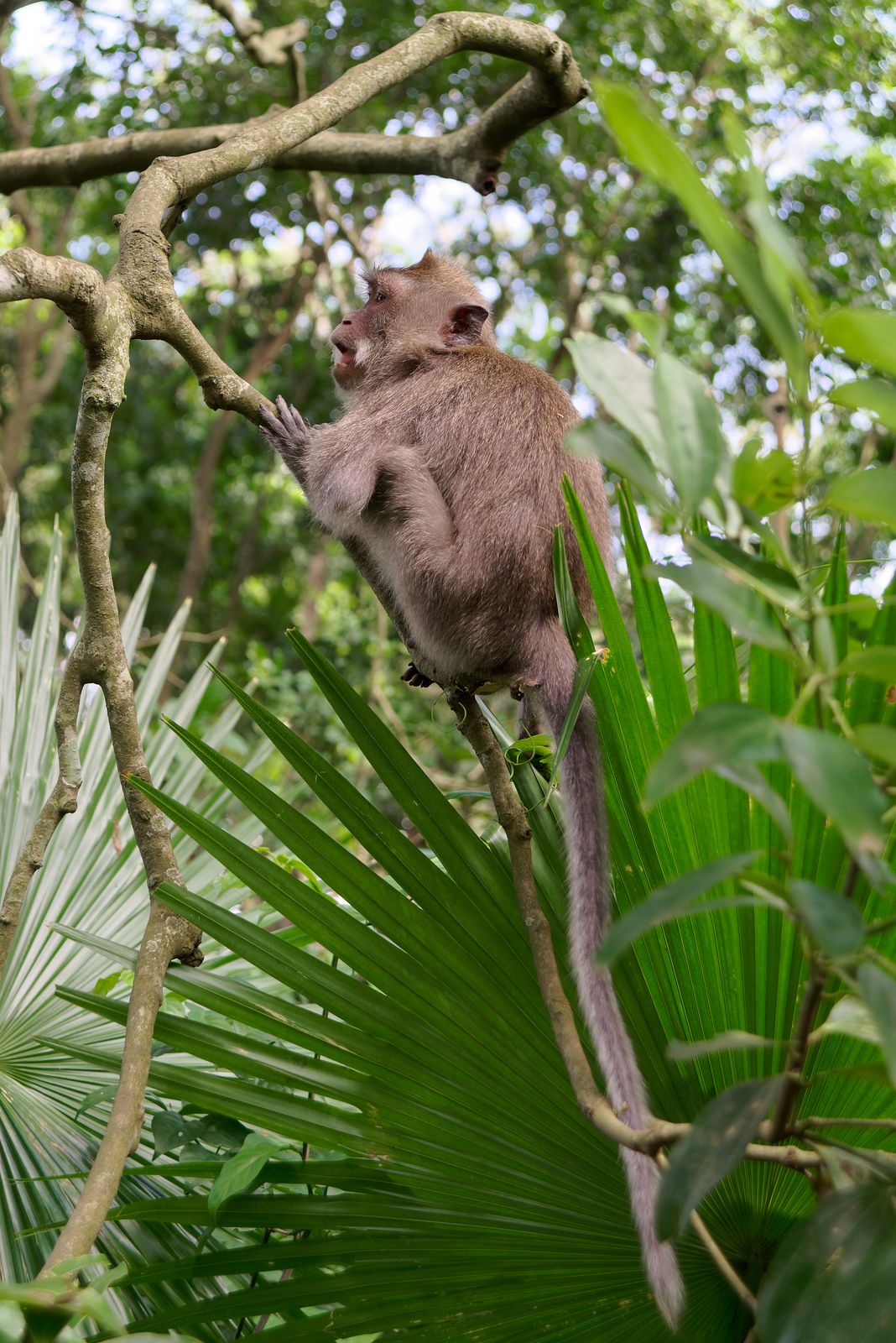
- Visit the Sacred Monkey Forest Sanctuary: a forested reserve inside town with three working Hindu temples and a resident troop of long-tailed macaques numbering in the hundreds. Go early, when it's cooler and the animals are more active, and don't carry loose valuables in outer pockets — the macaques are quick and confident around sunglasses, water bottles and phones.
- See the Tegallalang rice terraces: about a twenty-minute drive north of the center, this is the most photographed rice-terrace landscape on the island, stepping down a hillside in tight, precise tiers. It's not the largest or least crowded terrace system in Bali, but it's the most convenient one to reach from Ubud, and the swing and cafe operators along the road can be treated as optional rather than mandatory.
- Raft or tube the Ayung River: the closest thing to an adrenaline activity in the area, running through a genuinely jungled gorge on the western edge of town, with half-day trips easy to book through most hotels and tour desks.
- Spend an hour in the art museums: Ubud's identity as Bali's art capital predates its tourism boom by decades, and the Museum Puri Lukisan and Neka Art Museum both hold serious collections of Balinese and Indonesian modern painting, worth an hour even if museums aren't usually your thing.
- Take a sunrise or sunset yoga class: Ubud has one of the highest concentrations of yoga studios in Southeast Asia, many built with open walls facing the ravines, and drop-in classes are easy to find without a retreat commitment.
- Walk through Ubud Palace and the night market: the palace, Puri Saren Agung, sits at the town's main crossroads and hosts traditional Balinese dance performances most evenings, with the night market a short walk away for an easy, inexpensive dinner.
Good to know
Most of what people mean by "Ubud jungle" is really the Campuhan-Sayan ridge system plus Tegallalang. If you want denser, less-visited forest without leaving the region, the day trips below — particularly the temple and waterfall circuit east of town — get you there faster than anything inside Ubud proper.
The best day trips
Ubud's real strength is how much genuinely different landscape sits within an hour's drive. A car and driver for the day is the practical way to string several of these together.
The waterfall pair: Tegenungan and Tibumana
Tegenungan, about ten kilometers south of Ubud and roughly twenty minutes by car, is the area's most visited waterfall — a wide, powerful cascade with stairs down to a swimming pool at the base, busy by mid-morning but worth an early visit. Tibumana, around fifteen kilometers east and a thirty-to-forty-five-minute drive, is smaller, quieter and requires a short walk through rice fields and forest to reach, which keeps the crowds down considerably compared to Tegenungan.
The temple circuit: Goa Gajah, Yeh Pulu, Gunung Kawi and Tirta Empul
East and north of Ubud sits a cluster of some of Bali's oldest religious sites, and they string together into a single half-day loop. Goa Gajah, the Elephant Cave, is a rock-cut hermitage with a carved demon-face entrance dating to around the 11th century, roughly fifteen minutes from Tegenungan. Yeh Pulu, a five-minute drive from Goa Gajah, is a lesser-visited relief carving cut into a rock face along a rice-paddy footpath — easy to have almost to yourself. Gunung Kawi, near Tampaksiring about thirty minutes from Ubud, is a set of monumental shrines carved directly into a river cliff face, reached by descending a long stone staircase into the gorge. Tirta Empul, ten minutes further on, is Bali's most important holy-water temple, where Balinese Hindus and a steady stream of visitors take part in ritual purification at the spring-fed bathing pools — genuinely moving to witness if you approach it with the respect it's due rather than as a photo stop.
Sidemen valley
An hour and a half to two hours east, Sidemen is a working rice-terrace valley at the foot of Gunung Agung with a much quieter pace than Ubud — good for a full-day escape or an overnight if the crowds around Tegallalang and the Monkey Forest have worn you down. Our Sidemen guide covers it in depth if you want to build it into a longer stay rather than a single day.
Mount Batur sunrise trek
For a genuinely different kind of morning, a Mount Batur sunrise hike starts around 2–3am with a guided climb to the crater rim in time for sunrise over the caldera and Lake Batur below — a long day given the early start and the roughly two-hour drive each way from Ubud, but a legitimately different landscape from anything in the jungle guide above.
Food and practicalities
Ubud is the easiest jungle destination in Bali to eat well in, by a wide margin. Warungs — small family-run eateries — serve nasi campur, mie goreng and satay for a few dollars and are everywhere, including several with genuine ravine or paddy views built into a bamboo dining platform. The town's reputation as a wellness and expat hub has also produced a dense cluster of good cafes and mid-range restaurants doing everything from Balinese fine dining to smoothie bowls, concentrated along Jalan Hanoman, Jalan Dewi Sita and the streets around the Monkey Forest.
Tap water isn't safe to drink anywhere in Bali; stick to bottled or filtered water, and be mindful of ice outside reputable restaurants and hotels. Most nationalities need a paid Visa on Arrival or e-VOA, which currently costs around IDR 500,000 (about $35) and is extendable once for another 30 days at the same cost — applying online in advance avoids the airport queue. On top of that, Bali charges a one-time provincial tourist levy of IDR 150,000 (about $10) per person, which funds environmental and cultural conservation across the island and can be paid online before arrival or on the ground.
Get real travel insurance before you go. Indonesian hospitals commonly ask for payment upfront before treating foreign visitors, and a serious injury can mean an evacuation to Singapore or Australia if local facilities can't handle it — worth having in place before, not after, a scooter mishap or a bad fall on a wet ravine trail. Sarongs and sashes are required at active temples, including Tirta Empul and Gunung Kawi, and are usually available to rent or borrow at the entrance if you don't bring your own; shoulders and knees should be covered, and menstruating visitors are traditionally asked not to enter.
When to go
Bali runs on a dry season and a wet season rather than four distinct ones, and Ubud follows the island-wide pattern: dry roughly April through October, wet November through March. Within that broad split, a few windows stand out. June through September is the driest, sunniest stretch, and also the busiest — July and August in particular bring the heaviest crowds to the Monkey Forest, the Campuhan Ridge and the Tegallalang car parks, so budget extra patience or an earlier start if you're visiting then. April, May and September offer much of the same dry weather with noticeably fewer people, and are generally considered the sweet spot for a first visit.
The wet season, November through March, doesn't mean constant rain — downpours are typically short, heavy and concentrated overnight or early morning, leaving clear afternoons more often than you'd expect — but ravine trails and the temple staircases at Gunung Kawi can get slick, and it's worth checking conditions before a hike after a big overnight storm. On the upside, the wet season brings noticeably lower prices, thinner crowds, and rice terraces and waterfalls running at their fullest and greenest. If you want the Tegallalang terraces at their most vividly green, aim for shortly after a planting cycle — timing varies by field since Bali's subak system staggers planting across different watersheds, so there's no single calendar month that guarantees it everywhere.
Honest caveats
Ubud earns its popularity, but a few things are worth knowing before you build a trip around it.
Crowds are real and specific. Central Ubud, the Monkey Forest entrance, the Campuhan Ridge trailhead and the Tegallalang viewpoints all get genuinely busy from mid-morning through late afternoon, especially July through September. The fix is simple and reliable: go early. Most of these spots are dramatically quieter — and cooler — before 8am.
Roads outside the center are narrow and often rough. The main tourist strip is well paved, but side roads toward Tegallalang, Sidemen and the temple circuit can be steep, potholed and shared with trucks, motorbikes and pedestrians with very little separation. Road accidents involving rented scooters are the most common serious mishap for travelers in Bali generally, and it's worth taking that seriously rather than treating an International Driving Permit as a box to tick. A car with a driver is the lower-stress choice for any route you're not already comfortable riding.
Connectivity is patchy once you're off the main grid. Central Ubud has solid wifi and mobile coverage, but the ridges, Tegallalang's outer slopes and the more remote day-trip stops can have thin or no signal. That's a feature for some travelers and an inconvenience for others — worth confirming with your accommodation in advance if you need to stay reachable for work.
Ubud isn't wilderness. This is worth repeating plainly: the jungle here is a farmed and inhabited landscape threaded through a busy tourist town, not an empty forest. If deep, uncrowded wilderness is what you actually want, Bali's better answer is West Bali National Park in the island's far northwest, a genuinely different and much less visited kind of trip.
A suggested route
Three to five days is enough to cover Ubud properly without feeling rushed; add a night in Sidemen or the northern highlands if you have more time and want real quiet.
- Day 1: arrive, settle in, and walk the Campuhan Ridge in the late afternoon to get oriented and catch the light. Dinner in central Ubud.
- Day 2: the Sacred Monkey Forest Sanctuary first thing, then the palace and market, with an afternoon yoga class or a slow walk through Penestanan's rice paddies.
- Day 3: a half-day driver for Tegallalang and, if time allows, a swing north toward Sebatu; afternoon free for the art museums or an Ayung River rafting run.
- Day 4: the temple and waterfall day trip — Goa Gajah, Yeh Pulu, Gunung Kawi and Tirta Empul, finishing at Tibumana or Tegenungan waterfall on the way back.
- Day 5 (optional): relocate for a night to Sidemen for the quiet-valley contrast, or push north toward Munduk if waterfalls and highland coffee country appeal — both are covered in our Munduk and North Bali highlands guide.
If Bali is one leg of a longer jungle trip, it pairs naturally with the opposite hemisphere's dry season — several JungleBnB readers stitch it together with Thailand's northern hills or Sri Lanka's hill country on the same itinerary, timing each leg's dry window rather than fighting it.
Common questions
Is Ubud's jungle actually jungle, or is it mostly hype?
It's real but specific: two river gorges cutting through the town plateau, plus rice-terrace country to the north with forest fringe along the steepest banks. It's a farmed, inhabited landscape rather than untouched wilderness, which is part of what makes it distinctive rather than a shortcoming.
How many days do you need in Ubud?
Three days covers the essentials — the Campuhan Ridge, the Monkey Forest, Tegallalang and one day-trip loop. Five days lets you add a second day trip and some genuine downtime, or an overnight extension to Sidemen or the northern highlands.
Do I need a car, or can I get around on foot?
Central Ubud is walkable — the palace, market, Monkey Forest and Campuhan Ridge trailhead are all within easy reach on foot. Everything else, including Tegallalang and the day trips, requires a car with a driver or a scooter.
Is Ubud too crowded to be worth visiting?
Central Ubud and its best-known sights get genuinely busy, especially July through September and from mid-morning onward. Going early in the day solves most of it, and pairing Ubud with a night in quieter Sidemen or the northern highlands solves the rest.
What's the best month to visit?
April, May and September offer dry-season weather with noticeably fewer crowds than the July–August peak. The wet season, November through March, is quieter and cheaper still, with short, heavy rain rather than constant downpours.
Do I need a visa to visit Bali?
Most nationalities need a paid Visa on Arrival or e-VOA, currently around IDR 500,000 (about $35), plus a separate one-time provincial tourist levy of IDR 150,000 (about $10). Applying for the e-VOA online in advance skips the airport queue.
Where to go from here
Ubud is the easiest entry point into Bali's jungle side, and for a lot of travelers it's the whole trip on its own — walkable, well fed, and genuinely green along its ridges. If you want more of the quiet-valley and highland contrast that Ubud doesn't offer, our guides to Sidemen and Munduk and the northern highlands cover the two regions most travelers add on next. For a shortlist of vetted jungle-view stays across Ubud and beyond, start with our Bali destination page, or browse the full directory if you're still weighing Bali against another jungle destination. And if you're comparing regions worldwide before you commit to dates, our roundup of the best jungle Airbnbs in the world is a good next stop.
- Campuhan Ridge Walk — official site — trail length, route and the Pura Gunung Lebah river confluence.
- Inivie — A Guide to Exploring Campuhan Ridge Walk — Campuhan's meaning and river-gorge geography.
- Monkey Forest Ubud — official site — Sacred Monkey Forest Sanctuary details and temple count.
- Ubud Center — Tegenungan Waterfall — distance from Ubud and site details.
- Ubud Center — Tibumana Waterfall — distance and access details.
- Discover Your Indonesia — Temples and a Hidden Waterfall Day Trip Around Ubud — Goa Gajah, Yeh Pulu, Gunung Kawi and Tirta Empul routing and distances.
- Call of the World — How to Get to Ubud from Bali Airport — airport transfer options, timing and costs.
- Bali.com — Visa on Arrival (VOA / e-VOA) — current visa cost and application process.
- Bali.com — Bali Tourist Tax / Levy — provincial tourist levy amount and payment process.
More from the Journal.
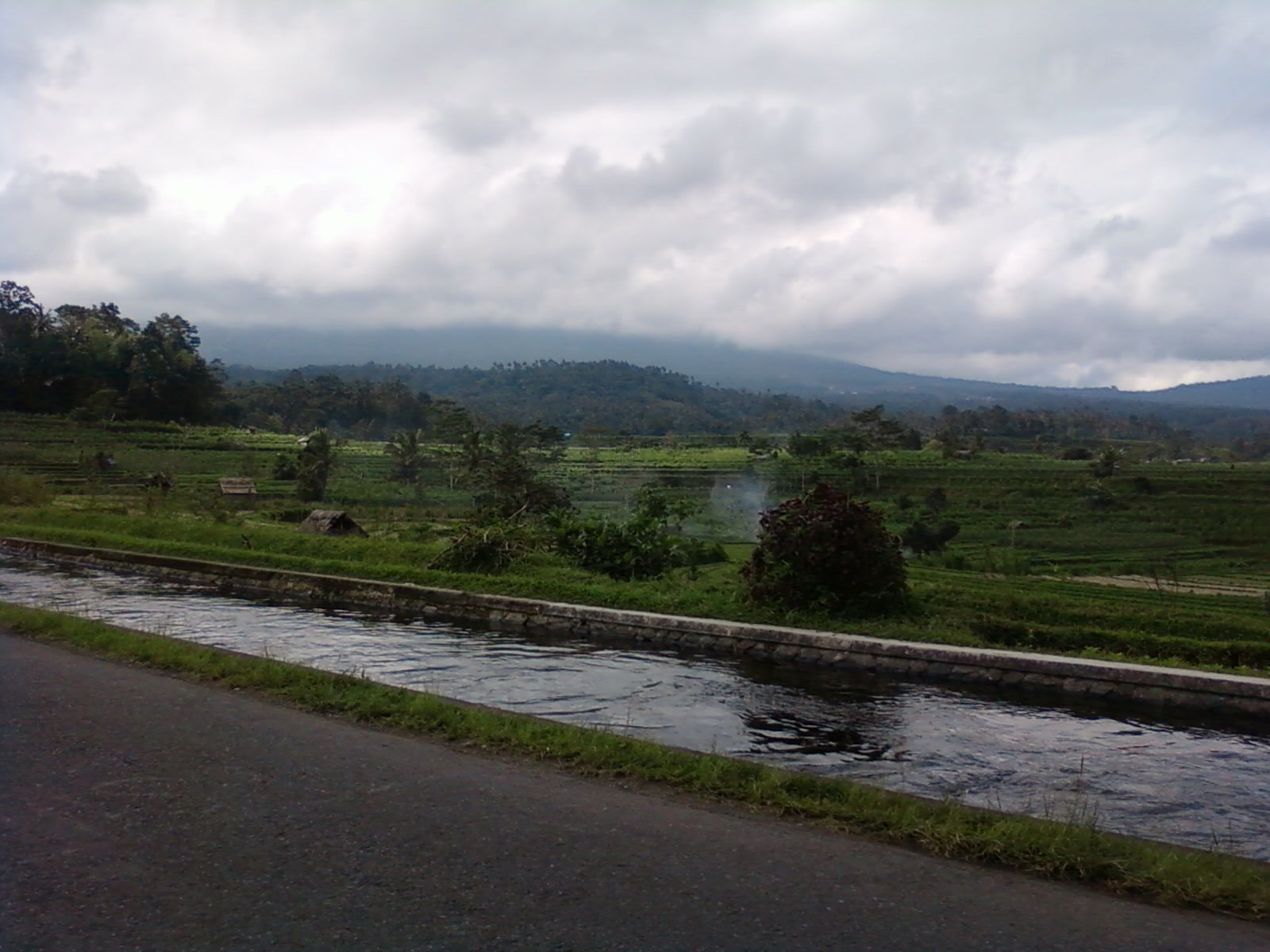 Photo: Adimelali Bali, CC BY-SA 3.0
Sidemen, Bali: The Quiet Valley Guide
An hour from Ubud and a decade behind it — Sidemen is the rice-terrace valley under Mount Agung where Bali's best bamboo houses hide.
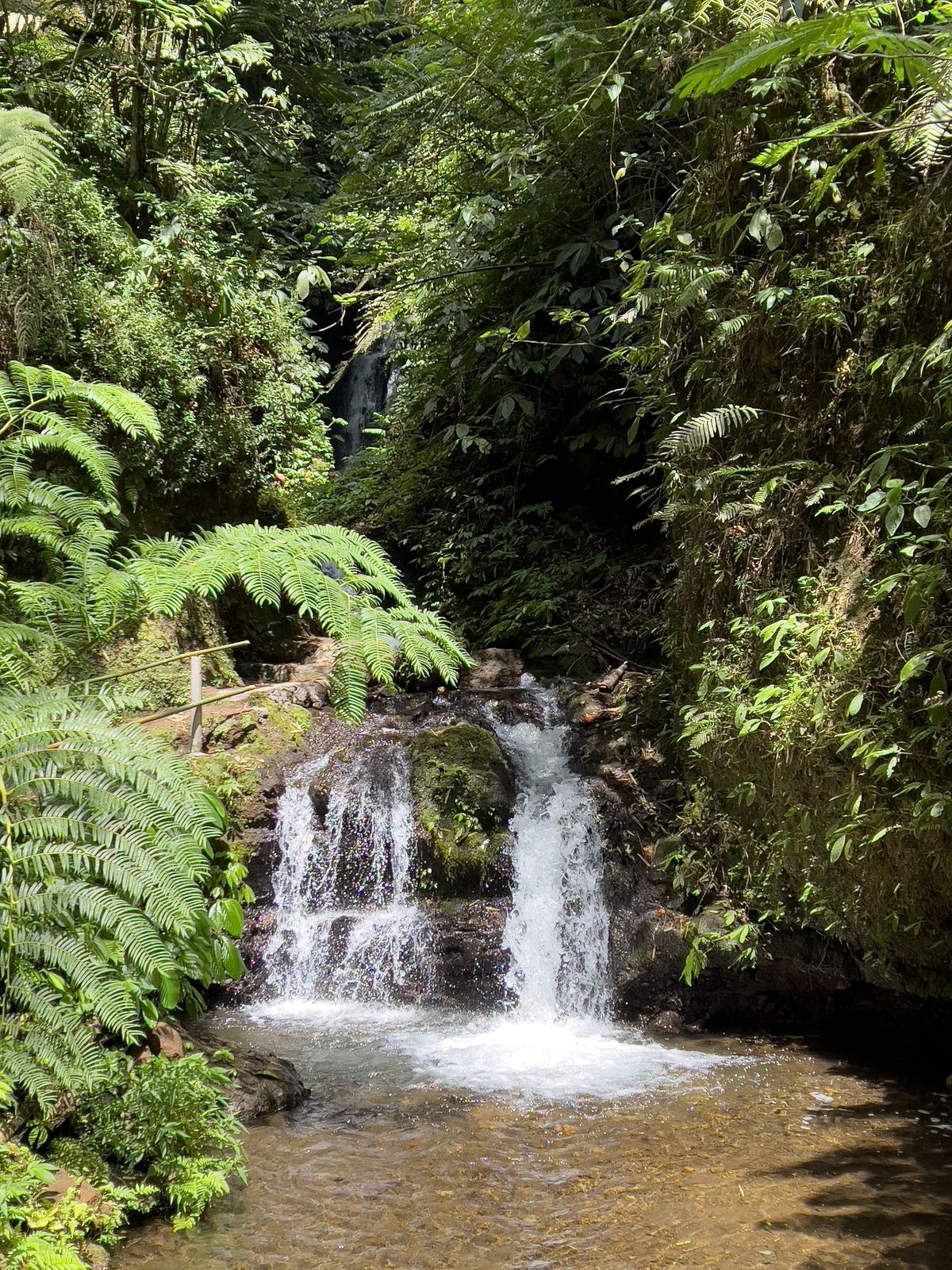 Photo: Stefan Fussan, CC BY-SA 3.0
Munduk & North Bali Highlands Guide
Bali's cool, waterfall-laced highlands — coffee country, twin lakes and jungle ridges two hours from the beach crowds.
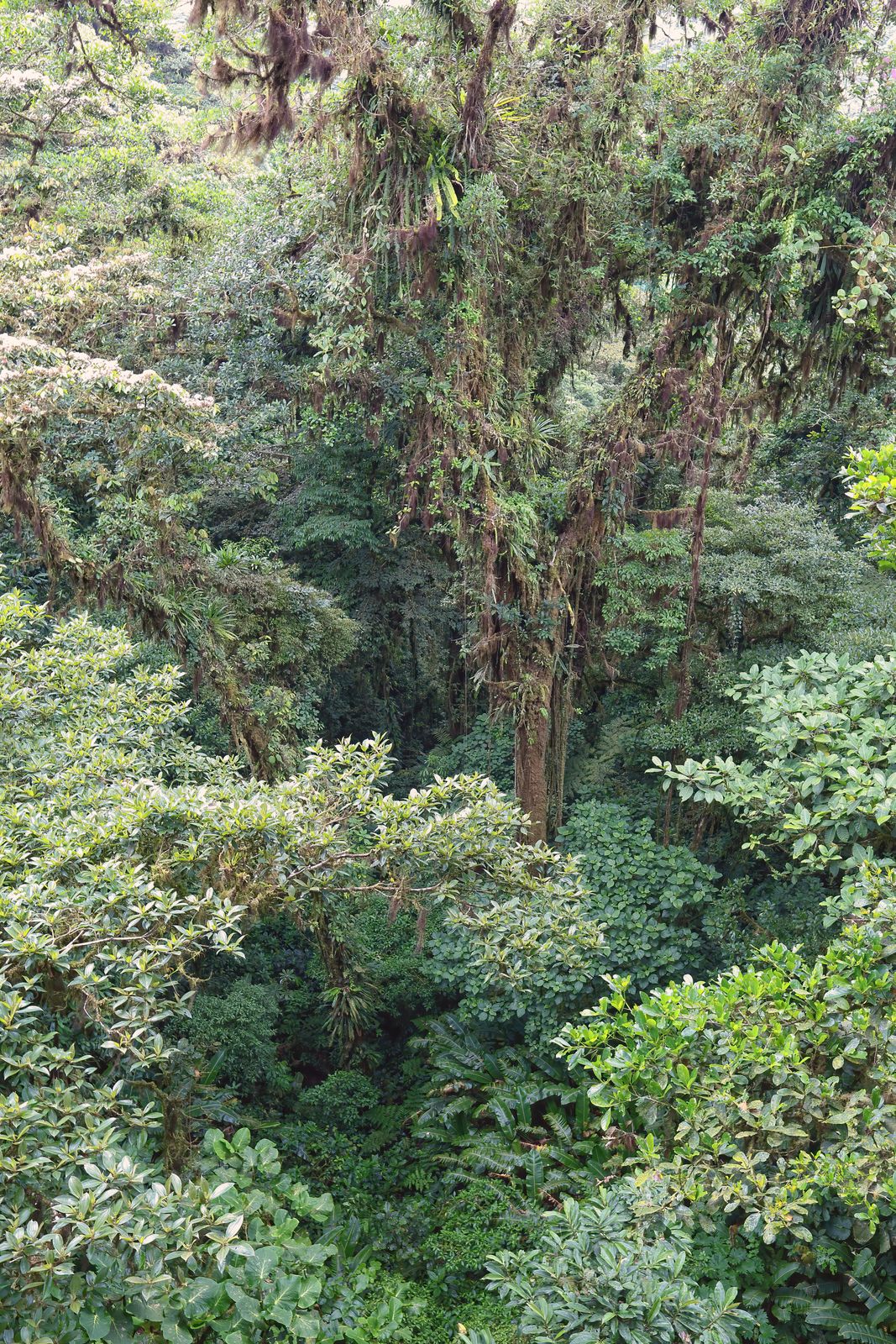 Photo: Cephas, CC BY-SA 4.0
Monteverde Cloud Forest Guide
Walk through the clouds on suspension bridges in the canopy — Costa Rica's most famous cloud forest, and how to do it well.
 Photo: Derek Ramsey (Ram-Man), CC BY-SA 4.0
Find your own piece of the canopy.
Treehouses, bamboo houses and rainforest villas across 17 destinations — found, vetted and written up honestly.
Browse all destinations