Sidemen, Bali: The Quiet Valley Guide
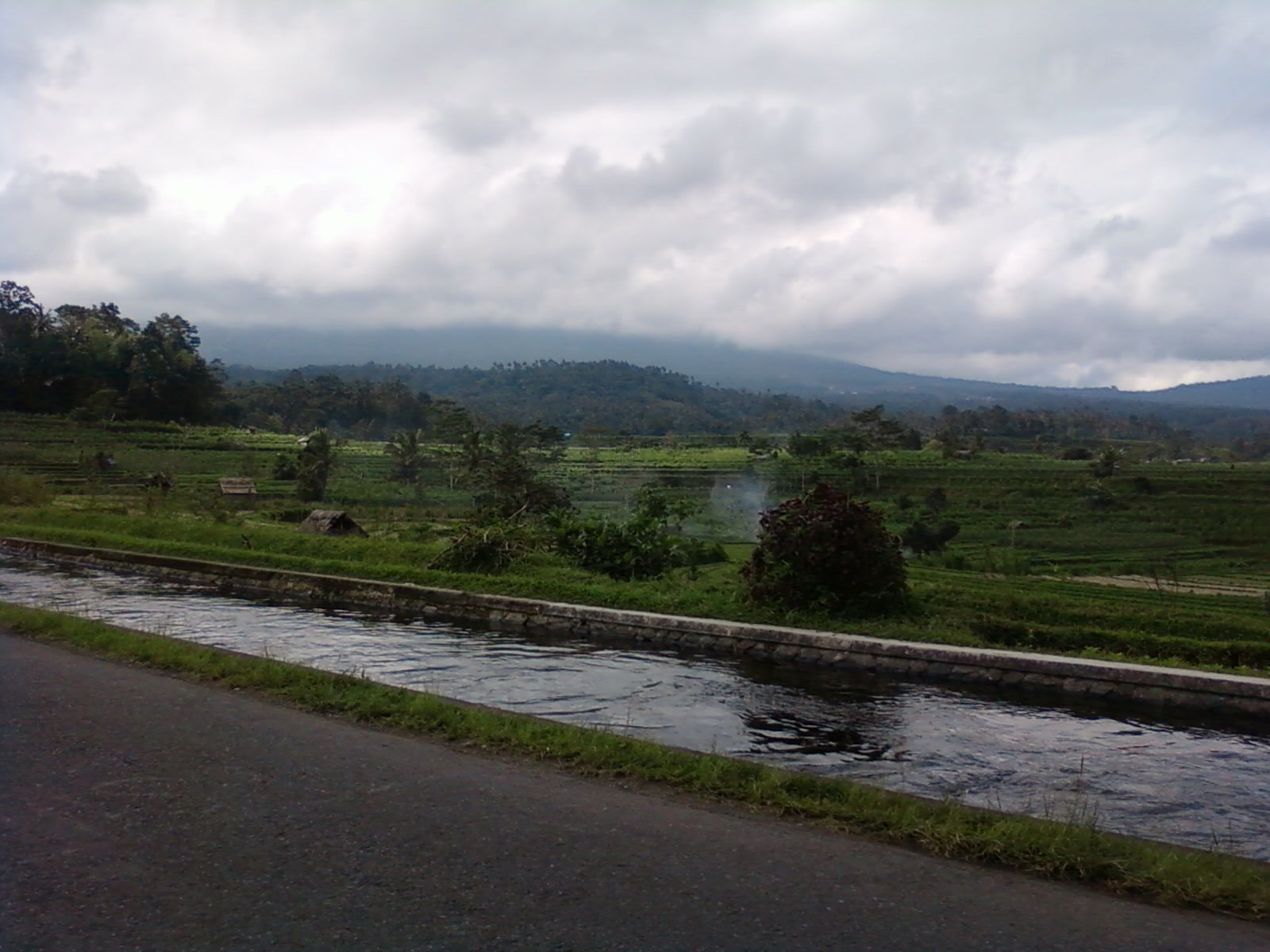
Every guidebook to Bali eventually gets around to saying that Ubud used to be quiet. Sidemen still is. An hour or so east of Ubud, on the lower slopes of Mount Agung, this is a valley of terraced rice, weaving villages and one of the best volcano views on the island — with a fraction of the traffic, the tour buses and the coffee shops with a queue out the door. It isn't undiscovered; word has been getting around for a couple of decades now. But it's still the kind of place where the loudest sound most mornings is a rooster, and where the rice terraces are worked by people who live there, not landscaped for a photo. This is a practical guide to Sidemen: what it actually is, how to get there, where to base yourself, what to do with your days, and the honest caveats that come with a place quietly becoming less of a secret every year.
What Sidemen is, and why go
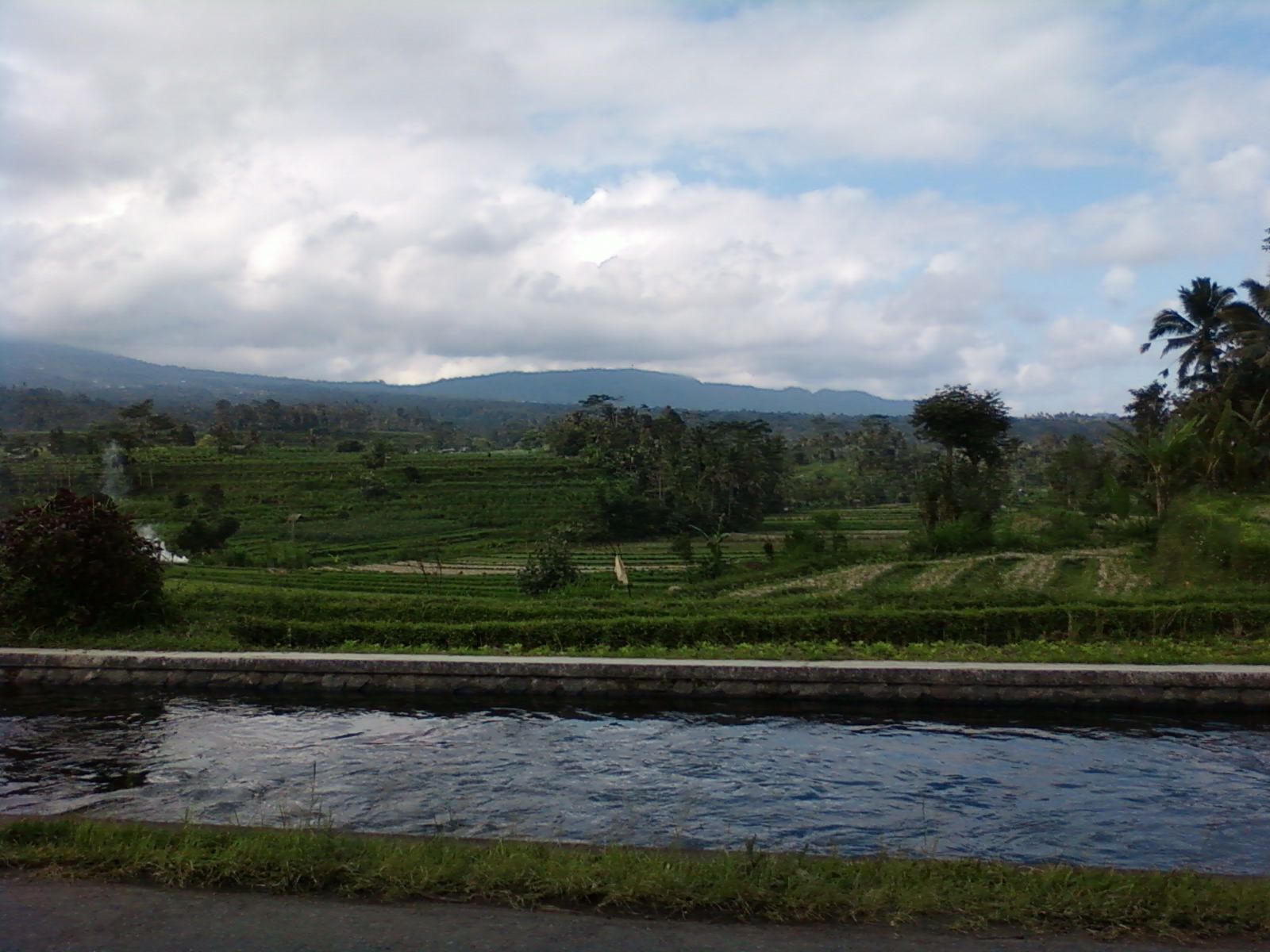
Sidemen sits in the Karangasem regency of East Bali, in a valley cut by the Unda and Telaga Waja rivers on the lower southern slopes of Mount Agung, the volcano that Balinese Hindus consider the most sacred point on the island. The village itself is small and unfussy — a market, a scattering of warungs, a road that keeps climbing and dropping through rice terraces cut into every available slope. What draws people here is the combination that's genuinely hard to find elsewhere on Bali: working rice terraces at valley-floor scale, framed directly by an active volcano, with almost none of the infrastructure that's grown up around Ubud's more photographed terraces at Tegalalang.
That comparison to Ubud is the one everyone reaches for, and it's fair as far as it goes. Sidemen has the same green, folded landscape and the same slow rhythm that made Ubud's rice-paddy outskirts famous decades ago, before the ring roads and the beach-club satellite towns. It doesn't have Ubud's restaurant scene, its yoga studios, its Monkey Forest or its markets stacked three deep with the same woven baskets. What it has instead is quiet, a genuinely dramatic mountain backdrop, and a set of villages — Sidemen proper, Iseh, Tabola, Telagatawang — that still make their living from rice, coffee, cacao and traditional weaving rather than from tourism alone.
It's also a legitimate base for East Bali more broadly. Sidemen sits within reach of Bali's mother temple at Besakih, the water palaces at Tirta Gangga and Taman Ujung, the "Gates of Heaven" at Pura Lempuyang, the Bali Aga weaving village of Tenganan, and whitewater rafting on the Telaga Waja River — all covered in the day-trips section below. Stay here two or three nights and you can treat the valley itself as the point of the trip, with everything else as an easy add-on.
Getting there
Sidemen is roughly 90 minutes from Ubud by car and around two and a half hours from the south-coast tourist belt — Canggu, Seminyak, Uluwatu — depending on traffic, which on Bali's single-lane arterial roads can vary wildly by time of day. From Ngurah Rai International Airport (Denpasar), figure on two to two and a half hours as well, longer if you're arriving or leaving during the airport's evening crush.
A private driver is the standard way in, and it's worth treating the drive itself as part of the trip rather than a chore to get through. Most routes east from Ubud or the south pass through Klungkung or Rendang, and a good driver will happily stop at a roadside rice-terrace viewpoint, a market, or a small temple along the way — ask for this up front rather than assuming it's included. Ride-hailing apps (Gojek, Grab) work reasonably well in South Bali but get patchy once you're deep into Karangasem's back roads, so booking a driver directly, through your accommodation, or through a reputable local operator is the more reliable option for the final approach into the valley.
Scooter travel is possible and popular with confident, experienced riders, particularly coming from Ubud or the East Bali beach town of Candidasa. The roads into Sidemen climb and switchback through the terraces, are often only wide enough for one and a half vehicles, and get slick fast in rain — this is not the place to learn to ride a scooter, and an international driving permit plus real riding experience matters more here than it does on the flatter roads around Canggu or Seminyak.
There's no train service anywhere on Bali and no meaningful public bus network into the valley itself, so a hired car, private driver, or scooter are genuinely the only practical options. Once you're in Sidemen, the village and its immediate surroundings are walkable, but reaching the trailheads, temples and weaving workshops scattered across the valley means either your own scooter or arranging transport through your accommodation for each outing.
Good to know
Sidemen is not a single fixed point on a map — it's a valley with several hamlets spread across it, and "Sidemen" on a map pin can put you a fifteen-minute drive from where you actually want to be. Confirm the specific area with your accommodation before you book a driver, and build slack into arrival day rather than planning tightly around it.
Where to stay
The appeal of a Sidemen stay is almost entirely about the view and the position — waking up to Mount Agung over a working rice terrace is the actual product here, more than any amenity list. Stays in the valley range from simple family-run guesthouses to villas built directly into the terraces, most with some version of a rice-field or infinity-edge view toward the volcano, and a number of properties offer complimentary activities like an early-morning rice-field walk or a cooking class as part of a stay — worth asking about directly, since they vary property to property and aren't always advertised up front.
Because the valley is spread across several hamlets rather than one walkable center, where exactly you stay changes what's easy to reach on foot versus what needs a car. A base closer to Sidemen village itself puts you nearer the market, warungs and the main road; a base up toward Iseh or further into the terraces trades that convenience for a quieter, more immersive setting with a longer drive for supplies or a proper meal out. Neither is wrong — it depends on whether you want the valley as a backdrop to relax against or as the thing you're actively exploring each day.
For a shortlist of vetted stays in the valley, see our Bali destination page, and the wider directory if you're still weighing Sidemen against Bali's other jungle-adjacent regions — Ubud and Munduk in the north both cover a different side of the island worth comparing before you commit to an itinerary.
Sidemen doesn't sell you a view of Mount Agung from a rooftop bar. It puts a working rice terrace between you and the volcano and lets the mountain do the rest — which is the whole reason to drive the extra hour past Ubud.
The rice terraces and valley walks
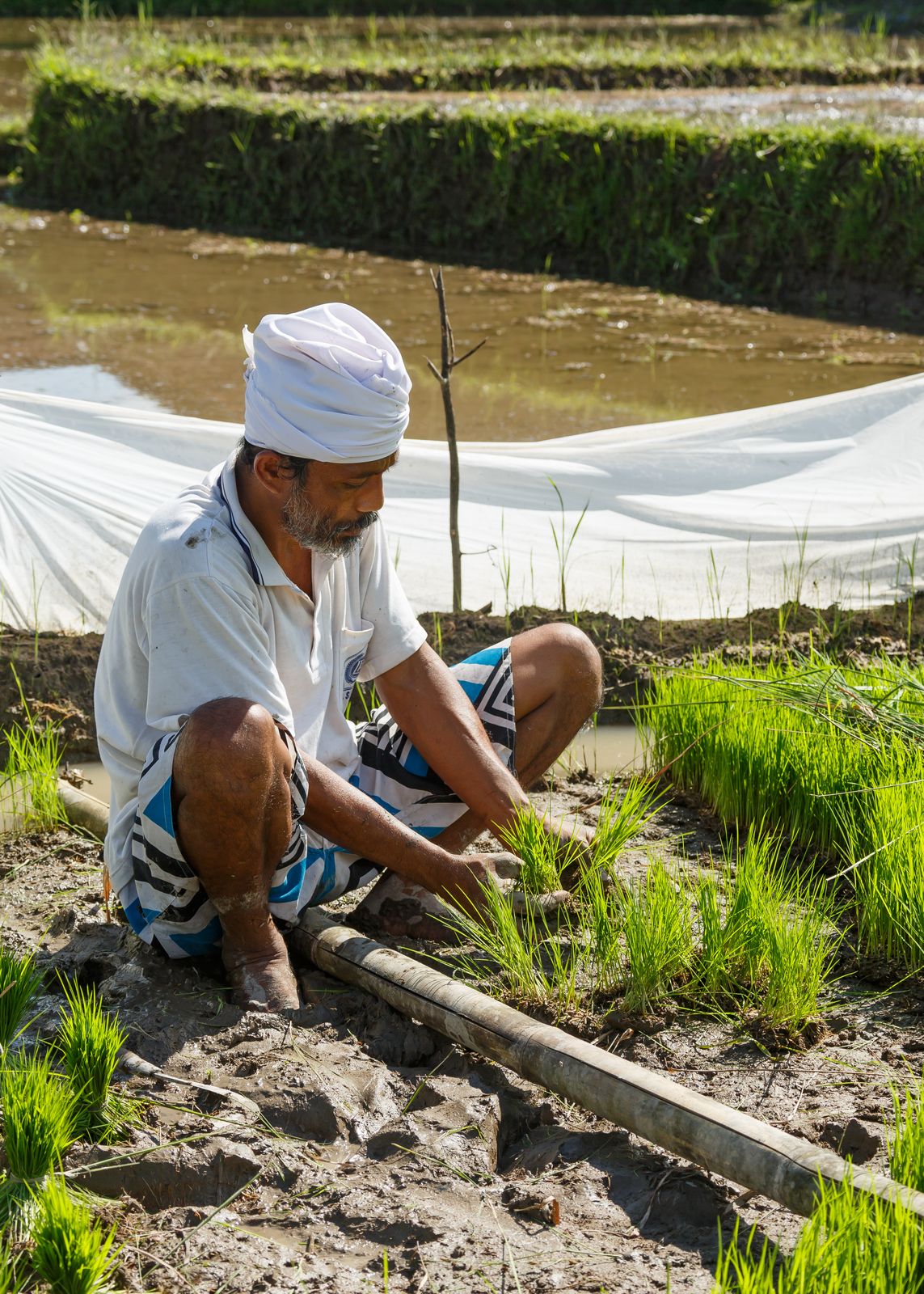
The terraces are the reason most people come, and the honest version of that experience is a walk, not a viewpoint stop. Trails thread between paddies at every stage of the growing cycle — flooded and mirror-still after planting, brilliant green a few weeks on, gold and ready just before harvest — and because rice here is planted in staggered cycles rather than all at once, no two fields nearby are usually at the same stage. A morning walk before the heat builds is the standard local rhythm: farmers are already out, the light is flat and clear, and Mount Agung — cloud cover permitting — is at its most visible before afternoon haze rolls in.
Bukit Jambul, a ridge along the road between Rendang and Sidemen, is one of the valley's best-known overlooks, giving a wide sweep across the terraced hillside with the volcano behind it — worth a stop even if you're just passing through by car. Closer to Sidemen village itself, informal trails cut between the paddies toward the Telaga Waja and Unda river valleys, and a local guide (easily arranged through most guesthouses) is worth hiring at least once, both to avoid inadvertently cutting across a farmer's working field and to get context on what's actually growing — rice shares the valley with coffee, cacao and clove at slightly higher elevations.
These aren't landscaped, ticketed attractions the way Tegalalang near Ubud has become, with its rows of swings and photo platforms. That's the trade: fewer facilities, no entrance gate, and a genuine working landscape where showing basic respect — staying on established paths, not trampling planted rows for a photo — actually matters, because someone's income depends on that field.
Mount Agung and trekking
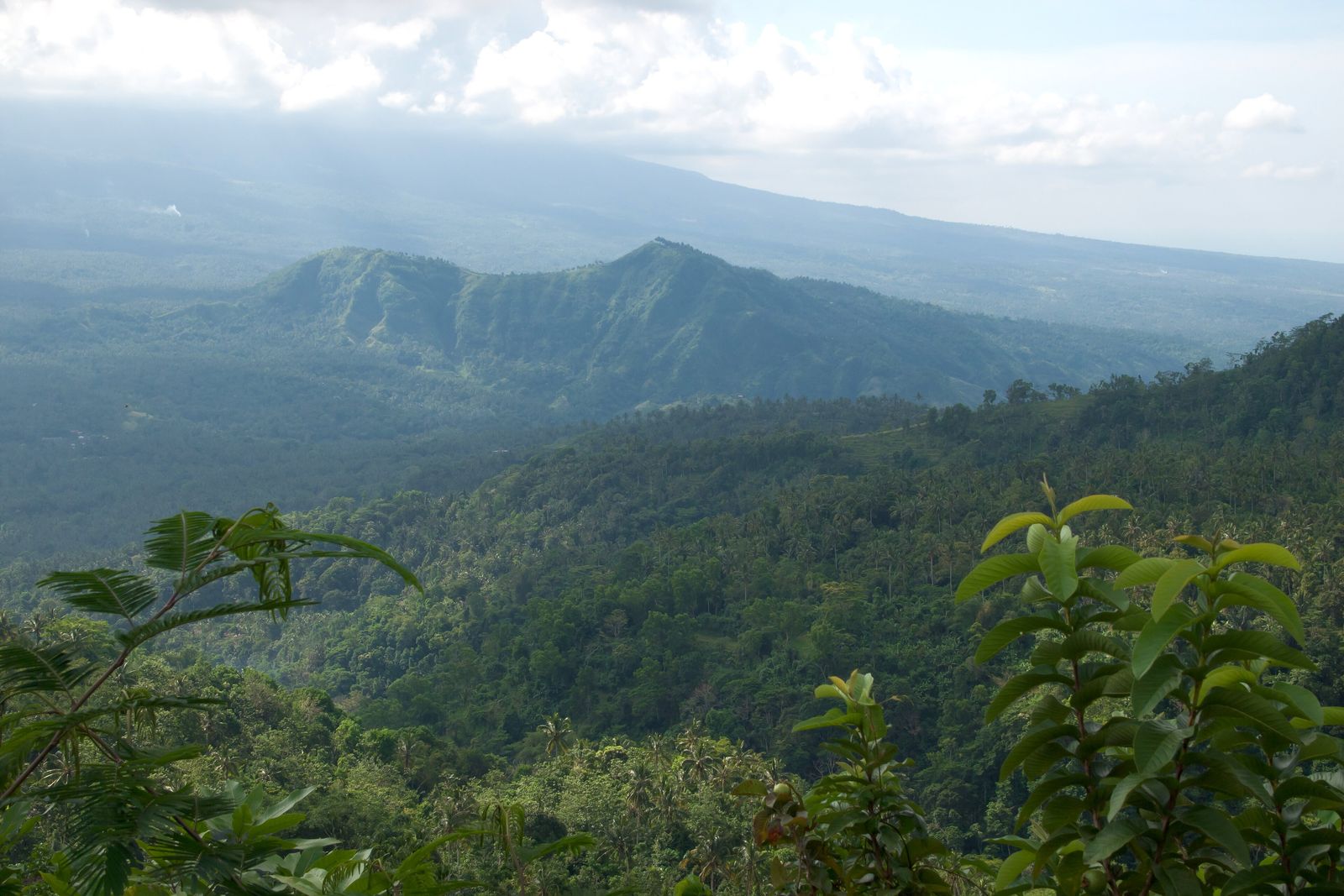
Mount Agung rises to 3,142 meters and is Bali's highest point and its most sacred, considered by Balinese Hindus to be the abode of the gods and the spiritual center of the island — every traditional Balinese house is oriented with reference to it. It's also an active volcano; its most recent eruptive period ran through 2017 and into 2018, closing the mountain and the surrounding area to trekking for an extended stretch and disrupting flights into Ngurah Rai. It has been open to climbers again for some time, but conditions and access can change, so it's worth confirming current status locally rather than assuming a guidebook or an old blog post still holds.
Sidemen is one of the more common bases for a Mount Agung climb, and treks are arranged through licensed local guides rather than attempted independently — solo climbing is not permitted, both for safety and out of respect for the mountain's religious significance. There are two main routes. The more popular starts from Pura Pasar Agung, a temple on the mountain's southern slope, and reaches a crater-rim viewpoint; it's shorter and considered the less demanding of the two, though "less demanding" on Agung still means a genuinely strenuous predawn hike over loose volcanic rock. The second, tougher route starts from Besakih, Bali's mother temple, and pushes on toward the true summit — a longer, harder climb generally reserved for more experienced trekkers.
Either route means a very early start, typically leaving in the middle of the night so you're on the upper slopes for sunrise, when the cloud cover that builds through the day hasn't yet rolled in. The reward, on a clear morning, is a view that takes in the neighboring volcano Mount Rinjani on Lombok across the strait, and the patchwork of East Bali laid out below. It is, by consensus, the toughest standard trek on the island — sturdy footwear, a headlamp, layers for a cold summit and a guide who knows the current mountain conditions all matter more here than on Bali's gentler hikes.
If a full summit attempt isn't the plan, the mountain is still very much part of the Sidemen experience without ever setting foot on it — it's the backdrop to almost every terrace view and guesthouse balcony in the valley, and on a genuinely clear day it can seem close enough to reach out and touch.
Good to know
Because Agung is an active volcano, access status can change with little notice. Check current conditions with your accommodation or a licensed local trekking operator before committing to a summit attempt, rather than relying on anything written before your trip.
Weaving villages and Iseh
Sidemen is one of Bali's centers for traditional handwoven textiles, specifically songket — a supplementary-weft cloth worked with gold or silver metallic thread — and endek, a weft ikat cloth dyed before weaving to create its pattern. Small weaving cooperatives around the village keep this going on wooden looms much as it's been done for generations; a single songket piece, worked by hand, can take weeks to months depending on its complexity. Most cooperatives welcome visitors to watch the process, and while entry is often free, a purchase or a donation is the right way to support work that's genuinely slow and skilled, not a staged demonstration.
A short drive or scenic walk from Sidemen village, the hamlet of Iseh is worth the detour on its own merits. It's changed remarkably little over the decades, and it has a specific claim to fame: the German painter and musician Walter Spies, a central figure in shaping the West's image of 1930s Bali and an influential presence in Ubud's own artistic community during that era, lived here for a time, drawn by the same rice-terrace-and-volcano view that still defines the place. Walking through Iseh today — past working fields, modest family compounds, the same folded hills that appear in Spies-era paintings of the region — gives a sense of why the valley captured him, and it's a useful corrective to any idea that Sidemen is a recent discovery. People have been quietly falling for this exact view for the better part of a century.
The best day trips
Sidemen's position in Karangasem regency puts it within a reasonable drive of some of East Bali's best-known sights, and basing yourself here rather than further south or in Ubud can mean beating the day-trip crowds that pour in from those directions.
Besakih, the mother temple
Pura Besakih, on Mount Agung's southwestern slope, is Bali's largest and holiest temple complex — a sprawling terraced sanctuary of more than twenty separate temples considered the mother temple of the island's Hindu tradition. It's a working temple rather than a museum piece, with ceremonies happening regularly, and a respectful sarong-and-sash visit (available for rent on site) is the standard approach.
Tirta Gangga water palace
Built in the 1940s by the last king of Karangasem, Tirta Gangga is a water palace of stepped pools, stone statuary and koi ponds fed by natural springs, with stone paths across the water that make for one of East Bali's more photographed and genuinely pleasant stops. It's an easy add-on to a day that also includes Lempuyang, roughly half an hour further on.
Pura Lempuyang, the "Gates of Heaven"
Lempuyang is one of Bali's oldest and most revered temple complexes, made up of seven temples climbing the slope of Mount Lempuyang. The much-photographed split-gate view with Mount Agung framed between the two halves is actually at the Penataran Agung temple partway up, not the summit temple, and reaching the true highest point involves a genuinely long climb — roughly 1,700 steps and three to four hours round trip for those going all the way. Expect a queue for the framed photo at busier times, including, at some spots, a mirror trick used to create the illusion of a still reflection underfoot.
Tenganan, a Bali Aga village
Tenganan is one of Bali's original Bali Aga villages — communities that maintain customs predating the Hindu-Javanese influence found across most of the island — and it's known specifically for geringsing, a rare double ikat weaving technique found in very few places in the world. Walking its walled, symmetrical village layout is a genuinely different cultural experience from the rest of East Bali's temple-and-terrace circuit.
Telaga Waja River rafting
For something more active, the Telaga Waja River, which runs directly through the Sidemen valley, is one of Bali's better whitewater rafting runs — a couple of hours of real rapids through jungle-lined gorge, arranged through operators based in or near Sidemen itself, making it one of the few day trips here that doesn't require leaving the valley at all.
Most of these can be combined into a single long day with a private driver — Besakih and Tirta Gangga together, or Tirta Gangga and Lempuyang, are the two combinations that make the most geographic sense — but trying to fit all four temple-and-palace stops into one day tends to turn a genuinely rewarding trip into a rushed one. Two shorter day trips, spread across a longer Sidemen stay, is the better pace.
Food and practicalities
Sidemen's food scene is unpretentious and largely tied to guesthouses and a handful of warungs rather than a dedicated restaurant strip — this is not Ubud's dining circuit, and that's part of the point. Expect Indonesian and Balinese home cooking: nasi campur, gado-gado, simple grilled fish and chicken, fresh vegetables from the surrounding fields, and good coffee grown at higher elevations nearby. Several stays offer cooking classes built around what's actually growing in the valley that week, which is a genuinely good way to spend a rainy afternoon.
Cash matters more here than in South Bali's more built-up tourist zones — card acceptance thins out fast once you're off the main road, and the nearest reliable ATMs are generally in larger towns like Rendang or Klungkung, so it's worth stocking up on rupiah before heading into the valley rather than assuming you'll find a machine when you need one.
Mobile signal and Wi-Fi are workable but noticeably patchier than in Ubud or the south coast, particularly for stays tucked deeper into the terraces — worth confirming with your accommodation in advance if a work trip depends on a stable connection, and worth treating the patchiness as a feature rather than a bug if it doesn't.
Indonesian is the national language and Balinese is widely spoken locally; English is common at accommodations and with guides but thinner at local warungs and markets, where a few basic phrases go a long way and are warmly received. Modest dress is expected at any temple — Besakih, Lempuyang, Tirta Gangga and the smaller village temples around Sidemen itself — with a sarong and sash either required or available to rent on site.
When to go
Like the rest of Bali, Sidemen runs on a dry and wet season rather than four distinct ones. Dry season, roughly April through October, brings the clearest skies and the best odds of an unobstructed Mount Agung view — which, given that the volcano view is a large part of the draw, makes this the more reliable stretch to visit if that's your priority. Wet season, November through March, brings more frequent afternoon downpours and a greater chance of cloud wrapping the summit for days at a time, though mornings are often still clear before the clouds build, and the terraces themselves turn a deeper, more saturated green.
Because Sidemen sits at higher elevation than the south-coast beach towns, temperatures run noticeably cooler, especially in the evening — a light layer for the evenings is worth packing even in dry season, and genuinely necessary if you're attempting a predawn Mount Agung summit at any time of year.
Crowds are a lighter consideration here than almost anywhere else on this list of East Bali stops, but they're not zero, and they're growing. Tirta Gangga and Lempuyang, both easy day trips from Sidemen, can get genuinely busy with tour groups by mid-morning, particularly for the split-gate photo spot at Lempuyang — an early start from Sidemen is a real advantage over day-trippers driving in from Ubud or the south.
The honest caveats
Sidemen earns its comparisons to an earlier, quieter Ubud, but it's worth being honest about what that comparison also implies: Ubud used to be quiet too, and it isn't anymore. Sidemen has been on travel writers' radar for well over a decade now, and the pace of new guesthouse and villa construction in the valley has picked up accordingly. It's still genuinely quieter than Ubud, by a wide margin — but arriving expecting an undiscovered village untouched by tourism will set you up for mild disappointment. Go for a valley that's markedly calmer than its famous neighbor, not for one that tourism hasn't found at all.
The roads are the other honest caveat. Reaching Sidemen and getting around within the valley means narrow, winding roads that climb and drop constantly through the terraces, occasionally single-lane in practice even where two-way traffic is technically allowed. This is manageable and genuinely beautiful with a good driver, more demanding on a scooter, and not the place to rush a schedule — build real slack into any day that involves driving in or out of the valley, especially after rain.
Connectivity, covered above, is a genuine limitation rather than charming rusticity if you actually need reliable internet for work — confirm with your specific accommodation rather than assuming. And because Mount Agung is an active volcano with a real eruptive history as recently as 2017–2018, it's worth checking current status before planning a trek, and treating any pre-trip research more than a year or two old with a bit of skepticism on that specific point.
None of this outweighs what the valley offers — it's a genuine, still-relatively-uncrowded rice-terrace-and-volcano landscape within reach of some of East Bali's best temples and villages. It's just not a secret anymore, and the roads demand a bit more patience than a Google Maps drive-time estimate suggests.
Common questions
How far is Sidemen from Ubud?
About 90 minutes by car under normal traffic conditions, making it a realistic day trip from Ubud, though an overnight stay or longer is the better way to actually experience the valley rather than just pass through it.
Can you see Mount Agung from Sidemen without trekking it?
Yes — the volcano is visible from much of the valley on a clear day, including from many guesthouse and villa balconies, and that view is a large part of why people come. Cloud cover is more likely in wet season (November–March), so dry season (April–October) gives better odds of an unobstructed view without ever setting foot on the mountain.
Is climbing Mount Agung from Sidemen difficult?
Yes, it's widely considered Bali's toughest standard trek — a predawn start, several hours of steep terrain including loose volcanic rock, and real elevation gain to reach either the Pura Pasar Agung crater-rim viewpoint or, on the harder route from Besakih, the true summit. It's done with a licensed local guide, not independently, and current access can change given the mountain's active status.
How many days do you need in Sidemen?
Two to three nights is enough to properly experience the valley itself — a rice-terrace walk, a weaving workshop, time to simply sit with the Mount Agung view — plus one or two day trips to nearby sights like Besakih, Tirta Gangga, Lempuyang or Tenganan without feeling rushed.
Is Sidemen a good base for East Bali, or better as a day trip from Ubud?
Both work, but basing yourself in the valley for a night or two has a real advantage: you can reach nearby sights like Lempuyang and Tirta Gangga early, ahead of the day-trip traffic arriving from Ubud and the south coast, and you get the valley's own rice-terrace mornings and evenings that a rushed day trip skips entirely.
Do you need a guide for the rice terrace walks?
Not strictly, but it's worth hiring one at least once, both for context on what's growing beyond rice — coffee, cacao and clove at higher elevations — and to avoid inadvertently cutting across a farmer's actively worked field. Most guesthouses can arrange one easily.
Where to go from here
Sidemen rewards slowing down rather than treating it as a single photo stop on an East Bali loop — give the valley itself at least a night or two before folding in Besakih, Tirta Gangga, Lempuyang or Tenganan as day trips. Start with our Bali destination page for a shortlist of vetted stays in the valley, or browse the full directory if you're still weighing Bali against another jungle destination. Our Ubud jungle guide and Munduk and North Bali highlands guide both cover the island's other major jungle-adjacent regions, useful if Sidemen is one stop on a longer Bali itinerary rather than the whole trip. And if you're comparing Southeast Asia's jungle destinations more broadly before you book, our Khao Sok guide and our Chiang Mai jungle guide, both in Thailand, are a useful next read.
- Kelana by Kayla — Sidemen Bali Guide — travel times from Ubud and the south coast, general orientation to the valley.
- Bali Sunsets — Sidemen: Rice Terraces, Village Life, and Mount Agung Views — rice terrace character and comparison with Tegalalang.
- Veronika's Adventure — Sidemen Trekking With a Close View of Mt Agung — Mount Agung trekking routes from Pura Pasar Agung and Besakih.
- Travelfish — How to Prepare for Climbing Gunung Agung, Sidemen — climb logistics, difficulty and guide requirements.
- Sidemen Bali — What to Do & Visit — Iseh village, Walter Spies history, weaving cooperatives.
- Wikipedia — Mount Agung — elevation, religious significance, and 2017–2018 eruption history.
- Wikipedia — Tirta Gangga — water palace history and construction date.
- Wikipedia — Tenganan — Bali Aga village status and geringsing double ikat weaving.
More from the Journal.
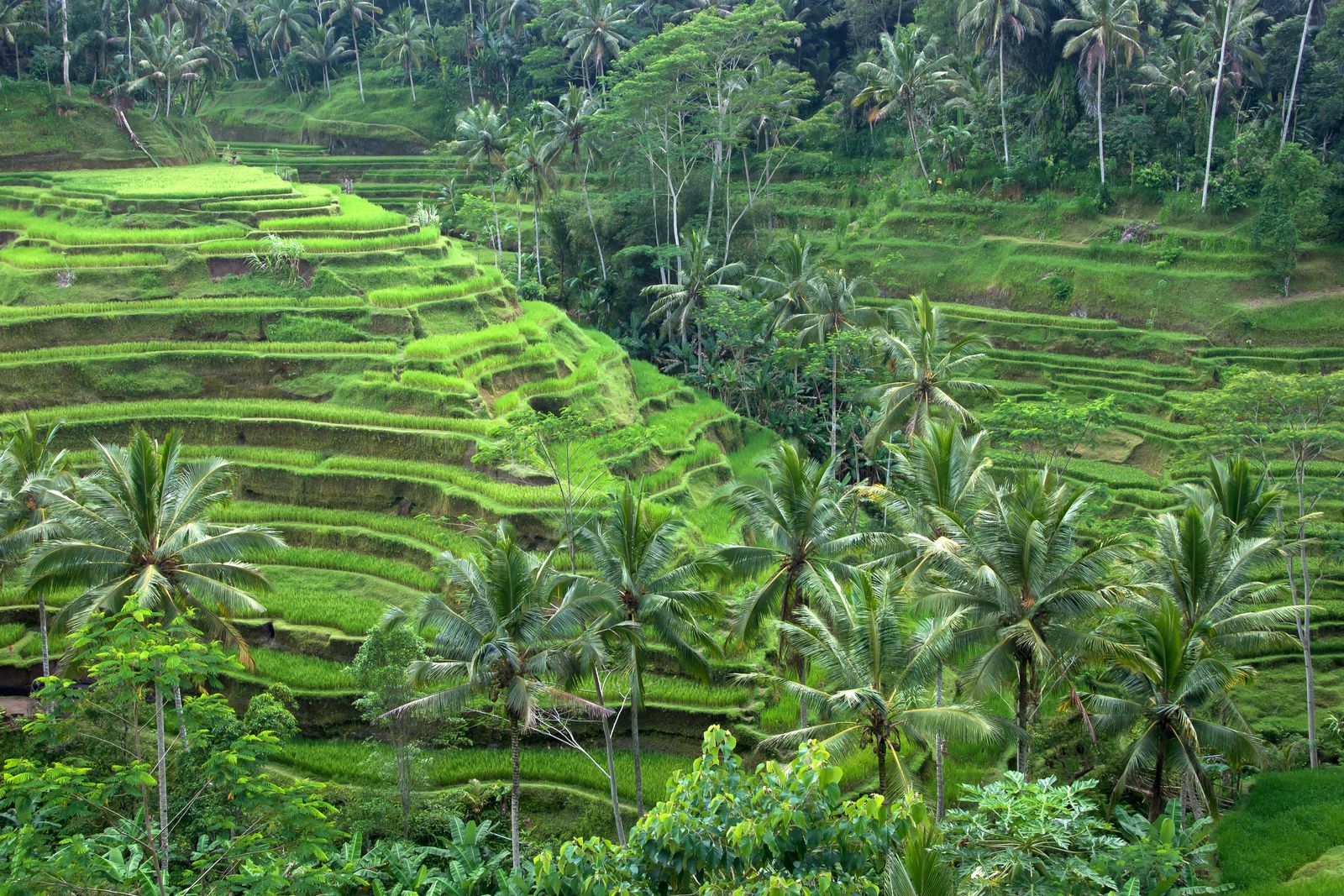 Photo: Vyacheslav Argenberg, CC BY 4.0
Ubud Jungle Guide
Bali's cultural heart is ringed by river gorges and terraced forest. Where to stay in the Ubud jungle, what to do, and how to escape the crowds.
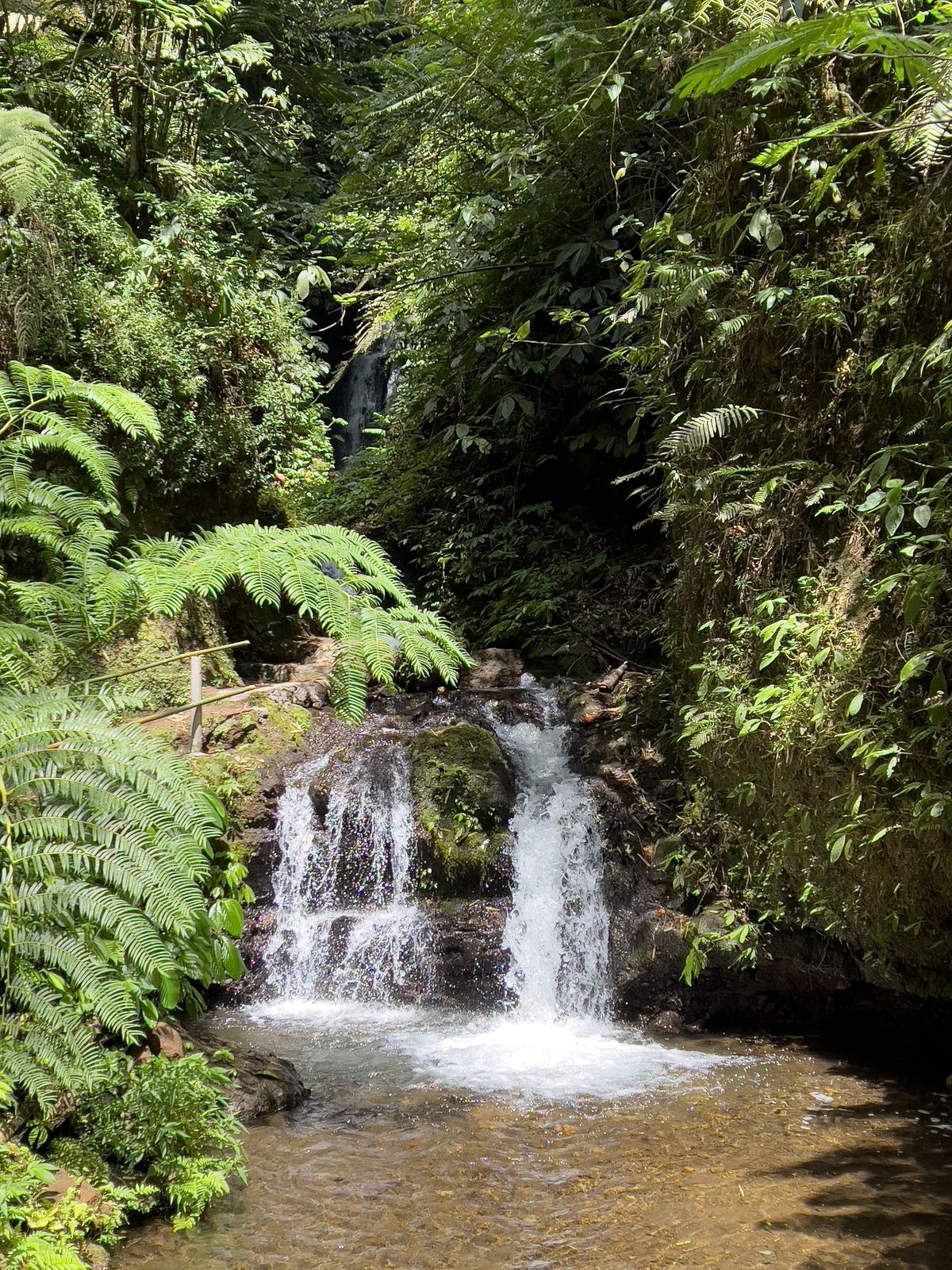 Photo: Stefan Fussan, CC BY-SA 3.0
Munduk & North Bali Highlands Guide
Bali's cool, waterfall-laced highlands — coffee country, twin lakes and jungle ridges two hours from the beach crowds.
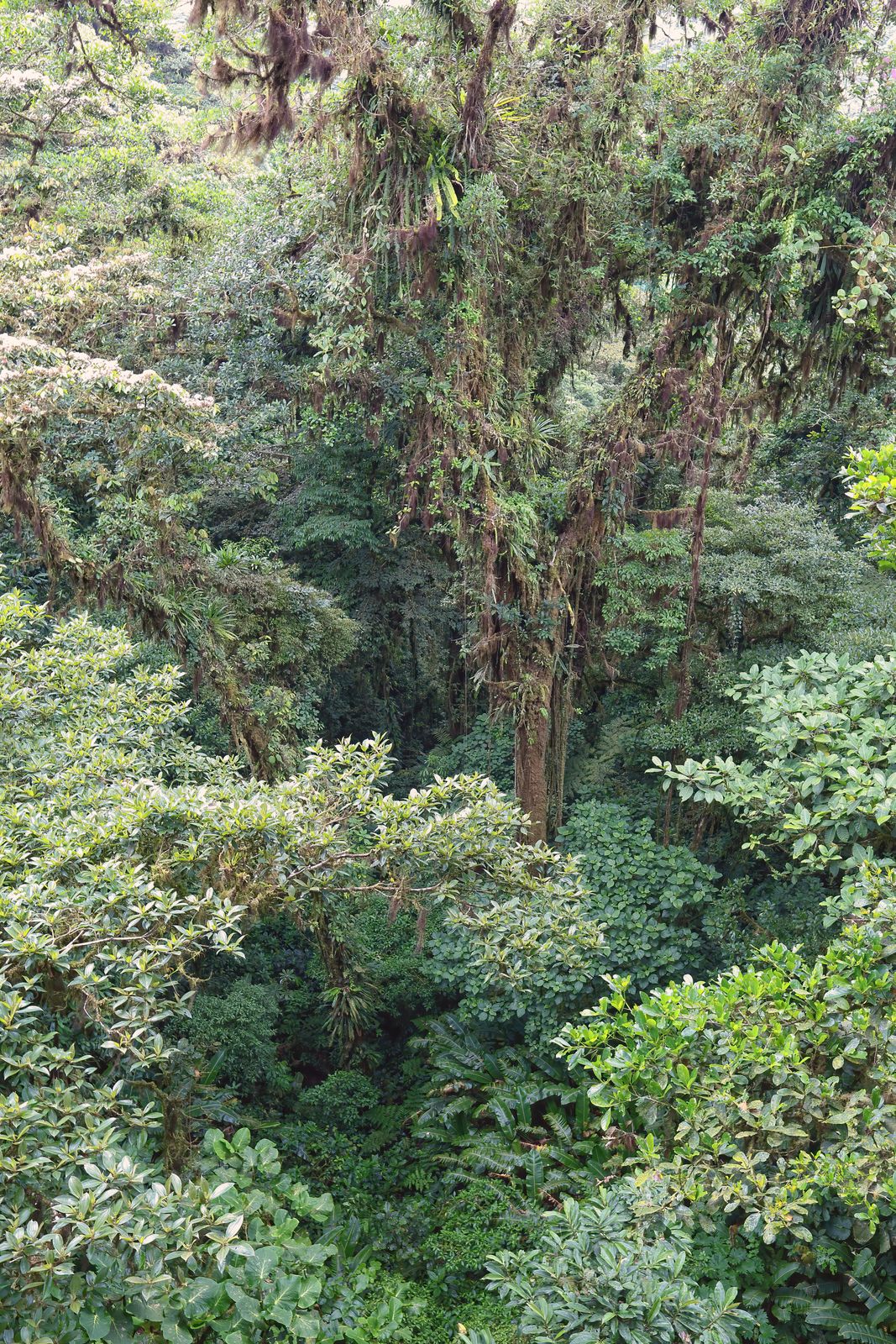 Photo: Cephas, CC BY-SA 4.0
Monteverde Cloud Forest Guide
Walk through the clouds on suspension bridges in the canopy — Costa Rica's most famous cloud forest, and how to do it well.
 Photo: Derek Ramsey (Ram-Man), CC BY-SA 4.0
Find your own piece of the canopy.
Treehouses, bamboo houses and rainforest villas across 17 destinations — found, vetted and written up honestly.
Browse all destinations