Chiang Mai Jungle & Northern Thailand Guide
Most people picture Thai jungle as flat, humid and coastal — the kind of green you see behind a beach in Koh Phangan or Khao Sok. Chiang Mai is a different animal entirely. It sits in a river valley ringed by the folded, forested mountains of the country's far north, cooler and higher than almost anywhere else in Thailand, with teak-shaded temples on the ridgelines and waterfalls dropping through national parks less than an hour from the old city gates. This is a guide to that northern jungle: how to get up into the hills, which elephant experiences are actually ethical and which aren't, where to base yourself, and the honest trade-offs — including a seasonal one worth planning around — that come with visiting.
What Chiang Mai's jungle actually is
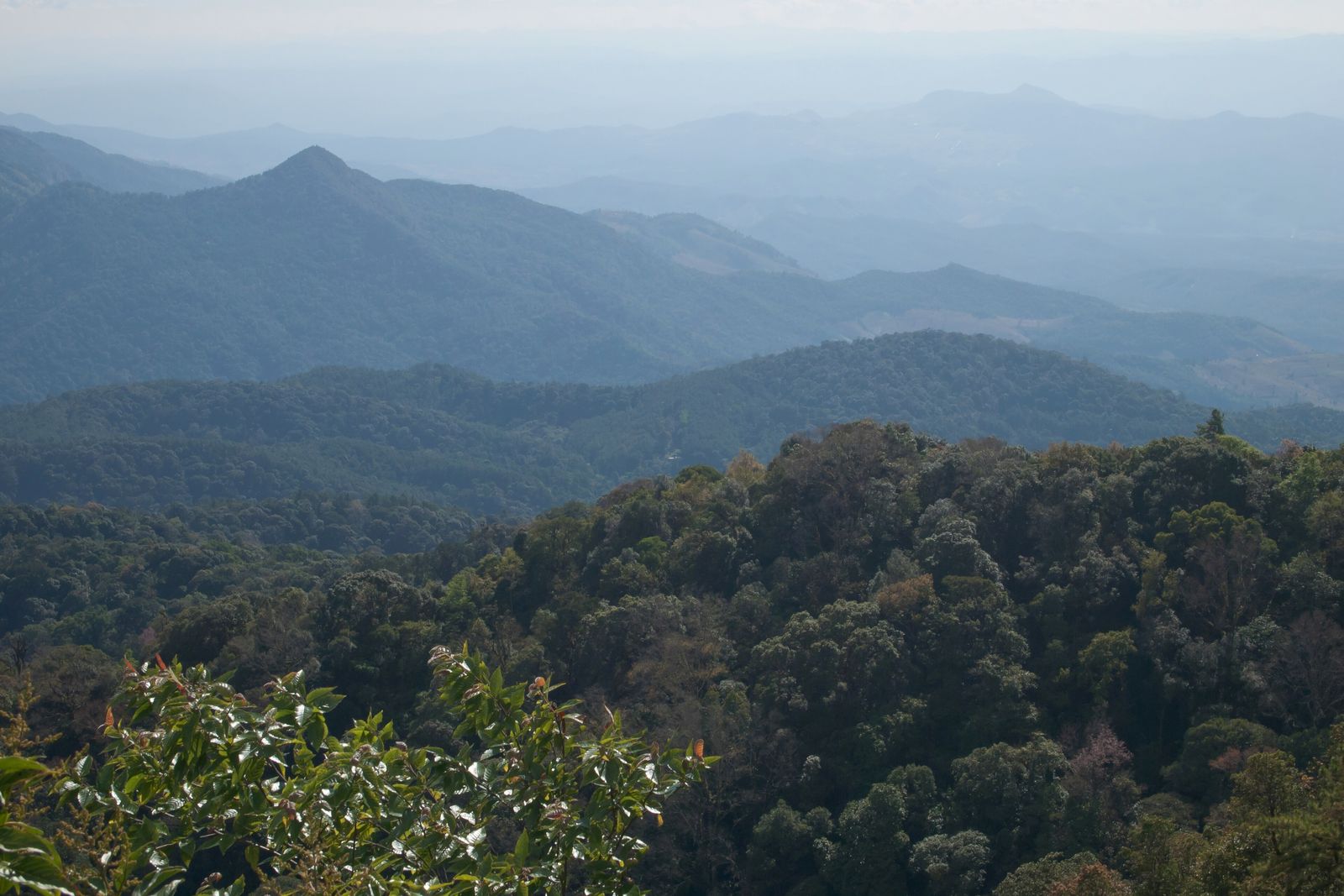
Chiang Mai city sits at around 310 meters above sea level in a broad valley along the Ping River, but it's ringed on nearly every side by the Thai highlands — the southern tail of the same mountain system that runs up through Myanmar and into the Himalayas. West of the city, Doi Suthep–Pui National Park rises straight out of the university district, its slopes thick with mixed deciduous and evergreen forest, and its summit crowned by Wat Phra That Doi Suthep, one of the most important Buddhist temples in the country. An hour or so further southwest, Doi Inthanon climbs to just over 2,565 meters, making it Thailand's highest point, and the change in elevation is dramatic enough that the summit sits in genuine cloud forest — moss, ferns, cool mist — while the valley floor below bakes in tropical heat.
This is Lanna country, the old northern Thai kingdom that was politically and culturally distinct from Bangkok and the central plains for centuries, and that history shows up everywhere in the architecture: steep, multi-tiered temple roofs, teak wood carving, a slower and more understated aesthetic than you'll find further south. The forest itself has a working history too — northern Thailand's hills were logged hard for teak through the 20th century before a nationwide logging ban in 1989, and a lot of what you're walking through today, especially at lower elevations, is regenerated or managed forest rather than untouched wilderness. That's worth knowing going in: this is beautiful, genuinely forested country, but it's a farmed and inhabited landscape — hill-tribe villages, tea and coffee plantations, temple grounds — threaded through the wild parts, not an empty green expanse.
The other defining feature of this region is elevation-driven climate. Chiang Mai's surrounding hills are cool enough in December and January that locals wear jackets in the morning, a genuine novelty in a country better known for year-round heat, and that coolness is a big part of why northern Thailand became famous for elephant sanctuaries, hill-tribe trekking and hot-air ballooning over rice terraces rather than beach resorts. If you're weighing Chiang Mai against Thailand's other major jungle destination, our Khao Sok National Park guide covers the flatter, wetter, limestone-karst rainforest down south — a genuinely different kind of green from the mountain forest up here.
Getting there and getting around
Chiang Mai International Airport (CNX) sits close enough to the old city that you can be checked into a hotel within twenty minutes of landing — one of the underrated conveniences of this destination compared to jungle towns that require a long transfer. Domestic flights from Bangkok run roughly every hour through the day and take about an hour and fifteen minutes in the air, with fares that are often cheaper than the overnight train if you book a few weeks out. The overnight sleeper train from Bangkok's Krung Thep Aphiwat station is the slower, more atmospheric option — around twelve to fourteen hours — and a genuinely pleasant way to arrive if you have the time and want to watch the country change from rice plains to hills through the window at dawn. Budget overnight buses cover the same route in a similar timeframe for less money, with less comfort.
Once you're in the city, the old town's grid inside the historic moat is walkable, and Grab (Southeast Asia's ride-hailing app) covers everything else reliably and cheaply. For getting up into the hills — Doi Suthep, Mae Wang, the elephant sanctuaries, Pai — you're choosing between a red songthaew (the shared pickup trucks with two bench seats that function as Chiang Mai's default shuttle), a private driver for the day, a scooter, or a joined tour van. Songthaews are cheap and fine for a straightforward run up to Doi Suthep temple, but for a multi-stop day — a waterfall, a sanctuary, a viewpoint — a private driver or a booked day tour is far less hassle and not much more expensive split across a group.
Scooters are everywhere and cheap to rent, and for confident riders they're the best way to feel the region — the ring roads out to Mae Rim and Mae Wang are genuinely good motorbike country. But northern Thailand's mountain roads get narrow, steep and switchbacked fast once you're off the main highways, and Thailand's roads carry one of the highest traffic fatality rates in the world, with motorbikes involved in the large majority of those deaths. An International Driving Permit is a legal requirement, not a formality, and it also affects your travel insurance validity if something goes wrong. If you haven't ridden a scooter on mountain roads before, this isn't the place to start.
The best areas and where to stay
Where you base yourself changes the trip more here than in most jungle destinations, because "Chiang Mai" really spans a walkable historic core and a much larger, greener periphery.
The Old City
Inside the square moat, the Old City is the most convenient base — temples, the Sunday Walking Street, guesthouses and restaurants are all within a short walk of each other, and it's the easiest place to arrange tours and drivers from. It's also the most built-up part of town, with no real jungle feel of its own; you're here for logistics and atmosphere, not canopy views.
Nimmanhaemin (Nimman)
West of the moat, near Chiang Mai University, Nimman is the city's café and design district — good food, boutique shopping, a younger crowd — and it sits closest to the base of Doi Suthep–Pui National Park, making it a reasonable middle ground between city convenience and proximity to the hills.
Mae Rim and the northern foothills
North of the city, Mae Rim is where a lot of Chiang Mai's elephant sanctuaries, orchid farms and hill resorts cluster, with the land rising steadily into forested slopes. It's a 30–45 minute drive from the Old City rather than a walk, but it trades city noise for genuine greenery and quiet mornings.
Mae Wang
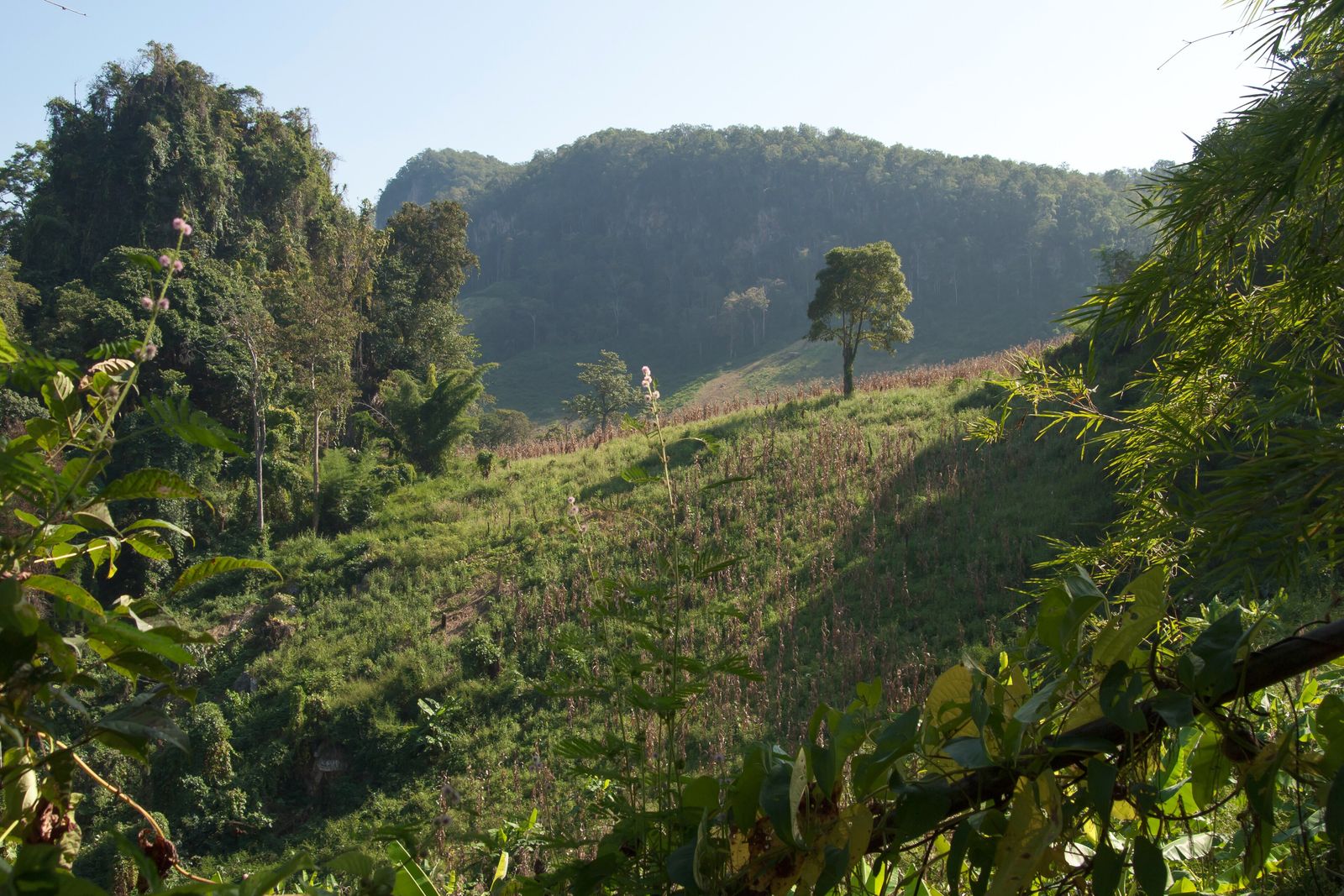
Southwest of the city, Mae Wang is where Chiang Mai's jungle character gets most literal — rafting rivers, waterfall trails and a scattering of genuinely rural stays set among orchards and reforested hillside. It's roughly an hour from the Old City, far enough that you'll want your own transport or a driver, but it's also where some of the region's most distinctive stays are. A three-storey bamboo treehouse on a farm sanctuary in Mae Wang — built on a 300-rai property of orange and longan orchards with a reforestation section — is a good example of what this pocket of the region offers: mountain views at sunrise, real quiet at night, and a working farm setting rather than a resort compound.
For a fuller shortlist of vetted jungle-view stays across these pockets, see our Thailand destination page, or browse the wider directory if you're still comparing Chiang Mai against other jungle regions before committing to dates.
Chiang Mai isn't one jungle experience — it's a walkable old city with a much bigger, greener, cooler world rising on every side of it. The trick is deciding how much of that world you want between you and your bed at night.
The top things to do and see
The best of Chiang Mai's jungle side splits fairly cleanly into temples-and-trails close to town and bigger set-piece days that need a car.
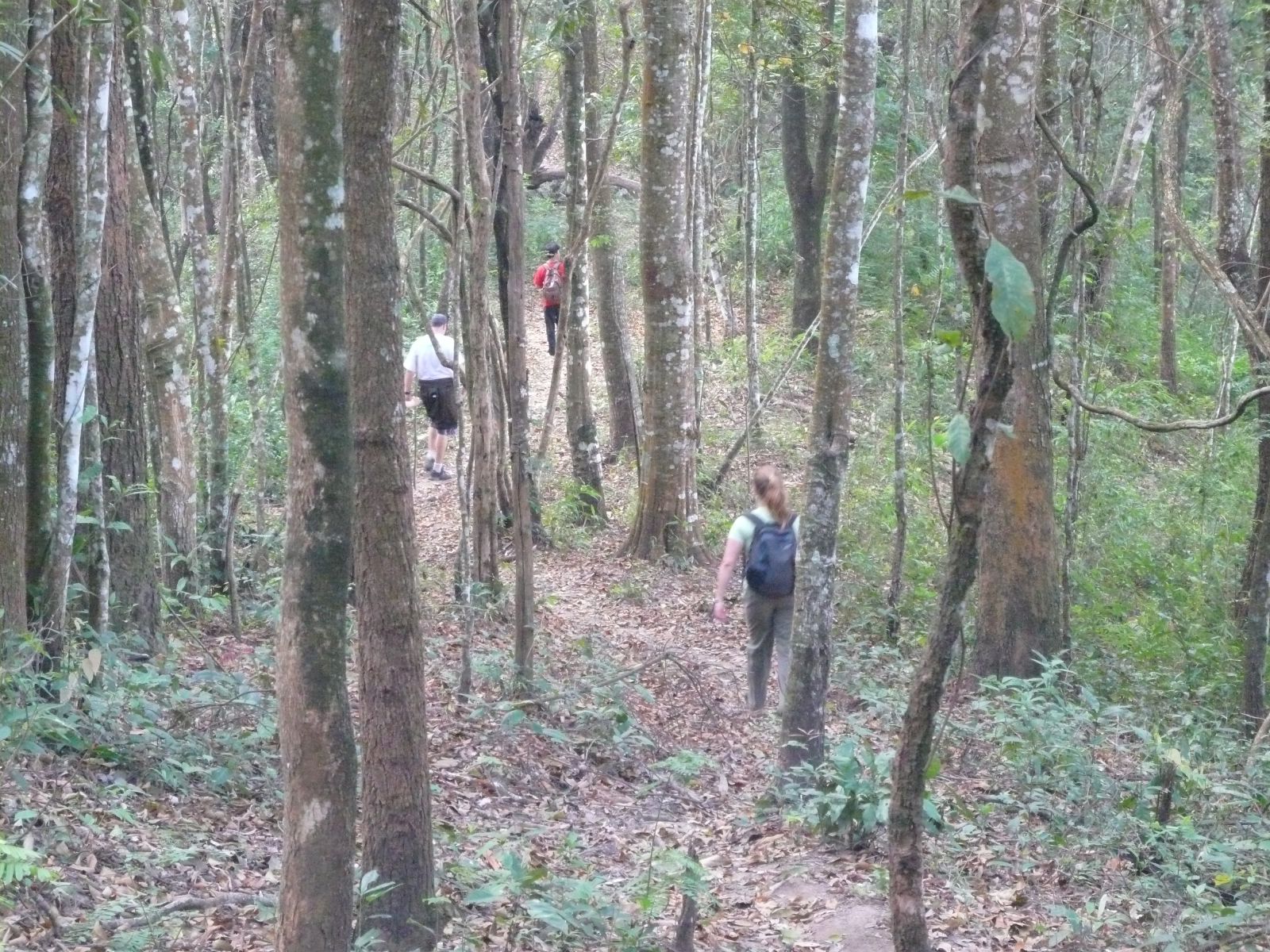
- Walk (or ride) up to Wat Phra That Doi Suthep: the mountain temple that gives Doi Suthep–Pui National Park its name, reached either by songthaew and a steep flight of naga-flanked stairs, or on foot via the Monk's Trail — a shaded forest path that climbs from the university area to Wat Pha Lat, a smaller, quieter forest temple built into a ravine, before continuing up to the main temple itself. The Monk's Trail is genuinely one of the best free things to do in the city: mostly shaded, moderately steep, and a real contrast to the busy temple complex at the top.
- Spend a day at Doi Inthanon National Park: Thailand's highest point, with cloud forest at the summit, boardwalk nature trails through moss and rhododendron, and a run of named waterfalls on the way up, including Wachirathan and Sirithan. The park holds well over a dozen distinct waterfall trails, so it rewards a full day rather than a quick stop at the summit viewpoint and the twin royal pagodas.
- Visit an ethical, no-riding elephant sanctuary: this is the activity most people associate with Chiang Mai, and it's worth doing carefully — see the caveats section below for how to tell a genuinely hands-off operation from one still built around performance and contact. Options in the hills around the city range from fully hands-off feeding-only visits to supervised bathing and walking programs.
- Browse the Sunday Walking Street: the Old City's main road closes to traffic every Sunday evening for a market that runs its full length, mixing textiles, hill-tribe crafts, street food and live music — one of the better ways to spend an evening without leaving town.
- Tour the Old City temples: Wat Chedi Luang, with its massive partially-ruined chedi, and Wat Phra Singh, one of the city's most revered temples, are both easy walks from almost any Old City guesthouse and give a sense of Lanna temple architecture before you head into the hills to see it in a forest setting.
- Take a cooking class: Chiang Mai has one of the highest concentrations of Thai cooking schools in the country, many built around a morning market visit followed by hands-on classes in northern dishes you won't find as easily further south.
Good to know
"Sanctuary" isn't a protected term in Thailand, and plenty of operations market themselves as ethical while still offering bathing, riding or close-contact photo ops that welfare groups advise against. Look specifically for language about no riding, no forced bathing and hands-off or feeding-distance-only contact before you book — it's a meaningfully different experience for the elephants, and usually a calmer, more honest one for you too.
The best day trips
Chiang Mai's real strength is how much different landscape sits within a couple of hours, which makes day trips — and short overnight extensions — an essential part of the region rather than an optional add-on.
Mae Wang waterfalls and rafting
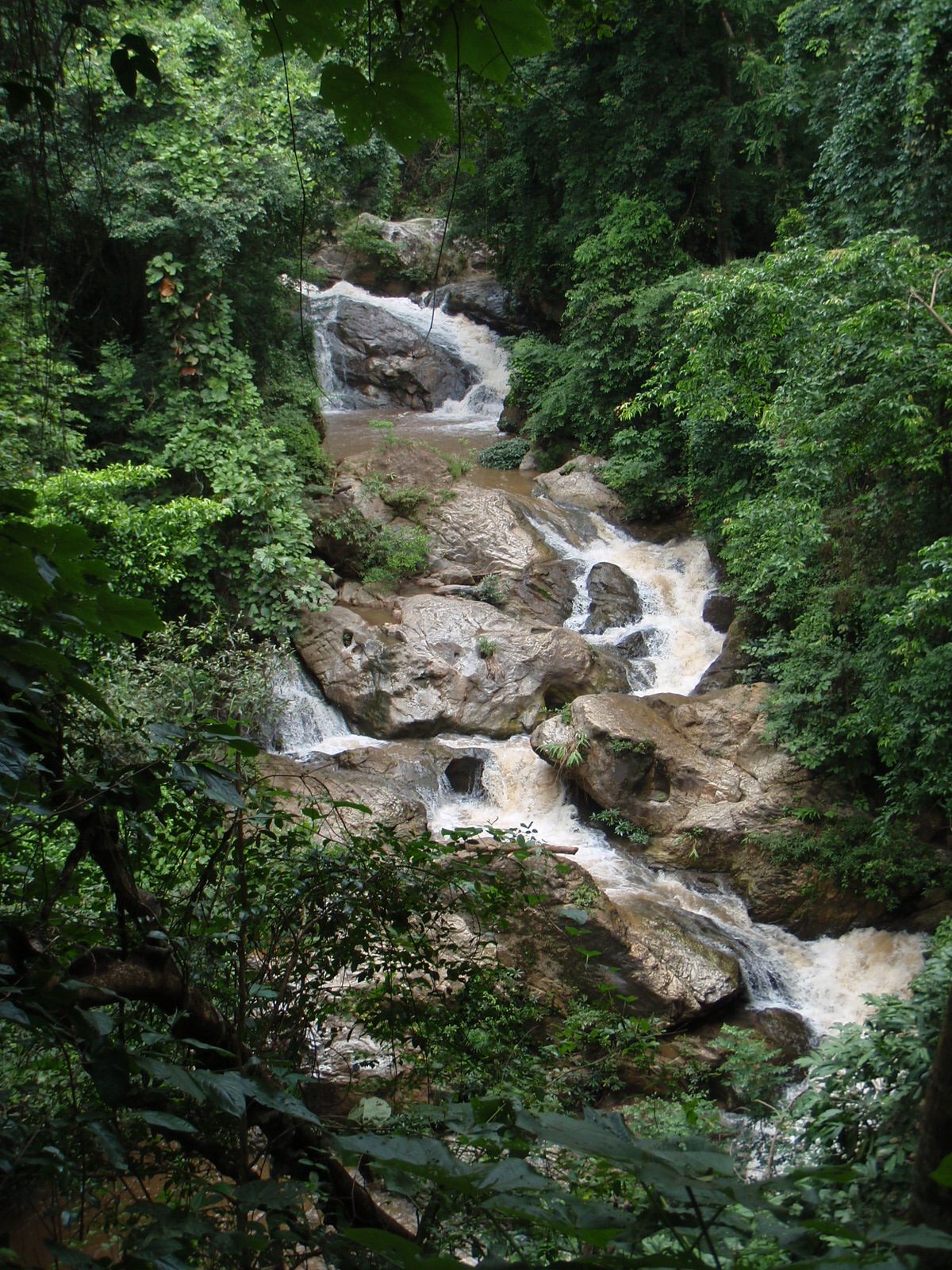
About an hour southwest of the city, Mae Wang National Park is built around a run of forest waterfalls, the best known being Mae Sa Pok, where you can walk behind the falling water and sit in a natural rock shelter carved out behind the curtain of the falls — one of the more distinctive waterfall experiences in the region rather than just a viewpoint. The same area runs bamboo rafting and whitewater trips on the Mae Wang River, and several operators combine a rafting run with a waterfall stop and an elephant sanctuary visit into a single full day.
Doi Inthanon full-day loop
A full day covers the summit boardwalk and cloud forest, the twin royal pagodas with their landscaped gardens, and two or three of the park's named waterfalls on the drive up and down — Wachirathan is the most powerful and easiest to reach from the road, while the quieter trails further from the main viewpoints thin the crowds considerably. Bring a layer: the summit sits more than two kilometers higher than the valley floor and can be genuinely cold, a strange sensation this far into the tropics.
Pai
North of Chiang Mai, Pai is reached by a mountain road famous for its switchbacks — roughly three to four hours by car or minibus, less by the newer, straighter route, more if you're prone to motion sickness on the older road. It's a laid-back valley town built around rice fields, a walking-street night market, hot springs and a canyon trail, and it's popular enough as a Chiang Mai extension that a night or two there is a common add-on rather than a full detour. A hand-built bamboo house set among Pai's rice fields is a good example of the kind of low-key, close-to-nature stay the valley is known for, with the walking street, canyon and hot springs all a short scooter ride from the door.
Chiang Rai and the White Temple
Further north still — a long day trip or better as an overnight — Chiang Rai is home to Wat Rong Khun, the striking white contemporary temple better known simply as the White Temple, along with the Golden Triangle region where Thailand, Laos and Myanmar meet. It's a stretch from Chiang Mai at three-plus hours each way, so most visitors either commit to an overnight or treat it as a long, full-day tour.
Food and practicalities
Northern Thai food is its own distinct cuisine, not a regional variation on Bangkok's, and Chiang Mai is the best place in the country to eat it. Khao soi — a curried coconut noodle soup topped with crispy fried noodles — is the dish most associated with the city, and you'll find it everywhere from plastic-stool street stalls to sit-down restaurants, with real quality variation worth seeking out rather than settling for the first bowl you see. Sai oua (northern herb sausage), khao niao (sticky rice) served with almost everything, and the night markets around the Old City and Nimman are all reliable, inexpensive ways to eat well.
Most nationalities can enter Thailand visa-free for a set period on arrival, though the allowed length and list of eligible countries changes from time to time, so it's worth checking current rules for your passport before you book rather than assuming last year's terms still apply. Tap water isn't safe to drink; bottled and filtered water are cheap and everywhere. Thai SIM cards or eSIMs are inexpensive and easy to pick up at the airport or in the Old City, and worth getting on arrival — data coverage is solid in the city and reasonable even out toward Mae Wang and Pai, though it thins out on the more remote mountain roads.
Get real travel insurance before you go, specifically insurance that covers scooter use if you plan to ride one — many policies exclude motorbike accidents by default or require an add-on, and Thai hospitals, while generally good in Chiang Mai, will typically want proof of ability to pay before treating a foreign visitor for anything serious. Dress modestly at temples — shoulders and knees covered — and remove shoes before entering temple buildings, a near-universal rule that's easy to forget after a few casual days in the city.
When to go
Northern Thailand runs on three seasons rather than the wet-and-dry split you get further south: a cool season from roughly November through February, a hot season from March through May, and a rainy season from June through October. The cool season is, by a wide margin, the best time to visit — clear skies, comfortable daytime temperatures, genuinely cold mornings up in the hills, and the region's famous rice-terrace and highland scenery at its greenest right at the start of the season before things dry out.
There's an honest caveat that belongs in the "when to go" conversation rather than buried at the end: Chiang Mai has a burning season, roughly mid-February through April, when agricultural burning across the region and in neighboring countries pushes air quality to genuinely unhealthy levels, with the city sometimes ranking among the most polluted in the world during the worst weeks, typically in March. It clears with the arrival of the rains in April or May. If you have flexible dates, avoiding February and March is the single best piece of planning advice for this destination — everything else about the trip is easier to route around than air quality.
The rainy season, June through October, isn't a write-off — rain tends to arrive in strong afternoon bursts rather than settling in for the day, waterfalls run at their fullest, and the hills are at their most vividly green — but expect some trail closures after heavy storms and muddier going on the steeper paths.
Good to know
If burning season and your travel dates overlap and you can't move them, build in flexibility: check daily air quality readings, favor indoor and lower-elevation activities on the worst days, and treat the hill trips as a bonus rather than a guaranteed centerpiece of the trip.
Honest caveats
Chiang Mai earns its reputation, but a few things are worth knowing before you build a trip around it.
Burning season is a real planning constraint, not a minor inconvenience. Covered above, but worth repeating here: mid-February through April can mean days of genuinely unhealthy air, especially in March. This isn't a "pack a mask and carry on" issue for travelers with respiratory conditions, young children or older family members — it's worth rerouting dates around if you can.
Not every "sanctuary" is what it claims to be. The ethical-tourism shift away from elephant riding and shows has been genuine and welcome, but the word "sanctuary" gets used loosely, and some operations still offer bathing, close supervised contact or crowd-driven feeding sessions that welfare groups advise against. Read reviews with an eye specifically for what physical contact is offered, not just whether riding is on the menu.
Mountain roads are unforgiving. Thailand's roads carry a genuinely high accident rate, and the switchback routes up to Doi Suthep, Doi Inthanon and especially the Pai road are where that risk concentrates for visitors on scooters. A private driver or a joined tour is the lower-stress choice for any route you're not already confident riding, and it's worth treating that as a real safety decision rather than a budget one.
Crowds concentrate predictably. The Doi Suthep temple complex, the most accessible Doi Inthanon viewpoints and the most-marketed elephant sanctuaries all get busy, particularly during the cool-season peak of December and January and around the Songkran water festival in mid-April. Early starts and, where possible, the less-marketed alternative sites — a quieter waterfall trail, a smaller sanctuary — go a long way toward avoiding the crush.
A suggested route
Five to seven days covers Chiang Mai's jungle side properly, with room for one hill extension; add a night or two in Pai if you have more time and want a genuinely different pace.
- Day 1: arrive, settle into the Old City or Nimman, and walk the temples close to your base — Wat Chedi Luang and Wat Phra Singh — before an easy first dinner of khao soi.
- Day 2: the Monk's Trail up through Wat Pha Lat to Wat Phra That Doi Suthep, starting early to beat both the heat and the crowds at the summit temple.
- Day 3: a full day at Doi Inthanon — the summit boardwalk and pagodas in the morning, two or three waterfalls on the way back down.
- Day 4: an ethical, no-riding elephant sanctuary day, booked in advance and vetted for its actual contact policy rather than its marketing.
- Day 5: Mae Wang for waterfalls and river rafting, or a slower day in Nimman's cafes and the Sunday Walking Street if today happens to be a Sunday.
- Days 6–7 (optional): relocate north to Pai for the valley, hot springs and canyon, or push on to Chiang Rai for the White Temple and the Golden Triangle if you have the extra driving day to spare.
If Thailand is one leg of a longer jungle trip, its cool season pairs naturally with the dry windows in other parts of Asia — several JungleBnB readers stitch a Chiang Mai leg together with Bali or Sri Lanka's hill country on the same itinerary, timing each stop's own dry season rather than fighting it.
Common questions
Is Chiang Mai's jungle actually jungle, or is it mostly hype?
It's real, but it's mountain forest rather than lowland rainforest — cooler, higher and drier than Thailand's southern jungle destinations, with a working history of teak logging that means a lot of what you're walking through is regenerated forest rather than untouched wilderness. It's genuinely green and genuinely wild-feeling in places, especially around Doi Inthanon and Mae Wang.
How many days do you need in Chiang Mai?
Three days covers the essentials — Doi Suthep, one big day trip and the Old City. Five to seven days lets you add Doi Inthanon, an elephant sanctuary day, Mae Wang and a short extension to Pai without feeling rushed.
Do I need a car, or can I get around without one?
The Old City is walkable, and Grab covers city trips easily. Everything in the hills — Doi Suthep beyond the base, Doi Inthanon, Mae Wang, Pai — needs a private driver, a booked tour, or a scooter if you're an experienced rider comfortable with mountain roads.
How do I know if an elephant sanctuary is actually ethical?
Look for explicit no-riding and no-forced-bathing policies, and be specific about what "hands-off" means at that operation — some genuinely limit contact to feeding at a distance, while others still offer close bathing and photo sessions marketed under the same "sanctuary" language.
What's the best month to visit?
November through January offers the clearest skies, coolest temperatures and best overall conditions. Avoid February and March if you can — that's peak burning season, when air quality regularly turns unhealthy across the region.
Is Chiang Mai safe to get around on a scooter?
Only if you're already an experienced rider. Thailand's roads carry a high accident rate, and the mountain routes around Chiang Mai are steep and switchbacked. An International Driving Permit is legally required, and a private driver is the lower-risk choice for anyone without solid two-wheeled experience.
Where to go from here
Chiang Mai is the best introduction to Thailand's mountain jungle — cooler, higher and culturally distinct from the beach-and-island version of the country most visitors picture first. If you want the country's other major jungle landscape, all limestone karsts and lowland rainforest, our Khao Sok National Park guide covers it in depth. For a shortlist of vetted jungle-view stays across the north, start with our Thailand destination page, or browse the full directory if you're still weighing Thailand against another jungle destination. And if mountain forest towns are your thing generally, our Ubud guide covers Bali's closest equivalent, while our roundup of the best jungle Airbnbs in the world is a good next stop if you're comparing regions before committing to dates.
- Chai Lai Orchid — Best Waterfall Hikes in Mae Wang — Mae Sa Pok Waterfall and Mae Wang National Park location and character.
- AllTrails — Best Waterfall Trails in Chiang Mai — Doi Inthanon's waterfall trail count and named falls.
- Chiang Mai Trekking — Waterfall Attractions — Doi Suthep and regional waterfall geography.
- Backpackers Wanderlust — 6 Ethical Elephant Sanctuaries in Chiang Mai — sanctuary comparison, Elephant Nature Park scale and location.
- In Wanderment — Chang Chill, An Ethical Elephant Sanctuary — hands-off, no-touch feeding policy.
- Ticket2Attraction — 10 Best Ethical Elephant Sanctuaries in Chiang Mai — Elephant Jungle Sanctuary's Karen-community operation and no-riding policy.
- cnxlocal — Chiang Mai Burning Season: Dates, Air Quality & What to Do — burning season timing and AQI severity.
- Nomado Travel — Chiang Mai Burning Season Guide — best months to visit and avoid.
- HolidayPirates — Bamboo Treehouse in the Cat Garden — Mae Wang treehouse property details.
More from the Journal.
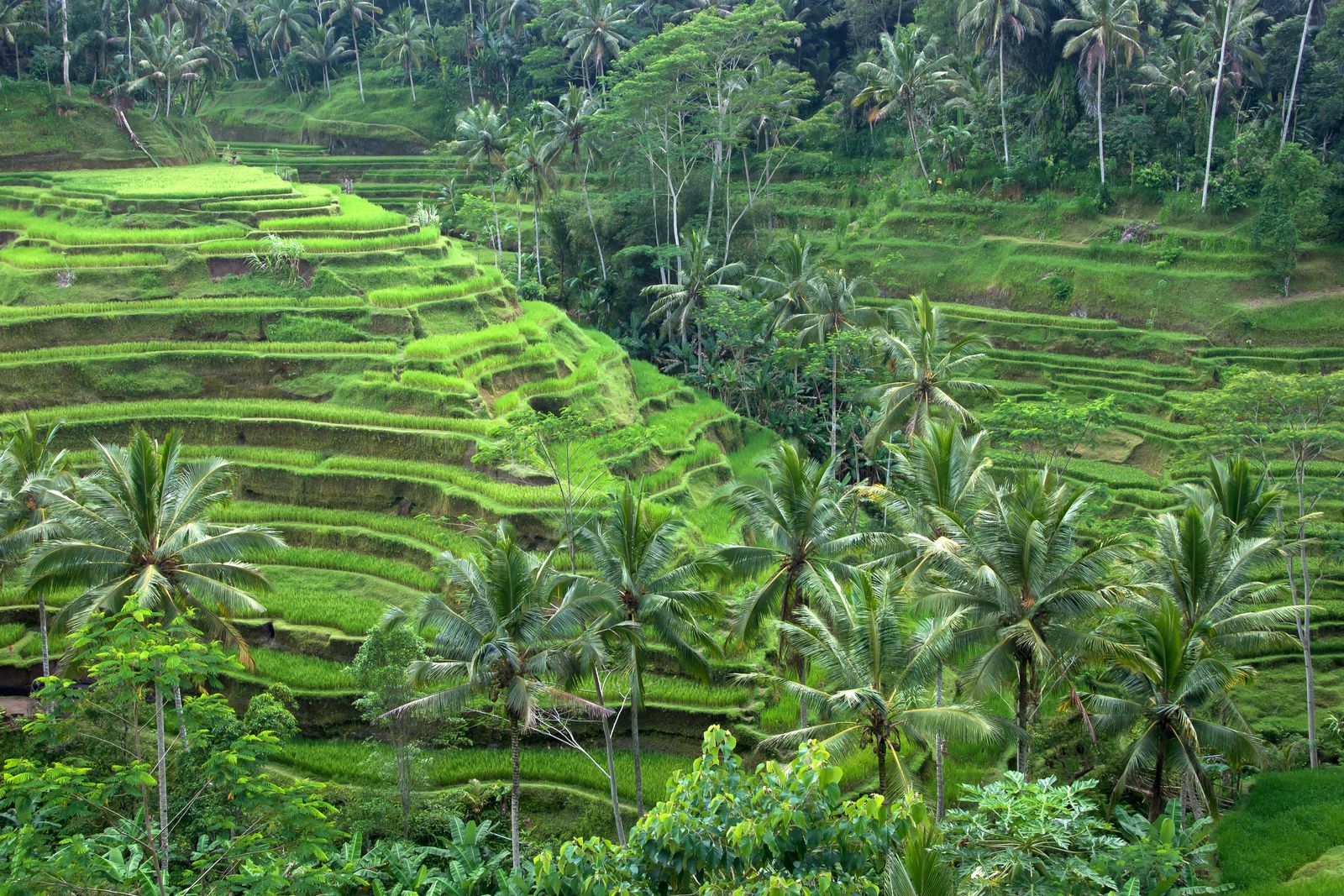 Photo: Vyacheslav Argenberg, CC BY 4.0
Ubud Jungle Guide
Bali's cultural heart is ringed by river gorges and terraced forest. Where to stay in the Ubud jungle, what to do, and how to escape the crowds.
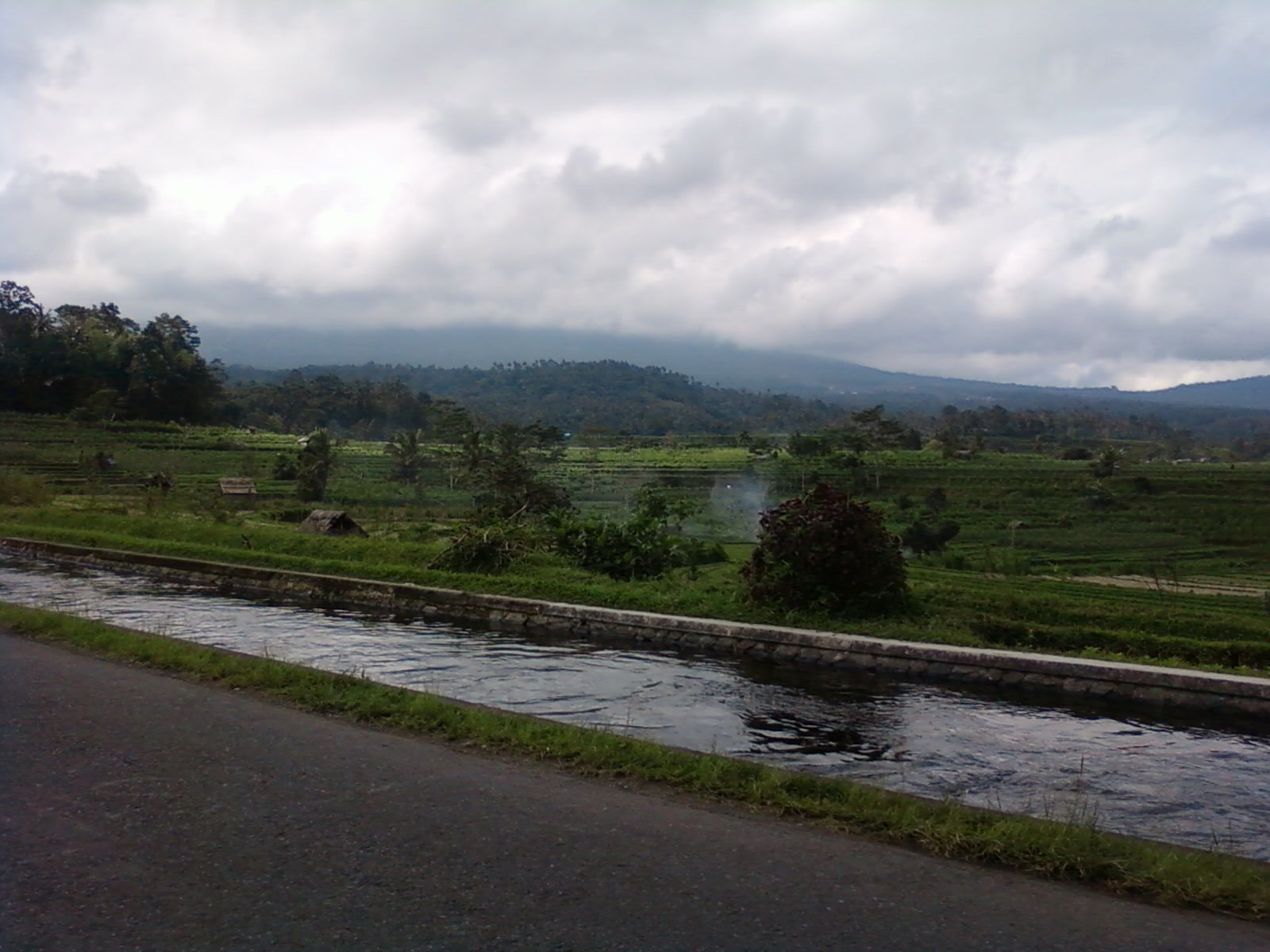 Photo: Adimelali Bali, CC BY-SA 3.0
Sidemen, Bali: The Quiet Valley Guide
An hour from Ubud and a decade behind it — Sidemen is the rice-terrace valley under Mount Agung where Bali's best bamboo houses hide.
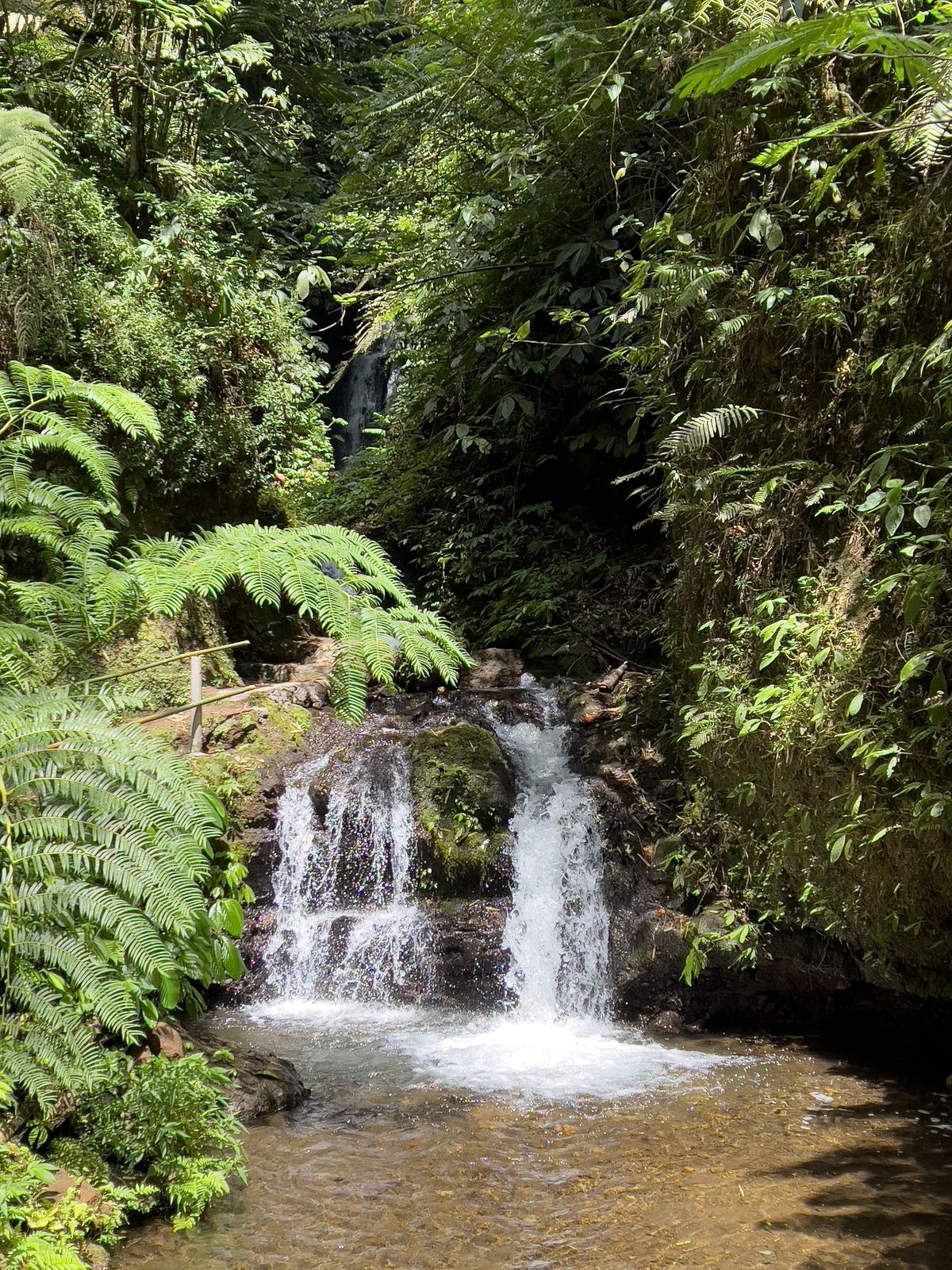 Photo: Stefan Fussan, CC BY-SA 3.0
Munduk & North Bali Highlands Guide
Bali's cool, waterfall-laced highlands — coffee country, twin lakes and jungle ridges two hours from the beach crowds.
 Photo: Derek Ramsey (Ram-Man), CC BY-SA 4.0
Find your own piece of the canopy.
Treehouses, bamboo houses and rainforest villas across 17 destinations — found, vetted and written up honestly.
Browse all destinations