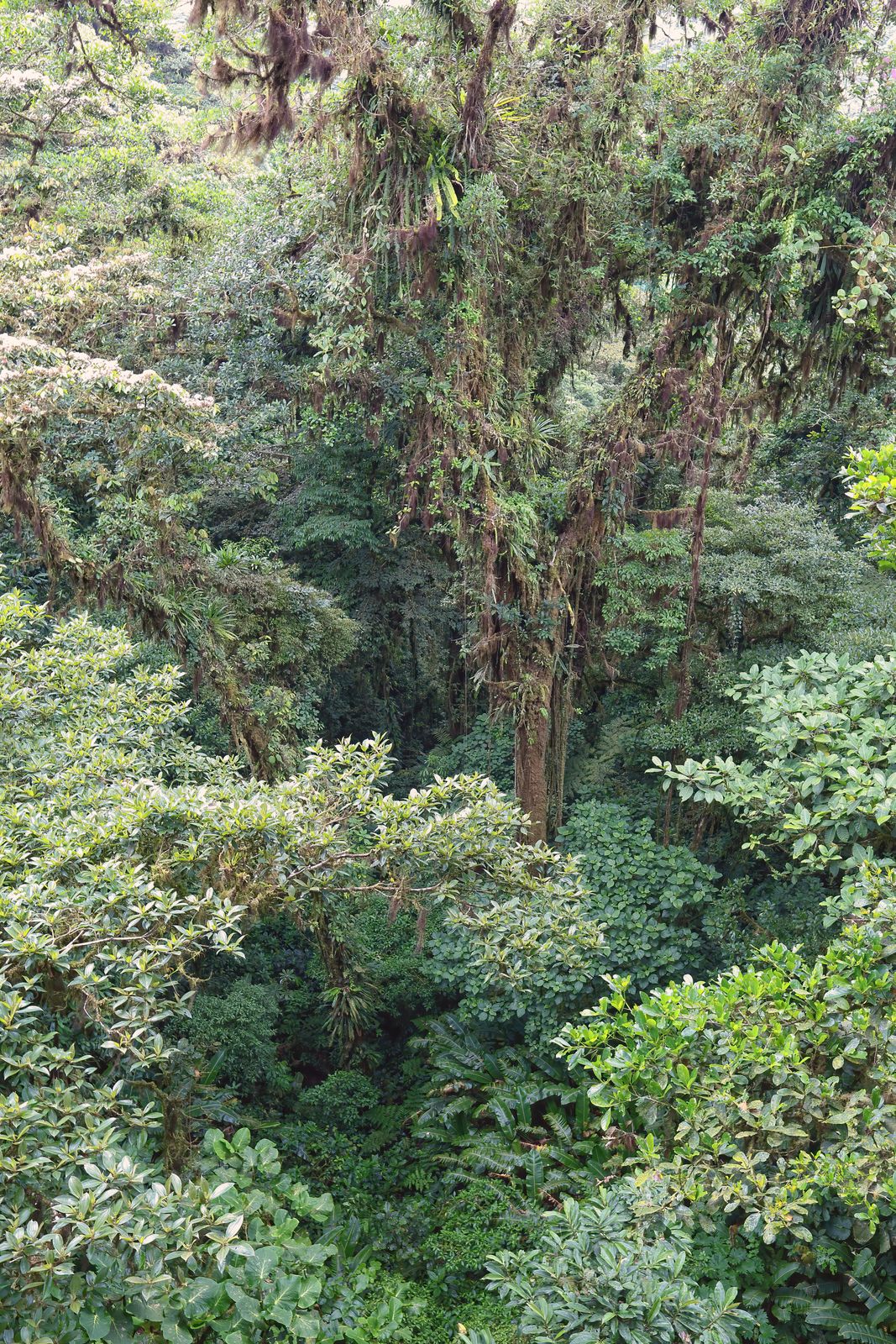
Monteverde Cloud Forest Guide
Monteverde is the reason "cloud forest" is a phrase most travelers know at all. It sits on the Continental Divide in Costa Rica's central highlands, high enough that the Pacific and Atlantic weather systems collide right on top of it, wringing out a permanent mist that keeps the canopy dripping most days of the year. It was also, for decades, one of the harder places in the country to actually reach — a fact that shaped everything about it, from the Quaker dairy farmers who settled here in 1951 to the researchers who turned part of their land into a private reserve twenty years later. That reserve became the template for a whole regional economy built on hanging bridges, zip-lines and a quetzal habit few visitors ever fully shake. This is a working guide to getting to Monteverde, picking the right reserve for what you actually want to see, and building a few honest days around it.
What Monteverde is, and why it looks the way it does
"Monteverde" gets used loosely to mean several things at once — a district, a town, a reserve, and a whole tourism economy built on all three — and it's worth untangling before you plan anything. The Monteverde Cloud Forest Biological Reserve, run by the nonprofit Tropical Science Center, is the original protected area and the one most people picture when they hear the name. It sits directly on the Continental Divide, the ridge line where rain clouds pushing in from the Caribbean side meet the drier Pacific slope and get forced upward, cooling as they rise and condensing into the near-constant mist that defines a cloud forest. That collision is why the reserve straddles two watersheds at once, and why the forest on the Caribbean-facing slope looks noticeably wetter and more tangled than the Pacific side a short walk away.
The town that services all of this is Santa Elena, a compact hillside settlement that didn't exist in any real form until the reserve and its neighbors started drawing visitors. Locals and most tour operators use "Monteverde" and "Santa Elena" almost interchangeably, which trips up first-time visitors trying to book a hotel — addresses, shuttle pickups and trail entrances are scattered across both, connected by a network of gravel and partly-paved roads climbing through dairy pasture and forest fragments.
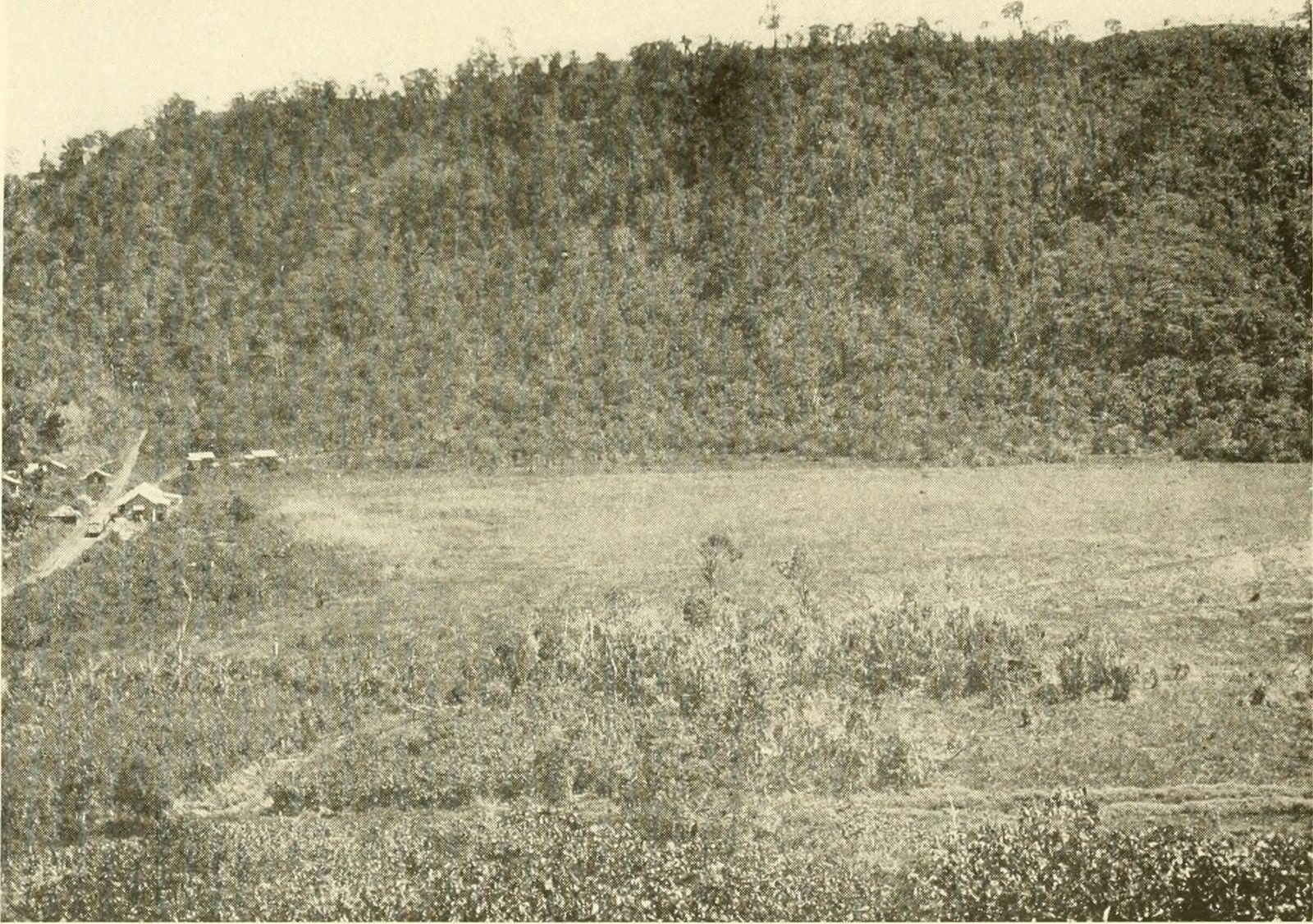
The history matters here more than in most jungle destinations, because it explains why so much of this forest is still standing at all. In 1951, a group of Quakers from Fairhope, Alabama arrived looking for a country without a military — several of the men had been jailed in the United States for refusing conscription during the Korean War, and Costa Rica had abolished its own army in 1948. They settled the highlands above what's now Santa Elena and built a dairy economy around it, founding the Monteverde Cheese Factory in 1953, which is still operating and still one of the more grounded things to do in town. Conservation entered the picture later: in 1970, American biology researchers George and Harriett Powell came to study the region's birdlife and, alarmed by how fast the surrounding forest was being cleared for pasture, worked with the Quaker community and the Tropical Science Center to set aside land as a protected reserve. That reserve has grown over the decades through purchases and easements into a broader patchwork of connected protected areas — the Monteverde Cloud Forest Reserve, the Children's Eternal Rainforest, Santa Elena Cloud Forest Reserve and several private reserves — that together hold one of the largest remaining blocks of highland forest in Central America.
None of that is trivia you need to recite on the trail, but it changes how you should think about a Monteverde trip. This isn't a resort built next to nature — it's a farming community that chose, generation by generation, to keep selling milk and cheese with one hand while protecting the forest above the pasture line with the other. That tension between working town and protected wilderness is still visible everywhere, and it's part of what makes Monteverde feel different from more manicured jungle destinations elsewhere in Costa Rica.
Getting there
Monteverde is not on the way to anywhere else in Costa Rica, and getting there takes a genuine commitment of a half-day or more from almost any starting point. Budget for that rather than fighting it.
From San José
The standard route from Juan Santamaría International Airport or downtown San José runs west along the Pan-American Highway, a fast, mostly flat drive, before turning off onto the mountain road that climbs into Monteverde itself. Door to door, plan on roughly three to three and a half hours by car or shuttle. The final stretch is the part people warn you about: a steep, switchbacking mountain road that has historically been unpaved gravel for long sections, though paving projects have steadily closed gaps over the years. Whatever the surface on the day you visit, it's slow going regardless — narrow, winding, and shared with local trucks and buses — so don't expect to make up time here even in a capable rental car.
From Liberia and the Guanacaste coast
If you're flying into Liberia's Daniel Oduber Quirós International Airport, or coming from the beach towns of Guanacaste, the drive time is broadly similar — around three to three and a half hours — down through the Interamerican Highway and then up the same style of mountain access road from the Pacific side. This routing makes Monteverde a realistic add-on to a Guanacaste beach trip without doubling back through San José.
By bus and shuttle
Public buses run to Santa Elena from San José and from Puntarenas, where the Trans Monteverde line has multiple daily departures and takes roughly three hours from the coast. Buses are the cheapest option by a wide margin but the slowest and least flexible, especially on the unpaved sections. Private and shared shuttle vans, bookable through most hotels and tour agencies, are the middle ground most travelers land on — door-to-door service, no navigating the mountain road yourself, and a price that's usually worth it against a rental car once you factor in gravel-road wear and tear.
Good to know
A once-common shortcut worth knowing about even if you don't take it: a jeep–boat–jeep transfer across Lake Arenal that connects Monteverde directly to La Fortuna in a few hours, skipping the long loop back through San José entirely. It's the standard way experienced travelers link this guide with our La Fortuna and Arenal Volcano guide if cloud forest and volcano are both on the itinerary.
Santa Elena and where to stay
Santa Elena is small enough to walk across in fifteen minutes, and it functions as the practical base for nearly every reserve and activity in the area — most of the hanging-bridge parks, canopy tours and both major reserves sit within a twenty-minute drive of the town center, along the same rough road that also leads toward the Monteverde Cloud Forest Reserve itself. Staying in or near town keeps you close to restaurants, tour desks and the bus stop, and it's the easiest option if you're not renting a car.
A short drive further up the mountain, closer to the reserve entrances, sits a scattering of lodges that trade town convenience for quiet and forest views — this is where a lot of the area's more established nature lodges cluster, tucked against pasture and forest edges with the mist rolling through most afternoons. Staying up here means less walking to the reserves but more reliance on a car, a hotel shuttle, or the local taxi network to get into Santa Elena for dinner.
Because Monteverde's cloud forest draws a real mix of travelers — birders on a dedicated trip, families doing the bridges and a zip-line in one day, honeymooners padding a beach itinerary with one highland stop — the range of stays runs from simple guesthouses in town to full nature lodges with their own forest trails and hummingbird feeders. For a shortlist of vetted jungle and cloud-forest stays in the area, see our Costa Rica destination page, or browse the wider directory if Monteverde is still competing with other cloud-forest and highland destinations on your list.
The reserves, and which one to pick
This is the decision that actually shapes your Monteverde days, and most first-timers don't realize there's a choice to make until they're standing at a ticket counter. There are three main protected areas within easy reach of Santa Elena, and they are genuinely different experiences, not interchangeable versions of the same walk.
Monteverde Cloud Forest Biological Reserve
The original and still the most famous, run by the nonprofit Tropical Science Center and sitting directly on the Continental Divide. Trails here include the wide, mostly flat Sendero Camino, which leads to the reserve's well-known red suspension bridge, and the longer Continental Divide Trail, a loop of roughly four kilometers that takes around two and a half hours and crosses from the wetter Caribbean-facing slope to the drier Pacific side within a single walk. Because it's the best-known reserve in the country, it also draws the heaviest crowds and, as of a ticketing overhaul that took effect in December 2025, visitors now book a specific trail circuit rather than a general day pass — worth checking current booking rules before you go, since procedures here have changed more than once in recent years.
Curi-Cancha Reserve
A smaller, privately run reserve on the opposite side of Santa Elena from the main reserve, and the reserve serious birders tend to head for first. It mixes cloud forest with patches of old pasture and forest edge, a combination that concentrates bird activity in a way unbroken high forest doesn't, and it's a reliable spot for resplendent quetzal sightings in season. Entry costs less than the main reserve and crowds are consistently lighter, which matters if you're carrying binoculars rather than a selfie stick.
Santa Elena Cloud Forest Reserve
Run by the local high school's board rather than a private nonprofit, this reserve sits a little further from town, at slightly higher elevation, which pushes it further into cloud forest proper with fewer of the transitional pasture edges Curi-Cancha has. It sees noticeably fewer visitors than the Monteverde reserve, and its trail network includes a viewpoint that, on a clear day, looks out toward Arenal Volcano — a rare moment of open sky in a landscape defined by canopy and mist.
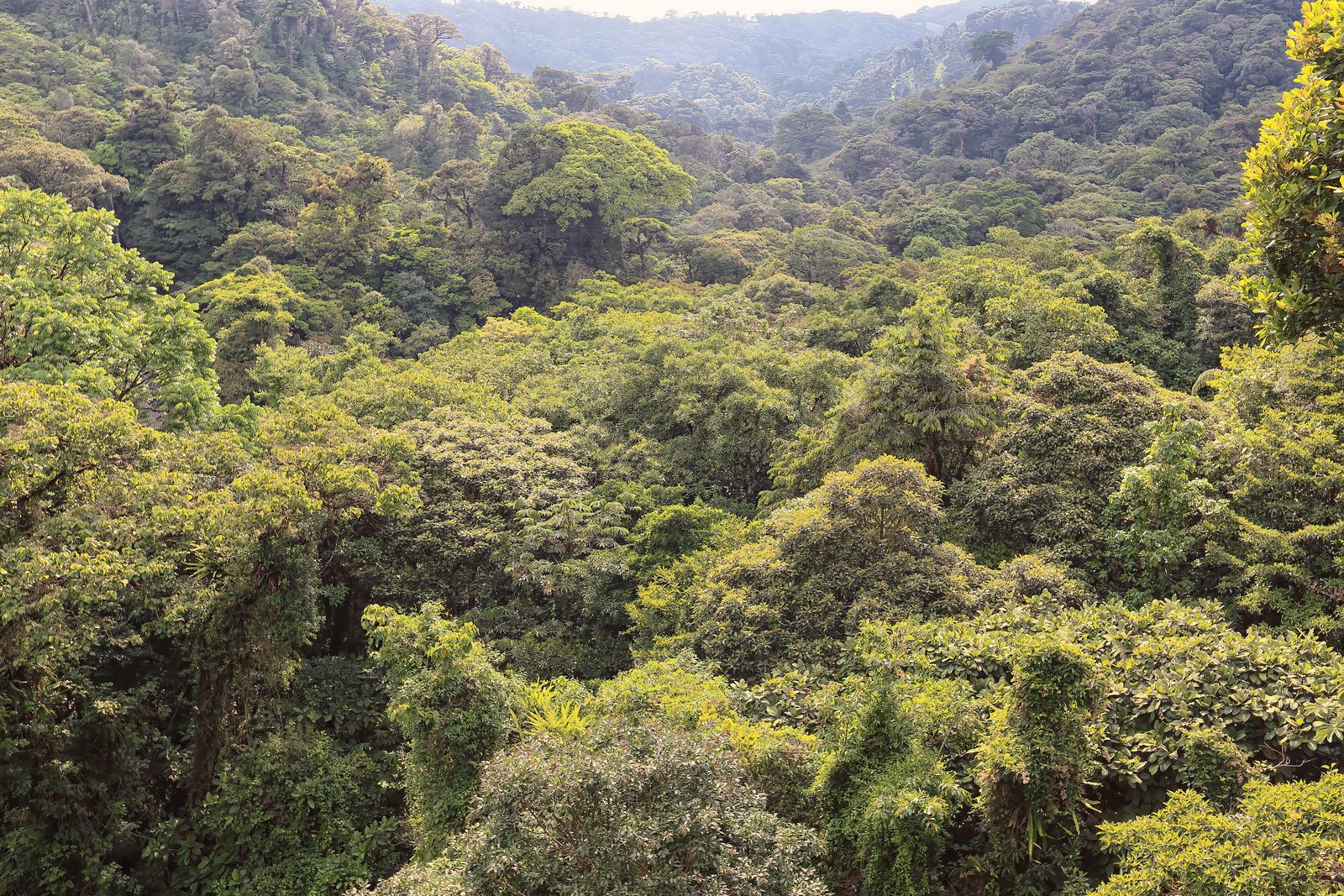
If you only have one day, most visitors are better served picking one reserve and doing it properly — arriving near opening, hiring a guide, and taking two to three unhurried hours — over rushing between two reserves and seeing less of either. If you have two days, pairing the main Monteverde reserve with either Curi-Cancha or Santa Elena gives you a genuinely different forest experience each time rather than a repeat of the same trail.
Hanging bridges, zip-lines and the canopy tours
Monteverde didn't just popularize the cloud forest hanging bridge, it's widely credited as the birthplace of the modern zip-line canopy tour, which started here in the mid-1990s as a way to move biologists and, soon after, tourists through the upper canopy without cutting anything down. That history is still visible in how much of the local economy runs on canopy-based attractions layered on top of, rather than instead of, the conservation reserves.
The two best-known hanging-bridge parks sit along the same road toward the reserves. Selvatura Park runs a network of eight suspension bridges strung through mature forest, a walk that typically takes two to three unhurried hours, and pairs it with a hummingbird garden, a butterfly garden and its own zip-line circuit — a reasonable one-stop option if your group has mixed interests. The Santa Elena Skywalk, run by the Sky Adventures operation, is the other major bridge network in the area and is commonly paired with a zip-line tour that includes some of the highest and longest lines in the region.
The appeal of the bridges over a standard forest trail is straightforward: they put you at canopy height rather than looking up at it from the forest floor, which changes what you can actually see. Epiphyte-loaded branches, bromeliads, and birds working the mid-canopy are all far easier to spot from a bridge deck than from below, and on a misty morning the bridges themselves — suspended over a drop with fog moving through the trees on both sides — are worth doing for the walk alone, independent of any wildlife you spot along the way.
The bridges aren't a gimmick bolted onto the reserve system — they're the most honest way to actually see a cloud forest, because most of what makes this ecosystem strange happens thirty meters off the ground, not on the trail beneath it.
If heights or crowds aren't your thing, the reserves' own internal trails — including the main Monteverde reserve's Sendero Camino and its single well-known red bridge — give a gentler version of the same canopy access without committing to a dedicated bridge park or a zip-line add-on.
The wildlife, honestly
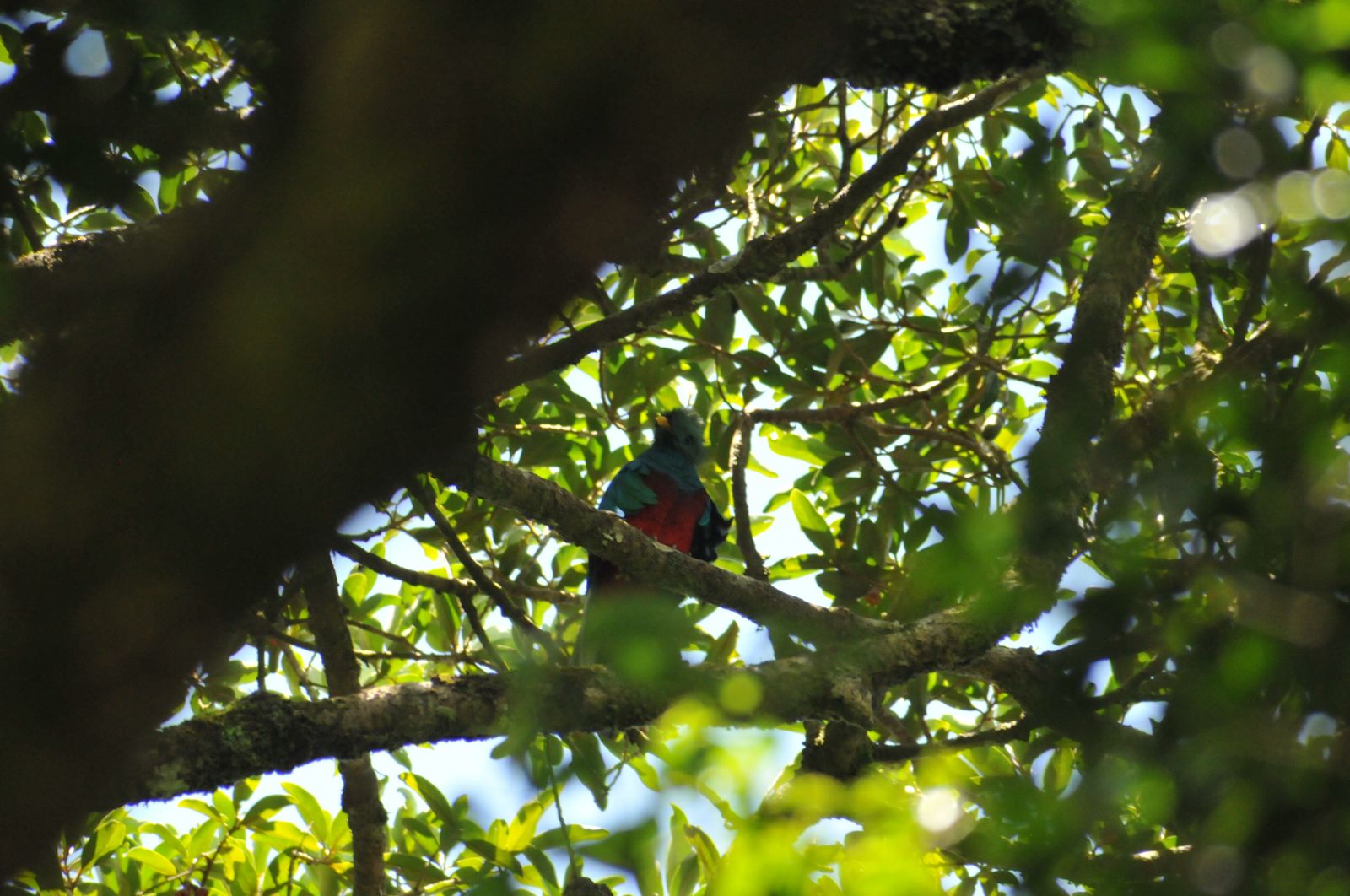
Monteverde's signature animal is the resplendent quetzal, and it's earned the reputation — this is one of the more reliable places in the Americas to see one, particularly during quetzal season, which runs roughly from March through June when males grow their long iridescent tail streamers for the breeding display. Outside that window, quetzals are still present but harder to find, and a guide who knows the current nesting or fruiting trees makes a real difference; wild avocado trees in fruit are a classic tip-off, since quetzals feed heavily on them. Curi-Cancha in particular has a strong local reputation among guides for consistent quetzal sightings.
Beyond the quetzal, Monteverde's bird list runs long — several hundred species have been recorded across the connected reserves, drawing serious birders on dedicated trips rather than casual add-on visits. Hummingbirds are the easiest wins: gardens at Selvatura and several lodges maintain feeders that pull in a dozen or more species at close range, useful if you want guaranteed sightings without a trail walk. Mammals are a quieter story, as in most cloud forest — the terrain and dense understory make sightings harder than in lowland rainforest, though howler and white-faced capuchin monkeys, coatis, agoutis and, with real luck, a kinkajou on a night walk are all realistic. Larger cats and tapirs are present in the connected forest system but are rarely encountered by day visitors.
The honest caveat on wildlife here: a cloud forest's near-permanent mist and dense canopy make it a genuinely harder ecosystem to spot animals in than a drier lowland forest, even though the biodiversity is just as real. A local guide isn't optional if wildlife is the point of your visit — it's the single biggest factor in whether you leave having seen a quetzal or having walked past three without knowing it.
Good to know
Night walks are worth booking separately from your daytime reserve visit. Many of Monteverde's mammals, along with sleeping birds, red-eyed frogs and a startling number of insects, are far easier to find after dark with a guide and a flashlight than during the day, and several operators in Santa Elena run dedicated evening walks on private reserve land.
Day trips and things to do beyond the canopy
Monteverde's tourism economy grew directly out of its farming roots, and the town's food-and-farm tours are genuinely worth the half-day rather than a box-ticking add-on. The Monteverde Cheese Factory, running since 1953, still processes local milk into cheese and other dairy products and offers tours and tastings that double as a piece of the town's Quaker settlement history. Coffee tours run by local family farms walk through the growing, processing and roasting steps by hand, typically ending in a cupping, and several operations extend the same tour into chocolate, tracing cacao from pod to bar.
For travelers who want a change of pace from forest trails, the area around Santa Elena also has smaller community and conservation projects worth a stop, including butterfly gardens, frog exhibits and orchid gardens that showcase species too small or nocturnal to reliably see on a standard reserve walk. None of these substitute for time in the reserves themselves, but they round out a multi-day itinerary usefully, especially on a rainy afternoon when a long forest hike is less appealing.
If your trip has more than a few days to spend in Costa Rica, Monteverde pairs naturally with other highland and lowland stops rather than standing alone. The jeep–boat–jeep transfer across Lake Arenal connects directly to La Fortuna and the Arenal Volcano region, trading cloud forest for hot springs and a genuinely active volcano within a few hours' travel. Heading south instead links Monteverde to the Pacific coast rainforest of Manuel Antonio, or, for travelers with more time and a taste for something wilder and less developed, the Osa Peninsula and Corcovado National Park, widely considered the most biodiverse patch of forest left in the country.
Food and practicalities
Santa Elena's food scene is small but genuinely good by highland-town standards, running from simple sodas — the Costa Rican term for a family-run local diner — serving rice, beans and whatever's fresh, up to a handful of more polished restaurants aimed at the tourist trade, several of which lean on the same local dairy and coffee that built the town in the first place. Given the altitude and the near-constant cloud cover, evenings here run noticeably cooler than the Costa Rican coast or lowlands — bring a light jacket or fleece even if the rest of your trip is beachwear.
Costs sit in the middle of Costa Rica's already mid-to-upper price range for Central America. Reserve entrance fees run in the twenty-to-thirty-dollar range per person depending on which reserve and whether a guide is included, and guided walks are consistently worth paying for here given how much harder cloud forest wildlife is to spot unassisted. Hanging-bridge parks and zip-line combinations typically run somewhat higher, in the thirty-five to seventy-five-dollar range depending on the operator and how many activities are bundled together. A guesthouse or simple hotel room in Santa Elena runs considerably less than the nature lodges further up the mountain, and self-catering options are limited outside of a few well-stocked local markets, so most visitors eat out for the bulk of their stay.
Cell signal and WiFi are reasonably reliable in Santa Elena itself and at most established lodges, but coverage thins out fast on reserve trails and along stretches of the mountain access road — worth downloading offline maps and telling your accommodation your rough plans before a longer hike, the same practical habit worth carrying into any remote jungle destination, from the cloud forests of Peru to the coffee highlands of Colombia.
When to go
Costa Rica runs on a broad two-season calendar — dry season roughly December through April, green or "rainy" season May through November — but Monteverde's position on the Continental Divide complicates that pattern more than almost anywhere else in the country. Because the reserve straddles both slopes, it can be raining on the Caribbean side of a trail while the Pacific side stays dry within the same short walk, and the near-permanent mist that gives the cloud forest its name is present in some form for most of the year regardless of official season.
- December–April (dry season): the most reliable weather and the busiest, most expensive stretch of the year, particularly around the December and Easter holiday weeks. Trails are driest and easiest underfoot, and this window overlaps with peak demand for lodges and shuttles alike.
- March–June (quetzal season): a special case worth planning around on its own terms if seeing a resplendent quetzal is a priority — this is when males display their long tail feathers for the breeding season, and sightings, while never guaranteed, are noticeably more likely with a knowledgeable guide.
- May–November (green season): heavier and more frequent rain, quieter trails, lower lodge rates, and a forest that looks, if anything, more dramatic with mist rolling through in the afternoons. Some unpaved sections of the mountain access road get rougher in the heaviest rains, worth factoring in if you're self-driving.
- September–October: the wettest stretch of the year regionally, with the fewest visitors and the deepest discounts, but also the highest odds of a washed-out afternoon plan — build flexibility into any itinerary timed for these months.
There's no genuinely bad month to see a cloud forest — mist and rain are part of the point here, not a disruption to it — but travelers chasing a specific target, whether that's a dry trail underfoot or a quetzal overhead, should let that priority set the calendar rather than defaulting to Costa Rica's general dry-season advice.
The honest caveats
Monteverde earns its reputation, but it's worth going in with clear eyes on a few things. The road is still the biggest one: however much paving has progressed by the time you visit, the final climb from either the San José or Liberia side is slow, narrow and shared with local traffic, and it adds real hours to a trip that looks short on a map. Don't schedule a tight connection on either end of a Monteverde visit.
Crowds are the second honest caveat. The main Monteverde Cloud Forest Reserve is genuinely famous, and its narrow trail network — especially the approach to the well-known red bridge — can feel more like a queue than a wilderness walk in the middle of a busy dry-season morning. Arriving at opening, picking Curi-Cancha or the Santa Elena reserve instead, or simply timing your visit for the shoulder or green season are all real ways around this, and locals will tell you the same thing without hesitation.
Connectivity thins out fast once you leave Santa Elena's main strip, which is a feature for some travelers and a frustration for others — this is not a destination for working remotely from a trailhead. And because the reserve system here runs on a genuine mix of nonprofit, community and private management, booking procedures and pricing have changed more than once in recent years, most recently with a ticketing overhaul at the main reserve at the end of 2025 that replaced open day passes with specific trail-circuit bookings. Check current rules directly with whichever reserve you're planning to visit before you build a day around it, rather than trusting an old blog post — including, to be fair, parts of this one a year or two from now.
Common questions
How many days should I spend in Monteverde?
Two full days is the practical minimum: one for a proper, unhurried visit to the main reserve or Curi-Cancha with a guide, and one for a hanging-bridge park, a zip-line circuit, or a coffee and cheese-factory day depending on your interests. Three days gives you room to add a second reserve or a night walk without rushing any of it.
Do I need a guide?
You don't need one to enter most reserves, but you should hire one anyway if wildlife is any part of the reason you're visiting. Cloud forest is a genuinely harder ecosystem to spot animals in than open lowland rainforest, and a local guide who knows current nesting trees and feeding patterns is consistently the difference between seeing a quetzal and walking past one.
Is Monteverde worth the difficult drive?
For most travelers, yes, but it's worth being honest that it's a genuine detour rather than a stop on the way to somewhere else. If your trip is short and coastal, a highland cloud-forest add-on may not be worth the road time; if you have a week or more, it's one of the more distinctive ecosystems in the country and hard to replicate anywhere else on a Costa Rica itinerary.
When is quetzal season?
Roughly March through June, when males display long tail feathers during the breeding season. Quetzals are present in Monteverde year-round, but sightings are noticeably more consistent, especially with a guide, during this window.
Can I visit Monteverde without a car?
Yes — public buses and, more comfortably, shared or private shuttles connect Santa Elena to San José, Liberia and Puntarenas, and most reserves, bridge parks and tour operators offer or arrange pickup from local hotels. A car adds flexibility but isn't necessary given how compact the Santa Elena area is.
How does Monteverde compare to La Fortuna and Arenal?
They're genuinely different experiences worth pairing rather than choosing between if time allows. Monteverde is cool, misty highland cloud forest built around reserves and canopy walks; La Fortuna and Arenal, a few hours away by the Lake Arenal jeep-boat-jeep transfer, trade that for a warmer lowland climate, hot springs and an active volcano. Our La Fortuna and Arenal Volcano guide covers that side of the pairing in full.
Where to go from here
Monteverde rewards travelers who treat the road as part of the trip rather than an obstacle to it, and who pick one or two reserves to do properly instead of rushing the whole list. Start with our Costa Rica destination page for a shortlist of vetted stays across the country, or the full directory if you're still weighing Monteverde against another cloud-forest or highland destination. If you're building a longer Costa Rica loop, our guides to La Fortuna and Arenal Volcano and the Osa Peninsula and Corcovado National Park cover the volcanic and lowland-rainforest sides of the same country, and our roundup of the best jungle Airbnbs in the world is a good next stop if you're still comparing destinations before booking anything.
- Wikipedia — Monteverde — Quaker settlement history, founding of the reserve, and the Continental Divide setting.
- My Tan Feet — Monteverde Cloud Forest Reserve: How to Visit — trail names, the Continental Divide Trail distance and timing, and 2025 ticketing changes.
- Paradise Catchers — Hanging Bridges in Monteverde — Sendero Camino, the red suspension bridge, and Selvatura's eight-bridge network.
- Private Travel CR — Monteverde Costa Rica Travel Guide — Curi-Cancha and Monteverde reserve comparison, quetzal season timing, and suggested itinerary length.
- Monteverde Tours — History of Monteverde and the Quakers — 1951 Fairhope, Alabama settlement, conscientious-objector background, and the Monteverde Cheese Factory's 1953 founding.
- Enchanting Costa Rica — Quakers and Conservation — George and Harriett Powell's role in establishing the biological reserve in 1970s.
- Horizon Guides — How to Get to Monteverde Cloud Forest Reserve — driving routes and times from San José and the Pacific coast.
- Tripadvisor — Santa Elena Skywalk — Sky Adventures hanging bridges and zip-line pairing near Santa Elena.
More from the Journal.
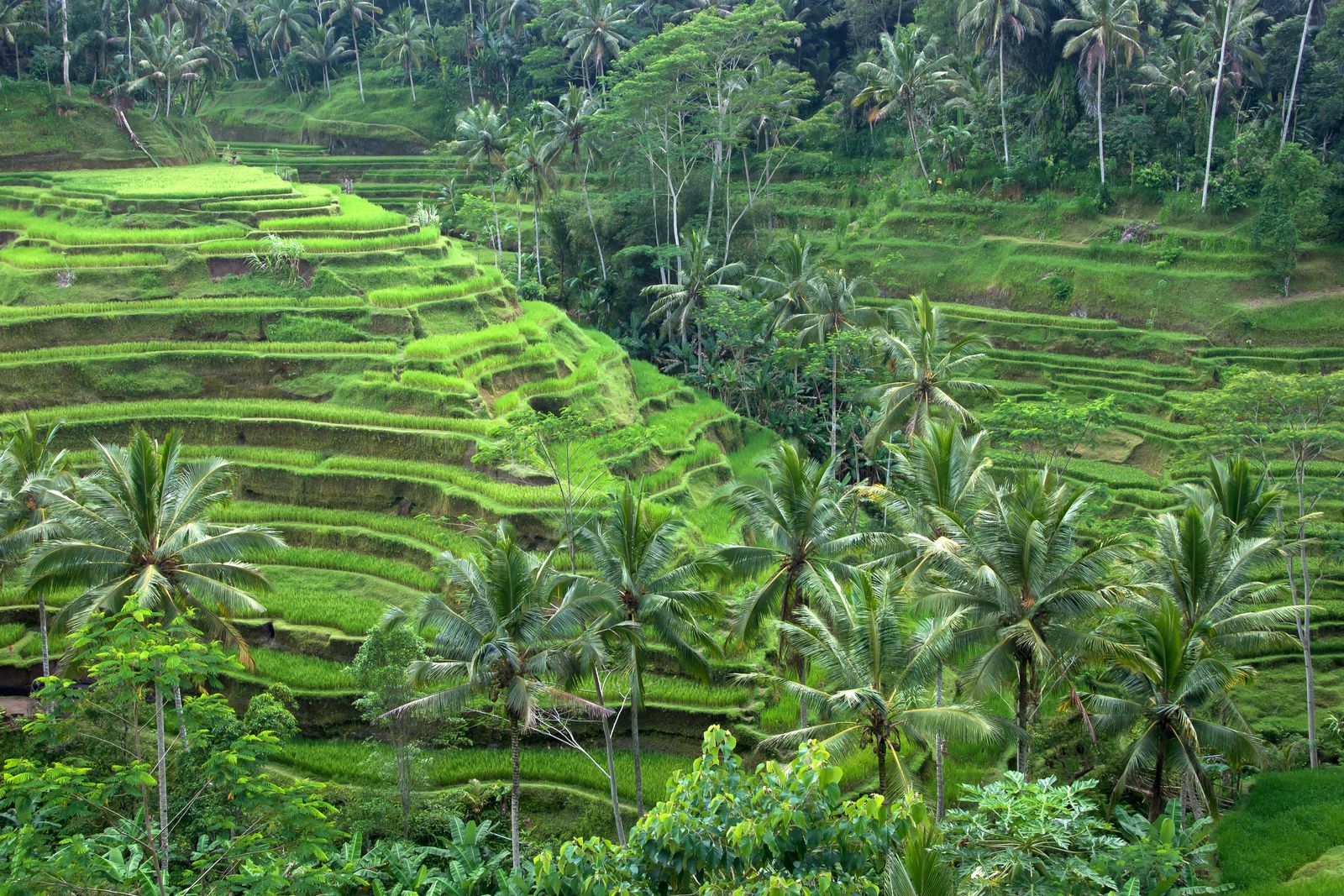 Photo: Vyacheslav Argenberg, CC BY 4.0
Ubud Jungle Guide
Bali's cultural heart is ringed by river gorges and terraced forest. Where to stay in the Ubud jungle, what to do, and how to escape the crowds.
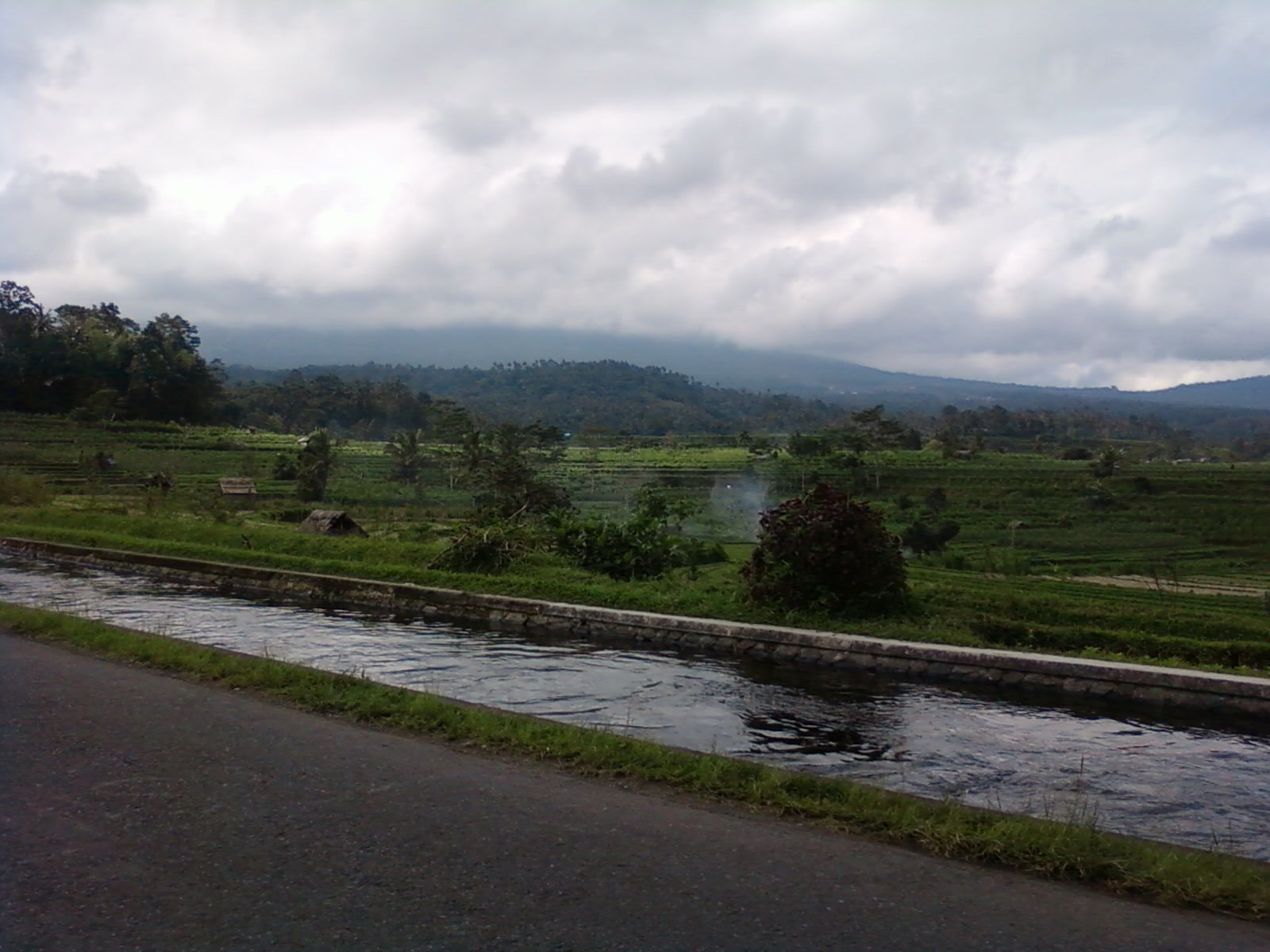 Photo: Adimelali Bali, CC BY-SA 3.0
Sidemen, Bali: The Quiet Valley Guide
An hour from Ubud and a decade behind it — Sidemen is the rice-terrace valley under Mount Agung where Bali's best bamboo houses hide.
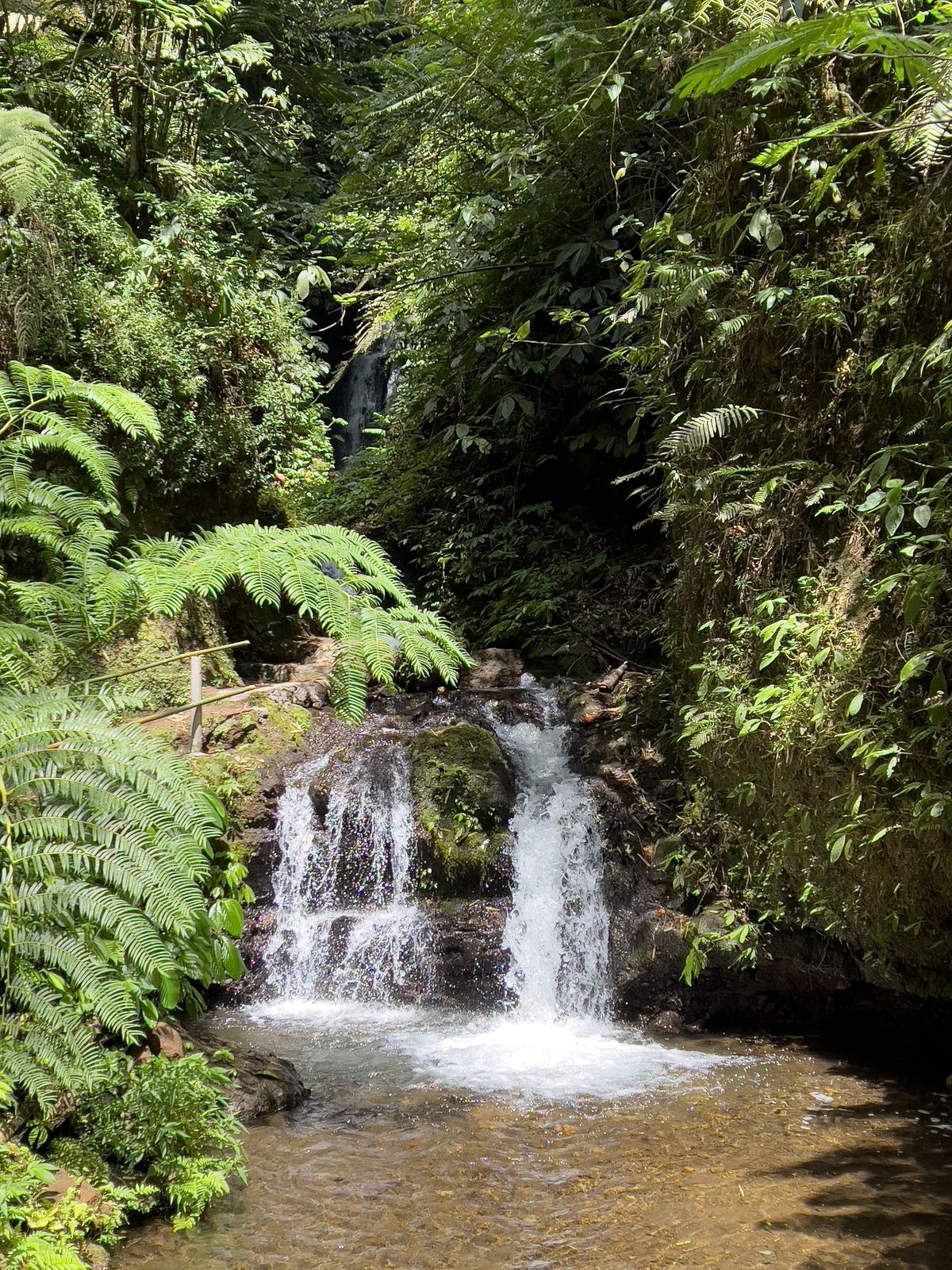 Photo: Stefan Fussan, CC BY-SA 3.0
Munduk & North Bali Highlands Guide
Bali's cool, waterfall-laced highlands — coffee country, twin lakes and jungle ridges two hours from the beach crowds.
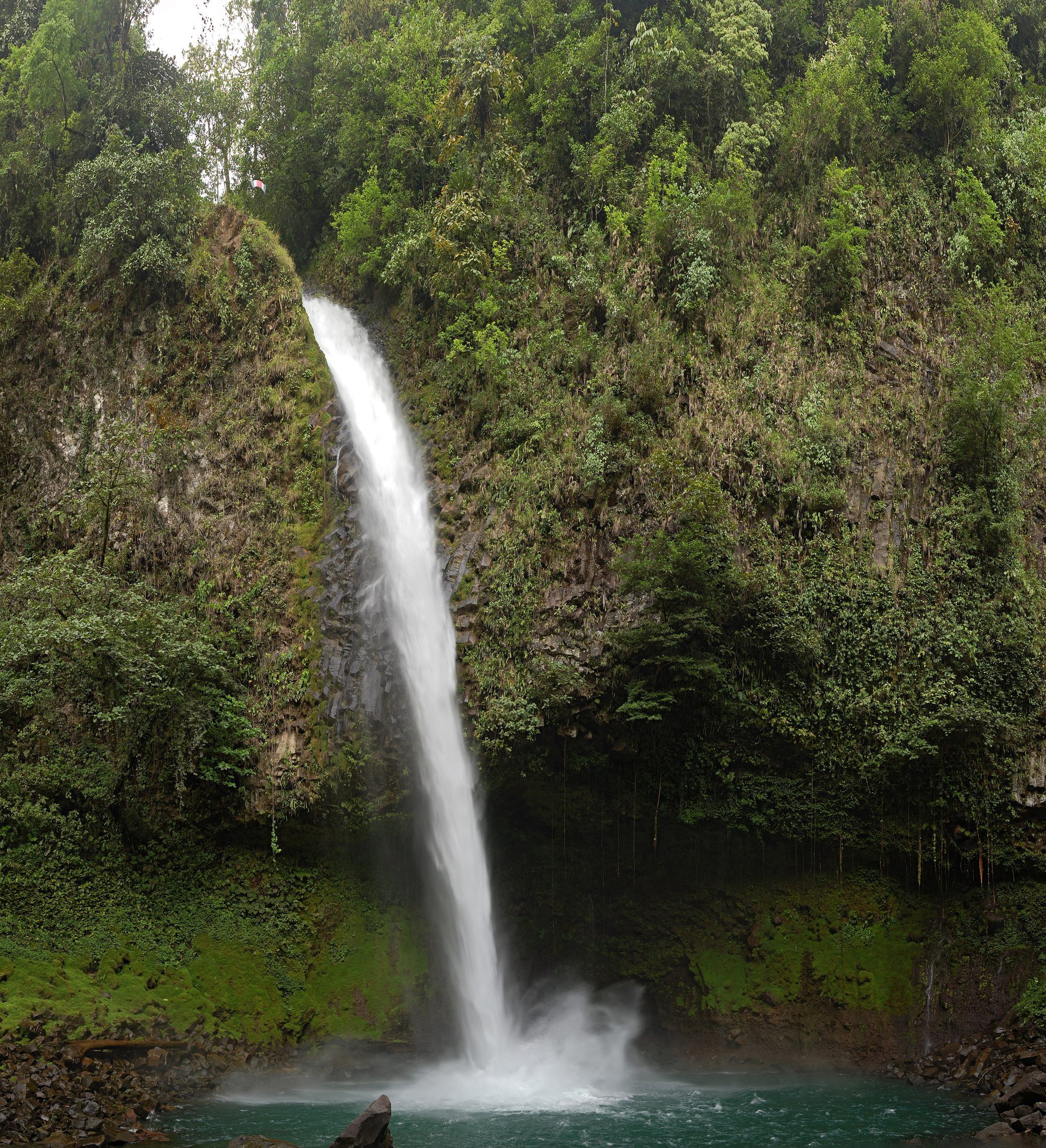 Photo: Derek Ramsey (Ram-Man), CC BY-SA 4.0
Find your own piece of the canopy.
Treehouses, bamboo houses and rainforest villas across 17 destinations — found, vetted and written up honestly.
Browse all destinations