Osa Peninsula & Corcovado Guide
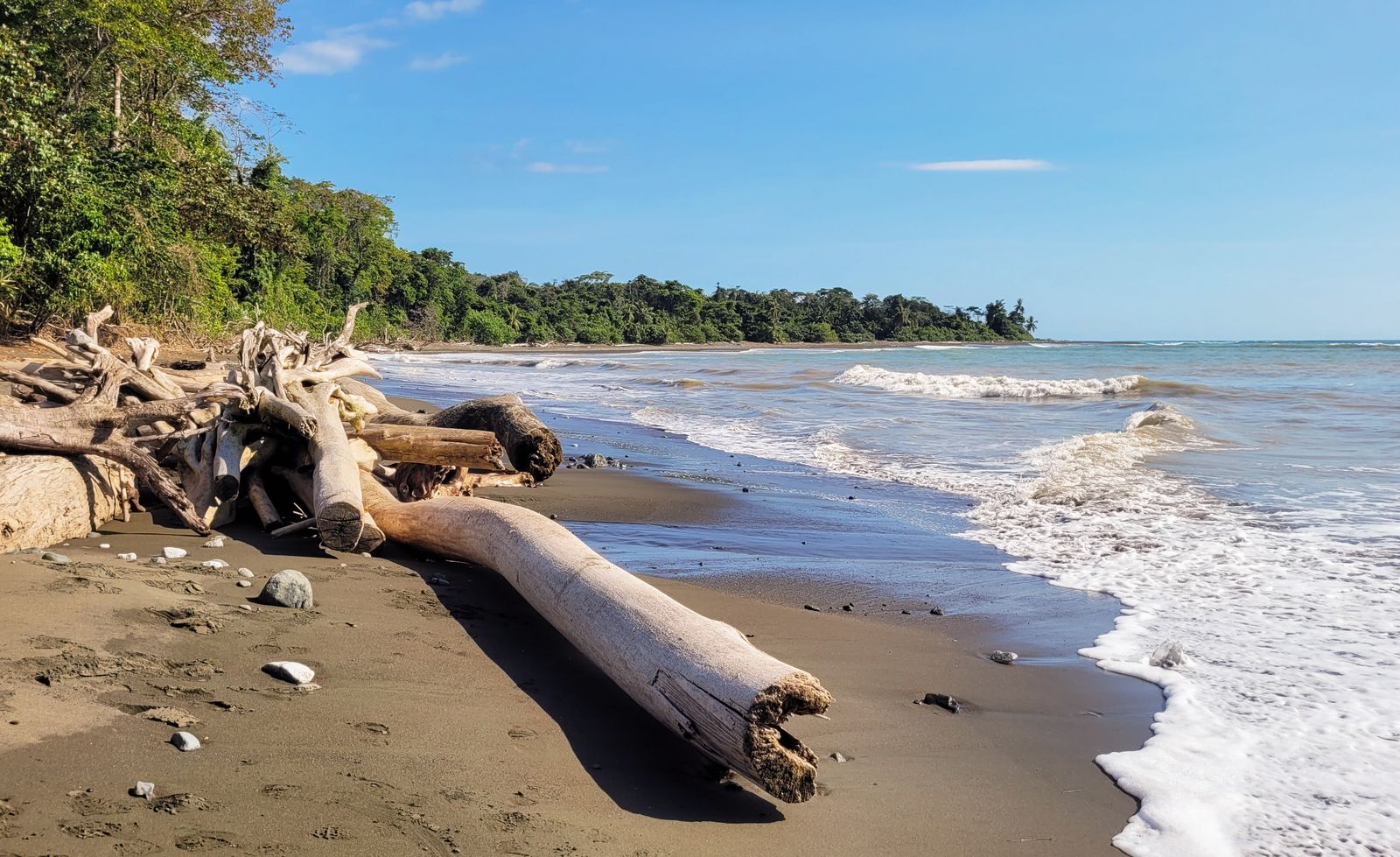
National Geographic once called the Osa Peninsula the most biologically intense place on earth, and the line has followed the place around ever since, printed on lodge brochures and tour van doors until it's almost background noise. It holds up anyway. This is a hunk of rainforest hanging off Costa Rica's southern Pacific coast, most of it still primary forest, with Corcovado National Park sitting in the middle of it like a fist. Getting here takes actual effort — there's no highway shortcut, no quick add-on from a beach resort — and that effort is the whole reason the place still looks the way it does. This is a working guide to the roads and boats that get you onto the peninsula, the towns and lodges worth basing yourself in, what Corcovado actually requires of a visitor these days, and the honest tradeoffs of going somewhere this far from the rest of the country's tourist infrastructure.
What the Osa Peninsula and Corcovado actually are
The Osa Peninsula is a thumb of land jutting into the Pacific off the southern end of Costa Rica, separated from the mainland tourist circuit by the Golfo Dulce on one side and a long stretch of coastal lowland on the other. It's remote by Costa Rican standards, which is saying something in a country that already markets itself on remoteness. Corcovado National Park takes up a large piece of the peninsula's interior and western coast, and it's the reason the whole region gets talked about the way it does — a block of lowland tropical rainforest large enough and undisturbed enough to still hold the full cast of species that used to range across this part of Central America before most of it was cleared for cattle and banana plantations.
The park was established in 1975, relatively late by the standards of Costa Rica's protected-area system, and its creation followed a familiar pattern: gold miners and loggers had already been working parts of the peninsula, and conservationists pushed to protect what was left before it went the way of so much of the rest of the country's lowland forest. What's left is substantial — Corcovado is one of the largest remaining patches of Pacific lowland rainforest in Central America, and it sits alongside a chain of connected protected areas, including Piedras Blancas National Park across the Golfo Dulce, that together buffer a huge stretch of coastline from development.
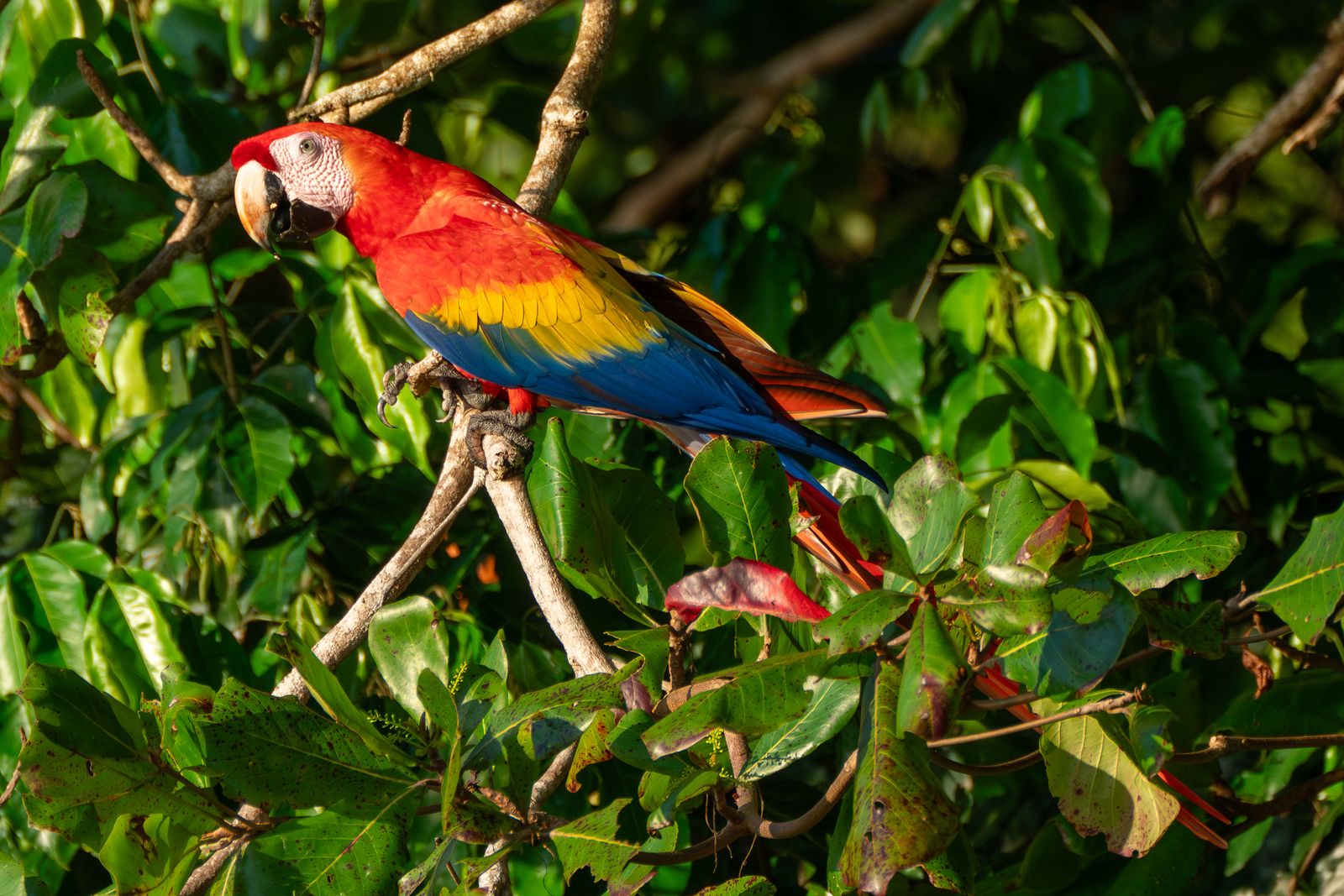
The scarlet macaws are usually the first thing visitors notice, screeching in pairs overhead almost everywhere on the peninsula, but they're really just the loudest evidence of something bigger: this is one of the only places left in the country where all four of Costa Rica's monkey species share the same forest, where tapirs still turn up on trail cameras and occasionally in person, and where jaguar sign — tracks, scat, the occasional confirmed sighting — still gets reported by researchers working the interior. None of that is guaranteed on any single visit. But the fact that it's plausible at all is what separates Corcovado from the more manicured nature parks elsewhere in Costa Rica.
It's worth being clear about scale and effort up front, because it shapes everything that follows in this guide. This isn't a park you drive up to, buy a ticket, and walk into for an afternoon. Corcovado sits at the end of unpaved roads and, for some entrances, only reachable by boat, and the park itself requires a guide by law. That's not bureaucratic overreach — the terrain is genuinely disorienting, the heat is serious, and a lot of what makes the wildlife visible at all is a guide who knows this week's fruiting trees and this month's tapir wallow. Treat the logistics as part of the trip rather than an obstacle to it, and the Osa delivers on the reputation.
Getting there
There is no version of visiting the Osa Peninsula that happens by accident on the way to somewhere else. Budget a full travel day from San José no matter which route you pick.
By air
Flying is the fastest and, for most travelers, the least stressful option. Domestic carriers run multiple flights a day from San José's Tobías Bolaños airport to both Puerto Jiménez and Drake Bay, and the flight itself takes around 45 to 50 minutes — long enough to get a good look at the Golfo Dulce and the green wall of the peninsula from the air, short enough that it doesn't eat your day. Both airstrips are small and close to town, so there's little of the usual airport friction on arrival; most lodges will meet you at the strip directly.
By road
Driving from San José runs southeast on Route 27 and then the Costanera Sur (Route 34) down the coast to Palmar Norte, before cutting onto Route 245 toward Puerto Jiménez. The whole drive covers something like 370 kilometers and typically takes seven to eight hours depending on stops and road conditions, and a 4WD vehicle is worth having, particularly in the rainy season when stretches of unpaved road on the peninsula itself get soft. This route gets you to Puerto Jiménez directly; reaching Drake Bay by road involves a rougher, slower final stretch that many drivers skip in favor of the boat instead.
By bus
Public buses run daily from San José to Puerto Jiménez, taking roughly eight to nine hours and costing a fraction of a flight — the cheapest way to reach the peninsula by a wide margin, and a realistic option if you're not in a hurry and don't mind a long day on a bus.
By boat from Sierpe
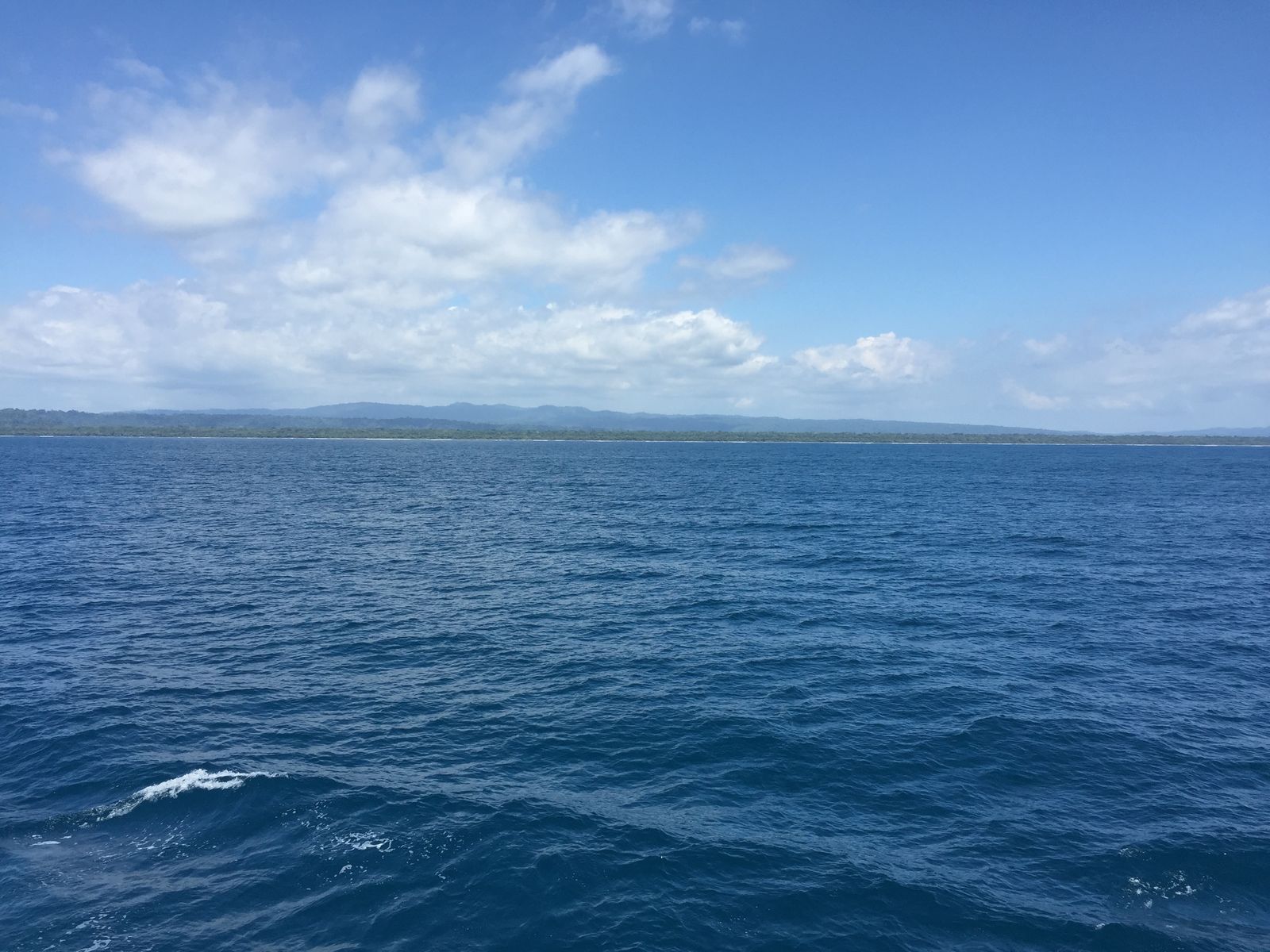
The classic way into Drake Bay is by water, and it's an experience in its own right rather than just a transfer. From San José, buses run to Palmar Norte, then a short hop by bus or taxi reaches the river town of Sierpe. From the dock there, boats run the Sierpe River down through mangrove channels to the open Pacific and along the coast into Drake Bay, a trip of roughly an hour to ninety minutes depending on tides and the boat. Boats typically run a couple of departures a day, and the ride itself — mangroves giving way to open ocean, with a real chance of dolphins alongside the boat — is one of the better travel days in this whole guide, not just a means to an end.
Good to know
Whichever route you take, arrive with cash. ATMs on the peninsula are limited to Puerto Jiménez and thin out fast from there, and most small operators, water taxis and family-run sodas in Drake Bay still run on cash only.
Puerto Jiménez or Drake Bay: picking a base
The Osa splits into two practical bases, and picking between them shapes your whole trip more than almost any other decision here.
Puerto Jiménez
The peninsula's biggest town and its unofficial capital, sitting on the calmer, Golfo Dulce side of the Osa. It has the best infrastructure on the peninsula by a wide margin — supermarkets, banks, a proper selection of restaurants, car rental counters and a genuine local population going about ordinary business rather than a town built purely for tourism. It's also the access point for La Leona ranger station and the coastal trail into Corcovado from the south, and the jumping-off point for the Cabo Matapalo area, a stretch of coastline and forest just south of town that holds some of the peninsula's best-known lodges. Puerto Jiménez works well if you want a functional base with real services, a rental car, and easy access to the park's southern entrances.
Drake Bay
Smaller, quieter and noticeably more remote, sitting on the peninsula's wilder Pacific-facing side and reachable most comfortably by the Sierpe boat or a direct flight rather than by road. Drake Bay has grown around eco-tourism specifically, with a cluster of nature lodges rather than a full town center, and it's the standard launch point for day trips into Sirena and San Pedrillo, Corcovado's two most wildlife-rich stations, as well as boat trips out to Isla del Caño. It has less in the way of independent infrastructure than Puerto Jiménez — expect to lean on your lodge for most logistics — but it puts you closer to the park's best-regarded trails.
Neither choice is wrong. Travelers who want a rental car, more dining variety and easy access to the southern park entrances tend to land in Puerto Jiménez; travelers prioritizing the deepest wildlife-viewing and the boat-and-jungle atmosphere tend to head for Drake Bay. Some visitors do both, splitting a week between the two rather than picking one for an entire stay.
Corcovado National Park: entrances, permits and guides
Corcovado has four main access points, and they're genuinely different experiences rather than interchangeable doors into the same park.
Sirena
The station deep in the park's interior and the one most guides and repeat visitors rate highest for wildlife density — this is where sightings of tapirs, all four monkey species and, with real luck, a jaguar are most consistently reported. Most visitors reach Sirena on a day trip by boat from Drake Bay, though it's also possible to stay overnight at the ranger station itself with advance arrangement, which opens up the early-morning and dusk hours when the interior is at its most active.
San Pedrillo
The closest entrance to Drake Bay and a shorter, more manageable hike than Sirena, passing through primary forest with genuinely old, massive trees and leading to waterfalls along the way. It's a good pick for travelers who want a real Corcovado day without the longer commitment Sirena requires, and it's consistently strong for birdwatching.
La Leona
The southern entrance, reached from Carate near Puerto Jiménez, and the starting point for the well-known coastal trail that runs along the Pacific shoreline into the park's interior. This is the entrance most travelers based in Puerto Jiménez or Cabo Matapalo use.
Los Patos
The eastern entrance and the starting point for the full cross-park trek to Sirena — a serious multi-day hike through interior jungle that's a different undertaking entirely from a day trip, aimed at travelers who want the deepest, most committed version of Corcovado and have the time and fitness for it.
Every one of these entrances comes with the same non-negotiable rule: since regulations tightened in 2014, a SINAC-accredited local guide is required for every visitor entering Corcovado, with no exceptions for experience level. Advance permits are also required, particularly for Sirena, and are handled through Costa Rica's SINAC reservation system or arranged through the park administration office in Puerto Jiménez — most travelers book through a tour operator or their lodge, which handles both the permit and the guide as a package. Given how far in advance permits for Sirena in particular can sell out during dry season, it's worth booking weeks ahead rather than assuming you can walk up and arrange it locally.
The guide requirement isn't red tape bolted onto a wilderness experience — in a forest this dense and this hot, a guide who knows this week's fruiting trees is usually the entire difference between a walk in the woods and actually seeing what Corcovado is famous for.
Where to stay
Accommodation on the Osa runs from simple guesthouses in Puerto Jiménez to some of the more well-regarded rainforest lodges in Costa Rica, and the peninsula's remoteness means almost everything worth staying at leans toward the lodge model — full board, guided activities included, and a real commitment to the surrounding forest rather than a hotel that happens to have trees around it.
Cabo Matapalo, the stretch of coast and forest south of Puerto Jiménez where the peninsula's tip meets both the Golfo Dulce and the open Pacific, holds two of the region's best-known properties: Lapa Rios, a long-running eco-lodge set on roughly a thousand acres of private reserve with thatched-roof bungalows and a strong track record on local conservation and community partnerships, and Bosque del Cabo, another established rainforest lodge on the same stretch of coastline known for its own private trail network and canopy views over the Pacific. Both are the kind of place people build an entire Osa trip around rather than treating as a place to sleep between park days.
Drake Bay's lodging cluster leans smaller and more varied, from simple cabinas in the village itself to nature lodges tucked into the forest edge along the coast toward San Pedrillo, most of them built around easy access to boat trips into Corcovado and out to Isla del Caño. Puerto Jiménez has the widest range of budget options on the peninsula, useful for travelers who want a functional base and plan to spend their money on guided park days rather than the room itself.
For a shortlist of vetted jungle and rainforest stays across the country, see our Costa Rica destination page, or browse the full directory if the Osa is still competing with other rainforest destinations on your list.
Wildlife: what you'll actually see
Scarlet macaws are close to a guarantee here — they're loud, they travel in pairs, and the Osa is one of the strongholds for a species that's become genuinely rare elsewhere in Central America after decades of habitat loss and the pet trade. You'll likely hear them before you see them, and once you know the call, you'll hear it constantly.
Beyond the macaws, Corcovado's reputation rests on the sheer completeness of its species list. All four of Costa Rica's monkeys — mantled howler, white-faced capuchin, spider and squirrel monkey — share this forest, which isn't true of most of the country's other parks anymore. Baird's tapir, the largest land mammal in Central America, turns up regularly enough around Sirena that guides plan morning walks with tapir wallows specifically in mind. Jaguar and puma are both present in the park's interior, tracked mostly through camera traps and scat rather than regular sightings, but their presence here — largely absent from smaller, more fragmented reserves elsewhere in the country — is part of what makes Corcovado feel different from a typical day-hike jungle park.
The bird list runs long even by Costa Rican standards, and the coastal and river sections add species you won't pick up in a highland cloud forest like Monteverde — herons, kingfishers and, along the beaches, sightings of turtles nesting in season. As with most dense lowland rainforest, patience and a good guide matter more here than in more open habitats; the same density of canopy that supports this much life also does a very good job of hiding it.
Good to know
Early morning is genuinely the best window for wildlife activity in Corcovado — most animals are noticeably less active by midday once the heat sets in. Guides who run day trips typically schedule the earliest possible departure from Drake Bay or Puerto Jiménez for exactly this reason; it's worth taking the early start seriously rather than sleeping in.
Day trips beyond the park
Isla del Caño, a small island reserve a short boat ride offshore from Drake Bay, is the standard add-on for travelers based on that side of the peninsula. It pairs snorkeling and diving over a rocky reef system with a short forested trail on the island itself, and it's a reliably good half-day when you want something other than another jungle hike.
The Golfo Dulce, the calm gulf separating the Osa from the mainland, is one of the few tropical fjords in the world and a serious destination in its own right for dolphin-watching trips and, seasonally, humpback whales that migrate through to breed. Boat trips out of either Puerto Jiménez or Golfito on the mainland side run regularly in season.
For travelers with more time, the Osa connects reasonably to a broader Costa Rica loop. Heading north up the coast links to the beaches and rainforest of Manuel Antonio, a more developed and accessible version of jungle-meets-coast; heading into the highlands instead trades the Osa's heat and humidity for the misted, cooler world of Monteverde or the volcanic landscape covered in our La Fortuna and Arenal Volcano guide. None of these are quick add-ons given the distances involved, but they round out a longer Costa Rica itinerary well if the Osa is one stop among several.
Food and practicalities
Puerto Jiménez has the best food variety on the peninsula, running from simple sodas serving rice, beans and the catch of the day up to a handful of restaurants aimed at the international crowd, several leaning on the region's genuinely good seafood. Drake Bay is smaller and more lodge-dependent — most visitors eat where they sleep, with meals built into the lodge package rather than a wander-and-choose dinner scene.
Costs on the Osa run comparable to the rest of Costa Rica's nature-tourism circuit, with guided Corcovado day trips — permit, guide and transport included — typically the single biggest line item in a peninsula itinerary, generally landing somewhere in the range of a full-day guided tour anywhere else in the country's national parks, though prices vary by operator and entrance. Lodge stays at the higher end, particularly at Cabo Matapalo's established properties, run well above budget guesthouse rates but include meals and guided activities that would otherwise be booked separately.
Heat and humidity are constant here in a way they aren't in the highlands — this is lowland tropical rainforest at low elevation, and midday temperatures with full humidity are genuinely draining. Pack light, breathable clothing, real hiking footwear rather than sandals for any park trail, and more water than feels necessary. Cell signal and WiFi are limited outside Puerto Jiménez and thin to nothing on park trails and much of the Drake Bay area, which is worth planning around — tell your lodge your rough schedule before a longer excursion, the same habit worth carrying into any remote rainforest destination, whether that's the Peruvian Amazon or the Colombian jungle.
When to go
Costa Rica's broad dry-season and green-season split applies here as everywhere else in the country, but the Osa's exposed, low-elevation position makes both seasons feel more extreme than they do inland.
- December–April (dry season): the most reliable weather, the driest trails, and the busiest and most expensive stretch of the year on the peninsula. Sirena permits in particular can sell out well in advance during the December and Easter holiday weeks.
- May–November (green season): heavier rain, muddier roads and trails, and noticeably quieter lodges and boats, often at meaningfully lower rates. Wildlife doesn't disappear in the rain — if anything, the forest looks more alive — but road conditions on the peninsula's unpaved stretches get rougher, and boat crossings can be choppier.
- September–October: the wettest part of the year regionally, with the fewest visitors and the deepest lodge discounts, but also the highest chance of a washed-out day. Build flexibility into any itinerary timed for this window.
There's no genuinely bad time to see Corcovado — the wildlife is resident, not migratory, and the forest holds its character year-round — but travelers chasing the driest trails and the easiest logistics should lean toward dry season, while those prioritizing quiet and lower costs should look at the shoulder months either side of the heaviest rain.
The honest caveats
The Osa asks more of a traveler than most jungle destinations in this guide, and it's worth going in clear-eyed about a few things. The distance and cost are real: between the guided-entry requirement, the permits, the boat or flight to get here at all, and the lodge-heavy accommodation landscape, this isn't a budget add-on to a beach trip the way some other jungle stops can be. It rewards travelers who commit real time and money to it rather than those trying to squeeze it into a day.
Heat is the second honest caveat, and it catches people who've only experienced Costa Rica's cooler highlands off guard. Lowland tropical heat and humidity at midday are genuinely tiring, and a Corcovado day trip is a real physical undertaking — hiking hours in that heat with a pack and camera gear isn't for everyone, and it's worth being realistic about fitness level before booking a full cross-park trek from Los Patos rather than a shorter Sirena or San Pedrillo day.
Sirena's popularity has also brought real crowding to what was, a decade ago, one of the more solitary wildlife experiences in the country — dry-season mornings at the station can feel busier than the "most biologically intense place on earth" branding suggests, with multiple guided groups converging on the same trails. San Pedrillo and the Los Patos crossing offer a genuinely quieter alternative if solitude matters more to you than maximizing sighting odds.
Common questions
Do I need a guide to enter Corcovado National Park?
Yes, with no exceptions. Since regulations tightened in 2014, every visitor entering the park must be accompanied by a SINAC-accredited local guide, regardless of hiking experience. Most travelers book the guide as part of a package with their permit and transport through a tour operator or their lodge.
Should I base myself in Puerto Jiménez or Drake Bay?
Puerto Jiménez has better infrastructure — supermarkets, restaurants, car rentals — and easy access to the southern La Leona entrance and the Cabo Matapalo lodges. Drake Bay is smaller and more remote, reached by boat from Sierpe or by direct flight, and it's the standard launch point for day trips to Sirena and San Pedrillo, the park's two most wildlife-rich stations. Some travelers split a longer trip between both.
How many days do I need for the Osa Peninsula?
Three to four days is a realistic minimum: one full day for a guided Corcovado entry, plus time for a day trip like Isla del Caño or the Golfo Dulce, and enough slack to account for weather and boat schedules. Travelers doing the multi-day Los Patos–to–Sirena crossing should add extra days specifically for that trek.
Is Corcovado worth the cost and effort to reach?
For travelers who prioritize genuine wildlife density and undisturbed lowland rainforest, yes — this is one of the last places in Central America where tapirs, all four Costa Rican monkey species and jaguar sign share the same forest. Travelers on a short, budget-focused trip may find the permits, guide fees and remote logistics harder to justify than a more accessible park elsewhere in the country.
What's the best time of year to visit?
Dry season, roughly December through April, gives the most reliable weather and the easiest trail and road conditions, but it's also the busiest and most expensive window, especially for Sirena permits. Green season, May through November, brings heavier rain and rougher roads but quieter lodges and lower rates.
Can I see Corcovado without booking an overnight at Sirena station?
Yes — day trips into Sirena or San Pedrillo from Drake Bay, or into La Leona from Puerto Jiménez, are the standard way most visitors experience the park, and they cover the highlights without the logistics of an overnight stay inside the park itself.
Where to go from here
The Osa rewards travelers who treat the journey — the boat from Sierpe, the guided walk into Sirena, the heat and the hours — as part of what they came for rather than an inconvenience on the way to it. Start with our Costa Rica destination page for a shortlist of vetted rainforest stays across the country, or the full directory if the Osa is still competing with other jungle destinations on your shortlist. If you're building a longer Costa Rica loop, our guides to Monteverde Cloud Forest and Manuel Antonio cover the highland and easier-access coastal sides of the same country, and our roundup of the best jungle Airbnbs in the world is a good next stop if you're still weighing the Osa against jungle destinations further afield.
- GoCorcovado — Corcovado National Park Entrance Fee & Permits 2026 — permit requirements and the SINAC reservation process for Sirena and other stations.
- GoCorcovado — How To Visit Corcovado National Park — the four park entrances (Sirena, San Pedrillo, La Leona, Los Patos), the 2014 mandatory-guide rule, and trail descriptions.
- Osa Tourism — Puerto Jiménez vs Drake Bay — comparison of the peninsula's two main bases and their access to park entrances.
- My Tan Feet — How to Get to Puerto Jiménez in the Osa Peninsula — driving route via Route 27/34/245, distance and drive time from San José.
- My Tan Feet — Drake Bay: How to Plan An Unforgettable Trip — the Sierpe boat route, flight times, and Drake Bay's remoteness relative to Puerto Jiménez.
- Rough Guides — Osa Peninsula — regional overview, Golfo Dulce geography, and Puerto Jiménez as the peninsula's main town.
- Lapa Rios Eco-Lodge — verified property details for the Cabo Matapalo lodge, its private reserve and access via Puerto Jiménez.
- Wikipedia — Corcovado National Park — park founding in 1975, size, and species including tapir, jaguar and Costa Rica's four monkey species.
More from the Journal.
 Photo: Vyacheslav Argenberg, CC BY 4.0
Ubud Jungle Guide
Bali's cultural heart is ringed by river gorges and terraced forest. Where to stay in the Ubud jungle, what to do, and how to escape the crowds.
 Photo: Adimelali Bali, CC BY-SA 3.0
Sidemen, Bali: The Quiet Valley Guide
An hour from Ubud and a decade behind it — Sidemen is the rice-terrace valley under Mount Agung where Bali's best bamboo houses hide.
 Photo: Stefan Fussan, CC BY-SA 3.0
Munduk & North Bali Highlands Guide
Bali's cool, waterfall-laced highlands — coffee country, twin lakes and jungle ridges two hours from the beach crowds.
 Photo: Derek Ramsey (Ram-Man), CC BY-SA 4.0
Find your own piece of the canopy.
Treehouses, bamboo houses and rainforest villas across 17 destinations — found, vetted and written up honestly.
Browse all destinations