Canopy Walkways & Sky-Bridges Explained
Most of what lives in a rainforest never touches the ground. The real traffic — birds, monkeys, insects, epiphytes, entire food chains — happens twenty, thirty, forty meters up, in a layer of the forest that a person standing on the forest floor mostly has to imagine. A canopy walkway is the honest fix for that: a suspended path, strung between platforms or towers, that puts you up where the forest is actually happening instead of looking at it from underneath. This guide covers where the idea came from, how these things are actually engineered, what it's really like to walk — or stay — near one, and which real walkways are worth knowing about before you book.
What a canopy walkway actually is
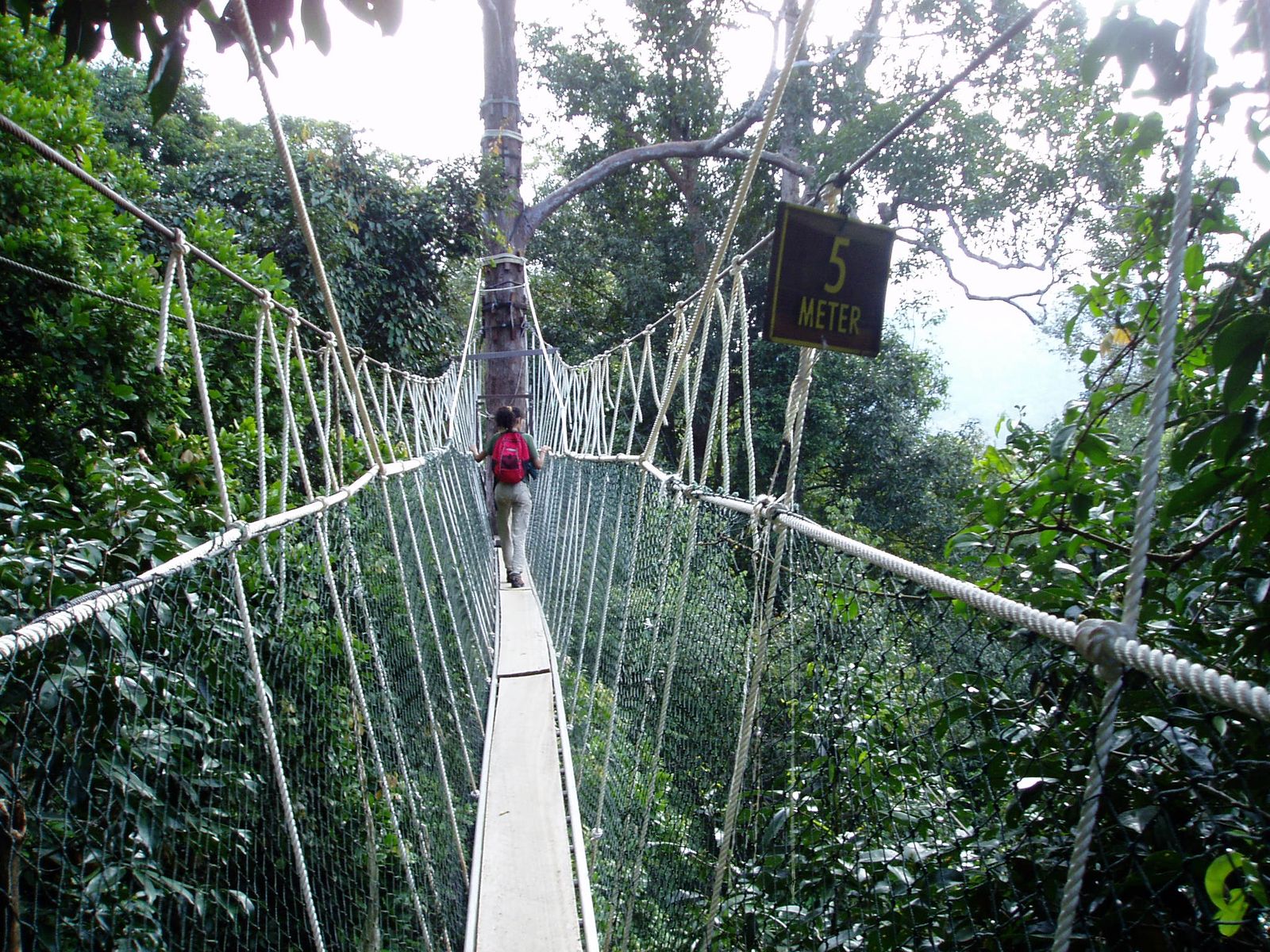
Start with the definition, because the vocabulary gets used loosely in travel marketing and it's worth untangling before anything else. A canopy walkway is a suspended pedestrian structure — a series of bridges and platforms, usually with a mesh or plank floor and rope or cable handrails — that lets a person move horizontally through the forest canopy at height, tree to tree or tower to tower, rather than climbing straight up and back down again. The word "sky bridge" gets used more or less interchangeably, though it sometimes implies a single dramatic span between two fixed points rather than a longer, multi-bridge network.
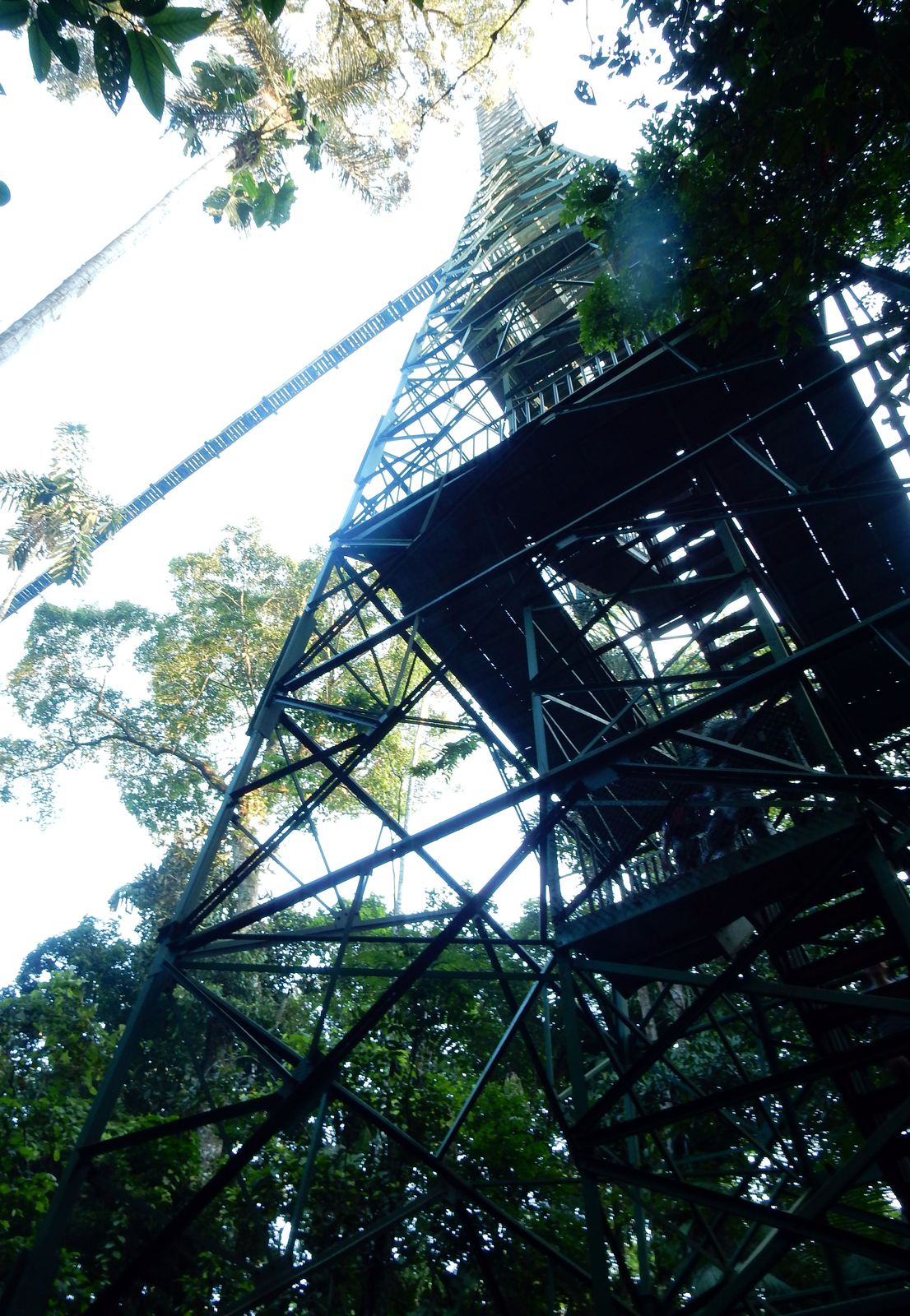
It's worth separating that from three things it commonly gets confused with. A canopy tower or observation deck is a single fixed structure you climb up to and then come back down from — no horizontal movement between points, no walkway. A zipline canopy tour uses cables too, but the point is speed and gravity, not walking; you clip in and ride a line rather than crossing a bridge on foot. And a tree-mounted platform or treehouse, which we've covered in detail in our guide to how treehouses are actually engineered, is a place you sleep or sit, not a route you travel along. A canopy walkway can connect any of those — towers, platforms, treehouses — but it's specifically the moving-between-them part, the bridge itself, that defines the category.
The distinction actually matters if you're booking a stay rather than just a day tour. A lodge that says it has a "canopy walkway" might mean a single short suspension bridge between the dining platform and one guest room, or it might mean a genuine multi-hundred-meter research-grade system with towers and observation decks along the way. Both are real. They're just very different experiences, and the honest operators will tell you which one you're getting.
Where the idea comes from
Canopy walkways didn't start as a hospitality idea at all. They started as a research problem. Before the 1980s, a scientist who wanted to study the rainforest canopy had genuinely bad options: single-rope ascent, one person at a time, slow and physically demanding and useless for moving equipment or covering ground once you were up there. The canopy — by most estimates the layer holding the majority of a rainforest's species diversity — was, for practical purposes, understudied simply because nobody had built a workable way to get around in it.
Margaret "Meg" Lowman is the person most credited with changing that. A forest canopy biologist working in Australia in the early 1980s, she sketched an early canopy walkway design — reportedly on the back of a cocktail napkin — in 1983, aimed at giving researchers a safer, faster, multi-person alternative to single-rope climbing. Walkways built on that thinking began appearing in Queensland's rainforests over the following years, first as scientific access infrastructure, only later as something the public could walk too. Lowman went on to co-found Canopy Construction Associates in 1992 specifically to build accessible canopy walkways for research and public education, and helped bring the first canopy walkway to North America at Williams College in Massachusetts. She's since become one of the most visible figures in canopy science generally, popularly nicknamed for her decades spent working at height in forests most people only ever see from below.
From Australia, the model spread fast, and it spread for two reasons that reinforced each other. Conservation organizations and park authorities in tropical countries realized a walkway could fund itself and the forest around it — visitors pay to walk it, and that revenue supports the reserve. And research institutions realized the same infrastructure that let tourists cross a bridge safely also let scientists set up long-term canopy study plots without re-rigging ropes every morning. Ghana's Kakum National Park, Peru's Amazon basin lodges, and Costa Rica's cloud forest parks all built out major walkway systems within a decade or two of Lowman's original design, each blending the same two purposes — genuine research access and public revenue for conservation — in different proportions.
Good to know
A canopy walkway being open to tourists doesn't mean it isn't also doing real scientific work. A number of the walkways covered later in this guide, including Peru's ACEER-linked system near Iquitos, were built with research plots and long-term canopy study built into the design from day one — the same bridge a guest crosses for the view is often the same bridge a biologist uses to reach a permanently tagged tree.
How a canopy walkway is actually built
The engineering problem is different from a ground-level bridge in one important way: nearly every anchor point is either a living tree that keeps growing and moving, or a purpose-built tower standing in soil that wasn't necessarily chosen for its load-bearing qualities. Get either one wrong and you have a structure that either strangles the tree it depends on or settles unevenly under a tower's own weight.
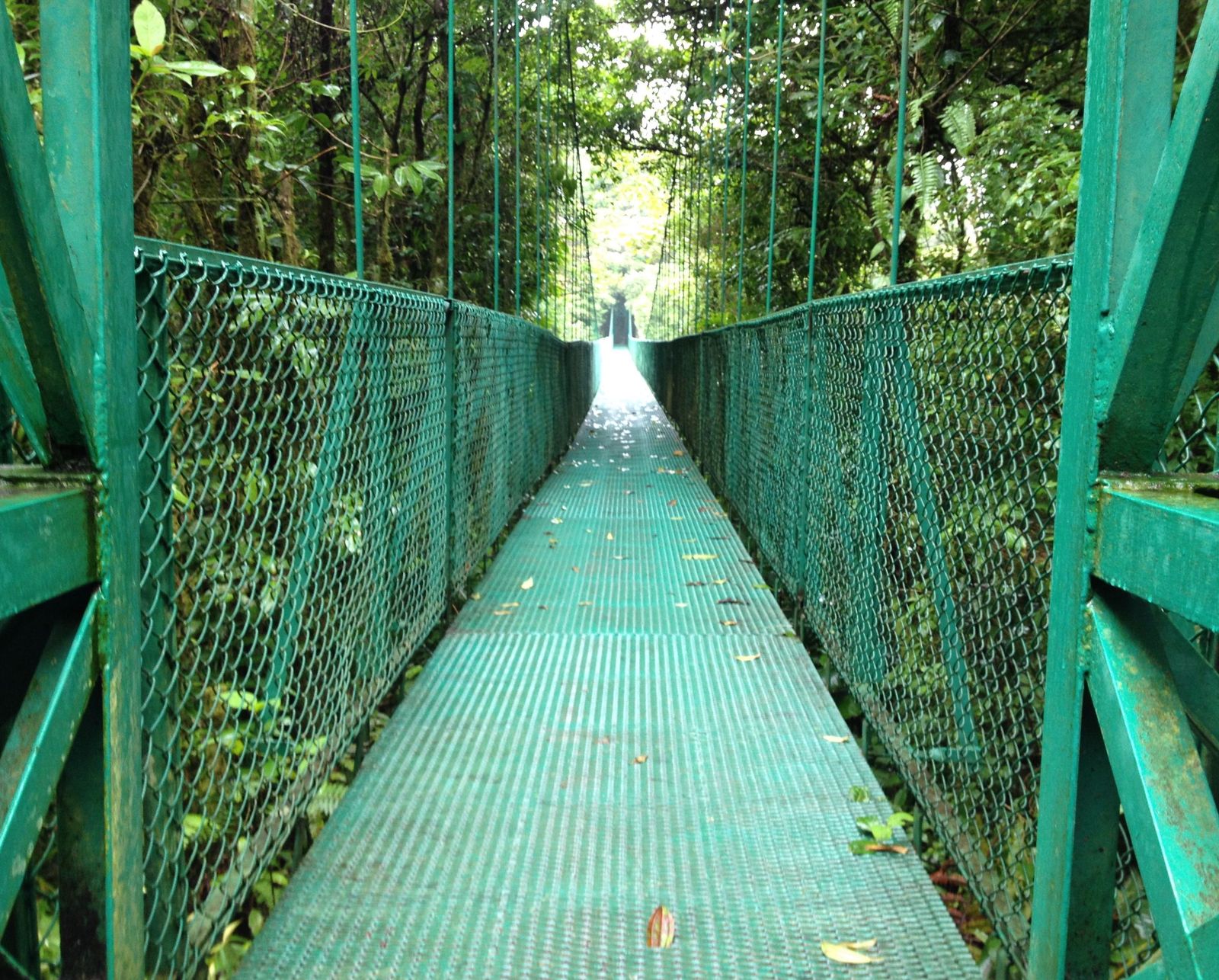
Most modern walkways are built from one of two structural families, or a mix of both. Platforms and bridge decking are typically aluminum modules or pressure-treated timber, chosen for weight and durability rather than looks — aluminum increasingly wins out in the tropics specifically because it doesn't rot and termites can't eat it, which matters enormously in a rainforest and barely at all in a temperate one. The whole system usually hangs from multi-strand galvanized steel cable, strung under tension between anchor points, with the walkway deck, handrail cable and mesh netting all attached to those main lines rather than framed as a rigid structure. That's what gives a good canopy walkway its characteristic gentle bounce and sway — it's not a flaw, it's a suspension bridge doing exactly what a suspension bridge is supposed to do, moving with load and wind instead of resisting it rigidly.
Where the walkway actually anchors into a living tree, the better-engineered systems use non-invasive tensioned hardware rather than driving bolts through the trunk — padded cable collars, sometimes called "tree huggers," that spread and distribute load around the trunk's circumference rather than concentrating it at a single drilled point, with enough built-in slack or adjustment to let the tree keep growing without being girdled. ACEER, the research and education nonprofit behind one of the Peruvian Amazon's earliest and best-known systems, developed exactly this kind of hardware — including a stabilizing device it calls a "kissing bar," which keeps adjacent platforms from swaying into each other — specifically so a walkway built for decades of use wouldn't slowly damage the forest it was built to showcase.
When no single tree can be trusted to carry the load safely — often the case for the tallest, longest spans, or wherever the available trees are younger or more shallow-rooted than the design calls for — walkway builders do exactly what treehouse builders do in the same situation: they build a freestanding tower instead, usually steel or heavy timber, and let the surrounding trees provide scenery rather than structure. It's the same honest trade-off covered in our piece on how treehouses actually stay up — past a certain scale, no living tree is the right answer, and a well-engineered system says so rather than pretending otherwise.
Building for jungle conditions specifically
A canopy walkway built in a temperate forest and one built in a tropical rainforest are solving different problems, even when the basic cable-and-deck logic is identical. Humidity near saturation for months at a stretch accelerates corrosion on steel cable and hardware far faster than it would in a drier climate, which is why serious operators run regular cable and connection inspections rather than treating a walkway as a build-once structure. Termites make untreated or poorly treated timber decking a real liability in a way it simply isn't in most temperate settings, which is a large part of why aluminum decking has become the preferred material for a lot of tropical systems specifically.
Wind load matters differently too. A rainforest canopy funnels and gusts wind in ways a more uniform temperate forest often doesn't, and a well-run walkway will have a genuine weather protocol — closing bridges above a certain wind speed, or during and immediately after heavy storms, rather than leaving that judgment to whoever happens to be staffing the entrance that day. None of this is exotic engineering. It's closer to routine bridge maintenance, just done more often and with more attention to rot and corrosion than a comparable structure would need anywhere drier.
The lodges and stays built around these systems tend to borrow the same off-grid logic covered in our guide to how off-grid jungle homes handle solar and rainwater — a walkway itself needs no power at all, but the towers, platforms and guest rooms strung along it usually run on solar sized for light loads, with rainwater catchment doing most of the water supply work. Building light, and building for airflow instead of sealed climate control, is the same instinct that shapes jungle treehouses; a canopy walkway is just the connective version of it.
The bridge isn't supposed to feel like solid ground. A canopy walkway that didn't move at all in the wind would be the more worrying sign — it would mean the structure was fighting the forest instead of moving with it.
What it's actually like to walk one
The appeal is straightforward and it holds up in person: you're at eye level with birds that spend their whole lives above where a person on the ground ever sees them, close enough to hear insects and frogs you'd never notice from below, and looking down through gaps in the canopy at a forest floor that suddenly looks very far away. Early morning, before a park fills with day visitors, is when a walkway earns its reputation — quiet, cooler, and the best window for actually seeing wildlife rather than just the structure itself.
The honest trade-offs are worth naming plainly. Height and sway are real for people with vertigo or a fear of heights — a well-engineered bridge is safe, but "safe" and "doesn't feel unsettling" are different claims, and a bridge that sways gently underfoot forty meters up will read as thrilling to some visitors and simply unpleasant to others. Weather closures happen, and they should — a genuinely well-run walkway will shut down in high wind or an active storm rather than keep operating for the sake of a schedule, which occasionally means a booked visit gets rescheduled or cut short. Capacity limits matter too: a good system caps how many people can be on a given span at once, which at a popular park can mean queuing, especially in high season. And not every walkway delivers the quiet, wildlife-forward experience the photos promise — the busiest tourist-park systems can feel more like a line at an attraction than a walk through an undisturbed forest, particularly midday, particularly during peak travel months.
None of that is a reason to skip one. It's a reason to time the visit deliberately — early, off-season if you can manage it — and to pick an operator that treats weather and capacity limits as safety decisions rather than inconveniences to route around.
Real walkways worth knowing
A handful of real, verifiable systems are worth knowing by name, because between them they cover most of what a canopy walkway can be — research infrastructure, conservation funding, and genuine hospitality architecture.
Kakum National Park, in Ghana, runs one of West Africa's best-known systems: seven suspended bridges strung across more than 300 meters of rainforest canopy, reaching up to roughly 35 meters above the forest floor at their highest point. It's a strong example of the conservation-funding model working as intended — entrance revenue from the walkway supports the park directly.
Selvatura Park, in Costa Rica's Monteverde cloud forest, operates a network of eight suspended walkways ranging from about 50 to 170 meters in length and reaching heights of up to roughly 60 meters, making it one of the more extensive multi-bridge systems built specifically around the cloud forest ecosystem rather than lowland rainforest.
The ACEER canopy walkway near Iquitos, in the Peruvian Amazon — associated with Explorama Lodges' ExplorNapo property — is one of the oldest and longest systems built in the Amazon basin, running roughly 500 meters and reaching about 35 meters up, strung across fourteen of the area's largest trees. It's the system that pioneered the non-invasive tree-attachment hardware — the tree huggers and kissing bars — described earlier, built jointly for research access and public visitation from the outset.
Inkaterra Canopy Walkway, part of Inkaterra Reserva Amazonica near Puerto Maldonado in the Peruvian Amazon, is a more recent and more architecturally ambitious system: roughly 344 meters of walkway across seven hanging bridges, six treetop observation platforms, and two towers standing about 29 meters tall. It's a good example of a walkway built as a hospitality centerpiece as much as a research tool, integrated directly into a lodge property rather than a standalone park attraction.
The Danum Valley Canopy Walkway, in Sabah, Malaysian Borneo, runs about 300 meters and reaches roughly 27 meters high through rainforest widely described as among the oldest in the world. Nearby, the Borneo Rainforest Lodge's own treetop canopy walk, within the same Danum Valley Conservation Area, spans roughly 183 meters at about 22 meters up — a smaller, lodge-integrated system built for guests staying on-site rather than day visitors passing through.
Walkways as the connective tissue of a canopy stay
Day-visitor parks are one use of a canopy walkway. The other, more relevant to anyone booking an actual stay, is as the connective tissue between rooms in a lodge built entirely above the forest floor. Inkaterra's system does exactly this — its towers and platforms aren't just a scenic attraction guests walk once and move on from, they're integrated into how the property is laid out, linking observation points guests can return to throughout a stay. The ACEER walkway near Iquitos works similarly for the research station and lodge it's attached to, moving people and light equipment between platforms without anyone needing to descend to the forest floor and climb back up.
It's the same idea covered from the treehouse side in our guide to how treehouses are built: a lodge with several elevated units gains a lot by connecting them with a walkway rather than sending every guest down a staircase and back up another one each time they want to visit a neighboring platform or the main dining area. It's a genuinely different way to move through a property, and it's part of what separates a real canopy stay from a hotel that simply has tall buildings — the whole point is spending your visit above ground level, not just sleeping there.
What separates a good one from a gimmick
After enough of these, the difference between a canopy walkway worth the trip and one that's mostly a photo backdrop comes down to a short, mostly structural list.
- Disclosed engineering and maintenance. A good operator can tell you plainly how the walkway is anchored, how often cables and connections are inspected, and what the load capacity actually is. Vagueness on any of that is a real flag.
- An honest weather and capacity policy. Bridges that stay open regardless of wind speed, or that pack in more visitors than the design was rated for, are cutting a corner that matters.
- Non-invasive tree attachment where trees are actually load-bearing. Padded, tensioned hardware that lets a tree keep growing beats a rigid bolted connection, the same way it does for treehouses.
- A real relationship to research or conservation, where one is claimed. A lot of the best-known systems fund park protection or active canopy science directly; a marketing claim of "eco" credentials should point to something specific, not just the fact that the structure is in a forest.
- Timing that actually favors wildlife. The better operators build early-morning or small-group access into how the walkway is used, rather than running it purely as a high-volume midday attraction.
None of this requires an engineering background to check. It just means asking a direct question or two before booking, instead of assuming the drone photo on the listing tells the whole story.
Common questions
Are canopy walkways actually safe?
A properly engineered and maintained one, yes. The sway underfoot is intentional suspension-bridge behavior, not a sign of instability, and reputable operators run regular cable and connection inspections along with clear weather and capacity protocols. As with any structure, the real risk sits with poorly maintained or unregulated systems, which is exactly why it's worth asking an operator directly about inspection frequency rather than assuming every walkway meets the same standard.
What's the difference between a canopy walkway and a zipline canopy tour?
A canopy walkway is something you cross on foot, at a walking pace, usually able to stop and look around. A zipline canopy tour uses similar cable infrastructure but is built for a fast, clipped-in ride between points rather than walking. Some jungle properties offer both, and they deliver genuinely different experiences even though the marketing sometimes blurs the line between them.
How high up are these things, typically?
It varies a lot by system, but most well-known canopy walkways run somewhere in the range of 20 to 60 meters above the forest floor, depending on the canopy height at that particular site and where the design puts the walking level relative to it. Systems built for research often include multiple platforms at different heights rather than one fixed elevation.
Do canopy walkways harm the trees they're attached to?
Done well, minimally. The better systems use padded, load-spreading hardware — sometimes called tree huggers — specifically designed to avoid girdling the bark and to allow room for continued growth, the same underlying principle used in modern treehouse attachment bolts. Done poorly, with rigid or invasive fastening, it can genuinely damage a tree over time, which is part of why the engineering behind the better-known systems gets discussed as openly as it does.
Why do some walkways close in bad weather?
Wind is the main reason. A suspension structure that's perfectly safe in normal conditions can become a real risk in high wind or an active storm, and a well-run operator will close access rather than keep a schedule running through conditions the structure wasn't rated for. It's worth building some flexibility into a trip that includes a walkway visit, particularly in the rainier parts of the year.
Can you actually sleep on a canopy walkway, or just walk it?
The walkway itself is a path, not a room — nobody sleeps directly on the bridge deck. But a growing number of lodges build guest platforms, towers or treehouses at the same canopy level and connect them with a walkway, so a stay can genuinely happen at that height even though the walkway's own job is movement, not sleeping.
Where to go from here
Canopy walkways are one piece of the same shift covered throughout this journal — jungle hospitality moving away from ground-level hotel blocks toward structures that actually put you inside the forest rather than facing it through a window. If the appeal is height and structure more than the specific idea of a walkway, our guide to how treehouses are engineered covers the closely related discipline of building rooms that live in the canopy rather than just crossing it. If it's the systems that make an elevated stay actually livable, how off-grid jungle homes handle solar and rainwater is the deeper dive. And for a wider sense of what's out there, our list of the best jungle Airbnbs in the world includes plenty of stays built around exactly this kind of canopy-level access.
On the ground, the strongest canopy walkway traditions worth planning a trip around are Costa Rica's cloud forest parks, the Amazon basin lodges of Peru, and the growing number of canopy towers and platforms across Brazil's Atlantic Forest and Amazon lodges. The full spread of where to look, region by region, is in our destination directory.
- Margaret D. Lowman — Wikipedia — biography and background on Lowman's 1983 canopy walkway design and career in forest canopy science.
- Meg's Story — CanopyMeg — details on founding Canopy Construction Associates in 1992 and the first North American canopy walkway at Williams College.
- Canopy walkway — Wikipedia — general definition, structure and history of canopy walkway systems.
- Stroll through the treetops on the world's best forest canopy walkways — Lonely Planet — figures and details used for Selvatura Park, Kakum, Danum Valley and Borneo Rainforest Lodge.
- Reaching for the Treetops: Canopy Walkway Systems — ACEER — engineering detail on the tree hugger cable system, kissing bar stabilizer, and the Amazon canopy walkway near Iquitos, Peru.
- Canopy Walkway — Explorama — height, length and tree-count details for the ExplorNapo canopy walkway in the Peruvian Amazon.
- The 9 Most Incredible Canopy Walkways Around the World — Ecophiles — figures used for the Inkaterra Canopy Walkway in the Peruvian Amazon.
More from the Journal.
 Photo: Basile Morin, CC BY-SA 4.0
What Is a Bamboo House? Bali's Bamboo Architecture Explained
How a fast-growing grass became the most beautiful building material in the tropics — the story of bamboo architecture and where to sleep in it.
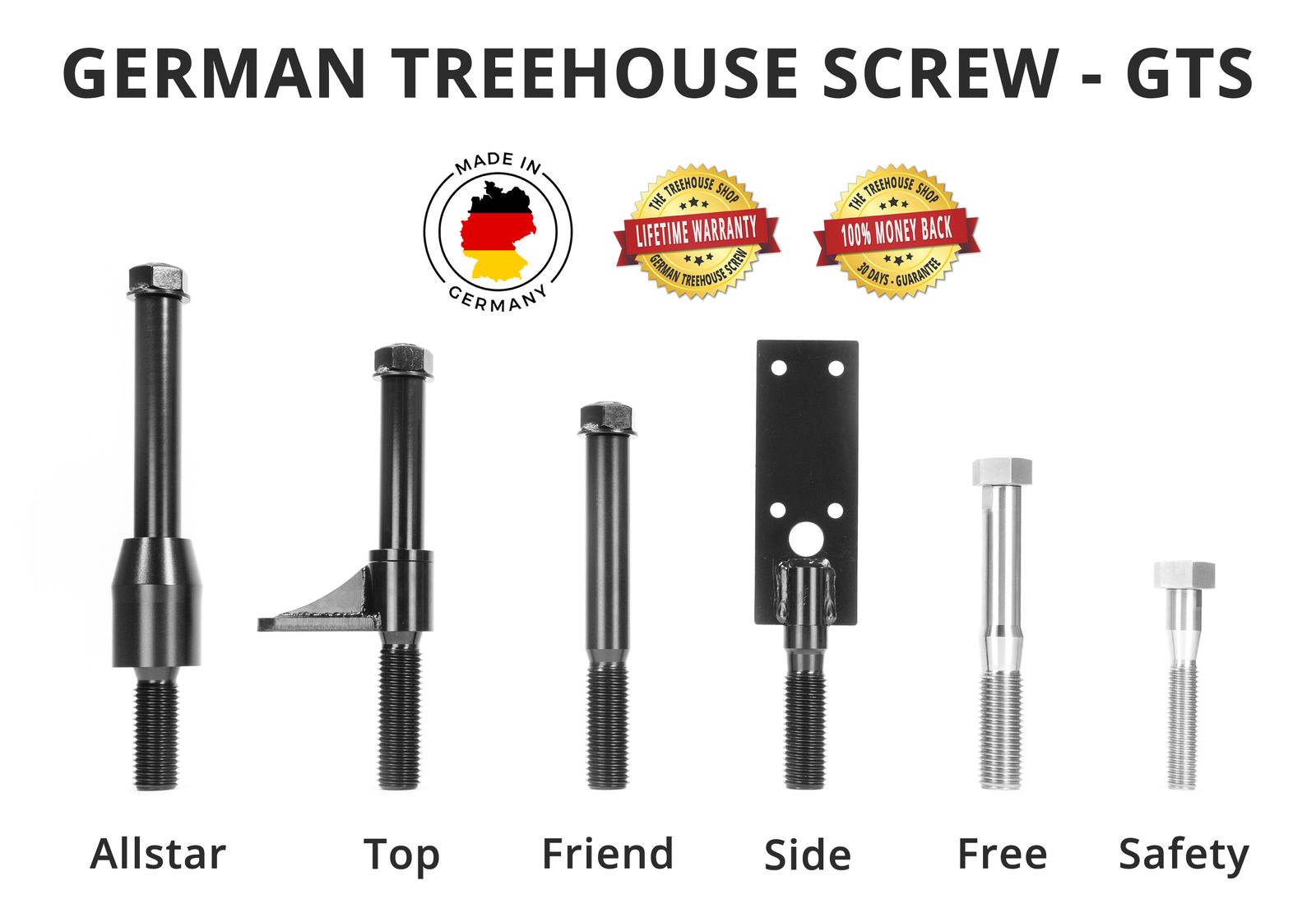 Photo: Vitus Wahlländer, CC BY-SA 4.0
Treehouses Explained: History & Modern Design
From childhood forts to seventy-foot canopy suites — how the treehouse grew up, and what makes a great one to stay in.
Overwater & Floating Bungalows in the Jungle
The room that floats — how raft houses and overwater bungalows are built on jungle lakes and rivers, and the best places to sleep on the water.
 Photo: Derek Ramsey (Ram-Man), CC BY-SA 4.0
Find your own piece of the canopy.
Treehouses, bamboo houses and rainforest villas across 17 destinations — found, vetted and written up honestly.
Browse all destinations