How Off-Grid Jungle Homes Work: Solar & Rainwater
Somewhere past the last utility pole, the road narrows to a track, and the track eventually gives up entirely. That's usually where the interesting jungle stays begin — and it's also where the electric company's wires stop. Nobody is running grid power three hours up a river valley or across a private reserve of rainforest, so if a place like that has lights, a fridge, hot water and wifi, it made all of that itself. This is a look at how: the solar arrays and battery banks that keep the power on, the roofs and tanks that turn rain into running water, and what it actually feels like to stay somewhere that answers to weather instead of a utility bill.
What "off-grid" actually means here
The phrase gets used loosely in travel marketing, so it's worth pinning down before anything else. A genuinely off-grid jungle stay is not connected to a public electric grid or a municipal water main, and isn't going to be, because there isn't one within any practical distance. This is different from a property that could plug into the grid but chooses solar for the branding, and it's different from a "rustic" cabin that's actually running a diesel generator around the clock and calling it self-sufficient. The real version generates its own electricity on-site, almost always with solar panels and a battery bank, sometimes backed up by a small generator or, where there's a stream with real elevation drop, a micro-hydro turbine. Water comes from a well, a spring, or — the focus of this piece — rain caught off the roof and stored in tanks.
None of this is a hardship gimmick. In most of the deep rainforest regions where jungle stays cluster — the Osa Peninsula in Costa Rica, stretches of the Amazon in Brazil and Peru, the interior of Bali, jungle-backed coastline outside Tulum — running grid infrastructure to a single remote property would cost more than the property itself and would mean cutting a permanent access corridor through forest that's often protected precisely because it hasn't been cut through yet. Off-grid isn't the eco-friendly option chosen over a grid connection. In a lot of these places, it's the only option that ever made sense.
Where this comes from
Rainwater catchment is not a new idea — cisterns fed by roof runoff have kept people alive on islands and in dry hill country for thousands of years, long before anyone called it "sustainable." What's new is pairing that old plumbing with a technology that only became practical for a jungle lodge in the last twenty-five years or so: photovoltaic solar cheap and reliable enough to run a real building, not just a single light bulb.
Costa Rica is where the modern version of this took shape as a hospitality model. The country built a national identity around conservation starting in the 1980s and 90s — national parks now cover a large share of its land, and ecotourism became a genuine economic strategy rather than a marketing layer bolted onto regular tourism. Lodges built deep inside reserves like Corcovado National Park and the Osa Peninsula had no realistic path to grid power, so operators who wanted electricity, refrigeration and hot showers had to generate it themselves, and solar dropped in cost fast enough over the 2000s and 2010s to make that a real option instead of a compromise. The same pattern repeated wherever jungle tourism grew up around genuinely remote reserves rather than roadside resorts: parts of the Amazon basin, patches of interior Bali away from Ubud's grid-connected sprawl, and river-access lodges from Belize to Peru.
The other half of the story is battery chemistry. Early off-grid solar setups leaned on lead-acid batteries — heavy, finicky about depth of discharge, and short-lived in hot, humid climates that are hard on any battery. The shift to lithium iron phosphate (LiFePO4) batteries over the last decade changed what an off-grid jungle building could realistically run. Lithium battery banks tolerate deep, daily discharge without degrading the way lead-acid does, need far less maintenance in a humid environment, and last long enough to make the upfront cost worth it over a building's lifespan. That single change is a big part of why off-grid jungle stays in the last ten years can run air conditioning in a bedroom or two, keep a proper kitchen fridge cold overnight, and offer wifi — things a solar cabin from the 1990s simply couldn't promise.
The power side: solar, batteries, and what backs them up
A working off-grid solar system has four parts, and understanding what each one does explains most of what you'll notice — or not notice — as a guest.
Panels
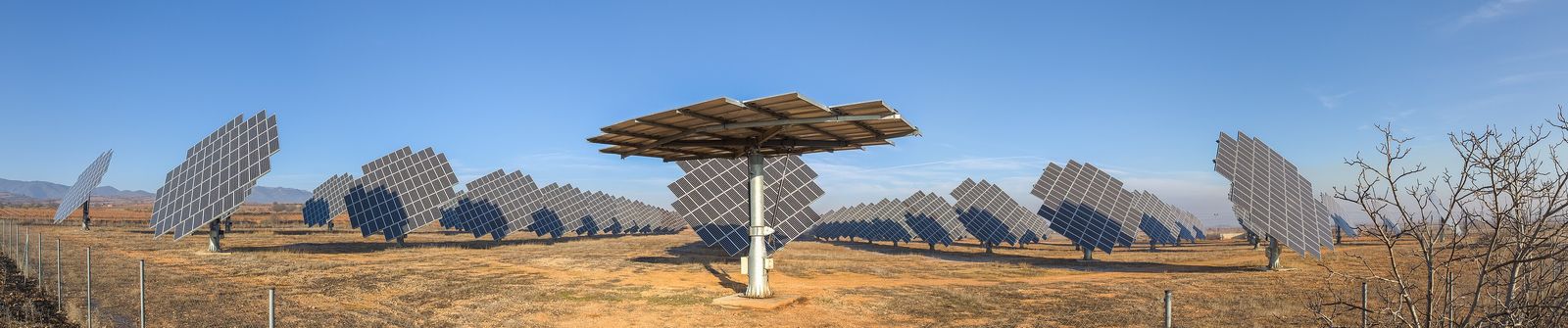
Most jungle properties use monocrystalline panels, the darker, more space-efficient type, because roof area is usually limited and jungle canopy already eats into how much clear sky a panel array gets. Panels get mounted on the roof of the main building or on a separate rack in the one patch of clearing that gets full sun for most of the day — sometimes a fair walk from the guest rooms, because the best solar exposure and the best jungle canopy for shade and privacy are often not the same spot. Siting a jungle building for off-grid solar is a real design compromise: too much clearing for panels undercuts the whole point of staying in forest, too little and there isn't enough power for the building.
Charge controllers
Between the panels and the batteries sits a charge controller, which regulates how fast the batteries charge so they aren't damaged by a sudden burst of tropical midday sun after a cloudy morning. Better systems use MPPT (maximum power point tracking) controllers, which squeeze meaningfully more usable power out of the same panels than the older, cheaper PWM type — worth knowing if you're ever the sort of guest who asks a property manager about their setup, because it's usually a sign of how seriously a place has invested in reliability.
Batteries
The battery bank is the part that actually determines whether a place is comfortable or is rationing power after dark. It stores the day's solar generation for use overnight and through cloudy stretches, which matter a lot in rainforest climates where multi-day overcast weather during the wet season is normal, not an exception. Lithium battery banks now common in newer off-grid builds are rated for thousands of charge cycles — Bali Silent Retreat's own off-grid write-up describes lithium batteries good for roughly 6,000 cycles, more than sixteen years of daily use, even when discharged every day — versus a few hundred cycles for the lead-acid batteries most older systems still run. That's the difference between a property that quietly rebuilds its power system every three or four years and one that doesn't.
Worth naming specifically because the property is unusually transparent about its own numbers. The main lodge and its wooden bungalows run on roughly 15 kilowatts of solar panels feeding a battery bank, with a backup LPG generator for stretches when the sun doesn't cooperate. It's a rice-paddy and jungle-edge retreat rather than a deep-forest lodge, but the power setup is a genuine, working example of the same system used at smaller scale in a single off-grid cabin — just sized up to run a whole small community. It sits within reach of the wider Bali jungle belt north of Ubud.

Inverters, and what a generator is actually for
Solar panels and batteries produce direct current (DC), and most of what a guest plugs in — a phone charger, a laptop, the room's lights — runs on alternating current (AC), so an inverter sits at the end of the chain converting one to the other. A pure sine wave inverter, the better and more common type now, produces power clean enough to run sensitive electronics without the buzz or shortened lifespan you'd get from a cheaper modified-wave inverter. Backup generators, where a property has one, exist for the edge cases: a run of solid cloud cover during the wet season, a big group booking that pushes demand past what the battery bank was sized for, or a genuinely overcast week that would otherwise mean rationing power. A well-run off-grid lodge treats the generator as an insurance policy it rarely has to use, not a crutch running in the background of every night — if you can hear a generator running constantly at a place marketed as off-grid solar, that's usually a sign the solar and battery system was undersized for what the building actually needs.
Some jungle properties skip solar's variability altogether by tapping a stream instead. Micro-hydro turbines, submerged in a fast-moving jungle creek with enough elevation drop, generate power around the clock rather than only in daylight, which is a real advantage in a rainforest where a sunny day isn't guaranteed. It's a site-specific solution — you need the right stream in the right place — but where it's available, it's often paired with solar rather than replacing it, giving a property two independent sources instead of one.
The water side: catching, storing, and cleaning rain
Water is, in a way, the simpler engineering problem in a rainforest, for the obvious reason that rainforests get a great deal of rain. The system that turns that rain into a working shower has four stages, and each one exists to solve a specific failure mode.
Catchment
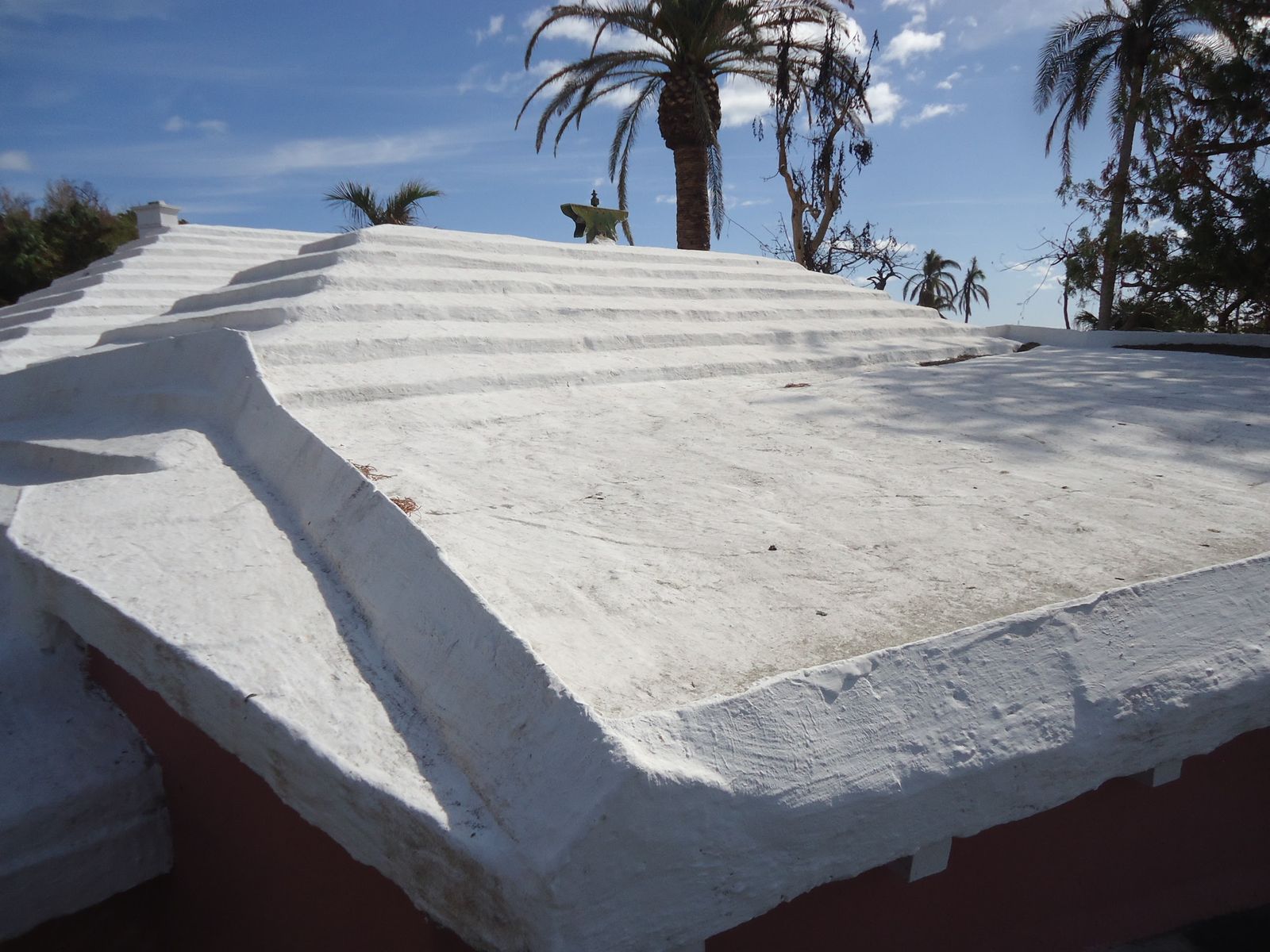
It starts with the roof. A metal roof with a real pitch sheds water fast and cleanly into gutters, which is why so many off-grid jungle buildings use corrugated metal rather than the greener-looking thatch you might expect — thatch looks the part but is a poor, leaky catchment surface. The roof's total square footage sets the hard ceiling on how much water a property can ever collect: as a rough rule of thumb, a square meter of roof catches close to a liter of water for every millimeter of rain that falls on it, before you subtract what's lost to evaporation, overflow, and the first flush. In a rainforest region getting several meters of rain a year, that adds up fast even off a modest roof — which is exactly why jungle lodges can run genuinely off-grid on rain alone in a way a property in a drier climate never could.
First flush and filtration
The first few minutes of any rain event wash accumulated dust, leaf litter, insect debris and bird droppings off the roof, and a well-built system diverts that dirty first flush away from the storage tank entirely, usually with a simple valve that fills and seals once it's caught the initial rush. What follows is comparatively clean, but it still runs through a mesh gutter guard and a sediment pre-filter before it ever reaches storage, which keeps leaves and larger debris out of the tank. Architectural rainwater-collection systems increasingly build this filtration into the roof design itself rather than bolting it on afterward — sloped channels and integrated gutters that do double duty as both drainage and pre-filtration.
Storage
From there, water goes into a cistern, which can sit above ground as a visible tank near the building, partly buried for insulation and to reduce algae growth from sunlight, or fully underground where the property wants to keep the architecture clean of visible infrastructure. Elevated tanks have the advantage of gravity feed, pushing water to taps without needing a pump running constantly — a meaningful consideration on a limited battery budget, since every pump is one more thing pulling from the same power system running the lights.
Treatment
Stored rainwater still needs a final treatment stage before it's safe to drink, even after pre-filtration. Standard off-grid cabin systems typically run water through a finer particulate filter and then a UV sterilizer immediately before the tap, which neutralizes bacteria without adding chemical taste — a detail worth knowing if a property tells you the tap water is drinkable, since it means they've actually built out this last stage rather than just collecting and storing. Plenty of off-grid jungle stays are more honest than that and simply provide filtered water in the kitchen or refillable bottles, using the cistern water untreated for showers, laundry and irrigation, which is a perfectly reasonable and common setup. It's worth asking rather than assuming either way.
Good to know
Ask before you assume a jungle stay's water is safe to drink straight from the tap. A lot of well-run off-grid properties treat their rainwater fully and will tell you so proudly; plenty of others — including some very good ones — collect and filter for washing but still provide bottled or filtered drinking water separately. Neither answer is a red flag. Not asking, and guessing wrong, is the only real mistake here.
Building around the systems, not just the view
An off-grid jungle building is designed around its power and water systems as much as around the view, even when the finished result reads as pure architecture. Roof geometry is the clearest example: a roof has to do triple duty as a rain catchment surface, a mounting platform for solar panels, and shade for the rooms underneath, and those three jobs pull in different directions. A steep pitch sheds rain fast and cleanly but eats into usable panel area if the surface isn't angled toward the sun; a shallow, wide roof is better for solar but collects less catchment velocity and needs more careful gutter design to avoid overflow in a proper tropical downpour.
Siting the whole building matters just as much as the roof itself. The best solar exposure in a rainforest is almost never directly under the densest canopy — obviously, since that's the point of canopy — so off-grid jungle architecture tends to work with existing clearings, riverbanks, or ridge lines where the tree cover naturally breaks, rather than cutting new gaps purely for panels. That's part of why so many of the better off-grid jungle stays sit on a ridge, beside a river, or on the edge of a reserve rather than buried in unbroken forest: it isn't only about the view, it's about having enough open sky for the system to actually work.
Elevation shows up again in construction itself. Buildings are commonly raised on stilts or a concrete plinth, which does several jobs at once: it keeps the structure above flood-prone ground during wet-season downpours, discourages insects and small animals from moving in underneath, and creates a natural spot to run plumbing, wiring and the battery bank out of the weather and out of sight. Deep roof overhangs, screened rather than glazed windows, and cross-ventilation reduce how much a building needs to lean on power-hungry air conditioning in the first place — the most effective way to make a small battery bank last is to design a building that needs less from it, the same logic behind the passive cooling used in glass jungle houses and open-air A-frame cabins alike.
The best off-grid jungle buildings don't fight the climate with equipment. They use the equipment for the parts the climate genuinely can't solve on its own, and let good roof pitch, shade and airflow handle the rest.
Real places doing this
The clearest concentration of working examples is Costa Rica, where off-grid lodging in genuine rainforest has been a hospitality category for decades rather than a recent trend.
Lapa Rios Lodge, on the Osa Peninsula bordering a 1,000-acre private reserve of lowland rainforest, operates entirely off the grid on a combination of solar power and rainwater harvesting — as close to the exact pairing this article is about as a single named property gets. Esquinas Rainforest Lodge, bordering Piedras Blancas National Park in the country's southern Puntarenas region, runs on clean hydroelectric power supplemented by roughly ten solar panels dedicated to the kitchen and dining area, a good example of a property mixing power sources rather than relying on solar alone. Playa Nicuesa, a boat-only retreat on a private rainforest reserve next to the same national park, is fully off-grid on a combination of solar, micro-hydro and recycled biofuel — about as thorough a mixed system as you'll find in one place. Rancho Margot, near Lake Arenal in the country's north, generates its own electricity through hydro power and purifies its own water on a working organic farm, running almost entirely off the grid as a matter of course rather than a marketing point. And Pacuare Lodge, reachable only by raft or a jungle trail along the Pacuare River, gives each of its thatched-roof suites solar-powered lighting built from locally sourced materials.
Costa Rica isn't the only place doing this well, just the place doing it longest and most visibly. Bali Silent Retreat, covered above for its solar numbers, is a working example from a different jungle region entirely — proof the same approach scales from a single cabin to a small off-grid community. And on Mexico's Yucatán coast, the off-grid residential community of Los Árboles Tulum publishes its own comparisons of battery chemistries for homeowners building off-grid in the jungle just outside town — a sign of how mainstream this kind of build has become in a region that, a couple of decades ago, was mostly grid-connected beach hotels. It's one more reason the jungle-backed stretch of coast around Tulum and the Maya jungle keeps turning up on lists of interesting off-grid architecture.
The pattern holds wherever jungle tourism has grown up around genuinely remote reserves rather than roadside access: pockets of the Brazilian Amazon and the Peruvian Amazon, both regions where lodges routinely run entirely on their own power and stored rain simply because there's no realistic alternative for a building reached by boat.
Why people love it
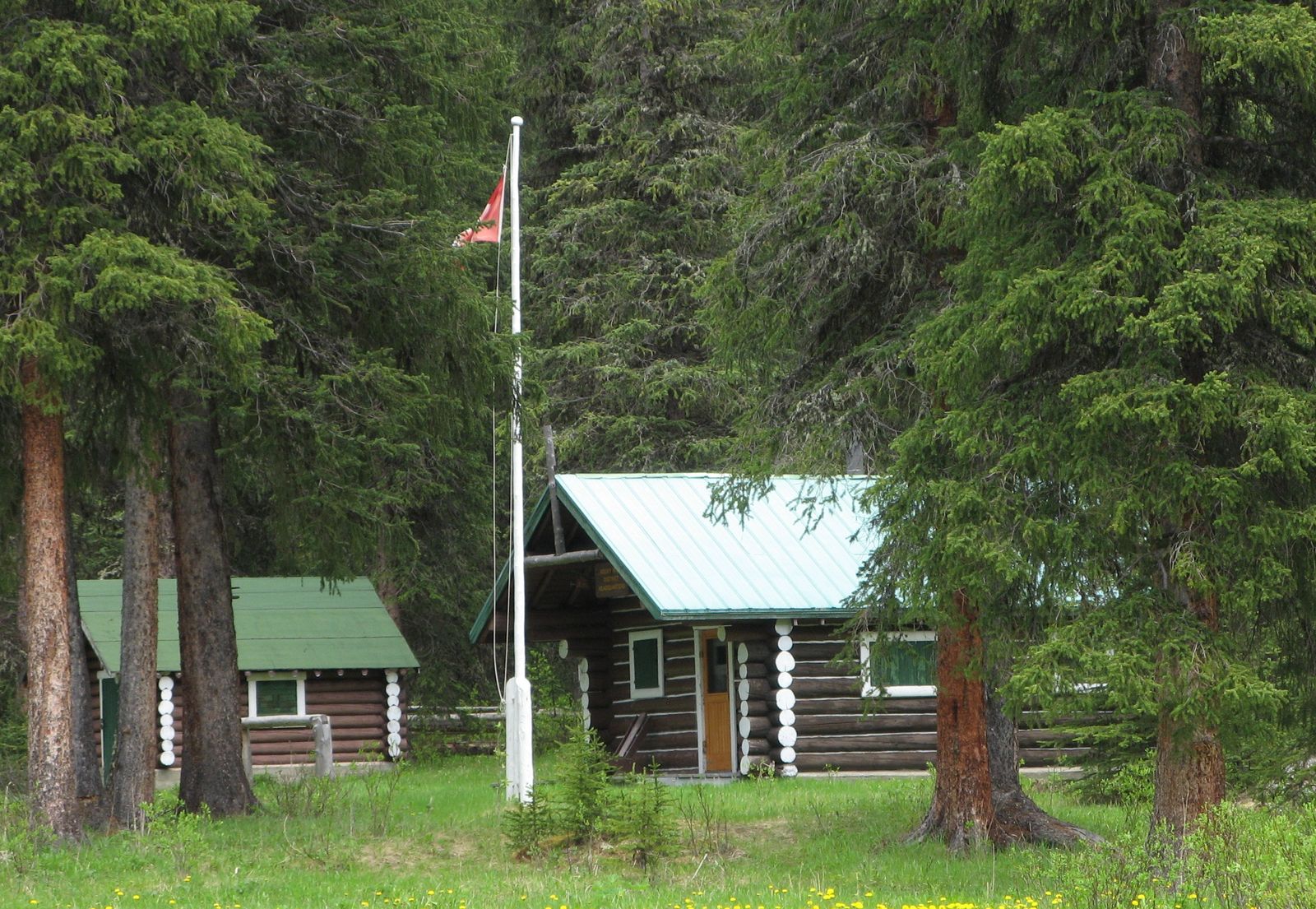
Part of the appeal is simply quiet. No generator hum running around the clock, no HVAC unit cycling on and off all night — a well-designed off-grid property is close to silent except for what the jungle itself is doing, and that's a real, physical difference from a conventional resort that a lot of guests notice within the first hour and don't stop noticing for the rest of the trip. There's also a kind of honesty to it that people respond to: you can see the panels, you can see the tank, and it's obvious where your power and water actually came from, which is a different feeling than flipping a switch connected to an anonymous grid a hundred miles away.
It also tends to select for better-sited, better-built properties, if only because badly designed off-grid systems fail fast and loudly — a lodge that gets the solar sizing or the roof catchment wrong runs out of power or water within a season and either fixes it or closes. That's a rough filter, but it's a real one, and it's part of why off-grid jungle stays skew toward operators who've clearly thought hard about the building rather than just the marketing photos. For a lot of travelers drawn to jungle stays in the first place, running on sun and stored rain isn't a limitation to tolerate. It's close to the point of the trip.
The honest trade-offs
None of this is free of real compromises, and a property that pretends otherwise is worth being skeptical of. Power is finite in a way it simply isn't on a grid connection — most off-grid lodges ask guests, gently or otherwise, to be mindful about running air conditioning, hair dryers and other heavy draws simultaneously, especially during a run of cloudy days. Some rooms don't have AC at all by design, relying on the passive cooling covered above instead, which is a real adjustment if you've never slept in open, screened air in genuine humidity before.
Water can run short too, particularly toward the end of a dry season when tanks haven't been topped up in weeks, and a lodge that's honest with itself about its own catchment capacity will ask guests to keep showers reasonably short during those stretches rather than pretending the supply is unlimited. Wifi, where it exists at all, is often satellite-based and shares the same limited power budget as everything else, so it can be slow or drop out during storms — which, depending on why you booked a jungle stay in the first place, might read as a feature rather than a bug.
And there's a cost side to be honest about: solar arrays, battery banks and proper rainwater treatment systems are a real capital investment, and that cost tends to show up in room rates. An off-grid jungle stay is rarely the cheapest option in a given region, because the property is quietly running its own small utility company in addition to being a place to sleep.
Common questions
Will I have hot water at an off-grid jungle stay?
Usually, yes, though how it's heated varies. Some properties heat water with a small electric or propane heater drawing from the same solar and battery system running everything else; others use solar water heaters — a separate, simpler technology from photovoltaic panels, built specifically to heat water directly rather than generate electricity. A few, especially at the more rustic end, offer only cold or lukewarm showers, which in a genuinely hot rainforest climate is less of a hardship than it sounds.
Is the water safe to drink?
It depends on the property, and it's worth asking directly rather than assuming. Some fully treat their rainwater with filtration and UV sterilization and it's genuinely drinkable from the tap; others treat for washing and provide separate filtered or bottled water for drinking. Both are normal, safe setups — they're just different setups.
What happens during a long stretch of rain, or a long stretch without it?
Extended cloud cover during the wet season is the harder case for power, which is what backup generators and, where available, micro-hydro turbines are for. Extended dry spells are the harder case for water, since the tanks are only ever as full as recent rain has left them — well-run properties size their cisterns with a real dry-season buffer in mind, but it's still reasonable to be a little more careful with water use toward the end of a dry season than you would be after a week of storms.
Does off-grid mean no wifi or air conditioning?
Not necessarily, but both are genuinely more limited than at a grid-connected resort. Lithium battery systems have made both far more common at off-grid jungle stays than they were a decade ago, but a property still has to budget every watt against a finite daily supply, so don't expect the same casual, unlimited use of either that you'd get at a city hotel.
Are these places more expensive than a regular jungle stay?
Often, yes, at least at the more considered end of the category — proper solar, battery and rainwater systems cost real money to install and maintain, and that shows up in the rate. It isn't universal; some of the simplest off-grid cabins, running smaller systems by necessity rather than ambition, are among the cheapest jungle stays around. Price tends to track how much system is actually behind the building, not just the "off-grid" label.
Is off-grid the same thing as an eco-lodge?
Not exactly, though the two overlap a lot in practice. An eco-lodge is a broader label about sustainable operating practices generally — sourcing, waste, conservation partnerships — while off-grid specifically means self-generated power and self-sourced water. Plenty of eco-lodges are grid-connected, and a few off-grid stays don't otherwise market themselves as eco-anything at all; they're just remote enough that self-sufficiency was the only practical option. For a fuller look at how the eco-lodge model compares to a standard jungle rental, see our piece on eco-lodges versus jungle Airbnbs.
Where to go from here
Off-grid solar and rainwater systems show up across most of the world's jungle regions once you know to look for them, from the Osa Peninsula's lodges to the interior hills of Bali to the residential builds going up outside Tulum. If you're picking a region first and a property second, start with our full destination directory, or go straight to the places this piece kept returning to: Costa Rica, still the deepest bench of working off-grid lodges anywhere, Bali, and the jungle coast around Tulum and the Maya jungle. Beyond those three, Peru and Brazil both have Amazon lodges running the same systems out of necessity rather than trend-chasing.
If it's the architecture more than the region pulling you in, a few of our other guides sit right alongside this one: glass houses in the jungle and A-frame cabins both lean on the same passive-cooling logic covered above, and why jungle stays are booming puts this whole category in a wider context. And if what you actually want is simply a well-vetted list to start booking from, the best jungle Airbnbs in the world is the place to start — a fair number of them, it turns out, are running on the same sun and rain as everything in this piece.
- Bali Silent Retreat — Off the Grid — solar array size, battery bank, and generator backup at a real off-grid Bali property.
- Los Árboles Tulum — Powering Your Off-Grid Home — lithium versus lead-acid battery comparison for off-grid jungle homes near Tulum.
- Battle Born Batteries — Off-Grid Solutions — technical background on lithium battery performance in off-grid systems.
- Ecolodges Anywhere — Sustainable Eco Lodges in Costa Rica — background on Esquinas Rainforest Lodge and Pacuare Lodge's power systems.
- Villagio Musca — Costa Rica Off-Grid Stays — overview of off-grid eco-retreats including Playa Nicuesa.
- Eco Tropical Resorts — Costa Rica Ecolodges — verification background on Rancho Margot and Lapa Rios Lodge's off-grid operations.
- Architizer — Architectural Details for Harvesting Rainwater — roof and gutter design approaches for rainwater catchment.
- Rain Brothers — Off-Grid Cabin Rainwater Harvesting System — filtration and UV treatment stages in a cabin rainwater system.
More from the Journal.
 Photo: Basile Morin, CC BY-SA 4.0
What Is a Bamboo House? Bali's Bamboo Architecture Explained
How a fast-growing grass became the most beautiful building material in the tropics — the story of bamboo architecture and where to sleep in it.
 Photo: Vitus Wahlländer, CC BY-SA 4.0
Treehouses Explained: History & Modern Design
From childhood forts to seventy-foot canopy suites — how the treehouse grew up, and what makes a great one to stay in.
Overwater & Floating Bungalows in the Jungle
The room that floats — how raft houses and overwater bungalows are built on jungle lakes and rivers, and the best places to sleep on the water.
 Photo: Derek Ramsey (Ram-Man), CC BY-SA 4.0
Find your own piece of the canopy.
Treehouses, bamboo houses and rainforest villas across 17 destinations — found, vetted and written up honestly.
Browse all destinations