Eco-Lodges vs Jungle Airbnbs: Which to Book
A lodge gives you guides and dinner. An Airbnb gives you the place to yourself. Both will put you to sleep under a mosquito net with frogs going off outside the window, but the experience of getting there, staying there, and leaving is different enough that picking wrong can ruin a trip. Here is what actually separates them, and how to choose.
What we actually mean by "eco-lodge" and "jungle Airbnb"
"Eco-lodge" gets slapped on everything from a genuinely off-grid research station to a resort with a recycling bin by the pool, so it's worth being precise. A real eco-lodge is a staffed property, usually with somewhere between eight and forty rooms or bungalows, built with a stated environmental mission and run with guides, a kitchen, and a schedule. You book a room, not the building. Meals are often included, and a naturalist walks you into the forest at dawn to point out a sloth you would have walked straight past. The lodge exists because someone decided the land was worth protecting and that tourism could pay for that protection — Lapa Rios on Costa Rica's Osa Peninsula and Inkaterra's lodges in the Peruvian Amazon are the clearest examples of this model actually working over decades, not just in a press release.
A jungle Airbnb is a different animal. It's a private house, cabin, or villa that one owner built or bought, furnished, and now rents out through Airbnb or a similar platform. There's no shared dining room, no fixed schedule, and usually no staff beyond a caretaker who drops off firewood or fixes the water pump. You get the whole structure to yourself: the whole bamboo pavilion in Bali, the whole stilted cabin in the Yucatán, the whole glass box overlooking a ravine in Costa Rica. What you don't get is anyone showing up to explain what you're looking at. If you want that, you either hire a local guide separately or you go without.
Both categories sit inside the broader boom in jungle stays over the past decade, and both can be architecturally serious — see our guides to bamboo houses and glass jungle houses for how far the design has come. The distinction that matters for booking isn't the building, though. It's the business model behind it, because that's what determines whether you'll have company, guidance, and a dinner bell, or total privacy and a fridge you have to stock yourself.
Where these two categories came from
The eco-lodge model is older than most people assume. Costa Rica started building a tourism economy around its forests in the 1980s and 1990s, after decades of cattle-ranching deforestation had cut national forest cover roughly in half. Lodges like Lapa Rios opened in 1993 specifically to make a case that a hectare of standing rainforest could earn more, year after year, as a place tourists paid to walk through than it ever would cleared for pasture. That argument needed proof, so early lodges leaned hard into visible sustainability: rainwater tanks, solar arrays, wastewater treated through constructed wetlands, staff drawn from the nearest village. Costa Rica's government backed the pitch with its Certification for Sustainable Tourism program, which gave lodges an actual scorecard to earn rather than a marketing word to claim.
In the Peruvian Amazon, the lineage runs differently but lands in the same place. What's now Inkaterra Reserva Amazonica started as a research station in the 1970s, when a Spanish doctor and later the Peruvian hotelier José Koechlin turned a patch of rainforest outside Puerto Maldonado into a base for scientific study before it ever took paying guests. The lodge grew out of the research, not the other way around, and Inkaterra's scientists have logged the property's biodiversity for decades. That history is part of why the lodge model tends to layer expertise on top of the stay: naturalist guides at Inkaterra and comparable lodges typically have years of fieldwork behind them, not a weekend of training.
Jungle Airbnbs are a newer story, tied to two things happening at once: the platform itself launching in 2008 and making it trivial for an individual owner to list a single property to a global audience, and a design movement — bamboo architecture out of Bali chief among it — that made building something genuinely striking in the jungle achievable without hotel-scale capital. The bamboo studio IBUKU, founded by Elora Hardy in Bali, is the clearest case: its structures at Green Village on the Ayung River, including the widely photographed Sharma Springs house, proved that a single dramatic building could draw bookings on its own, no brand or lodge network required. Once photos of houses like that started circulating, individual owners everywhere — Tulum, the Amazon fringe, Hawai'i, Puerto Rico — realized they could do a smaller version themselves and list it directly. That's the shift: the eco-lodge needed an operator and years of buildout; the jungle Airbnb just needs one striking building and a listing.
Good to know
"Eco" in eco-lodge is not a legal term anywhere. Some lodges hold real third-party certification (Costa Rica's CST program is the most rigorous), and some just use the word. If sustainability actually matters to your choice, look for a named certification or a specific claim you can check, not the word alone.
How an eco-lodge is built and run
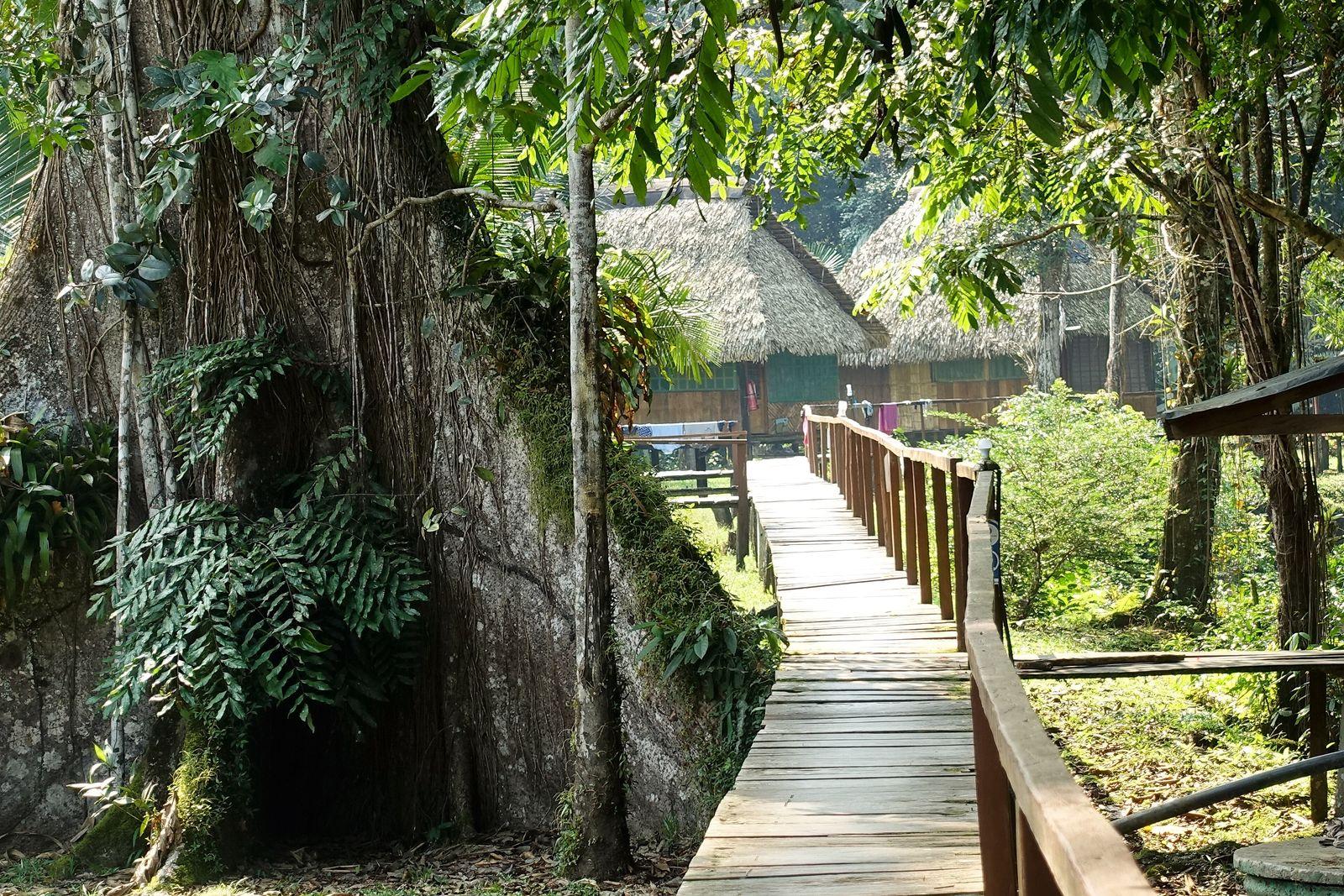
Because a lodge has to pass fire codes, insurance, and years of nightly turnover, it's built more like a small hotel than a private house, even when it looks rustic. Rooms are usually raised on stilts or platforms to keep the forest floor's moisture and insects at a distance, roofed in thatch or metal for rain that can dump several inches in an afternoon, and screened rather than glassed so airflow does the work air conditioning would otherwise have to do. Walls are often open on one or two sides, which sounds precarious until you realize that's the whole point: a closed, air-conditioned box in the rainforest fights the climate constantly and burns through diesel or grid power doing it, while an open, well-shaded structure works with the climate and needs far less energy to stay comfortable.
The systems behind the scenes are where the real engineering sits. A serious eco-lodge like Pacuare Lodge, built inside a roughly 340-hectare private reserve on Costa Rica's Pacuare River, runs its own power, water, and waste — solar arrays or micro-hydro for electricity, rainwater catchment or a filtered well for water, and constructed wetlands or biodigesters for wastewater instead of a septic line to a municipal system that doesn't reach that far into the forest anyway. None of that is decorative. It's what off-grid actually means: no utility trucks come out here, so the lodge has to be its own utility. For a deeper look at exactly how those systems work, see our guide to off-grid solar and rainwater in jungle homes.
Staffing follows the same logic as the building. Lodges hire locally where they can — kitchen staff, housekeeping, groundskeepers, and critically, naturalist guides who grew up reading that particular patch of forest. That local hiring is often the actual sustainability story, more than the solar panels: a lodge that employs forty people from the nearest town gives that town a reason to keep the forest standing rather than sell the timber or clear it for agriculture. It's also why lodge stays tend to include full board. Feeding forty to eighty guests a night from a single kitchen, three times a day, is only efficient at that scale — it's the same reason all-inclusive resorts bundle meals, just for genuinely different reasons here.
The lodge exists because someone decided the land was worth protecting and that tourism could pay for that protection.
How a jungle Airbnb is built and run
A jungle Airbnb is, structurally, a private house — which means the build decisions are driven by one owner's budget and taste rather than a hotel's operating requirements. That's exactly why the category has produced some of the most interesting small-scale architecture happening anywhere. Bamboo is the material most associated with the look, and Bali's Green Village district is the reason: engineered bamboo, when properly treated against insects and joined with the techniques IBUKU and similar studios developed, can span rooms the way timber does, curve into forms sawn lumber can't, and go up in a fraction of the time and cost of a concrete structure. A single striking bamboo pavilion, a stilted cabin over a mangrove, or a glass-walled box cut into a hillside can be built by a small crew in months, not years, which is why an individual owner can pull it off without hotel-level financing.
What that owner does not usually build is redundancy. A lodge has backup generators, a second well, staff on rotation. A single private rental often runs on one solar setup, one water tank, one caretaker who lives down the road — which is fine until the one system fails. Read the listing's amenities section literally: "solar power" without a battery mentioned often means lights off after dark on a cloudy week; "rainwater collected" without a filtration note means you're drinking bottled water for the stay. None of that makes the property bad. It makes it a real off-grid house with a real off-grid house's quirks, the same trade-off any owner living there full-time would accept. The difference is you're finding out on vacation instead of after months of living with it.
Bamboo isn't the only material driving the category. Tulum and the Riviera Maya popularized palapa-roofed concrete and stucco villas suited to Mexico's limestone jungle; Hawai'i and Puerto Rico lean toward wood-frame construction rated for hurricanes as much as heat; Sri Lanka and Thailand blend traditional timber joinery with the open-plan layouts guests now expect from photos. Whatever the material, the tell of a good jungle Airbnb is the same: it's designed around one specific site — a particular tree canopy, a particular ravine, a particular view — in a way a forty-room lodge's repeated bungalow layout structurally can't be. If you want to see how far the type has run in a specific direction, our guides to A-frame jungle cabins and jungle villas with infinity pools cover two of the more extreme ends.
The honest trade-offs of sleeping in each
Start with what you're actually there for. If the reason you're going into the jungle is to see and understand wildlife — birds, mammals, the way a rainforest's layers actually function — a lodge with a trained naturalist guide will show you more in three mornings than a week alone with a bird app will. Guides at established lodges know which fruiting tree the monkeys are working this week, can pick out a call from thirty species at once, and carry the kind of pattern recognition that only comes from walking the same trails for years. A private Airbnb gives you none of that unless you arrange it separately, and in many jungle regions a decent local guide is genuinely worth booking on top of the stay regardless of where you sleep.
Set that against what you give up for it. A lodge runs on a schedule — set breakfast times, a shared dining room, a group hike departing at 5:45 whether or not you slept well. You're also sharing the property with other guests, which some travelers like (it's a built-in way to meet people) and others find is exactly what they were trying to get away from. An Airbnb removes all of that. No schedule, no dining room, no strangers at breakfast — genuinely just you, whoever you're traveling with, and the forest. For a couple or a family that wants the jungle without an audience, that privacy is the entire appeal, and it's the reason articles like our best jungle Airbnbs for couples guide exist as a category at all.
Food is a real, practical difference. Lodges include meals, cooked by a kitchen that knows how to feed forty people a night reliably — you show up, you eat, it's handled. A private rental usually means self-catering or a caretaker who can arrange a home-cooked meal for a fee, which is either a fun part of the trip or a logistical headache depending on how remote the property is and how comfortable you are finding a market in a language you don't speak. Check the listing for what's actually nearby before you assume you'll just pick something up.
Cost doesn't sort as cleanly as people expect. A basic Airbnb in the jungle can be genuinely cheap, our budget jungle Airbnbs guide covers plenty under $100 a night — but split a well-built four-bedroom villa four ways and it can beat a mid-range lodge's per-person, all-inclusive rate. High-end lodges like Pacuare or Inkaterra sit at the top of both categories, and there the price reflects staff, guiding, and the reserve itself as much as the room. Neither category is inherently the budget option; it depends entirely on which specific property you're comparing.
Safety and comfort cut both ways too. A lodge has staff on-site if something goes wrong — an injury on a trail, a medical issue, a storm. A private rental in a genuinely remote spot may have a caretaker a phone call away and nothing more, which is worth weighing honestly if you're traveling with kids, have a health condition, or just don't love the idea of being the only humans for a mile in any direction. None of this is a reason to avoid either option. It's a reason to actually read the listing or the lodge's site before you book, rather than going on the photos alone.
Real places worth knowing
A few properties are worth naming because they show what each category looks like done well, and because they've been doing it long enough to prove the model rather than just launch it.
Lapa Rios, Osa Peninsula, Costa Rica
Opened in 1993 on roughly 1,000 acres of protected rainforest bordering Corcovado National Park, Lapa Rios was one of the first properties anywhere to earn Costa Rica's top Certification for Sustainable Tourism rating. It's a genuine lodge model: seventeen bungalows, a shared main lodge, guided hikes, and a working relationship with the neighboring community, including a school the lodge helps support. It's the property most often cited when people ask what an eco-lodge is actually supposed to look like.
Pacuare Lodge, Limón Province, Costa Rica
Set inside a private reserve of several hundred hectares along the Pacuare River, Pacuare Lodge runs fully off-grid — its own power, water, and waste systems — and pairs that with river rafting, canopy access, and indigenous Cabécar community visits arranged through the lodge. It's the clearest Costa Rican example of a lodge whose off-grid systems aren't a talking point but the actual infrastructure keeping the place running.
Inkaterra Reserva Amazonica, Madre de Dios, Peru
Growing out of a 1970s research station outside Puerto Maldonado, Inkaterra's Amazon property has spent decades cataloguing the reserve's biodiversity alongside hosting guests, and its guiding reflects that: staff trained in ongoing fieldwork rather than a seasonal script. National Geographic Traveler named it among the world's best ecolodges in 2013, and it remains one of the few properties where the research history genuinely predates the tourism.
Green Village and the bamboo houses of Bali
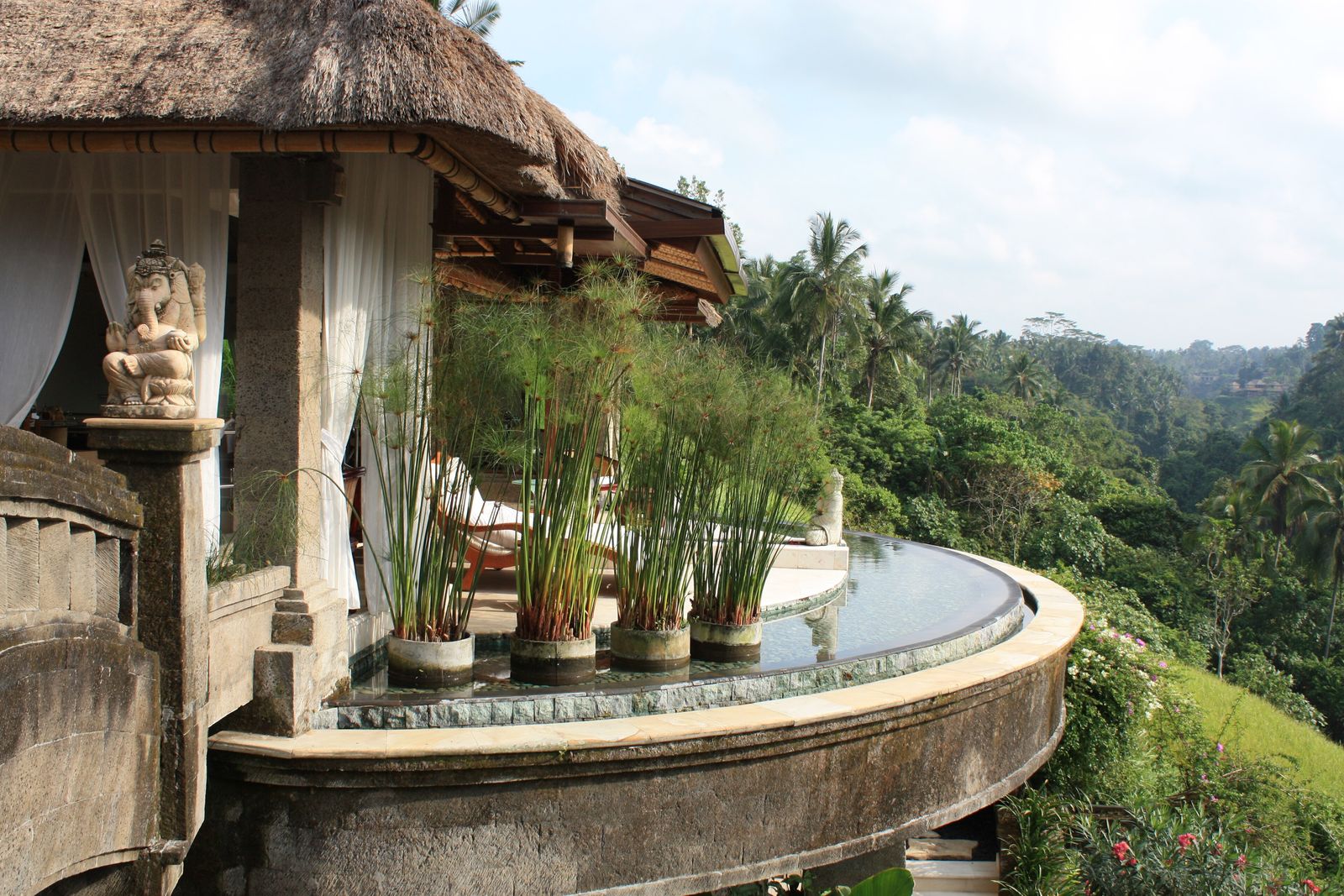
On the Ayung River outside Ubud, the bamboo architecture studio IBUKU — founded by Elora Hardy — built Green Village, a cluster of privately owned bamboo houses that between them essentially created the "jungle Airbnb as architecture" category. Sharma Springs, the largest structure on the site, is the single most photographed bamboo house in Bali and is often rented directly rather than through a lodge desk. Aura House, on the same river, is a smaller but similarly ambitious three-story bamboo build with a glass revolving door and river-facing baths. Both are private rentals, not lodge rooms — you book the whole structure, there's no shared dining room, and that's precisely the point.
These aren't the only properties worth knowing by name, but they're a useful reference set: two Costa Rican lodges that show the certified, staffed, off-grid model at its best; a Peruvian lodge whose scientific roots run deeper than its tourism does; and a Balinese bamboo district that proved a single striking private house could be a destination on its own. If you want a wider net, our directories for Costa Rica, Peru, and Bali cover both lodges and private rentals in each region, and our best jungle eco-lodges roundup goes deeper on the lodge side specifically.
What you're actually paying for
At a lodge, the nightly rate is close to an all-in package: the room, three meals, at least one guided activity a day, transfers from the nearest airstrip or town in many cases, and the overhead of running a small hotel's worth of staff and off-grid infrastructure in a place where nothing is easy to truck in. That's why a lodge like Pacuare or Inkaterra can run several hundred dollars a night per person and still be, arguably, fairly priced for what's included. Compare it to a full day tour plus meals plus lodging booked separately in the same region and the gap often narrows or disappears.
At an Airbnb, the nightly rate covers the building and basic upkeep, full stop. Everything else — food, a guide, transport from the nearest town, activities — is on you to arrange, which can cost less if you're comfortable doing your own logistics, or can cost more than expected if you end up hiring a driver and a guide separately once you arrive and realize how remote the property actually is. Read the listing's location pin and reviews carefully; "jungle" can mean a ten-minute walk from a town with restaurants, or two hours from the nearest paved road. Both exist under the same search term.
The other real cost is time. A lodge stay is largely planned for you once you arrive; an Airbnb stay, especially a remote one, often means you're the one figuring out meals, transport, and activities day to day. For some travelers that's the appeal — total control, zero schedule. For others, especially on a short trip, it eats into the vacation itself. Neither is objectively better value. It comes down to whether you'd rather pay for planning to be done for you or pay less and do it yourself.
Which one to book
If you're traveling solo or as a couple and wildlife-watching is the actual goal, book a lodge. The guiding is the product, and you're not giving up much privacy relative to what you gain in what you'll actually see and understand.
If you're a family or a group of friends splitting a villa, a private jungle Airbnb usually wins on cost, flexibility, and not having to keep young kids quiet at a shared 6 a.m. breakfast. Check our jungle Airbnbs for families and jungle Airbnbs for digital nomads guides if that's your trip.
If it's a honeymoon, an anniversary, or any trip where privacy is the whole point, a well-built Airbnb — a bamboo house in Bali, a jungle villa near Tulum, a stilted cabin in Costa Rica — will beat a lodge every time, no matter how good the lodge's honeymoon suite is on paper.
If you're new to remote travel generally, or traveling with anyone who has a health condition, lean toward a lodge. Staff on-site matters more than people expect until they need it.
If budget is the deciding factor, compare actual listings rather than the category. A basic private cabin can beat a lodge's per-person rate; a high-end lodge with meals and guiding included can beat a luxury villa once you price in a private guide and driver separately. The category tells you what kind of trip you're having far more reliably than what it costs.
And there's no rule against doing both on the same trip — a lodge for the first few nights to get properly guided into a region, then a private house for the back half once you know your way around. Plenty of good jungle itineraries are built exactly that way.
Common questions
Is an eco-lodge always more sustainable than a jungle Airbnb?
Not automatically. A certified lodge with audited water, waste, and energy systems is a stronger sustainability bet than an unverified claim, but plenty of individually owned jungle rentals run on real solar and rainwater systems too — they're just not audited by anyone. Look for specifics (a named certification, a stated power and water source) rather than trusting the word "eco" on its own, at either type of property.
Do jungle Airbnbs come with guides?
Rarely as part of the booking. Most hosts can recommend or arrange a local guide for a separate fee, and in regions with serious wildlife — the Amazon, Costa Rica's national parks — it's worth doing regardless of where you're staying, since a good guide will show you far more than you'd find alone.
Are jungle Airbnbs safe to book, given they're remote and privately run?
Generally yes, with the same due diligence you'd use anywhere: check reviews, confirm the exact location before you travel, and ask the host directly about power, water, and phone signal if the listing doesn't say. Remote doesn't mean unsafe, but it does mean you should know what backup exists if something goes wrong before you're an hour from the nearest town.
Which is better for families with young kids?
Most families do better in a private rental, where nap schedules and noise aren't constrained by a shared dining room and a fixed group hike time. That said, some lodges run genuinely well for families with dedicated family activities and staff used to kids — check reviews from other families specifically before ruling a lodge out.
Do I need to choose one category for an entire trip?
No. A common and often smart approach is to start at a lodge for a few guided nights, then move to a private rental for a stretch of unstructured time once you've got your bearings in a region.
What should I check in a listing before booking a jungle Airbnb?
Power source and whether there's battery backup, water source and whether it's filtered or you'll need bottled water, how far the nearest town or market actually is, phone or wifi signal, and recent reviews mentioning any of the above. Photos won't tell you any of this; the listing description and reviews will.
Whichever way you go, both categories are part of the same shift: more of the jungle's best stays, guided or private, are findable and bookable directly, without a resort chain in between. Browse the full JungleBnB directory by region, or start with our guides to how to start a jungle Airbnb and canopy walkways and sky-bridges if you want to go deeper on how these stays actually get built.
- Lapa Rios Eco-Lodge — history, certification, and property details for the Osa Peninsula lodge.
- Pacuare Lodge — reserve size, off-grid systems, and guided activities on the Pacuare River.
- Rios Lodge — additional detail on the Pacuare River eco-lodge model in Limón Province.
- Inkaterra: A Lodge with History — the research-station origins of Inkaterra Reserva Amazonica.
- Eco Lodges Anywhere: Eco-Lodges in Peru — context on Amazon lodge sustainability practices and recognition.
- Aura House, Green Village, Bali — details on the bamboo house at Green Village on the Ayung River.
- Bali Bamboo House Hotels and Villas — background on Sharma Springs and Bali's Green Village bamboo district.
More from the Journal.
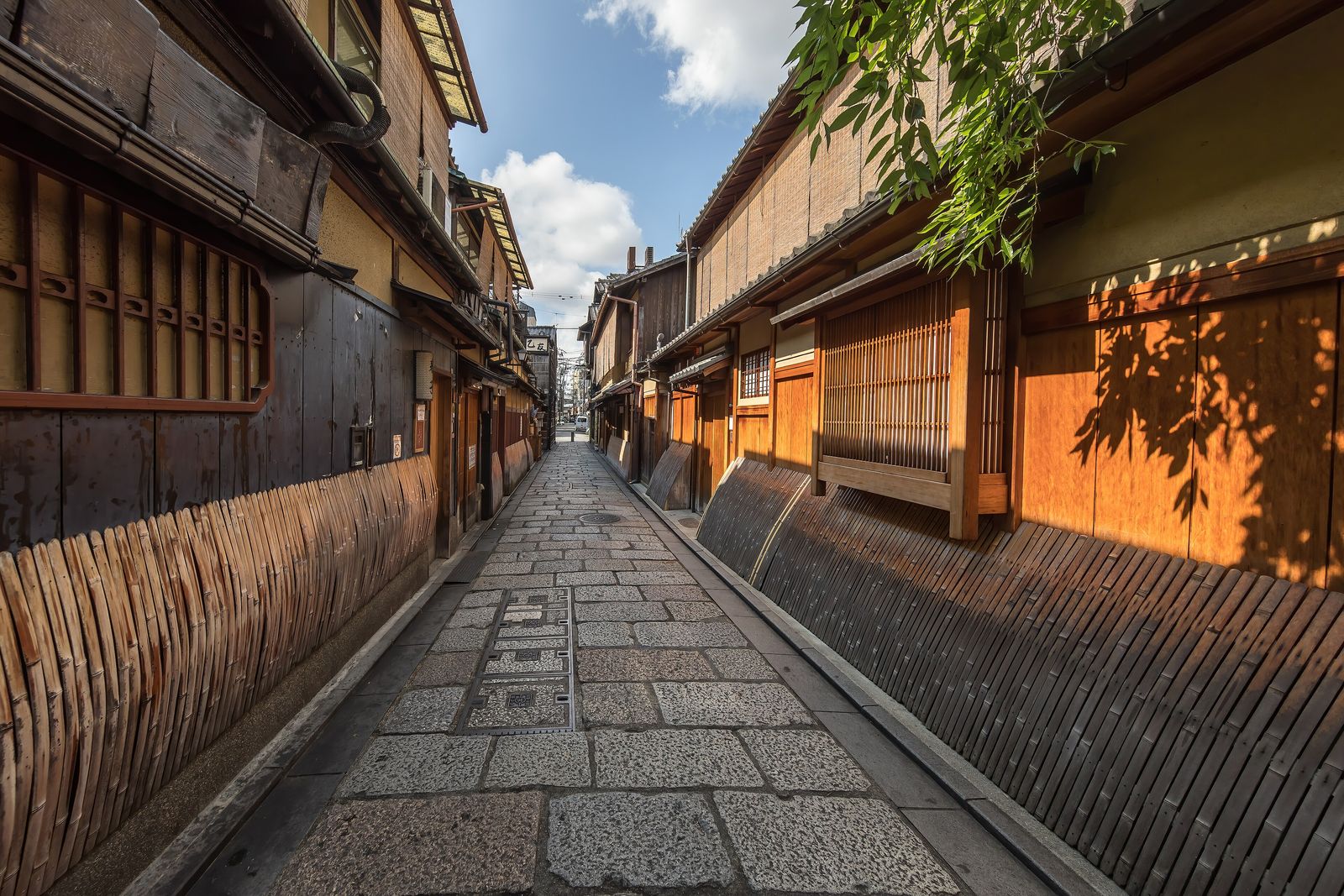 Photo: Basile Morin, CC BY-SA 4.0
What Is a Bamboo House? Bali's Bamboo Architecture Explained
How a fast-growing grass became the most beautiful building material in the tropics — the story of bamboo architecture and where to sleep in it.
 Photo: Vitus Wahlländer, CC BY-SA 4.0
Treehouses Explained: History & Modern Design
From childhood forts to seventy-foot canopy suites — how the treehouse grew up, and what makes a great one to stay in.
Overwater & Floating Bungalows in the Jungle
The room that floats — how raft houses and overwater bungalows are built on jungle lakes and rivers, and the best places to sleep on the water.
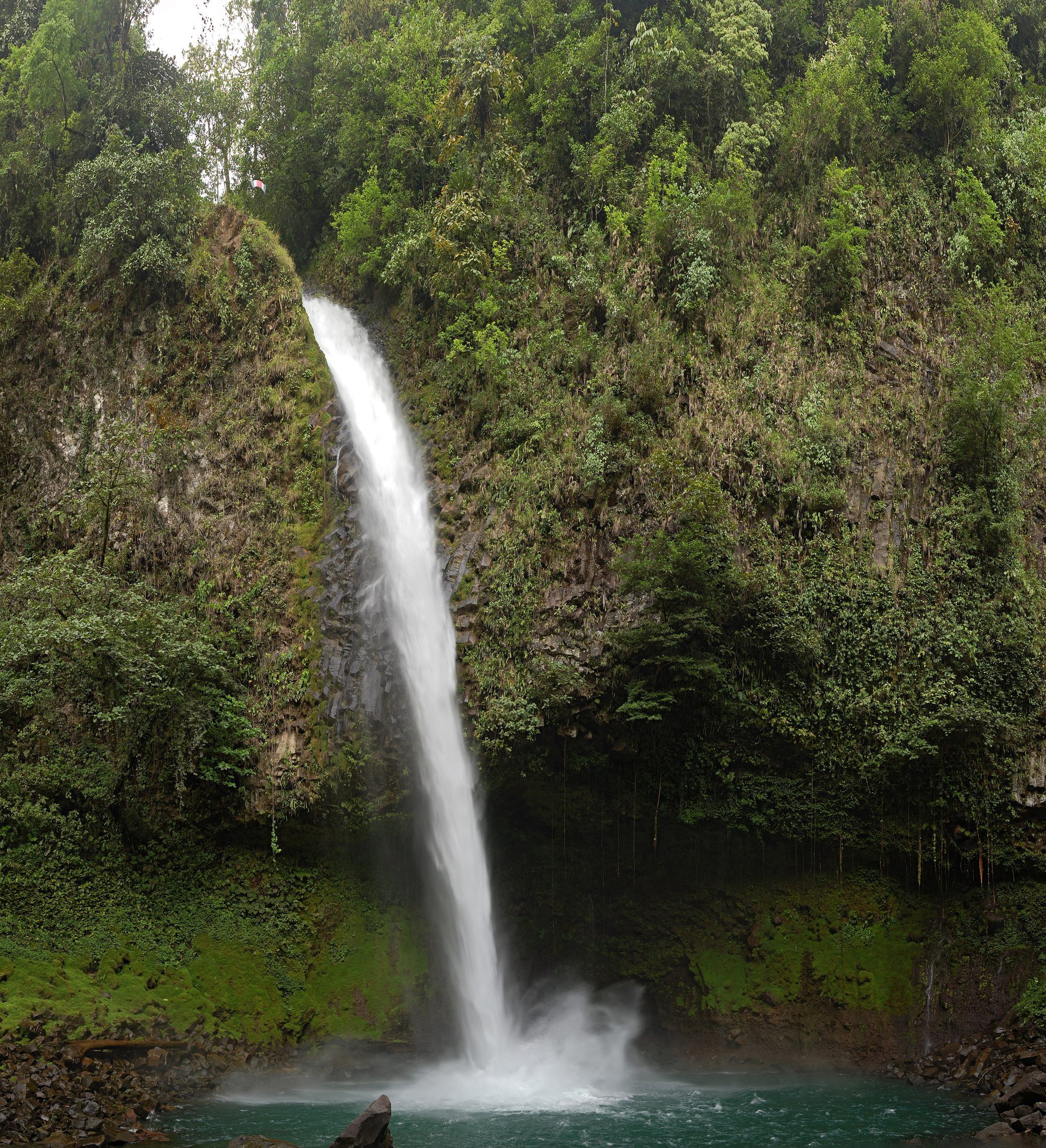 Photo: Derek Ramsey (Ram-Man), CC BY-SA 4.0
Find your own piece of the canopy.
Treehouses, bamboo houses and rainforest villas across 17 destinations — found, vetted and written up honestly.
Browse all destinations