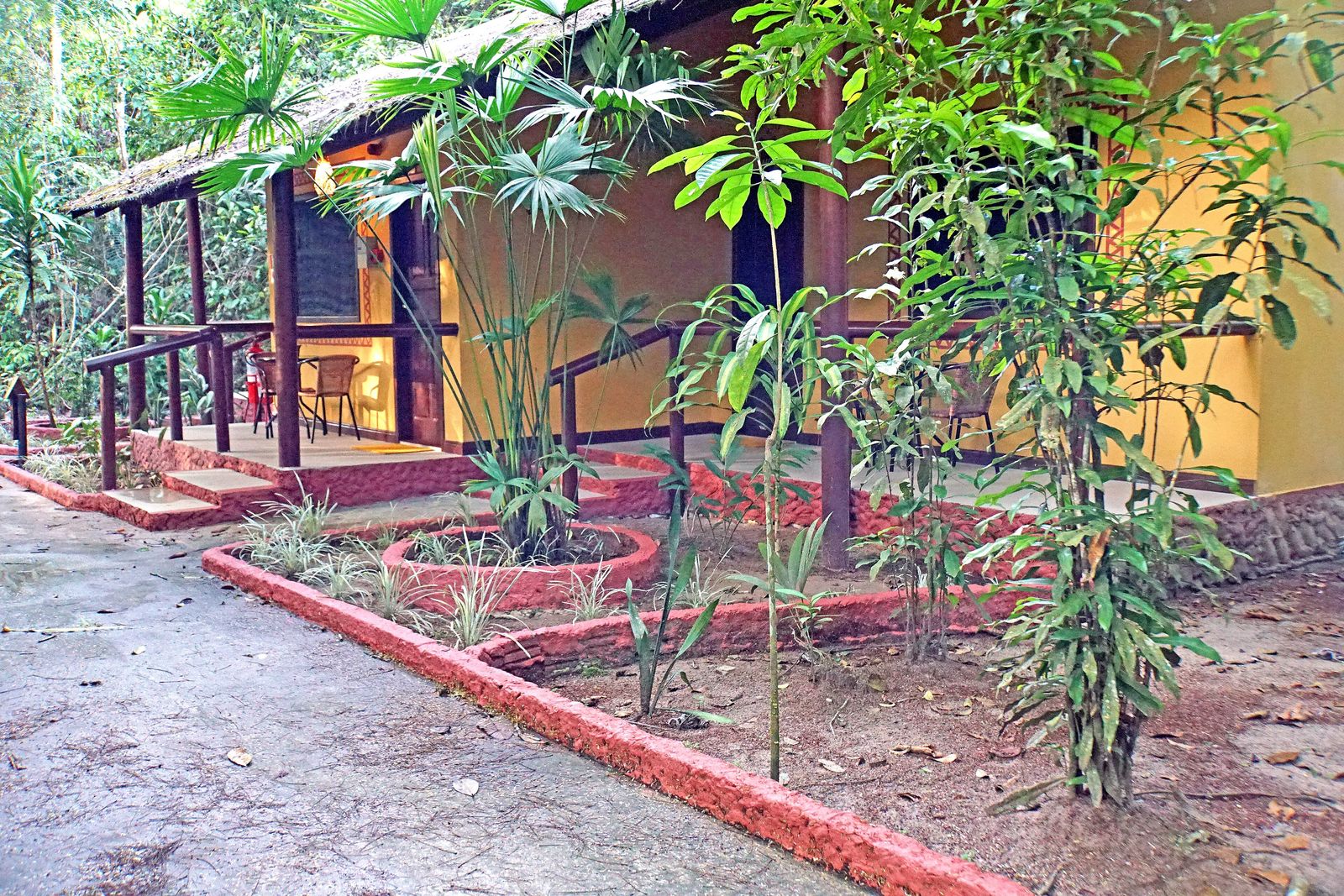
The Best Budget Jungle Airbnbs Under $100
Search "jungle Airbnb" and the algorithm feeds you infinity pools that cost more a night than most people pay in rent. That's not because affordable jungle stays don't exist — it's because they don't buy ads, and nobody's flying an influencer out to photograph a seventy-dollar cabin with a cold shower. We went looking for the real ones anyway: places that are genuinely in the forest, genuinely bookable tonight, and genuinely under a hundred dollars once you do the math on what's included. A couple are homes you rent entirely to yourselves. Most, honestly, are small lodges and jungle hostels, because that's where the real budget tier of this kind of travel actually lives — and we'd rather tell you that upfront than pretend otherwise.
How we picked, and what "under $100" actually means
"Budget" and "jungle" turn out to be two words that don't like sharing a listing. Search either one alone and you get thousands of results. Search them together, filtered to something close to $100 a night, and the number of properties left standing that are genuinely in the forest, genuinely bookable, and not a fluke of an outdated listing is a short list — which is exactly why this guide exists instead of another one padded out with hotels that happen to have a courtyard tree.
To make this list, a stay had to clear three bars. First, real forest: not a resort with palm landscaping a mile from the beach, but a property where the canopy is doing actual work — shading the roof, supplying the noise at night, occasionally dropping something onto the porch. Second, real and currently bookable: every name below has a working website, a listing on a platform you can check yourself, or both, and we checked before it made the cut. If we couldn't confirm a place was still operating and taking guests, it isn't here, however good its photos looked. Third, honestly affordable: at or close to $100 a night for the room or cabin itself, understanding that a few of these price by a multi-day package rather than a single night — we've flagged exactly which, and why, in each write-up — and that currency swings and seasonal demand can nudge any of these a few dollars either side of the line in a given week.
One honest finding, upfront, because it shapes the whole list: a true whole-home rental — an entire private house, nobody else on the property, for under $100 a night — is genuinely rare in jungle travel. Building or maintaining a private home inside rainforest costs real money no matter how simple the finish, and most owners who've made that investment price accordingly. What actually fills the sub-$100 tier is smaller and more communal: family-run reserve lodges, jungle hostels with private rooms rather than dorms, and a handful of genuine whole-home standouts in corners of well-known destinations that the villa-rental algorithms haven't fully discovered yet. We found two of the latter. The rest of this list is honest, well-run small lodges — and we've flagged every one, because a lodge with a shared breakfast table is a different trip than a jungle house to yourselves, and you should know which you're booking before the card statement arrives.
Good to know
A few entries below — especially in Peru's Amazon and on Thailand's Cheow Lan Lake — don't really sell a nightly rate at all. They sell a two- or three-day package with meals, guiding and transport folded in, and the honest per-night cost only appears once you divide the package price by the nights it covers. We've done that math in each write-up so you're comparing like with like, but read the actual booking page before you assume a $70 or $80 figure is what a single, standalone night will cost.
Puerto Rico and Florida: real jungle, no passport required
Start close to home, because two of the strongest values on this entire list sit on US soil, and neither one requires a passport, a vaccination record or a currency conversion. Puerto Rico's El Yunque is the only tropical rainforest in the US national forest system; Florida's subtropical hammock isn't rainforest at all, technically, but it's humid, green, and full of the same off-grid, built-by-a-character spirit that runs through this whole list.
A rustic, three-level wooden cabin on stilts, tucked into Puerto Rico's karst hill country and built to sleep up to six for a rate that regularly starts around seventy dollars a night — an entire whole-home rental, not a room in someone else's house, near the bottom of this list's price range. There's a hammock deck pointed straight into the trees, and the coquí frogs run at full volume after dark, which is either the best or worst part of the trip depending on how lightly you sleep. It's rustic by design rather than accident: don't expect air conditioning or a polished finish, and do expect a narrow mountain road on the way in. For a group willing to trade polish for a genuine jungle price point, it's one of the better values in Puerto Rico's whole-home market, and it's in our own directory — see the full write-up, or browse the rest of Puerto Rico.
An open-air treehouse on a working urban farm ten minutes from Wynwood, with goats, emus and parrots moving around below and the breeze coming straight through the canopy at night since there's no glass to stop it. It's routinely one of the cheapest unique stays anywhere in Miami — a genuinely strange thing to be able to say about a city where a standard downtown hotel room can cost more than this entire treehouse. The trade-off is exactly what the price and setting suggest: this is a working farm, not a resort, so it's rustic and it's a little noisy in the way barnyards are noisy, and it isn't the pick for anyone who wants a polished finish. For a cheap, genuinely different night inside a major US city, it's hard to beat — full details at Canopy Treehouse at a Permaculture Farm, and more of Florida.
Costa Rica's Osa Peninsula, without the Osa Peninsula prices
Costa Rica overall isn't a cheap country to visit — inland flights, mandatory park guides and permit fees add up fast, and the Osa Peninsula in particular tends to be the priciest corner of the country once you've paid to get there. None of that rules it out if the accommodation itself still comes in under $100, and on Playa Rincón, at the edge of Corcovado's buffer zone, one property has built its whole identity around exactly that gap.
The name is the pitch: a small, family-run eco-lodge on Playa Rincón, one of the least developed beaches on the Osa Peninsula, with simple jungle cabins — the Kinkajoungalows among them — set into tropical forest where the wildlife on the property genuinely competes with what's inside Corcovado National Park next door. This is the honest, rustic end of Costa Rican lodging: open-air construction, basic plumbing, and a setting that does the work a fancier finish would otherwise be paid for. Getting there is part of the trade-off that keeps it affordable — Playa Rincón sits down a rough road well past Puerto Jiménez, and most guests arrive by boat or 4x4 rather than a rental sedan built for pavement. For travelers willing to handle their own logistics in exchange for a real stretch of the Osa at a fraction of the peninsula's usual rate, it's one of the few places on this coast that delivers. If the logistics sound like more than you want to take on, Costa Rica's Caribbean coast around Puerto Viejo runs consistently cheaper than the Pacific parks for comparable comfort, with small guesthouses near the rainforest edge at Cocles and Punta Uva worth a direct search once you land. (See current Osa Peninsula listings, or browse more of Costa Rica.)
The Amazon for less: Peru and Colombia
The Amazon has a reputation as the priciest, most logistically demanding jungle destination on earth, and the marquee lodges selling four-figure, multi-day packages earned that reputation honestly. There's a cheaper way in, if you're willing to go through Iquitos rather than the brochure lodges, or trade a soft bed for a treehouse platform reached by rope in Colombia.
A jungle hostel set about forty kilometers outside Iquitos, in the middle of the rainforest rather than on its edge, at the budget end of a region better known for four-figure lodge packages. Like most of the hostels clustered around Iquitos, it leans on a communal kitchen and included breakfast to keep costs down, which means the savings over a marquee Amazon lodge go into the room rate rather than the food. It's a social way into the Amazon rather than a private one — expect shared spaces and other travelers around, in exchange for a price that makes a multi-night Amazon stay possible on an actual backpacker's budget. Book river trips and night walks directly through the hostel rather than assuming they're automatically included, and confirm what is and isn't bundled into the nightly rate before you arrive. (See it on Hostelworld, or browse more of Peru.)
An all-inclusive lodge in the Iquitos region built for travelers who want the guided-Amazon experience — meals, a guide, jungle excursions — without paying for the marketing budget of the region's most commercialized properties. Travelers who've stayed there point to the same thing repeatedly: it delivers a genuine Amazon itinerary for hundreds of dollars less, across a multi-day stay, than the big-name lodges selling essentially the same river trips and canopy walks. Because it's sold as a package rather than a simple room rate, do the same math the aside above recommends — divide the total by the nights it covers before comparing it to a straight per-night listing elsewhere on this list. It won't be the most polished lodge in the region, and it isn't trying to be; it's trying to get you onto the river for a fair price, and by most accounts it succeeds. (Read a full review, or see more of Peru.)
The cheapest night on this entire list, and it makes you earn every dollar of the difference. Tanimboca's treehouse sits about twelve meters up in the canopy outside Leticia, in Colombia's slice of the Amazon near the Brazilian and Peruvian borders, and you reach it by zipline and rope system rather than a staircase — for around $35 a night, roughly a third of this guide's ceiling. There's a toilet, a shower and bunk beds once you're up there, but the reserve enforces a strict one-night limit on the treehouse itself, and it's genuinely cash-only, so arrive with Colombian pesos rather than a card you're hoping works. Around the treehouse, the reserve runs canopy tours, kayaking and night hikes worth building a day or two around, even basing the rest of a stay somewhere more conventional in Leticia itself. It's the clearest proof on this whole list that "budget" and "the actual Amazon" aren't mutually exclusive. Brazil's stretch of the Amazon, reached through Manaus rather than Iquitos or Leticia, runs a different calculus — its best-known lodges skew toward multi-day luxury packages, and we couldn't confidently verify a currently-operating property there under this guide's ceiling, so it isn't ranked here. (Reserva Natural Tanimboca, official site; more of Colombia and Brazil.)
The honest rule of budget jungle travel: the less you pay, the more of the trip you're expected to supply yourself — the itinerary, sometimes the meals, occasionally just the nerve to zipline up to your own bed.
Southeast Asia's budget canopy: Bali and Thailand
Southeast Asia has a reputation as the cheapest place on earth to travel, and on the ground it mostly earns it — a dollar goes further in the rice-field jungle outside Ubud or in rural Thailand than almost anywhere else on this list. Bali's river valleys have gotten pricier as jungle-villa marketing has caught on there, but its budget end hasn't disappeared, and Thailand's Khao Sok National Park still runs one of the most distinctive cheap jungle experiences anywhere: a bamboo bungalow floating on a jungle lake.
A bamboo-and-thatch, hut-style hostel set in rice-field jungle a short ride outside Ubud, built for travelers who want Bali's canopy-and-rice-terrace scenery without the premium that's crept into central Ubud's villa market over the past several years. It's a quiet, relaxed property rather than a party hostel, with a pool and a reputation among guests for staff who go out of their way with onward plans. Rooms lean simple and hut-style rather than luxury-finish, which is the trade for the price: you're paying for the setting and the atmosphere, not marble bathrooms. It's an easy base for Campuhan Ridge walks, the Sacred Monkey Forest and the Tegalalang rice terraces, all a short scooter ride away, without the traffic and price tag of staying in central Ubud itself. (See it on Hostelworld, or browse more of Bali.)
A small, land-based resort at the edge of one of the oldest rainforests on earth, built around simple huts rather than the floating bungalows Khao Sok is best known for, and priced to match — the property markets itself, accurately, as a deluxe-budget option rather than a backpacker dorm. Being on solid ground rather than a raft has real advantages the lake bungalows below don't offer: an actual bed rather than a mattress on bamboo slats, easier access to the park's own trailheads, and no boat schedule dictating when you can leave. Expect real jungle conditions once you're there — humidity, insects, the occasional gibbon call at dawn — and a level of finish that's comfortable rather than polished. For travelers who want Khao Sok's limestone-cliff scenery without committing to a night on the water, it's the more convenient of this guide's two Khao Sok picks. (Khao Sok Jungle Huts Resort, official site; more of Thailand.)
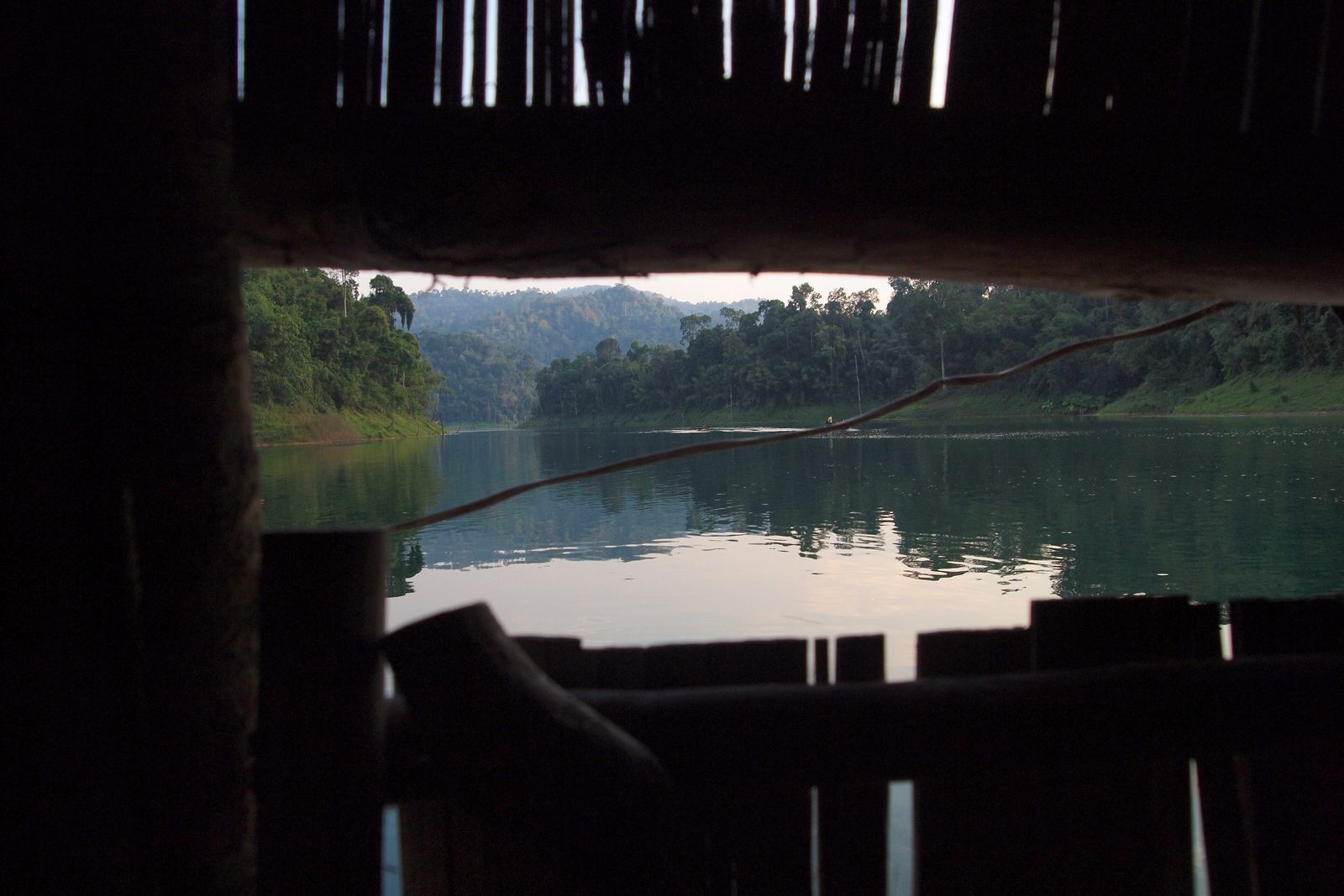
The single most distinctive image on this entire list: a bamboo bungalow tethered directly to the water of Cheow Lan Lake, ringed by limestone karst towers, reachable only by longtail boat since there's no road anywhere near it. A handful of small, mostly family-run operators — Khao Sok Lake Bamboo Floating Bungalows among them — run these at genuinely different tiers, and the budget end starts around $70: bamboo walls, a mattress on the floor, and a shared toilet block set back from the rooms rather than an ensuite. Almost everyone books this as a package rather than a single room, typically one or two nights bundled with meals, a lake tour and jungle trekking, so treat the nightly figure as an estimate until an actual quote confirms it. Arrive in the town of Khao Sok itself a day or two ahead for the cheapest, most rustic version — the hostels and guesthouses there can often book you directly with an operator for less than the same trip costs pre-booked online. It's basic, it's a genuine adventure to reach, and it's one of the more memorable seventy dollars on this list. (More of Thailand, and our wider look at the best jungle Airbnbs in Asia for the region's pricier end too.)
What the budget tier actually buys you
Line up all nine of these and a few honest patterns emerge about what "under $100" actually means in jungle travel, as opposed to what the marketing around pricier stays implies it should mean.
Communal, not private, is the default
Seven of the nine stays on this list are lodges or hostels rather than whole homes, and that's not a coincidence — it's close to the actual floor of what a private jungle house costs to build and run. What you get instead at this price point is real hospitality: someone who knows the trails, a shared kitchen or restaurant, other travelers who usually turn into dinner company rather than an inconvenience. If total privacy is the point of the trip, this probably isn't the budget for it; the Buzzer Tree House and the Canopy Treehouse at a Permaculture Farm are the exceptions that prove the rule, and both ask you to give up polish in exchange for the whole property to yourselves.
Off-grid isn't a downgrade, it's the business model
Solar power, shared bathroom blocks, cash-only policies and rope or zipline access show up again and again on this list, from the Colombian Amazon to a Thai lake, and it's tempting to read all of that as a hardship tax on the cheaper stays. It's more accurate the other way around: running full electrical service, plumbing and road access into genuine rainforest is expensive, and skipping it is exactly how these properties keep the rate this low. Pack a headlamp, a dry bag and a realistic expectation about hot water, and treat the simplicity as the actual product rather than a compromise on the way to it.
The setting did the expensive part for free
None of the nine stays on this list are boring, and none of them needed a big budget to avoid being boring, because the canopy, the river or the lake was doing the interesting work before a single wall went up. A $70 floating bungalow on Cheow Lan Lake and a $1,000-a-night villa in the same country are both, fundamentally, selling access to a limestone gorge neither one built. That's the real case for budget jungle travel: past a certain point, the extra money buys thread count and a cocktail menu, not a better forest.
Where "under $100" mostly doesn't reach
Part of being honest about a budget list is being honest about where it falls apart, and a few destinations closely associated with jungle stays simply don't have a genuine, verifiable sub-$100 option worth recommending right now.
Hawai'i is the clearest example. Land, permitting and building costs on the islands run high enough that even famously simple off-grid stays like the ones we've covered in our treehouse roundup routinely run well past this guide's ceiling, and demand from a limited supply of unique stays pushes prices higher still. If Hawai'i is the destination regardless of budget, go in expecting a genuinely different price bracket than the rest of this list, and browse Hawai'i with that in mind.
Tulum and the Maya jungle tell a similar story from a different direction: the design-hotel boom that made properties like Azulik and Hotel Bardo famous — both covered in our luxury jungle villas guide — pulled the whole area's jungle-adjacent lodging upmarket with it. Budget stays exist in the wider region, but the specific jungle-cabana style Tulum is known for has largely priced itself out of this list. More of the area, budget and otherwise, in Mexico.
Sri Lanka is the trickiest case, because the island genuinely has affordable guesthouses throughout its interior — it's the specific, well-marketed eco-lodges and design villas that dominate search results for "Sri Lanka jungle stay" that skew well above $100, the way Sam & Lola's on the south coast does. A budget stay is almost certainly findable there with some direct legwork; we just couldn't verify a specific one confidently enough to rank it here. Start with Sri Lanka and search locally rather than relying on the big listing sites, which tend to surface the pricier end first.
How to find one yourself
This list will be out of date within a year or two — jungle stays are one of the fastest-growing categories in travel right now, which we've written about at length in why jungle stays are booming, and rising demand tends to push prices up rather than down. A few habits will help you find the next Buzzer Tree House or Tanimboca before everyone else does, or confirm one of these nine still holds its price when you're ready to book.
- Search hostel platforms, not just Airbnb. Two of the strongest values on this list, Amazon Lodge & Safaris and Bali Bamboo Jungle Huts and Hostel, turned up through hostel-specific booking sites rather than the usual vacation-rental platforms, which skew results toward whole homes and miss small lodges entirely.
- Ask directly whether a quoted price is per night or per package. This trips up more travelers than anything else on this list. If a jungle stay seems too cheap for multiple nights, meals and guiding combined, it's very likely priced by the package rather than the room.
- Book direct where a lodge has its own site. Small, family-run properties like Tanimboca and Khao Sok Jungle Huts Resort often quote a lower rate to guests who book directly rather than through a commission-charging platform — worth an email even if you found the property through a listing site first.
- Arrive a day early in gateway towns for the cheapest version. Iquitos for the Peruvian Amazon and the town of Khao Sok itself both work this way: guesthouses connected to local tour operators can often undercut the same trip booked online weeks in advance, in exchange for less certainty about exact dates.
- Travel in the shoulder or wet season. Nearly every region on this list drops its rates outside peak dry-season months, sometimes substantially, and a jungle stay in the rain is arguably more honest to what jungle actually is than the postcard-dry version everyone photographs.
- Read what's not included as carefully as what is. Transfers, meals and activity fees are the most common way a genuinely cheap room rate turns into an expensive trip once you're actually there — ask before you book, not after you land.
Common questions
Can you really find a jungle stay for under $100 a night?
Yes, but the honest tier looks different from what most "budget jungle" marketing implies. It's mostly small lodges, jungle hostels with private rooms, and a handful of true whole-home rentals, rather than the private villas with infinity pools that dominate search results for "jungle Airbnb." Every stay on this list clears $100 or comes close to it, at least for the room or cabin itself.
Are these safe and comfortable, or genuinely rough?
Genuinely simple rather than rough. Expect fans instead of air conditioning, shared or basic bathrooms at several of these, and a level of finish closer to a well-run hostel than a hotel. None of that is a safety concern — these are established, currently operating businesses used to hosting travelers — but go in with realistic expectations rather than a five-star mindset stretched over a budget price.
Why are so many of these lodges or hostels instead of whole homes?
Because that's genuinely where the budget tier of jungle travel lives. Building and maintaining a private jungle home costs real money no matter how simple the finish, and most owners who've made that investment price the result above $100 a night. Small, family-run lodges and hostels spread that cost across more guests, which is what keeps the rate down.
Do any of these prices include meals or activities?
A few do, and we've flagged exactly which in each write-up. Libertad Jungle Lodge in Peru and Khao Sok's floating bungalows are both typically sold as multi-day packages with meals and guiding built in, so the per-night figure we quote is a package price divided by nights, not a standalone room rate. Confirm directly with the property before you book if that distinction matters to your budget.
Will prices on this list still be accurate when I go to book?
Treat every figure here as a snapshot rather than a guarantee. Currency swings, seasonal demand and simple time all move prices, sometimes by a lot — jungle travel in general is growing fast enough that rates across this entire category are more likely to rise than fall. Check the current rate directly on the property's own site or listing before you commit to dates.
What should I pack that I wouldn't normally bring?
A headlamp or flashlight, since several of these run on solar power that goes quiet after dark. Real insect repellent, not the travel-size bottle from the airport. A padlock if you're staying anywhere with shared or communal storage. And cash — Tanimboca in Colombia is cash-only, and remote lodges throughout this list are a bad place to discover your card doesn't work.
The pattern, and where to go from here
Look back across all nine of these and the throughline isn't luck or a lack of ambition — it's that every single one spent its money on the forest instead of the finish. Nobody here is buying a marble bathroom or a butler; they're buying a rope-and-zipline route into an actual Amazon canopy, a bamboo wall a few feet from a limestone gorge, a hammock deck pointed at real karst hills. The best budget jungle stays don't feel like a compromised version of the expensive ones. They feel like the whole idea, with the extras stripped back to what the setting was already providing.
If this list has you weighing budget against comfort, a few places to go next. If a private pool or total isolation matters more than the price, our guide to jungle Airbnbs for couples and the best luxury jungle villas in the world cover the other end of this same map. If you specifically want the canopy experience rather than a lodge on the ground, the best treehouse Airbnbs in the world and the best off-grid jungle cabins both overlap heavily with what's on this list, minus the price ceiling. And if you're curious why this whole category keeps getting harder to book cheaply, why jungle stays are booming explains the demand side of it. Otherwise, start with the full directory and go find the one that's actually yours, before the rest of the internet catches up to what a hundred dollars can still buy.
- Reserva Natural Tanimboca — official site — canopy treehouse access, cash-only policy and one-night stay limit, Leticia, Colombia.
- Khao Sok Jungle Huts Resort — official site — land-based budget hut accommodation at Khao Sok National Park, Thailand.
- Khao Sok Lake — Bamboo Floating Bungalows — floating bungalow design and Cheow Lan Lake access details.
- South East Asia Backpacker — Khao Sok Floating Bungalows Guide — budget-end and package pricing for Cheow Lan Lake bungalows.
- Hostelworld — Bali Bamboo Jungle Huts and Hostel — property details and location near Ubud.
- Hostelworld — Amazon Lodge & Safaris — jungle hostel location and amenities near Iquitos, Peru.
- Schuck Yes — Libertad Jungle Lodge review — all-inclusive pricing and Amazon itinerary details.
- Airbnb — Osa Peninsula bungalow rentals — Poor Man's Paradise / Kinkajoungalows listing details, Playa Rincón, Costa Rica.
More from the Journal.
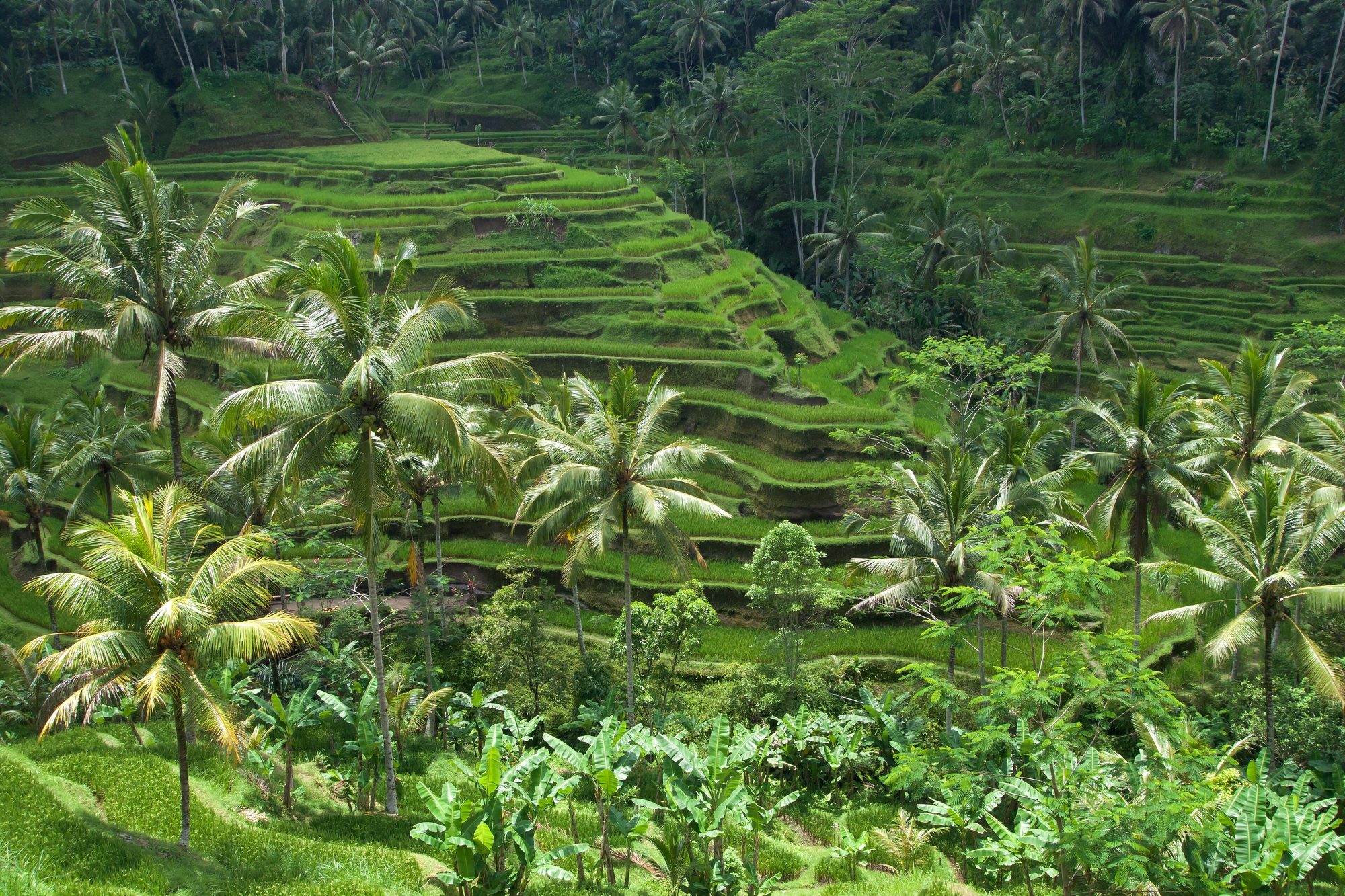 Photo: Vyacheslav Argenberg, CC BY 4.0
The Best Jungle Airbnbs in the World
Our honest, unpaid ranking of the jungle stays that changed what a night in the forest can be — from Bali's bamboo masterpieces to the floating bungalows of Thailand.
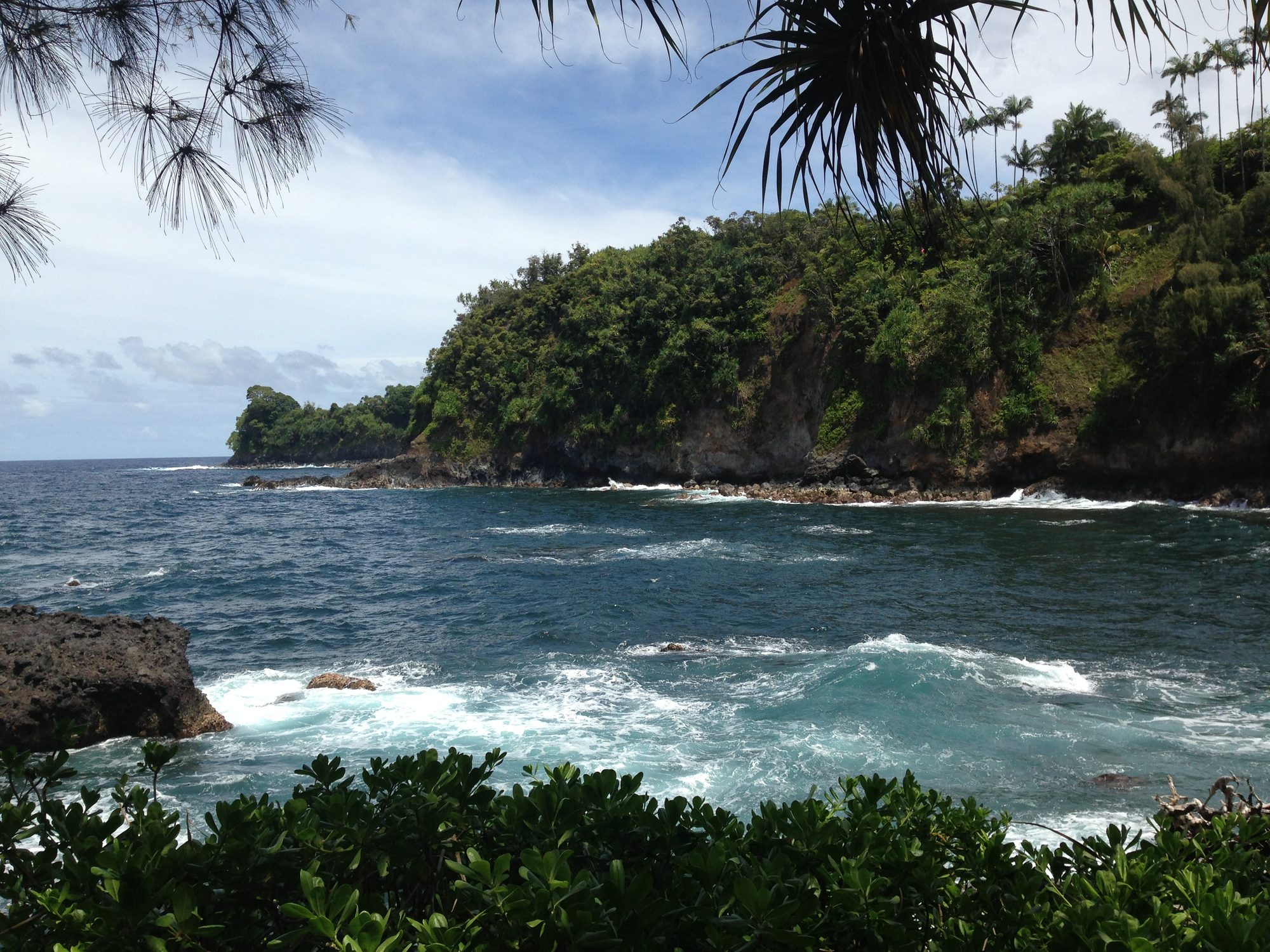 Photo: AlaskaDave, CC BY-SA 3.0
The Best Jungle Airbnbs in the USA
Real rainforest, no passport required — the best treehouses and bamboo houses across Hawai‘i, Puerto Rico and Florida.
 Photo: Bernard DUPONT from FRANCE, CC BY-SA 2.0
The Best Treehouse Airbnbs in the World
Our honest ranking of the treehouses worth crossing an ocean for — from canopy platforms in the Amazon to stilted glass boxes above the rainforest floor.
 Photo: Derek Ramsey (Ram-Man), CC BY-SA 4.0
Find your own piece of the canopy.
Treehouses, bamboo houses and rainforest villas across 17 destinations — found, vetted and written up honestly.
Browse all destinations