Glass Houses in the Jungle
A glass jungle house makes one promise and either keeps it or doesn't: that the wall between you and the forest is optional. Not a window onto the canopy, the canopy itself, close enough to touch, with nothing but a few millimetres of laminated glass and a steel frame standing between your pillow and the leaves. Done well, it's the most direct way architecture has ever found to put a person inside a rainforest without getting them wet. Done badly, it's a greenhouse with a bed in it, and you find that out around 2pm on the first afternoon. We looked at where the idea came from, how the good ones are actually engineered to survive a jungle rather than just look good in one, and the real, verifiable buildings that made this style famous, plus the trade-offs nobody puts in the brochure copy.
What a glass jungle house actually is
Start with what it isn't. A villa with a big picture window in the living room isn't a glass jungle house. Neither is a bedroom with sliding doors that open onto a deck, however lovely that deck is. Those are ordinary tropical houses with generous glazing, and there are thousands of them, some of them genuinely great places to stay. A glass jungle house is a narrower, stranger thing: a structure where entire walls, sometimes an entire floor plate, are glazed from slab to ceiling, so that from inside a room the forest reads as unbroken. No mullion grid chopping the view into frames, no half-height knee wall breaking the illusion, just glass, structure, and canopy.
The distinction matters because it changes what the building has to do. A house with windows treats the forest as scenery. A true glass house treats the forest as the fourth wall, which means the architect has to solve for everything a real wall would normally hide: heat, glare, insects, condensation, and the fact that at night, with the lights on inside, you're the most visible thing in the entire clearing. Every building worth including in this guide solved those problems on purpose, not by accident.
It's also worth saying that "jungle" is doing real work in that phrase. A glass box on a windswept dune or a glass cabin in a pine forest is a different design problem, with different light, different bugs, and none of the humidity load a tropical build has to manage. The houses in this guide sit specifically in or at the edge of rainforest, on Brazil's Atlantic coast, in Bali's river valleys and comparable climates, where the engineering challenge is genuinely distinct from a glass house anywhere temperate.
Where the idea came from
The glass house as a serious architectural idea is a mid-twentieth-century American invention, and it didn't start anywhere near a jungle. Ludwig Mies van der Rohe designed the Edith Farnsworth House, a glass-and-steel weekend retreat on the Fox River in Plano, Illinois, completed in 1951 for a Chicago physician: floor-to-ceiling glass on all four sides, no interior walls beyond a service core, the whole building raised on steel columns above the floodplain. Philip Johnson, who had championed Mies's work at MoMA and admired the Farnsworth commission while it was underway, built his own version two years earlier on his estate in New Canaan, Connecticut. His Glass House, completed in 1949, transparent walls on all sides, a single brick cylinder containing the bathroom as the only object reaching full height. Both houses are preserved today and open to the public, and seeing them side by side, as the National Trust for Historic Preservation has organized tours to do, makes clear how directly one grew out of the other.
Neither house was built to solve a climate problem. Illinois and Connecticut are temperate, and both architects were chasing a philosophical idea: that a house could dissolve the boundary between the built and the natural world entirely, using new structural steel and plate glass to do something masonry construction never could. That idea is the direct ancestor of every jungle glass house built since, even though the climate problem those first two houses never had to solve, keeping a fully glazed room livable in equatorial heat and near-total humidity, is exactly the problem tropical architects spent the following decades working out.
The tropical modernist tradition that picked up the thread runs through Brazil, where architects had already been experimenting for decades with deep brise-soleil screens, raised pilotis and open-plan houses built around cross-ventilation rather than sealed climate control, well before Farnsworth or the Glass House existed. What changed later was the arrival of high-performance glazing, laminated and low-emissivity glass that could cut solar heat gain without cutting the view, which finally made a Mies-style glass box realistic in hot, wet conditions rather than just cool ones. That's the gap the modern glass jungle house fills: Farnsworth's transparency, engineered for a climate Mies never had to design for.
Good to know
If you want to see where this idea started, both American houses are museums you can actually tour. The Glass House in New Canaan, Connecticut and the Farnsworth House in Plano, Illinois are open seasonally, and several tours pair the two so you can walk both in the same trip and see, close up, how one answered the other.
How they're actually built
A glass jungle house that works is mostly engineering that doesn't show. The glass itself is rarely a single simple pane. Most serious builds use laminated glazing, two sheets bonded around a plastic interlayer, both because it holds together if it cracks (a real concern in a climate with falling branches and the occasional bird strike) and because the interlayer filters a meaningful share of solar heat and UV before it reaches the room. Low-emissivity coatings, a microscopically thin metallic layer baked onto the glass, do more of the same job: they let visible light through while reflecting back the infrared heat that would otherwise cook the interior. None of this is visible to a guest in the room. It's the difference between a glass wall you can sit in front of at midday and one that turns the sofa into a griddle.
The roof matters as much as the glass, arguably more. Almost every successful glass jungle house has a deep overhanging roofline, often a metre or more of eave, so that direct sun rarely hits the glazing at all; the roof does the shading work the glass alone can't do economically. Get the roof geometry wrong and no amount of coated glass saves the building from becoming an oven by early afternoon. It's one of the clearest tells separating an architect who has actually built in the tropics from one transplanting a temperate glass-house idea without adapting it.
Structure is the other half of the problem. Fully glazed walls can't brace a building against lateral load the way a solid wall does, so the frame carries that work instead, usually a concrete or steel skeleton, sometimes raised on pillars, that lets the glazing hang as pure infill rather than structure. Studio mk27's Jungle House in Brazil is a clean example: the house is lifted on two pillars above a natural clearing in the Atlantic Rainforest, letting the ground and root systems below stay largely undisturbed while the glazed volume floats above them, framed in concrete and wood rather than load-bearing glass. Raising a house this way also solves a second, more practical problem on rainforest sites: ground-level construction in wet tropical soil invites moisture and pests in a way a raised, ventilated undercroft doesn't.
Off-grid systems show up on a lot of these builds too, less because glass houses need them specifically and more because the remote, forested sites they sit on often have no reliable grid connection to begin with. Solar arrays, rainwater harvesting and greywater recycling are common the same way they're common on any ambitious off-grid jungle home, and a fully glazed building has one advantage here: with the right coated glass and a well-vented roof, it can often get away with less mechanical cooling than a sealed concrete box needs, because the design is already working with airflow rather than against it.
Screening is the detail every good glass jungle house gets right and every mediocre one skips. Floor-to-ceiling glass with no way to move air is a beautiful photograph and a genuinely unpleasant place to sleep in the tropics, since it either runs air conditioning constantly or traps humidity against the glass overnight. The better solution pairs fixed glass walls with separate operable openings, screened sliding doors or a glazed panel that pockets away entirely, so the house can be sealed and cooled during the hottest hours and opened wide once the temperature drops.
The famous ones, verified
Two bodies of work anchor this style, on opposite sides of the world, and both are well documented enough to check for yourself rather than take our word for it.
Jungle House, Guarujá, Brazil
Studio mk27, the São Paulo practice led by Marcio Kogan with Samanta Cafardo on this project, completed Jungle House (Casa na Mata) in 2015 at Guarujá, inside the Atlantic Rainforest. The 805 square metre house sits on a natural clearing that already existed rather than one cut for the project, raised on two structural pillars so the glazed volumes hover above the ground and the site's trees and slope stay largely intact. Concrete, wood and glass are the entire material palette; the lower floor's glass-bordered deck holds an infinity pool, firepit, sauna and hot tub, cantilevered toward the Atlantic. The project has been widely published, from ArchDaily's full case study to Studio mk27's own project page, and remains one of the most photographed jungle houses in contemporary architecture: the clearest built proof that a fully glazed house and an intact rainforest canopy don't have to be in conflict.
Alexis Dornier's Bali portfolio
Where Jungle House is a single, singular building, the German architect Alexis Dornier, based in Bali since 2013, has built a body of work that treats glass-walled jungle living as a recurring, evolving idea rather than a one-off. His Twins House sets a glass-walled three-bedroom home around a collection of historic artifacts, transparent facades on the living spaces framing the river and forest below, blending contemporary glazing with traditional Indonesian building forms rather than replacing them outright. The Loop, covered by designboom, takes a stranger shape, a figure-eight spiral that appears to float above a steep jungle slope, built for a client who told Dornier they'd "lived in boxes their entire life" and wanted the opposite. Villa Omah Prana wraps a ring-shaped glazed volume around a green internal courtyard instead of opening outward to the forest at all, a different answer to the same basic question of how much glass a jungle house actually needs and where it should face. His retreat covered by Wallpaper makes the point explicitly: this is an architect working hard to avoid the tropical clichés that clutter most resort architecture, glass included.
One of Dornier's projects, The River House, is also a rare case of this style being genuinely bookable rather than a private commission: it's listed as a vacation rental through Stay Some Days, glass walls looking directly onto the river gorge and forest below. That's worth flagging because most of the buildings that define this style, including Jungle House itself, are private residences you can admire in photographs but never actually sleep in. If part of the appeal for you is the idea rather than a specific address, Bali and Brazil both have working, bookable versions of the same design language even where the signature buildings themselves are off-limits.
A glass jungle house doesn't hide you from the forest. That's the entire point, and it's also the entire problem: everything a normal wall does without you noticing, keeping heat out, keeping bugs out, keeping you from feeling like you're on display at 9pm with the lights on, the architect now has to solve on purpose.
Why people love sleeping inside one
The obvious appeal is visual and it's real: waking up with the canopy at eye level, no frame, no mullion, no transition, is a genuinely different experience from waking up next to a large window. Most people who've stayed in one describe the same moment, opening their eyes at dawn and for a half-second not being sure whether they're inside or out. That disorientation is the whole product. It's also, in a strange way, restful: a glazed wall removes the usual visual cue that tells your eye where a room ends, and a lot of guests report sleeping unusually well once the initial nervousness about being so exposed wears off.
There's a light quality to these houses that's hard to get any other way too. Rainforest light is filtered, green-tinted, constantly moving as leaves shift in wind, and a fully glazed room lets that light fill the entire space rather than arrive in a rectangle on the far wall. "Immersive" gets overused in travel writing, but here it's literally accurate: you're inside the forest's light rather than looking at it.
Weather is part of the draw too, particularly rain. Watching a tropical downpour arrive across a canopy, from a dry room with a totally unobstructed view, is one of those experiences people describe years later. A conventional jungle villa with windows gives you a version of this; a true glass house gives you the whole thing, sound included if any of the glazing is operable, and there's a specific kind of calm in being warm, dry and completely surrounded by a storm at once.
The honest trade-offs
Heat is the first and biggest one. Even with the best coated glazing and a generous roof overhang, a fully glazed room in the tropics runs warmer during the middle of the day than an equivalent room with solid walls and smaller windows, and if the air conditioning isn't sized and positioned correctly, that gap turns uncomfortable rather than just noticeable. Ask, before you book, how the house handles the two or three hottest hours of the afternoon. A good answer involves shade, cross-ventilation and a cooling system sized for glass; a vague answer is a warning sign.
Privacy is the second, and it's less about other guests seeing in than about how exposed you feel to the forest itself after dark. With interior lights on and the jungle outside pitch black, a glass wall turns into a mirror from the inside and a lit stage from the outside, at exactly the moment you're least dressed for either. Well-designed houses solve this with siting, blackout screens or curtains and enough distance from any path or trail that the exposure is theoretical rather than actual, but it's worth confirming before you arrive rather than discovering it at 10pm on night one.
Insects and wildlife are a real, practical issue and not a romantic detail. Glass draws moths and other night-flying insects toward interior light the same way any lit window does, just across a much larger surface area, and geckos, frogs and the occasional larger visitor treat a glass house's exterior sills and ledges as prime real estate. None of it is dangerous, but if you can't relax with a moth on the outside of the glass six inches from your face, this style of house isn't for you regardless of how good the photos look.
Condensation is the detail nobody warns you about. Big glass surfaces in a humid climate fog up, especially glazing facing east at dawn or any pane near a bathroom or kitchen, and it takes real engineering, ventilation, coatings, sometimes a discreet demisting system, to stop that happening constantly. A house that gets this wrong isn't dangerous, just annoying: a view you paid for, obscured by fog, every morning.
Then there's cost, to build and to maintain. Structural glazing at this scale costs meaningfully more than a conventional wall system, and cleaning acres of glass in a climate with pollen, dust, salt air and near-daily rain is an ongoing expense somebody pays, whether that's an owner or, indirectly, you as a nightly guest. None of this is a reason to avoid these houses. It's a reason the good ones sit at the upper end of the price range for wherever they are, and a reason to be skeptical of anywhere offering the same look at a suspiciously low rate.
Getting comfort right in a hot, wet climate
The houses that actually work, rather than just photograph well, share a specific set of decisions, and it's worth knowing what they are so you can judge a listing before you book it rather than after.
Orientation before glazing
Which way the glass faces matters more than what kind of glass it is. Architects siting a glass jungle house well orient the biggest glazed walls away from direct east or west sun, toward filtered morning or afternoon light rather than a full blast of either, and use the roofline to block whatever the orientation can't avoid. A house with west-facing floor-to-ceiling glass and no real shading strategy is genuinely hard to sit in most afternoons, however good it looks in a sunset photo.
A retreat space that isn't glass
Almost every successful example includes at least one enclosed, solid-walled space, a bathroom, a reading nook, sometimes a whole bedroom, that isn't part of the glazed envelope. It's a pressure valve: somewhere to go when you want a door that closes, without leaving the building entirely. Houses that go fully glass on every wall with no retreat tend to wear on guests by the second or third day, in a way the first-night photos never suggest.
Real ventilation, not just air conditioning
The best glass jungle houses treat air conditioning as a tool for the hottest hours, not a permanent state, and pair it with operable openings, sliding panels, louvres, screened doors, that let the house breathe once the temperature drops. That keeps the interior air from feeling stale and over-conditioned against the outside world the glass is supposed to be connecting you to.
Good to know
Before booking a glass jungle house, ask specifically what happens after dark: whether the room has blackout curtains or screens, how far the nearest neighboring structure or trail is, and whether the house has any enclosed space that isn't glazed. Good hosts answer this without hesitation. If a listing goes quiet on the question, treat that as useful information in itself.
Privacy, and how good design solves it
Privacy in a glass house is a siting problem first and a screening problem second. The best examples sit well back from any road, trail or neighboring property, often facing a slope, a river gorge or unbroken forest rather than anywhere a person could realistically stand and look in, which solves most of the problem before a single curtain gets installed. Studio mk27's Jungle House benefits enormously from this: raised above a private clearing deep inside a large forested lot, there's simply nowhere nearby for anyone to see in from.
Where siting alone can't do the whole job, the better houses layer in screening that doesn't fight the transparency they're built around: sheer curtains that soften a view without blocking it, sliding timber screens that close a specific wall at night while leaving others open, planting positioned to block one sightline rather than the whole facade. Alexis Dornier's ring-shaped Villa Omah Prana takes a more radical approach, wrapping its glazed rooms around an internal courtyard instead of opening them to the wider forest at all, which sidesteps the privacy question by controlling exactly what the glass faces.
What separates a well-solved glass jungle house from an uncomfortable one usually isn't how much glass there is. It's whether the architect thought about the building at 9pm with the lights on as carefully as they thought about it at 9am with the light streaming in. Ask about that, or look for photos of the house lit at night in a listing, and you'll learn more than any daytime shot will tell you.
Common questions
Are glass jungle houses actually hot inside?
They can be, if the glazing and roof aren't engineered for it. Laminated, low-emissivity glass with a deep roof overhang and real cross-ventilation can keep a room genuinely comfortable in tropical heat, but a house that just bolted floor-to-ceiling glass onto a design meant for a temperate climate will run hot by midday. Ask how a listing handles afternoon heat before you book.
Is there any privacy at all, or can people see straight in?
Good ones are sited so there's genuinely nowhere for anyone to look in from, deep in a private clearing or facing unbroken forest rather than a trail or road, and they layer in screens, curtains or courtyard layouts for the rest. The vulnerable moment is after dark with interior lights on, when glass turns into a mirror from inside; ask about blackout options if that concerns you.
What about bugs, since there's so much glass?
Expect more insect activity on the outside of the glazing than with a conventional window, since a large lit surface at night draws moths the same way any window does, just across more area. It's a real adjustment for some travelers and a non-issue for others. It isn't dangerous, and screened operable sections generally keep the interior clear.
Is Jungle House by Studio mk27 somewhere you can actually stay?
No. It's a private residence in Guarujá, Brazil, widely published but not a bookable stay. For the same design language in a house you can sleep in, look at Brazil's wider stock of Atlantic Rainforest villas, or Alexis Dornier's The River House in Bali, a rare bookable example of this exact style.
Do these houses hold up in storms?
Structural glazing built for the tropics, laminated and correctly framed against wind load, handles severe weather, and it's a fundamentally different product from an ordinary window wall. Quality varies between builders though, so a property's age and reviews after a storm season are a reasonable way to judge how seriously it was engineered.
Where did the whole idea of a fully glazed house even start?
With two connected American houses from the late 1940s: Philip Johnson's Glass House in New Canaan, Connecticut and Mies van der Rohe's Farnsworth House in Plano, Illinois, neither built for a tropical climate. Architects working in Brazil and later Southeast Asia adapted that idea of total transparency for hot, wet conditions decades later, once glazing technology could support it.
Where to actually book one
Because most of the buildings that defined this style, Jungle House chief among them, are private residences rather than rentals, finding a bookable version means looking slightly wider than the famous names. Bali is the most reliable place to start: beyond Alexis Dornier's own portfolio, the broader design scene around Ubud and the island's river valleys has absorbed the same glass-wall vocabulary into dozens of smaller villas, some run as private rentals and some as boutique stays. Brazil's Atlantic coast has fewer bookable examples but a strong architectural pedigree behind the ones that exist, worth exploring if the specific appeal is that raised, floating-above-the-canopy feeling Jungle House made famous.
Costa Rica and the wider Maya jungle around Tulum have their own, generally smaller-scale take, often a single glazed pavilion rather than a whole house, which tends to solve the heat and privacy trade-offs by simply limiting how much of the building is glass. Costa Rica in particular has a strong tradition of architect-designed jungle homes generally, glass-walled or not, worth exploring if total transparency turns out not to be for you.
If you're not sure whether a fully glazed house is the right call, compare it against the alternatives first. Our guide to eco-lodges versus jungle Airbnbs covers a related decision, and if what you actually love about the idea is proximity to the canopy rather than glass specifically, our guide to treehouses solves the same problem with timber and screens, often with fewer of the trade-offs above. For the full range, start with our destination directory and filter down from there.
- ArchDaily, "Jungle House / studio mk27" — project details, materials, siting and dimensions for Studio mk27's Jungle House in Guarujá, Brazil.
- Studio mk27, project page for Jungle — the architects' own account of the design and structural approach.
- Wallpaper, "An architect's Bali retreat steers clear of tropical clichés" — background on Alexis Dornier's approach to glass-walled jungle architecture in Bali.
- designboom, "The Loop by Alexis Dornier" — details on The Loop's design brief and form.
- Stay Some Days, The River House listing — confirms this Alexis Dornier glass jungle house in Bali is an actual bookable vacation rental.
- ArchDaily, "AD Classics: The Glass House / Philip Johnson" — history and design of Philip Johnson's 1949 Glass House.
- National Trust for Historic Preservation, on the Farnsworth House and the Glass House — the connected history of Mies van der Rohe's and Philip Johnson's glass houses.
- Wikipedia, "Glass House (New Canaan, Connecticut)" — construction dates and architectural details of Philip Johnson's Glass House.
More from the Journal.
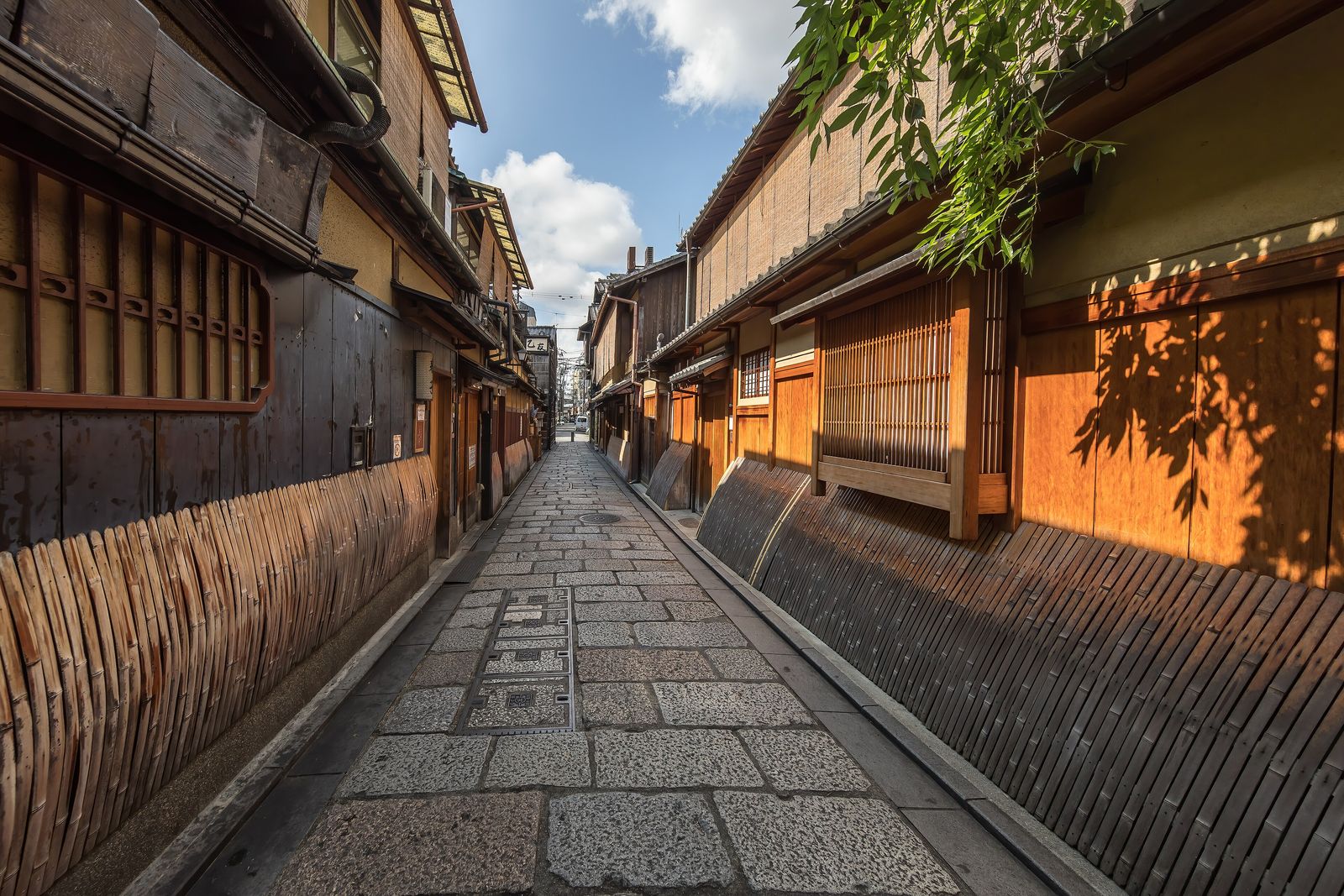 Photo: Basile Morin, CC BY-SA 4.0
What Is a Bamboo House? Bali's Bamboo Architecture Explained
How a fast-growing grass became the most beautiful building material in the tropics — the story of bamboo architecture and where to sleep in it.
 Photo: Vitus Wahlländer, CC BY-SA 4.0
Treehouses Explained: History & Modern Design
From childhood forts to seventy-foot canopy suites — how the treehouse grew up, and what makes a great one to stay in.
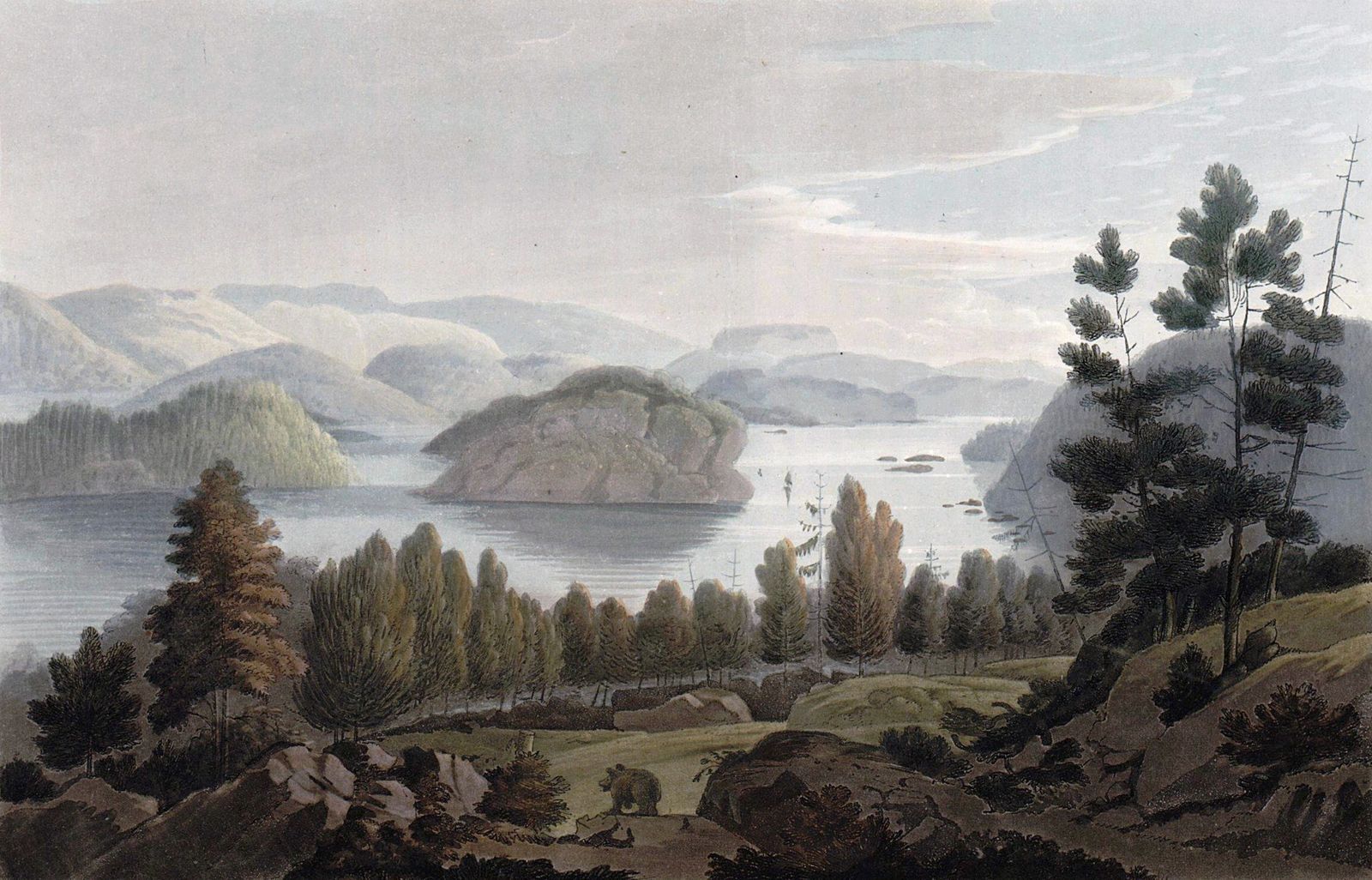
Overwater & Floating Bungalows in the Jungle
The room that floats — how raft houses and overwater bungalows are built on jungle lakes and rivers, and the best places to sleep on the water.
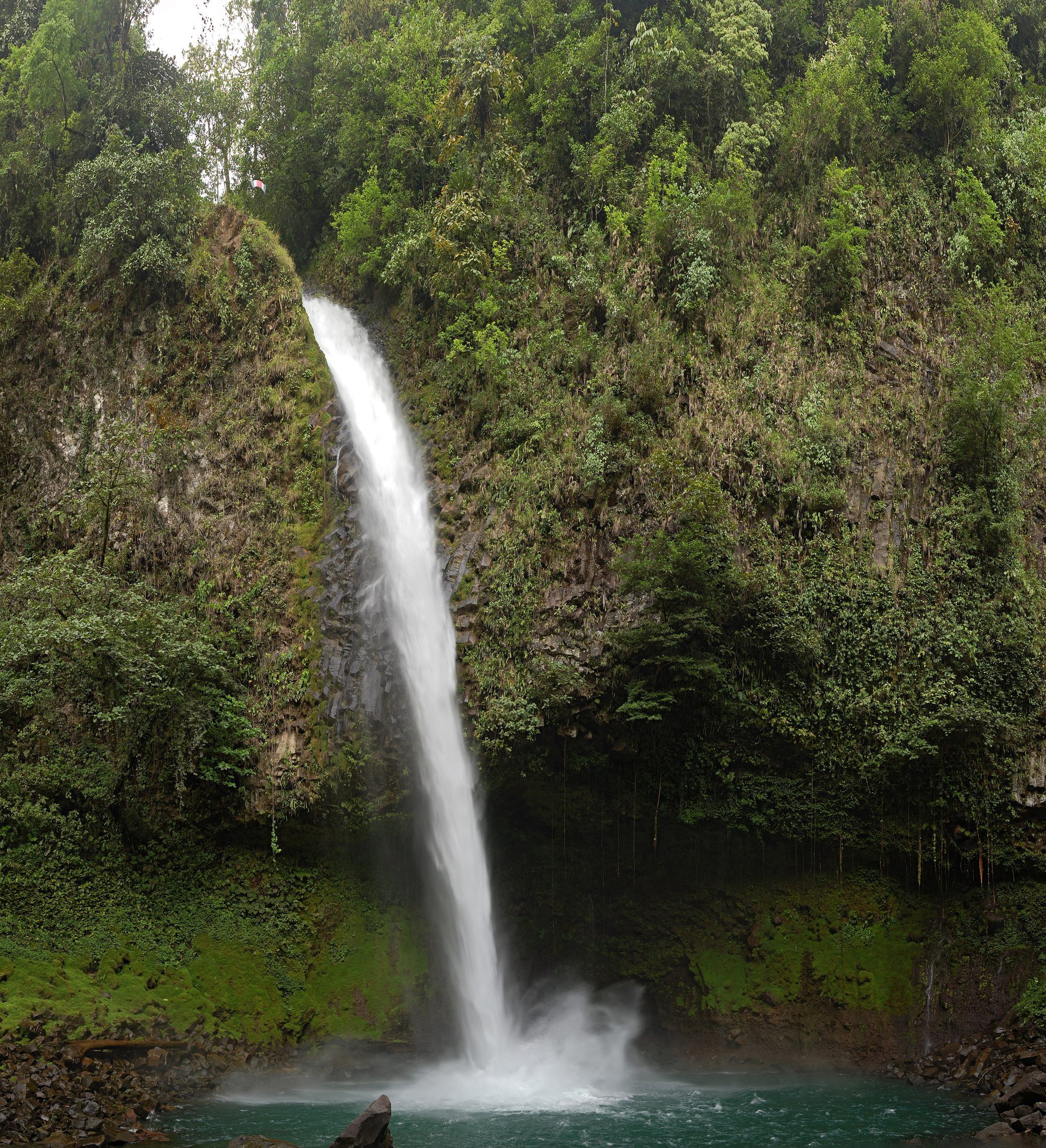 Photo: Derek Ramsey (Ram-Man), CC BY-SA 4.0
Find your own piece of the canopy.
Treehouses, bamboo houses and rainforest villas across 17 destinations — found, vetted and written up honestly.
Browse all destinations