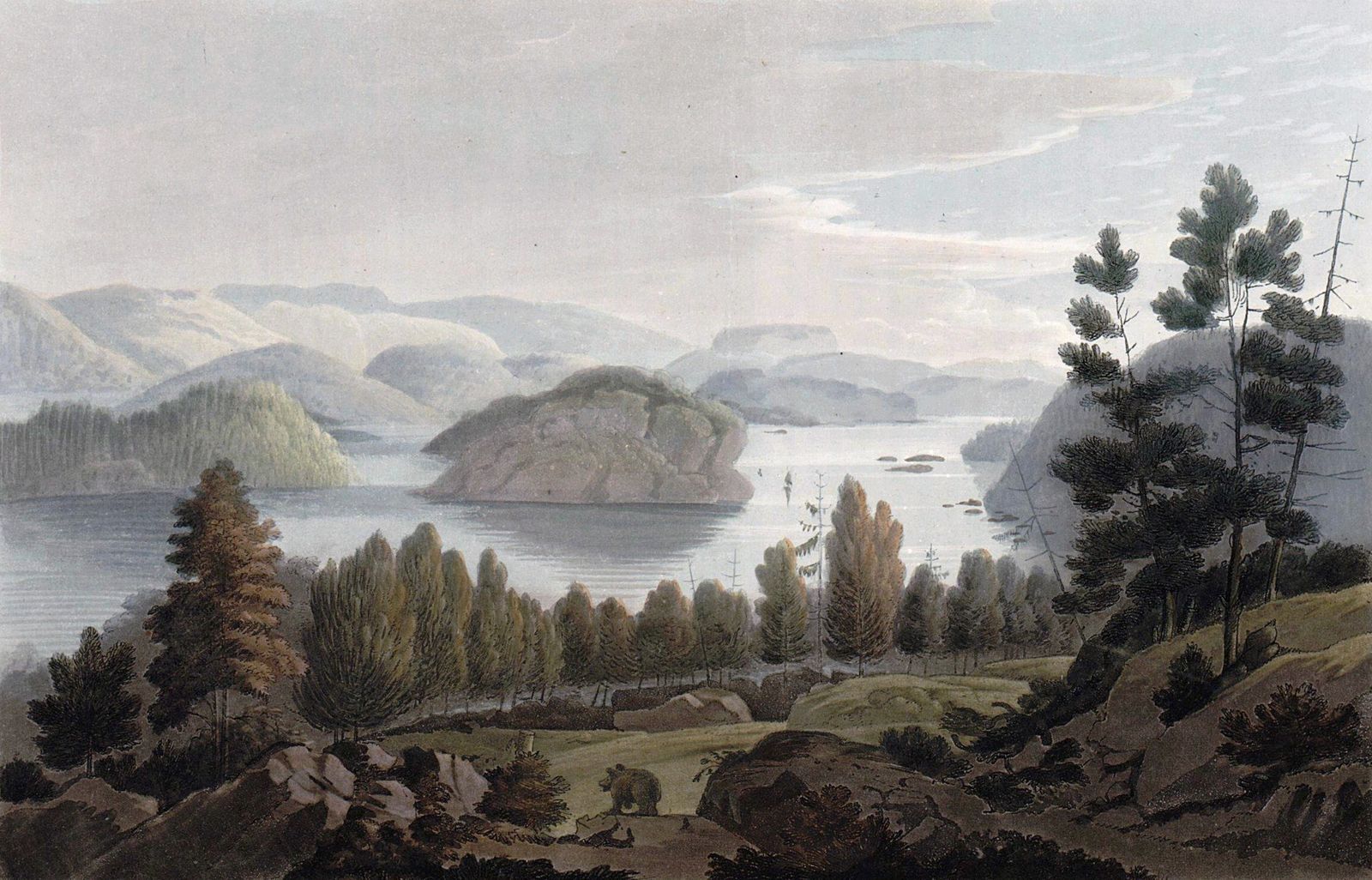
Overwater & Floating Bungalows in the Jungle
The room floats. Not in a marketing-copy sense — the floor under your feet is either standing on stilts driven into a lagoon bed or it's genuinely riding on pontoons, rising and falling a few inches with the water beneath it. Both count as "sleeping on the water," and both get lumped together as overwater bungalows, but they're built differently, they came from different places, and they suit different trips. This is a guide to how both kinds actually work, where the idea came from, and where you can go stay in one — including a few real jungle lakes and rivers where the water house never had anything to do with a resort brochure in the first place.
What we actually mean by "sleeping on the water"
Two very different structures get sold under the same phrase, and it's worth separating them before we go anywhere else, because the engineering, the sensation, and the environmental questions are not the same.
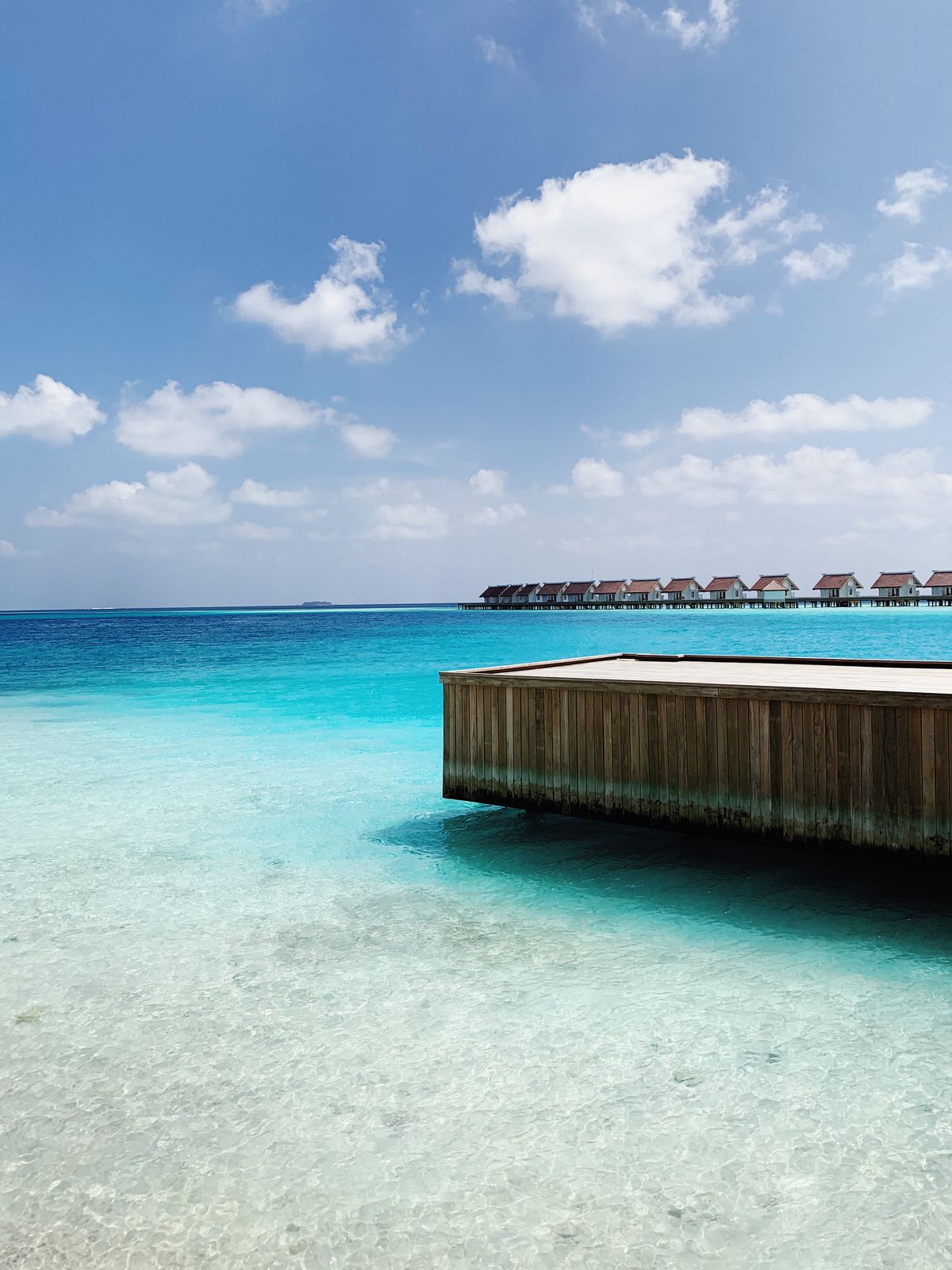
The first is the classic overwater bungalow: a house on stilts, standing over a lagoon or a shallow bay on pilings driven into the seabed, connected back to shore by a wooden walkway. This is the Bora Bora postcard image — a fixed structure that happens to be built over water rather than on it. It doesn't move. The tide rises and falls under the floor, and on a calm day you can lie on the deck and watch fish under glass, but the house itself is as static as any building on land.
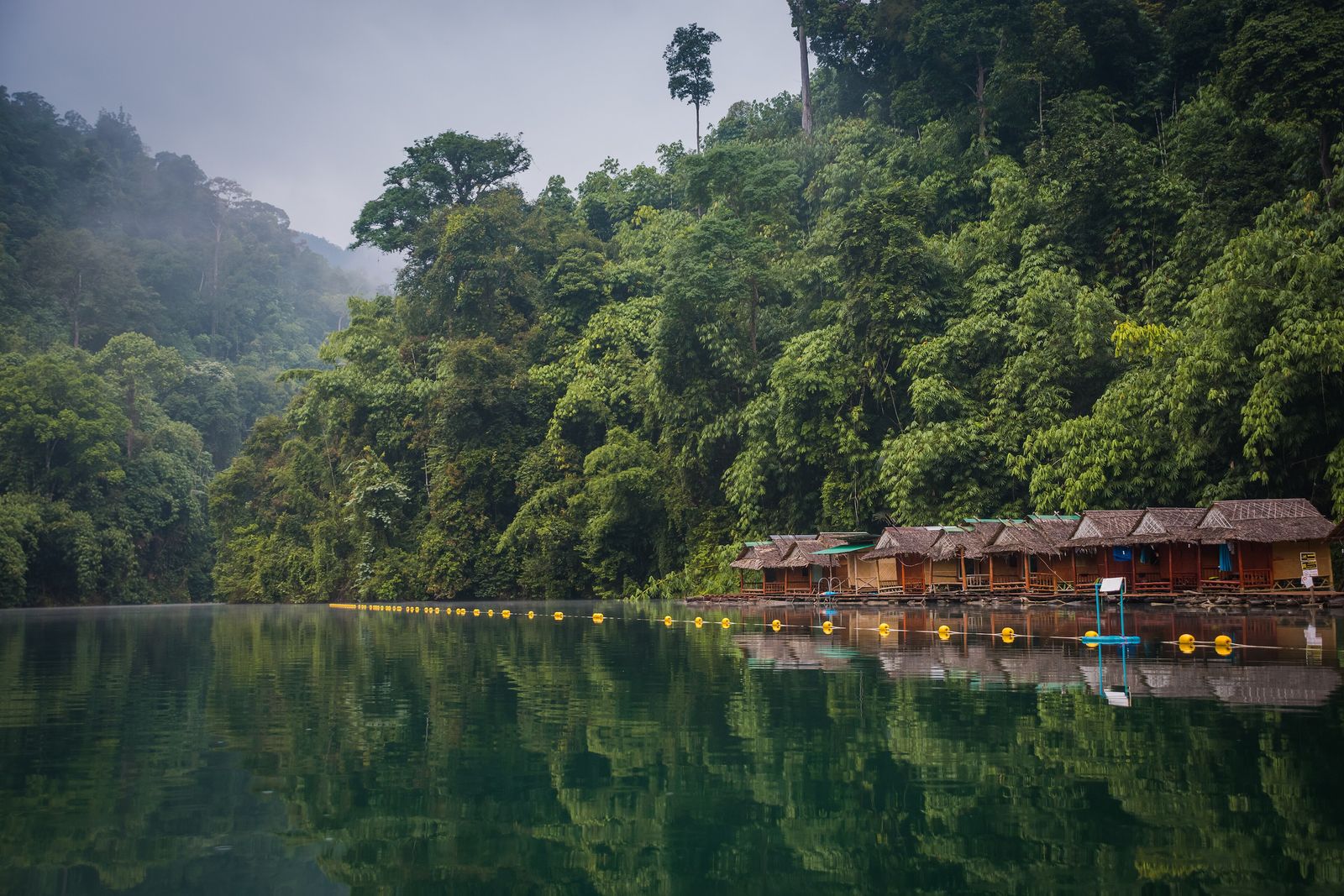
The second is a true floating structure: a raft house, a pontoon bungalow, or a houseboat, sitting on a buoyant hull or a deck of sealed drums or logs, anchored or moored rather than staked into the bottom. These genuinely float. They rise with a flood, they rock a little in wind and boat wake, and on a lake with a hydroelectric dam controlling the water level — which describes several of the best jungle examples — they have to float, because the water underneath them can rise or drop by tens of metres over a season. A stilted house on that kind of reservoir would be left standing in mud, or drowned, depending on the month.
Jungle settings favor the second kind for a practical reason: the sea-view lagoon that makes stilted bungalows possible in Tahiti or the Maldives is a coastal, coral-reef environment, and rainforest doesn't usually come with a coral lagoon attached. Where the jungle meets the water, that water is more often a river, a flooded forest, or a dammed lake — all places where the ground underneath moves too much to build on stilts and stay dry. That's why almost every genuinely jungle-adjacent version of this idea, from Thailand to the Amazon, is a floating one rather than a staked one.
Good to know
If a listing calls itself an "overwater bungalow" in a rainforest destination, check whether it's staked or floating before you book — it changes the whole feel of the stay. A staked bungalow is dead still and usually comes with air conditioning and a glass floor panel. A floating one moves with the water, usually has no glass floor at all, and depends on a generator or solar bank rather than a grid connection. Neither is better. They're different trips.
Where the idea started: Tahiti, 1967
The overwater bungalow has an origin story with actual names attached, which is unusual for a piece of hospitality design this widely copied. Three American expats — Hugh Kelley, Jay Carlisle and Muk McCallum, known locally as the Bali Hai Boys — bought a run-down hotel on Moorea in 1962 and turned it into the Hotel Bali Hai. It became known partly on the strength of a feature in Life magazine, and the trio went on to open a second property on the neighboring island of Raiatea.
Raiatea's site was the problem that produced the solution. The hotel sat on a narrow strip of land with a road on one side and open water on the other, leaving almost no room to add rooms. Hugh Kelley's fix, worked out around 1967, was to stop trying to build on the strip of land at all and build out over the water instead, using a design borrowed loosely from the small fishing huts Tahitians already built on stilts over the reef. It worked, it was cheap relative to a land expansion, and it gave guests a view no land-based room could match. Three years later, in 1970, the Hotel Bora Bora introduced its own version, and the image that most people now picture when they hear "overwater bungalow" — turquoise lagoon, thatched roof, private stairs down into the water — comes from that Bora Bora property specifically, not from the original Raiatea site.
From there the idea traveled fast. Fiji and the Maldives both built their own overwater rooms through the 1970s and 80s, and by the 1990s the Maldives in particular had turned the format into its signature product — hundreds of individual resort islands, most of them built around a ring of overwater villas on a lagoon, some with glass floor panels and a few with fully submerged bedrooms. None of that is jungle travel, strictly speaking, but it matters here because it's the design language every floating jungle bungalow borrows from, even when the engineering underneath is completely different.
How a stilted lagoon bungalow is actually built
A classic overwater bungalow is, underneath the thatch, a fairly conventional pier structure. Builders drive piles — timber, concrete, or steel — into the lagoon floor, deep enough to resist wave action and storm surge, and cap them with a platform that carries the bungalow's floor joists. The walkway connecting it to shore is built the same way, on its own line of piles, which is why resort walkways are almost always dead straight: each pile has to line up with the next one.
The house itself, once the platform is in, is built much like any tropical building — timber or steel frame, a roof (often thatch, sometimes metal, occasionally glass), and walls that are as open as the climate allows. What's different is everything below floor level: plumbing, wiring, and structural bracing all have to survive permanent exposure to salt water and marine growth, which is a harsher environment than anything a land-based jungle house deals with. Barnacles and algae colonize the piles within months, and a maintenance program that resort operators rarely advertise — regular pile inspection, anti-fouling treatment, occasional replacement of corroded fittings — is baked into the cost of every night's stay, whether the brochure mentions it or not.
The famous glass floor panel is a small, sealed window set into the deck or the floor of the bathroom, usually over the deepest, clearest water on the property, so guests can watch fish without getting in. It's a genuinely simple detail engineering-wise — the hard part isn't the glass, it's making sure the seal around it never leaks in a structure that spends its whole life a few feet above salt water.
Floating instead of staked: rafts, pontoons and houseboats
A true floating bungalow solves a different problem, and it solves it with buoyancy instead of piles. The deck sits on sealed floats — historically bundled bamboo or hollow logs, more often today welded steel drums, plastic pontoons, or purpose-built ferrocement hulls — and the whole structure is tied to the shore or the lake bed with mooring lines rather than being fixed to it. Push down on one corner of a well-built raft house and you can feel the whole platform give slightly and settle back, the way a dock does, because structurally that's exactly what it is: a floating dock with a house built on top of it.
This matters enormously on a reservoir with a managed water level, which is the setting for most of the jungle examples in this guide. A hydroelectric dam can hold a lake dozens of metres higher in the wet season than the dry season. A staked structure would either flood or be stranded depending on the month; a floating one simply rises and falls with the lake and stays at the same relative height above the water year-round. The mooring lines, not the structure itself, do the work of keeping the bungalow roughly where it's supposed to be, and on a reservoir that means long anchor chains running down to concrete blocks or old engine blocks sunk in deep water, adjusted seasonally as the lake level changes.
Floating walkways connecting bungalow to bungalow, or bungalow to a central dining raft, use the same buoyant logic, hinged where they meet each platform so the whole assembly can flex independently rather than tearing itself apart when one section rises faster than its neighbor. It's a genuinely different discipline from lagoon-pile construction — closer to naval architecture and dock-building than to house-building — and it's why floating jungle-lake operations tend to be run by boat operators and local fishing cooperatives rather than resort chains.
A staked bungalow is a house that happens to be over water. A floating one is a boat that happens to look like a house. Once you understand that difference, everything else about how these places are built, maintained and run makes a lot more sense.
The off-grid reality: power, water and where the waste goes
Both kinds of water bungalow face the same three problems land-based jungle stays deal with — power, drinking water, and waste — but water makes each one harder, not easier.
Power
Grid power to a structure standing or floating offshore means running cable underwater or along the walkway pilings, which is expensive and vulnerable to storm damage, so a lot of overwater and floating properties run partly or entirely on solar, sometimes backed by a generator for peak loads like air conditioning. Floating lodges in remote jungle settings — where there's no shore-based grid to tap into at all — tend to be solar-first by necessity rather than by eco-marketing choice: panels on the roof, battery banks below deck, and a generator kept in reserve for cloudy stretches. It's the same off-grid toolkit used by land-based jungle homes, just installed on something that moves.
Water
Drinking water on a lagoon or a jungle lake is, obviously, not something you can draw from what's directly underneath the building. Most water bungalows either pipe filtered water from a shore-based system, truck or boat it in, or run their own rainwater collection and filtration on site, particularly on floating lodges in wet-season rainforest, where rainfall is abundant for at least part of the year and unreliable municipal water may not exist at all.
Waste
This is the part hospitality brochures talk about least and environmental scientists talk about most. A stilted bungalow's plumbing sits directly over a lagoon, and older or badly regulated properties in several parts of the world have been documented discharging greywater and sewage straight into the water beneath them — a real and long-running criticism of the format, since a coral lagoon is exactly the kind of enclosed, slow-flushing water body where nutrient pollution does the most damage to reef health. Better-run properties, and increasingly the regulations governing new construction, require sealed holding tanks pumped out by boat rather than a direct discharge line. Floating jungle lodges face the same test on a river or lake rather than a reef, and the more credible operators are explicit about it: some, including the lodge described below in the Brazilian Amazon, describe treating effluent before it returns to the water and running the whole operation on a closed system precisely because the surrounding reserve exists to protect that water.
Good to know
If sustainability is part of why you're booking a water bungalow rather than a land-based jungle stay, it's a fair question to ask directly: does wastewater get treated before it re-enters the lake or reef, or does it go straight in? A property that's proud of its answer will usually tell you unprompted, on its own site, rather than making you ask.
Real stays: Khao Sok's floating raft houses, Thailand
Cheow Lan Lake sits inside Khao Sok National Park in southern Thailand, a reservoir created by the Ratchaprapha Dam and now ringed by limestone karst towers that rise straight out of the water — the kind of scenery that shows up on Thailand tourism posters without needing much help from a photo editor. Because the dam controls the water level, and because the lake sits well inside a protected national park with no road access to most of its shoreline, floating raft houses are essentially the only way to sleep on the water here, and they've become one of the signature stays in this part of the country.
There are roughly a dozen and a half operators running raft houses across the lake's various inlets, known locally as klongs, ranging from simple open-sided bamboo rooms with shared bathrooms to en-suite floating bungalows and a handful of higher-end teak-built options. All of them are reached the same way: by longtail boat from Ratchaprapha Pier, with a national park regulation requiring visitors to travel with a licensed operator rather than book and arrive independently. Most stays are sold as one or two nights, bundled with a guide, meals, and activities like a night safari by boat looking for elephants, gaur and hornbills along the shoreline, or a paddle into one of the narrower limestone canyons at dawn when the water is still glass-flat.
The trade-off that comes with the setting is total isolation by design: no wifi worth mentioning, no shops, and lights-out shortly after dinner because most raft houses run on a generator that's switched off overnight to save fuel and cut noise. That's precisely the point for most guests — Cheow Lan Lake after dark, with the karst towers as black shapes against the stars and cicadas going full volume from the forest, is not a scene you get anywhere with a road to it. It also means bringing a headlamp, a dry bag, and the acceptance that the whole platform will rock gently when a longtail boat passes, all night, every time one does. Anyone planning a wider loop through the country's parks and beaches can build the rest of a trip around it in Thailand.
Real stays: the Amazon's floating lodges, Brazil and Peru
The Amazon basin floods on a scale that makes the reservoir engineering at Khao Sok look modest. Across much of the flooded-forest habitat known as várzea, the river can rise ten metres or more between the dry and wet seasons, turning forest floor into navigable water for months at a time and back into dry ground the rest of the year. A fixed, staked structure simply cannot survive that swing, which is exactly why the region's most serious eco-lodges are built to float.
Uakari Floating Lodge, Mamirauá Reserve
The clearest example sits inside the Mamirauá Sustainable Development Reserve in Brazil's Amazonas state — Brazil's first sustainable development reserve and a UNESCO-recognized site, reached by a short flight from Manaus to the river town of Tefé and then roughly ninety minutes by speedboat up the Solimões River. Uakari Floating Lodge is exactly that: a set of five bungalows, ten rooms in total, each supported on giant balsawood logs and linked by floating walkways to a central raft holding the kitchen, a small library, and a common deck. Everything runs on solar power, rainwater is collected and stored on site, and the lodge describes treating its wastewater before it goes back into the reserve's waters — a genuinely load-bearing detail in a reserve created specifically to protect an endangered flooded-forest ecosystem, not a line added for marketing.
What makes Uakari worth the trip beyond the novelty of a floating bed is the reserve itself: Mamirauá protects the largest area of protected flooded forest on Earth and is one of the more reliable places to see the red uakari monkey the lodge is named for, along with pink river dolphins working the flooded channels and, depending on the season, black-faced squirrel monkeys along the forest edge. It's a working conservation project as much as a hotel — the lodge is run as a community-tourism arm of the Mamirauá Institute, with revenue built to support the reserve and the riverside communities living around it, rather than a resort company that happened to pick a scenic river.
Belém, Iquitos, Peru
Not every floating structure in the Amazon is built for tourists, and it's worth knowing that before assuming every raft house has a rate card. Belén, the low-lying riverside district of Iquitos in Peru, is a genuine floating neighborhood — homes and a busy market built on rafts and stilts along the Itaya River, rising and falling with the water the same way Uakari's bungalows do, but built by and for the people who actually live there rather than for an overnight guest. It's usually visited by boat as a half-day cultural stop rather than booked as a bed, but it's the clearest possible reminder that floating architecture on Amazon rivers is a working, centuries-old local solution to seasonal flooding first, and a hospitality format second. A trip built around either lodge is a good excuse to look harder at Brazil or Peru as a whole rather than treating the floating stay as a one-off detour.
Why people love it, and the honest trade-offs
The appeal is straightforward once you've actually done it: water sounds different when it's directly under the floor instead of visible through a window, and a jungle lake or a flooded forest at night, with no road noise and no light pollution, is one of the more genuinely disorienting-in-a-good-way experiences available in travel. Waking up and stepping straight into deep water off your own deck, watching a dolphin surface twenty feet from where you're having coffee, or falling asleep to a generator cutting off and leaving total silence behind it — none of that is replaceable by a land-based room with a nice view, and people who try a floating stay once tend to go looking for the next one.
The trade-offs are just as real and worth stating plainly rather than glossing over.
- Motion. Floating platforms move. Most people adjust within an hour; a genuinely motion-sensitive traveler may not, and there's no way to test that in advance from a listing photo.
- Heat and humidity. Open-sided raft houses in particular have little or no air conditioning, because running a compressor off a small solar bank is a real load. Expect a fan, a mosquito net, and a climate that doesn't cool down much after dark near the equator.
- Limited power and connectivity. Wifi, if it exists at all, is usually weak and shared. Chargers compete for a small battery bank. This is a feature for a lot of guests and a genuine problem for anyone who needs to stay reachable.
- Noise carries. Water transmits sound efficiently, and thin decking does very little to stop it. A floating property with bungalows close together is not the place for a light sleeper hoping for privacy from the next room.
- Cost and access. Because almost every floating jungle stay is boat-access-only and often bundled with a guide and meals by regulation, these trips tend to cost more per night than an equivalent land-based room, and they can't be booked as a same-day walk-in.
- Environmental footprint is a live question, not a solved one. As covered above, wastewater handling varies enormously between operators. A well-run floating lodge in a protected reserve and a poorly regulated raft house on an unprotected lake are not the same environmental proposition, even if the marketing photos look identical.
None of that is a reason to skip it. It's a reason to pick the operator carefully, pack for genuine off-grid conditions, and go in knowing this is closer to a working boat trip than a hotel stay with a water view.
Common questions
What's the difference between an overwater bungalow and a floating bungalow?
An overwater bungalow is a fixed structure standing on piles driven into the lagoon or seabed — it doesn't move. A floating bungalow sits on a buoyant hull, raft, or pontoon deck and is anchored or moored rather than staked, so it rises and falls with the water. Most classic resort-style bungalows in places like Bora Bora and the Maldives are staked; almost all jungle-lake and jungle-river versions, including everything covered in this guide, are floating.
Are floating bungalows safe in storms?
Reputable operators design mooring systems to handle expected local wind and water conditions, and floating structures on inland lakes and rivers are generally sheltered from the open-ocean storm surge that threatens coastal stilted bungalows. That said, any water-based accommodation should be booked through a licensed, established operator, and travelers should always follow local guidance during severe weather, including evacuation to shore if instructed.
Do floating bungalows have air conditioning?
Rarely, and it depends entirely on the property's power setup. Solar-and-battery systems on remote lakes and rivers usually can't support the constant draw of AC, so most floating stays rely on fans, cross-ventilation and mosquito netting instead. A handful of higher-end, generator-backed properties do offer it — worth confirming directly before you book if it matters to you.
Is it safe to swim off a floating bungalow?
It depends entirely on the water. Some jungle lakes and reserves are genuinely safe and popular for swimming directly off the deck; others, particularly stretches of Amazon river with caimans, piranha, or strong current, are not, and lodges will tell you plainly which is which. Always ask staff on site rather than assuming, since local conditions change with season and water level.
How much does a night in a jungle floating bungalow cost compared to a land-based stay?
Generally more, because access almost always requires a boat transfer, a licensed guide, and meals bundled into the rate by park or reserve regulation, rather than being optional add-ons the way they often are at a land-based lodge. Expect it to read closer to a multi-day guided tour price than a simple room rate.
Do I need to know how to swim?
It's strongly recommended and required by some operators, particularly for activities like kayaking between rafts or swimming stops on a lake tour. Life jackets are standard equipment on the boat transfers themselves regardless of swimming ability.
Where to go from here
A floating or overwater stay is one specific answer to a much bigger question — how do you build a place to sleep that puts you inside a landscape instead of just looking at it from a balcony. If that's what you're actually after, it's worth reading it alongside the rest of the jungle-architecture family: bamboo houses solve a version of the same problem on dry land with a fast-growing material instead of a floating hull, and off-grid solar and rainwater systems explain the power-and-water side of the equation in more depth than we could cover here. If you're still deciding whether a remote lodge or a private whole-home rental suits your trip better, eco-lodges vs. jungle Airbnbs lays out that trade-off directly.
For the destinations themselves, Khao Sok and Cheow Lan Lake are a strong reason on their own to build a Thailand itinerary, and both the Mamirauá reserve in Brazil and the wider Amazon basin in Peru are worth planning as a dedicated trip rather than a side trip — start with Thailand, Brazil, or Peru, or browse the full spread of jungle destinations we cover in our destination directory to see what else is out there. A floating bungalow is a genuinely different way to spend a night in a rainforest, and once you've tried one, it's hard to go back to a room that just has a nice view of the water instead of a floor built to float on it.
- Islands.com, "History Of The Overwater Bungalow" — origin story of the Bali Hai Boys, Hotel Bali Hai on Moorea, and the first overwater bungalows built on Raiatea in 1967.
- South China Morning Post, "The tropical overwater bungalow... turns 50" — confirms the 1967 Raiatea origin and the 1970 introduction of overwater bungalows at Hotel Bora Bora.
- Tahiti Tourisme, "Luxury Is An Overwater Bungalow In Bora Bora" — background on Bora Bora's overwater bungalow tradition.
- Khao Sok Rafthouse, "Cheow Lan Lake Raft House & Floating Bungalows" — used for details on raft-house construction and lake access on Cheow Lan Lake.
- Khao Sok Lake, "Floating Bungalows: Complete Guide to Raft Houses" — used for the number of operators on the lake and access via Ratchaprapha Pier.
- Brazil Nature Tours, "Uacari Floating Lodge" — used for Uakari Floating Lodge's structure, location in the Mamirauá Reserve, and access route from Manaus and Tefé.
- Rainforest Cruises, "Uakari Lodge" — used for room count, balsawood-log construction, and solar power details.
- Suitcase Magazine, "How A Floating Brazilian Lodge Is Keeping The Amazon's Caimans Swimming" — used for Uakari Lodge's community-tourism model and wastewater treatment practices.
More from the Journal.
 Photo: Basile Morin, CC BY-SA 4.0
What Is a Bamboo House? Bali's Bamboo Architecture Explained
How a fast-growing grass became the most beautiful building material in the tropics — the story of bamboo architecture and where to sleep in it.
 Photo: Vitus Wahlländer, CC BY-SA 4.0
Treehouses Explained: History & Modern Design
From childhood forts to seventy-foot canopy suites — how the treehouse grew up, and what makes a great one to stay in.
 Photo: Dudley Miles, CC BY-SA 3.0
Eco-Lodges vs Jungle Airbnbs: Which to Book
A lodge gives you guides and dinner; an Airbnb gives you the place to yourself. An honest comparison to help you pick the right jungle stay.
 Photo: Derek Ramsey (Ram-Man), CC BY-SA 4.0
Find your own piece of the canopy.
Treehouses, bamboo houses and rainforest villas across 17 destinations — found, vetted and written up honestly.
Browse all destinations