Cob & Natural-Building Jungle Homes
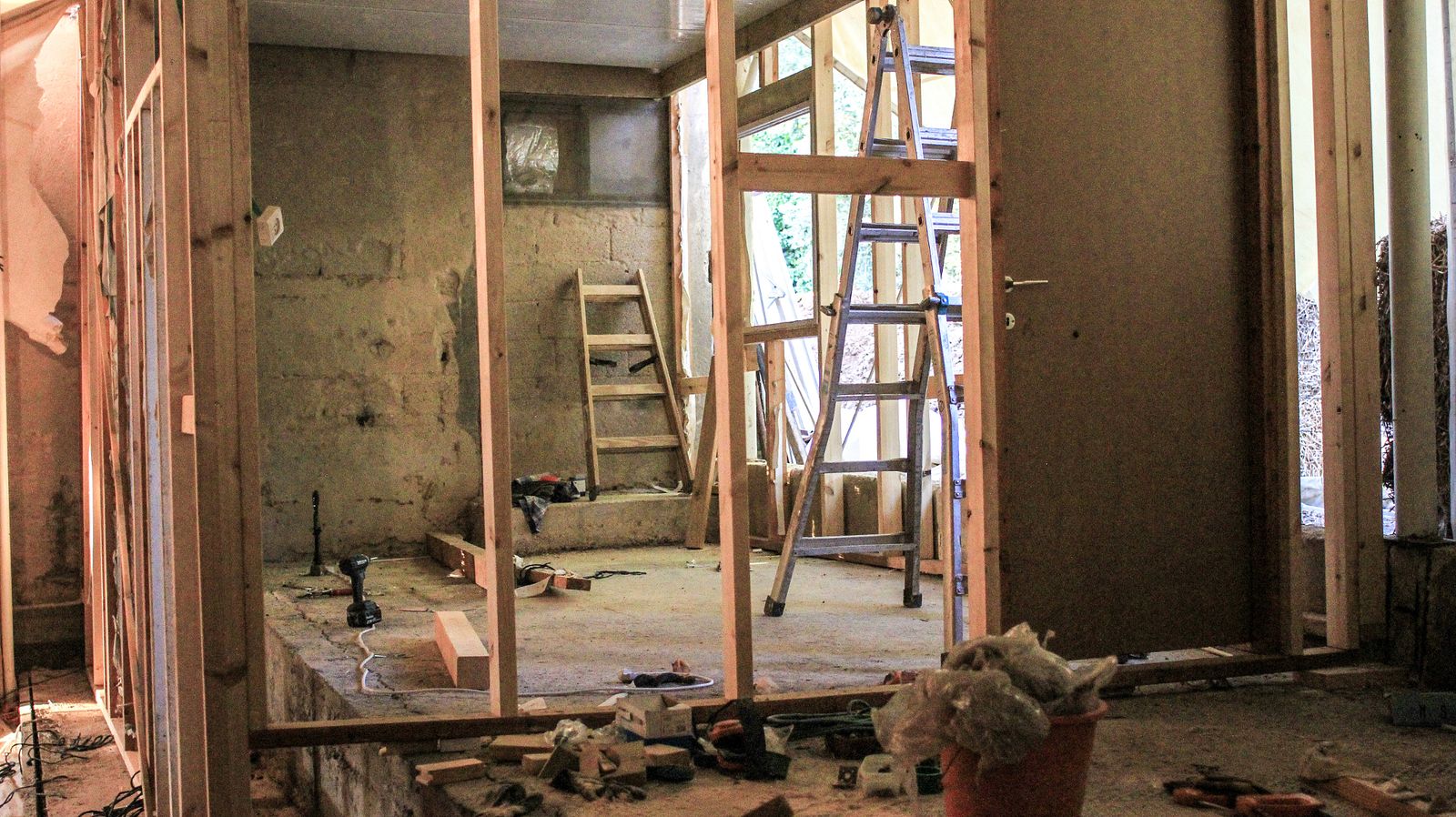
Most jungle architecture is a conversation with wood — timber posts, bamboo poles, a roof doing most of the talking. Natural building is a different conversation entirely, one that starts with the dirt under your feet. Cob, earthbag, rammed earth, adobe: these are all ways of turning the soil on a piece of land into the walls of the house standing on it, a technique older than agriculture in most parts of the world and, improbably, still one of the more honest ways to build somewhere hot, wet and far from a hardware store. This is what these buildings actually are, how a wall made of mud stands up to a rainforest wet season without dissolving, what it's like to actually sleep inside one, and a handful of real, working projects where you can see it done properly.
What "natural building" actually means
"Natural building" gets used as a catch-all for anything that looks rustic, which is a shame, because the term actually describes a specific, testable idea: build with materials that are minimally processed, usually sourced within a short distance of the site, and largely returnable to the earth at the end of the structure's life. That's a meaningfully different design brief than a timber A-frame or a bamboo house, both of which are natural in the loose sense but are still built from a single harvested material milled or lashed into a frame. Earth building starts from soil itself as the structural material, and it comes in a handful of distinct techniques that get lumped together under one banner more often than they should be.
Cob is the oldest and most sculptural of the group: a mix of subsoil, sand, straw and water, kneaded into loaves and stacked and shaped by hand, wall course by wall course, with no formwork and often no square corners. Adobe is cob's more industrial cousin — the same basic clay-sand-straw mix, but formed into uniform bricks in molds, sun-dried, and then laid up with mortar the way a bricklayer would work, which makes it faster to build with predictably but slower to prepare beforehand. Rammed earth takes a drier mix of subsoil and compacts it, in thin layers, inside temporary formwork under heavy pressure, producing a dense, striated wall that reads almost like sedimentary stone once the forms come off. Earthbag, the youngest of the four, fills woven polypropylene or burlap sacks with soil, stacks them in courses like sandbags at a flood wall, and often runs a strand of barbed wire between courses to keep the bags from sliding — the technique behind the domed, beehive-shaped houses that show up in natural-building photo essays. Wattle-and-daub, a fifth relative, weaves a lattice of sticks or bamboo and then packs it with the same clay-straw daub cob uses, essentially building a timber-framed house and filling the panels with earth instead of glass or board.
What ties all five together, and what separates them from the timber-and-thatch vernacular most people picture when they think "jungle house," is thermal mass. A cob or rammed-earth wall is typically 30 to 60 centimeters thick, dense, and slow to change temperature — the opposite design logic of a light bamboo or timber wall built to let air move straight through it. That difference in approach is the whole story of why natural building shows up in the tropics at all, and it's worth holding onto before getting into how any of it is actually built.
Good to know
If a listing photo shows perfectly straight, sharp-edged walls with a uniform brick pattern, you're almost certainly looking at adobe or rammed earth, not cob — true cob is built by hand in soft, monolithic loaves, and it tends to show gently rounded corners, thick sculpted window reveals, and the odd built-in bench or shelf grown straight out of the wall rather than added afterward.
Where cob comes from
Earth building isn't a rediscovered fringe idea; it's one of the oldest continuous building traditions on the planet, and cob specifically has a documented pedigree stretching back thousands of years across cultures that never had contact with one another — a case of the same basic solution getting reinvented wherever clay-rich soil and a need for shelter coincided. The clearest surviving proof of how durable it can be sits in the English county of Devon, where, according to the documented history of the material, roughly 20,000 cob houses are still standing today, some of them centuries old, alongside a comparable number of cob barns, outbuildings and garden walls. That's not a museum piece; people still live in those houses, which tells you more about cob's actual durability than any marketing claim could.
Cob nearly vanished from mainstream construction through the twentieth century, pushed out by cheap concrete block, kiln-fired brick and mass timber framing, all of which build faster and need less skilled hand labor. Its modern revival has a fairly specific origin point: the Welsh architect Ianto Evans and researcher Linda Smiley spent the 1980s and 1990s developing what's now known as "Oregon cob," a refined version of the traditional English technique, and founded the Cob Cottage Company in Oregon to teach it. Their work is the reason cob shows up in owner-builder and natural-building circles worldwide today rather than remaining a regional English farmhouse material — most of the hands-on workshops that now teach cob, from Oregon to Costa Rica to Thailand, trace their method more or less directly back to that revival.
The tropical version of the story runs on a parallel track. Long before "natural building" was a workshop topic, earth construction in various forms — wattle-and-daub, adobe, rammed earth — was the default building method across huge stretches of the tropics, simply because clay soil was free and locally available in a way that milled lumber or fired brick often wasn't. What's happened over the last few decades isn't earth building arriving in the jungle for the first time; it's a specific, hand-sculpted strand of it — cob, in particular — being deliberately reintroduced by permaculture and natural-building educators who learned the Oregon method and adapted it for a much wetter climate than the one it came from.
Earthbag and rammed earth: the other half of the family
If cob is the oldest earth-building technique, earthbag is close to the newest, and its origin story is genuinely unusual: the Iranian-American architect Nader Khalili developed the technique — often trademarked as "Superadobe" — after years of working with traditional Middle Eastern earth-dome construction, and refined it in California partly in response to a NASA-sponsored design competition looking at how future lunar or Martian shelters might be built from the ground they landed on. That off-world framing sounds like a stretch until you see the actual technique: long polypropylene tubes or individual sacks filled with damp, tampable soil, coiled or stacked course by course into walls and domes, with a strand of barbed wire laid between each course so the bags grip each other instead of sliding. No mortar, no cement required, and a dome shape that's structurally self-supporting the same way a masonry arch is, which is why earthbag structures so often end up as beehive-shaped rooms rather than square ones.
Rammed earth works on a completely different logic again — closer to poured concrete than to bricklaying. Builders erect temporary formwork, usually plywood panels braced with steel or timber, then add a barely-damp mix of subsoil, sand and a small amount of stabilizer in thin layers, compacting each one hard with a hand or pneumatic tamper before adding the next. Pull the formwork off a finished wall and you get a dense, layered, almost geological-looking surface, with each compaction line visible as a faint stripe — it's one of the only natural-building techniques that regularly turns up in high-end contemporary architecture rather than staying purely in the owner-builder and eco-lodge world, because the finished wall reads as deliberately modern rather than rustic.
All three techniques — cob, earthbag, rammed earth — end up solving the same basic engineering problem as a load-bearing masonry wall: mass and compression carrying the load, rather than a lightweight frame. What changes between them is labor, skill and formwork. Cob needs the most hand-sculpting skill and the least equipment. Rammed earth needs the most formwork and the most physical compaction effort, but produces the fastest, most uniform walls once a crew has the system dialed in. Earthbag sits in between — quick to learn the basic bag-filling and stacking motion, genuinely well suited to an unskilled volunteer crew, but slow going wall by wall compared to a rammed-earth pour.
Building with mud in a place that floods
Every one of these techniques has the same enemy in a tropical climate: standing water. Unstabilized earth walls, left in direct contact with wet ground or exposed to driving rain without protection, will erode — slowly if the design is right, fast if it isn't. Natural builders working in the tropics have spent decades working out a fairly consistent playbook for keeping a mud wall standing through a full wet season, and it comes down to three overlapping ideas that show up again and again at the real projects covered later in this guide.
A good hat and good boots
The oldest piece of natural-building wisdom, repeated at almost every workshop that teaches earth construction, is that a cob or earthbag wall needs "a good hat and good boots" — a generous roof overhang keeping rain off the wall face, and a stone or concrete stem wall lifting the earth construction well above grade so splash-back and ground moisture never reach it directly. In a temperate climate that overhang might be a foot or two; in a rainforest getting several meters of rain a year, tropical natural builders push eaves out much further, sometimes with a full secondary roof plane or wraparound veranda doing the actual weather protection while the earth wall underneath stays comparatively dry.
Plaster is not decoration
An earth wall's exterior plaster in the tropics is a functional weather skin, not a finish coat. Lime plaster is the traditional choice because it's breathable — it lets moisture that does get into the wall migrate back out rather than trapping it, which matters in a humid climate where a sealed, vapor-tight coating can turn a wall into a slow-drying sponge. Some tropical natural builders also use natural oils or a lime wash reapplied every year or two as routine maintenance, the same way a wood deck gets re-oiled rather than treated once and forgotten.
Stabilized versus unstabilized
Not every earth wall in the tropics is pure clay, sand and straw. A meaningful share of tropical earthbag and rammed-earth construction mixes in a small percentage of Portland cement or lime as a stabilizer, trading a bit of the "fully returns to the earth" purity for real, measurable extra resistance to erosion and cracking in a genuinely wet climate. It's a legitimate adaptation rather than a compromise anyone tries to hide — most tropical natural-building schools teach both methods and let the site's rainfall decide which one applies.
A cob wall doesn't fail because mud is a bad material. It fails because someone forgot the roof.
Why earth walls are quietly good at climate control
Here's the part that actually explains why anyone bothers hauling and kneading clay instead of just building a light, breezy bamboo pavilion: thermal mass works in your favor in a hot climate almost as much as in a cold one, just on a different schedule. A thick earth wall absorbs heat slowly through the hottest part of the day and releases it slowly overnight, which flattens out the temperature swing inside the building rather than letting the interior track the outdoor air minute by minute the way a thin-walled structure does. The practical result, reported consistently across natural-building projects in hot climates, is a house that runs noticeably cooler than the outdoor air during peak afternoon heat and holds a bit of that coolness into the evening — the same physics that keeps old adobe missions and thick-walled Mediterranean farmhouses comfortable without mechanical air conditioning.
That's a genuinely different climate strategy than the one running through most other jungle architecture. A bamboo house or an open-sided A-frame cabin manages tropical heat by maximizing airflow — get the breeze moving through the space and evaporative cooling off your own skin does the rest. An earth-walled building manages the same problem by doing the opposite: minimizing how much of the day's heat gets into the thermal mass in the first place, then releasing what does get in slowly enough that it never becomes uncomfortable. Neither approach is objectively better; they're two different physics arguments, and it's worth knowing which one a given stay is actually built on before you assume "no air conditioning" automatically means "hot."
Humidity, not heat, is the harder problem for earth construction specifically, and it's the trade-off worth understanding rather than glossing over. Clay-based walls are naturally hygroscopic — they absorb and release ambient moisture, which is part of why builders describe cob interiors as feeling less clammy than a sealed concrete room even at high humidity. But that same breathability means a poorly ventilated or badly plastered earth room can hold onto moisture rather than losing it, which is exactly why cross-ventilation, roof overhangs and breathable lime plaster aren't optional extras in a tropical natural build — they're the difference between a wall that manages humidity and one that grows mold. For the systems that typically run alongside a natural-built stay — solar power, rain catchment, sometimes a composting system — our guide to how off-grid jungle homes handle solar and rainwater covers the utility side in more depth; the earth walls themselves are really a climate-control system layered on top of that same toolkit.
What it's actually like to sleep in one
Walk into a well-built cob room in the tropics in the middle of a hot afternoon and the first thing you notice is temperature, not decor — it is measurably, physically cooler than the air outside, often enough to feel like walking into shade even before your eyes adjust. The second thing is sound. Thick earth walls absorb and deaden noise in a way a thin timber or bamboo wall simply can't, so a cob or rammed-earth room tends to feel quiet and enclosed even a few meters from an active kitchen or a busy path, a genuinely different feeling from the fairly porous acoustic experience of most open-sided jungle stays.
The shapes themselves are part of the experience, especially with cob and earthbag. Because the material is sculpted by hand rather than assembled from straight, milled pieces, natural-built rooms tend toward curves — rounded corners, deep, softly beveled window reveals, built-in benches or shelves that emerge directly from the wall instead of being added as furniture afterward. Earthbag domes push this furthest, since the structural logic of a self-supporting dome naturally produces a round room with no interior corners at all. It's a genuinely different spatial feeling than any framed building, closer to being inside a sculpture than inside a house, and it's part of why photographs of these stays travel well even to people who've never heard the word "cob" before.
Light is the honest trade-off on the other side of that thick wall. Deep walls mean deep window reveals, and most tropical earth builders keep window openings smaller than they would in a timber-framed room, both because a smaller opening is structurally easier to build into a load-bearing wall and because it limits how much direct heat gain comes in with the daylight. The result is interiors that read as cozier and dimmer than an open bamboo pavilion or glass-walled cabin — some travelers find that restful, almost cave-like in a good way, and some find it a little dark for a jungle stay where the whole point is usually to feel connected to the forest outside. It's worth checking listing photos for window size specifically if that matters to you, the same way you'd check ceiling height on an A-frame loft.

Real natural-building projects worth knowing
Natural building in the tropics is still a small, education-driven world compared with mainstream construction, which means most of the best examples aren't polished resort brands — they're working farms, permaculture centers and small owner-built projects that happen to also take guests, and that history is worth knowing before you book one.
In Costa Rica, Rancho Mastatal is the clearest example of the type: a sustainable-living and education center in the country's central Pacific rainforest that has run hands-on natural-building courses for years, teaching adobe, cob, wattle-and-daub and natural plastering to visiting students, and housing guests directly in the earthen structures those courses helped build. It's less a boutique stay than a working demonstration project you can spend a night, or a season, inside — see Rancho Mastatal's own natural earth building page for specifics. Elsewhere in Costa Rica's rainforest, in the Diamante Valley, a rammed-earth complex built from three interconnected domes has been documented as a striking example of the technique at real residential scale, covered in detail by Inhabitat's report on the rammed-earth dome home. The Pacific coastal town of Ojochal, in the same country, is also home to at least one earthbag-built rental property — evidence the technique has moved beyond workshop demonstrations into ordinary, bookable tourism inventory in Costa Rica specifically.
The other major center of gravity for natural building sits in northern Thailand, around the Pun Pun Center for Self-Reliance and the adjacent Panya Project outside Chiang Mai. Pun Pun grew out of the work of Jo Jandai, a Thai farmer and educator who helped popularize wattle-and-cob building for people with land but little construction budget, and the center now teaches adobe, bamboo and clay construction to a steady stream of students and volunteers. The neighboring Panya Project runs its own permaculture and natural-building education program on the same principles. Neither operates as a conventional hotel, but both accept visitors, students and volunteers on a rolling basis, which makes the region worth knowing about even for travelers who just want to see the technique rather than take a course in it.
What connects these projects is that the strongest natural-building examples tend to be education-first. The people who know how to keep a mud wall standing through a tropical wet season are, more often than not, the same people teaching the technique to the next generation of builders, and the stays built around that work tend to be more honest about the trade-offs — and better built — than a one-off "eco" listing chasing the aesthetic without the underlying craft.
The honest trade-offs
Earth building rewards the traveler and the owner-builder who go in with realistic expectations, and it punishes the ones who don't. A few trade-offs are worth naming plainly.
It needs more maintenance than a modern build, not less
A well-built, well-plastered earth wall in the tropics can genuinely last decades, but "well-plastered" is doing real work in that sentence. Lime or clay plaster on an exterior earth wall is a wear surface, not a one-time finish, and it typically needs reapplication on a cycle of a few years rather than never — closer to the maintenance rhythm of a wooden boat than a concrete building. A natural-built stay that's been actively cared for shows it immediately; one neglected through a couple of wet seasons shows that too, usually as visible erosion or cracking near the base of the walls.
Cracking is normal, structural failure isn't
Hairline cracks in cob or rammed-earth plaster, especially as a new building dries out over its first year or two, are a normal part of the material curing, not necessarily a sign of a structural problem. Wide, actively growing cracks near corners or window openings are a different matter and worth asking a host about directly. A fair, informed traveler should be able to tell ordinary cosmetic aging from an actual red flag.
Financing, insurance and permitting can be genuinely harder
This affects owner-builders more than guests, but it shapes which stays exist to book: earth construction sits outside standard building codes in a lot of jurisdictions, which can complicate permitting, mortgage lending and insurance in ways a conventional timber or concrete build doesn't face. It's a real reason natural-built stays cluster around permaculture farms and education centers rather than showing up as a mainstream hotel category — the people building them successfully tend to be the ones who've already solved that regulatory puzzle once.

Common questions
What's the actual difference between cob and adobe?
Both use roughly the same clay-sand-straw mix, but cob is applied wet, by hand, straight onto the growing wall in soft loaves with no molds, while adobe is formed into uniform bricks in molds, sun-dried separately, and then laid up with mortar like conventional brick. Cob tends to produce rounded, sculptural walls; adobe produces straighter, more uniform ones.
Is earthbag the same thing as cob?
No. Earthbag fills long tubes or sacks with tamped soil and stacks them in courses, often with barbed wire between layers for grip, and is closely associated with dome-shaped structures. Cob is applied directly by hand with no bags or forms involved at all. Both are earth-building techniques, but the construction method and the tools needed are quite different.
Do earth-walled houses actually hold up in heavy tropical rain?
Yes, when they're built the way experienced tropical natural builders build them — a generous roof overhang keeping rain off the wall face, a raised stone or concrete foundation keeping ground moisture out, and breathable lime plaster protecting the exterior surface. The failures that give earth building a bad reputation almost always trace back to skipping one of those three things, not to a flaw in the material itself.
Are natural-built stays hotter or cooler than other jungle cabins?
Generally cooler during the day. Thick earth walls have high thermal mass, which slows down how fast outdoor heat reaches the interior, so a well-built cob or rammed-earth room often stays noticeably cooler through peak afternoon heat than a thin-walled timber or bamboo structure — though it also tends to have smaller windows and a dimmer, cozier feel as the trade-off.
Can you actually learn to build with cob or earthbag on vacation?
At a handful of the education-focused projects covered in this guide, yes — places like Rancho Mastatal in Costa Rica and the Pun Pun and Panya projects in Thailand run structured courses and accept volunteers and students alongside overnight guests. It's worth checking directly with any specific project for current course dates rather than assuming a hands-on workshop is always running.
Is natural building actually more sustainable than a normal timber cabin?
It generally has a lower embodied energy footprint, since unfired clay soil requires far less processing and transport than milled lumber, fired brick or concrete, especially when the soil is sourced from the building site itself. It's not automatically zero-impact, though — stabilized mixes use some cement or lime, and the maintenance cycle of replastering has its own ongoing resource cost that's worth weighing against a lower-maintenance conventional build.
Where to actually experience one
If this guide has you curious to see earth building up close rather than just read about it, the two clearest starting points are the ones this guide keeps coming back to: Rancho Mastatal in Costa Rica's rainforest, which houses guests directly inside the cob and adobe structures its own courses helped build, and the Pun Pun and Panya projects in northern Thailand, where a steady rhythm of courses and volunteer stints keeps the craft actively alive rather than preserved behind glass. Beyond those, keep an eye on smaller earthbag and rammed-earth rental properties turning up around Costa Rica's Pacific coast, where the technique has moved furthest from workshop demonstration into ordinary bookable inventory.
If it's the broader idea of tropical architecture built from what's actually on site, rather than earth specifically, that drew you in, our guide to bamboo houses covers the other major low-impact building tradition in the tropics, and how off-grid jungle homes handle solar and rainwater is worth reading before booking any stay marketed as self-sufficient, natural-built or otherwise. Brazil and Bali both carry their own strong local building traditions worth exploring on their own terms, even where the specific material leans toward bamboo, stone or timber rather than earth. And the full destination directory is the place to start if you'd rather browse by place than by wall material and let the stay find you.
- Wikipedia — Cob (material) — history of cob construction, the roughly 20,000 surviving cob buildings in Devon, England, and the modern Oregon cob revival led by Ianto Evans and Linda Smiley.
- Natural Building Colloquium — History of Cob — background on cob's global, cross-cultural origins as a building material.
- This Cob House — Earth Building Techniques — comparison of cob, adobe, rammed earth and related earthen construction methods.
- Rancho Mastatal — Natural Earth Building — details on the natural-building courses and earth-built guest structures at this Costa Rica education center.
- Inhabitat — Spectacular rammed-earth dome home tucked into a Costa Rican jungle — reporting on the three-dome rammed-earth complex in Costa Rica's Diamante Valley.
- Eco Lodges Anywhere — Sustainable Building Materials Used by Eco-lodges — overview of earthbag, cob and other natural-building materials in use at tropical eco-lodges, including examples in Costa Rica.
- Pun Pun Center for Self Reliance — Natural Building — the center's approach to adobe, cob, wattle-and-daub and bamboo construction in northern Thailand.
- The Panya Project — official site — permaculture and natural-building education program adjacent to Pun Pun in northern Thailand.
More from the Journal.
 Photo: Basile Morin, CC BY-SA 4.0
What Is a Bamboo House? Bali's Bamboo Architecture Explained
How a fast-growing grass became the most beautiful building material in the tropics — the story of bamboo architecture and where to sleep in it.
 Photo: Vitus Wahlländer, CC BY-SA 4.0
Treehouses Explained: History & Modern Design
From childhood forts to seventy-foot canopy suites — how the treehouse grew up, and what makes a great one to stay in.
Overwater & Floating Bungalows in the Jungle
The room that floats — how raft houses and overwater bungalows are built on jungle lakes and rivers, and the best places to sleep on the water.
 Photo: Derek Ramsey (Ram-Man), CC BY-SA 4.0
Find your own piece of the canopy.
Treehouses, bamboo houses and rainforest villas across 17 destinations — found, vetted and written up honestly.
Browse all destinations