Stilted Houses of the Jungle
Long before anyone built a jungle lodge with a marketing photo of a private plunge pool, somebody in a floodplain or a mangrove or a monsoon forest looked at the ground — wet, crawling, about to be underwater in a few months — and decided not to build on it. Instead they drove a row of posts into the mud, hoisted the floor a story into the air, and left the water, the snakes and the termites to do whatever they wanted down below. That's the whole idea of a stilted house, and it's old enough that nobody can point to a single inventor or a single place of origin. It shows up independently in the Amazon, across the Malay world, along West African lakeshores and up and down the coasts of Southeast Asia, which is usually a sign that an idea isn't clever so much as obvious to anyone who's ever tried to sleep on flooded ground. Here's where the design actually comes from, how a builder gets a house to stand up on posts and stay that way through a wet season, what it's honestly like to stay in one, and a handful of real, bookable stilted stays worth knowing by name.
What actually makes a house "stilted"
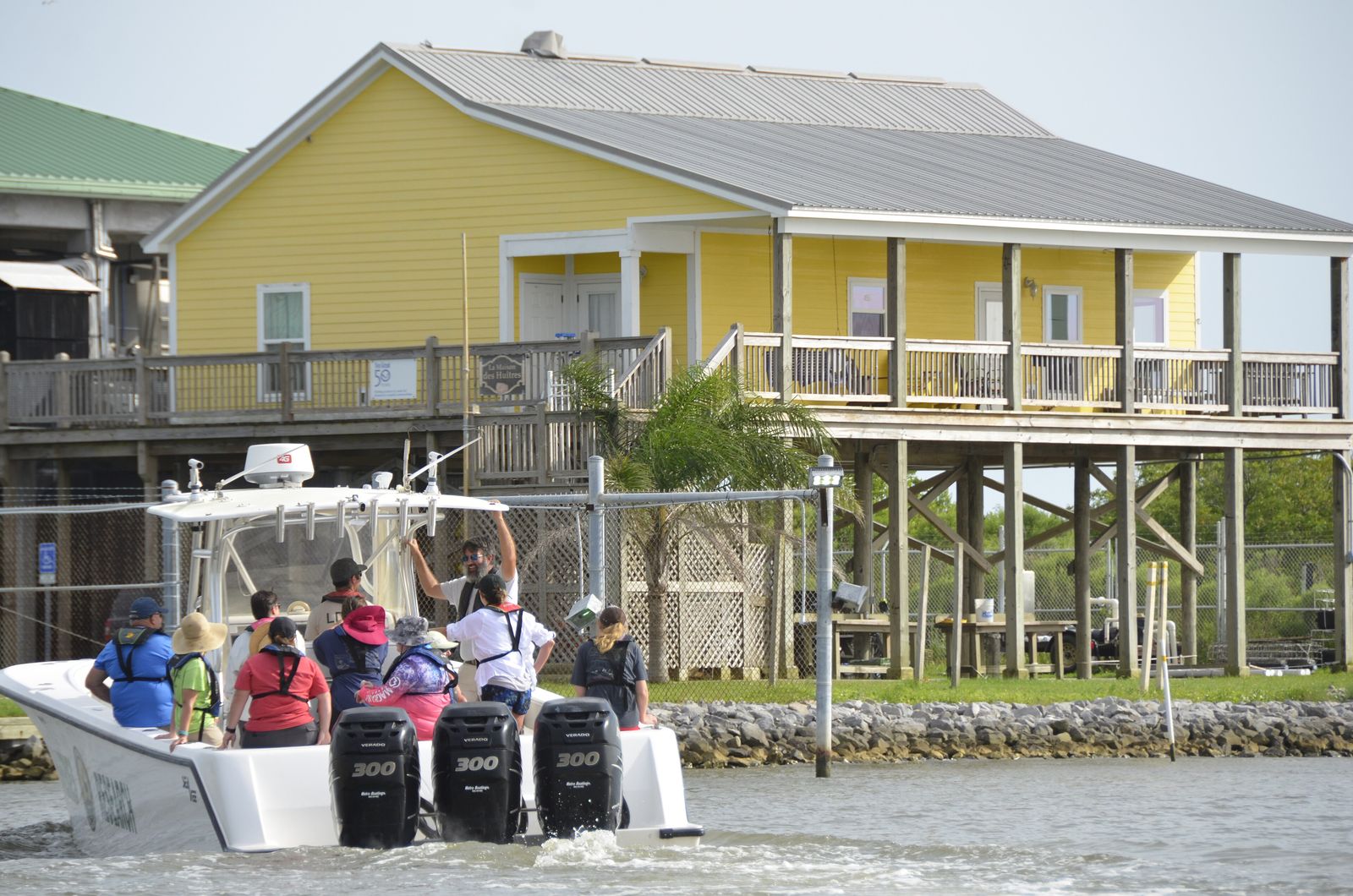
Strip the word down to what it's actually describing and a stilted house is any dwelling whose living floor sits above the ground on a set of posts, piles or piers, with open or lightly enclosed space underneath rather than a solid foundation wall or a slab. That's it. The posts can be hardwood tree trunks driven straight into riverbank mud, concrete piers poured on dry ground, steel pipe piles on a coastline, or — on the fanciest end of the spectrum — engineered pilings sunk deep enough to anchor a building against a flood surge. What matters structurally isn't the material, it's the gap: air and, often, water moving freely between the ground and the floor joists above it.
It's worth separating this from two things people often lump in with it. A treehouse uses a living tree, or several, as some or all of its structural support, which is a genuinely different engineering problem — see our history of treehouse design for how that one works. And modernist architecture has its own, mostly decorative cousin of the stilted house: Le Corbusier's pilotis, the slender concrete columns that lift a building off the ground mostly to free up the space underneath for a garden or a driveway, a move about urban space rather than flood or wildlife. A jungle stilted house is closer in spirit to a fisherman's stilt house on a tidal flat than to a Corbusier villa — the posts are there because the ground is a real, immediate problem, not an aesthetic choice.
The other useful distinction is height. A stilted jungle house typically sits somewhere between a few feet and a few meters off the ground — enough to clear a flood line, a storm surge or a curious animal, but still very much a ground-adjacent building, reached by a short stair or ramp. That's different from the canopy-level platforms this site covers in its A-frame and treehouse guides, and different again from an overwater bungalow, which is stilted specifically over open water rather than land that only floods part of the year. All three ideas rhyme — lift the room, let the ground or the water do what it wants underneath — but they're solving slightly different versions of the same problem.
Where the idea comes from
There's no single point of origin for the stilted house, and that's the interesting part. It was arrived at, independently, by builders in wildly different parts of the world who were all looking at the same basic hazard: wet, unstable, or dangerous ground.
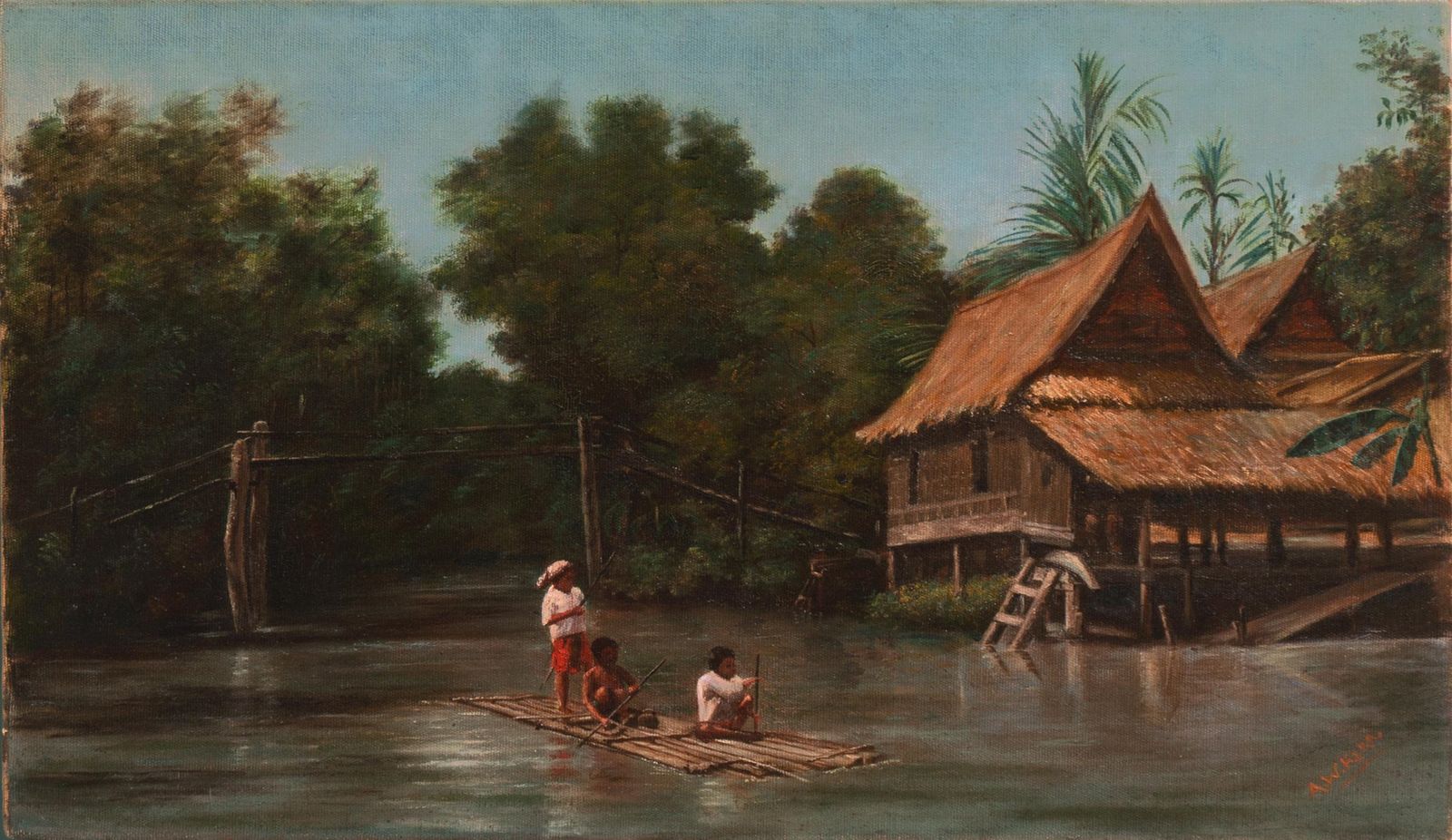
In the Malay world — what's now Malaysia, Indonesia and the southern Philippines — the traditional rumah panggung, or "stage house," is built on stilts as a near-universal default rather than a regional style. According to the documented history of the Malay house, the stilts serve several jobs at once depending on where the house sits: in Sumatra, raising the floor kept residents out of reach of dangerous wildlife, including snakes and tigers moving through the forest floor at night, while in villages near the big rivers of Sumatra and Borneo, the same stilts lifted the house clear of seasonal flooding. Ventilation was a bonus that came along for free — gaps in the floorboards and open space underneath let air move through the house in a climate where trapped humidity is its own kind of misery. It's a design logic that shows up again and again across the wider Malay archipelago, including the stilted village architecture you can still find inland from the beaches of Bali.
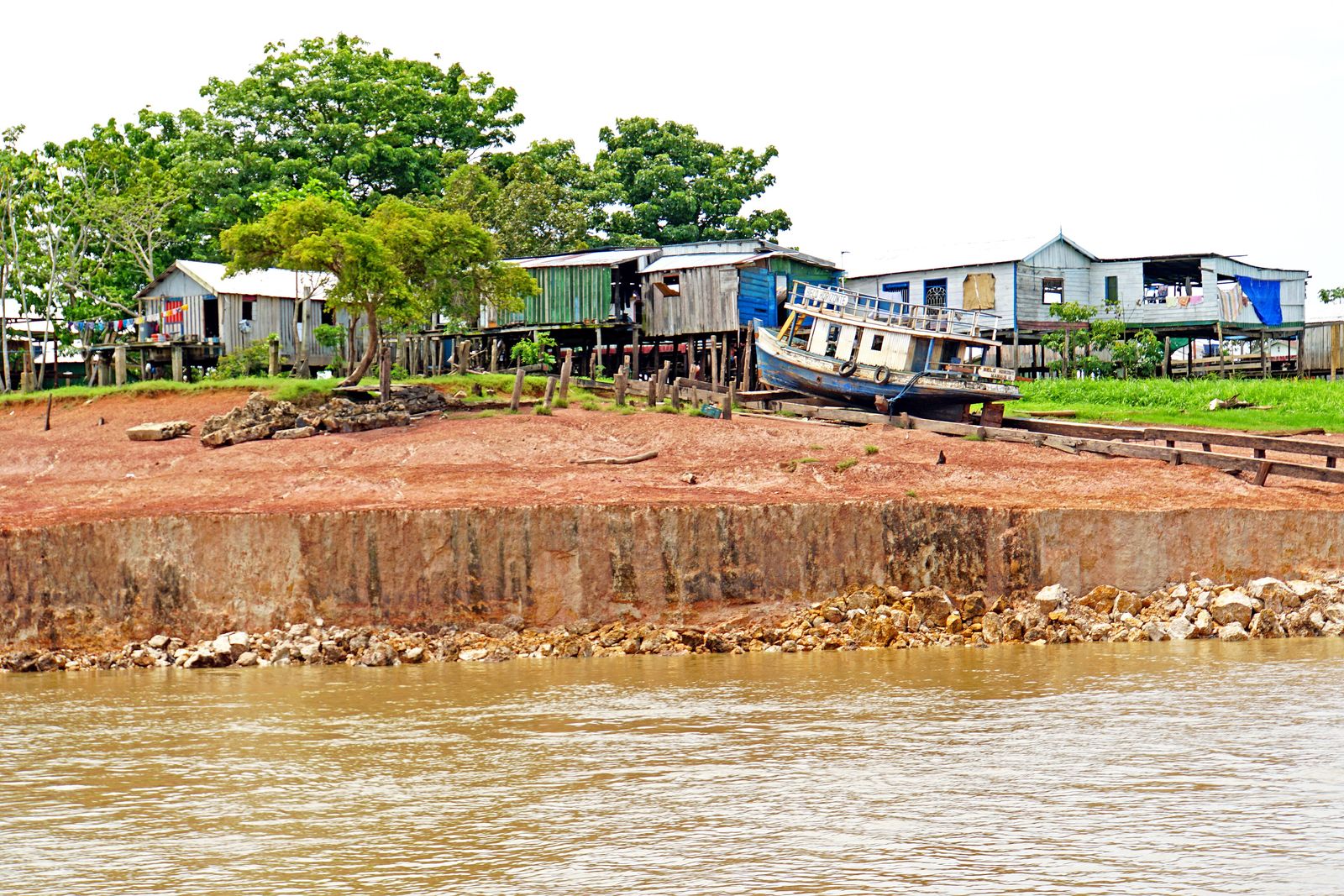
The Amazon has its own, separately evolved version of the same idea, and it's old enough to show up in colonial-era travel writing. The eighteenth-century Jesuit missionary João Daniel, traveling through the Brazilian Amazon, described riverside and lake-dwelling communities whose houses stood over the water itself, built from poles and palm-branch thatch rather than sawn timber — a direct ancestor of the stilted river houses, known in Portuguese as palafitas, still built along the Amazon's flooded-forest tributaries today. The reasoning tracks closely with the Malay version: raise the floor above a river that rises and falls by several meters between dry and wet season, and the house survives a flood cycle that would otherwise make riverside living impossible for half the year.
Africa contributes one of the best-documented and most dramatic versions of the idea, even if it isn't strictly a rainforest example: the stilt village of Ganvié, built on Lake Nokoué in what's now Benin. Local history holds that the Tofinu people settled the lake in the seventeenth and eighteenth centuries specifically because the Fon kingdom's warriors, bound by a religious prohibition against entering water, would not follow them there — a defensive use of stilts as pointed and practical as any flood-avoidance strategy. Whatever the exact original motive, Ganvié has stood on its lake for centuries and is still inhabited today, a reminder that raising a house on posts has never been only about weather.
None of these traditions borrowed from each other in any direct way. Southeast Asian stilt villages, Amazonian river houses and West African lake settlements developed on separate continents, on separate timelines, almost certainly without contact between the builders. What they share is a set of ground-level hazards — flood, predator, damp, insect — that repeat themselves in nearly every tropical and equatorial region on earth, and a solution simple enough that any builder with posts and rope could arrive at it on their own.
Why raise a house in the first place
It's worth listing the actual, functional reasons plainly, because the modern version of a stilted jungle stay tends to get sold on the view from the deck rather than the engineering underneath it, and the engineering is the more interesting story.
Flood and standing water
This is the big one, and it's the reason stilted architecture clusters so heavily along rivers, lakeshores and coastal wetlands. A house built on a slab or a shallow foundation in a floodplain has exactly one bad season before it needs serious repair; a house built a story above the flood line rides the water out underneath itself, year after year, without structural damage. Along Amazon tributaries where the water level can rise and fall by several meters between dry and wet season, this isn't a hundred-year-flood contingency — it's an annual, predictable event the house is built to absorb as routine.
Snakes, insects and the general traffic of the forest floor
Ground level in a rainforest is where almost everything that can hurt you actually lives and moves — snakes, scorpions, biting ants, and in parts of Sumatra and Borneo, historically, tigers. A floor raised even a few feet off the ground puts real, meaningful distance between a sleeping person and that traffic, without needing a sealed, air-conditioned building to do it. It's a low-tech solution to a problem a lot of modern jungle stays still spend real money solving with screens, sealed doors and pest control.
Rot, termites and general ground moisture
Wood left in constant contact with damp, warm ground rots and attracts termites fast — faster in the tropics than almost anywhere else on earth. Lifting the structural floor framing off the ground and letting air circulate underneath it dramatically slows both problems, which is a large part of why stilted construction remains the sensible default for timber building across the wet tropics even where flooding and dangerous wildlife aren't serious concerns.
Mosquitoes and disease
This one is easy to forget because it's invisible, but it's real: mosquitoes that carry malaria and other diseases tend to stay low, close to standing water and ground vegetation where they breed. A sleeping level raised a story into the air, with airflow moving underneath and around it, is measurably less hospitable to them than a ground-level room — one more reason the stilted house became the default across malaria-endemic regions long before anyone understood the mechanism.
Ventilation and heat
Raising a floor off the ground opens it up to airflow from underneath as well as from the sides, which matters enormously in a climate where the alternative — a sealed slab-on-grade building — traps heat and humidity at floor level with nowhere to go. Traditional stilted houses built with gapped floorboards let air move straight through the living space, a passive cooling strategy that predates the electric fan by centuries.
Good to know
Not every stilted jungle stay is dealing with all five of these problems at once. A hillside cabin on posts in a dry, well-drained part of Costa Rica is mostly managing rot, ventilation and the odd curious animal; a riverside lodge in the flooded forest of the Brazilian Amazon is managing an actual, annual flood cycle that would otherwise put the floor underwater for months. Worth knowing which version you're booking, since the height of the stilts is usually a pretty direct clue.
How one is actually built
The basic method hasn't changed much in principle since the eighteenth-century palafitas João Daniel described, even where the materials have moved from lashed poles to engineered lumber and concrete.
The posts themselves
Traditional stilted houses use whatever durable timber is locally available and resistant to rot and insects — ironwood and other dense hardwoods are common across Southeast Asia and the Amazon specifically because they hold up for decades in ground contact that would destroy softer wood in a few rainy seasons. Modern builds, including most of the lodges named later in this guide, more often use pressure-treated timber posts, concrete piers, or a combination — concrete for the section that meets the ground or the water, timber framing above it for everything that has to flex slightly rather than crack. Depth matters as much as material: a post meant to survive an actual flood surge, rather than just damp ground, needs to be sunk well below the anticipated scour line, not simply set on top of the mud.
Bracing against lateral load
A tall, narrow post is strong going straight up and down and comparatively weak sideways, which is the real engineering problem a stilted building has to solve that a slab-on-grade building doesn't. The fix is diagonal bracing — angled timbers or steel members connecting the posts to each other below the floor line, turning a row of individual sticks into a rigid frame that can resist wind load and, in a genuine flood, the lateral push of moving water itself. This bracing is often the least photogenic part of a stilted lodge and also the part doing the most structural work; a building on posts with no visible cross-bracing underneath is worth a second look before booking.
The floor and the walls above it
Once the post-and-brace frame is standing, the floor framing sits on top of it much like a conventional house's floor joists sit on a foundation wall — the difference is what's underneath. Traditional builds often left visible gaps between floorboards deliberately, for the ventilation described above; modern lodge construction more often uses a tighter, insulated floor deck with the airflow benefit coming instead from open sides, screened walls and ceiling fans. Walls above the stilted floor are frequently lighter than a ground-level house would need, since they're not doing any of the flood- or ground-moisture-resistance work — timber frame, screen mesh, thatch or metal roofing, depending on region and budget, following much of the same tropical-building logic covered in our guide to bamboo house construction.
Boardwalks and access
A single stilted cabin needs a stair; a whole stilted lodge needs a network. Most multi-cabin jungle lodges connect their raised buildings with elevated boardwalks rather than ground-level paths, for exactly the same reasons the cabins themselves are raised — keeping guests off flooded or animal-trafficked ground at night, and giving the whole property a consistent, walkable layer above the forest floor regardless of what the water table underneath is doing that week.
Off-grid systems: water and power up in the air
A stilted jungle lodge is very often an off-grid lodge as well, not because the two ideas are inherently linked, but because the same remote, flood-prone or water-adjacent sites that call for stilts also tend to be sites with no practical grid or municipal water connection. It's worth reading this section alongside our dedicated guide to how off-grid jungle homes handle solar and rainwater, since the systems themselves aren't unique to stilted construction — they just show up on stilted buildings unusually often.
Power is typically solar, sometimes backed by a generator for heavier loads, with panels mounted on the roof of the raised structure where they're clear of canopy shade and safe from ground-level flooding that would otherwise threaten ground-mounted equipment. What that power realistically runs is worth being specific about: lighting, fans, charging, and often a small refrigerator, but rarely full air conditioning — the ventilation the stilts and open walls already provide is frequently the lodge's actual cooling strategy, with solar power filling in around the edges rather than running a compressor all night.
Water is the more interesting problem on a genuinely flooded or riverside site, because the obvious source — the river or lake the house is standing over — usually isn't safe to drink untreated. Rainwater catchment off the roof, filtered and stored in an elevated tank, is a common solution, sometimes supplemented by water hauled or pumped in from a cleaner upstream source. Wastewater and sewage need equally careful handling on a stilted structure over or near open water — a badly designed system can undo a huge amount of the ecological benefit of building lightly on stilts in the first place, which is one of the real, unglamorous questions worth asking a lodge directly rather than assuming a raised floor automatically means a low-impact one.
The stilts solve the flood. They don't solve the plumbing. A lodge that's gotten both right is doing more engineering than the photos ever show you.
What it's actually like to sleep in one
The most immediate difference from a ground-level cabin is exactly what the design intends: you're up in the air, with a stair or a short ramp between you and the forest floor, and that changes the texture of the whole stay in ways that are mostly good and occasionally worth knowing about in advance.
The sound of water underneath the floor, on a lodge actually built over a river or a seasonally flooded lagoon, is a genuinely different experience from anything a ground-based jungle stay offers — current moving, the occasional splash, sometimes a boat passing below at night. Guests who've stayed at flooded-forest lodges along the Amazon consistently describe it as one of the most distinctive parts of the trip, not a background inconvenience. The trade-off is that it's an experience tied closely to season: the same lodge in dry season, with the water down and the ground exposed underneath, is a noticeably different and generally quieter stay.
Airflow is usually the other headline benefit. A well-built stilted room with screened rather than sealed walls catches breeze from multiple directions in a way a slab-built room simply can't, and it's a large part of why so many stilted lodges skip air conditioning entirely and still get warm reviews for comfort. The honest caveat is that "screened, not sealed" also means insects, geckos and the general nighttime soundtrack of the forest are part of the room rather than kept firmly outside it — the same trade-off travelers accept at an open-sided bamboo house or a jungle A-frame, and one worth being at peace with before booking rather than discovering at check-in.
Stairs are a small but real consideration. A stilted cabin sitting several meters up means a real flight of stairs multiple times a day, connected by boardwalk to the dining area, the dock or the trailhead — fine for most travelers, worth flagging for anyone with mobility concerns, and worth a direct question to the lodge rather than an assumption either way.
Real stilted stays worth knowing
The stilted house is one of the oldest ideas in this guide's whole subject, but it's still very much an active, bookable category, especially across the flooded forest of the Brazilian and Peruvian Amazon, where the annual flood cycle makes stilts close to non-negotiable.
In Brazil, Uakari Lodge sits inside the Mamirauá Sustainable Development Reserve, a protected várzea floodplain forest where the water can rise many meters between seasons — the lodge's buildings are built on stilts and effectively float above the reserve's water for a large part of the year, giving guests direct access to a flooded-forest ecosystem that a ground-level building simply couldn't survive in. Also in the Brazilian Amazon, Juma Amazon Lodge raises its bungalows on tall wooden stilts connected by boardwalks, with water passing beneath the rooms during the high-water months and the same structures standing clear above dry ground later in the year — a direct, present-day descendant of the palafitas João Daniel described nearly three centuries ago.
Across the border in the Peruvian Amazon, the pattern repeats with regional variations. Tahuayo Lodge, deep in the reserve system near Iquitos, raises each of its guest cabins on stilts and links them with an elevated boardwalk system rather than ground paths. Wasai Puerto Maldonado, on the Madre de Dios River in Peru's southern Amazon, runs stilted riverside bungalows with windows opening directly onto the river or the surrounding forest. And Treehouse Lodge, also on the Yarapa River, takes the idea to its most dramatic extreme with a structure called Laguna Vista — built around an oje tree roughly 38 feet above a seasonally flooded lagoon, technically a treehouse but engineered with the same flood-clearance logic that drives every stilted building in this guide, standing well above the water when the lagoon rises during high-water season.
Outside the Amazon basin, the same construction logic turns up wherever a jungle lodge sits on genuinely flood-prone or animal-trafficked ground. Awasi Iguazu, near Argentina's stretch of Atlantic Forest close to the Iguazú Falls, built all fourteen of its guest villas on stilts specifically to minimize the structures' footprint on the forest floor beneath them, each with its own private plunge pool and terrace looking straight into the canopy.
None of these are the only stilted lodges worth knowing — the design is close to a default across flood-prone rainforest regions generally — but they're real, currently operating properties, and a solid starting point for anyone who wants the specific, honest experience of a floor that isn't touching the ground.
Why the design is having a moment again
Stilted construction never actually went away in the regions where it's traditional, but it's had a visible second life in contemporary eco-lodge design over the last couple of decades, for reasons that track pretty closely with why builders reached for it in the first place, plus a couple of newer ones.
The biggest newer reason is footprint. A stilted building touches the ground at a handful of discrete post locations rather than across an entire foundation slab, which means far less earth-moving, less clearing, and less permanent disturbance to root systems and drainage patterns than a conventional foundation demands. For a lodge trying to genuinely minimize its impact on a rainforest site — rather than simply claiming to — building on posts is one of the more legitimate, verifiable ways to do it, since the alternative to the ground underneath a stilted lodge is largely still forest floor, not a poured slab.
The second reason is that guests have started actively seeking the experience the stilts create, not just the low-impact footprint behind it. A room where you can hear water moving underneath the floor, or watch the forest floor from several feet up rather than standing on it, reads as a genuinely different kind of immersion than a conventional cabin offers — closer to the treehouse category covered in our history of treehouse design, and a close cousin of the overwater bungalow, without either the canopy-level engineering of a true treehouse or the purely decorative lagoon setting of a resort overwater villa. It's a middle path — real ground-level hazard avoidance, dressed up as very little, because it doesn't need to be dressed up as anything.
Common questions
What's the actual difference between a stilted house and a treehouse?
A stilted house is supported by built posts, piers or piles that a builder places wherever the engineering calls for them; a treehouse uses one or more living trees as some or all of its structural support. They solve related problems — getting a room up off dangerous or unstable ground — but they're different structural systems with different design constraints.
How high off the ground does a stilted house actually need to be?
It depends entirely on what the stilts are defending against. A house managing rot, ventilation and the odd animal might sit a few feet up; a lodge built to clear an actual seasonal flood on an Amazon tributary, where water levels can rise several meters, needs stilts tall enough to clear that full flood line with margin to spare — sometimes well over a story high.
Are stilted jungle lodges usually off-grid?
Often, yes, mostly because remote, flood-prone or waterside sites tend to lack a practical grid connection regardless of the building style sitting on them. Solar power for lighting, fans and charging, plus rainwater catchment for non-drinking water, is the common setup — worth confirming directly with a specific lodge rather than assuming.
Is it safe to sleep in a stilted house during an actual flood?
A properly engineered stilted building is specifically designed to have water pass underneath and around it during flood season without structural risk to the living floor above — that's the entire point of the design, and lodges built in genuinely flooded-forest regions like Brazil's Mamirauá reserve operate through the flood season as a matter of course. The design only works, though, if the posts were engineered for the actual flood height and current the site experiences, which is a fair thing to ask about before booking a remote property.
Do stilted houses have air conditioning?
Rarely, and it's usually intentional rather than an oversight — the airflow the raised, often screened design creates is frequently the whole cooling strategy, and many stilted lodges run partly or fully off solar power that isn't sized for AC in the first place. Some higher-end properties do offer it; check the specific listing.
Are stilted houses noisy to sleep in?
They can be more acoustically open than a sealed, ground-level room, since screened walls let in the general sound of the forest and, on waterside lodges, the sound of the river or lagoon moving beneath the floor. Most guests describe it as a feature rather than a flaw, but it's worth knowing going in if you're a light sleeper.
Where to actually book one
If the flooded-forest version of this design is what's calling to you, the Amazon basin is the most concentrated place to actually book one — Uakari Lodge and Juma Amazon Lodge on the Brazilian side, or Tahuayo Lodge, Wasai Puerto Maldonado and the treehouse-leaning Laguna Vista structure at Treehouse Lodge on the Peruvian side, all named earlier in this guide with real, current stilted construction. Outside the Amazon, Awasi Iguazu's stilted villas are worth knowing for a different stretch of South American rainforest entirely, near the Brazilian and Argentine sides of the Iguazú Falls.
If it's the broader idea of low-footprint, elevated jungle architecture that drew you in rather than the flood-country engineering specifically, a few close relatives on this site are worth reading next: our history of treehouse design and our guide to overwater and floating bungalows both cover buildings solving a version of the same ground-avoidance problem, and how off-grid jungle homes handle solar and rainwater is worth a read before booking any remote lodge that's promising to be self-sufficient, stilted or not. For a wider survey of what's actually out there right now, our ranking of the best jungle Airbnbs in the world includes several stilted and elevated properties alongside the rest. And if a specific region is pulling at you more than the architecture itself — the flooded forests of Peru, the river systems of Brazil, or the stilt-village traditions of Bali and the wider Southeast Asian jungle — the full destination directory is the place to start browsing from there.
- Wikipedia — Malay house — the rumah panggung tradition, and the flood, wildlife and ventilation reasons Sumatran and Bornean houses are built on stilts.
- Wikipedia — Stilt house — general functions of stilted construction: flood clearance, ventilation, and protection from ground moisture and wildlife.
- Wikipedia — Stilts (architecture) — the broader architectural use of stilts and pilotis, including the distinction from purely decorative elevated construction.
- Wikipedia — Ganvié — the Tofinu stilt village on Lake Nokoué, Benin, and its history as a defensive settlement.
- Rainforest Cruises — Uakari Lodge — stilted, floating lodge construction inside Brazil's Mamirauá Sustainable Development Reserve.
- Culture Trip — The Coolest Jungle Lodges in the Amazon Rainforest — Juma Amazon Lodge's stilted bungalows and seasonal high-water access.
- Rainforest Cruises — Luxury Amazon Jungle Lodges — Treehouse Lodge's Laguna Vista structure on the Yarapa River, and Tahuayo Lodge's stilted, boardwalk-connected cabins.
- Room + Wild — Modern Rainforest Resorts — Awasi Iguazu's fourteen stilted guest villas in Argentina's Atlantic Forest.
More from the Journal.
 Photo: Basile Morin, CC BY-SA 4.0
What Is a Bamboo House? Bali's Bamboo Architecture Explained
How a fast-growing grass became the most beautiful building material in the tropics — the story of bamboo architecture and where to sleep in it.
 Photo: Vitus Wahlländer, CC BY-SA 4.0
Treehouses Explained: History & Modern Design
From childhood forts to seventy-foot canopy suites — how the treehouse grew up, and what makes a great one to stay in.
Overwater & Floating Bungalows in the Jungle
The room that floats — how raft houses and overwater bungalows are built on jungle lakes and rivers, and the best places to sleep on the water.
 Photo: Derek Ramsey (Ram-Man), CC BY-SA 4.0
Find your own piece of the canopy.
Treehouses, bamboo houses and rainforest villas across 17 destinations — found, vetted and written up honestly.
Browse all destinations