Internet & Connectivity in the Jungle
Ten years ago, "internet in the jungle" was a punchline. Now it's a genuine question travelers ask before booking, and the honest answer is: it depends entirely on which jungle, which lodge, and how much you're willing to spend on a dish. Some rainforest stays now have wifi as fast as a city apartment, powered by a small white satellite terminal on the roof. Others have none at all, on purpose, and will tell you so proudly in the listing. Knowing which is which before you arrive is the difference between a productive working trip and three days of holding your phone up near a window, waiting for a bar of signal that never comes.
The short answer: it depends where you go
There is no single truth about jungle internet, because "the jungle" isn't one place with one infrastructure story. A rainforest lodge twenty minutes from a Costa Rican town with fiber running down the main road is a completely different connectivity situation from a lodge four hours upriver in the Peruvian Amazon that's only reachable by boat. Both get called jungle stays. Both can be genuinely wonderful. Only one of them is likely to hold a video call without the picture freezing.
The single biggest shift in the last few years has nothing to do with cell towers and everything to do with satellites. Low-earth-orbit satellite internet, principally Starlink, has started showing up at remote lodges that would never have qualified for a phone line, let alone broadband, a decade ago. That doesn't mean every jungle stay now has fast wifi. It means the range of what's possible has widened dramatically, and a property's connectivity now says more about what the owners chose to install than about where on the map the property happens to sit. This guide walks through what's actually reaching these locations, what a lodge is likely to offer, whether you can genuinely work remotely from one, and how to find out before you book rather than after.
Good to know
"Wifi available" in a listing can mean a fiber connection fast enough for a video call, or it can mean one router in the lounge that occasionally reaches your room if you stand near the door. The word tells you almost nothing on its own. Ask the property directly what the connection is built on — cable, a local mobile network, or satellite — and you'll learn more in one sentence than from the whole rest of the listing.
Mobile signal: what actually reaches the jungle
Before satellite internet, mobile coverage was the main way anyone had signal at all in a remote rainforest destination, and it still matters enormously, because a phone with a local SIM or eSIM often gets you further than a lodge's wifi ever will. The catch is that mobile coverage in jungle regions is patchy in a very specific way: it tends to follow roads, towns and river settlements, and it drops off fast once you're genuinely inside dense forest or down in a valley with hills blocking the nearest tower.
A few patterns hold across most rainforest destinations:
- One carrier is usually noticeably better than the others in rural areas. In Costa Rica, Kolbi (run by the state telecom ICE) is widely regarded as having the strongest rural and jungle coverage of the country's carriers, reaching areas like Tortuguero, the Osa Peninsula and Monteverde's cloud forest better than competitors. In Indonesia, Telkomsel plays a similar role — it's the country's largest network and the one most likely to still show bars once you're off the main roads around Ubud's rice terraces and jungle ravines.
- Coverage thins out fast past the last town. Main roads and populated areas get 4G or better; the interior of a protected reserve or a lodge reachable only by boat very often gets nothing. Tortuguero National Park, the Corcovado side of Costa Rica's Osa Peninsula, and the deep interior of the Peruvian Amazon are common examples of places where phones simply go quiet.
- An eSIM from a specialized provider can extend coverage further than your home carrier's roaming. Regional eSIM providers often route through whichever local network has the best rural footprint, which matters more in jungle regions than in cities, where all the networks tend to perform similarly.
- Physical geography beats network quality every time. Thick canopy, steep valleys and distance from the nearest tower will defeat even a strong carrier. A property's proximity to a town matters more to your signal than which SIM is in your phone.
The practical move is simple: buy a local eSIM or SIM before or immediately on arrival rather than relying on international roaming, check which carrier the lodge or nearby town recommends (staff usually know exactly which network works from the property and which doesn't), and treat any mobile signal in a genuinely remote jungle location as a bonus rather than something to plan around.
Starlink and satellite internet: the thing that actually changed
If there's one piece of technology responsible for jungle lodges suddenly having usable wifi, it's low-earth-orbit satellite internet, and Starlink specifically. Unlike older satellite internet, which bounced signal off satellites parked in a fixed spot far above the equator and suffered from high latency and modest speeds, the newer generation of satellites orbits much closer to earth in large constellations, which cuts latency dramatically and pushes speeds high enough for video calls, streaming and large uploads. A property just needs a clear enough patch of sky above the dish — tree cover is the main obstacle, not distance from civilization.
Starlink's Roam plan, built specifically for mobile and off-grid use rather than a fixed home address, is priced in tiers: a capped 100GB-per-month plan starts at $55, a 300GB plan runs $80, and an unlimited-data plan is $175 a month, on top of a one-time equipment cost of $349 for the standard dish or $199 for the smaller, more portable Mini. For a small lodge, that's a genuinely reasonable monthly cost compared to what it would take to run a cable line or microwave relay to a location with no existing infrastructure — which is exactly why it's shown up so quickly at remote properties that would never have qualified for broadband before.
Real-world speeds on Starlink's Roam service typically land somewhere between 50 and 150 Mbps download, with uploads more modest at roughly 10 to 20 Mbps — more than enough for a video call, email, and normal browsing, though a heavy upload (a large batch of RAW photos, for instance) will take longer than it would on a home fiber connection. Rainforest Expeditions' Refugio Amazonas, a lodge in the Tambopata region of Peru's Amazon reachable only by boat from Puerto Maldonado, is a real example of this shift in action: the lodge now runs Starlink-powered wifi both at the property and on its boats, something that would have been close to unthinkable for a river-access-only Amazon lodge even five years ago.
That said, satellite internet isn't universal even where it's technically available, and it isn't free to run. A lodge has to weigh the monthly cost and the ongoing need to keep the sky above the dish clear of new growth against how much guests actually value it, and plenty of well-run, well-reviewed properties decide the trade-off isn't worth it, or simply haven't gotten around to installing it yet. Don't assume a lodge has satellite internet just because the technology exists — ask directly, the same way you'd ask about air conditioning or hot water.
A decade ago, a lodge four hours upriver with no wifi was just how things were. Now it's a choice — which means it's worth asking the lodge which choice they made, and why.
What lodges themselves offer
Beyond the underlying technology, it's worth understanding the shapes jungle wifi actually comes in, because "the property has wifi" covers a wide range of real experiences:
- Full in-room wifi, all day. Increasingly common at lodges with Starlink or a solid fiber connection nearby, especially in destinations closer to towns — parts of Bali, Costa Rica's more developed regions, and Tulum's jungle-adjacent stays in Mexico often fall here.
- Communal wifi in a lounge or reception area only. A common middle ground at off-grid or partially off-grid properties: a router in the main building, sometimes only switched on for a few hours in the evening to manage battery draw, with no signal reaching individual rooms or cabins.
- Scheduled or metered access. Some remote lodges cap wifi to certain hours, or ask guests traveling on business to flag it in advance so staff can prioritize the connection during video calls.
- None, by design. A meaningful number of jungle properties, particularly ones built around a disconnection-focused pitch, simply don't offer wifi at all and are upfront about it in their own marketing.
None of these is automatically better than the others — it depends entirely on what you need from the trip. The mistake is assuming any of them without asking. A listing that says "wifi available" tells you almost nothing about which of these four situations you're actually walking into.

Can you actually work from the jungle?
Yes, at a meaningful and growing number of properties — but "yes" comes with real conditions, and it's worth being honest about them before you book a trip around the assumption that you'll be fully productive.
What tends to work
Email, messaging, browsing, and audio calls are the most forgiving uses of a jungle internet connection, because they tolerate small drops and lower bandwidth far better than video does. A Starlink-equipped lodge with a clear sky view can usually handle a video call reasonably well too, though it's sensible to expect the occasional freeze or drop, especially during heavy rain, which can affect satellite signal more than a wired connection. Uploading and downloading moderate files, joining scheduled meetings, and getting through a normal day of async work is realistic at a growing number of properties, particularly the more established, higher-end lodges that have invested in Starlink specifically because they know some guests need it.
What tends not to work
Anything that depends on a rock-solid, uninterrupted connection is a real risk: a live presentation to a large group, a call where a dropped connection would be genuinely costly, or heavy, sustained uploads like large video files. Power is the other constraint that internet speed alone doesn't solve — many properties with strong wifi are still running on solar or generator power, which means the connection itself might be fine while your laptop battery and the property's outlets are the actual bottleneck. It's worth reading our guide to off-grid jungle stays: what to expect alongside this one if you're weighing a work trip against a property that's off-grid for power as well as remote for connectivity — the two questions are related but not the same.
Good to know
If a specific call genuinely cannot drop — a live pitch, a signing, an interview — do not bet it entirely on jungle wifi, satellite or otherwise, no matter how good the property's reviews are. Weather, tree growth over a dish, and shared bandwidth with other guests are all real variables a hotel in a city doesn't have to deal with. Build in a backup: a local SIM as a hotspot, or simply schedule the call for a day you're passing through a town with reliable coverage.
The realistic way to plan a working trip is to treat any jungle connection, even a good one, as less predictable than what you're used to at home, and structure your week accordingly: schedule anything time-critical for the mornings when a property's battery and bandwidth are freshest, keep a local eSIM as backup for messaging if the main connection drops, and build slack into your calendar rather than booking back-to-back calls the way you might in an office. Done that way, plenty of people genuinely do work full days from jungle stays now — it's a real and growing pattern, not a marketing promise.
Region-by-region notes
Connectivity varies as much by region as it does by individual property, mostly driven by how developed the surrounding infrastructure is and how remote a given lodge chooses to be within it.
Costa Rica
Costa Rica has some of the more developed connectivity infrastructure of any jungle destination on this list, particularly around the Central Valley, Arenal and the more visited parts of the Pacific coast, where 4G coverage from Kolbi/ICE is generally solid. It drops off in genuinely remote pockets — Tortuguero (accessible only by boat or small plane), the more isolated stretches of the Osa Peninsula, and higher into the Monteverde cloud forest — where dead zones are real and expected rather than a sign anything's wrong. A growing number of eco-lodges here, including some in the off-grid category, have added Starlink specifically to serve both guests and their own bookings and operations. See our full Costa Rica destination guide for more on the country's regions.
Peru and the Amazon basin
The Peruvian Amazon around Tambopata and Madre de Dios has some of the most remote lodges anywhere in this guide, and it's also where the Starlink shift is most visible, because the alternative — no connectivity at all, hours from the nearest town by boat — was the baseline for so long. Refugio Amazonas now runs Starlink-powered wifi at the lodge and on its river boats, a genuine change from how these properties operated even recently. Not every Amazon lodge has made the same investment, and some, deliberately or not, remain fully disconnected. Our Peru guide has more on planning a trip to this region.
Brazil
The Brazilian Amazon shares much of Peru's remoteness profile: river access, long distances from towns, and connectivity that depends heavily on which specific lodge you choose rather than the region as a whole. Coverage along more populated river towns and the edges of the basin tends to be better than deep interior stays, and as with Peru, satellite internet is starting to appear at the more established or higher-end properties. See our Brazil destination guide for more on planning around this.
Bali
Bali sits at the more connected end of the jungle-stay spectrum. Telkomsel, Indonesia's largest mobile carrier, has the strongest rural footprint on the island and is generally the most reliable choice once you're away from the main tourist strips. Central Ubud, including popular spots like the Monkey Forest, has solid 4G coverage, and wifi is common at jungle-adjacent villas and stays in the area. Signal weakens in deeper jungle ravines and the more remote rice terrace areas, but genuine dead zones are less common here than in the Amazon or Costa Rica's most isolated pockets. See our Bali destination guide for more.
Tulum and the Maya jungle
The jungle-adjacent stays around Tulum and the broader Yucatán benefit from Mexico's relatively developed telecom infrastructure, and mobile coverage along the coast and main roads is generally reliable. It gets patchier the further you move inland into denser jungle away from the main tourist corridor, so it's worth checking with any specific property about its wifi setup rather than assuming Tulum's overall connectivity applies everywhere nearby. See our Tulum & the Maya jungle guide for more.
Elsewhere
Connectivity in jungle regions across Puerto Rico, Hawai'i, Thailand, Colombia and Sri Lanka follows the same underlying pattern as everywhere else in this guide: proximity to towns and roads is the strongest predictor of mobile signal, and whether satellite internet has reached a given property depends on that lodge's own investment rather than the country as a whole. Always check directly with the specific property rather than assuming a country's general reputation for connectivity applies to every stay within it.
A connectivity checklist before you book
A short list of questions, asked directly to the property before booking, will tell you more than any amount of guessing from the listing photos:
- Is wifi available in the room, or only in a communal area? This single question resolves most of the ambiguity in a typical listing.
- Is the connection satellite, fiber, or a local mobile network? Satellite (Starlink or similar) tends to be the most consistent option at remote lodges; a shared mobile hotspot is more prone to slowing down when several guests use it at once.
- Is there a cost or data cap for guest wifi use? Some properties on capped satellite plans ask heavy users (large uploads, streaming) to be mindful of shared data.
- What's the mobile carrier situation nearby? Staff will usually know exactly which network has signal at the property and which doesn't, which can save you from buying the wrong local SIM.
- What's the backup if the connection drops during something important? Reputable, remote-work-friendly lodges usually have a straightforward answer to this; a vague one is itself useful information.
If you're booking through a listing rather than contacting a lodge directly, our guide on how to book a jungle Airbnb (what to check) covers the broader set of questions worth asking before you commit, connectivity included.
What to pack for staying connected
A short kit goes a long way toward closing the gap between a property's connection and what you actually need:
- A local eSIM or physical SIM, bought before you arrive or immediately at the airport, from the carrier known locally for the best rural coverage rather than whichever one is most convenient.
- A portable power bank, fully charged before you arrive, especially at off-grid properties where in-room outlets may be limited or scheduled.
- Offline copies of anything essential — maps, key documents, boarding passes — downloaded before you lose reliable signal rather than assumed you'll be able to pull them up later.
- A lightweight travel router or hotspot device, if your trip genuinely depends on staying online, since it lets you combine a local SIM's signal with a property's wifi rather than relying on just one.
- A realistic sense of your own limits — the single most useful thing to pack isn't hardware at all, it's a plan for what happens if the connection simply doesn't cooperate on a given day.
Our general what to pack for the jungle guide covers the rest of the kit beyond connectivity specifically.

The case for choosing no signal on purpose
All of the above assumes you want connectivity, and increasingly you can find it. But it's worth saying plainly: a growing number of travelers book jungle stays specifically because they won't have signal, and the trade-off is a real and well-documented one, not just a marketing angle. Meals run longer without a phone at the table. Evenings fill with actual conversation instead of scrolling. You notice how loud a rainforest genuinely is after dark once nothing else is competing for your attention. If a work trip isn't the point of your visit, it's worth at least considering a property that's off-grid for connectivity on purpose, and treating the disconnection as part of what you paid for rather than a gap in the amenities. Our solo travel in the jungle guide has more on planning a trip — working or not — around real disconnection, including how to stay safely reachable in an emergency even when you're not reachable for anything else.
Whichever way you land, the honest advice is the same: decide what you actually need before you book, rather than assuming either way and being surprised. A trip planned around genuine disconnection, chosen deliberately, tends to be more satisfying than one where you spent the whole week fighting a connection that was never going to hold.
Common questions
Will my phone work at all in a remote jungle lodge?
Sometimes, depending on how close the property is to a town or main road, and which local carrier you're on. Ask the lodge directly which network has signal there — staff generally know exactly which carrier works and which doesn't, and it often isn't the biggest one nationally.
Do jungle lodges have wifi now?
A growing number do, thanks largely to satellite internet services like Starlink, which have made broadband-level speeds possible at properties with no cable or fiber access at all. Plenty of others still have limited or no wifi, sometimes as a deliberate choice. Always check with the specific property rather than assuming based on the region.
Can I actually work remotely from a jungle stay?
At a meaningful number of properties, yes — email, messaging, browsing and most calls are realistic at a lodge with a solid connection. Anything that absolutely cannot drop, like a live pitch or a signing, is safer scheduled for a day you're passing through a town, or backed up with a local SIM as a hotspot.
What is Starlink, and why does it matter for jungle travel?
Starlink is a satellite internet service using a large constellation of satellites orbiting close to earth, which gives it far lower latency and higher speeds than older satellite internet. Because it doesn't need cable or fiber infrastructure, it's shown up quickly at remote lodges that would never otherwise have qualified for broadband, including river-access-only Amazon properties.
Should I buy an eSIM before I arrive?
It's generally worth it for jungle travel specifically, since local eSIM providers often route through whichever carrier has the strongest rural coverage in that country, which matters more outside cities than within them. Buying one before you travel also means you're not relying on international roaming, which is typically both more expensive and less reliable in remote areas.
Is it worth choosing a jungle stay with no internet at all?
For a lot of travelers, genuinely yes. A trip built around real disconnection — no wifi, limited or no signal — is a different kind of experience than a working trip with a good satellite connection, and plenty of people book jungle stays specifically for that reason. The key is choosing it on purpose rather than discovering it by surprise.
Jungle connectivity has changed faster in the last few years than in the previous two decades combined, and it's still changing. A lodge that had no wifi at all last time you checked may well have Starlink now, and one that advertises "wifi available" may still mean one router in a lounge that switches off at nine. The only reliable approach is to ask the specific property directly, decide honestly whether you want to be reachable or not, and pack accordingly. If you're still choosing where to go, our full destination directory is a good place to start, and if the trade-offs in this guide have you weighing a fully off-grid stay instead, off-grid jungle stays: what to expect covers the rest of what changes when a property is disconnected by design.
- Starlink, Roam — official pricing and plan details for Starlink's mobile/off-grid satellite internet service.
- SatelliteInternet.com, Starlink Roam Review — real-world speed and performance data for Starlink Roam.
- Rainforest Expeditions, Refugio Amazonas — example of a river-access-only Amazon lodge in Tambopata, Peru now running Starlink-powered wifi.
- Costa Rica Spirit, Best eSIM for Costa Rica — coverage notes on Kolbi/ICE's rural and jungle signal strength versus other Costa Rican carriers.
- BaliEasy eSIM, Best Mobile Networks in Bali — coverage comparison of Telkomsel and other Indonesian carriers in rural and jungle areas of Bali.
- eSIMy, Indonesia eSIM Coverage Guide — signal notes for Ubud, the Monkey Forest and central Bali.
- Wikipedia, Starlink — general background on low-earth-orbit satellite internet technology.
More from the Journal.
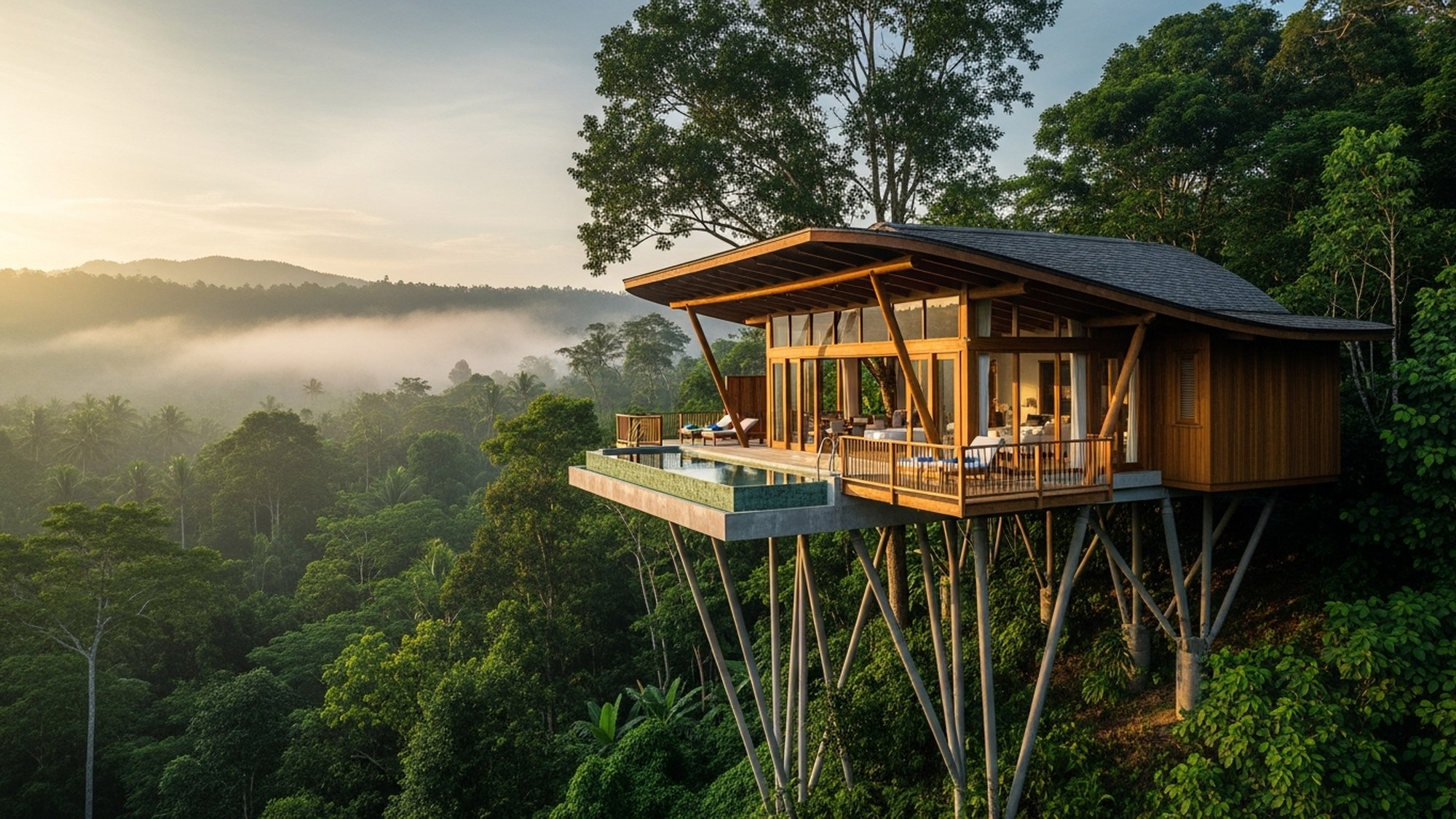
How to Start a Jungle Airbnb
The complete, honest guide to building and running a treehouse, bamboo house or rainforest villa — from choosing a country and the land laws to off-grid systems, budgets, and getting booked.
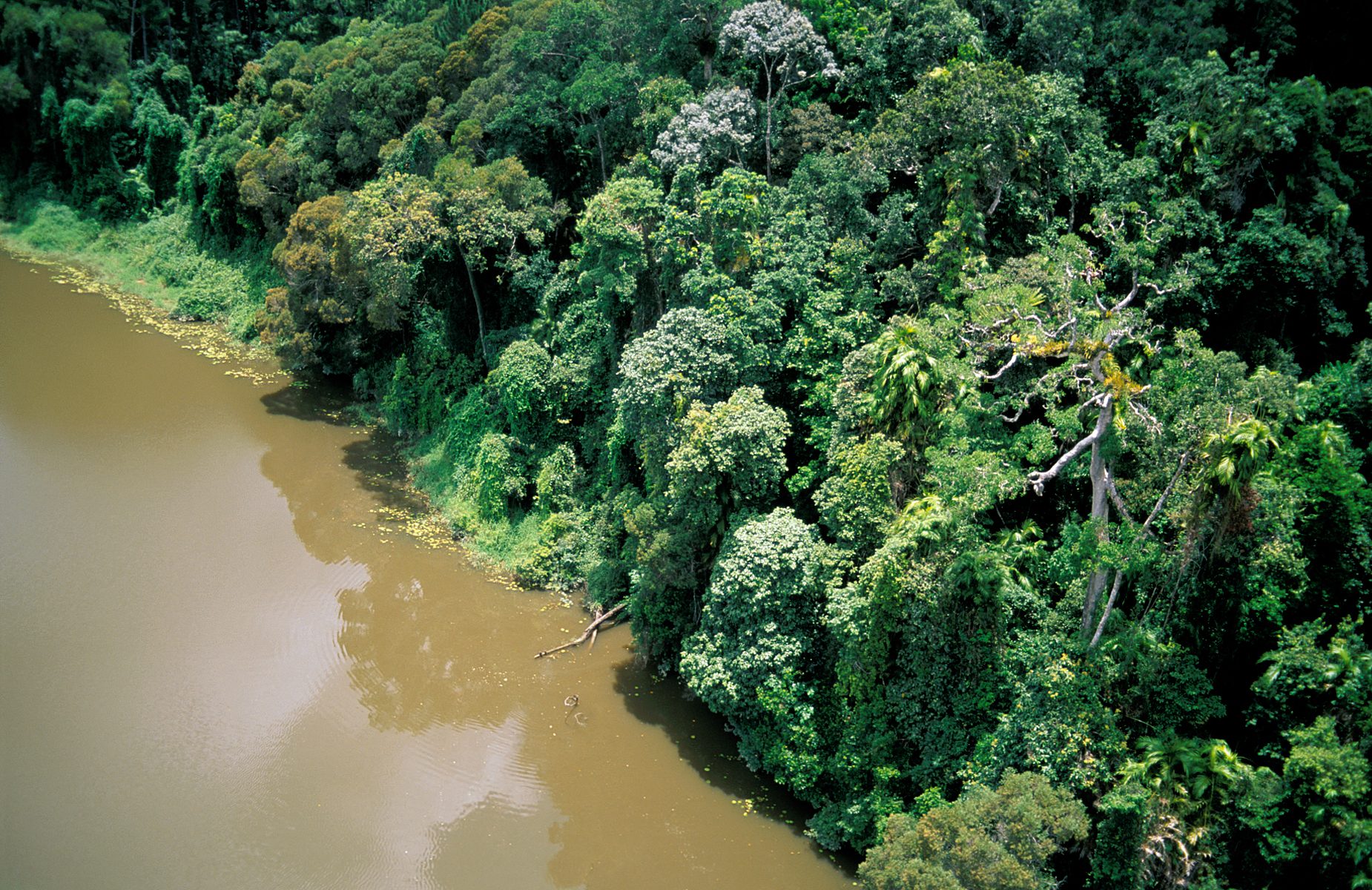 Photo: Gregory Heath, CSIRO, CC BY 3.0
Why Jungle Stays Are Booming
The data behind the treehouse boom: four shifts in how the world travels are all converging on the forest — and it looks structural, not a fad.
 Photo: Vyacheslav Argenberg, CC BY 4.0
When to Visit the Jungle: A Season-by-Season Guide
There's no single best time to visit 'the jungle' — because it isn't one place. Here's when to go, region by region, with a month-by-month cheat sheet.
 Photo: Derek Ramsey (Ram-Man), CC BY-SA 4.0
Find your own piece of the canopy.
Treehouses, bamboo houses and rainforest villas across 17 destinations — found, vetted and written up honestly.
Browse all destinations