How to Book a Jungle Airbnb (What to Check)
A jungle stay looks like every other Airbnb listing right up until you arrive: the walls might stop halfway up, the wifi might exist for two hours a night, and the thing keeping mosquitoes off you at 2am might be a net rather than a screen. None of that is a problem if you know it's coming. It's only a problem when you find out at check-in. This is the list of questions worth answering before you pay, not after.
Why jungle stays don't play by normal booking rules
Booking an apartment in Lisbon and booking a jungle stay outside Puerto Jiménez are, on paper, the same transaction: you pick dates, you pay, you show up. In practice they're different enough that the habits you've built booking city Airbnbs will actively mislead you. A city listing that says "air conditioning" has air conditioning. A city listing with four stars and forty reviews is a known quantity. A city listing's location pin is accurate to the meter, and if something goes wrong, there's another place two blocks away.
Jungle stays remove most of those guardrails at once. Open-air construction is common and often the whole point, not a defect. "Twenty minutes from town" can mean twenty minutes by paved road or twenty minutes by 4x4 track that stops being passable in October. Wifi, hot water and air conditioning are amenities that exist on solar and generator schedules rather than a flat switch. And because these properties are frequently one-of-one — a single owner-built cabin rather than one of forty identical units in a building — a five-star review from someone who visited in the dry season tells you less than you'd think about your own trip in the wet season.
None of this makes jungle stays a bad idea. It makes them a category that rewards a bit of extra homework before you book, the same way booking a safari camp or a dive liveaboard does. The rest of this guide is that homework, organized in the order it actually matters: read the listing properly, understand where you're really going, check the systems that keep you comfortable, read reviews for the right signals, ask the host directly, understand what protects you if something goes sideways, and time the booking to the season. If you're weighing where to go in the first place, our destination directory is a reasonable starting point before any of this applies.
Read the listing like you've already been there
Most of what you need is already in the listing — it's just written in a shorthand that's easy to misread if you've mostly booked city stays. A few phrases are worth learning to parse properly.
"Open-air" and "semi-open" mean exactly that
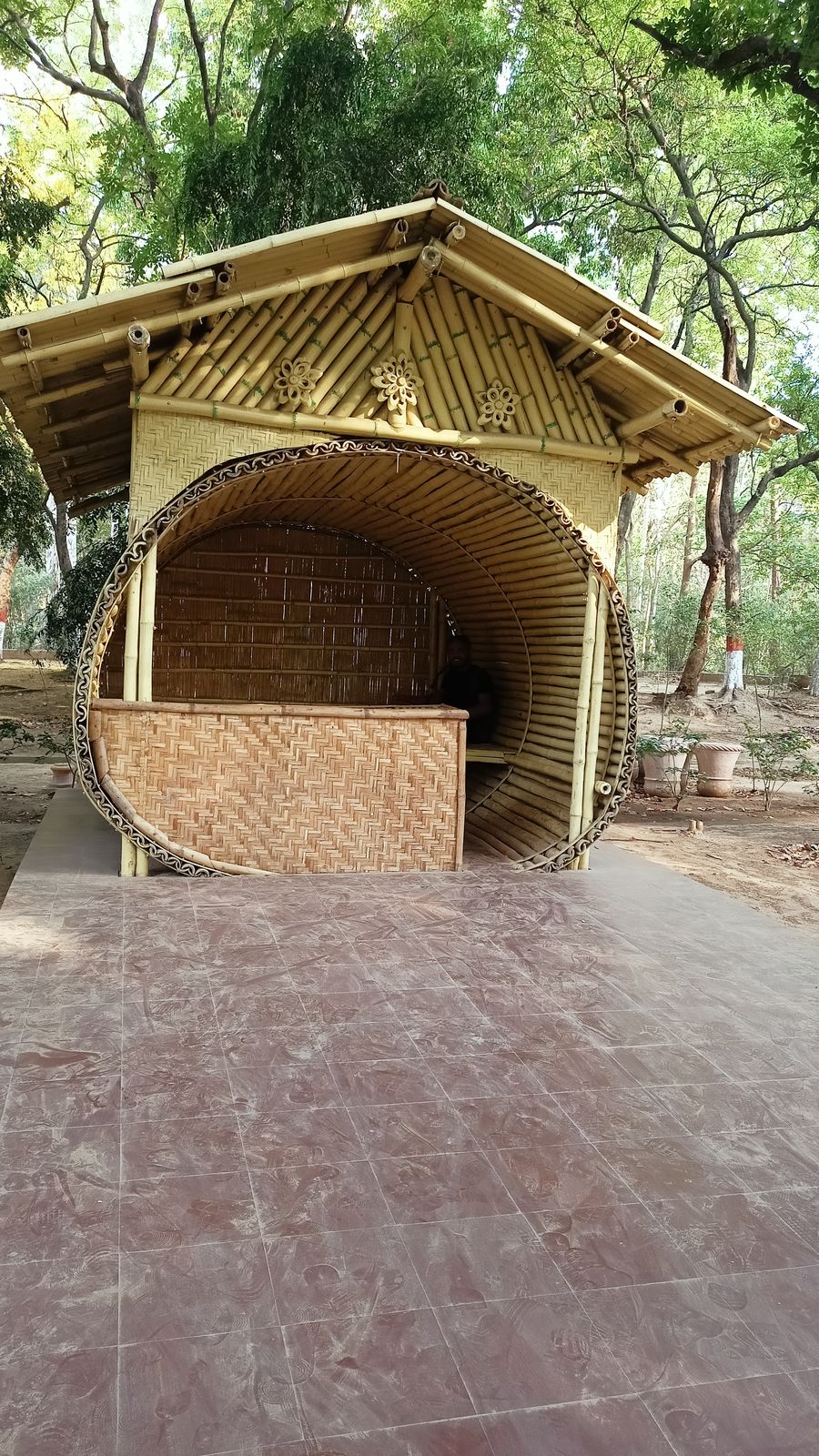
Jungle architecture leans hard on connecting the interior to the forest: walls that stop at chest height, a bathroom with a living wall of vegetation instead of a fourth wall, a bedroom with screens instead of glass. Photos usually show this honestly because hosts know it's a selling point for the right guest and a dealbreaker for the wrong one — but scroll past the golden-hour hero shot and look at the detail photos of the actual sleeping area. If you can't tell whether a wall is solid, screened or absent, that's the first thing to ask the host directly, covered in the messaging section below.
Photos: check the wide shots, not just the styled ones
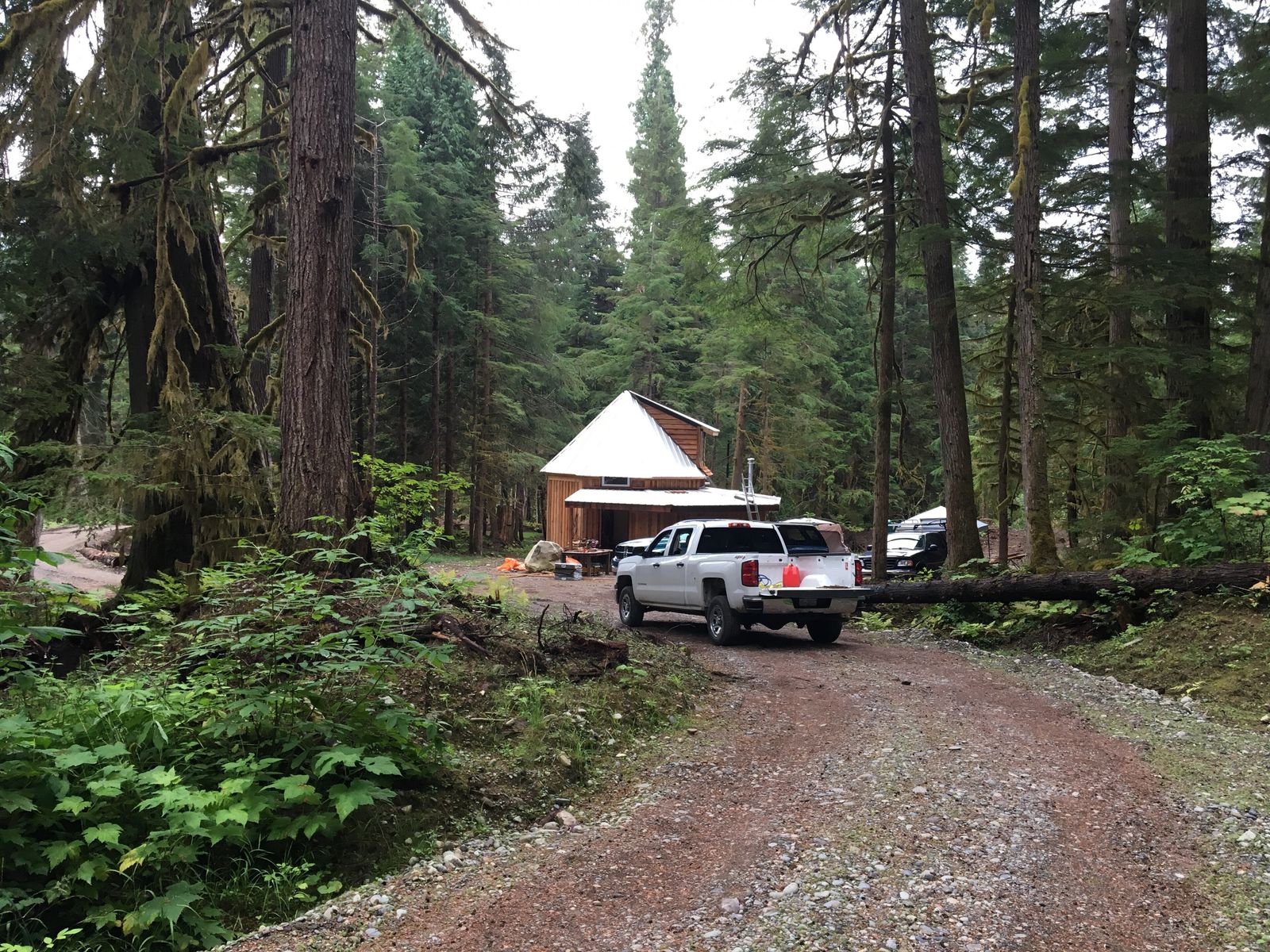
A single well-lit photo of a deck at sunset tells you almost nothing about the building it's attached to. Look for at least one photo that shows the property from a distance — it tells you whether you're looking at a stand-alone cabin, a unit inside a larger lodge complex, or something built directly onto a hillside that means stairs, and a lot of them, between your room and the common area. If every photo is a tight, styled crop with no wide establishing shot, treat that as a small yellow flag worth asking about rather than a dealbreaker on its own.
"Jungle view" versus "in the jungle"
These are different products. A jungle view can mean a comfortable, fully enclosed room with a forest outlook and normal amenities — closer to a regular vacation rental with good scenery. Being genuinely in the jungle usually means the canopy is close enough to affect light, sound, humidity and bugs inside the room itself, not just outside the window. Both are legitimate ways to spend a trip; the mismatch happens when someone books expecting one and gets the other. The listing description and photos together usually make this clear if you read past the headline.
Amenity icons are a starting point, not a guarantee
"Wifi" as a checked amenity box can mean anything from a fast fiber connection to a satellite hotspot that drops every time it rains. "Air conditioning" might cool one room and not the outdoor-adjacent bathroom. "Kitchen" might mean a full range or a two-burner camp stove. None of this is dishonest listing behavior so much as the limits of a checkbox system built for standard apartments — it just means the box confirms the amenity exists somewhere on the property, not that it works the way you're picturing. Where an amenity actually matters to your trip, confirm the specifics with the host rather than trusting the icon alone.
Good to know
Look for a listing description that mentions specific limitations unprompted — generator hours, a warning about the last kilometer of road, a note that wifi is for messaging rather than video calls. Hosts who volunteer the inconvenient details tend to be more reliable across the board than ones whose listing reads like pure marketing copy.
Location and access — how remote is remote
The single most common source of jungle-stay disappointment isn't the room, it's the journey to the room. "Remote" is the entire appeal of a genuine jungle stay, but remote access has real logistics attached, and those logistics change by season more than most travelers expect.
Take Costa Rica's Osa Peninsula, one of the more visited jungle regions covered on this site, as a working example of what "remote" actually involves. The peninsula runs a distinct green season from roughly May through November — seven months of the year — with the heaviest rain concentrated in October and November, and a brief drier stretch in July that locals call the Veranillo. During dry-season months, a high-clearance two-wheel-drive SUV can usually manage the unpaved roads out toward Corcovado National Park and Carate. During the wetter months, a genuine 4x4 is recommended rather than optional, and some of the more remote eco-lodges and sections of the park close entirely during the peak of the wet season. None of that is a secret — it's published by regional tourism boards and the lodges themselves — but it's easy to miss if you're booking from a map and a set of photos rather than checking the calendar against the route.
The lesson generalizes well beyond Costa Rica. Before booking anywhere genuinely remote, check three things specifically:
- The last stretch of the journey. Paved road the whole way, unpaved 4x4 track, river or boat transfer, or a combination — and whether that changes by season.
- Whether a vehicle is required, provided, or arranged. Some jungle stays include a transfer from the nearest town or airstrip; others expect you to arrive with your own rental, which may need to be a specific vehicle type.
- What happens if the road is bad on your travel day. A heavy rain event can turn a 45-minute drive into a multi-hour one, or make a river crossing impassable until water levels drop. Ask the host how often that happens during your travel dates and what the contingency is.
This isn't unique to Costa Rica — it applies to jungle stays across Brazil's Amazon region, parts of Bali's interior, and most genuinely remote jungle destinations covered in our destination directory. The pattern repeats: the more remote and more beautiful the setting, the more the journey itself deserves its own line of questioning before you commit.
The photos sell the destination. The road, the boat or the river crossing decides whether you actually arrive comfortable, and that part rarely makes it into the listing gallery.
Power, water and connectivity
"Off-grid" is a badge of honor on a lot of jungle listings, and it's usually true in the best sense — solar panels, rainwater collection, a genuinely lower footprint than a resort. It also means the systems that power your stay run on schedules and limits that a city apartment never has to think about.
Power
Solar-powered properties generally have power during daylight and into the evening, then taper off or shut down overnight except for essential circuits like a refrigerator. Generator-powered properties often run the generator for a defined window — a few hours in the evening is typical — and are silent the rest of the time, which is sometimes the point but is worth knowing if you were planning to run a fan all night. Ask specifically: how many hours of power per day, is it consistent or does it vary with weather, and can you charge a laptop or camera battery reliably. If a device genuinely needs to stay charged — a CPAP machine is the clearest example — get a direct answer before booking, not a general assurance.
Water
Hot water in an off-grid jungle property is often solar-heated, which means it's more reliable on sunny afternoons than on a rainy morning. Some properties rely on rainwater or spring-fed systems for all water, which is generally fine to shower in but not always fine to drink without treatment — ask directly rather than assuming either way, and pack a means of purifying water if you're at all uncertain.
Connectivity
This is the amenity most worth setting realistic expectations for. A wifi icon on a remote jungle listing often means a satellite connection or a cellular hotspot rebroadcast as wifi, both of which can be perfectly fine for messaging and slow for anything else, and both of which are affected by heavy rain. If you need to work remotely or take video calls during your stay, ask the host directly what the connection actually supports rather than trusting the amenity list, and have a local SIM or international data plan as a backup where cell coverage exists nearby even if the property's wifi doesn't hold up. Genuinely off-grid stays with no connectivity at all exist too, and plenty of travelers book them on purpose — our guide to what to expect from an off-grid jungle stay goes deeper on that specific tradeoff.
Climate control: heat, walls and mosquito nets
Air conditioning is the exception in genuine jungle architecture, not the rule, and that's usually a deliberate design choice rather than a missing amenity. Open-air and semi-open structures rely on cross-ventilation, elevation, shade and ceiling height to stay livable in heat that would make a sealed, unconditioned room miserable. It works surprisingly well in a well-designed property and poorly in a badly designed one, and you generally can't tell the difference from photos alone — this is worth asking about directly if heat tolerance is a real concern for you or anyone traveling with you.
The mosquito net is doing real work
In a property with screened or open walls, the mosquito net over the bed isn't a decorative touch — it's frequently the actual barrier between you and insects overnight, doing the job a sealed window and screen would do elsewhere. Check that the listing photos show a net that's properly sized and hung, tucked under the mattress rather than just draped over the frame, since a gap at the bottom defeats the purpose. If bug exposure is a significant concern for you, ask the host directly whether the property is screened, netted, or both, and pack accordingly — our packing guide covers the repellent and clothing side of this in more depth.
What actually helps with heat
A ceiling fan does more for comfort in a genuinely well-ventilated jungle room than most people expect, and it's worth checking the listing for fans specifically if air conditioning isn't offered. Elevation also matters more than people assume: a property up a hillside or on stilts generally catches more airflow and stays several degrees cooler at night than one tucked low in a valley, even a short distance away. If you run hot, ask the host how guests typically find the nighttime temperature rather than relying on a general "very comfortable" line in the listing description, which means different things to different hosts.
Good to know
Rooms lower in a valley or directly beside dense vegetation tend to trap both heat and moisture more than elevated, breezier sites nearby — sometimes within the same small property. If a listing offers a choice of rooms or cabins, it's worth asking which one sits highest or catches the most breeze if nighttime heat is a concern.
Reviews: what to actually look for
Reviews on a jungle listing carry a different kind of signal than reviews on a city apartment, mostly because the sample size is smaller and the seasonal variation is bigger. A handful of five-star reviews from dry-season visitors won't tell you much about a wet-season stay, and a single frustrated review about bugs or heat might say more about that traveler's expectations than the property itself.
Read for pattern, not for star rating
One negative review mentioning generator noise is a data point. Three separate reviews across different months all mentioning the same thing — unreliable wifi, a rough final stretch of road, mosquitoes indoors — is a pattern worth taking seriously and asking the host about directly. Star ratings compress a lot of very different experiences into one number; the actual text is where the useful information lives.
Check the dates against your own travel dates
A review from February praising the dry, breezy weather isn't much use if you're booking for September. Where possible, look specifically for reviews written during the same rough season you're traveling in — they'll tell you far more about road conditions, bug levels and humidity than reviews from the opposite season, even on the exact same property.
Look at how the host responds
A host who responds to a critical review by addressing it directly — acknowledging a real issue, explaining a fix, or clarifying a misunderstanding — is a better sign than a host who ignores criticism or responds defensively. Given how much of a jungle stay depends on the host being reachable and helpful once you've arrived, this is one of the more useful things a review section can tell you that a star rating can't.
Weight recency
Jungle properties change — a new generator, a repaired road, an expanded net over the bed — faster than most listings' overall rating reflects, since older reviews carry equal weight in the average. If a property has forty reviews and the five most recent all mention a specific improvement or a specific new problem, trust the recent cluster over the historical average.
Message the host before you pay
For a standard city apartment, messaging the host before booking is a courtesy. For a genuine jungle stay, it's close to a requirement, because so much of what matters — wall construction, road conditions on your specific dates, generator hours, net quality — either isn't in the listing at all or is described in language general enough to hide the real answer. A good host expects these questions and answers them plainly; a host who's vague or slow to answer specific, reasonable questions is itself useful information before you commit.
A short, direct list to send before you book:
- Are the walls of the bedroom and bathroom fully enclosed, screened, or open to the outside?
- What are the power hours, and is it solar, generator, or grid?
- Is there a mosquito net over the bed, and is it a full enclosure?
- What's the road or transfer like from the nearest town, and does that change in the rainy season?
- Is there cell signal or wifi reliable enough for messaging, and is it affected by weather?
- Is drinking water provided, or do we need to treat or bring our own?
- What's the nearest point with medical care, and how far is it in travel time?
- Are there any dates in our stay when the road, river or access point is known to be difficult?
You won't always need every question — a semi-remote jungle stay with a paved driveway and full grid power doesn't need the same interrogation as a lodge accessible only by boat — but asking the ones that apply, in writing, before you pay gives you both a clearer picture of the trip and a record to point back to if something advertised turns out to be materially different on arrival, which matters for the protections covered next.
Cancellation policies and what actually protects you
It's worth understanding what you're actually agreeing to when you book, separate from anything jungle-specific, because the terms determine how much flexibility you have if the road washes out, a storm delays your travel, or the trip otherwise doesn't go to plan.
The cancellation tiers
Airbnb hosts choose from four cancellation policy tiers: Flexible, Limited, Moderate and Firm. Flexible allows a full refund up to 24 hours before check-in. Limited allows a full refund up to 14 days out. Moderate allows a full refund up to five days out. Firm — now the strictest tier available, after Airbnb retired the old Strict policy in late 2025 and migrated those listings to Firm — allows a full refund up to 30 days out, a 50% refund between 7 and 30 days out, and no refund inside 7 days. Underneath whichever tier a host selects, every booking also carries a universal 24-hour window: cancel within 24 hours of booking, and more than 48 hours before check-in, for a full refund regardless of the listing's policy. Given how far out many jungle stays get booked, and how weather-dependent access can be, it's worth checking which tier applies to a listing before you pay, and factoring that into how far ahead of your travel dates you commit.
What AirCover actually covers
Every Airbnb home booking includes AirCover for guests at no extra cost. Practically, it matters most in two jungle-relevant scenarios: if a host cancels on you before check-in, or if you arrive and the listing is significantly different from what was described — a room that's fully open to the elements when the listing showed an enclosed space, for instance — and the host can't resolve it. In either case, AirCover is meant to help you find a comparable replacement or issue a refund. It's genuinely useful, but it's not travel insurance: it doesn't cover a missed flight, a medical issue, or trip cancellation on your end, and it doesn't help with anything outside the platform, like a tour or transfer you booked separately.
Get real travel insurance too
For any stay that's genuinely remote — meaning a real distance from a hospital, which describes most authentic jungle lodges by definition — travel insurance that includes medical evacuation coverage is worth having regardless of how the Airbnb booking itself is protected. It's a different layer entirely: AirCover addresses the booking, travel insurance addresses you. The two aren't a substitute for each other, and treating AirCover as sufficient protection for a remote jungle trip is one of the more common and avoidable planning mistakes.
Timing your booking to the season
Jungle destinations run on a wet season and a dry season rather than four distinct seasons, and that split affects far more than whether you'll need an umbrella — it affects road access, whether some properties are even open, insect activity, and how much of the forest canopy is visible on hikes versus how loud and lush everything is with growth.
Dry season: easier logistics, higher demand
Dry season generally means better road access, more reliable power (less cloud cover for solar systems), and fewer surprises overall — which is also exactly why it's the more heavily booked and typically pricier window at popular jungle destinations. Book well ahead if you're targeting dry-season dates at a well-known property, since availability tightens meaningfully compared to the wet season.
Wet or "green" season: fewer crowds, real tradeoffs
Green season brings lower prices, thinner crowds, and — genuinely — some of the best wildlife viewing and lushest scenery of the year, since many regions are at their greenest and most active right after rain. The tradeoff is real: rougher road access, a higher chance of a rained-out day, and at the wettest point of the season, some remote properties and park sectors close outright. If you're booking during the heart of the wet season, the location and access questions from earlier in this guide matter more, not less, and it's worth asking the host directly whether your specific dates fall in a period they consider reliably accessible.
The shoulder months are often the sweet spot
The transition weeks between wet and dry season — the start of the rains after a long dry stretch, or the tail end of the wet season before things fully dry out — frequently offer a workable middle ground: lower prices and crowds than peak dry season, without the heaviest access problems of peak wet season. These windows vary by region and are worth asking a host or a destination guide about specifically rather than assuming a generic "shoulder season" applies everywhere the same way. Our regional guides, including best time to visit the Southeast Asia jungle, go deeper on specific windows by destination.
Whatever season you land on, booking further ahead generally gives you more choice of property and, per the cancellation tiers above, often a better refund position if plans change — which matters more for a jungle stay than a city one, given how much more weather-dependent the whole trip can be.
Common questions
Is it normal for a jungle Airbnb to have no air conditioning?
Yes — it's the norm rather than the exception for genuinely jungle-set properties, and it's usually a deliberate design choice built around ventilation, shade and elevation rather than an oversight. If air conditioning is a requirement for you, filter for it specifically and confirm with the host directly, since it's less universal here than in most other travel categories.
What if the property turns out to be nothing like the photos?
Document it with your own photos immediately, contact the host to try to resolve it, and if that fails, contact Airbnb — this is precisely the kind of situation AirCover for guests is designed to address, including help rebooking a comparable place or a refund. Having asked specific questions before booking, per the messaging checklist above, also gives you a clearer basis for the claim.
Do I need travel insurance if AirCover is already included?
Yes. AirCover addresses problems with the booking itself — a host cancellation, a listing that's materially misrepresented. It doesn't cover medical emergencies, evacuation, trip cancellation on your end, or anything booked outside the Airbnb platform. For a genuinely remote jungle stay, separate travel insurance with medical evacuation coverage is worth having regardless of AirCover.
How far in advance should I book a jungle stay?
For popular destinations in dry season, several months ahead is reasonable given how quickly well-reviewed properties fill for the more reliable weather window. For wet-season travel, you can often book closer to your dates, though it's still worth confirming access conditions with the host before committing, since availability isn't the limiting factor — road and weather reliability is.
Are jungle Airbnbs safe for solo travelers?
Plenty of solo travelers stay at jungle properties without issue, but the remoteness that makes these stays appealing also means less immediate backup if something goes wrong, so the location and connectivity questions in this guide matter more when traveling alone. Our solo travel in the jungle guide covers this in more depth, and our broader honest guide to jungle safety is worth reading alongside it.
What should I ask about bugs and health risks before booking?
Ask the host about screening and netting as covered above, but treat the medical side as a separate conversation with a travel clinic rather than something a host can advise on. Our guide to malaria, vaccines and health for jungle travel covers what's worth discussing before you go, region by region.
Where to go from here
Booking a jungle stay well is mostly a matter of asking the questions a city Airbnb never requires — about walls, power, roads and season — before you pay rather than after you arrive. Once you've got a property lined up, our guide on what to pack for the jungle covers the gear side, and how much a jungle trip actually costs is worth reading while you're still comparing options. If you're weighing destinations, our full destination directory spans everywhere from Costa Rica to Bali, and if you're specifically after well-reviewed, thoroughly vetted properties rather than starting your search cold, the best jungle Airbnbs in the world is a solid next stop.
- Airbnb Help Center — Cancellation policies for your home — the four current cancellation policy tiers (Flexible, Limited, Moderate, Firm) and the universal 24-hour free-cancellation window.
- BNBCalc — Airbnb Cancellation Policy 2026: What Replaced Strict — confirms Airbnb's retirement of the Strict policy on October 1, 2025 and migration of those listings to Firm.
- Airbnb Help Center — AirCover for guests — what AirCover covers, including host-cancellation rebooking and refund support, and that it's included on every booking at no extra cost.
- Airbnb Help Center — If your host cancels your home reservation — how Airbnb handles rebooking and refunds when a host cancels before check-in.
- Osa Tourism — Osa Peninsula Weather: Best Time to Visit — Osa Peninsula green season timing (May–November), the July Veranillo dry spell, and monthly rainfall patterns.
- El Remanso Lodge — Costa Rica's Rainy "Green Season" on the Osa Peninsula — on-the-ground description of green-season rain patterns and road conditions in the region.
- My Tan Feet — Osa Peninsula Travel Guide — road access and 4x4 recommendations for reaching remote Osa Peninsula lodges by season.
- CDC Travelers' Health — Avoid Bug Bites — background on mosquito exposure risk relevant to screened and open-air jungle accommodation.
More from the Journal.
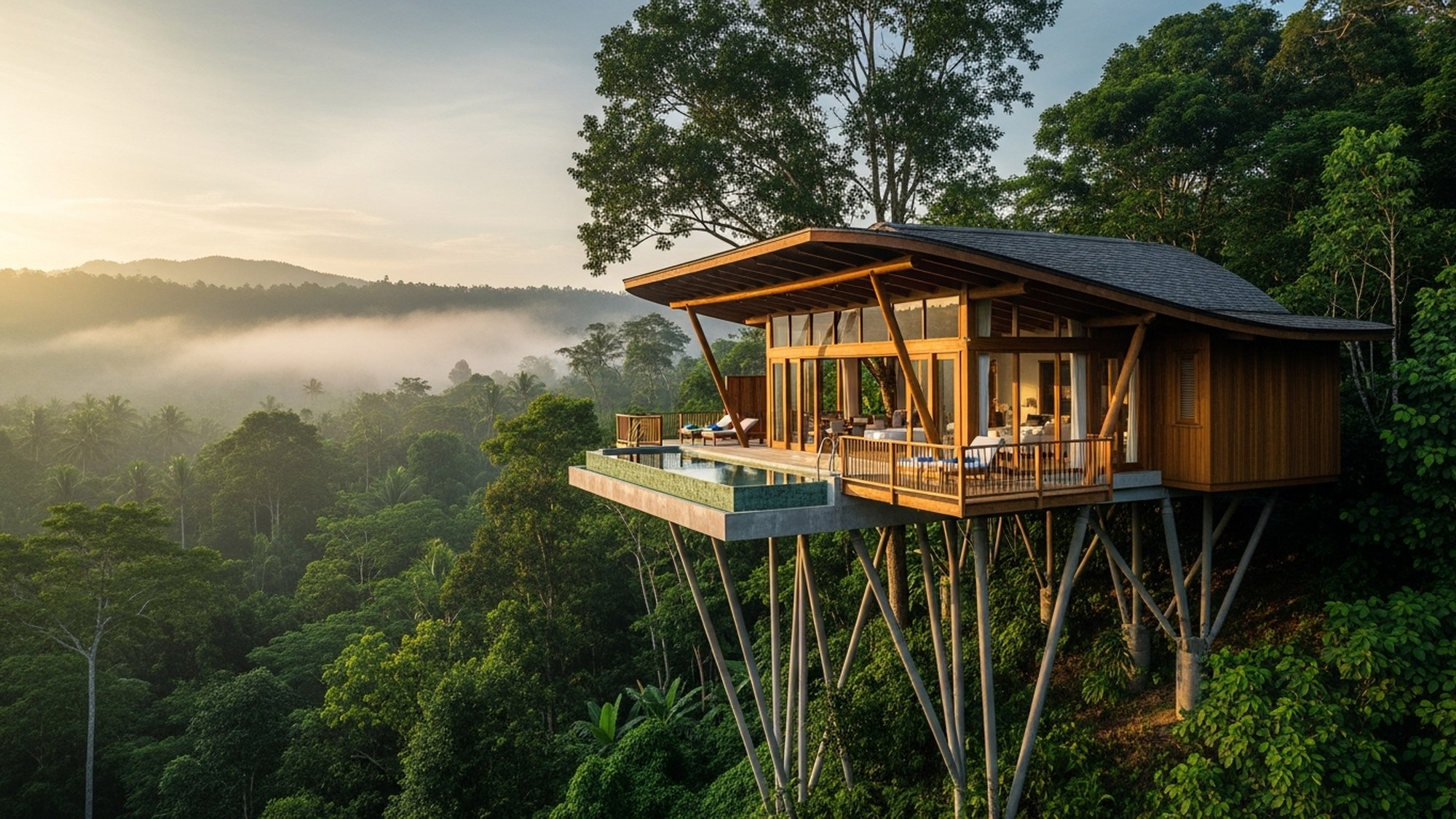
How to Start a Jungle Airbnb
The complete, honest guide to building and running a treehouse, bamboo house or rainforest villa — from choosing a country and the land laws to off-grid systems, budgets, and getting booked.
 Photo: Gregory Heath, CSIRO, CC BY 3.0
Why Jungle Stays Are Booming
The data behind the treehouse boom: four shifts in how the world travels are all converging on the forest — and it looks structural, not a fad.
 Photo: Vyacheslav Argenberg, CC BY 4.0
When to Visit the Jungle: A Season-by-Season Guide
There's no single best time to visit 'the jungle' — because it isn't one place. Here's when to go, region by region, with a month-by-month cheat sheet.
 Photo: Derek Ramsey (Ram-Man), CC BY-SA 4.0
Find your own piece of the canopy.
Treehouses, bamboo houses and rainforest villas across 17 destinations — found, vetted and written up honestly.
Browse all destinations