Off-Grid Jungle Stays: What to Expect
Every off-grid jungle listing uses roughly the same three words: solar, rainwater, sustainable. What they don't tell you is what that actually feels like at ten at night when the power dims because the battery bank is low, or at six in the morning when the shower runs cold because the tank hasn't caught the sun yet. Off-grid isn't a marketing category. It's a set of real trade-offs, and knowing them ahead of time is the difference between a trip you love and three days of quiet resentment about the wifi.
What "off-grid" actually means
Off-grid, in the strict sense, means a property is not connected to a national or regional electricity grid, water utility, or sewer line. In a city that's rare and deliberate. In the jungle it's often just physics: there is no grid to connect to. Many rainforest regions — the interior of the Peruvian Amazon, the Osa Peninsula in Costa Rica, stretches of Borneo and the Brazilian Amazon — are hours from the nearest power line by road, or reachable only by boat or small plane. Running grid electricity to a single lodge in that setting would cost more than the lodge itself. So the property generates its own power, catches and treats its own water, and manages its own waste on-site. That's not a lifestyle choice being marketed to you; it's the only way to build there at all.
This matters because it changes what you should expect. A "glamping" site with solar panels bolted onto a grid-connected building for the aesthetic is a different thing from a lodge two hours upriver that has never had grid power and never will. Both get called "off-grid" in listings, and only one of them will genuinely run out of hot water if three groups shower back to back on a cloudy day. Before you book, it's worth asking directly: is this property grid-connected with solar as a supplement, or is solar (or micro-hydro, or a generator) the only power source? The answer tells you almost everything else in this guide.
The honest version of off-grid jungle travel is this: it works, reliably, at properties that have been doing it for years and have sized their systems properly. It works less reliably at newer or smaller operations still figuring out their capacity. Neither is a red flag on its own — a lot of wonderful, well-run jungle stays are small and still learning — but it's useful context for setting expectations, especially if you're travelling with someone who has zero tolerance for a lukewarm shower.
Good to know
"Off-grid" and "eco-lodge" aren't synonyms, even though the terms get used interchangeably. A property can be fully grid-connected and still call itself an eco-lodge because of recycling programs, local sourcing or conservation partnerships. Ask specifically about power and water source if being off-grid is the point of your trip, not just the vibe.
Power: solar, batteries, and what goes dark
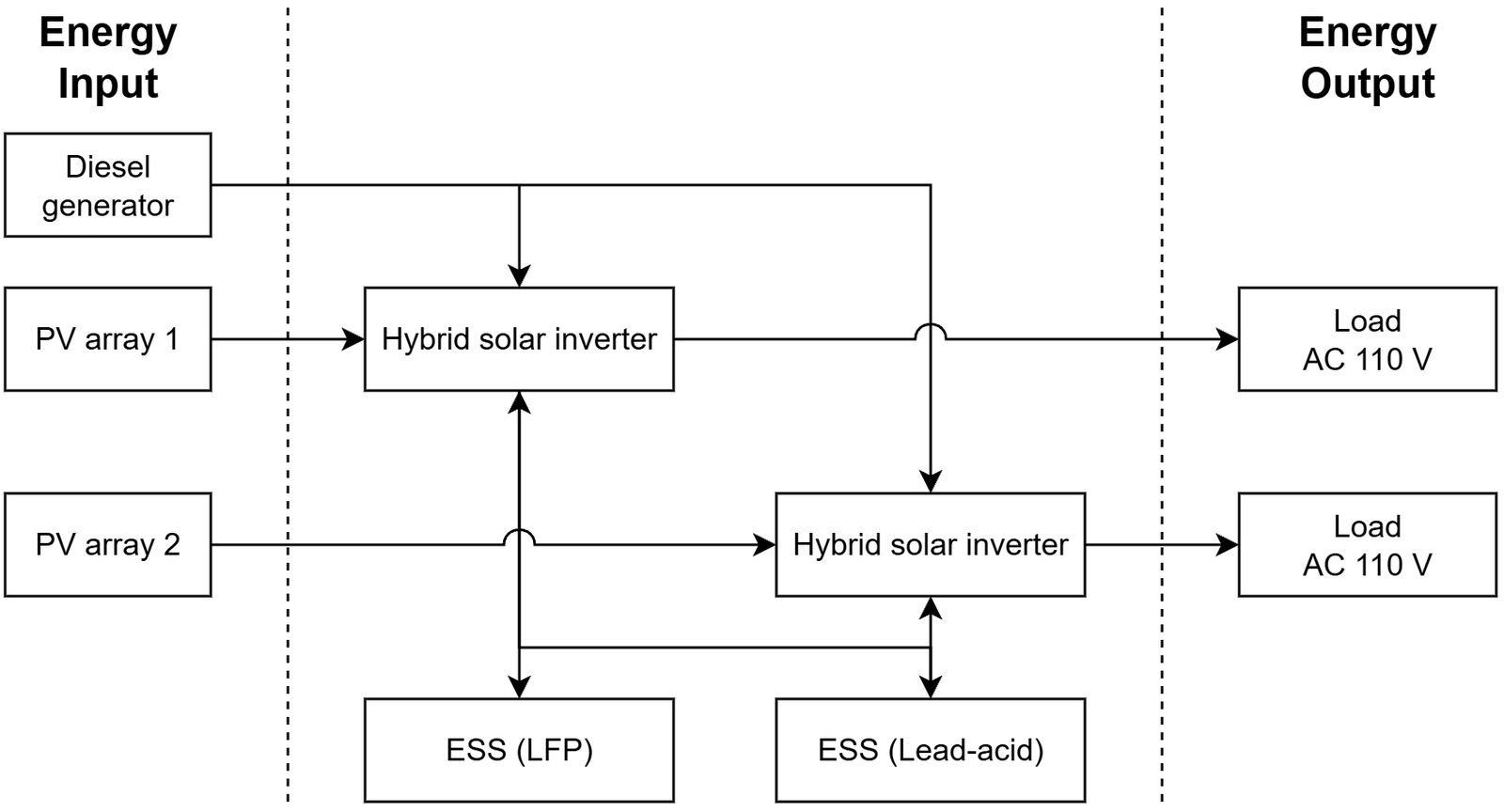
Solar is the default power source for most off-grid jungle properties now, and it has gotten dramatically better over the last decade. Panel costs have dropped, batteries hold more charge for longer, and a well-designed system at a mid-sized lodge can run lighting, fans, water pumps, refrigeration and charging outlets without much drama on a normal sunny day. Some remote lodges pair solar with a small generator that kicks in during long stretches of cloud cover or for high-draw appliances; others rely on a hydro turbine fed by a stream or waterfall on the property, which is actually more consistent than solar in places with heavy cloud cover but relies on rainfall levels through the year.
What changes, compared to a grid-connected hotel, is the margin. A city hotel's electricity supply doesn't care whether ten guests or a hundred are drawing power at once. An off-grid lodge's battery bank does. That means:
- Lights are often dimmer or more limited after dark — many lodges use warm, low-wattage LED lighting by design, both to save power and because it draws fewer insects than bright white light.
- Air conditioning is rare and fans are the norm. AC is one of the highest-draw appliances there is, and few off-grid systems are sized to run it continuously. Ceiling or standing fans, good airflow design (screened walls, raised floors, high ceilings) and the natural temperature drop after dark do most of the work instead.
- Charging is usually available but sometimes scheduled. Some lodges run power to rooms only during set hours, or ask guests to charge devices in a communal area rather than in-room, simply to manage total draw.
- Cloudy or rainy stretches reduce capacity. A run of overcast days can mean a system that's usually generous starts rationing. This is more likely in the wet season in most tropical regions — worth knowing if you're deciding when to go.
- Hot water is frequently solar-heated separately from electricity and follows the sun's schedule: often warm by mid-morning, hottest in late afternoon, and cooler again by early morning.
None of this means you'll be roughing it in the dark. The lodges that do off-grid well have been sizing these systems for years and know their limits. It means the electricity supply has a personality — generous most of the time, occasionally rationed — rather than being an invisible utility you never think about.
Water: rain tanks, gravity feeds and what "safe to drink" means
Water at an off-grid property usually comes from one of three sources: harvested rainwater collected off the roof into a storage tank, a gravity-fed system drawing from a spring or stream higher up the property, or a well. Some lodges combine two — rainwater for general use, a filtered or bottled supply for drinking. The system matters less than how it's managed, and the honest lodges are upfront about it.
Rainwater harvesting is a genuinely efficient system in a tropical climate: as a rule of thumb, a roughly 1,000-square-foot roof can collect around 600 gallons of water from a single inch of rainfall, and most rainforest regions get far more than an inch a month even in the "dry" season. A tank sized properly for the roof area and guest count rarely runs short in the wet season. It's the dry season, at some destinations, where supply gets tighter and lodges may ask guests to be more conservative with showers and laundry.
What "safe to drink" actually means locally
Ask directly whether tap or tank water is safe to drink at the property, and don't assume the answer is the same everywhere. Many well-run lodges filter and treat their water to a standard that's genuinely safe to drink straight from the tap; others provide filtered water in a communal dispenser or reusable bottles specifically because the tank water isn't treated to drinking standard, even though it's fine for showering and washing. Both are completely normal — the mistake is assuming without asking. If you're unsure, drink the bottled or dispensed water and use the tap for everything else; it costs you nothing to be cautious and it avoids a stomach bug ruining day three of a week-long trip.
- Bring a reusable bottle with a built-in filter (like those using hollow-fibre membrane or activated carbon) if you want a backup that doesn't depend on the lodge having bottled water in stock.
- Expect showers to be cooler in the early morning before the sun has heated the tank, and don't schedule a hot shower as the first thing you do at 6 a.m. before a dawn hike.
- Water pressure is often lower than you're used to — gravity-fed systems depend on how far above the taps the tank sits, not a pump forcing water through pipes at city pressure.
The water in your shower fell out of the sky onto that roof, most likely within the last week. That's either the most honest fact about the trip or the thing that finally makes you appreciate a municipal water bill.
Connectivity: no wifi, and how to plan around it
This is the trade-off that surprises people most, because it's the one modern travel has trained us hardest to expect everywhere. A genuinely off-grid jungle property is very often also off the mobile network — no cell signal, no wifi, sometimes a single satellite phone or radio kept at reception for emergencies and staff communication only. Some lodges offer limited wifi in a communal lounge for an hour or two in the evening, powered by the same battery bank as everything else; some offer none at all, by design, as part of the pitch.
Practically, that means:
- Download everything before you arrive: offline maps, any books, podcasts, or shows you want, and message anyone who needs to reach you that you'll be unreachable for X days.
- Tell someone your itinerary in detail before you go dark — which lodge, which dates, and how you're getting in and out — the same way you would for a backcountry trip.
- Ask the lodge directly how they handle emergencies before you book if this matters to you. Reputable operators in remote areas have a system — usually a satellite phone or radio link to a nearby town or their own head office — even when guests have no connectivity at all.
- Set expectations with work if you're not fully on holiday. "Unreachable" needs to actually mean unreachable to the people relying on you, not a surprise they discover on day two.
Most people who've done it report the same thing: the first day is a little uncomfortable, reaching for a phone that has nothing to offer, and by day two or three it stops registering. Meals get longer. Conversations go further. You notice the actual sounds of the forest at night instead of scrolling through them. It's a real, well-documented effect of disconnection, not just marketing copy — but it only lands if you've actually prepared for it rather than fighting it the whole time.
Toilets, showers and the sanitation question
Off-grid properties handle waste in a few common ways, and none of them are the mystery first-timers often assume. Composting toilets are widespread — they separate liquid and solid waste, use a small amount of sawdust, coconut husk or similar material after each use, and are odorless when maintained properly, which reputable lodges do as a matter of routine. Others use a conventional flush toilet connected to a septic system, which functions almost exactly like a home septic tank: fine for normal use, less fine for anything that isn't toilet paper and waste, since there's no municipal sewer to absorb mistakes.
Showers are typically simple: a rainwater or spring-fed line, sometimes solar-heated, sometimes genuinely cold (and in a hot, humid climate, a cold shower is often more refreshing than an inconvenience). Open-air or semi-open showers — screened but not fully enclosed, sometimes looking straight into the forest canopy — are common at higher-end jungle stays specifically because they're a selling point, not a compromise.
Good to know
If a composting toilet has a specific set of instructions posted (add a scoop of the provided material after use, no wet wipes, close the lid), follow them. They're not being fussy — a poorly maintained composting toilet is the one thing that actually can create the smell people worry about, and it's almost always caused by guests skipping the instructions rather than the system itself failing.
Laundry is the other thing to plan around. Some off-grid lodges offer laundry service using the same limited water supply; many don't offer it at all, precisely because water and drying capacity are both constrained. Packing quick-dry fabrics and planning to rinse rather than fully launder mid-trip solves this — see our full guide on what to pack for the jungle for the complete system.
Wildlife in the room: geckos, insects and what's normal
You are staying inside the forest, not next to it, and the walls at most jungle lodges are built to let air through rather than seal it out — screens instead of glass, gaps under eaves, sometimes open-air common spaces entirely. That means wildlife inside your room is normal, expected, and almost always harmless. Geckos on the wall or ceiling are extremely common across jungle regions worldwide and are, if anything, a good sign: they eat mosquitoes and other insects, and a gecko-free room in the tropics is rarer than one with a resident or two.
Insects are the bigger adjustment for most first-timers. Moths and beetles drawn to light, ants on the floor near any dropped food, the occasional larger spider in a bathroom corner — all standard, all part of staying somewhere the forest hasn't been chemically cleared to the property line. Reputable lodges take reasonable precautions (screened windows, mosquito nets over beds, staff who'll relocate anything genuinely concerning if you ask), but "reasonable precautions" is different from "insect-free," and no honest operator will promise you the latter.
What actually warrants concern
The overwhelming majority of what you'll see is completely benign. That said, it's reasonable to ask staff about anything unfamiliar rather than guessing — they know the local species and can tell you in seconds whether something is worth avoiding. Basic precautions that cover almost every real risk: shake out shoes before putting them on, don't put hands into dark gaps or under logs without looking, keep the mosquito net tucked in at night, and use a headlamp rather than walking paths in bare feet after dark. For a deeper look at risk specifically, our guide is the jungle safe? an honest guide covers this in more detail, and our malaria, vaccines and health for jungle travel guide covers the medical side.
Heat, light and comfort after dark
Without air conditioning as the default, comfort at an off-grid jungle stay comes from design rather than machinery: raised floors that let air move underneath, high ceilings that let heat rise away from where you sleep, deep roof overhangs that block direct sun without blocking airflow, and screened rather than glazed windows. It works better than most people expect, especially at night, when temperatures in most rainforest regions drop noticeably even if daytime humidity stays high. A ceiling fan or standing fan, run off the battery bank, does most of the remaining work. It's worth packing a lightweight sleep sheet or sarong even in a hot climate — not for warmth exactly, but because a light layer under a mosquito net in a breeze is more comfortable than lying directly on a bare mattress.
Light after dark is deliberately dim at most off-grid properties, for the two reasons already mentioned — battery conservation and insect control — and it's worth packing your own headlamp or small flashlight rather than relying on room lighting to get around after sunset. A headlamp is also simply more useful in the jungle generally: paths to communal areas are often unlit, and a hands-free light matters if you're also carrying a plate of food or steadying yourself on a rail.
- Pack a headlamp with spare batteries — this is the single most-recommended item by people who've actually stayed off-grid in the jungle.
- A dry bag or two protects electronics and documents from both rain and the general humidity that off-grid properties can't dehumidify the way an air-conditioned hotel room does.
- Earplugs help on the first night or two if you're not used to how loud a rainforest actually is after dark — insects and frogs, mostly, and it's genuinely loud.
Region-by-region notes
Off-grid systems and what to expect from them vary meaningfully by region, mostly driven by rainfall patterns, terrain and how remote the property actually is.
Costa Rica
Costa Rica has one of the most mature off-grid lodge scenes anywhere, built on decades of ecotourism infrastructure. Properties on the Osa Peninsula and in the southern Pacific region — an area with no grid connection for long stretches of coastline — commonly run entirely on solar, and some, like a small hydro turbine setup along the Golfo Dulce, generate power from a stream on the property rather than the sun at all, which gives more consistent output through cloudy stretches. Rainfall is heavy and reliable most of the year in most regions, so water shortages are less common than in drier climates; the main planning consideration is the green season (roughly May through November), when heavier, more frequent rain can mean fuller water tanks but also muddier trails. See our full Costa Rica destination guide for more.
Peru and the Amazon basin
The Peruvian Amazon, particularly around Tambopata and the Madre de Dios region, has some of the most remote lodges in this guide — reachable only by boat, sometimes several hours upriver from the nearest town. Lodges here run on solar as standard, with capacity built around the reality that there's no backup grid to fall back on if a system fails. Water is typically river- or rain-sourced and filtered on-site. Expect the most genuinely disconnected experience of any region here — no cell signal at all for long stretches, and itineraries built around river transport schedules rather than road transport. Our Peru guide has more on planning a trip to this region.
Brazil
The Brazilian Amazon shares much of Peru's remoteness profile — river access, solar power as the default, and long stretches without connectivity — but spans a wider range of property types, from simple family-run stays to larger research-affiliated lodges. Seasonal flooding matters more here than almost anywhere else in this guide: water levels in parts of the Amazon basin can rise several meters between low and high water season, which changes how lodges are built (many are on stilts) and how you get around (boat rather than trail during high water). See our Brazil destination guide.
Bali and Southeast Asia
Bali's jungle stays, concentrated around Ubud and the island's central highlands, tend to sit closer to towns and grid infrastructure than the Amazon lodges above, so fully off-grid properties are less common here than partially off-grid ones — solar-supplemented but grid-backed, or grid-connected with genuinely sustainable water and waste practices even without full energy independence. True off-grid stays exist further into Indonesia's more remote islands and in parts of mainland Southeast Asia's forested interior. Worth confirming directly with any specific property whether "eco" means off-grid or means grid-connected-but-sustainable — the terms get blurred in this region more than most. See our Bali and Thailand guides for more.
Elsewhere
Off-grid jungle stays also turn up in Puerto Rico's forested interior, parts of Hawai'i away from the main grid, the Maya jungle around Tulum and the Yucatán, Colombia's Pacific and Amazonian regions, and Sri Lanka's rainforest reserves. The underlying pattern holds everywhere: the further a property sits from the nearest town and grid connection, the more likely — and often the more essential — a well-designed off-grid system becomes.
Who this is actually right for
Off-grid jungle stays aren't a downgrade from a normal hotel and they aren't an upgrade either — they're a different thing, and they suit some travellers much better than others. They tend to work well for people who genuinely want disconnection rather than tolerate it, who are comfortable with some unpredictability in exchange for a setting a grid-connected resort couldn't offer, and who read "cold shower some mornings" as a minor inconvenience rather than a dealbreaker. They tend to work less well for anyone travelling for work who needs reliable connectivity, anyone with a medical condition requiring refrigerated medication or powered equipment without a confirmed backup plan, or anyone whose idea of a good trip depends on total predictability.
None of that is a judgment — plenty of great trips are grid-connected, air-conditioned and fully wired, and there's no rule that a jungle trip has to be off-grid to be worthwhile. If you're weighing it against a more conventional jungle stay, our guide on how to book a jungle Airbnb (what to check) covers the questions to ask regardless of how remote the property is. If you're travelling with children, jungle stays with kids: a family guide is worth reading before you commit to a fully off-grid property, since some of the trade-offs here — limited hot water, no wifi for a bored ten-year-old on a rainy afternoon — land differently with a family than a couple. And if you're going alone, solo travel in the jungle: a complete guide covers the specific planning considerations for going off-grid without a travel companion to split logistics with.
Common questions
Will I have hot water at an off-grid jungle lodge?
Usually, but on the lodge's schedule rather than yours. Most off-grid properties heat water using the same solar system that powers everything else, so hot water tends to build through the morning and be most reliable in the afternoon and early evening, and can run cooler first thing in the morning or after several cloudy days. Ask the property directly if hot water timing matters to you.
Is the water safe to drink?
Sometimes straight from the tap, sometimes only from a filtered dispenser or bottled supply — it depends entirely on the property's treatment system, and you should ask rather than assume. When in doubt, drink the bottled or filtered water provided and use tap water for washing only.
Will I have any phone signal or wifi at all?
At a genuinely off-grid, remote property, often none. Some lodges offer limited wifi for an hour or two in a communal area in the evening. Ask specifically before you book if staying reachable matters, and tell someone your itinerary in detail before you go, the way you would for any remote trip.
Are the insects and geckos actually dangerous?
Almost never. Geckos are harmless and genuinely useful — they eat mosquitoes. The insects you'll see indoors are overwhelmingly the same common, non-threatening species you'd find in any warm, humid climate. Ask staff about anything unfamiliar rather than guessing; they'll know in seconds whether it's worth avoiding.
What should I pack differently for an off-grid stay versus a regular jungle hotel?
A headlamp with spare batteries, a dry bag for electronics, a portable charger (a full power bank charged before you arrive covers gaps in room power), and quick-dry rather than cotton clothing, since laundry service is less reliable off-grid. Our full packing guide covers the complete list.
Is off-grid more expensive than a regular jungle stay?
Not inherently — cost depends far more on the property's location, size and service level than on whether it's grid-connected. Very remote off-grid lodges can cost more simply because of transport logistics (boat or small-plane access), while some off-grid stays are among the more affordable options in a region precisely because they're simpler by design. Our guide on how much does a jungle trip cost? breaks this down further.
Off-grid isn't harder travel, exactly — it's travel with a different set of defaults, and once you know what those defaults are, almost none of it comes as a surprise. The power runs on the sun's schedule instead of a utility company's, the water fell out of the sky instead of through a pipe from a treatment plant, and the wildlife you share the room with was always going to be there, tucked-in mosquito net and all. Most people who try it once go looking for it again. If you're still deciding where, our full destination directory is the place to start, and why jungle stays are booming is worth a read if you want the wider context for why more travellers are choosing exactly this kind of trip over a conventional resort.
- IRENA, Off-grid Renewable Energy Statistics 2025 — global off-grid solar adoption figures.
- World Bank, Off-grid Solar Could Provide First-time Electricity Access to Almost 400 Million People by 2030 — context on off-grid solar's global reach and growth.
- Golfo Dulce Retreat, Costa Rica — example of an off-grid lodge powered by a hydro turbine with spring-fed showers.
- Rainforest Expeditions, Refugio Amazonas — example of a solar-powered, river-access-only Amazon lodge in Tambopata, Peru.
- Rainforest Expeditions, Tambopata Research Center — example of a remote, solar-powered lodge inside the Tambopata National Reserve.
- Chilamate Rainforest Eco Retreat, Costa Rica — example of a Costa Rican lodge built around solar power and rainwater systems.
- Wikipedia, Off-the-grid — general background on off-grid power and water systems.
More from the Journal.
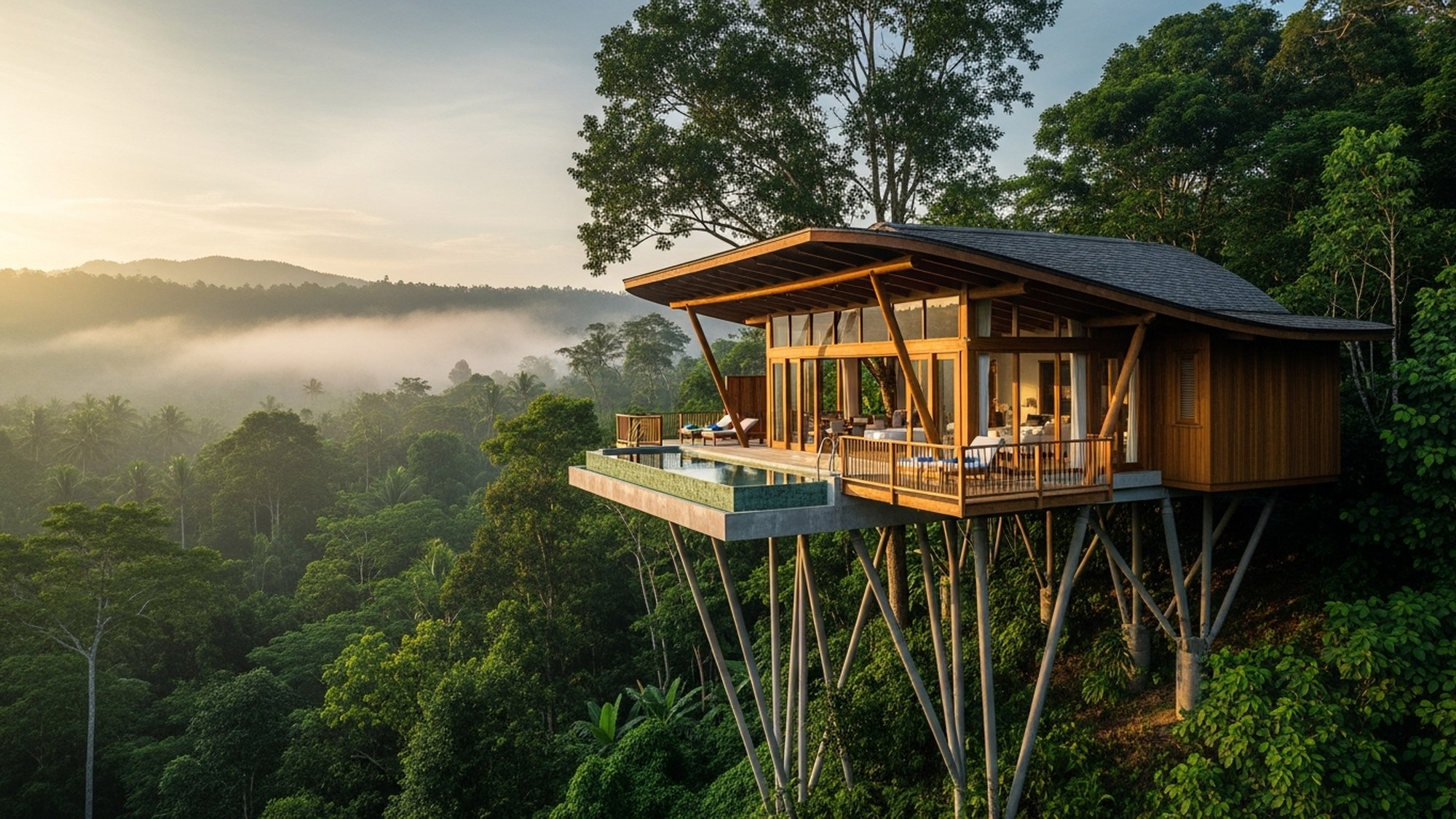
How to Start a Jungle Airbnb
The complete, honest guide to building and running a treehouse, bamboo house or rainforest villa — from choosing a country and the land laws to off-grid systems, budgets, and getting booked.
 Photo: Gregory Heath, CSIRO, CC BY 3.0
Why Jungle Stays Are Booming
The data behind the treehouse boom: four shifts in how the world travels are all converging on the forest — and it looks structural, not a fad.
 Photo: Vyacheslav Argenberg, CC BY 4.0
When to Visit the Jungle: A Season-by-Season Guide
There's no single best time to visit 'the jungle' — because it isn't one place. Here's when to go, region by region, with a month-by-month cheat sheet.
 Photo: Derek Ramsey (Ram-Man), CC BY-SA 4.0
Find your own piece of the canopy.
Treehouses, bamboo houses and rainforest villas across 17 destinations — found, vetted and written up honestly.
Browse all destinations