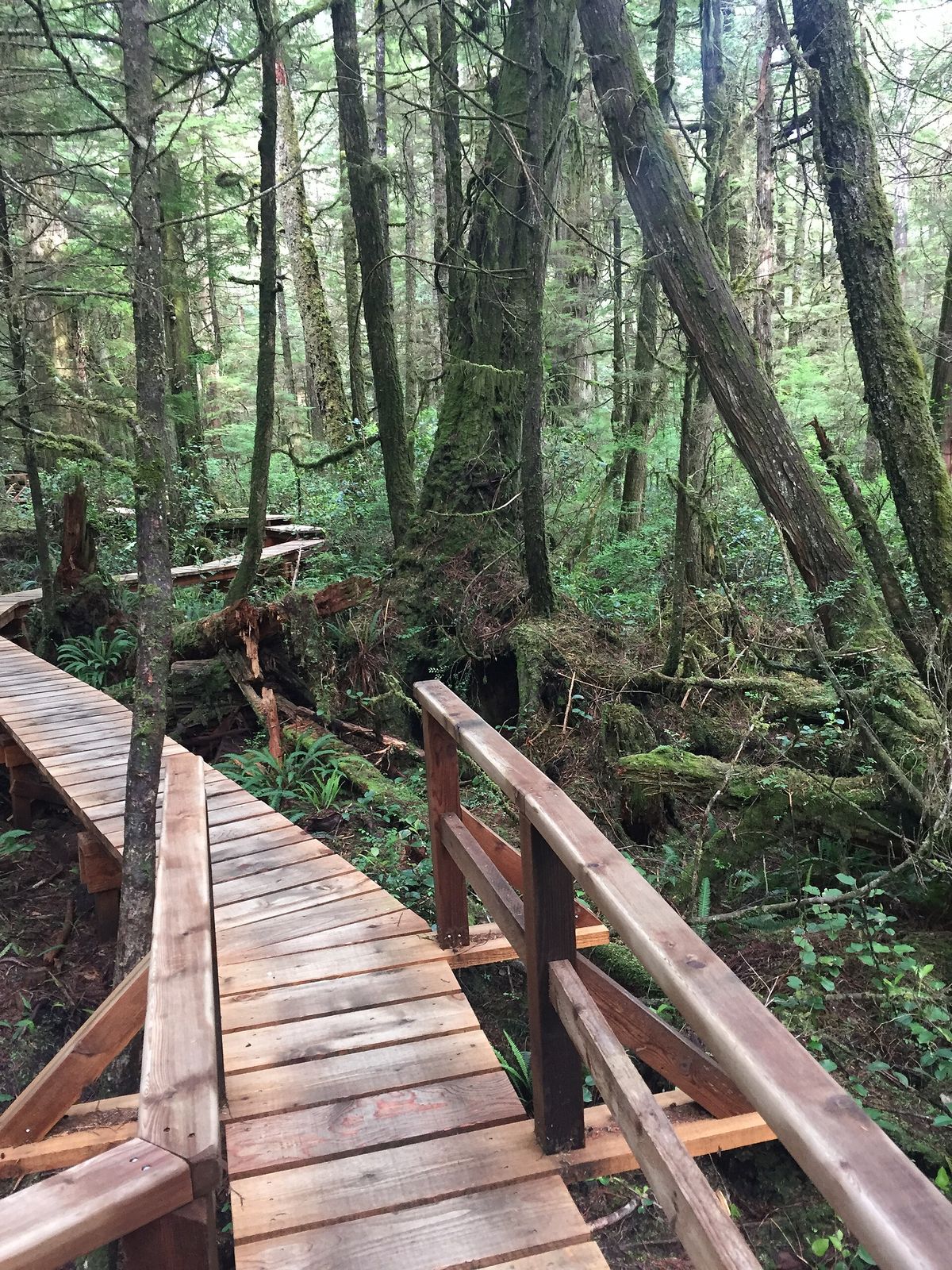
Is the Jungle Safe? An Honest Guide
Every jungle trip starts with the same conversation, usually with a parent or a partner who has watched one too many nature documentaries. Snakes. Spiders. Malaria. Getting lost half a mile from the lodge and never being seen again. Almost none of it matches what actually happens to the people who go. This is a plain accounting of what the real risks are, how big they actually are, and what a good host, a decent guide and a little preparation do to shrink them further — written by people who book these stays for a living, not by a brochure trying to sell you one.
The short answer
Yes, the jungle is safe — for the overwhelming majority of travelers, on the overwhelming majority of trips, staying at an established lodge or guesthouse with a guide who works there regularly. That's not a marketing line, it's just what the numbers and the accident reports actually show. The jungle is not a theme park with the danger removed, and treating it that way is its own kind of risk. But the mental image most people carry into a first trip — venomous everything, one wrong step from disaster, no signal and no way to get help — belongs to survival television, not to the actual experience of staying somewhere like a lodge outside Costa Rica's Corcovado, a homestay in the Brazilian Amazon, or a family-run guesthouse in the Bali hills.
The honest risks are real, and this guide doesn't pretend otherwise. They're just different from the ones people worry about, and smaller than the ones people worry about most. A car ride to the airport, a flight of stairs at night without a light, or a sunburn on the boat ride in are, statistically, more likely to cause a problem on a jungle trip than a jaguar, a snake or getting swallowed by quicksand. What follows goes through each worry in turn — what it actually is, how often it actually happens, and what changes the odds in your favor.
Nobody who runs a jungle lodge for a living wants a guest bitten, lost or sick — it's bad for the guest and it's bad for the business. The safety record of this kind of travel isn't an accident. It's the product of guides, hosts and communities who have been doing this far longer than any one trip.
Snakes: the risk everyone asks about first
Snakes are almost always the first thing anyone asks about, and the fear is understandable — a snake is the one animal most travelers genuinely cannot identify at a glance, venomous or not, and the uncertainty does more work than the actual danger. Here's the real shape of it. The World Health Organization estimates around 5.4 million snakebites happen worldwide each year, with a global death toll somewhere between roughly 81,000 and 138,000. Those numbers sound alarming stripped of context, and the context matters enormously: nearly 70 percent of the global death toll is concentrated in South Asia, and more than half of it in a single country, India, where the people getting bitten are overwhelmingly barefoot agricultural workers and rural residents encountering snakes in rice paddies and homes, not tourists on a guided night walk through a rainforest reserve.
In the parts of the world where jungle tourism actually happens — Central and South America, Southeast Asia — the picture for a visitor looks nothing like the global aggregate. In the United States, for comparison, around 7,000 people are bitten by venomous snakes annually and only about one in 500 of those bites is fatal, largely because of quick access to antivenom and hospital care. Lodges in snake habitat carry the same basic advantage: staff who know the local species, guides trained to spot and avoid them rather than provoke them, and — at any reputable property — a plan for reaching a hospital if the worst genuinely happens. Nearly every snake encounter a traveler has on a guided walk ends the same way: the guide sees it first, points it out from a safe distance, and everyone moves on with a good story and a photo.
What actually reduces the risk
- Stay on marked trails and boardwalks after dark rather than cutting through undergrowth — this is where the large majority of incidents anywhere in the world happen, snake or otherwise.
- Wear closed shoes, not sandals, for any walk after dusk, even just to a dining area a hundred meters away.
- Use a flashlight or headlamp for every after-dark walk, full stop — most snakes want nothing to do with a human who has seen them coming.
- Never reach into log piles, thatch, or dense leaf litter with a bare hand; use a stick or ask your guide.
- Let your guide walk in front on any unmarked trail. This is precisely what they're trained for, and it's the single biggest risk-reducer on this list.
Spiders, insects and things that bite at night
Spiders get almost as much fear as snakes and deserve almost none of it. The jungle's spiders are, with very few exceptions, more interested in insects than in humans, and serious bites from species like the Brazilian wandering spider or various tarantulas are rare enough that most long-time guides have never actually seen one happen to a guest. Tarantulas in particular look far worse than they are — their bite, on the rare occasion it happens, is generally compared to a bee sting, not a medical emergency.
The insects that actually matter on a jungle trip are smaller and less dramatic: mosquitoes, first and by a wide margin, followed by ticks in some regions and, in a handful of places, biting ants or wasps if you brush against a nest. None of these make for a good campfire story, which is exactly why they get underrated. A mosquito bite is the single most consequential insect encounter you're likely to have in the jungle, not because any one bite is dangerous, but because of what a small number of mosquito species can carry — which is worth its own section below.
Good to know
Bright light draws insects, not danger. A porch light or a headlamp left on will pull in moths and beetles that look alarming in a group but are almost always harmless. The genuinely useful habit is checking your shoes before putting them on in the morning — scorpions and other small creatures like a dark, enclosed space overnight — and giving your bed a glance for anything that moved in while you were at dinner.
Mosquito-borne disease: malaria, dengue and yellow fever
This is the category where preparation genuinely matters, and it's also the one most first-time jungle travelers underprepare for relative to how much they worry about snakes. Malaria, dengue, yellow fever and Zika are all mosquito-borne, all present in at least some jungle regions, and all meaningfully preventable with the right combination of vaccination, prophylaxis and repellent — none of which a snake-avoidance strategy will help you with at all.
The risk varies enormously by country and even by region within a country, which is why generic advice is close to useless here. Costa Rica is a good illustration of how localized this gets: across the country's major tourist areas — San José, Arenal, Manuel Antonio, Guanacaste, Monteverde, the Osa Peninsula — malaria transmission is negligible and antimalarial medication generally isn't recommended by the CDC. It's really only relevant for extended trips into remote lowland jungle in Alajuela and Limón provinces, a scenario that applies to a small fraction of visitors. In 2025, Costa Rica ran over 142,000 malaria tests nationwide and confirmed just 29 cases of local transmission — a useful real number for calibrating how rare it actually is even in a country with jungle throughout. Other regions carry more risk: parts of the Amazon basin, sub-Saharan Africa and much of South and Southeast Asia have areas where a doctor will reasonably recommend prophylaxis. Costa Rica also recorded its first yellow fever case since 1956 in October 2025, in a traveler who had recently been in the Peruvian Amazon — a reminder that these diseases move with travelers, and that "risk in this country" and "risk in the region you actually visited" aren't always the same question.
What actually reduces the risk
- See a travel medicine clinic or doctor 4–6 weeks before departure — this is the single highest-leverage thing you can do, and it's the step most people skip in favor of worrying about snakes.
- Ask specifically about your itinerary, not just your destination country. Malaria and yellow fever risk can differ hugely between a coastal tourist zone and an inland jungle reserve in the same country.
- Use a DEET or picaridin repellent consistently, especially at dawn and dusk when mosquito activity peaks, and reapply after swimming or heavy sweating.
- Sleep under a mosquito net if your lodge provides one and screens are imperfect — most jungle accommodation does this as standard, not as an upsell.
- Wear long, light-colored sleeves and trousers in the evening in higher-risk regions; it's unglamorous and it works.
For a full country-by-country breakdown of what to actually get vaccinated for and where prophylaxis makes sense, our companion guide on malaria, vaccines and health for jungle travel goes deeper than this section can.
Getting lost, and why it happens less than you'd think
The fear of getting lost in the jungle is one of the oldest travel anxieties there is, and it's also one of the easiest to manage, because almost nobody who stays at a proper lodge is ever actually alone in unmarked forest. The structure of a jungle stay does most of the work here before you've even thought about it: guided walks happen with a guide, self-guided trails are marked and looped rather than open-ended, and lodges are generally clustered near a river, a road, or another obvious landmark that makes true disorientation hard to achieve by accident.
Where it does happen — and it does, rarely — the pattern is almost always the same: someone wanders off a marked trail alone, usually chasing a photo of a bird or an animal, loses track of the path back, and the jungle's dense canopy and thick understory make landmarks and phone signal disappear fast. This is genuinely disorienting even for experienced hikers, which is exactly why the advice from every search-and-rescue organization that operates in tropical forest is identical: if you realize you're off the trail, stop moving immediately rather than trying to correct course. Staying in one place makes you findable; wandering further to "figure it out" is what turns a twenty-minute inconvenience into a genuine search.
What actually reduces the risk
- Never leave a marked or guided trail alone, even for what looks like a five-minute detour.
- Tell someone at the lodge your route and expected return time before any independent walk.
- Carry a whistle — three sharp blasts is the universal distress signal, and it carries much further through dense forest than shouting.
- If you do lose the trail: stop, stay put, and make noise. Do not keep walking "toward where it should be."
- Download offline maps before you lose signal, but treat them as a backup to a trail marker, not a replacement for one — GPS accuracy under thick canopy is genuinely unreliable.
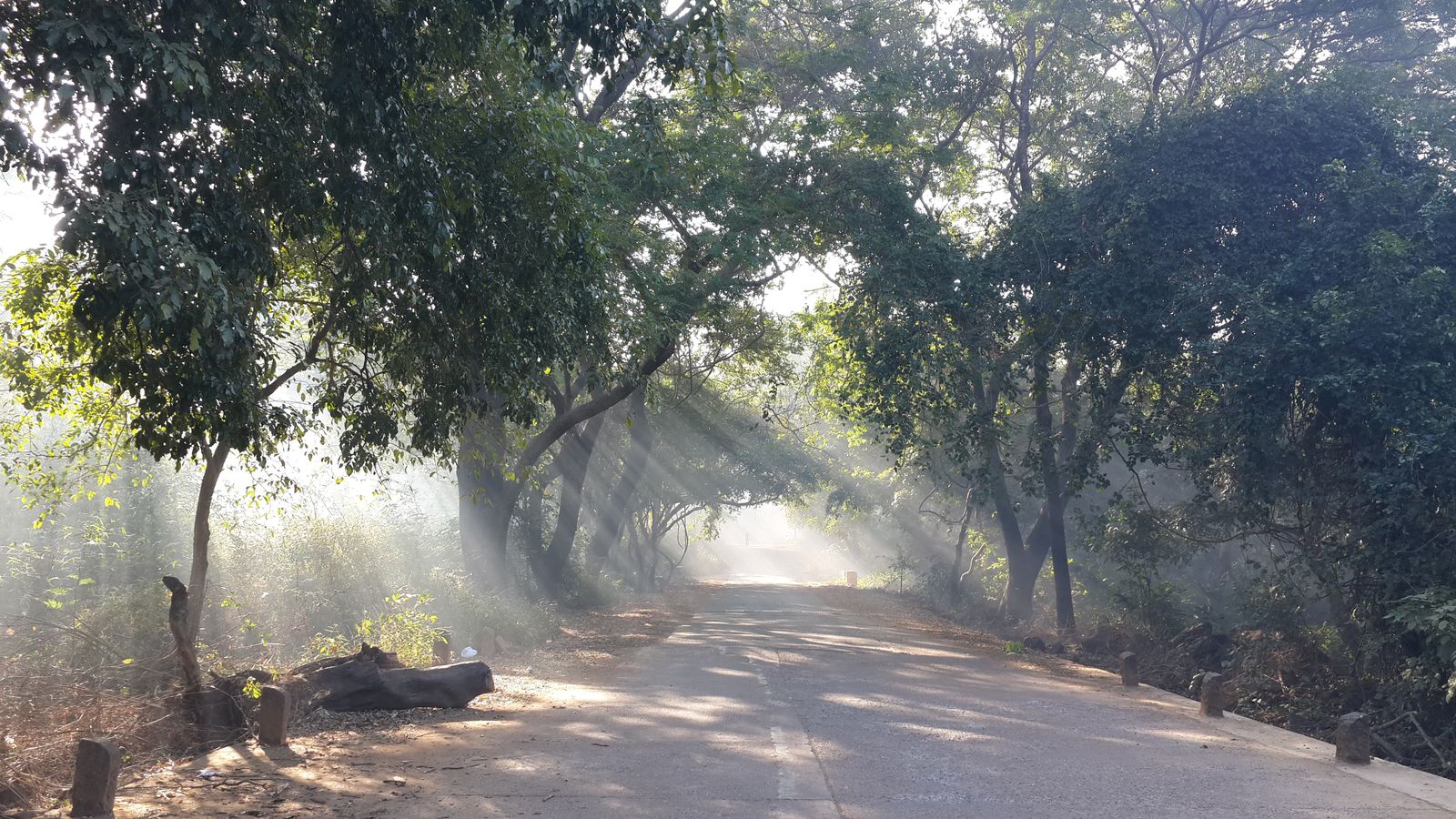
Water: the risk that's actually underrated
If there's one category of risk that genuinely deserves more worry than it gets, relative to snakes and spiders, it's water. River crossings, boat transfers, waterfalls and swimming holes are a real part of most jungle stays, and the accidents that do happen on jungle trips skew disproportionately toward water — a slip on wet rock, a stronger current than it looked from the bank, a boat trip in weather that should have been postponed. None of this is unique to the jungle, but jungle terrain has a way of hiding how fast and how deep a river is running under a calm-looking surface, especially after rain upstream that a guest at the lodge never saw fall.
Drinking water is the other half of this category, and it's more mundane but statistically far more likely to affect a trip: untreated water and contaminated ice are a genuine and common cause of travel illness worldwide, jungle or not. Most established lodges provide filtered or bottled water as standard, and it's worth confirming this before you assume tap water is fine anywhere outside a major city.
What actually reduces the risk
- Never swim in a river or waterhole your host or guide hasn't specifically cleared, and ask about currents, not just about crocodiles or piranhas — currents are the more common problem.
- Wear a life jacket on river transfers if one is offered, even on a boat trip that looks calm.
- Drink bottled, filtered or boiled water, and treat ice with the same suspicion unless your lodge confirms it's made from treated water.
- Ask locally about recent rainfall before any river crossing or swim — a clear morning downstream can follow a storm upstream you never saw.
Heat, storms and terrain
The least dramatic risks on this list are, in practice, the ones most likely to actually affect a trip: heat exhaustion, dehydration, and simple slips on wet roots, mud or rock. Tropical humidity makes exertion feel harder and sweat evaporate slower, which means dehydration and heat-related illness creep up faster than they would somewhere temperate, especially on a first day or two before a body has adjusted. Afternoon thunderstorms are a near-daily feature of most jungle climates in wet season, and while they rarely wash out a whole day, they do turn trails slick and rivers fast for an hour or two at a time — one more reason lodges build flexibility into daily schedules rather than fixed hiking plans.
Terrain itself is the quiet culprit behind more minor injuries than any animal: exposed roots, mud, loose rock near waterfalls, and uneven boardwalks account for the majority of the sprains, scrapes and twisted ankles that guides actually deal with. It's an unglamorous list next to snakes and getting lost, which is exactly why it's worth taking seriously — the mundane stuff is what statistically happens.
What actually reduces the risk
- Drink more water than feels necessary, starting the morning of any hike, not partway through it.
- Wear real hiking shoes or boots with grip, not sneakers or sandals, on any trail longer than a short stroll.
- Pace yourself on day one or two — heat acclimatization is real and takes about that long even for fit travelers.
- Treat wet rock near waterfalls as slick regardless of how it looks; this is one of the more common places for a genuine injury on an otherwise easy trip.
How the risk changes by region
None of the categories above apply evenly everywhere, and "the jungle" isn't one place with one risk profile. A few regional notes worth knowing before you book:
Costa Rica runs one of the most developed and safety-conscious jungle tourism industries anywhere, with well-marked trails, experienced guiding and, as the numbers above show, genuinely low disease risk across its main visitor areas. It's a sensible first jungle trip for exactly this reason.
Brazil and the wider Amazon basin carry more real disease risk than Costa Rica, particularly around malaria and, following the 2025 Costa Rican case linked back to Peru, yellow fever — this is the region where a pre-trip travel medicine consultation matters most, and where lodges tend to be more remote from hospital care, which is worth weighing for anyone with existing health conditions.
Bali and Indonesia present a different mix — lower malaria risk in most tourist areas than the Amazon, but genuine road-safety and water-current risk around waterfalls and beaches that gets less attention than it deserves.
Peru splits sharply by region: Lima and the highlands carry essentially no jungle-specific risk, while lowland Amazon regions like Madre de Dios and Loreto carry the same malaria and yellow fever considerations as Brazil's Amazon.
Sri Lanka and Thailand generally sit toward the lower-risk end for disease in their main tourist and jungle-adjacent regions, with the practical risks skewing more toward heat, water currents and traffic than toward snakes or malaria.
The honest takeaway is that "how safe is the jungle" has a different answer depending on which jungle, and the right response isn't to rule out riskier regions — it's to prepare specifically for the one you're actually going to, which is what a good travel medicine consultation and a specific, non-generic packing list both accomplish far better than general jungle folklore does.
What a good stay does about all of this
A large share of jungle safety isn't something a guest manages alone — it's built into how a decent lodge or homestay already operates, quietly, before a guest even arrives. Local guides who've worked the same trails for years know exactly where the risk actually concentrates and where it doesn't, which is a level of specific knowledge no amount of pre-trip reading replicates. Established properties carry basic first-aid training and supplies as standard, keep a working relationship with the nearest clinic or hospital, and build schedules with enough flexibility to reroute around a storm or a flooded crossing rather than pushing through one.
This is one of the more useful things to actually check before booking, and it's worth asking directly rather than assuming: does the property have a guide on-site or on call, how far is the nearest medical facility and how do they reach it, and do walks after dark happen with a guide as standard rather than as an optional extra. Our guide on how to book a jungle Airbnb covers exactly what to check before you commit, and it's a genuinely more useful safety tool than any single packing item.
Off-grid properties — the ones without cell signal, with generator power a few hours a day, further from a town than a typical stay — deserve one extra layer of thought here, not because they're inherently riskier, but because the response time to any incident is naturally longer. Our off-grid jungle stays guide walks through what that actually means in practice and how established off-grid hosts plan around it.
Your own checklist
Boiled down, the actual preparation that moves the needle on a jungle trip's safety is shorter and less dramatic than most people expect:
- See a travel medicine provider 4–6 weeks out and ask about your specific itinerary, not just your destination country.
- Pack and use a real insect repellent (DEET or picaridin), applied consistently at dawn and dusk.
- Bring closed, sturdy footwear for every walk, day or night — this alone prevents more incidents than any single other item.
- Confirm your lodge or host provides filtered or bottled water, and treat ice with the same caution.
- Never leave a marked trail or a guide's side without telling someone your route and return time.
- Carry a whistle, and know the rule: if you're ever unsure of the trail, stop and stay put rather than pushing on.
- Ask specifically about water — currents, recent rainfall, and whether a spot is actually cleared for swimming — before getting in.
- Pace your first day or two to let your body adjust to heat and humidity before pushing a full hiking schedule.
None of this requires specialized gear or an expedition mindset. It's closer to the preparation for a serious hiking trip anywhere in the world, adjusted for humidity, mosquitoes and the fact that help, if you need it, is generally a boat or a radio call away rather than a five-minute drive.
Common questions
Will I definitely see a snake on a jungle trip?
Probably not, and if you do it's more likely to be a small, harmless species spotted by your guide from a safe distance than a dangerous encounter. Many guests come away having seen more snake skins and tracks than actual snakes — they're genuinely good at staying out of sight.
Do I need malaria pills for every jungle destination?
No. Risk varies enormously by country and even by specific region within a country — plenty of popular jungle destinations, including most of Costa Rica's main tourist areas, carry negligible malaria risk and don't call for prophylaxis. A travel medicine consultation that asks about your actual itinerary is the only reliable way to know, not a blanket rule.
Is it safe to travel to the jungle with kids?
Generally yes, with the same preparation as any traveler — repellent, appropriate footwear, and a lodge with guided activities rather than an unstructured, self-guided one. Our family jungle guide covers the specific adjustments worth making, from nap-friendly schedules to which activities suit which ages.
What happens if someone gets genuinely hurt or sick at a remote lodge?
Established lodges maintain a plan for exactly this — a relationship with the nearest clinic or hospital, a boat or vehicle on standby, and staff trained in basic first aid. This is precisely the kind of question worth asking directly before booking, especially for a genuinely off-grid property.
Is solo jungle travel safe?
It's more common than people assume, and it's generally safe at an established lodge with guided activities — the main adjustment is being more disciplined about telling staff your plans and never improvising a solo, unguided walk off a marked trail. Our solo jungle travel guide goes into more detail on what changes when there's no travel partner to double-check a plan with you.
Should the risk of snakes, spiders or getting lost stop me from booking a jungle trip?
No. The actual numbers, region by region, point toward a low-risk trip for a prepared traveler staying at an established property — the categories that deserve real attention are mosquito-borne disease and water safety, not the animals that get all the pre-trip anxiety. Browse the full destinations directory for a sense of the range on offer, and go in prepared rather than not going at all.
The jungle rewards the traveler who respects it and shows up prepared, not the one who avoids it out of a fear built mostly from television. Do the unglamorous preparation — the vaccines, the repellent, the footwear, the honest questions to your host — and the rest of the trip is what people actually go for: a night walk with a guide who can spot a sleeping bird from thirty feet away, a river you cross in a canoe instead of a car, and a quiet that most travelers never get anywhere else. For more on getting ready, see our guide on what to pack for a jungle trip, and if this is your first time weighing the idea at all, our piece on what a jungle trip actually costs is a useful next stop.
- World Health Organization — Snakebite envenoming fact sheet — global snakebite incidence and death-toll estimates, and regional concentration of deaths in South Asia.
- World Population Review — Snake Bite Deaths by Country — country-level snakebite death comparisons.
- Global Rescue — Snakebites: Who Gets Bitten and Who Dies — US snakebite incidence and fatality rate (roughly 1 in 500).
- Our World in Data — Death rate from venomous snakes — comparative snakebite mortality data by country and region.
- CDC Yellow Book — Yellow Fever Vaccine and Malaria Prevention Information by Country — country-by-country guidance on yellow fever vaccination and malaria prophylaxis.
- CDC Travelers' Health — Costa Rica — malaria risk by Costa Rican region, 2025 local transmission and testing figures, and the October 2025 yellow fever case linked to travel in Peru.
More from the Journal.
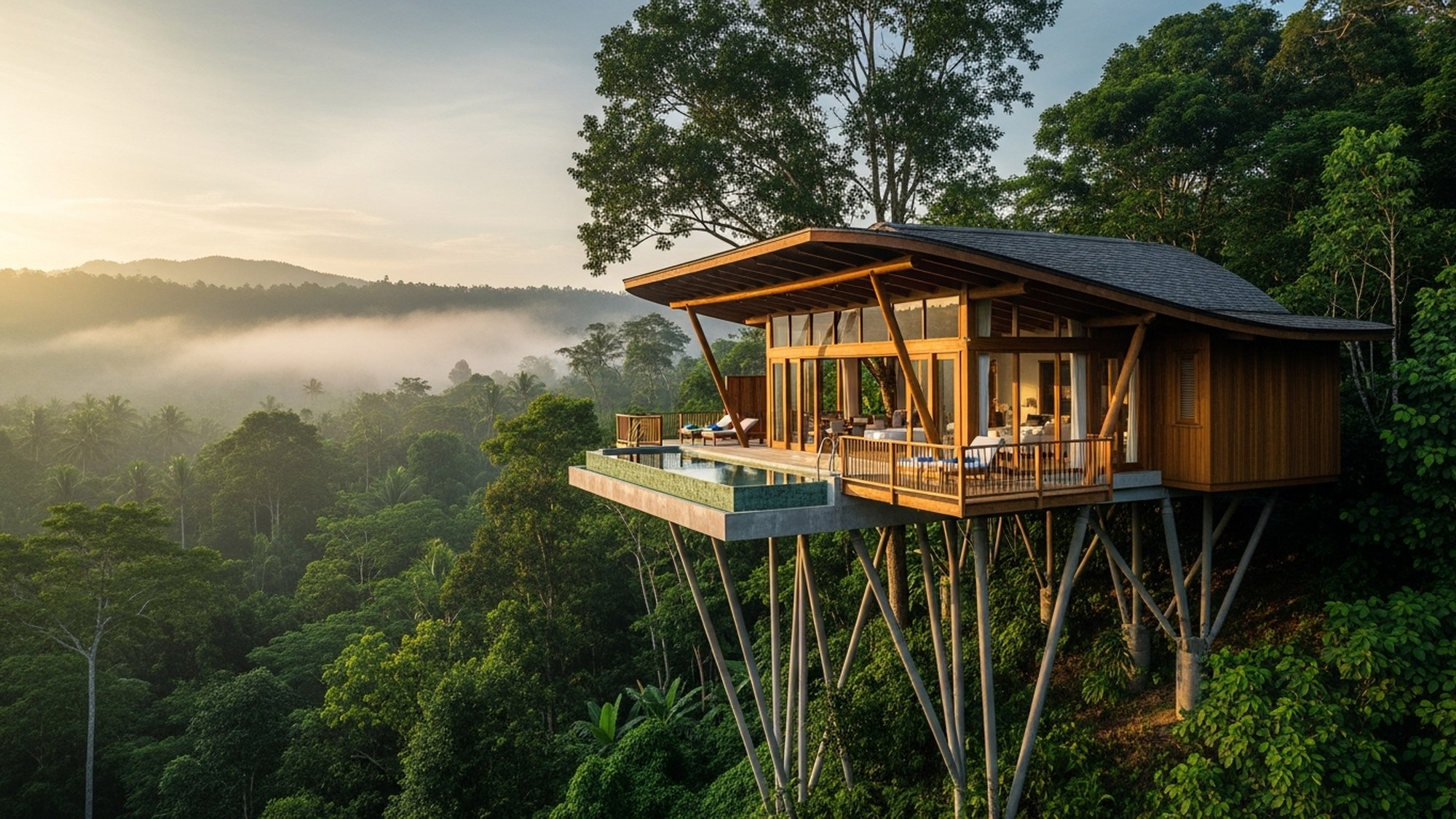
How to Start a Jungle Airbnb
The complete, honest guide to building and running a treehouse, bamboo house or rainforest villa — from choosing a country and the land laws to off-grid systems, budgets, and getting booked.
 Photo: Gregory Heath, CSIRO, CC BY 3.0
Why Jungle Stays Are Booming
The data behind the treehouse boom: four shifts in how the world travels are all converging on the forest — and it looks structural, not a fad.
 Photo: Vyacheslav Argenberg, CC BY 4.0
When to Visit the Jungle: A Season-by-Season Guide
There's no single best time to visit 'the jungle' — because it isn't one place. Here's when to go, region by region, with a month-by-month cheat sheet.
 Photo: Derek Ramsey (Ram-Man), CC BY-SA 4.0
Find your own piece of the canopy.
Treehouses, bamboo houses and rainforest villas across 17 destinations — found, vetted and written up honestly.
Browse all destinations