Minca & the Sierra Nevada Guide
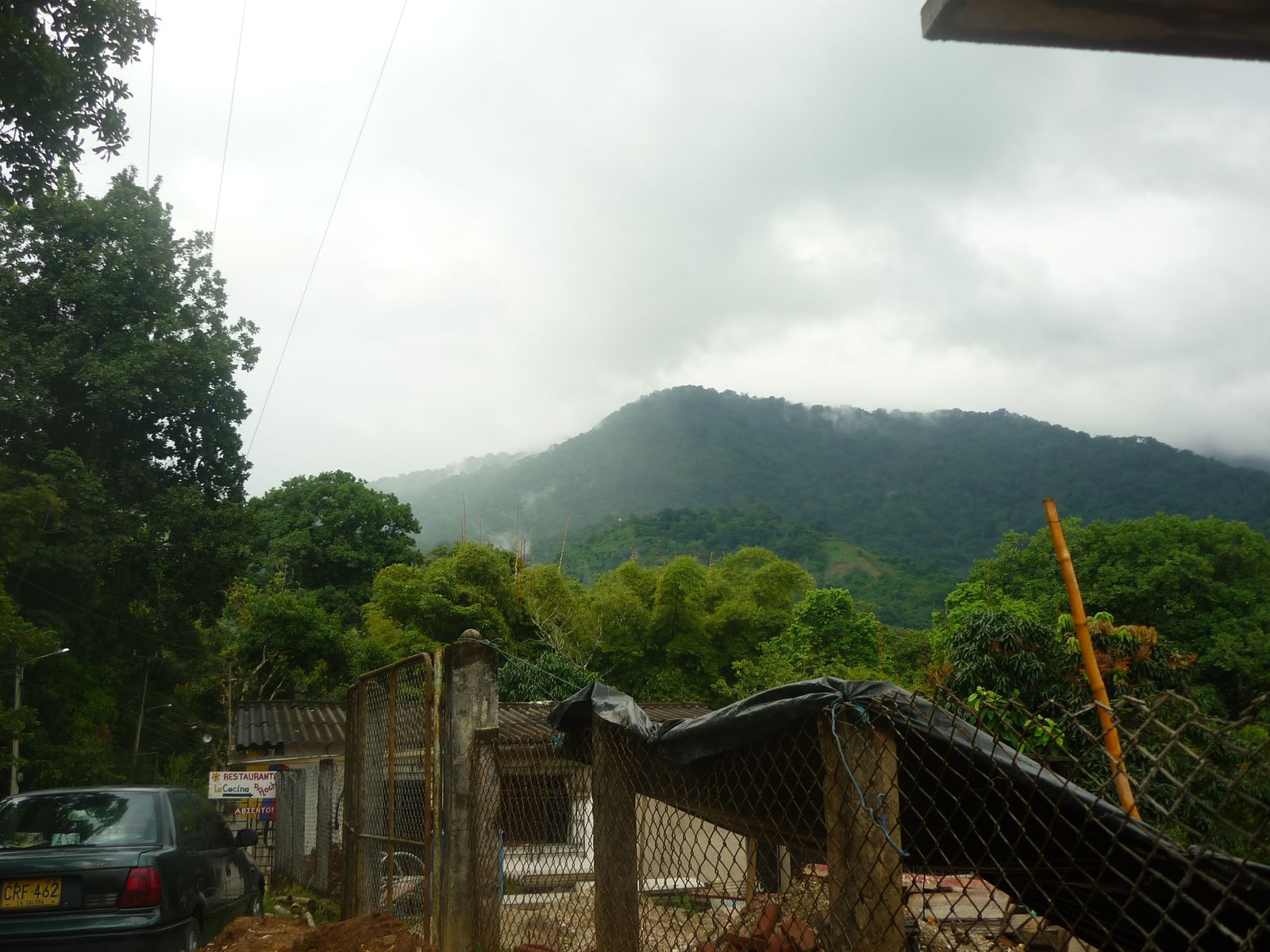
Most people who end up in Minca weren't planning to. They came to Colombia's Caribbean coast for Tayrona's beaches or the port city of Santa Marta, heard from another traveler that there was a cool green town up in the mountains with hammocks and good coffee, and took a colectivo up the hill on a whim. That's still basically the right way to arrive. Minca sits at around 660 meters in the foothills of the Sierra Nevada de Santa Marta, the tallest coastal mountain range on earth, and the drive up from sea level takes less than an hour but changes the climate, the light and the pace of the day completely. This is a guide to that town: how to get there, where to stay, what the waterfalls and coffee farms actually involve, and how it connects to the bigger treks and parks around it.
What Minca is and why go
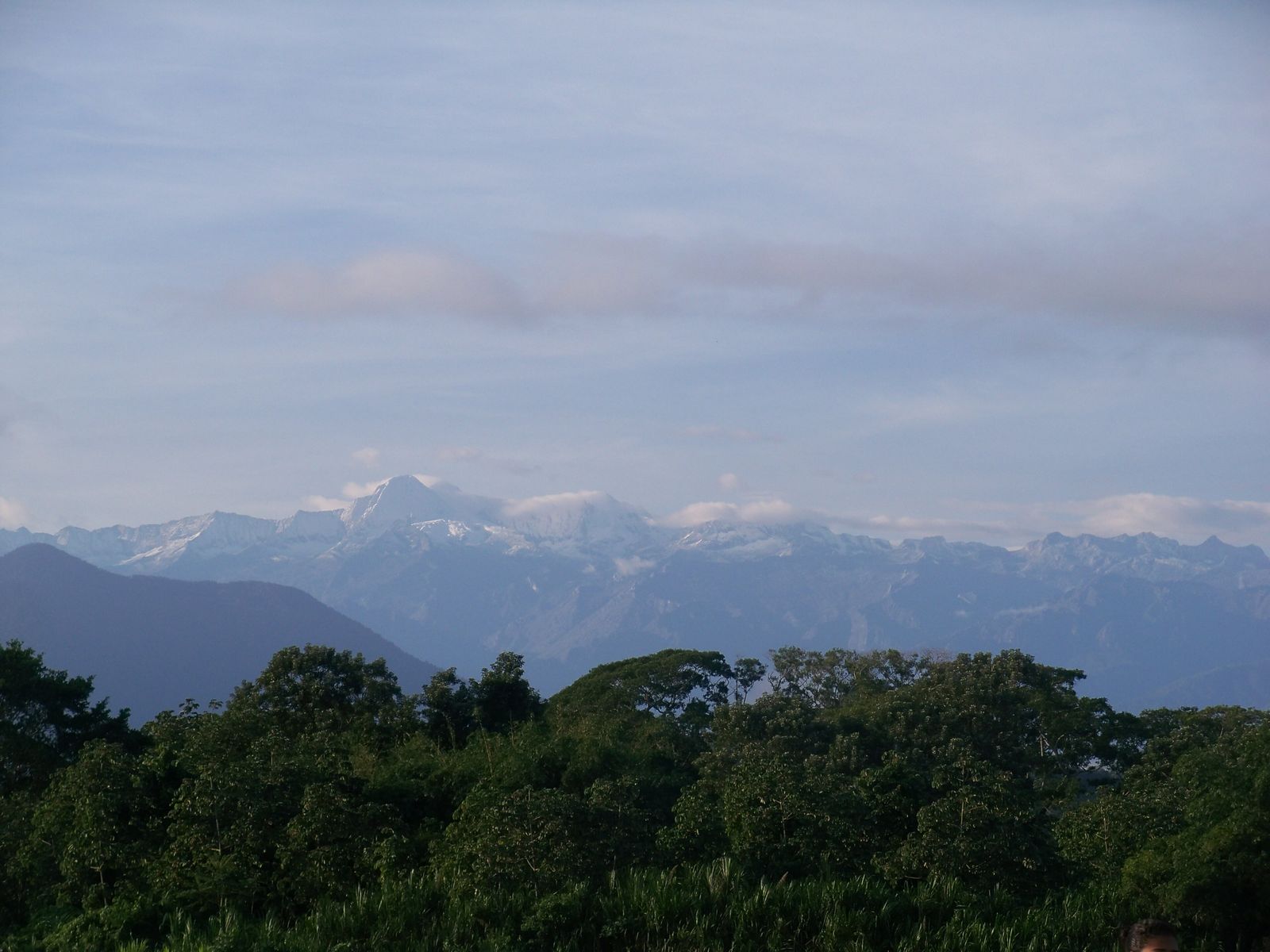
Start with the geography, because everything about Minca follows from it. The Sierra Nevada de Santa Marta is an isolated massif that rises directly from the Caribbean coastline to snow-capped peaks above 5,700 meters, all within about 42 kilometers of the sea — which makes it the tallest coastal mountain range in the world, a genuinely unusual piece of geography with no connection to the Andes chain running down the rest of the continent. Minca sits low on the northwestern slope of that massif, in a transition zone where dry Caribbean lowland gives way to cloud forest, which is why the town feels like a different country from the beach towns forty minutes below it. The air is noticeably cooler, the vegetation is thicker and greener, and the birdsong starts before the roosters do.
The town itself is small: a couple of streets, a church, a handful of restaurants and tour operators, and a river running through the middle of it that everyone eventually ends up swimming in. What draws people up the hill isn't really the town center, though — it's the ring of things around it. Waterfalls with swimming holes a short walk or moto-taxi ride away. Working coffee farms, some more than a century old, where you can watch beans get sorted and roasted the way they always have been. A multi-day trek up to Cerro Kennedy that ends with a view of snow on the horizon above jungle, which is about as strange and good a combination as travel offers. And, further out but connected through the same mountain range, the Lost City trek and Tayrona National Park, two of the most talked-about experiences in Colombia.
Minca is also, quietly, a serious birding destination — the Sierra Nevada de Santa Marta holds one of the highest concentrations of endemic bird species anywhere on the planet, a product of the range's isolation from the Andes, and birders fly in specifically for species found nowhere else on earth. You don't need to know a warbler from a woodpecker to enjoy a morning walk here, but it's worth knowing that the quiet you notice on a Minca trail is full of things other people traveled a long way to hear.
If you're weighing Minca against other jungle-and-mountain combinations, it sits in the same category as cloud forest towns elsewhere in Latin America — cooler, greener, and slower than the coast below it. Our Colombia destination page covers how Minca compares to the rest of the country's jungle regions, and if you're building a longer Latin American itinerary, Costa Rica and Peru both have their own versions of this same script — coffee, cloud forest, and a mountain town above a coastline or a jungle basin.
Getting there and getting around
Almost everyone reaches Minca through Santa Marta, the coastal city with the nearest airport (Simón Bolívar International, code SMR), about 45 minutes to an hour from Minca by road depending on where you're coming from in the city. From Santa Marta's center, the standard way up is a colectivo — a shared car or minivan — that leaves from a fixed spot near the central market roughly every half hour once it fills up; any taxi driver in town can point you to the right corner if you can't find it yourself. The ride takes 30 to 45 minutes and climbs through switchbacks with the coastline dropping away behind you, which is a genuinely nice way to arrive somewhere. A private taxi covers the same route faster and costs more, and is worth it if you're arriving with heavy bags or after dark.
There's no need for a rental car, and most travelers wouldn't want one — the road up is narrow, shared with motorbikes and trucks, and parking in the town center is limited. Once you're in Minca itself, you're choosing between walking, hiring a moto-taxi, or arranging a jeep or 4x4 for anything further up the mountain. The town center is small enough to walk end to end in ten minutes, but most of what makes Minca worth the trip — the waterfalls, the coffee farms, Casa Elemento's hammocks — sits several kilometers up steep, partly unpaved roads that aren't realistic to walk in the heat.
Moto-taxis are the local workhorse: a cluster of drivers waits near the bridge just past the town center, and a ride to a nearby waterfall or lookout typically runs a small flat fee per person, negotiated on the spot. It's an efficient system once you're used to it, though the roads are rutted and the drivers move fast around blind corners, so hold on and keep loose items zipped up. For anything higher up the mountain — Cerro Kennedy, the more remote coffee farms — a 4x4 jeep with a driver is the standard option, and most guesthouses and tour operators in town can arrange one.
The best areas and where to stay
Where you base yourself changes the trip more than the town's small size would suggest, because Minca's accommodation is spread across a real elevation gradient, not clustered on one street.
The town center
Staying right in Minca puts you within walking distance of restaurants, the river, tour operators and the colectivo stand back to Santa Marta. It's the easiest base logistically, and a reasonable choice if you're short on time or don't want to depend on moto-taxis for every meal. It's also the least dramatic in terms of views — you're in a river valley, not up on a ridge.
Up the mountain toward Cerro Kennedy
The road climbing out of town toward Cerro Kennedy gains elevation fast, and a cluster of guesthouses and hostels sit along it at increasing heights, with the views and the temperature both improving the higher you go. This is where Casa Elemento, the hostel known for its oversized hammocks strung across an open deck facing the Sierra Nevada, sits at around 1,200 meters — a genuinely different feel from the town center below, cooler at night and quiet except for the birds. Staying up here means depending on a moto-taxi or the hostel's own transport for anything in town, which is a fair trade for the view if you don't mind the logistics.
Near the coffee farms
Several of Minca's working coffee farms, including Hacienda La Victoria, sit on their own roads outside the main cluster, some with basic accommodation attached. Staying near a farm is a quieter, more rural option, better suited to travelers who want mornings among coffee plants and birdsong over easy access to Minca's restaurant scene.
For a shortlist of vetted jungle-view stays in and around Minca, see our Colombia destination page, or browse the wider directory if you're still comparing Minca against other jungle mountain towns before committing to dates.
You can be sweating in Caribbean heat on a Santa Marta beach at ten in the morning and be pulling on a light jacket in Minca by eleven. That temperature swing, over less than an hour of driving, is the whole reason the town exists as a destination.
The top things to do and see
Minca's activity list splits cleanly into water, coffee, and altitude — and the good news is that none of it requires technical skill or serious gear.
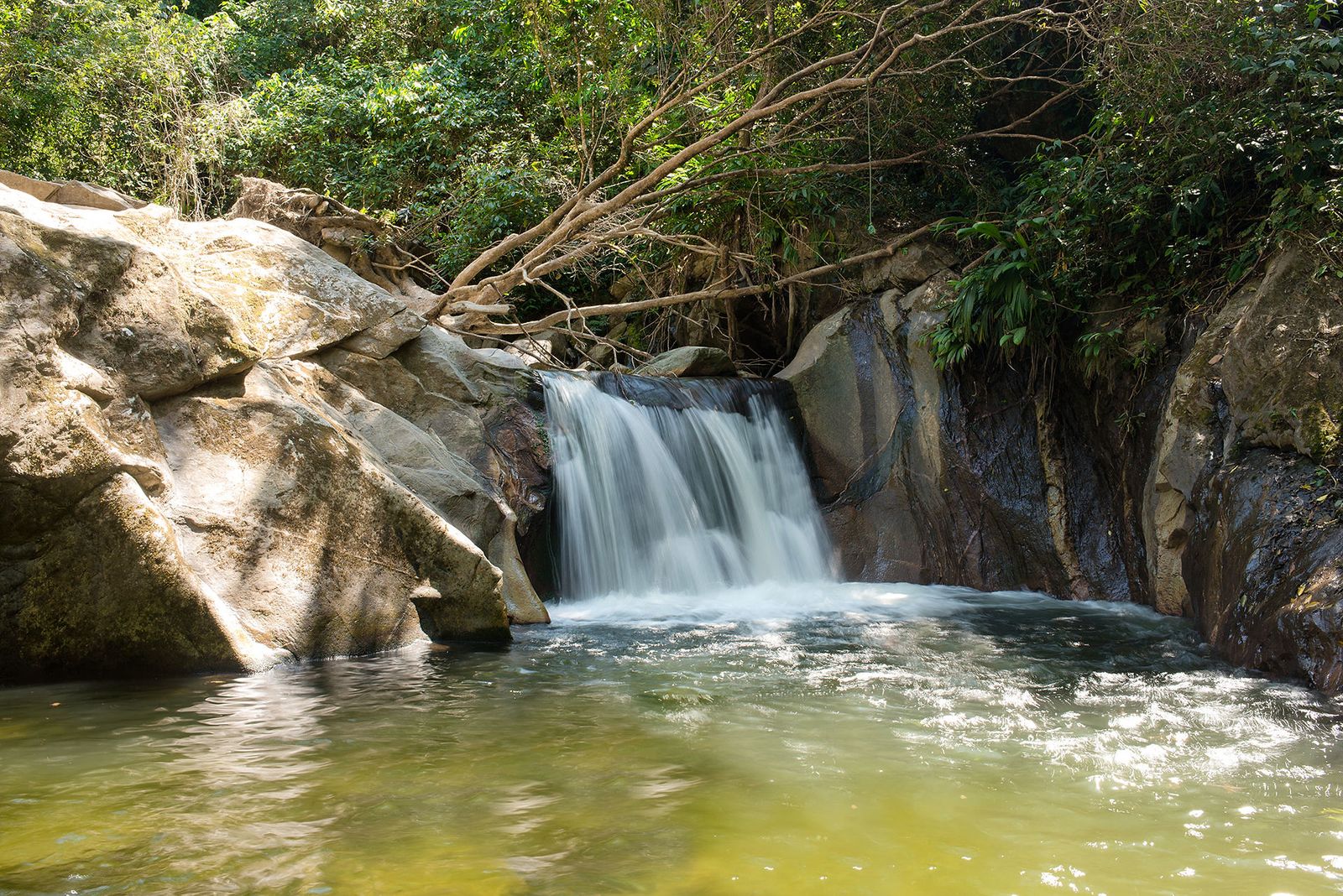
- Swim at Pozo Azul: Minca's most visited waterfall spot, a swimming hole fed by a modest cascade and shaded by trees, with a second pool further along the path good for cliff jumping if you're inclined. It's an easy walk of about an hour from town, or a short moto-taxi ride to the trailhead followed by a shorter walk. Go before mid-morning if you want the pools to yourself — by midday it's a popular spot for both travelers and locals.
- Hike to Marinka Falls: taller and, by most accounts, prettier than Pozo Azul, Marinka has two swimming holes on different tiers connected by a further climb, and a well-maintained approach trail that keeps to the shade for most of its length. There's an entrance fee, higher than most things in Minca but reasonable given the upkeep, and it's worth the extra effort compared to Pozo Azul if you only have time for one.
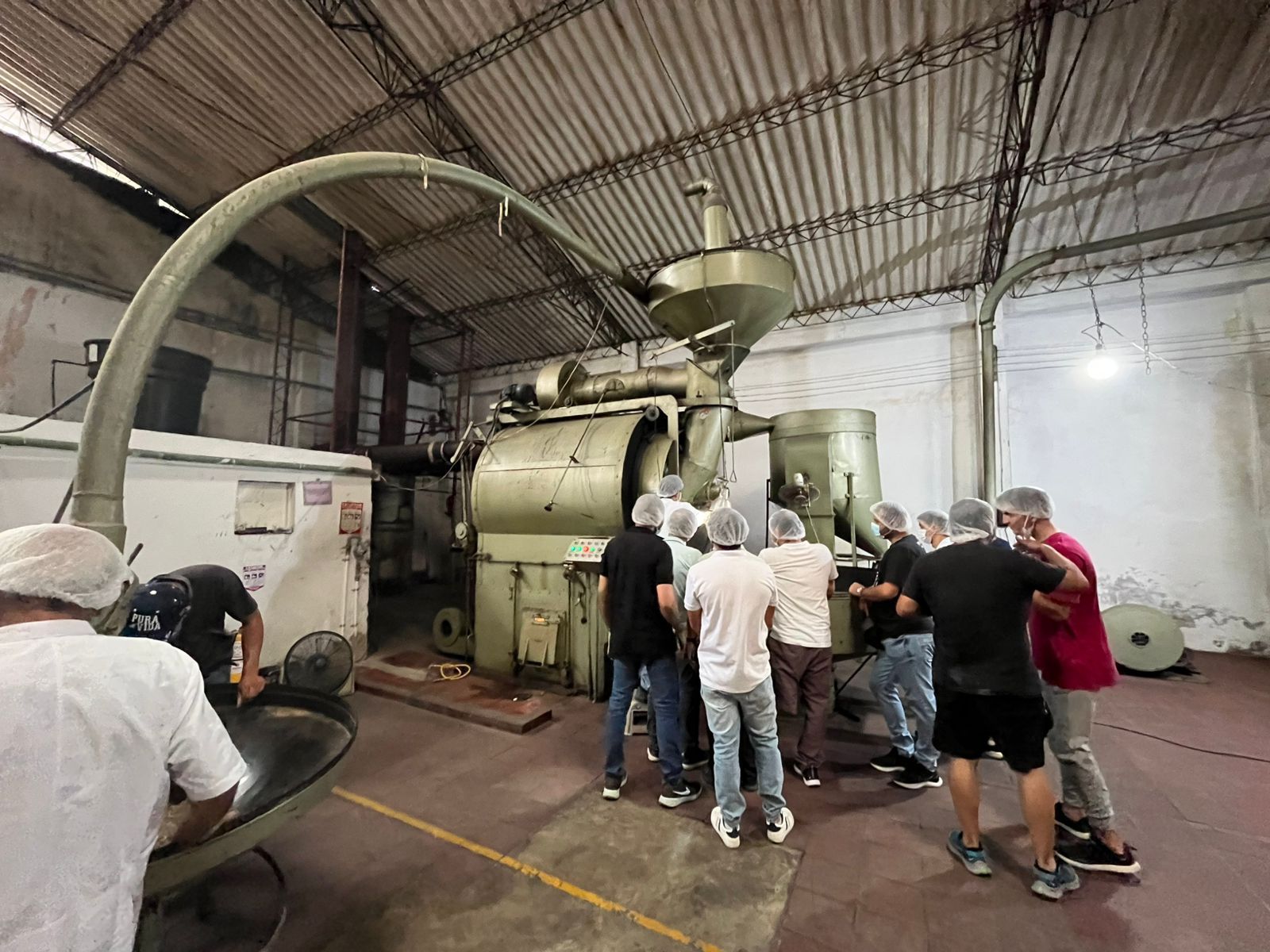
- Tour a working coffee farm: Hacienda La Victoria, founded in 1892 and still run with much of its original water-powered machinery — gravity-fed sorters, hand-cranked presses — is the best-known option, offering a genuine bean-to-cup walkthrough rather than a staged tourist stop. Smaller farms around Minca offer similar tours on a more casual basis; ask at your accommodation, since availability and schedules shift.
- Trek to Cerro Kennedy: a two-day hike, usually with an overnight along the way, climbing to roughly 3,100 meters. The reward at the top is one of the odder views in Colombia — cloud forest and jungle canopy in the foreground, with the snow-capped peaks of the Sierra Nevada's high points visible in the distance on a clear day. It's a serious hike, not a casual walk, and worth booking through a local guide rather than attempting solo.
- Go birding at dawn: the Sierra Nevada de Santa Marta is one of the most important endemic bird areas on the planet, and Minca sits right in the transition zone where lowland and cloud-forest species overlap. A guided dawn walk, even a short one, will turn up species found nowhere else in the world — worth doing even if you've never picked up binoculars before.
- Float or tube on the Minca river: the river running through town has calm stretches good for a casual float and cool, clear pools for an afternoon swim without leaving the town center — the easiest way to cool off if you're not up for a full waterfall hike that day.
Good to know
Minca's waterfalls and coffee farms are genuinely spread out, and the roads between them are steep, unpaved in places, and not signed the way a first-time visitor might expect. Budget moto-taxi fare into every day rather than assuming you'll walk between sights — what looks like a short hop on a map is often a real climb in real heat.
The best day trips
Minca's real leverage is its position: it sits close enough to the coast and to Colombia's biggest trekking draw that both are realistic add-ons to a trip based here.
Tayrona National Park
Tayrona, the Caribbean coastal park known for palm-lined beaches backed by dense jungle, sits roughly 50 to 60 minutes by road from the Minca area, on the other side of Santa Marta. It's a full day out rather than a half-day, since the park's best beaches — Cabo San Juan chief among them — require a walk in from the entrance, but it's a legitimate contrast to Minca's mountain scenery: the same Sierra Nevada massif, viewed from sea level with sand under your feet instead of cloud forest overhead.
The Lost City trek (Ciudad Perdida)
Ciudad Perdida is the multi-day trek to an archaeological site built by the Tayrona civilization around 800 AD — older than Machu Picchu — hidden in dense jungle deeper in the Sierra Nevada. It's not a Minca day trip; treks typically run four to five days round-trip and start from a different trailhead near the town of El Mamey, reached from Santa Marta rather than from Minca directly. But it's close enough, and thematically connected enough — same mountain range, same Tayrona lineage that the Kogi people descend from — that a lot of travelers base a Minca stay and a Lost City trek around the same Santa Marta hub, doing one before or after the other. Book through a licensed operator; access to the site is controlled and guides are required.
Santa Marta itself
Colombia's oldest surviving city, founded in 1525, sits at the base of the mountain and is worth a half-day on its own — a walkable historic center, a lively waterfront, and the departure point for both Minca and Tayrona. It's also the most practical place to restock on cash, supplies or anything Minca's small shops don't carry.
If Colombia's mountain-and-coast combination has you thinking about jungle destinations elsewhere with a similar split, our guides to Monteverde's cloud forest and the Osa Peninsula both cover Costa Rica regions built on the same basic idea — altitude and coastline within a short drive of each other.
Food and practicalities
Minca's food scene is small but has grown up fast alongside its tourism, and you can eat well without much effort. The town center has a run of casual restaurants doing typical Colombian plates — arepas, patacones, fresh grilled fish trucked up from the coast — alongside a newer wave of cafes leaning into the region's coffee, which is, unsurprisingly, very good here. Prices are low by international standards and only modestly higher than elsewhere in Colombia, reflecting the cost of trucking supplies up the mountain road.
Tap water in Minca is not reliably safe to drink; stick to bottled or filtered water, which is sold everywhere in town. Cash is the practical currency for moto-taxis, entrance fees at the waterfalls, and many of the smaller restaurants and shops — Minca has limited card infrastructure and no reliable ATM in town, so withdraw what you need in Santa Marta before heading up. Mobile signal in the town center is workable but gets thin fast once you're up the mountain toward Casa Elemento or the coffee farms, so download offline maps and let people know your plans before you head out for the day.
Mosquito repellent is worth packing seriously — the combination of river, forest and standing water after rain makes Minca a genuine mosquito habitat, and dengue is present in the wider region, so covering up at dawn and dusk is a reasonable precaution rather than paranoia. Sturdy footwear matters more here than in a lot of jungle destinations, since the paths to the waterfalls and up toward Cerro Kennedy are uneven, sometimes muddy, and occasionally involve a scramble over rock. Colombia's currency is the peso, and Minca, like the rest of the country, is generally safe for travelers who take normal precautions — the region has changed enormously over the past two decades, and the security concerns that once kept this exact area off itineraries are, by all current accounts, a thing of the past.
When to go
Minca runs on a dry season and a wet season rather than four distinct ones, and the dry stretch — roughly December through March — is the most reliable window: clearer skies, easier trail conditions, and the best odds of a clean view from Cerro Kennedy or the coffee farm terraces. It's also, unsurprisingly, the busiest and most expensive stretch, particularly around the December holidays.
The rest of the year, April through November, is technically the wet season, but that doesn't mean it rains constantly — showers in this part of Colombia tend to be short, heavy bursts concentrated in the afternoon or evening, with clear mornings more often than travelers expect. Trails can get muddy and the rivers run higher and faster after a big storm, which is worth factoring in if a waterfall swim or a Cerro Kennedy trek is the point of your visit, but the trade-off is fewer crowds, lower prices, and a noticeably greener landscape. If your schedule is flexible, shoulder months just before or after the December–March peak tend to offer a reasonable balance of good weather and thinner crowds.
Honest caveats
Minca is a genuinely good trip, but a few things are worth knowing going in.
The roads are rough, and moto-taxis are not for everyone. Getting to most of what makes Minca worth visiting means riding on the back of a motorbike over rutted, sometimes muddy roads, often with a driver moving faster than the surface really allows. If that's not something you're comfortable with, ask about jeep or 4x4 transport instead — it exists, costs more, and is a fair trade for peace of mind.
Connectivity is thin outside the town center. Mobile signal drops fast once you're up toward Casa Elemento, the coffee farms, or anywhere on the Cerro Kennedy trail. Plan accordingly if you need to stay reachable, and don't count on booking things last-minute from the trailhead.
It gets crowded in the dry-season peak. December through March, and especially around the holidays, Minca's waterfalls and main street can feel considerably busier than the sleepy-mountain-town reputation suggests. Going early in the day at the popular spots, or leaning toward the shoulder months, solves most of it.
Minca is not a beach destination. It's a mountain town, cooler and greener than the coast below it, and the swimming here is river pools and waterfall holes rather than ocean. If you want Caribbean beach time as well, that's Tayrona or Santa Marta's own coastline, not Minca itself — plan for both if you want the full range of what this stretch of Colombia offers.
A suggested route
Two to three days is enough to get a real feel for Minca without rushing; add a day or two for Cerro Kennedy or the Lost City trek if you have the time and legs for it.
- Day 1: arrive from Santa Marta by colectivo, settle in, and spend the afternoon at Pozo Azul or floating in the river in town. Dinner in the Minca center.
- Day 2: a coffee farm tour at Hacienda La Victoria in the morning, followed by the hike to Marinka Falls in the afternoon once the day has cooled slightly.
- Day 3: a day trip to Tayrona National Park for beach and coastal jungle contrast, or, for the more ambitious, the start of the two-day Cerro Kennedy trek.
- Day 4–5 (optional): extend toward the Lost City trek out of Santa Marta if the schedule and the legs allow, or simply stay put in Minca and slow down — a second or third day up at Casa Elemento's elevation, with nothing on the agenda, is a completely legitimate way to spend the time.
If Colombia is one stop on a longer Latin American jungle trip, it pairs naturally with Peru's Amazon basin or Costa Rica's cloud forest towns, both covered elsewhere in our directory. And if you're comparing Minca against jungle stays worldwide before committing to dates, our roundup of the best jungle Airbnbs in the world and our piece on why jungle stays are booming are both good next reads.
Common questions
How do you get from Santa Marta to Minca?
Shared colectivos leave roughly every half hour from near the central market in Santa Marta and take 30 to 45 minutes up a winding mountain road. A private taxi covers the same route faster and costs more, and is worth it after dark or with heavy luggage.
How many days do you need in Minca?
Two to three days covers the essentials — a waterfall hike, a coffee farm tour, and a day trip to either Tayrona or a shorter mountain walk. Add extra days if you want to attempt the Cerro Kennedy trek or connect onward to the Lost City trek from Santa Marta.
Is Minca the same as the Lost City (Ciudad Perdida) trek?
No. Minca is a mountain town you can visit on its own; the Lost City trek is a separate multi-day hike to an archaeological site deeper in the Sierra Nevada, starting from a different trailhead near El Mamey. Many travelers combine both around a Santa Marta base, but they're distinct trips.
What's the best time of year to visit?
December through March is the dry season and the most reliable for clear views and easy trails, though it's also the busiest and most expensive stretch. The rest of the year brings short, heavy afternoon showers rather than constant rain, along with fewer crowds and lower prices.
Do you need a car in Minca?
No, and most travelers don't rent one. Moto-taxis handle short trips to waterfalls and viewpoints, and a jeep or 4x4 with a driver covers longer or steeper routes, like the road up toward Casa Elemento or the trailhead for Cerro Kennedy.
Is Minca safe to visit?
Yes, by current accounts — the region has changed substantially over the past two decades, and normal travel precautions (watching your belongings, being cautious on moto-taxis, not hiking alone after dark) are what's called for, not special concern beyond that.
Where to go from here
Minca is a rare combination: a cool mountain town, working coffee farms, jungle waterfalls, and one of Colombia's most talked-about treks, all reachable from a single Caribbean coastal city. For a shortlist of vetted stays across Minca and the rest of the country, start with our Colombia destination page, or browse the full directory if you're still weighing Colombia against another jungle destination. And if you're building out a longer trip, our guides to the Osa Peninsula and Monteverde's cloud forest in Costa Rica cover two more places built on the same mountain-meets-jungle idea.
- Baquianos — How to Get to the Marinka and Pozo Azul Waterfalls in Minca — waterfall access, hike times and moto-taxi details.
- Our Escape Clause — Pozo Azul + Marinka Falls — comparison of the two waterfalls, swimming holes and entrance fees.
- Tripadvisor — Finca La Victoria — coffee farm details and visitor reviews.
- National Geographic — Sip Your Way Through Colombia's Coffee Towns — Hacienda La Victoria's history, founding date and processing equipment.
- Sol Guides — 12 Essential Things to Do in Minca — Cerro Kennedy trek, Ciudad Perdida and Tayrona context.
- Journey Era — Casa Elemento Hostel & The Giant Hammocks in Minca — Casa Elemento's elevation and setting.
- Cultural Survival — The Kogi of Colombia — Kogi people, Tayrona lineage and the Sierra Nevada as the "Heart of the World."
- MileHacker — Best Time to Visit Minca — dry and wet season timing and rainfall patterns.
More from the Journal.
 Photo: Vyacheslav Argenberg, CC BY 4.0
Ubud Jungle Guide
Bali's cultural heart is ringed by river gorges and terraced forest. Where to stay in the Ubud jungle, what to do, and how to escape the crowds.
 Photo: Adimelali Bali, CC BY-SA 3.0
Sidemen, Bali: The Quiet Valley Guide
An hour from Ubud and a decade behind it — Sidemen is the rice-terrace valley under Mount Agung where Bali's best bamboo houses hide.
 Photo: Stefan Fussan, CC BY-SA 3.0
Munduk & North Bali Highlands Guide
Bali's cool, waterfall-laced highlands — coffee country, twin lakes and jungle ridges two hours from the beach crowds.
 Photo: Derek Ramsey (Ram-Man), CC BY-SA 4.0
Find your own piece of the canopy.
Treehouses, bamboo houses and rainforest villas across 17 destinations — found, vetted and written up honestly.
Browse all destinations