Rainy Season vs Dry Season in the Jungle
Most people plan a jungle trip around one assumption: dry season good, rainy season bad. It's not that simple, and treating it as simple is how travelers end up paying peak prices to stand in a crowded parking lot for a five-minute glimpse of a sloth. The rainy season — often rebranded "green season" by the lodges that depend on it — is frequently the better trip, not the consolation prize. This is what the two seasons actually change: the wildlife you'll see, what you'll pay, how you'll get around, and what the forest feels like at 6am. Pick based on that, not on the word "rainy" scaring you off.
What "rainy" and "dry" actually mean in a jungle
Start with the thing nobody explains clearly enough: almost no tropical jungle has a genuinely dry season in the sense a desert does. What travel sites call the "dry season" is really the drier half of the year — fewer storms, shorter ones, more blue sky between them. What they call "rainy season" is the wetter half, and in most of the destinations covered on this site that doesn't mean constant rain. It usually means a pattern: clear mornings, a build-up of heat and humidity through midday, and then a defined window of heavy rain in the afternoon or evening that can last anywhere from thirty minutes to a few hours before clearing again. In much of Costa Rica, for instance, the rainy-season pattern is sunny mornings followed by heavy showers roughly between 2pm and 5pm — predictable enough that seasoned travelers plan hikes for the morning and treat the afternoon downpour as a built-in nap window, not a ruined day.
The industry term for the rainy season is "green season," and it's not just a euphemism dreamed up by marketing departments trying to sell rooms in the off months — though it is partly that too. It's accurate. Rain is what makes a rainforest green, obviously, but the intensity of it is easy to underestimate until you've seen a forest at the tail end of a four-month dry spell versus the same forest six weeks into the rains. The dry-season version can look almost temperate: brown leaf litter, thinner canopy in some deciduous pockets, dust on the trail. The wet-season version is the postcard — every shade of green stacked on every other shade of green, waterfalls at full volume, rivers the color of coffee with cream running high and fast.
The two seasons also aren't symmetrical in length or intensity everywhere. Some regions have a sharp, well-defined split — Costa Rica's Pacific side runs roughly December through April dry and May through November wet, and locals will tell you the first rain of the season almost to the week. Others blur the line almost completely: Amazon basin destinations like Peru's Iquitos region or the forest around Manaus in Brazil don't have a true dry season at all, just a period of markedly lower river levels and less frequent rain. Understanding which kind of place you're booking — hard-split or blurred — changes how much the season should factor into your dates at all.
Wildlife: who shows up in which season
This is the section that surprises people most, because the honest answer is: it depends what you want to see. Neither season is objectively better for wildlife across the board. They're better for different wildlife, for reasons that are actually pretty logical once you know them.
Dry season's case
The dry season's advantage is visibility, not abundance. Trails are firmer, canopies in some forest types thin out slightly, and there's simply more usable daylight without a mid-afternoon washout. Many bird species time their nesting to the dry season specifically to avoid flooding and nest failure, and because nesting birds return to the same spot over and over, that predictability is a gift to anyone trying to actually see a resplendent quetzal, a macaw pair, or a toucan rather than just hear one deep in the canopy. If your trip is built around a specific bird list or a guide with a spotting scope, dry season is the safer bet.
Rainy season's case
The rainy season's advantage is a different category of animal almost entirely. Amphibians and reptiles are fundamentally tied to rainfall — frogs need standing water to breed and high humidity to stay active, and a night walk in the wet season can turn up more tree frogs, glass frogs and toads in an hour than a dry-season trip turns up in a week. Insect activity climbs too, which sounds like a downside until you remember that insects are what draw in the animals that eat them. Serious "herpers" — wildlife travelers focused on reptiles and amphibians — treat the rainy season as the actual best time to visit Costa Rica, not the fallback.
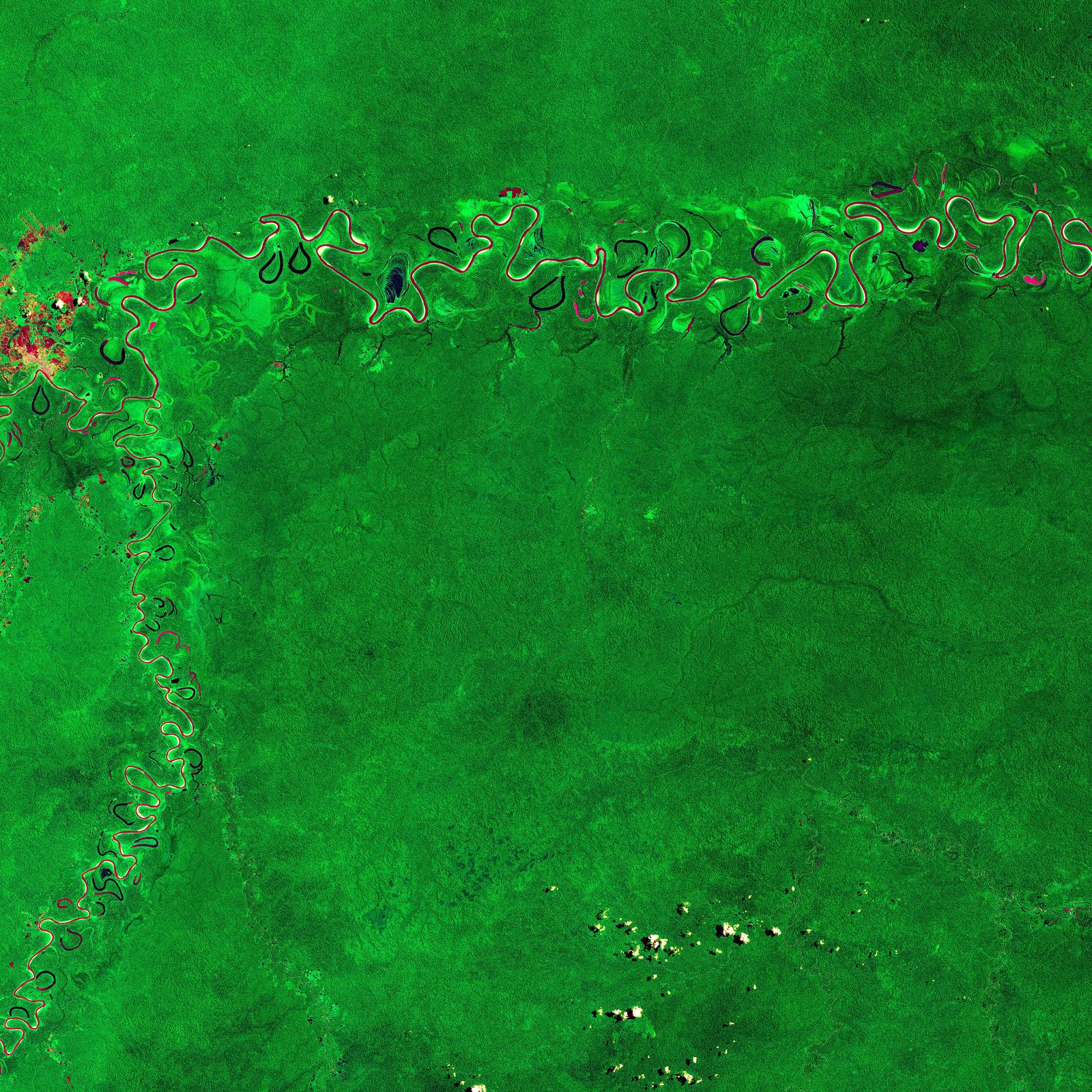
The Amazon adds its own version of this trade-off, and it's the most dramatic seasonal wildlife shift in any jungle on Earth. During high water, river levels around Manaus can rise dozens of feet, flooding enormous tracts of forest and linking river channels into a single connected system — this is the várzea, the flooded forest, and it's navigable by small boat in a way it simply isn't during low water. Pink river dolphins move into the flooded understory to feed, and the paddling itself becomes a different kind of wildlife encounter, gliding between tree canopies instead of walking beneath them. During low water, by contrast, exposed riverbanks and sandbars turn up caiman baskings, wading birds and — on some rivers — nesting turtles that need the beach to be dry in the first place. Both are genuinely good; they're just not the same trip.
Dry season shows you the forest holding still long enough to be photographed. Rainy season shows you the forest actually working.
Prices and crowds
If budget is a real factor in your decision, this section alone might settle it. Dry season in most jungle destinations is also peak season — the same weather that makes hiking easier draws the largest number of visitors, and lodges price accordingly. Green season is the industry's own name for the discount period, and the discounts are not subtle: green-season rates at Costa Rica jungle lodges commonly run 10 to 40 percent below dry-season peak pricing, and that's before factoring in the cheaper flights that tend to follow the same seasonal curve.
The crowd difference is just as real as the price difference, and for some travelers it matters more. A trail that's genuinely crowded in February — vehicles queued at a park entrance before opening, a line to photograph the same sloth everyone else already photographed — can be nearly empty in June. Wildlife guides who work both seasons will often say, off the record, that rainy season is when they actually enjoy the job: fewer groups competing for the same sightline, more time to let a group wait quietly for something to move instead of rushing to the next van.
Good to know
"Rainy season" is not one long downpour. Most jungle destinations get their heaviest, most disruptive rain in specific peak months — often the one or two months right in the middle of the wet season — with the shoulder months on either side offering the discount and the quiet without the worst of the weather. Ask a specific lodge which months they consider their driest "wet" months; the answer is usually more reassuring than the season label suggests.
There's a real trade worth naming honestly, though: some tours and excursions scale back or close entirely in the deepest rainy-season months, particularly ones that depend on river crossings, unpaved access roads, or open-air transport. A lodge that's spectacular and half-empty in September might also be running a shorter activity list than it does in February. Ask directly before booking rather than assuming everything on the website's dry-season itinerary is available year-round.
Roads, rivers and getting around
This is the most practical, least romantic part of the decision, and it deserves to be treated that way. Unpaved roads that are a mild inconvenience in the dry season can become genuinely difficult, or briefly impassable, in the wet season — a river crossing that's a shallow ford in March can be a raging, uncrossable torrent after a week of heavy rain in October. Remote lodges that rely on a single access road or a river crossing will usually tell you plainly if their access changes seasonally; the good ones build alternate plans (4x4 transfer, boat pickup) into the rate, and the honest ones will tell you upfront if a specific week is a bad bet.
But roads are only half the story, and the other half cuts the opposite direction. In river-based jungle regions — the Peruvian and Brazilian Amazon especially — high water season is often when access actually improves. Boats can reach lodges, tributaries and flooded-forest trails that are too shallow to navigate during low water, when the same channels can silt up or dry into mudflats a boat can't cross at all. A lodge on a tributary of the Amazon might genuinely be easier and more interesting to reach by boat in May than in September, which inverts the usual "wet season equals harder travel" assumption completely.
The practical takeaway: don't apply a blanket rule. Ask the specific lodge or destination how their own access changes across the year, because "rainy season" affects a mountain dirt road in Costa Rica's Monteverde cloud forest completely differently than it affects a river lodge outside Iquitos. One gets harder in the wet months. The other gets easier.
Mood, light and what it's actually like to be there
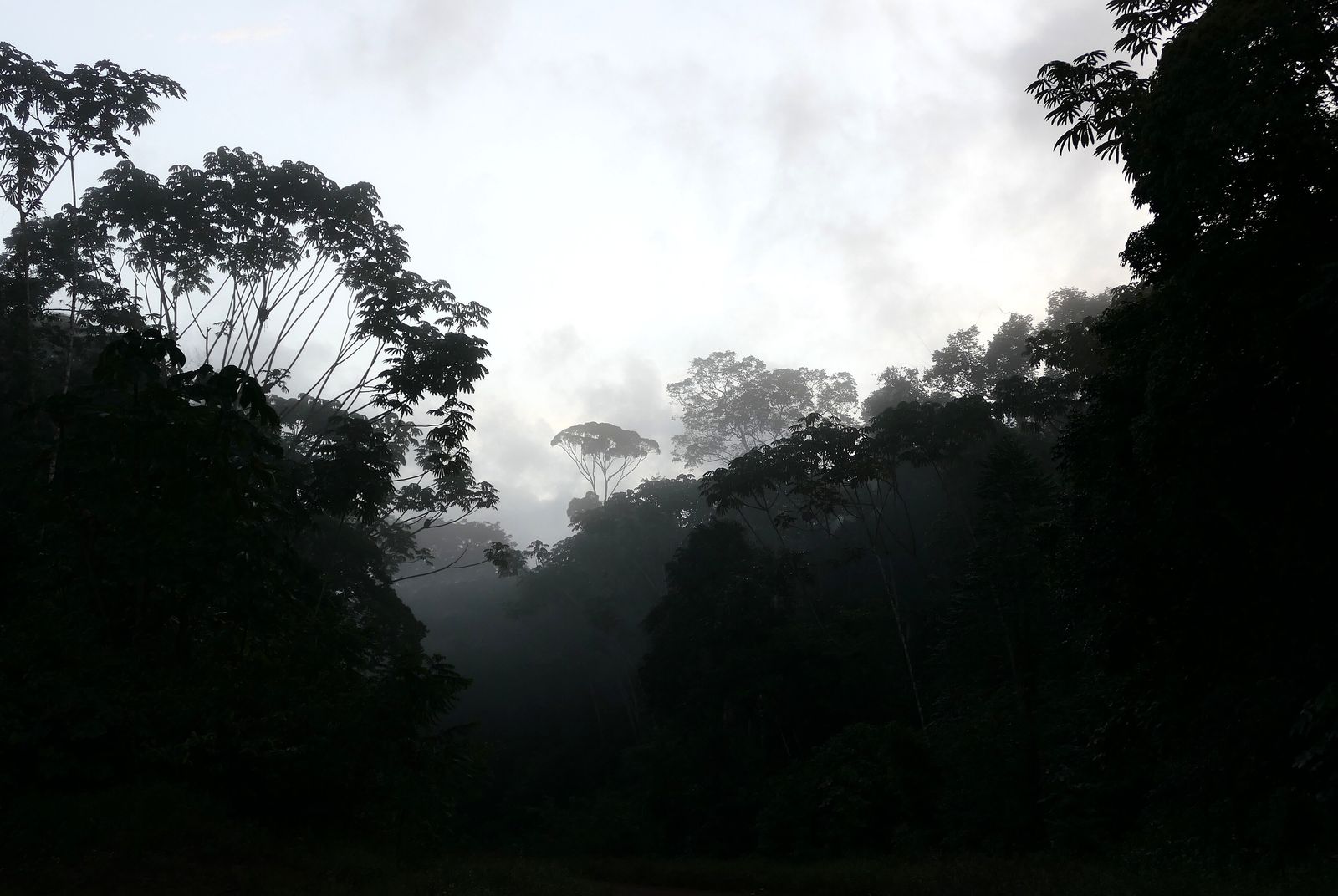
Beyond the practical checklist, the two seasons genuinely feel different to be inside, and that's worth being honest about too, because it's the part a spreadsheet of discounts and rainfall totals won't tell you. Dry season light is harder and more directional — good for wide landscape shots, tougher on skin-tone portraits at midday, and it tends to flatten a rainforest's color into a more uniform, slightly dusty green. Wet season light is softer and more diffuse, filtered through cloud and haze, and it's when a forest actually earns the word lush: saturated greens, water beaded on every leaf, and — almost every morning, regardless of what the afternoon has planned — a low mist that sits in the valleys and river bottoms until the sun burns it off an hour or two after dawn.
That morning mist is one of the most consistently underrated parts of a rainy-season trip. It has nothing to do with whether it actually rains that day — it's a function of overnight humidity and the temperature drop before dawn, and it happens with striking regularity in wet-season months across very different jungles, from Costa Rica's cloud forests to Sri Lanka's hill country to Bali's rice-terrace-adjacent forest edges. If you've ever seen a jungle photograph with soft light glowing through fog between the trees, there's a good chance it was taken at 6am in a wet month, not a dry one.
Sound changes too, and it's easy to underrate until you've experienced both. Dry season nights can be surprisingly quiet in some forests, with insect and frog choruses thinner than the guidebooks imply. Wet season nights are loud in the specific way that makes a jungle stay feel like a jungle stay — a wall of frog and insect sound that builds after dark and doesn't let up, which some travelers find magical and a few find genuinely hard to sleep through the first night. If you're a light sleeper, it's worth asking a host in advance how close the room is to standing water or a frog-heavy area, and packing earplugs regardless of the season.
Region by region
"Rainy season" and "dry season" don't fall on the same calendar everywhere, and getting the region wrong is the single most common jungle-trip planning mistake. Here's how it actually breaks down across the destinations covered on this site.
Costa Rica
The clearest hard split of any destination here. Dry season runs roughly December to April; green season runs May to November, with the heaviest rainfall typically landing in September and October. The Costa Rica Pacific side follows this pattern closely; the Caribbean side is wetter and less seasonal year-round.
Brazil and Peru — the Amazon
Less a dry-versus-wet split than a high-water-versus-low-water one. Around Manaus in Brazil, the lowest river levels typically fall in August and September, with the highest levels in April through June. In Peru's Amazon around Iquitos, the pattern runs similarly — higher water roughly December through May opens flooded-forest paddling, while lower water from June through November exposes riverbanks and improves some trail access. Neither season in the Peruvian Amazon is truly "dry" in the way Costa Rica's is.
Bali
Dry season runs roughly April to October, and it's also the more crowded, more expensive half of the year for Bali's jungle interior around Ubud. The wet months still deliver plenty of clear mornings, and the island's river gorges and waterfalls run fuller and more dramatic than they do in the driest months.
Thailand
Split roughly by region. The islands and southern jungle areas favor a November-to-April dry window; the mountainous north around Chiang Mai has its own dry, cool season from November to February that's distinct from the southern pattern, followed by a hot season and then a wetter one from roughly June through October. Thailand's jungle interior rewards checking the specific region rather than the country as a whole.
Tulum and the Maya jungle (Mexico)
November through April is the reliable dry window, with a hotter, more humid stretch in May and June before hurricane season peaks September through October. The Tulum jungle region's rain rarely disrupts a trip completely, but late-season tropical storm risk is worth watching if traveling in September or October specifically.
Puerto Rico and Florida
Both run December to April as the driest, most comfortable window, with El Yunque in Puerto Rico staying green and rainy to some degree year-round regardless of season, and Florida's jungle-adjacent wetlands turning into a genuine afternoon-thunderstorm sauna through the summer.
Hawai‘i
Less dramatic swings than most tropical destinations, but the same general shape applies: the drier, sunnier months run roughly April through October on most islands' leeward sides, while winter brings more frequent rain and, on some coasts, larger surf that can affect access to remote trails. Hawai‘i's windward, jungle-heavy coasts stay lush and rain-prone in every season, which is part of why they're jungle-heavy in the first place.
Colombia
Genuinely varies by region within the country. The Caribbean side around Minca and Tayrona is driest December through March and again briefly in July and August; the Chocó coast is wet nearly year-round but rewards a July-to-October visit with humpback whales offshore; the Amazon around Leticia has no real dry season, though lower water from roughly June through November eases some trail access. Colombia is the destination on this list where "check the specific region" matters most.
Sri Lanka
The most useful single fact about Sri Lanka: its two halves run on opposite monsoon calendars. The southwest rainforest and hill country are driest roughly December through March; the dry-zone south and east run on the reverse pattern, driest roughly May through September. Book the wrong half against the wrong season and you'll spend a week watching rain through a window that was supposed to show you leopards.
So which season should you pick?
There isn't a universally correct answer, but there is a genuinely useful way to think about it: match the season to what you actually want out of the trip, not to a vague sense that "dry" sounds safer.
- Pick dry season if: you're traveling with a fixed, short window and want the highest odds of predictable weather every single day; you're focused on birding or a specific nesting species; your itinerary depends on unpaved mountain or forest roads that genuinely worsen in the rain; or you simply don't want rain to be part of the story you tell about the trip.
- Pick green/rainy season if: budget matters and a 10 to 40 percent discount changes what's possible; you want fewer people between you and the forest; you're interested in amphibians, reptiles or general lushness over bird nesting behavior; your destination is river-based and high water actually improves boat access; or you just like the mood of mist, heavy green and a loud, humid night better than a dusty, quiet one.
- Split the difference with the shoulder months. The month or two right at the edge of a season — late November or early December in Costa Rica, for instance — often delivers lower prices and thinner crowds without the single wettest weeks of deep rainy season. Ask a specific lodge which shoulder weeks they'd personally recommend; most will tell you honestly, because a happy shoulder-season guest is a repeat guest.
One thing worth saying plainly: neither season is objectively "the good one," and any article — including this one — that tells you dry season is simply better is selling you the easy, unexamined version of the answer. The appeal of a genuine jungle stay has always included the parts that aren't fully controllable, and rain is one of them. Plenty of the most memorable jungle trips people describe involve a storm, not despite it.
Packing and planning for either season
Whichever season you land on, a few adjustments make the trip noticeably smoother.
For dry season
- Bring more sun protection than you think you need — reef-safe sunscreen, a hat, sunglasses — since open trails and river stretches get direct, unfiltered sun for longer stretches of the day.
- Book popular lodges and specific activities (canopy tours, guided night walks with limited group sizes) further in advance; dry season fills up first.
- Pack a light layer for early mornings in higher-elevation cloud forest destinations, which can run cool before the day's sun builds up.
For rainy/green season
- A genuinely waterproof rain jacket beats a poncho for anything longer than a five-minute downpour, and quick-dry clothing matters more here than almost anywhere else — cotton that gets wet in the tropics can stay wet for days.
- Dry bags or waterproof phone pouches for boat transfers and hikes, plus a spare set of shoes you don't mind getting soaked, since one pair staying wet through a multi-day trip is a real quality-of-life problem.
- Build slack into the itinerary. A single planned activity per day with flexibility beats a tightly packed schedule that a two-hour downpour can wreck completely.
- Confirm directly with your lodge which activities run rain-or-shine and which pause — most jungle lodges have handled this for years and have a straightforward, unbothered answer.
For the fuller gear list either season calls for, see what to pack for a jungle trip, and if you're weighing how remote to go at all, off-grid jungle stays: what to expect covers how seasonal access affects fully remote properties specifically. Budget-minded travelers should also see how much a jungle trip actually costs, since green-season savings often stack with other budget levers.
Common questions
Is rainy season a bad time to visit the jungle?
No — for a lot of travelers it's genuinely the better trip. It comes with lower prices, thinner crowds, lusher scenery and better odds with amphibians and reptiles. The trade-offs are real (some road access gets harder, a few activities pause in the heaviest weeks) but "bad" overstates it for most itineraries.
Will it rain all day, every day, in rainy season?
Usually not. Most jungle destinations covered here see a pattern of clear mornings and a defined afternoon or evening rain window, often a couple of hours long, rather than constant rain. There are wetter and drier stretches within the rainy season itself — the middle months are typically the heaviest.
Which season is cheaper?
Rainy/green season, consistently. Discounts of roughly 10 to 40 percent off dry-season lodge rates are common in destinations like Costa Rica, and flights often follow the same seasonal pricing curve.
Is dry season always better for wildlife?
Not always — it depends what you want to see. Dry season favors birding and nesting species, because sightlines are clearer and nests are predictable. Rainy season favors amphibians and reptiles, and in river-based regions like the Amazon, high water opens up flooded-forest wildlife encounters that simply don't exist during low water.
Does the "rainy season" fall on the same months everywhere?
No, and this is the most common planning mistake. Costa Rica, Bali, Thailand's north and south, Sri Lanka's two coasts, and the Amazon all run on different calendars — some of them opposite each other. Always check the specific destination and region rather than applying a general rule.
Should I avoid booking a remote lodge in rainy season?
Not automatically. Ask the specific property how their access changes seasonally — road-based lodges can genuinely get harder to reach, while river-based lodges in places like the Amazon can get easier, since high water opens channels that are too shallow the rest of the year.
Ready to compare destinations directly against your own dates? The full destinations directory breaks seasons down further by region, and how to book a jungle Airbnb covers exactly what to ask a host about seasonal access before you commit to dates.
- Rainforest Cruises — Best Time to Visit Manaus, Brazil — Amazon high-water and low-water season timing and river level changes around Manaus.
- World Rainforests — Flooding, Low Water, High Water — flooded-forest (várzea) ecology and seasonal Amazon water level swings.
- Amazon Waters — Fluctuation of River Flow — timing of peak and lowest flood stages across Amazon basin rivers.
- Costa Rica.com — Green Season Travel — Costa Rica's green season timing, pricing patterns and rainfall behavior.
- Cielo Lodge — 7 Reasons to Visit Costa Rica's Green Season — green-season lodge rate discounts and reduced crowds.
- Econaturalist — When to Visit Costa Rica for Wildlife: A Month-by-Month Guide — dry-season bird nesting predictability versus wet-season amphibian and reptile activity.
- National Geographic — Guanacaste, Costa Rica's Green Season — green-season travel conditions and seasonal rainfall pattern.
More from the Journal.
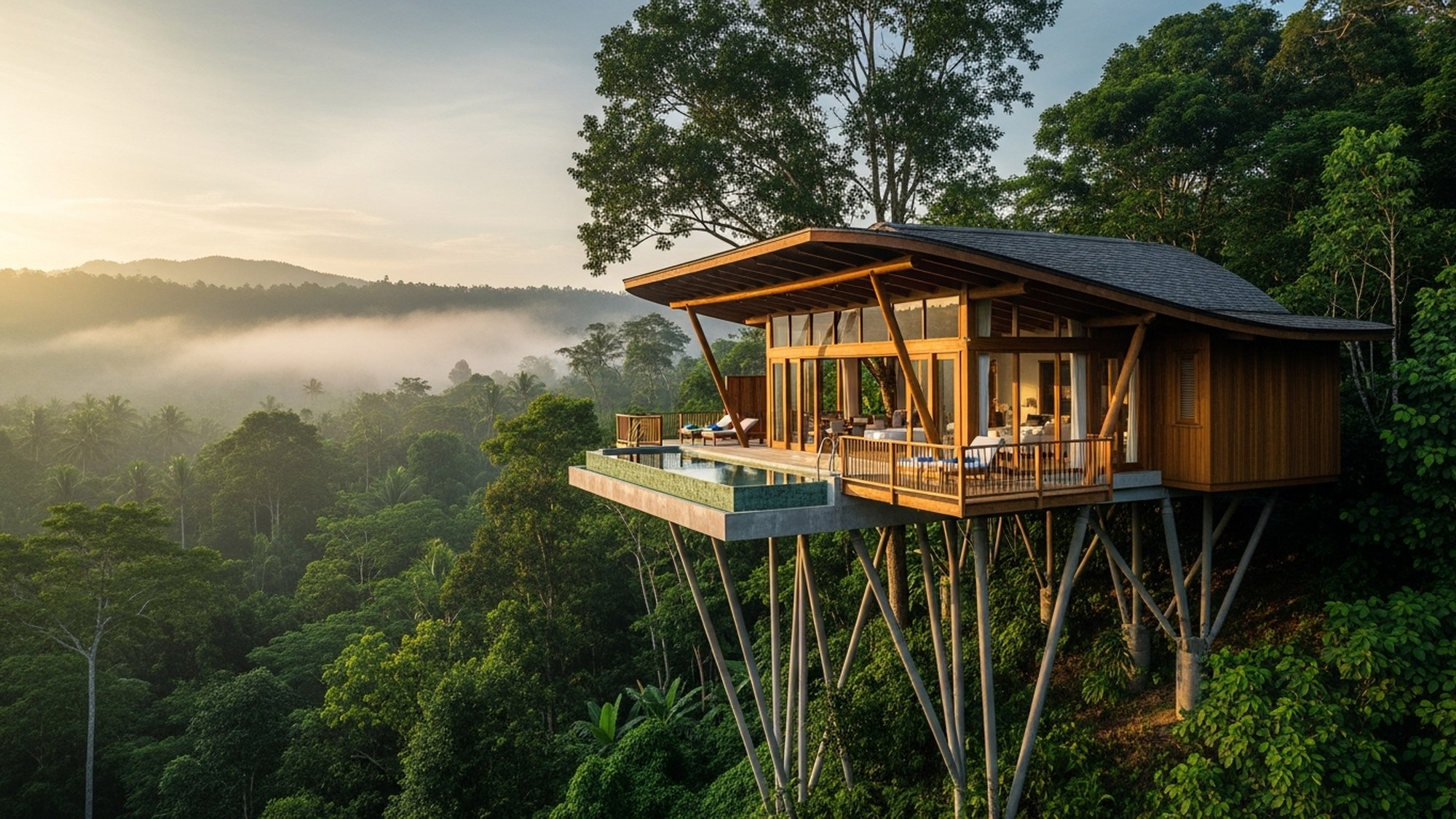
How to Start a Jungle Airbnb
The complete, honest guide to building and running a treehouse, bamboo house or rainforest villa — from choosing a country and the land laws to off-grid systems, budgets, and getting booked.
 Photo: Gregory Heath, CSIRO, CC BY 3.0
Why Jungle Stays Are Booming
The data behind the treehouse boom: four shifts in how the world travels are all converging on the forest — and it looks structural, not a fad.
 Photo: Vyacheslav Argenberg, CC BY 4.0
When to Visit the Jungle: A Season-by-Season Guide
There's no single best time to visit 'the jungle' — because it isn't one place. Here's when to go, region by region, with a month-by-month cheat sheet.
 Photo: Derek Ramsey (Ram-Man), CC BY-SA 4.0
Find your own piece of the canopy.
Treehouses, bamboo houses and rainforest villas across 17 destinations — found, vetted and written up honestly.
Browse all destinations