Sustainable & Responsible Jungle Travel
A jungle stay can do real good: it can fund a forest ranger's salary, keep a hillside from being cleared for cattle, and put money directly into a family's hands instead of a distant shareholder's. It can also do the opposite while using exactly the same words to describe itself. "Eco," "sustainable" and "responsible" are unregulated marketing terms — anyone can print them on a brochure — so the only way to actually travel well in the forest is to know what to look for underneath them. This is the honest version of that guide.
Why this actually matters
It's tempting to treat "sustainable travel" as a feel-good add-on, something you consider after you've already picked the place with the infinity pool and the good photos. But in a lot of the destinations this site covers, tourism isn't separate from conservation, it's the mechanism for it. Rainforest that generates income standing up — through lodges, guiding fees, park entrance charges, artisan sales — is rainforest that has an economic reason to stay rainforest. Rainforest that generates nothing tends to get logged, mined, or converted to pasture and plantation, because someone, somewhere, needs it to earn a living either way. Costa Rica is the textbook example: a country that lost more than half its forest cover by the 1980s and then rebuilt it past 50% largely by making standing forest more valuable than cleared land, with tourism as one of the main engines.
That's the upside case. The downside case is just as real. A badly sited resort can strain a village's water supply, price locals out of their own coastline, dump untreated sewage into a river that a downstream community drinks from, or quietly run a diesel generator all night behind a lobby full of reclaimed teak and potted ferns. Both of these things — the lodge that funds a ranger station and the one that's draining the aquifer — can look nearly identical in a listing photo. The point of this guide isn't to make you paranoid about every trip. It's to give you the handful of questions that actually separate the two, so you can spend your money on the version of jungle travel that's worth defending.
"Eco" on a sign costs nothing to print. A functioning biodigester, a solar array sized to the building instead of a brochure, and a payroll with local names on it cost real money — and that's usually the difference that matters.
The certifications worth trusting
There are, by most industry counts, well over a hundred different tourism sustainability labels in circulation worldwide, and the quality between them varies enormously — some are rigorous third-party audits, others are essentially a fee and a logo. You don't need to memorize all of them. You need to know the handful that are actually meaningful, and the one body that vets the rest.
The Global Sustainable Tourism Council (GSTC)
GSTC doesn't certify individual hotels directly. It sets the baseline criteria — covering sustainable management, socio-economic impact on local communities, cultural heritage protection, and environmental management (energy, water, waste, biodiversity) — and then reviews other certification schemes against that baseline. If a certification is "GSTC-Recognized" or "GSTC-Accredited," it has been independently checked against a real standard rather than just self-declared. That single fact — is this label recognized by GSTC — is the fastest filter you have.
Labels that clear the bar
- Costa Rica's CST (Certificación para la Sostenibilidad Turística) — run by the country's own tourism board (ICT), GSTC-recognized, and rated on a scale from CST Basic (meets mandatory environmental, social and operational criteria) up to CST Elite (goes well beyond them). It's one of the oldest national sustainable-tourism certifications in the world and is widely regarded as one of the most credible.
- Rainforest Alliance certification — the green frog seal, better known from coffee and cacao, also covers tourism operations, verifying biodiversity protection and fair treatment of workers and communities.
- Green Key, Green Globe, EarthCheck, Biosphere, TourCert and Travelife — all GSTC-recognized international frameworks, used across different regions and property types.
- Blue Flag — specifically for beaches and marinas, covering water quality and environmental management, useful for jungle stays that sit on the coast.
- Green Fins — for dive and snorkel operators, relevant if your jungle trip includes a reef.
A real example of what this looks like in practice: on Costa Rica's Osa Peninsula, Lapa Rios, a rainforest lodge bordering Corcovado National Park, holds CST Elite certification and runs its bungalows on solar and micro-hydro power with biodigesters handling waste on site. Nearby, Finca Bellavista — the treehouse community you'll also find mentioned in our best jungle Airbnbs list — has required every home built on its 600 forested acres since 2007 to run on solar power with a biodigester and has never permitted clear-cutting. That's the kind of specific, checkable detail a serious property is happy to hand you. A greenwashed one talks in adjectives instead.
Good to know
You can verify almost any certification claim in about two minutes. Search the certifying body's own website (GSTC.org, the CST registry at ict.go.cr, Rainforest Alliance's certificate finder) for the property by name. If it isn't listed, either the certification lapsed or it was never real. Don't take a logo on a homepage as proof of anything.
How to spot greenwashing
Greenwashing in jungle travel tends to follow a short list of patterns, once you know to look for them.
Vague virtue instead of specifics
"We care deeply about the environment" tells you nothing. "38% of our power comes from a micro-hydro turbine on the property stream, and we're adding solar to cover the rest by next year" tells you everything. A property that's actually doing the work can usually rattle off numbers, systems and timelines without hesitation, because they live with them daily. One that isn't tends to retreat into feeling-words.
Aesthetic sustainability
Bamboo walls, a thatched roof, rattan furniture and a lot of green paint signal "nature" to your eye, but none of it tells you anything about the water treatment, the power source, or the sewage system underneath the design. Some of the most photogenic jungle architecture on earth is genuinely sustainable — a lot of Bali's bamboo movement, pioneered by builders like IBUKU, was built around exactly that principle. But the look and the substance are two separate questions, and you have to ask both.
The diesel generator behind the curtain
Off-grid doesn't automatically mean clean. A remote lodge that markets itself on isolation may be running a diesel generator around the clock, which is noisy, carbon-heavy and expensive to fuel in by boat or mule. Ask directly what powers the property after dark. A confident, specific answer (solar with battery storage, micro-hydro, a documented generator-hours policy) is the sign of a place that's actually solved the problem rather than just avoided the question.
Water-hungry amenities in water-stressed places
An infinity pool or a lush irrigated lawn in a region that struggles with dry-season water access is a real cost to the community around it, no matter how many palm trees frame the photo. It's fair to ask where the property's water comes from and whether the surrounding village has reliable access to its own.
Certifications that don't exist when you check
As noted above, some properties have been caught displaying certification logos for programs that lapsed years ago, or that were never independently verified in the first place — a handful of "eco-certifications" turned out to be self-issued by marketing agencies rather than any accredited body. It costs you nothing to check.
What a genuinely low-impact stay looks like
Strip away the marketing and a low-impact jungle property tends to share a short list of practical, checkable traits.
Energy
Solar arrays sized to the building's actual draw, micro-hydro where a stream allows it, battery storage instead of a generator running all night, and — often overlooked — simple passive design: buildings oriented for cross-breeze and shade so air conditioning is a backup rather than a default. Ask what percentage of power comes from renewables and what covers the gap.
Water and waste
Greywater recycling, composting toilets or properly maintained biodigesters rather than a straight pipe to the nearest river, rainwater catchment, and a visible no-single-use-plastic policy that extends past the welcome bottle of water. Sewage treatment is the least glamorous item on this list and the one that matters most to the community living downstream.
Building materials and siting
Local, renewable materials — bamboo, reclaimed or sustainably harvested timber, thatch — built by local labor rather than shipped-in crews, on a footprint that avoids clearing old-growth trees to make room for the structure. The best jungle architecture works with the canopy that's already there instead of removing it to build the view.
Wildlife policy
A property that's serious about conservation won't offer wildlife selfies, won't have caged or chained animals as "attractions," and will keep a respectful, hands-off distance from anything wild on the property — including asking guests not to feed monkeys or birds, which sounds charming and does real long-term harm to wild animals' health and behavior.
Local employment and sourcing
Staff and management drawn from the surrounding community rather than flown in, produce and materials sourced regionally, and — where you can find it stated plainly — some share of profit or a fixed fee going back into a conservation trust, a school, or a park's ranger program.
Community tourism: who actually benefits
The most reliable form of "sustainable" travel is often the simplest to describe: money that stays local. A foreign-owned resort chain can employ local staff and still send the bulk of its profit overseas. A community-owned lodge, a family-run guesthouse, or an indigenous-led tourism cooperative keeps that money circulating in the place you're actually visiting — paying for schools, clinics, and the next generation's reason to protect the forest rather than sell the land under it.
This is a global pattern, not a niche one. In the Peruvian and Ecuadorian Amazon, indigenous-run lodges and cooperatives have become one of the more credible conservation tools in the region, because they give communities a direct financial stake in keeping the forest intact rather than logging or clearing it for agriculture. In Bali, the same bamboo-building movement that produced the island's famous treehouses also trains and employs local craftspeople rather than importing labor. None of this requires you to give up comfort — some of the best-reviewed stays anywhere are also the most community-rooted ones.
When you're comparing two similar-looking properties, a few plain questions do a lot of work: Who owns this place? Is management local or is it a branch of an international hospitality group? Does the website name specific community partnerships, schools, or conservation programs it funds — or just gesture at "giving back"? A property with nothing to hide will usually answer in one sentence.
Choosing a responsible guide or operator
The lodge is only half the equation. Who takes you into the forest matters just as much, especially for anything involving wildlife, indigenous land, or a protected area.
- Licensed, local guides. Most serious rainforest destinations require naturalist guides to be locally licensed and trained — ask, and be wary of an operator who can't produce a straight answer.
- Small groups. A trail can absorb four people quietly; it can't absorb forty. Group size is one of the simplest proxies for how seriously an operator takes its impact.
- No animal baiting or handling. A guide who baits wildlife with food to guarantee a sighting, or who lets guests touch, hold or ride wild animals, is optimizing for your photo over the animal's welfare — walk away.
- Transparent permits and fees. National parks and reserves charge entrance fees that fund rangers and maintenance. A reputable operator itemizes this rather than folding it into an unexplained lump sum, and it should show up as an actual paid entry, not a shortcut around it.
- Membership in a recognized association. National ecotourism or guide associations (Costa Rica's ACOPROT, for example, or country-specific guide licensing boards) are a reasonable proxy for accountability.
Region-by-region notes
The specifics of what to look for shift a little by region, though the underlying questions stay the same.
Costa Rica
The most mature sustainable-tourism infrastructure of any jungle destination on earth, thanks largely to the CST program described above. On the Costa Rica page you'll find stays across the Osa Peninsula and the southern Pacific zone, where lodges like Lapa Rios and community projects like Finca Bellavista sit within reach of Corcovado National Park, widely regarded as one of the most biodiverse places on the planet. Look for a CST rating on any property you're considering here; it's the clearest signal available anywhere in the industry.
The Brazilian Amazon
Scale changes the calculation. The Amazon is enormous, remote, and the stakes of deforestation are correspondingly higher, so community and indigenous-led lodges along tributaries like the Rio Negro matter even more here than elsewhere. Our Brazil page covers stays that put you on the water rather than in a resort compound, which tends to correlate with a lighter footprint and a closer relationship with the people who actually live along the river.
Bali
Home to the bamboo-architecture movement that's become almost synonymous with "jungle stay" on social media. The best of it, built by studios that trained and employ Balinese craftspeople using locally grown bamboo, genuinely earns the sustainable label. But Bali's interior has also seen rapid, unregulated construction driven by tourism demand, so it's worth being more skeptical here than the postcard suggests — ask about water sourcing in particular, since parts of the island face real dry-season strain. More on the island's stays on our Bali page.
Tulum and the Maya jungle
A cautionary tale as much as a destination. Tulum's rapid growth strained local water and waste infrastructure faster than it could be built out, which is exactly the greenwashing pattern this guide warns about — beautiful, plant-covered architecture built faster than the sewage and water systems underneath it could keep up. It's still possible to travel well here; it just requires asking the water and waste questions in this guide more pointedly than usual. See our Mexico page for stays.
Peru and the Amazon basin
Home to some of the most respected community and indigenous-partnership lodges anywhere, particularly around reserves like Pacaya-Samiria, reachable mainly by river rather than road — which naturally limits scale and keeps tourism tied to the communities who live along the water. Browse Peru for stays deep in the basin.
Puerto Rico, Florida and Hawai‘i
Domestic (for U.S. travelers) jungle destinations carry a different kind of responsibility: these are places where over-tourism and short-term-rental pressure can price out longtime residents just as surely as it can strain a forest. In Hawai‘i in particular, respecting cultural protocols around sacred sites and being mindful of the housing pressure tourism places on local communities is as much a part of traveling responsibly as anything to do with the rainforest itself. See Hawai‘i, Puerto Rico and Florida.
The honest math on getting there
Here's the uncomfortable part most sustainable-travel guides skip: for most travelers, the single largest carbon cost of a jungle trip is the long-haul flight to get there, not anything that happens once you land. A property running entirely on solar power doesn't offset the emissions of the plane that brought you to it, and no amount of on-site composting changes that math.
This isn't a reason to stay home. It's a reason to make the trip count once you've made it: stay longer rather than doing a string of short hops between destinations, combine multiple stops into one trip instead of separate flights, and choose direct routes where they exist, since layovers add disproportionate emissions for the distance covered. Once you're on the ground, walking, cycling, or using local shared transport between nearby stops does far more good than any single choice about which lodge to book. If a program matters to you, look for a verifiable carbon offset registered with a recognized standard (Gold Standard or Verra are the two most credible), understanding that offsets are a genuine but imperfect tool — reducing the trip itself still beats offsetting it.
Good to know
If you're weighing whether to fly at all, the honest trade-off is this: a well-chosen, well-run jungle stay funds real conservation work that a spreadsheet-only vacation at home doesn't. The travel industry's own research consistently shows tourism revenue is one of the strongest predictors of whether a given stretch of rainforest stays standing. The point isn't to feel guilty about flying — it's to make sure the trip you take once you're there is one worth the flight.
A pre-booking checklist
Before you book, run any property (or trip) through this list. None of it takes more than a few minutes.
- Search the property name plus the words "certification" or "CST" or "GSTC," and verify any claimed certification directly on the certifying body's own site.
- Ask what powers the property after dark, in plain terms — renewable percentage, generator hours, or both.
- Ask how wastewater and sewage are handled, and whether that system is inspected or certified.
- Check who owns and manages the property — local, regional, or an international group — and whether it names specific community or conservation partners.
- Look for a stated policy against wildlife handling, feeding, or captive-animal "attractions."
- Check group sizes for any guided activity, and whether guides are locally licensed.
- Ask directly about water sourcing if the property has a pool, lawn, or spa, especially in a dry or water-stressed region.
- Read a handful of recent independent reviews specifically for mentions of water shortages, construction noise, or staff treatment — these surface faster in reviews than in marketing copy.
- If flying long-haul, plan to stay longer and combine stops rather than booking a string of short, separate trips.
Common questions
Is "eco-lodge" a protected or regulated term?
No. Almost anywhere in the world, "eco-lodge," "eco-resort" and "sustainable stay" are marketing language, not legal or regulated designations. That's exactly why certifications matter — they're the only part of the claim that's actually been checked by someone independent.
Are eco-certified stays always more expensive?
Not necessarily. Certification is about process and management, not luxury tier — there are certified budget guesthouses and hostels as well as high-end lodges. Some certified properties cost more because the infrastructure (solar, biodigesters, water treatment) genuinely costs more to install and run, but plenty of community-run stays are priced well below comparable uncertified resorts.
Does staying at an Airbnb-style jungle home count as sustainable?
It can, if the same questions apply: who owns it, how is it powered, how is waste handled, and does it employ people locally. A privately owned, small-footprint jungle home built from local materials and run by a local family can be more genuinely low-impact than a large certified resort — and less so than one, if it's a foreign-owned investment property with none of those systems in place. Our guide on how to book a jungle Airbnb covers the practical side of vetting an individual listing.
What's the single biggest thing I can do to travel more responsibly in the jungle?
Choose where your money goes as deliberately as you choose where you sleep — locally owned lodges, licensed local guides, and community-run experiences over the largest or cheapest option available. After that, the flight math in this guide (staying longer, flying direct, combining stops) is the next biggest lever.
Should I avoid all-inclusive jungle resorts entirely?
Not automatically, but scrutinize them more closely. All-inclusive pricing can obscure exactly the details this guide asks about — water use, waste handling, local employment — because the whole point of the model is that you never see a line-item bill. Ask the same questions you'd ask anywhere else before booking.
How do I know if a "community partnership" claim is real?
Look for specifics: a named school, clinic, cooperative, or conservation trust, ideally with its own website or a mention in independent press, not just the phrase "we support the local community" with nothing underneath it. If you can't find the partner organization existing anywhere outside the resort's own marketing, be skeptical.
Where to go from here
None of this is meant to make jungle travel feel like homework. The honest news is that a genuinely low-impact stay is very often also the more memorable one — a small, locally run lodge with a real relationship to the forest around it tends to beat a generic resort on exactly the things that make a trip worth remembering. Start with our full destinations directory to browse stays across every region in this guide, and if you're still deciding where to go, our companion pieces on whether the jungle is safe, what to pack, and what a jungle trip actually costs round out the planning. If you're weighing a more remote stay, off-grid jungle stays: what to expect is worth reading before you book — a lot of the same sustainability questions in this guide show up there in practical, day-to-day form.
- GSTC — Recognized Standards for Hotels — the four sustainability pillars and how certification recognition works.
- GSTC — Costa Rica CST Standard — confirms CST's GSTC-recognized status.
- Instituto Costarricense de Turismo — CST Program — how Costa Rica's national certification is administered and rated (Basic/Elite).
- Lapa Rios Ecolodge — CST Elite-certified lodge on the Osa Peninsula bordering Corcovado National Park.
- Finca Bellavista — treehouse community and its solar/biodigester building requirements since 2007.
- Sustainable Travel International — How to Spot and Avoid Greenwashing in Tourism — greenwashing patterns and certification verification advice.
- Outside — Is Your 'Eco-Lodge' Really Eco-Friendly? — diesel generators, water use and other on-the-ground greenwashing signals.
- IBUKU — the Bali bamboo-architecture studio referenced for locally trained, locally sourced building practice.
More from the Journal.
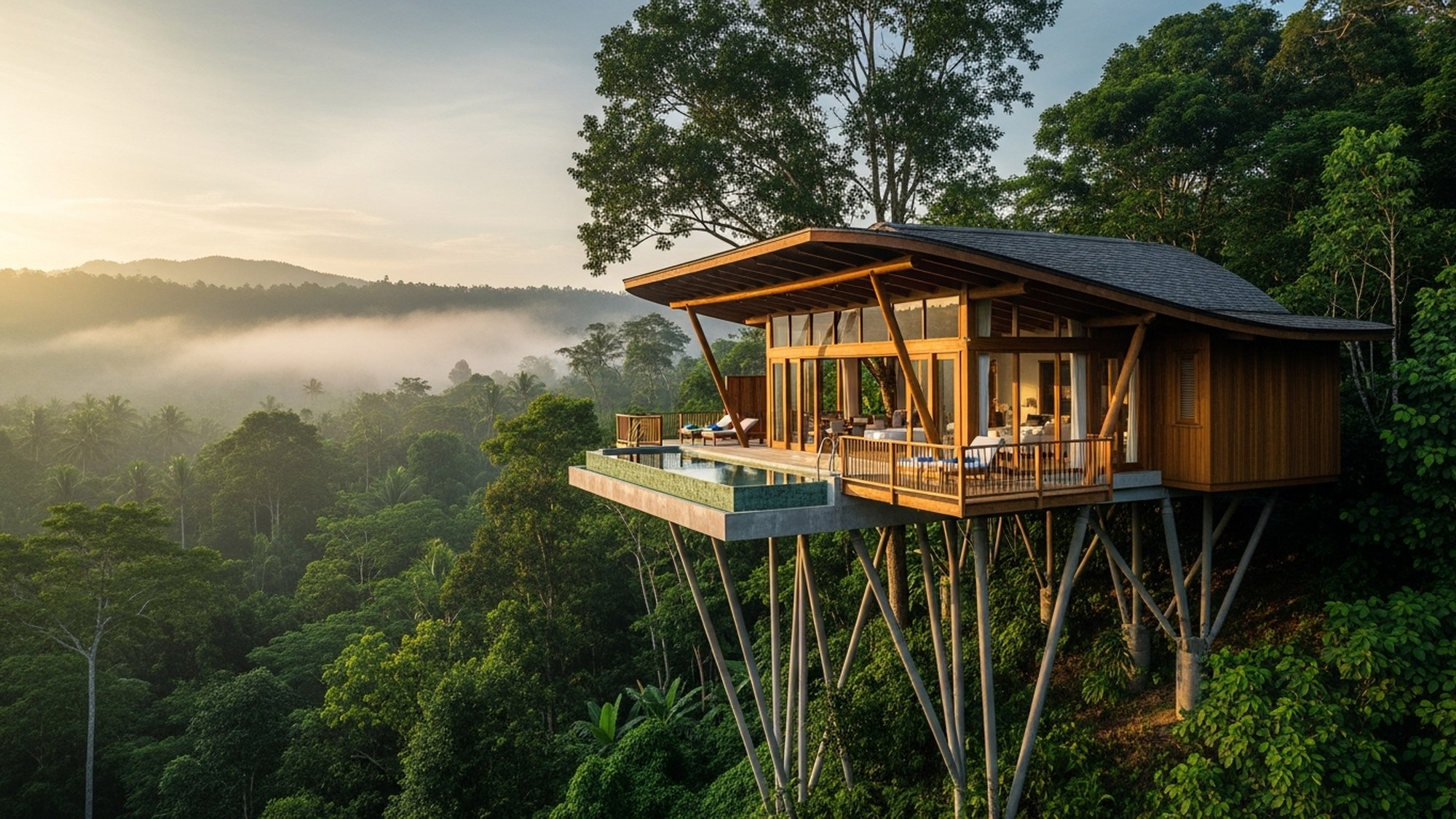
How to Start a Jungle Airbnb
The complete, honest guide to building and running a treehouse, bamboo house or rainforest villa — from choosing a country and the land laws to off-grid systems, budgets, and getting booked.
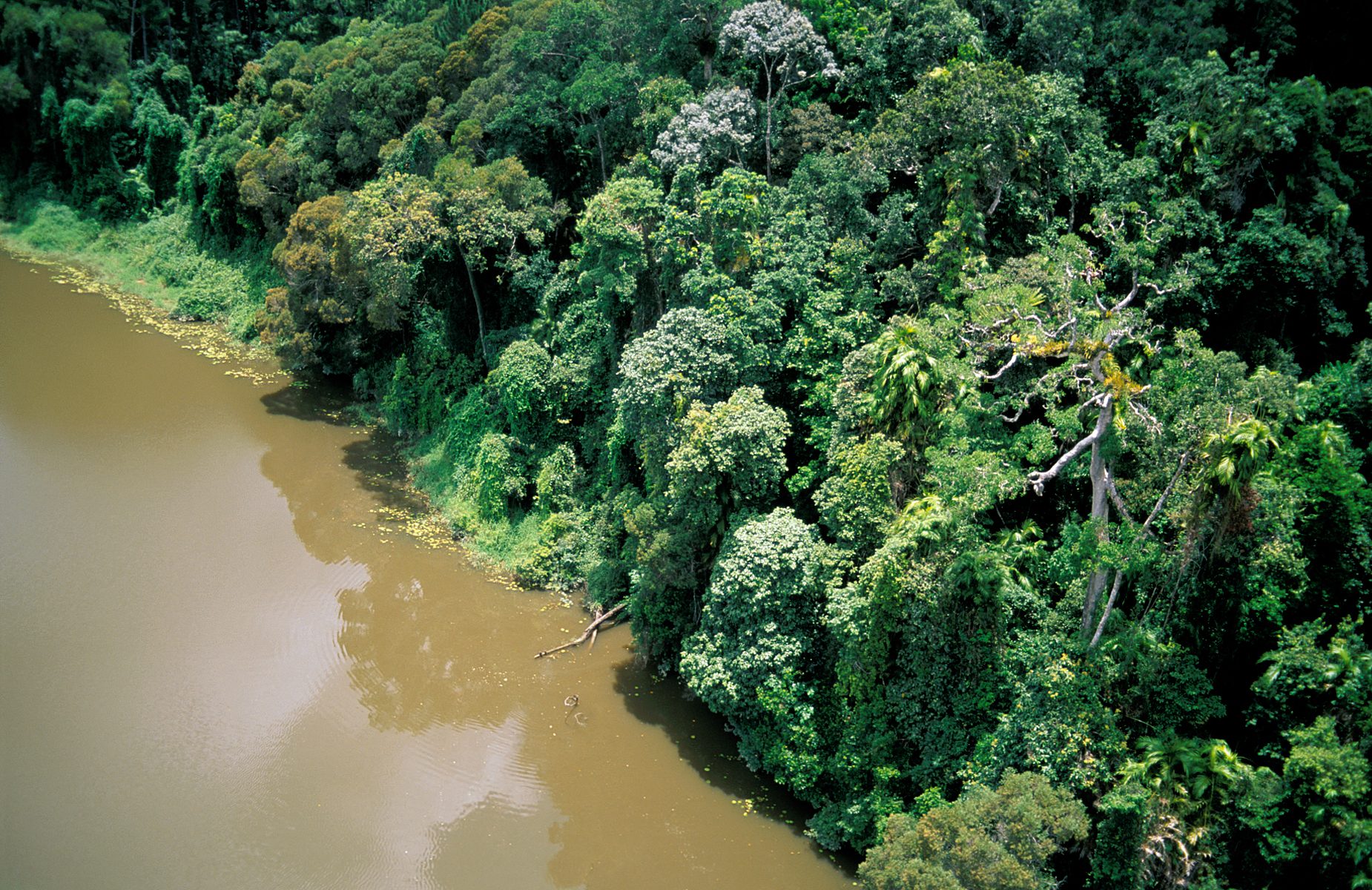 Photo: Gregory Heath, CSIRO, CC BY 3.0
Why Jungle Stays Are Booming
The data behind the treehouse boom: four shifts in how the world travels are all converging on the forest — and it looks structural, not a fad.
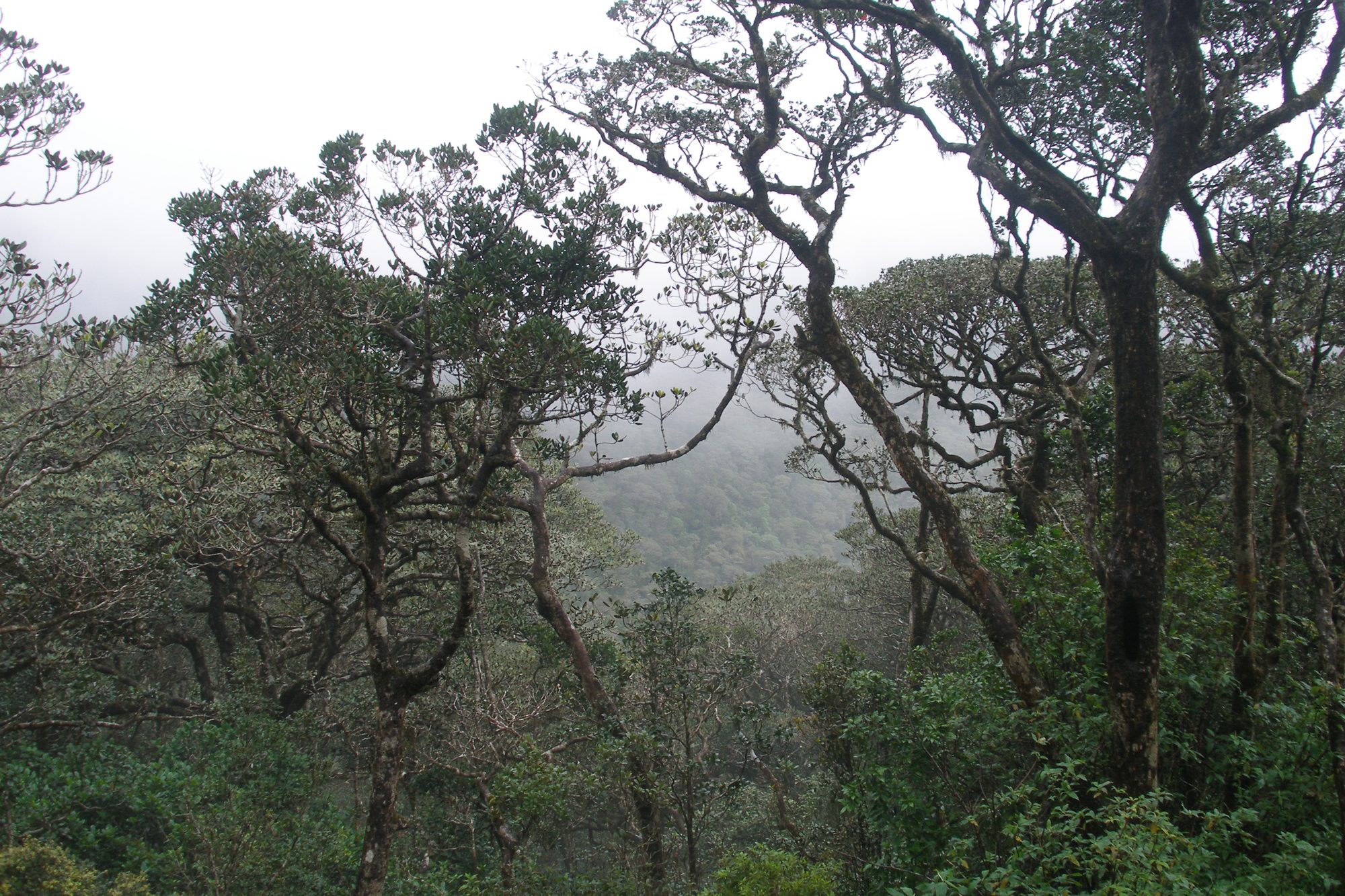 Photo: Vyacheslav Argenberg, CC BY 4.0
When to Visit the Jungle: A Season-by-Season Guide
There's no single best time to visit 'the jungle' — because it isn't one place. Here's when to go, region by region, with a month-by-month cheat sheet.
 Photo: Derek Ramsey (Ram-Man), CC BY-SA 4.0
Find your own piece of the canopy.
Treehouses, bamboo houses and rainforest villas across 17 destinations — found, vetted and written up honestly.
Browse all destinations