
Jungle Domes & Bubble Stays Explained
A dome tent sounds like one thing and turns out to be two. There's the rigid geodesic dome — a frame of triangulated struts under a skin of canvas, polycarbonate or clear plastic panels, descended more or less directly from a greenhouse kit — and there's the bubble tent, a fully transparent inflatable skin held up by a blower that never really stops running. Jungle lodges have adopted both, usually calling either one a "dome," which is how a guest ends up booking what they think is a glass-walled room and gets an air mattress with a view instead, or the other way round. Here's what actually holds each one up, how a builder keeps either from turning into a greenhouse at 2pm, whether you can really see the stars from bed, and a few real places doing it properly.
Two very different rooms called the same thing
Before anything else, it's worth separating the two products the word "dome" gets used for, because they don't behave anything alike once you're actually staying in one.
A geodesic dome is a rigid frame — usually aluminum or galvanized steel struts, sometimes timber — bolted together into a network of triangles that forms a sphere or partial sphere. What covers that frame varies a lot: heavy canvas on the more agricultural, greenhouse-style builds, clear or frosted polycarbonate sheet on the ones built to sell a view, or a mix of both, solid canvas on the lower half for privacy and clear panels up top for the sky. It stands up on its own. Nobody has to keep pumping air into it.
A bubble tent is a different animal entirely: a fully transparent inflatable skin, usually PVC or a food-grade TPU film, held taut by a continuous flow of air from an electric blower. There's no rigid structure inside it at all — the air pressure is the structure, the same principle that holds up a bounce house, just applied to a room you're meant to actually sleep in and see straight through in every direction, floor to ceiling, all night.
Both show up in jungle listings, often photographed at the same golden-hour angle that makes them look interchangeable. They aren't. A geodesic dome with clear panels gives you a fixed, walkable, weatherproof room that happens to have a great view of the canopy. A bubble tent gives you a genuinely 360-degree transparent bedroom that depends, every hour it's inflated, on a machine humming somewhere nearby. Knowing which one a listing is actually describing — and it's worth checking the photos for a rigid strut pattern versus a smooth, seamless skin — tells you a lot about what the night is actually going to be like.
Where the shape comes from
The geodesic dome has a specific inventor and a specific date, which is unusual for a building shape this common. The American engineer and design theorist Buckminster Fuller developed the geodesic dome through the 1940s and patented the design in 1954, working from the geometry of the icosahedron — a twenty-sided shape built entirely from equilateral triangles that shows up again and again in natural structures, from viruses to pollen grains. Fuller's insight was to break a sphere's surface down into that same triangular grid, using hexagons and pentagons made of smaller triangles rather than trying to force flat panels to approximate a curve.
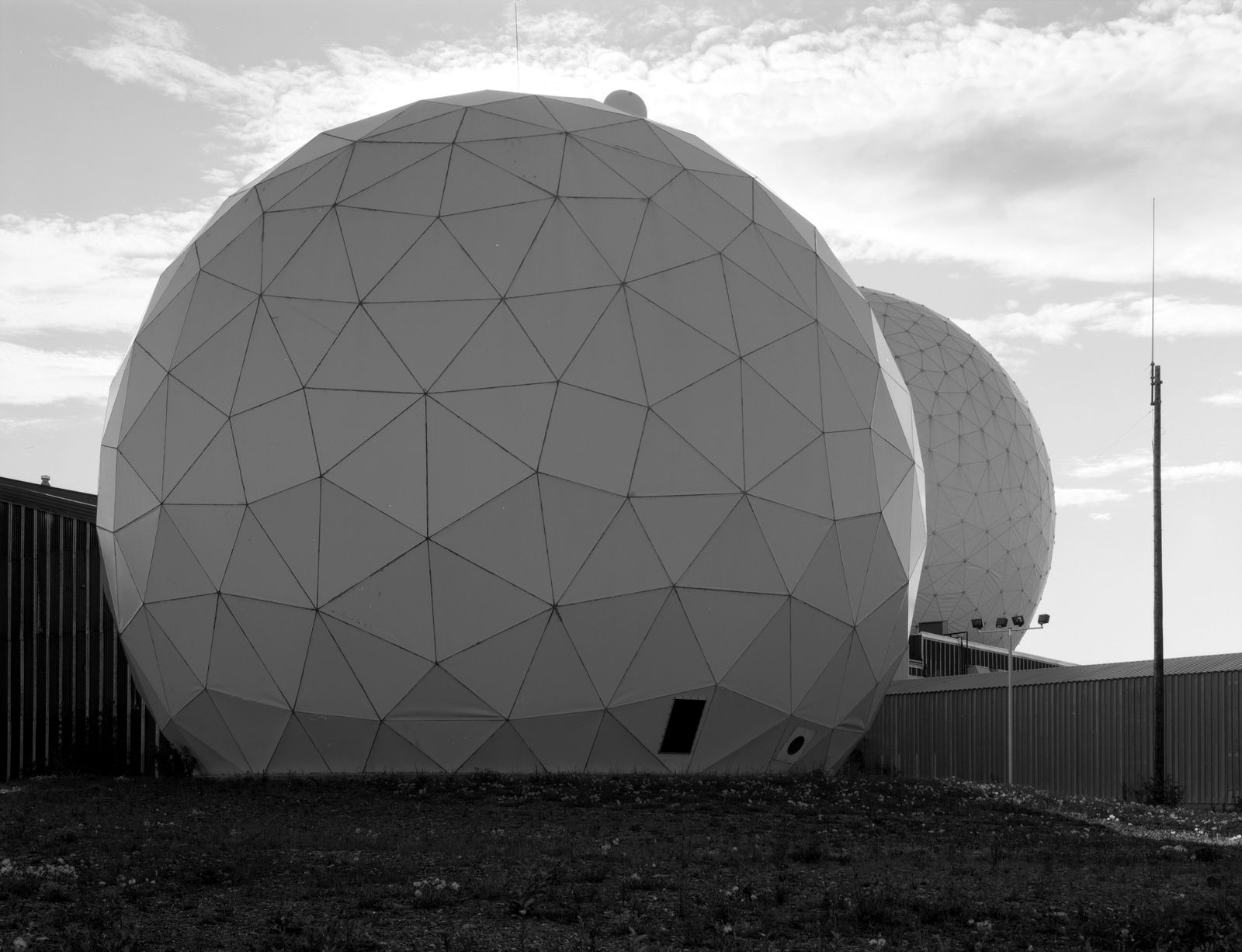
The dome's most famous early proof of concept wasn't a house at all. When engineers remodeling the Ford Rotunda in Dearborn, Michigan wanted to enclose the building's open central courtyard in the early 1950s, they calculated that a conventional steel-frame dome capable of spanning it would weigh roughly 150 tons — more than the existing structure could safely carry. Fuller's geodesic version, completed in 1953, did the same job at about 18,000 pounds, a fraction of the weight, because the triangulated frame was distributing the load instead of asking a handful of heavy beams to carry it alone. That single project is the reason geodesic construction went from a curiosity to something engineers took seriously for large-span structures — exhibition halls, radar stations, greenhouses, and eventually, decades later, a jungle guest room.
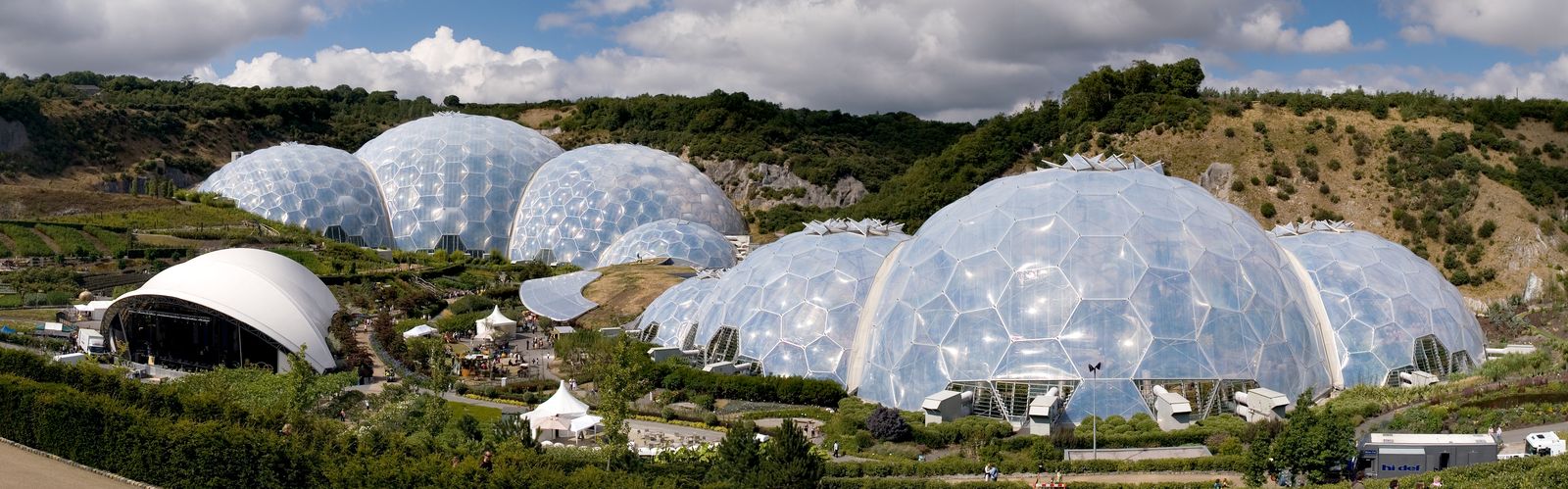
The jungle-hospitality version of the dome owes less to Fuller directly and more to the backyard greenhouse-dome kit industry that grew up in his wake through the 1970s and 80s — companies selling bolt-together dome frames for growers who wanted a structure that could shed snow load or handle wind without a lot of interior framing getting in the way of the plants. Glamping operators borrowed those same kits, swapped some or all of the panels for clear polycarbonate instead of greenhouse film, added a bed, a bathroom pod and sometimes air conditioning, and the jungle glamping dome as a category was more or less born. It's worth knowing that lineage, because it explains why a lot of dome-hotel structures still look, underneath the styling, exactly like a greenhouse — because in engineering terms, that's precisely what they are.
The engineering: why triangles hold up a sphere
A triangle can't change shape without one of its sides changing length, which is the entire reason triangulated framing shows up in everything from bridge trusses to bicycle frames to Fuller's domes. In a geodesic structure, that property gets applied in every direction at once — the dome's triangulated skin distributes any load applied at one point out across the whole surface along three intersecting sets of structural lines, rather than funneling it down through a small number of load-bearing beams the way a conventional building does. That's the direct source of the strength-to-weight ratio that made the Ford Rotunda dome possible, and it's the same property that lets a jungle glamping dome shrug off wind loads that would stress a flat-walled cabin of the same footprint.
For a jungle lodge specifically, there's a second, more practical advantage that has nothing to do with load math: a geodesic dome kit ships as a set of relatively light, identical or near-identical struts and panels, which can be carried in by hand or small vehicle and bolted together on site without a crane, a concrete pour, or heavy equipment. On a rainforest slope with no real road access, that's often the deciding factor over the physics — it's simply a building system a small crew can actually get to the site and assemble.
Good to know
The frame and the skin are two separate decisions, and a listing's photos usually show you both if you look closely. A visible grid of aluminum or timber struts under the covering means you're looking at a rigid geodesic dome — it'll be standing there whether the power is on or not. A smooth, seamless, fully see-through skin with no visible strut pattern means you're looking at an inflatable bubble tent, and its shape depends entirely on a blower that has to keep running.
How a bubble tent actually inflates and stays up
An inflatable bubble tent works on the same basic principle as an air mattress or a bounce house, just scaled up and made transparent. The skin — typically PVC tarpaulin for the structural sections and a clear film, often a food-grade TPU similar to the material used in baby-bottle nipples, for the see-through dome itself — arrives as a single sealed envelope. An electric blower connects through a duct and inflates it, usually in well under ten minutes, and then keeps running continuously at a low volume for as long as the tent needs to hold its shape. Turn the blower off and the bubble slowly settles; it isn't a one-time inflation the way a party balloon is, it's a structure that stays up because air keeps being added to replace what leaks out through the seams and zippers.
That continuous-power requirement is the single biggest practical difference from a rigid dome, and it shapes almost everything else about how a bubble-tent property is run: there has to be a reliable power source at every unit, all night, every night, because a power cut doesn't just mean the lights go out, it means the room itself starts to lose its shape.
Non-inflatable "bubble" domes solve the same see-through-room brief differently, and it's worth knowing they exist because they photograph almost identically. These use rigid polycarbonate sheet, a genuinely tough plastic with a UV coating that blocks the great majority of ultraviolet light and resists yellowing for years, set into an aluminum frame in the same geodesic strut pattern as a conventional dome. No blower, no continuous power draw to hold its shape, and generally better wind performance than a pressurized skin — the trade-off is a visible frame breaking up the transparent surface, rather than the uninterrupted, seamless glass-like effect an inflatable skin gives you.
Either version deals with the same everyday problem: condensation. A fully transparent skin fogging up from the inside is the fastest way to ruin the entire point of a see-through room, so both designs build in small vents, usually a pair near the apex, that let warm, moist air escape continuously rather than settling against the cold inner surface of the plastic overnight.
Keeping it livable at 30°C and humid
A dome or bubble tent is, structurally, a greenhouse, and a greenhouse's entire design purpose is to trap heat. That's a fine feature for growing tomatoes and a genuine problem for a bedroom in a rainforest that's already warm and humid before the sun starts working on a clear plastic roof. Managing that heat is the difference between a well-run dome property and a miserable one, and it's handled a few different ways depending on the build.
Shade and siting do a lot of the work before any machinery gets involved
The better jungle dome properties site their units under existing canopy rather than in cleared, sun-exposed ground, using the forest itself as the first line of defense against direct tropical sun hitting a mostly transparent structure all day. A dome pitched in full clearing will run measurably hotter than the same dome tucked under mature trees, whatever's covering the frame.
Air conditioning, where it exists, is doing real work rather than being a luxury add-on
Some of the more established jungle geodesic dome hotels build air conditioning in as standard rather than optional, precisely because a see-through structure in the tropics needs it more, not less, than an ordinary walled room would. It's a reasonable, specific question to put to a host directly before booking a dome stay in a hot climate, rather than assuming either way — plenty of dome properties still run on fans and cross-ventilation alone, and whether that's comfortable depends entirely on the season and the specific site.
A dome doesn't insulate you from the jungle's heat any better than a tent does. It just gives that heat a much bigger, much clearer window to come in through.
Power, water, and what actually keeps a dome running off-grid
The off-grid systems underneath a jungle dome look a lot like the systems underneath any other remote jungle stay — see our explainer on how off-grid jungle homes handle solar and rainwater for the general toolkit — but the dome adds one extra, non-negotiable line item: continuous power for either the air conditioning or, in an inflatable bubble tent's case, the blower itself. A rigid dome without AC can, in principle, sit unpowered and still be a perfectly functional room. A bubble tent, structurally, cannot; the moment power fails for long enough, the room itself starts to sag.
That's part of why most bubble tent hotels lean on a grid connection or a genuinely reliable generator rather than solar alone, and why solar-first dome properties tend to be the rigid, non-inflatable kind, where a bank of panels only has to run lights, fans and charging rather than keep a structural blower going all night without interruption. Rigid geodesic frames also happen to be a reasonably good mounting surface for solar in their own right, since a dome's curved, faceted skin usually has at least one section angled well toward the sun regardless of which way the whole structure is oriented — the same practical advantage that makes a steep A-frame roof convenient for panels, discussed in our guide to A-frame jungle cabins.
Water and plumbing are almost always handled outside the dome itself. Because neither a pressurized bubble skin nor a lightweight geodesic frame is a practical place to run heavy plumbing, most dome and bubble properties build the bathroom as a separate small structure or an attached pod, connected to the same rainwater catchment and filtration systems used across off-grid jungle building generally, rather than trying to plumb the transparent sleeping structure directly.
What it's actually like to sleep inside one
The honest answer depends heavily on which of the two structures you've actually booked, so it's worth taking them separately.
In a rigid, mostly-clear geodesic dome
This tends to feel like a normal room with an unusually good ceiling. You can stand up, walk around, and the parts of the wall that are canvas or solid panel rather than clear plastic give you the same sense of enclosure and privacy an ordinary tent does. The clear sections, usually concentrated overhead, deliver the canopy or night-sky view without the whole room feeling exposed. Rain on a rigid dome's harder panels is loud in the way rain on any solid roof is loud — some travelers find it soothing, others find a heavy tropical downpour genuinely hard to sleep through the first night.
In a fully transparent bubble tent
This is a different experience entirely, and it's worth going in with clear expectations rather than just the marketing photo. Every wall is see-through, all night, in every direction, which is extraordinary for twenty minutes of stargazing and can feel oddly exposed once the novelty wears off — most properties fit removable curtain systems for exactly this reason, so a guest can choose full transparency or privacy depending on the hour. The blower that keeps the skin inflated runs continuously and is audible, a low, steady hum rather than a roar, which some guests barely notice by the second night and others find impossible to tune out. Condensation management matters more here too: a well-run bubble tent stays clear through the night; a poorly ventilated one fogs up from the inside by 2am and quietly defeats the entire point of booking one.
Bugs and wildlife sightings are part of either version, honestly, the same way they're part of any open-air jungle stay covered in our guide to fully glazed jungle houses — a dome or bubble tent puts you closer to the forest visually than a solid-walled cabin does, even when the skin itself is sealed and bug-proof.
Real jungle domes and bubble stays worth knowing
The category is young enough that naming real, verifiable properties is more useful than describing it in the abstract, so here are a few worth knowing by name.
Faith Glamping Dome Costa Rica, near Puerto Viejo de Talamanca on the Caribbean side of Costa Rica, close to the Gandoca-Manzanillo wildlife refuge, is one of the more established real examples of a geodesic jungle stay done properly: proper geodesic domes set directly in jungle and beachfront terrain, air conditioning and queen beds included as standard rather than upsells, and an origin story the property itself credits to its owner's interest in NASA's geodesic-dome research into Mars habitats — an appropriately literal case of the shape's aerospace and space-habitat lineage showing up in a beach town glamping site. See it on Costa Rica's official tourism board listing.
Behind a fair number of these builds sits Pacific Domes, an Oregon-based manufacturer that has supplied geodesic dome kits to eco-resorts, festival infrastructure and residential builds for years and has documented projects like Faith Glamping's build directly. It's worth knowing the name because it turns up repeatedly across the glamping-dome industry as the actual engineering behind a lot of different-looking hotel brands.
Outside the tropics, Finnlough, a forest retreat in Fermanagh, Northern Ireland, runs some of the most photographed bubble domes anywhere and is worth knowing even though its setting is temperate forest rather than rainforest — it's a useful, honestly-described comparison for what the inflatable format looks like when it's done at a genuinely high standard, curtains, heating and all. Their bubble dome page is a good look at how a cold-climate operator handles the same transparent-skin challenges a tropical one faces in reverse.
Bali's jungle interior around the river valleys has its own small, fast-changing cluster of dome rentals, typically set beside a river or a waterfall in the forest above Ubud, leaning on the same transparent-roof, private-jungle-view pitch as their Costa Rican counterparts; the individual operators turn over quickly enough that a direct search closer to your travel dates will serve you better than a fixed name here. The same is increasingly true across parts of the wider Peru and Brazil Amazon basin, where a handful of lodges have begun adding dome or bubble units alongside their standard stilted cabins — a trend worth watching rather than a settled category yet.
The honest trade-offs
Privacy is thinner than the photos suggest
A structure that's selling you a 360-degree view is, by definition, also giving anyone outside a 360-degree view back. Curtain systems help, but they're rarely as complete or as easy to manage in the dark as a solid wall, and it's worth checking how private a specific unit actually is relative to its neighbors and any public paths before assuming the marketing photo tells the whole story.
Comfort depends entirely on the specific build, not the category
"Dome" and "bubble tent" both cover a huge range of build quality, from a properly engineered, air-conditioned geodesic room to a budget inflatable with a noisy blower and no real ventilation plan. The shape tells you almost nothing about which one you're getting; the specifics — AC or fans, curtain systems, how the property manages condensation, how established the operator is — tell you everything.
Weather risk is real and worth asking about directly
A tropical storm is a genuine test for either structure. A well-anchored geodesic frame is engineered for real wind load; an inflatable skin's performance in a serious storm depends heavily on the specific product and how well the site is sheltered. It's a fair, ordinary question to ask a host directly, the same way you'd ask about a boat's seaworthiness before booking a stay on the water.
Common questions
What's actually the difference between a geodesic dome and a bubble tent?
A geodesic dome is a rigid, self-supporting frame of triangulated struts under canvas, polycarbonate or a mix of panels — it stands up on its own, powered or not. A bubble tent is a fully transparent inflatable skin held taut by a continuously running electric blower; turn the power off for long enough and it loses its shape.
Are jungle domes hot inside during the day?
They can run hot, since the whole point of the structure is a large amount of clear or semi-clear surface facing tropical sun — the same physics that makes a greenhouse work. Good siting under existing canopy, air conditioning where it's fitted, and proper ventilation all make a real difference; it's worth asking a host directly how a specific property manages heat before booking.
Do bubble tents deflate or lose shape overnight?
Not under normal operation — the blower is designed to run continuously to keep the skin taut, so a bubble tent isn't inflated once and left. The real risk is a power cut, which is why reliable, continuous power matters more for a bubble tent than for almost any other kind of jungle stay.
Can you actually see stars clearly through the dome?
Through a genuinely clear panel or an unfogged inflatable skin, yes, and it's a real, distinctive feature of both formats. Condensation is the thing that ruins it — a well-ventilated dome or tent stays clear through the night; a poorly managed one fogs from the inside and the view disappears well before sunrise.
Are jungle dome and bubble tent stays private?
Less private by default than a solid-walled cabin, simply because the whole structure is built to be seen through. Most properties fit curtain systems to manage this, and siting relative to neighboring units and public paths matters a lot — worth checking specifically rather than assuming from a wide-angle marketing photo.
Do jungle domes usually have air conditioning?
Some do, as standard — Faith Glamping Dome Costa Rica is a real example that builds it in rather than treating it as an upsell — and some run on fans and ventilation alone. It varies enough by property that it's worth confirming directly before booking, especially for a stay in a hot, humid location.
Where to actually experience one
If the engineering is what pulled you in, Faith Glamping Dome Costa Rica is a real, currently operating example of the geodesic format done with air conditioning and proper siting near Puerto Viejo de Talamanca in Costa Rica, and it's worth reading directly against Finnlough's cold-climate bubble domes in Northern Ireland to see how differently the same transparent-skin idea gets solved depending on climate. Bali's river-valley dome rentals are a fast-moving, less formally documented scene worth a fresh search closer to your travel dates, and the wider Peru and Brazil Amazon basin is where the category looks likely to grow next.
If it's the broader idea of a fully transparent jungle room that appealed to you rather than the dome shape specifically, our guide to glass houses in the jungle covers the fixed-architecture version of the same instinct, and A-frame jungle cabins is worth a look for a roofline that solves a similar tropical-rain problem with an entirely different shape. Before booking any off-grid dome or bubble stay, it's worth reading how off-grid jungle homes actually handle solar and rainwater, since a dome's power needs are less forgiving than most other jungle architecture. For the wider context of why this whole category exists, our piece on why jungle stays are booming and eco-lodges vs. jungle Airbnbs are both good next reads, and the full destination directory is the place to start browsing if you're not yet sure which forest you actually want to wake up inside a bubble in.
- Visit Costa Rica — Faith Glamping Dome Costa Rica — official tourism board listing for the Cahuita/Puerto Viejo de Talamanca geodesic dome property, including amenities and setting.
- Pacific Domes — Faith Glamping Domes: The NASA-Inspired Costa Rican Hotel — background on the dome build, manufacturer, and the owner's NASA-linked interest in geodesic domes.
- Wanderlog — Hotel Faith Glamping Dome Costa Rica — additional property and location detail near the Gandoca-Manzanillo wildlife refuge.
- Buckminster Fuller Institute — Domes — the definitive history and design principles behind Fuller's geodesic dome.
- Growing Spaces — Buckminster Fuller's Geodesic Dome: History & Design — Fuller's 1940s development of the dome, the 1954 patent, and the triangulation principles behind it.
- EBSCO Research Starters — Fuller Builds First Industrial Geodesic Dome — the 1953 Ford Rotunda dome and its weight comparison against a conventional steel-frame design.
- Finnlough — Bubble Domes — a real, currently operating bubble dome property in Fermanagh, Northern Ireland, used here as a cold-climate comparison for the inflatable format.
- VIEWSKY — Clear Bubble Tent For Glamping, Hotel, Restaurant — materials and construction detail for inflatable PVC/TPU bubble tents versus rigid polycarbonate dome tents.
More from the Journal.
 Photo: Basile Morin, CC BY-SA 4.0
What Is a Bamboo House? Bali's Bamboo Architecture Explained
How a fast-growing grass became the most beautiful building material in the tropics — the story of bamboo architecture and where to sleep in it.
 Photo: Vitus Wahlländer, CC BY-SA 4.0
Treehouses Explained: History & Modern Design
From childhood forts to seventy-foot canopy suites — how the treehouse grew up, and what makes a great one to stay in.
Overwater & Floating Bungalows in the Jungle
The room that floats — how raft houses and overwater bungalows are built on jungle lakes and rivers, and the best places to sleep on the water.
 Photo: Derek Ramsey (Ram-Man), CC BY-SA 4.0
Find your own piece of the canopy.
Treehouses, bamboo houses and rainforest villas across 17 destinations — found, vetted and written up honestly.
Browse all destinations