The Jungle Honeymoon Guide
Most honeymoon lists start with a beach and a room-service menu. This one doesn't. If you want a week that actually feels like it belongs to the two of you — no lounge chairs lined up six inches from a stranger's, no DJ by the pool at 4pm — the rainforest does something a resort strip can't. It gives you distance, quiet, and a reason to talk to each other instead of scroll. Here's how to plan a jungle honeymoon properly: where to go, what it costs, when to book it, and the parts nobody tells you before you land.
Why the jungle works better than a resort
A big all-inclusive resort is built to keep hundreds of couples entertained at once, which means it's built around schedules, buffets, and shared space — the pool, the beach, the bar. That's fine for a lot of trips. It's the wrong shape for a honeymoon, where the entire point is that it's just the two of you and nobody else's itinerary matters. A rainforest stay flips that. Most of the properties worth booking hold a handful of rooms, sit inside private reserve land, and are hard enough to reach that day-trippers don't bother. You get a week where the loudest thing around you is actual wildlife instead of a wedding party from three time zones away.
There's also a practical honeymoon problem the jungle solves without trying: novelty fatigue. Couples who've just spent a year planning a wedding often don't want another schedule — they want to switch their brains off and be somewhere neither of them has ever been. A rainforest does that automatically. You won't have done this before. Neither will your group chat.
None of this means it's rustic by default. The range runs from tents with a shared bathhouse to private villas with a plunge pool and a chef who cooks to order, and prices span an equally wide range. What stays consistent, at almost every price point, is privacy and pace. Nobody's rushing you to check out of a hammock.
What a jungle honeymoon actually looks like
"Jungle honeymoon" covers more ground than people expect, and it's worth knowing the categories before you start comparing prices, because they're not really the same product.
Private-reserve lodges
This is the classic version: a small lodge, usually 10 to 25 rooms, sitting on its own tract of protected or private forest, often bordering a national park. Meals are typically included, guides are on staff, and the whole operation is built around getting you into the forest on foot, by boat, or on a canopy walkway rather than keeping you at the pool. Costa Rica's Osa Peninsula is full of these.
Treehouses and elevated stays
A smaller, more specific category — rooms built up in the canopy itself rather than at ground level. Peru's Amazon basin has some of the best-known examples, where the appeal isn't just the novelty of sleeping in a tree but the wildlife you see at eye level once you're thirty or more feet up instead of looking up from the forest floor.
Private villas with staff
The higher end of the category: a single villa or a small cluster of them, your own pool, your own cook, and grounds you don't share with other guests unless you choose to. This is the version that reads closest to a traditional luxury honeymoon, just relocated from a beach to a hillside above a river gorge.
Remote camps and river lodges
Further out again — places reached by boat or small plane rather than a resort shuttle, often inside or adjacent to a national park or biosphere reserve. These trade some creature comforts for genuine remoteness and the best wildlife access of any category, and they tend to suit couples who've traveled rough together before and know they'll enjoy it rather than endure it.
None of these is objectively "the" jungle honeymoon. The right one depends on how much comfort you want to trade for how much remoteness — which is really a conversation the two of you should have before you start looking at specific properties, not after.
Good to know
Almost every serious jungle lodge caps its guest count on purpose — some by regulation, most by choice, because crowding defeats the reason people come. That means the good ones sell out further ahead than a beach resort does. If your wedding date is set, start looking at jungle lodges nine to twelve months out, not the usual six.
Where to go, region by region
There's no single "best" jungle for a honeymoon — the right region depends on how far you're willing to fly, what kind of forest you want (mountain cloud forest reads very differently from lowland Amazon), and whether you want a beach nearby for the days you don't want to hike. Here's how the main options actually differ.
Costa Rica
Costa Rica is the easiest entry point into a jungle honeymoon for a reason: the infrastructure is mature, English is widely spoken, and the country has spent three decades building its economy around exactly this kind of tourism. The Osa Peninsula, in the country's remote southwest, is the honeymoon center of gravity — a stretch of rainforest wrapping around Corcovado National Park, which National Geographic once called one of the most biologically intense places on Earth. Lodges here are almost all boat- or small-plane-access only, which keeps the peninsula from turning into a strip. Casa Corcovado Jungle Lodge sits on a 170-acre private reserve at the edge of the park itself, reachable by boat from the town of Sierpe, and lists Honeymoon Suites specifically among its rooms. Lapa Rios holds a 1,000-acre private reserve on a ridge with both ocean and rainforest views, and Bosque del Cabo sits 500 feet above the point where the Golfo Dulce meets the open Pacific — genuinely dramatic geography, not marketing language. If you want the classic version of a private jungle honeymoon without a punishing flight to get there, this is it. Read more on our Costa Rica destination page.
The Peruvian Amazon
If Costa Rica is the accessible version, the Peruvian Amazon is the immersive one. Most lodges are reached by flying into Iquitos and then continuing by boat, sometimes for hours, into genuine lowland rainforest — no roads, no towns, just river and canopy. This is where treehouse stays are done best: Treehouse Lodge, for instance, sets twelve rooms into the canopy at heights ranging from 25 to 75 feet, inside a 345-acre reserve, connected by suspension bridges rather than ground paths. It's not a subtle honeymoon — you're sleeping in a tree in the Amazon — but it's one of the only places on this list where the accommodation itself is the experience, not just the base for it. Expect heat, humidity, and some of the best wildlife-spotting on this list, from pink river dolphins to more bird species than you'll ever be able to name. More on our Peru destination page.
Bali
Bali's jungle honeymoon scene centers on Ubud, up in the island's central hills, where the terrain drops away into steep river gorges lined with rice terraces and rainforest. It's a different feel from Costa Rica or Peru — more cultivated, closer to temples and villages, with spa culture built into daily life rather than added on. Hanging Gardens of Bali, set into the Ayung River gorge outside Ubud, is the property most people picture when they think "Bali jungle villa": thatched-roof rooms stepped down the hillside and a pool that appears to float above the canopy. Bali suits couples who want jungle scenery without giving up restaurants, spas, and an easy taxi into town for the nights you want to leave the forest behind. Details on our Bali destination page.
Tulum and the Maya jungle
Tulum gets marketed as a beach town, but its real advantage for a jungle honeymoon is that it sits at the edge of the Sian Ka'an Biosphere Reserve, a UNESCO site where mangrove jungle, freshwater cenotes, and reef all meet within a short drive of each other. That means you can genuinely split a week — jungle and cenote days inland, beach and reef days on the coast — without changing hotels. It's also the shortest flight of any option on this list for most of North America, which matters if one of you has limited vacation days. See our Tulum and Maya Jungle page.
Puerto Rico and Hawai'i
For couples who don't want to leave the country, or can't for passport or visa reasons, these two do more jungle-honeymoon work than people expect. El Yunque, in Puerto Rico, is the only tropical rainforest in the entire U.S. National Forest System, and it sits close enough to San Juan that you can pair a few forest nights with a few coastal ones without a second flight. Hawai'i's rainforest side shows up on Maui around Hana and on the Big Island's windward coast — genuinely lush, waterfall-heavy terrain, paired with the parts of Hawaii people already picture for a honeymoon. Neither will give you the sense of true remoteness that Peru or the Osa Peninsula will, but both remove the passport, the long flight, and the culture-shock learning curve. More on Puerto Rico and Hawai'i.
Brazil, Colombia, Sri Lanka, and Thailand
Four regions worth knowing about even if they're not first-trip picks. Brazil's Amazon, reached from Manaus, is the real thing at true scale — river lodges along tributaries like the Rio Negro put you inside the largest rainforest on Earth, though it's a longer, more logistically involved trip than most of this list. Colombia pairs jungle and coast unusually well around the Sierra Nevada de Santa Marta and Tayrona National Park, where cloud forest drops almost straight into Caribbean beach. Sri Lanka's Sinharaja Forest Reserve, a UNESCO World Heritage rainforest, works well for couples already planning a longer Asia trip and wanting a rainforest chapter within it. Thailand's Khao Sok National Park, one of the oldest rainforests in the world, is known for floating bungalows on Cheow Lan Lake — a genuinely different kind of jungle stay, half rainforest and half lake. None of these is a bad choice; they're simply better suited to couples with more flight time and flexibility to spend. Explore all eleven destinations on our full destinations directory, including Brazil, Colombia, Sri Lanka, and Thailand.
The best jungle honeymoons aren't the ones with the most planned activities. They're the ones where you finally ran out of things to plan and just sat on a deck together, which was the actual point of going.
When to go
Every rainforest region on this list has a wet season and a dry season, and the difference matters more for a honeymoon than for most other trips, because a week of daily downpours will genuinely change what you can do with it. As a general rule:
- Costa Rica's Pacific side (including the Osa Peninsula): dry season runs roughly December through April; the rest of the year is wetter, with September and October the heaviest rain, though lodges stay open and rates typically drop.
- The Peruvian Amazon: the region is humid and warm year-round, but river levels shift dramatically between the high-water months (roughly December to May) and low-water months, which changes what you can reach by boat and how close to the canopy your treehouse stay actually feels.
- Bali: the dry season, April through October, is the more reliable window for hillside and gorge-view properties, though Ubud's elevation means it's cooler and greener than the beach areas even in the dry months.
- Tulum and the Maya jungle: hurricane season runs June through November in the wider Caribbean basin, so the December-to-April window tends to be the safer bet for a trip you can't easily reschedule.
Rain isn't automatically a reason to avoid a season — some of the best wildlife activity happens in wetter months, and lodge rates are meaningfully lower — but it's worth deciding in advance whether you're the kind of couple who'll enjoy a storm on a covered deck or the kind who'll be checking the forecast every hour. Both are fine. Just know which one you are before you book.
What it actually costs
Honeymoon budgets have crept up across the board, and a jungle trip isn't automatically the cheap option some people assume. According to recent industry surveys, the average honeymoon budget in the U.S. reached around $6,500 in 2026, with couples now putting roughly a quarter of their total wedding spend toward the trip rather than the traditional smaller share. A meaningful share of couples are spending considerably more than that.
Where a jungle honeymoon does compete well is on value relative to what's included. Most rainforest lodges, especially the private-reserve and remote-camp categories, bundle meals, guided excursions, and transfers into a nightly rate — costs that add up separately at a resort where every excursion is booked à la carte. A three-night stay at a mid-range Costa Rican lodge with all meals and two guided activities a day can land close to what a comparable resort charges for the room alone. The trade-off is upfront cost of entry: flights to remote regions, especially deep into the Peruvian Amazon or Brazil, run higher than a direct flight to a beach hub, and boat or small-plane transfers to the more remote lodges are sometimes charged separately.
The other real cost variable is the two-destination trend now showing up in about 40% of 2026 honeymoon bookings — pairing a jungle stay with a few beach or city nights. It's a genuinely good structure for a jungle honeymoon specifically, since three to five nights in deep forest is enough for most couples, and a second stop gives you somewhere to unwind with a cocktail in hand once you're done being twenty feet from a howler monkey. Costa Rica, Tulum, and Bali all support this naturally, since jungle and coast sit close together in each.
Booking it right
The logistics of a jungle honeymoon are a genuinely different exercise than booking a resort, and getting them wrong costs more time than money.
Book the transfer, not just the room
Many of the best lodges are reachable only by boat, small plane, or a long unpaved drive, and that leg is often not automatic. Confirm exactly how you're getting from the nearest airport to the property, who's arranging it, and what it costs before you book flights — arriving at a rural airstrip with no plan for the last two hours is a bad way to start a honeymoon.
Check what's actually included
Rainforest lodge pricing varies wildly in what a nightly rate covers — some include all meals and two guided activities daily, others charge separately for everything past the room. Get an itemized breakdown before comparing prices between properties, because the headline rate rarely tells the whole story. Our guide on how to book a jungle Airbnb covers the specific questions worth asking a host or lodge directly.
Plan connectivity honestly
Many remote lodges have limited or no wifi in the rooms, and cell signal often disappears entirely once you're a few miles into the forest. For most honeymooning couples this is a feature, not a bug — but tell your families in advance, and if either of you has a job that genuinely can't go dark for a week, pick a property with at least a signal at the main lodge building rather than finding out on arrival. Our piece on off-grid jungle stays goes deeper on exactly what "no signal" looks like in practice.
Handle health prep early
Depending on the region, you may need specific vaccinations or antimalarial medication, and some of those need to start weeks before you travel. This isn't a step to leave until the week before the wedding. Our guide to malaria, vaccines, and jungle health breaks down what's actually required region by region, and it's worth reading months out, not days.
Pack for the forest, not the resort
A jungle honeymoon has a genuinely different packing list than a beach one — quick-dry fabrics, real hiking shoes, a dry bag for river transfers, and rain gear that isn't just a folding umbrella. See our full jungle packing guide before you start buying anything new for the trip.
What you'll actually do there
People sometimes book a jungle honeymoon expecting a packed adventure schedule and are surprised by how much unstructured time there actually is — which, for a honeymoon, is usually the right amount. A typical day at a good lodge runs something like: an early guided walk or boat trip while wildlife is most active, a long lazy stretch through the middle of the day when the heat and the light both discourage moving much, and a second shorter outing toward late afternoon when temperatures drop and animals come back out. That leaves several unscheduled hours a day that most resort itineraries never give you — hours you'll likely spend on a deck, in a hammock, or in the room, which is exactly the point.
The activities themselves vary by region but tend to fall into a few categories worth knowing about in advance: guided wildlife walks with a naturalist (the single best use of your time almost everywhere on this list — a good guide will find you things you'd walk straight past on your own), canopy access via walkways, towers, or zip lines, river or boat excursions, and increasingly, spa and wellness treatments built around local ingredients rather than imported ones. Some lodges also offer cultural components — visits to nearby communities, cooking classes, or craft demonstrations — which are worth doing selectively rather than every day; the appeal of a jungle honeymoon fades fast if it turns into another full schedule.
One thing worth setting expectations on together before you go: a rainforest, even a well-run lodge inside one, is not silent, climate-controlled, or bug-free, and it shouldn't be. Insects, humidity, the occasional creature in the bathroom — these are the actual texture of the place, not a service failure. Couples who go in expecting a jungle to feel like a jungle tend to love it. Couples expecting a resort with better scenery sometimes don't.
Do's and don'ts
- Do book further ahead than you think. The best rooms at small, popular lodges sell out six to twelve months out, especially over the peak dry-season months in each region.
- Do tell the lodge it's your honeymoon. Most properties genuinely do something with that information — a better room, a private dinner, small touches — and it costs you nothing to mention it when booking.
- Do build in a buffer day. Remote transfers occasionally run late; don't book a lodge stay that ends the same day as your international flight home.
- Do split a longer trip across two stops if either of you isn't sure how you'll feel about a full week fully off-grid. Three to five nights deep in the forest, followed by a few easier ones, works for almost everyone.
- Don't assume every "jungle resort" is actually in the jungle. Some properties market rainforest scenery from a manicured resort compound at the forest's edge rather than inside it. Ask directly about the size and nature of the surrounding reserve.
- Don't skip the health prep. Vaccination and antimalarial timelines matter, and "we'll figure it out closer to the date" is how people end up in a pharmacy the morning of a flight.
- Don't over-schedule it. One or two guided activities a day is usually enough. This is a honeymoon, not an expedition.
- Don't forget the practical gear. A resort honeymoon survives packing mistakes. A jungle one is less forgiving about shoes, rain protection, and bug protection.
Common questions
Is a jungle honeymoon too rustic for someone who's never done adventure travel?
Not necessarily. The category runs from tented camps to private villas with a pool and full staff, and plenty of first-time jungle travelers go straight to the comfortable end of that range. The forest and the wildlife access don't disappear just because the room has air conditioning and a proper bed.
Do we need to be fit or experienced hikers?
Most lodge-based jungle honeymoons involve walking, not technical hiking, and guides pace outings to the group. If one of you has real mobility concerns, ask specifically about trail terrain and walkway access before booking — some properties, especially treehouse and canopy-based ones, involve stairs and suspension bridges that aren't easy for everyone.
What about bugs, and is that going to ruin the trip?
Insects are part of the environment, not a sign something's wrong with the property. Good lodges screen rooms properly and provide netting where needed, and appropriate repellent and clothing (see our packing guide) handle the rest. Couples who arrive expecting zero insects anywhere are the ones who end up disappointed.
Is it safe?
Reputable jungle lodges have been operating for decades in most of these regions with strong safety records, and guided activities are generally lower-risk than people assume. Our honest breakdown at Is the Jungle Safe? covers what the real risks are and aren't.
Should we do a jungle-only honeymoon or split it with a beach?
Both work, and it genuinely comes down to preference. A growing share of couples now split their honeymoon across two destinations, and jungle-plus-beach is one of the more natural combinations, since several regions on this list (Costa Rica, Tulum, Bali) have both within a short drive of each other.
How far ahead should we book?
Nine to twelve months out for the most in-demand small lodges, particularly if your wedding falls during a regional dry season. Later-availability trips are still very doable, especially outside peak months, but the best individual rooms go early.
Where to start looking
If you're not sure which region fits the two of you, start broad rather than narrow: browse the full destinations directory and compare a couple of regions side by side before you get attached to a specific lodge. If you're deciding between a jungle-only trip and splitting your time, our guide on what a jungle trip actually costs is a useful next stop for budgeting a realistic range. And if this is your first time considering a stay that isn't a standard hotel or resort, our piece on how to book a jungle Airbnb walks through exactly what to check before you hand over a deposit.
A jungle honeymoon isn't the easiest trip on the list, and it's not trying to be. It trades a few resort conveniences for something a lot harder to manufacture: real privacy, a place neither of you has been, and enough quiet that you actually notice each other again after a year of planning a wedding around everyone else. That's usually worth the extra hour on a boat.
- Bosque del Cabo Rainforest Lodge — location and geography of the Osa Peninsula lodge, 500 feet above the Golfo Dulce.
- Tour the Tropics: Top 10 Jungle Lodges in Costa Rica — details on Casa Corcovado Jungle Lodge and Lapa Rios Lodge, including reserve size and honeymoon suite availability.
- Playa Nicuesa Rainforest Lodge — boat-access-only positioning on the Golfo Dulce.
- Rainforest Cruises: Amazon Jungle Lodges in Peru — Treehouse Lodge details, including elevation of rooms and reserve size.
- Honeyfund 2026 Honeymoon & Wedding Travel Trends Report — average honeymoon budget, share of wedding spend, two-destination booking trend.
- The Knot: Average Cost of a Honeymoon — honeymoon spending figures for 2026.
- Fora Travel: 2026 Wedding and Honeymoon Report — share of couples spending $10,000 or more on a honeymoon.
More from the Journal.
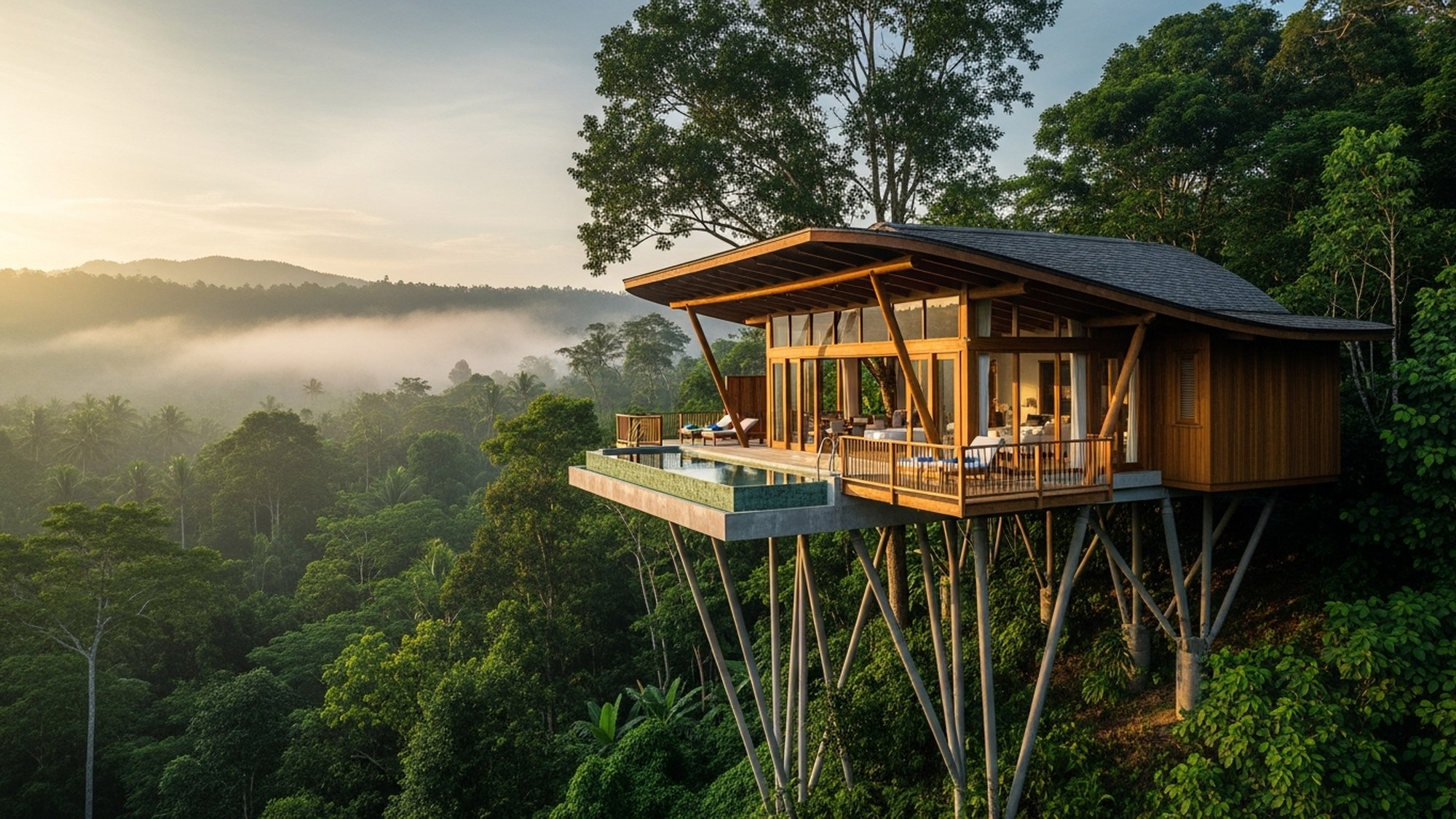
How to Start a Jungle Airbnb
The complete, honest guide to building and running a treehouse, bamboo house or rainforest villa — from choosing a country and the land laws to off-grid systems, budgets, and getting booked.
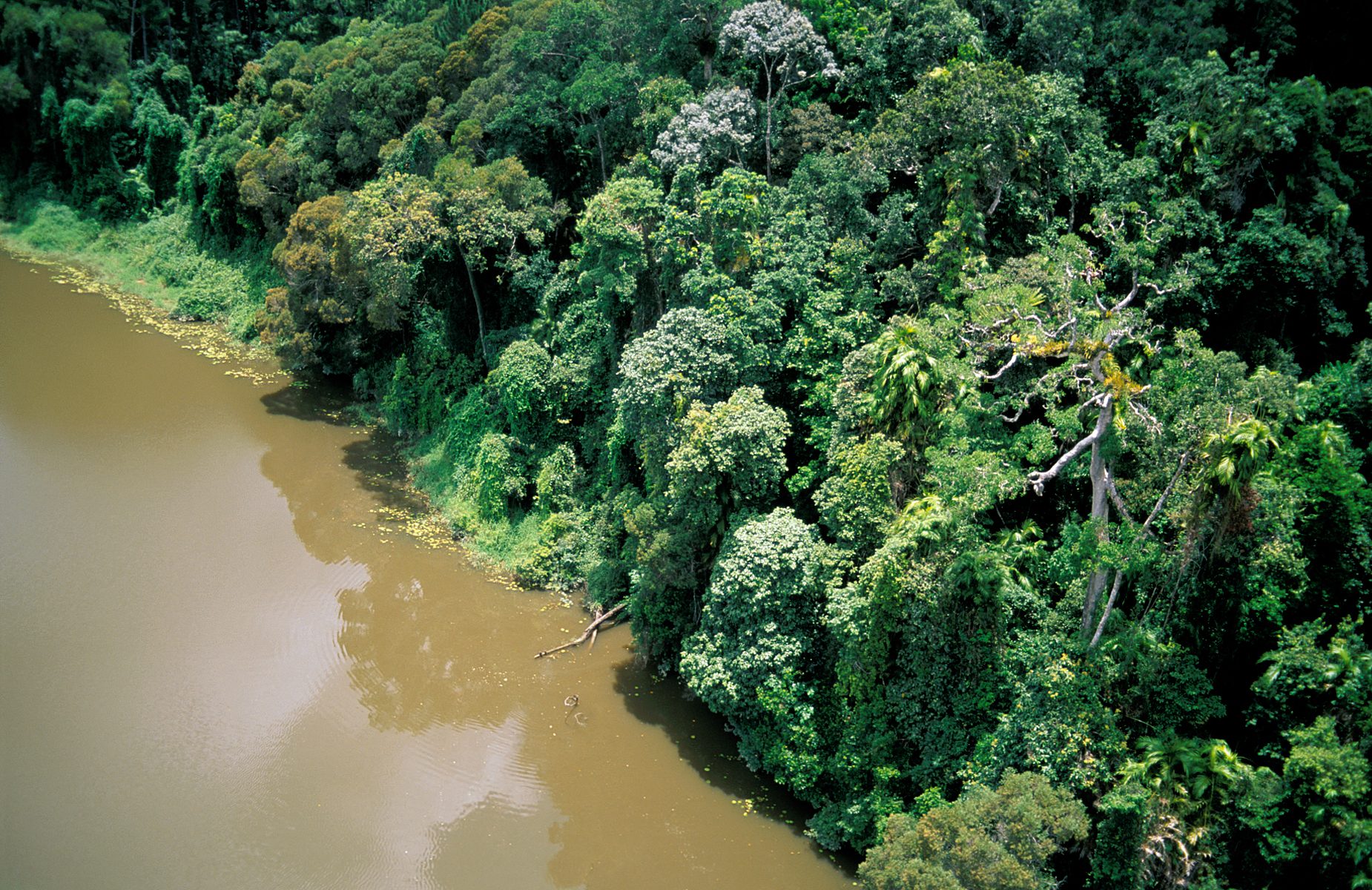 Photo: Gregory Heath, CSIRO, CC BY 3.0
Why Jungle Stays Are Booming
The data behind the treehouse boom: four shifts in how the world travels are all converging on the forest — and it looks structural, not a fad.
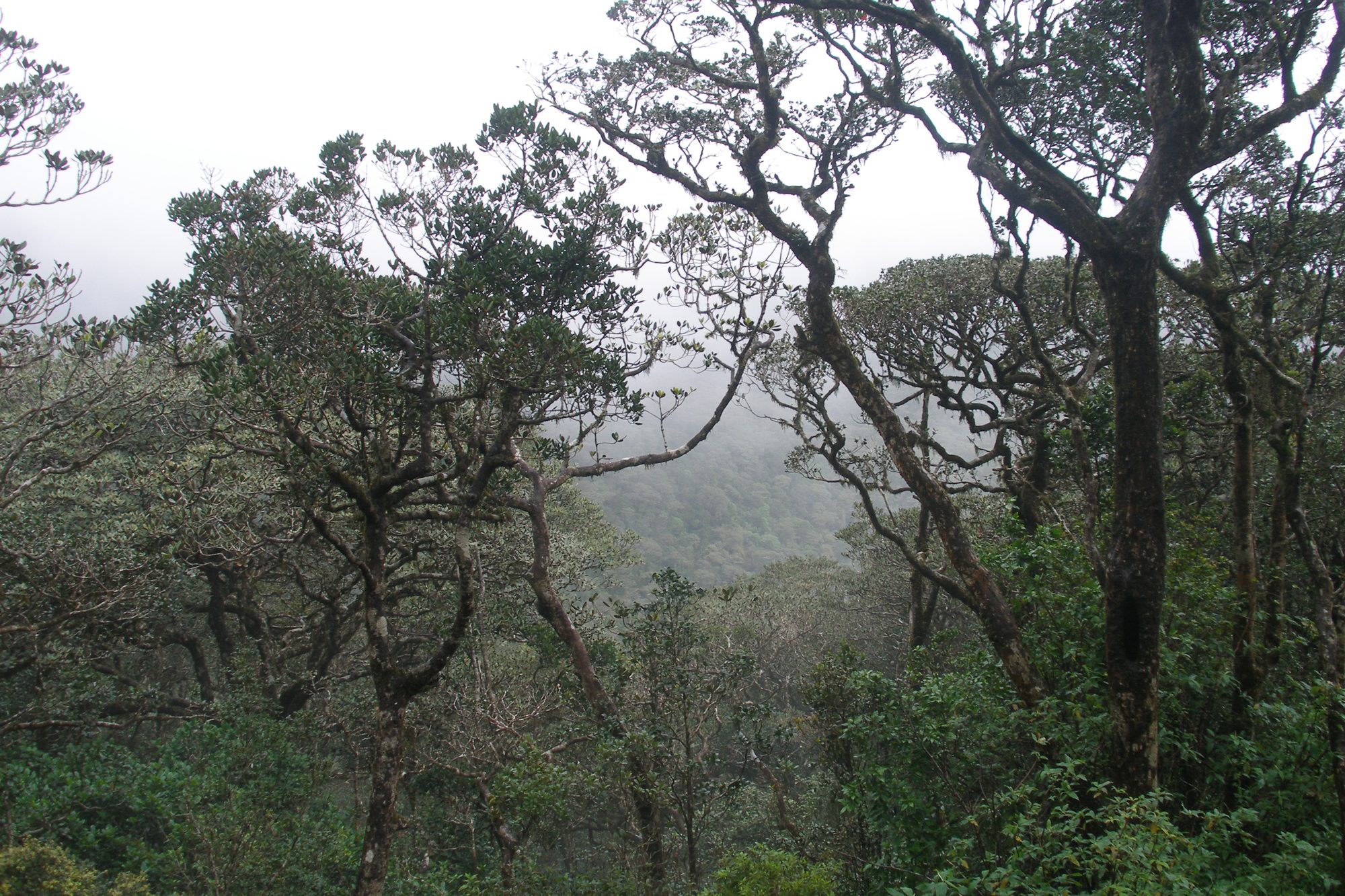 Photo: Vyacheslav Argenberg, CC BY 4.0
When to Visit the Jungle: A Season-by-Season Guide
There's no single best time to visit 'the jungle' — because it isn't one place. Here's when to go, region by region, with a month-by-month cheat sheet.
 Photo: Derek Ramsey (Ram-Man), CC BY-SA 4.0
Find your own piece of the canopy.
Treehouses, bamboo houses and rainforest villas across 17 destinations — found, vetted and written up honestly.
Browse all destinations