Mosquitoes & Bugs in the Jungle: Staying Comfortable
Ask anyone who's never been to the jungle what worries them most, and bugs win by a landslide — ahead of snakes, ahead of getting lost, ahead of the wildlife that actually looks dangerous. Ask anyone who has actually gone, and the answer is different: the bugs were there, they were manageable, and the whole thing was a lot less dramatic than the pre-trip anxiety suggested. Both things are true at once. Insects are the most consistent nuisance of jungle travel and, in a small number of cases, the most genuine health consideration. They are also almost entirely solvable with gear that fits in a side pocket and habits that take about a day to become automatic. This is a plain, specific guide to what actually bites in the jungle, what actually works against it, and how to stop thinking about it by day two of your trip.
The short answer
Insects in the jungle fall into two very different categories, and conflating them is where most of the pre-trip anxiety comes from. The first category is nuisance bites — itchy, annoying, occasionally ugly for a few days, but medically trivial. This covers the overwhelming majority of what bites you on a jungle trip: the mosquito that finds the one patch of ankle you missed with repellent, the no-see-um that gets through a loose-weave sock, the ant that objects to you leaning against its tree. The second category is small but real: a handful of mosquito species that can carry disease, and in some regions, sand flies that carry their own less-common but more serious risk. Almost all of the actual health-relevant prevention in this guide is aimed at that second, narrow category — everything else is comfort, not safety.
The practical upshot is that you don't need to treat every flying thing in the jungle as equally worth worrying about. A citronella-scented evening on a lodge porch with a fan running is a completely different situation from an unprotected walk through standing water at dusk in a malaria region, and the gear and habits that handle each are different too. This guide walks through both — the boring, high-leverage stuff (repellent, netting, clothing) that handles nearly everything, and the specific regional and seasonal knowledge that tells you when to take it more seriously than usual.
The jungle isn't more buggy than your backyard because it's dangerous. It's more buggy because it's warm, wet and full of the standing water and dense vegetation that insects need to breed and hide in. The difference is entirely about volume, not about how threatening any individual bug actually is.
Mosquitoes: the one that actually matters
Mosquitoes deserve more attention than every other jungle insect combined, and not because any single bite is dangerous — the itch from an ordinary mosquito bite is exactly as harmless in the jungle as it is in your backyard. They matter because a small number of species carry diseases that do matter, and because they are, by a wide margin, the insect you will actually encounter the most. Two mosquito genera do almost all of the disease-relevant work worldwide. Anopheles mosquitoes, which tend to bite between dusk and dawn and favor standing water in rural and forested areas, are the ones that transmit malaria — a disease that still causes an estimated 249 million cases and more than 608,000 deaths globally each year, concentrated heavily in sub-Saharan Africa but present in parts of the Amazon and other tropical forest regions too. Aedes aegypti, by contrast, is a daytime biter that thrives around towns and human settlements rather than deep forest, and it's the main vector for dengue, which has had a genuinely rough few years: the World Health Organization recorded more than 14.4 million cases and over 11,000 deaths globally in 2024 alone, with the Americas — Brazil in particular — accounting for the large majority of them.
None of this is meant to alarm anyone out of a trip. It's meant to explain why "just use repellent" is the correct advice and not a throwaway line. The actual risk to any individual traveler on a well-prepared, reasonably short trip is low, and it drops close to negligible with the basic habits covered in the next two sections. Where it isn't negligible — remote lowland Amazon stays, extended trips, certain West African and South Asian itineraries — a travel medicine consultation before you go is the single highest-leverage thing you can do, higher-leverage than any repellent or net. Our companion guide to malaria, vaccines and health for jungle travel goes deep on which destinations call for prophylaxis and which don't; this guide stays focused on the day-to-day mechanics of not getting bitten in the first place.
When mosquitoes are actually worst
- Dawn and dusk — peak activity for most Anopheles species, and the window worth being most disciplined about repellent and coverage.
- Wet season — more standing water means more breeding sites and more mosquitoes overall, in almost every jungle region.
- Near standing water — a still pond, a rain barrel, even a bromeliad holding a cupful of rainwater in the canopy can be a breeding site.
- Still, humid air — mosquitoes are weak flyers and a breeze genuinely keeps them away, which is why so many jungle lodges build porches and common areas to catch whatever airflow exists.
Repellents that work, and the ones that don't
There is a short, boring, well-tested list of active ingredients that reliably repel mosquitoes, and everything else is a matter of preference layered on top of one of these. DEET has been the standard for roughly sixty years and remains the most broadly effective option across concentrations, durations and price points — a 20–30% concentration is a sensible default for jungle travel, giving several hours of protection per application. Picaridin, the other CDC- and EPA-recommended option, performs close to on par with DEET in independent testing, without the odor or the plastic-melting reputation DEET has picked up over the decades; a 20% concentration is effective for roughly 8–14 hours per application, which for some travelers is genuinely more convenient than reapplying DEET more frequently. Oil of lemon eucalyptus (OLE) is the third CDC-recommended option and a reasonable choice for anyone who wants to avoid synthetic repellents, though it generally needs more frequent reapplication than DEET or picaridin.
The one addition that measurably changes the equation is permethrin — not a skin repellent at all, but an insecticide applied to clothing, gear and mosquito nets rather than skin. Permethrin-treated fabric keeps working through several washes, kills or repels mosquitoes and ticks on contact, and stacks with a skin repellent rather than replacing it. Combining permethrin-treated clothing with DEET or picaridin on exposed skin is, according to CDC guidance, the most complete protection available to a traveler — genuinely more effective than either measure alone, and worth the one-time cost of pre-treated clothing or a permethrin spray kit if you're headed somewhere with real malaria or dengue risk.
A working repellent routine
- Apply repellent to all exposed skin before you leave your room, not once you notice the first bite.
- Reapply after swimming, heavy rain, or heavy sweating — repellent washes and sweats off faster than the label duration suggests in real jungle humidity.
- Apply sunscreen first, then repellent, if you're using both — this is the order dermatologists and travel clinics consistently recommend.
- Treat clothing, not just skin, with permethrin if you're headed somewhere with meaningful malaria or dengue risk; it lasts for weeks and multiple washes.
- Don't skip repellent on overcast or rainy days — mosquitoes are often just as active, and travelers reliably let their guard down when the sun isn't out.
Clothing and other physical barriers
Repellent does most of the work, but clothing does the rest, and it's the part people most often get wrong by packing for looks rather than function. Long, lightweight sleeves and trousers in the evening cut down exposed skin more reliably than any repellent reapplication schedule, and they matter most exactly when mosquitoes are worst — dawn, dusk and any evening spent outdoors. Color matters more than people expect: mosquitoes and some biting flies are drawn to dark colors, so light-colored, loose-fitting fabric is both cooler in the heat and modestly less attractive to bugs than a dark t-shirt.
Footwear is the other underrated piece. Closed shoes rather than sandals for any walk after dusk keep mosquitoes and, more importantly, ticks and chiggers off your ankles and feet — the parts of the body chiggers in particular go straight for. Tucking trouser cuffs into socks looks unglamorous and works; it's standard advice from every travel medicine clinic that deals with tick and chigger exposure, not just a jungle-specific quirk. None of this needs to be technical gear — a loose cotton or linen shirt and trousers, closed shoes, and a wide-brim hat cover almost every situation a jungle stay puts you in.
Good to know
A headlamp or porch light left on at night pulls in moths, beetles and the occasional large, alarming-looking insect that is almost always completely harmless — it's drawn to the light, not to you. The one genuinely useful nighttime habit is shaking out shoes before putting them on in the morning and giving your bed a glance before climbing in; a handful of jungle creatures, none of them common, like a dark enclosed space overnight.
Sleeping through the night: nets, screens and porches
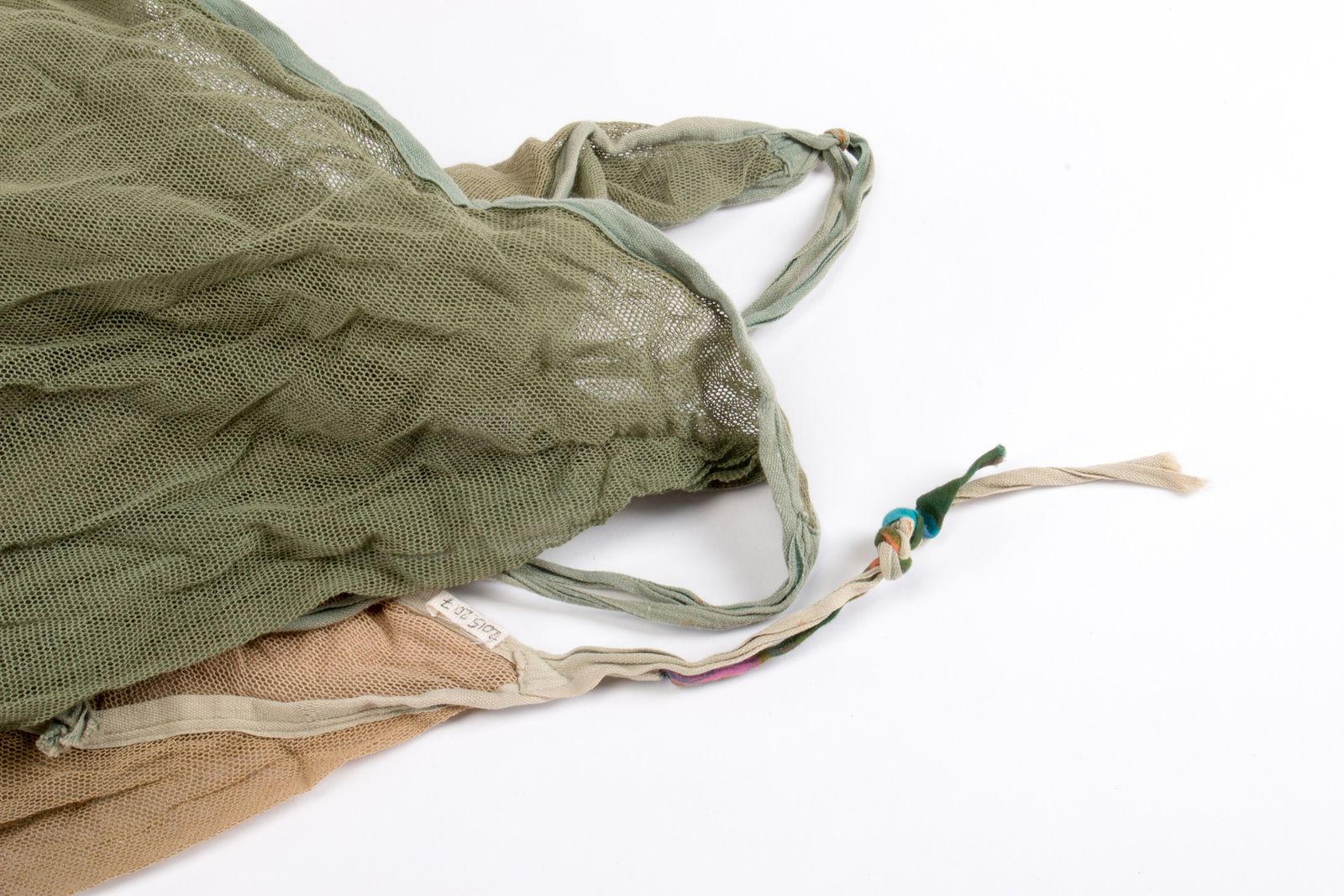
Where you sleep does more to determine your bug experience than any product you pack, and this is one area where the property you choose matters more than your own preparation. A well-built jungle lodge or guesthouse is designed around this problem from the ground up: screened windows and doors, elevated construction that keeps rooms above the density of ground-level insects, and — especially in more open-air or off-grid properties — a mosquito net over the bed as standard rather than an amenity you have to request. A net doesn't need to be fancy to work; it needs to be tucked fully under the mattress with no gaps, checked for holes before you go to sleep, and treated with permethrin if you're supplying your own for a region with real disease risk.
Screened porches are worth specifically valuing when you're comparing stays, because they solve a problem nets can't: they let you actually spend an evening outside — reading, having a drink, listening to the jungle wake up at dusk — without spending it also swatting. It's a small architectural detail that makes an outsized difference to how relaxed a stay actually feels, and it's one of the more reliable signs that a host has genuinely thought through what a comfortable jungle stay requires rather than just building a room and calling it done.
If you're choosing between listings and the photos don't make it obvious, it's a fair and completely normal question to ask a host directly: are the windows screened, is there a net over the bed, and is the room fully enclosed or more open-air. Our guide on how to book a jungle Airbnb covers the other questions worth asking alongside this one, and our off-grid jungle stays guide is worth a look if the property you're considering runs on generator power or sits well off any road — screening and netting tend to matter even more the further a stay is from conventional infrastructure.
The rest of the cast: no-see-ums, ticks, chiggers, ants and more
Mosquitoes get top billing, but they're not the only thing that bites in a jungle environment, and a few of the others are worth knowing by name so an itchy welt doesn't turn into an afternoon of nervous internet searching.
No-see-ums (biting midges)
Tiny — often just one to three millimeters — and genuinely hard to see coming, no-see-ums are common in warm, humid coastal and marshland areas and can pass straight through a standard window screen. Their bite is disproportionately itchy for something so small, but it's a nuisance bite, not a disease risk in most jungle destinations. The same repellents that work on mosquitoes work here, and they're most active, like mosquitoes, in still air around dawn and dusk — a fan or a breeze genuinely keeps them away.
Sand flies
Sand flies are a step up in seriousness in specific regions, because in parts of Latin America, the Middle East and South Asia they can transmit leishmaniasis, a parasitic infection that causes skin sores. It's an uncommon disease for a typical traveler to encounter, concentrated in specific rural and forested pockets rather than spread evenly across a country, but it's the reason sand fly bites are worth taking slightly more seriously than an ordinary itch if you're in a region where the disease is present — the same repellent and net habits that handle mosquitoes handle sand flies too, since sand fly mesh nets need a finer weave than standard mosquito netting.
Chiggers
Chiggers are mites, not insects, and their bite doesn't actually hurt going in — the intense itching that follows a day or two later is a reaction to a substance the larvae inject while feeding, not a sting. They favor skin where clothing sits snugly against the body — ankles, waistband, behind the knees — which is exactly why tucking cuffs into socks and avoiding sitting directly on leaf litter or grass matters. They're a comfort problem, not a health one, for the vast majority of travelers.
Ticks
Present in jungle and forest regions worldwide, ticks matter mainly because of the diseases some species carry — different diseases in different regions, which is one more reason a destination-specific travel medicine consultation beats generic advice. A daily tick check after any hike through longer grass or brush, focusing on the scalp, behind the ears, underarms and waistband, is the single most effective habit against them, since most tick-borne disease transmission requires many hours of attachment.
Ants, wasps and biting insects
Fire ants and biting ants exist in various jungle regions and are more of a "watch where you sit and lean" problem than a systemic worry — a nest disturbed underfoot produces a fast, painful, but generally short-lived reaction. The habit that avoids nearly all of it is simple: look before you sit on a log or lean against a tree trunk, and let your guide walk point on any unmarked trail, since this is exactly the kind of thing local guides spot automatically.
Fireflies and other harmless night insects
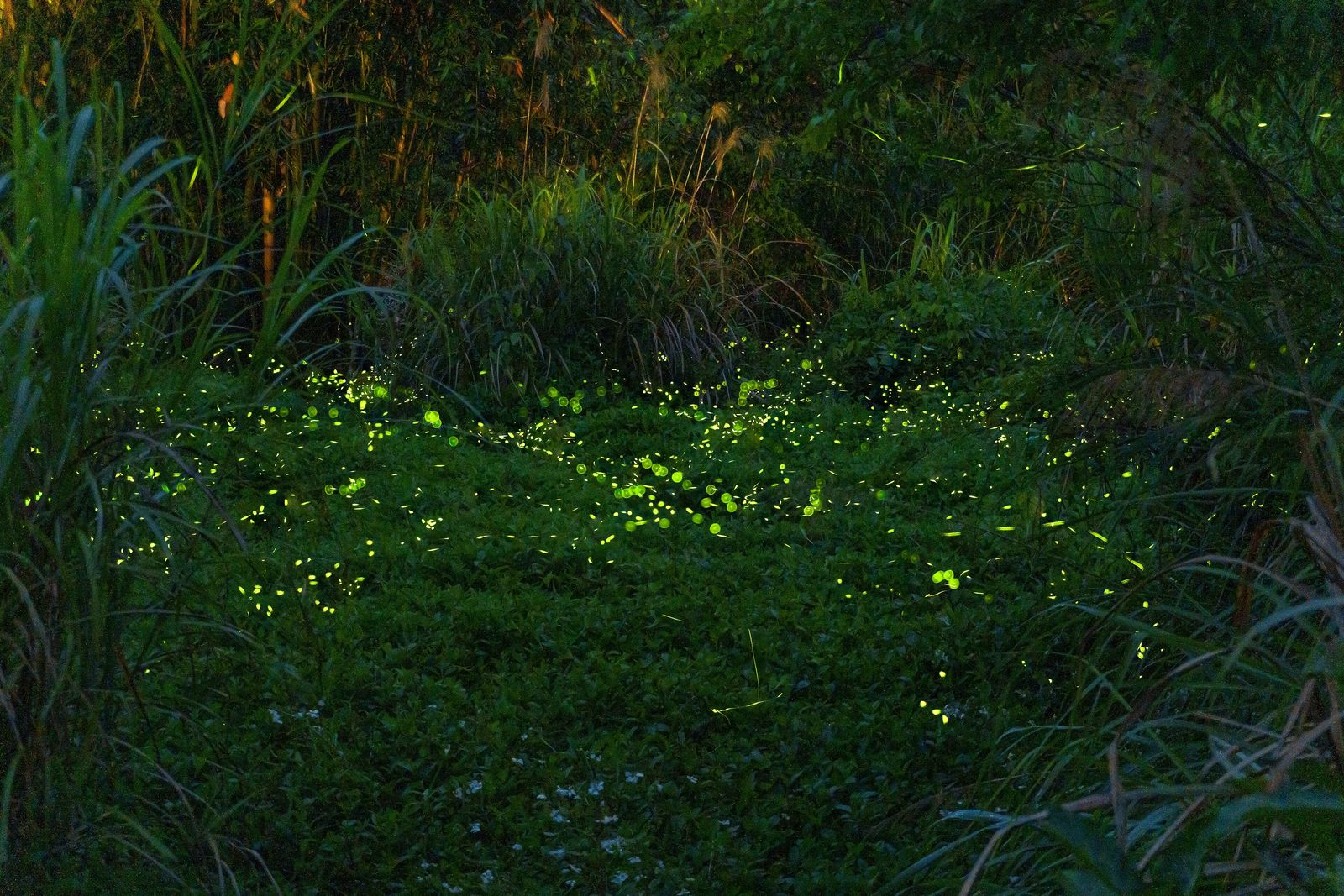
Worth a specific, reassuring mention: the insects most likely to actually startle you at night — moths at the porch light, large beetles, and fireflies drifting through the trees — are almost universally harmless. Fireflies in particular are one of the genuine, quiet highlights of a jungle evening rather than anything to worry about; several jungle regions put on synchronized or unusually dense firefly displays worth specifically asking a host or guide about if you're traveling in the right season.
How the bug situation changes by region
"The jungle" isn't one bug climate any more than it's one safety profile, and a little regional context makes the general advice above much more specific and useful.
Costa Rica runs a well-developed jungle tourism industry with screened, netted accommodation as the norm rather than the exception, and malaria risk across its major visitor areas — Arenal, Manuel Antonio, Monteverde, Guanacaste — is low enough that antimalarial medication generally isn't recommended by the CDC for those regions. It's a sensible, lower-anxiety first jungle trip on the bug front for exactly this reason, though repellent and evening coverage still matter for ordinary comfort.
Brazil and the wider Amazon basin carry real, region-specific malaria risk in parts of the interior, alongside the highest dengue burden of any country in the world in recent years. This is the region where the fuller kit — permethrin-treated clothing, a personal net as backup, and a pre-trip travel medicine consultation — earns its keep most clearly, especially for stays further from towns and hospitals.
Bali and Indonesia present a different mix: lower malaria risk in most tourist and jungle-adjacent areas than the Amazon, but dengue is present and no-see-ums are a genuinely common nuisance around rice-paddy and coastal-jungle stays, where still water and dense vegetation sit close together.
Puerto Rico and the wider Caribbean carry meaningful dengue risk in warmer, wetter months and relatively low malaria risk, making mosquito repellent and screened accommodation the priority over antimalarial planning for most visitors.
Sri Lanka and Thailand sit toward the lower end for malaria in their main jungle-adjacent tourist regions, with dengue the more relevant mosquito-borne consideration and, in Thailand's wetter, more rural forest areas in particular, a genuinely higher volume of everyday nuisance insects than the manicured resort image suggests.
The pattern across all of these: mosquito comfort measures (repellent, screens, nets) matter everywhere without exception, while the disease-specific preparation — prophylaxis, vaccination, extra caution around standing water — is worth calibrating to the specific region and even the specific itinerary within it, not the country as a whole.
You will get bitten anyway — what to do about it
Even with a full repellent-and-netting routine, an occasional bite is close to unavoidable on a multi-day jungle stay, and it's worth knowing what a normal reaction looks like versus one that deserves attention. An ordinary mosquito, no-see-um or chigger bite produces a small, itchy, red bump that peaks in irritation over a day or two and fades within a week; a cold compress, an over-the-counter antihistamine, and hydrocortisone cream handle the itching for nearly everyone. Scratching is the thing that turns a minor bite into a bigger problem — broken skin in a hot, humid environment is a genuine setup for secondary infection, so a tube of hydrocortisone or an anti-itch gel is worth more suitcase space than most travelers give it.
What's worth actually paying attention to: a bite site that becomes increasingly painful, swollen, warm or streaked with redness in the days after (signs of possible infection rather than ordinary reaction); fever, chills or body aches that show up days to weeks after mosquito exposure in a malaria or dengue region, which warrants prompt medical attention rather than a wait-and-see approach; and any bite that doesn't heal, or a sore that appears without an obvious bite behind it, in a region where sand flies and leishmaniasis are a known consideration. None of this is meant to induce worry over an ordinary itchy bump — it's meant to draw a clear line between "normal jungle souvenir" and "worth seeing a doctor," which is a distinction most travelers never get told plainly.
Myths, gadgets and things that don't work
The insect-repellent market is full of products that sound plausible and don't hold up under testing, and it's worth knowing which ones before you spend money packing them. Citronella candles and wristbands provide, at best, a modest and very short-range effect — useful as one small layer on a still evening, not as a substitute for repellent on skin. Ultrasonic repellent devices and "bug-repelling" phone apps have been tested repeatedly by independent researchers and consistently fail to show any meaningful effect on mosquito behavior. Vitamin B1 supplements, once a popular folk remedy for making yourself "less attractive" to mosquitoes, have not held up in controlled studies. Bug zappers do kill insects, but the insects they're most effective against are moths and other insects drawn to light and heat — not the mosquitoes actually biting you, which are drawn to carbon dioxide and body heat instead.
What does hold up, alongside DEET, picaridin, OLE and permethrin, is genuinely mundane: a fan or steady breeze, since mosquitoes are weak fliers; long sleeves at the right times of day; and a net that's actually tucked in properly rather than draped loosely. None of the effective options are exotic, and that's the actual reassuring news buried in all of this — the gap between "what tourists worry about" and "what actually works" is smaller and more boring than the marketing around bug prevention would suggest.
Your actual packing and prep checklist
Boiled down to what genuinely moves the needle, here's the complete list:
- A DEET (20–30%) or picaridin (20%) repellent, packed in your carry-on rather than checked luggage in case bags are delayed.
- Permethrin spray for clothing, or pre-treated clothing, if you're headed somewhere with real malaria or dengue risk.
- At least one long-sleeve shirt and one pair of long, lightweight trousers in light colors for evening wear.
- Closed shoes for every walk after dusk, with socks you can tuck trousers into.
- A personal mosquito net as backup if you're headed somewhere remote or off-grid, or if the listing doesn't confirm one is provided.
- Hydrocortisone cream and an oral antihistamine for bite relief.
- A travel medicine consultation 4–6 weeks before departure for any itinerary with real malaria risk — this is a bigger lever than anything else on this list.
- A wide-brim hat and light, breathable fabric — comfort in the heat and modest bug deterrence, in one item.
For the fuller packing picture beyond bugs specifically — footwear, rain gear, what to actually wear on a multi-day jungle stay — our guide on what to pack for a jungle trip covers the rest of the list this one leaves out.
Common questions
Do I need a mosquito net if my lodge already has screened windows?
Usually not, if the screens are genuinely intact and the room is fully enclosed — that combination handles the large majority of nighttime exposure on its own. It's still worth asking your host directly, especially for more open-air or off-grid properties, and packing a lightweight net as a backup if you're at all unsure or heading somewhere remote.
Is DEET safe to use every day on a week-long trip?
Yes, when used as directed on the product label — EPA-registered repellents including DEET are considered safe for daily use over the course of a trip, including for most pregnant and breastfeeding travelers, though it's worth checking product-specific guidance for infants and young children. Reapplication frequency, not daily safety, is the thing to actually manage.
Are jungle mosquitoes worse than the ones at home?
Usually in volume, not necessarily in the reaction any single bite causes — tropical heat and humidity support more mosquito activity and more standing water for breeding than most temperate backyards. The itch from a bite is the same regardless of geography; it's the small subset of species capable of carrying disease that makes the jungle version worth slightly more preparation.
Do natural or essential-oil repellents actually work?
Oil of lemon eucalyptus is the one plant-derived option with real evidence behind it and CDC backing, though it typically needs more frequent reapplication than DEET or picaridin. Most other essential-oil blends and "natural" sprays have little to no independent evidence behind them and are a weak substitute for a tested repellent in a region with real disease risk.
What's the single biggest mistake travelers make with bug prevention?
Treating repellent as a one-time application rather than a routine — putting it on in the morning and assuming it's still working at dusk, after a swim, or after a sweaty hike. The habit of reapplying on a schedule, not the product itself, is where most preventable bites actually happen.
Should I worry about bugs enough to skip a jungle trip?
No. For the overwhelming majority of travelers on the overwhelming majority of trips, insects are a manageable comfort issue solved by repellent, appropriate clothing and a decently screened room — not a reason to reconsider the trip. Browse the full destinations directory for a sense of what's out there, and go in with a repellent routine rather than a fear of every buzzing sound.
The honest summary is that bugs are the least interesting part of a good jungle trip and the part most travelers spend the most energy dreading beforehand. Do the boring things — repellent applied on a schedule, the right clothing at the right hours, a room with real screens and a net that's actually tucked in — and the insects stop being a daily decision and become background noise, the way they are for everyone who's done this trip more than once. What's left is what people actually come back for: the sound the jungle makes right at dusk, a porch that lets you sit outside for it, and mornings that start before the heat does. For more on what a first jungle trip actually involves, our guides on whether the jungle is safe and what a jungle trip actually costs are good next stops, and if you're traveling with kids, our family jungle guide covers the bug-specific adjustments worth making for younger travelers too.
- CDC — Preventing Mosquito Bites — recommended repellent active ingredients (DEET, picaridin, OLE) and prevention habits.
- CDC Travelers' Health — Avoid Bug Bites — repellent and clothing guidance for international travelers, including permethrin-treated clothing.
- CDC Yellow Book — Mosquitoes, Ticks, and Other Arthropods — picaridin concentration and duration data, and combined repellent/permethrin protection guidance.
- World Health Organization — Dengue and severe dengue fact sheet — 2024 global dengue case and death totals, and regional distribution.
- World Health Organization — Vector-borne diseases fact sheet — global malaria case and death estimates, and Anopheles/Aedes vector roles.
- CDC Travelers' Health — Costa Rica — malaria risk by Costa Rican region and prophylaxis recommendations.
- Cleveland Clinic — Sand Flea and Biting Insect Bites — bite reactions, treatment and when symptoms warrant medical attention.
More from the Journal.
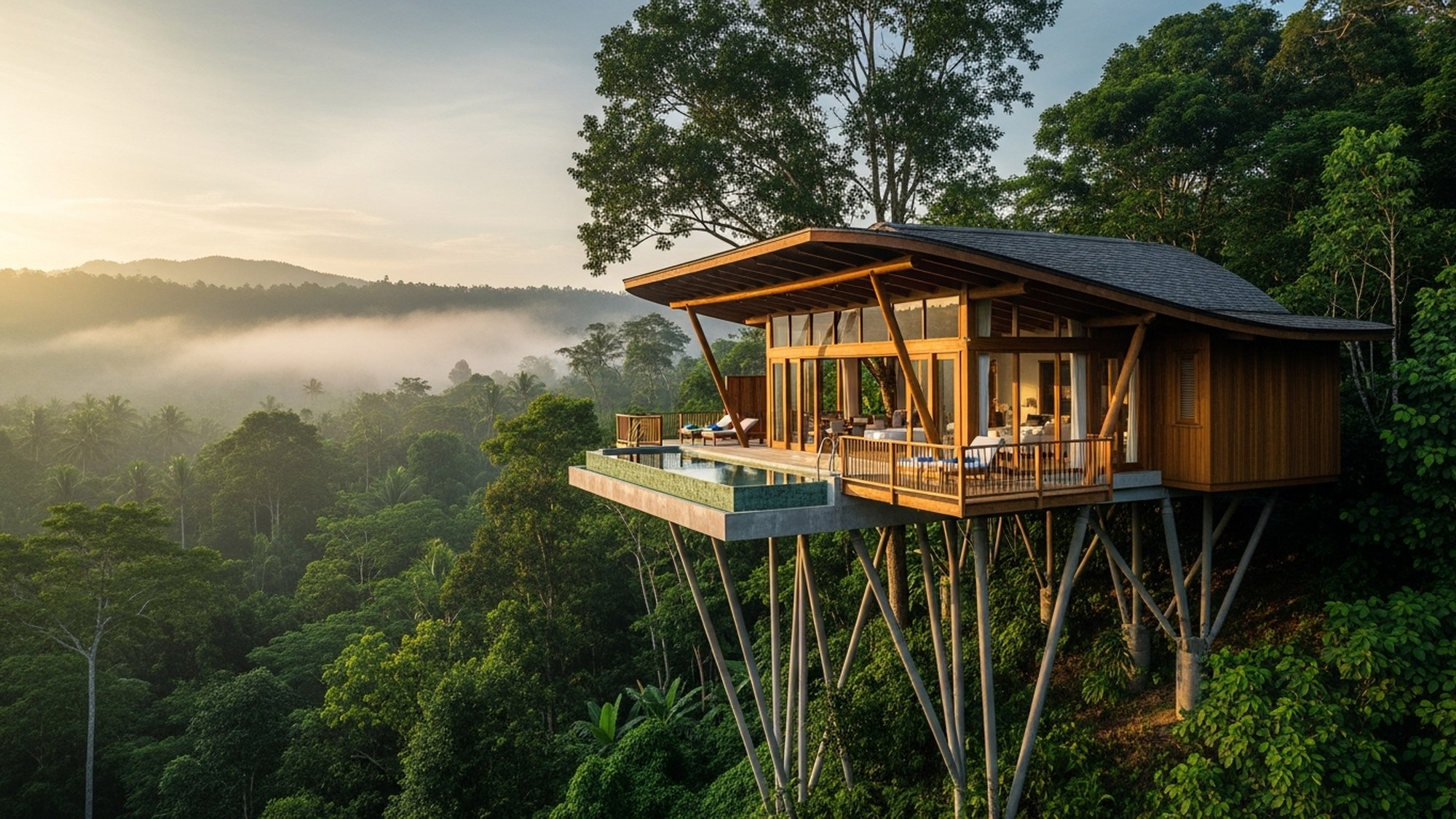
How to Start a Jungle Airbnb
The complete, honest guide to building and running a treehouse, bamboo house or rainforest villa — from choosing a country and the land laws to off-grid systems, budgets, and getting booked.
 Photo: Gregory Heath, CSIRO, CC BY 3.0
Why Jungle Stays Are Booming
The data behind the treehouse boom: four shifts in how the world travels are all converging on the forest — and it looks structural, not a fad.
 Photo: Vyacheslav Argenberg, CC BY 4.0
When to Visit the Jungle: A Season-by-Season Guide
There's no single best time to visit 'the jungle' — because it isn't one place. Here's when to go, region by region, with a month-by-month cheat sheet.
 Photo: Derek Ramsey (Ram-Man), CC BY-SA 4.0
Find your own piece of the canopy.
Treehouses, bamboo houses and rainforest villas across 17 destinations — found, vetted and written up honestly.
Browse all destinations