Butterflies of the Rainforest
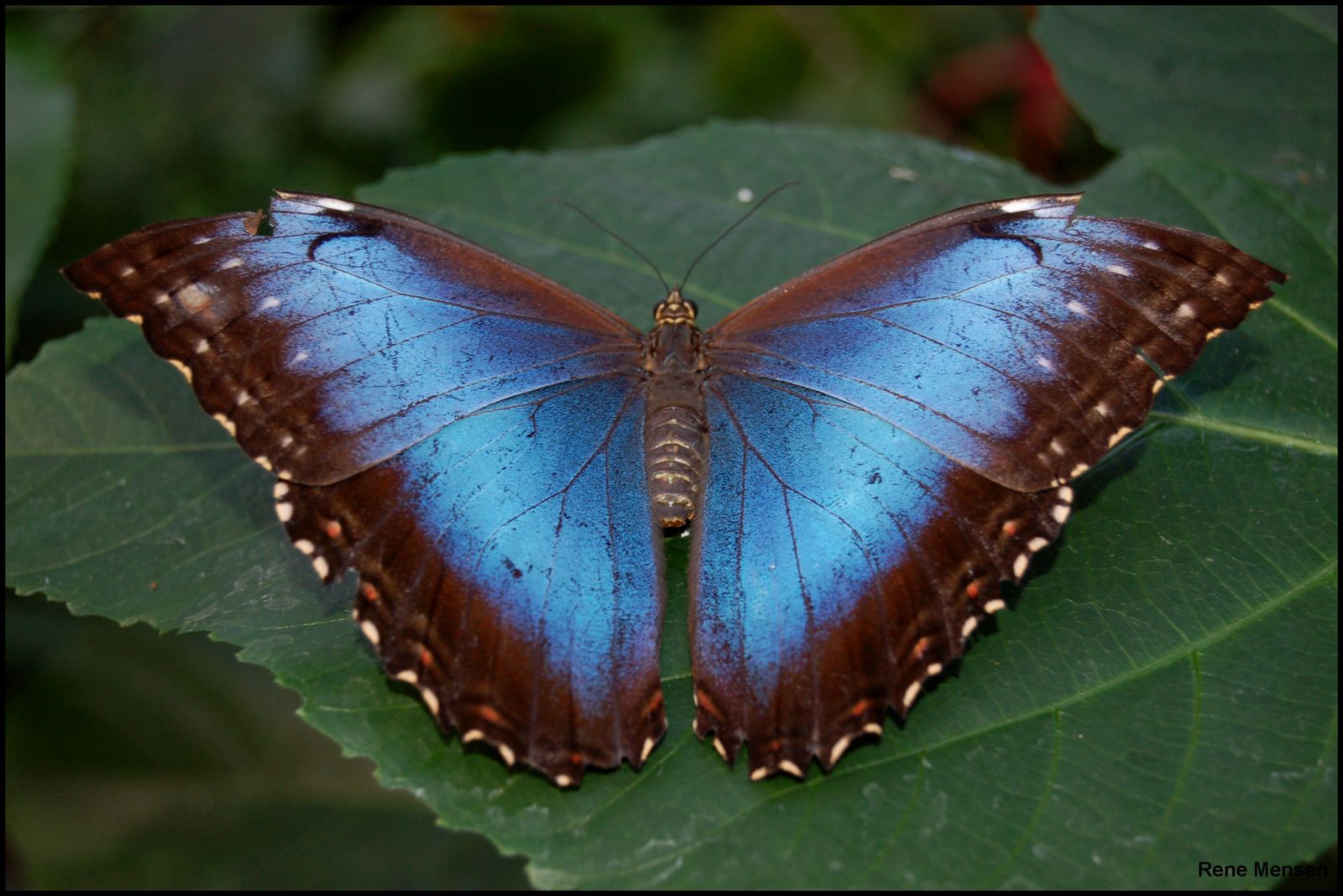
The first blue morpho you see in the wild does something no photograph prepares you for: it flashes an electric, almost unreal blue as it opens its wings, vanishes into dull brown as it closes them, and strobes between the two as it flaps away down a forest trail. It's a magic trick performed by an insect the size of your hand, and it's only the headliner. The rainforest holds more butterfly species than anywhere else on Earth — a single well-placed lodge can sit within reach of hundreds — and once you know what you're looking at, the forest turns out to be full of them. This is a field guide to the ones you'll actually meet, why they look the way they do, and where and when the flying is best.
Why the rainforest has so many butterflies
Butterfly diversity climbs steeply as you move toward the equator, and the tropical rainforests of the Americas are its global peak. The reasons are the same ones that make the rainforest rich in everything: warmth and moisture year-round mean there's no winter to survive and butterflies can fly in every month; the staggering variety of plants means a matching variety of the specific host plants caterpillars depend on; and the sheer three-dimensional structure of the forest, from the sunlit canopy to the shaded floor, creates dozens of separate niches for different species to occupy. The western Amazon in particular — the lowland forests of Peru and Ecuador — holds some of the highest butterfly species counts ever recorded, with single reserves tallying well over a thousand species.
What that means for a visitor is simple and happy: you do not need to be a specialist, travel to one exact spot, or get lucky to see beautiful butterflies in the rainforest. Unlike the jaguar or the rarer birds, they are abundant, active by day, and drawn to the exact places humans tend to be — sunlit clearings, forest edges, riverbanks, gardens and fruiting trees. The challenge is not seeing them but knowing what you're seeing, which is where the rest of this guide comes in. If your interest is the broader cast of rainforest life, our overview of the wildlife you'll actually see in the jungle sets butterflies in context alongside the birds, monkeys and reptiles you'll meet on the same walk.
The blue morpho, and the trick of its colour
The blue morpho is the butterfly everyone pictures when they picture a rainforest, and it deserves the fame. Several species across the genus Morpho share the same signature: broad wings, sometimes spanning five to eight inches, whose upper surfaces are a brilliant metallic blue, and whose undersides are a mottled brown carrying rows of eyespots. In flight the animal flickers between the two — a bright blue flash, then brown, then blue — which is thought to confuse predators trying to track it, a moving target that keeps disappearing.
The strangest thing about that blue is that it isn't a colour in the usual sense. There is no blue pigment in a morpho's wing. The blue is structural: the surface of each wing scale is built from microscopic, precisely spaced ridges that scatter and interfere with light so that only blue wavelengths reflect back to your eye, while the rest are absorbed. It's the same physics that makes a soap bubble or an oil slick shimmer, engineered at the scale of a butterfly scale. Tip the wing and the blue shifts and flares, because you're changing the angle at which that light interference happens — which is exactly why a morpho seems to glow and pulse rather than simply be blue. Materials scientists study morpho wings closely for this reason, as a model for creating colour without dyes.
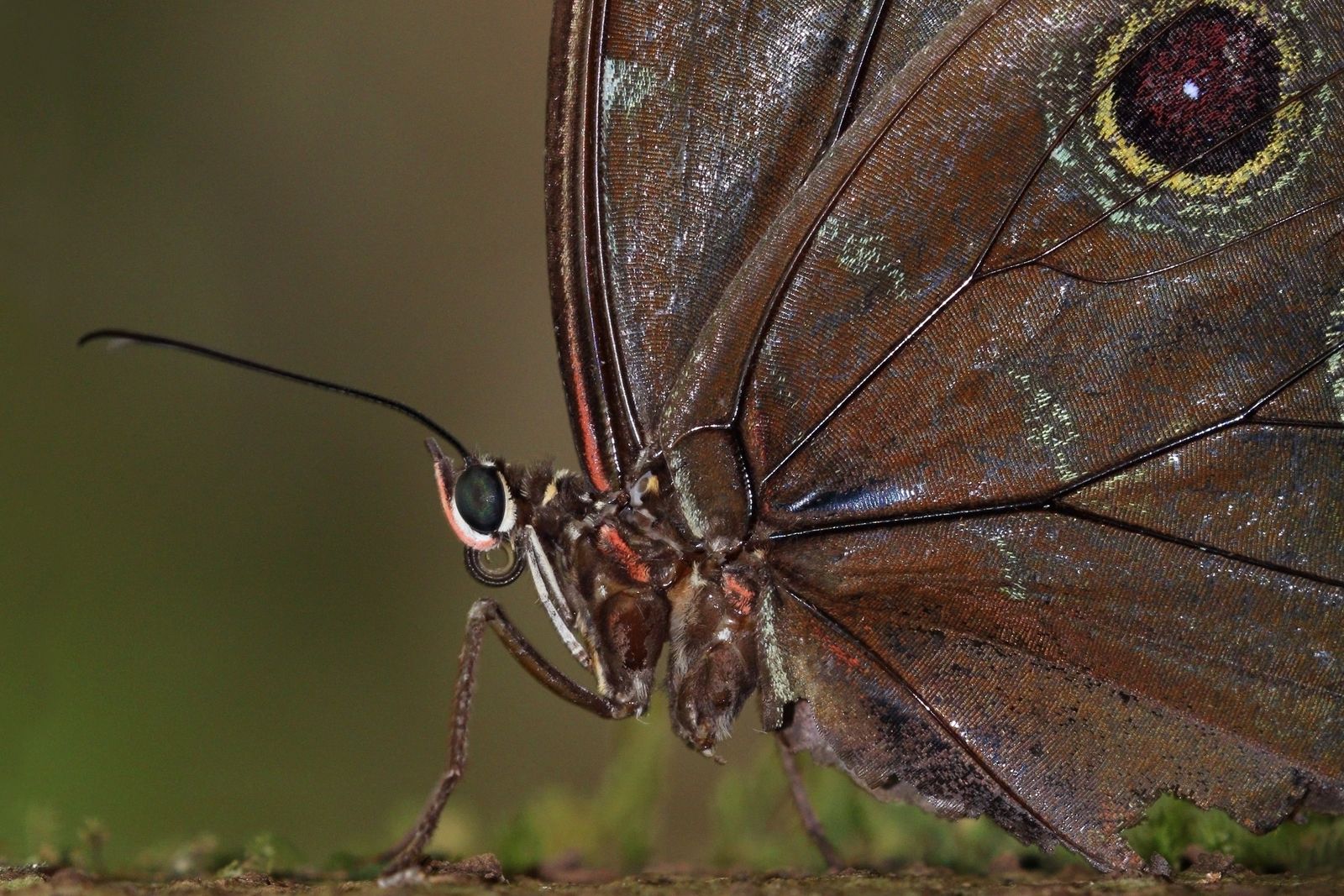
The brown underside is the other half of the design. When a morpho lands and folds its wings, the glowing blue vanishes and it becomes a dead leaf with a few staring eyespots — camouflage and a warning bluff in one. Morphos are also, contrary to what you might guess, not flower butterflies. Adults feed mostly on the juices of rotting fruit, tree sap and fermenting matter on the forest floor, which is why a pile of overripe bananas is a better place to wait for one than a flowerbed.
Owl butterflies and the art of the fake eye
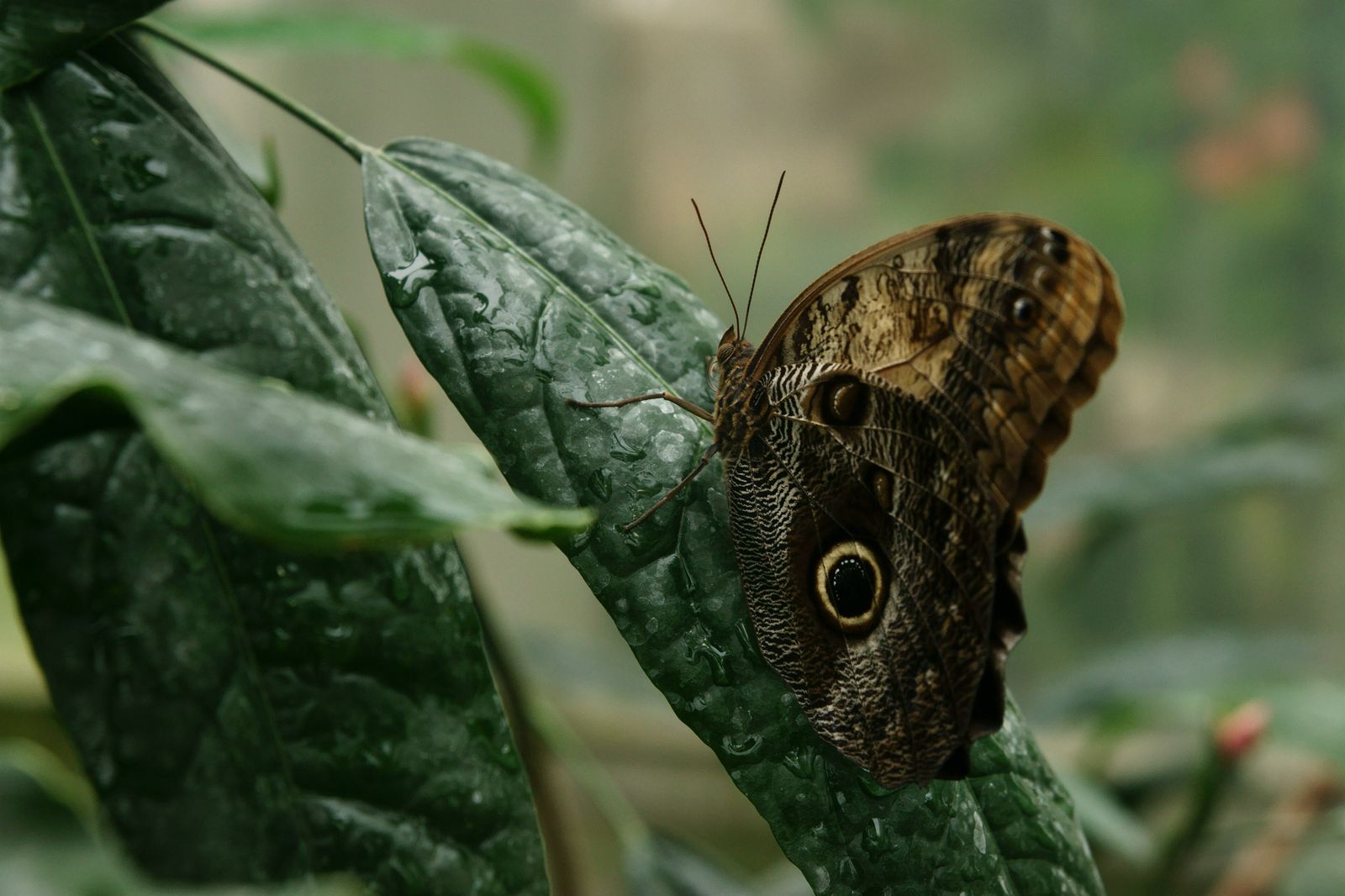
Where the morpho hides its eyespots on a drab underside, the owl butterflies of the genus Caligo make them the entire point. These are large, dusk-loving butterflies whose underwings carry a pair of enormous, startlingly realistic eyespots — dark, ringed, and set exactly where they'd need to be to look like the face of an owl or another large-eyed animal peering out of the leaf litter. The leading explanation is that these false eyes deter or briefly startle predators, particularly small birds and lizards, buying the butterfly the half-second it needs to escape; whether they mimic a specific predator or simply exploit a general fear of eyes is still debated, but the deterrent effect is real.
Owl butterflies fly mainly at dawn and dusk, when the low light suits their large, sensitive eyes and many of their bird predators are less active — one reason you're more likely to see them in the softer hours around a lodge than in the flat midday sun. Like morphos, they feed on rotting fruit rather than nectar, and the two are often found in the same fruit-baited spots. Their caterpillars, big and cryptically coloured, sometimes feed on banana and heliconia plants, which occasionally puts them at odds with growers but makes them easy to encounter around cultivated forest edges.
A morpho hides its eyespots and flashes blue; an owl butterfly hides the blue and flaunts its eyes. Two opposite answers to the same problem — not getting eaten.
Heliconius: the clever, poisonous longwings
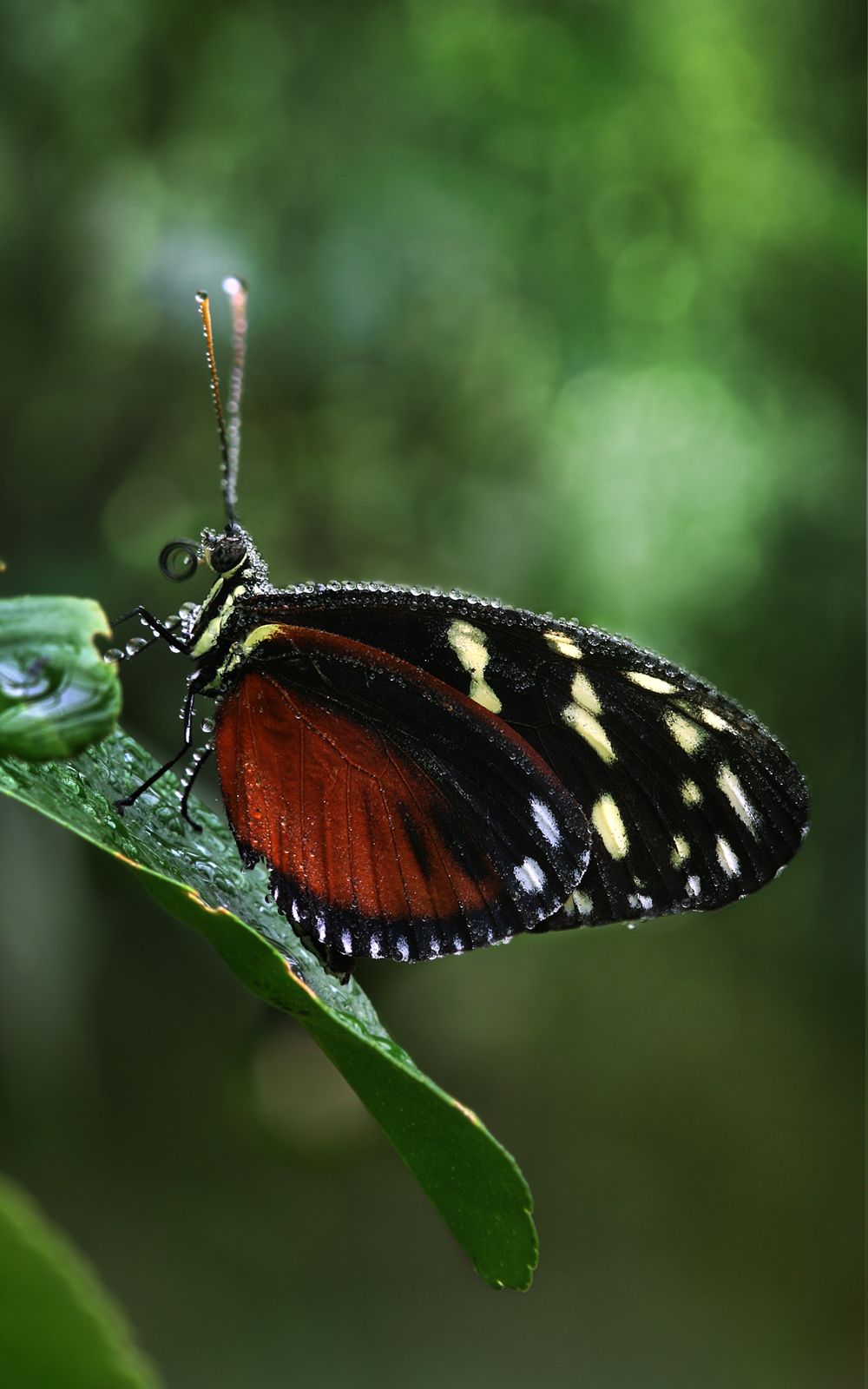
If the morpho is the rainforest's showpiece, the Heliconius longwings are its most interesting story. These slender, long-winged butterflies — usually black, marked with bold stripes and patches of red, orange, yellow or white — are the subject of some of the most famous research in evolutionary biology, and for good reason. Nearly everything about them is unusual.
They are poisonous, or at least distasteful: their caterpillars feed on passionflower vines (Passiflora), and the butterflies sequester or manufacture cyanide-based compounds that make them a bad meal. Their bold colours are a warning — aposematism, the same honest advertising a poison dart frog uses. And here the story deepens into one of biology's classic cases: many unrelated Heliconius species, and other distasteful butterflies alongside them, have evolved to share the same warning patterns in each region, so that a predator only has to learn one lesson to avoid them all. This mutual mimicry among genuinely defended species — Müllerian mimicry — is a textbook example of natural selection producing cooperation between species, first described in these very butterflies in the 19th century.
Heliconius are also unusually long-lived and, for an insect, unusually smart. Most butterflies drink only nectar and live a few weeks; Heliconius additionally collect and digest pollen, an extra protein source that lets them live for several months. That long life is paired with genuine spatial memory: individuals learn a reliable route between good flowers — "traplining" — and return to the same communal roost night after night, recognising both the location and, it seems, each other. For a creature with a brain the size of a pinhead, it's a remarkable amount of behaviour, and it's all happening around any passionflower-rich forest edge you walk past. Our guide to rainforest plants covers the passionflower vines these butterflies are bound to, if you want to find the caterpillars as well as the adults.
Glasswings and the see-through wing
The glasswing, Greta oto and its relatives, solves the problem of not being seen in the most literal way imaginable: much of its wing is simply transparent. Where most butterflies wear coloured scales, the glasswing's wing membrane is nearly bare and, crucially, structured at a microscopic scale so that it reflects very little light — the same nanostructure trick as the morpho, run in reverse, to make the wing vanish rather than glow. The result is a butterfly you can read newsprint through, bordered by a thin frame of opaque brown and orange, drifting through the forest understory like a smudge of moving air.
Transparency is thought to be camouflage: a see-through insect is far harder for a predator to lock onto against the shifting light and shadow of the forest floor. Glasswings are small, delicate and easy to miss precisely because they're built to be missed, which makes actually spotting one — usually low down, in shaded, humid understory — one of the quiet satisfactions of a slow rainforest walk. They are most common in the cloud forests and lowland forests of Central and South America, and they turn up reliably in the butterfly houses and gardens that many lodges and reserves keep, if you'd rather not leave the sighting to chance.
Good to know
Many rainforest lodges, reserves and gateway towns run butterfly gardens or enclosed houses where the region's species are raised and released into a netted forest. They can feel like a compromise next to a wild sighting, but they're genuinely useful: a good one lets you see, photograph and learn a dozen species in an hour, including shy or seasonal ones you might walk past for a week in the forest. Costa Rica's cloud-forest gardens around Monteverde are among the best known, and most support local conservation and research.
How to actually find them
Follow the fruit, not the flowers
The single most useful thing to know is that many of the rainforest's most spectacular butterflies — morphos, owls and others — feed on rotting fruit rather than nectar. Guides and butterfly gardens exploit this with fruit "baits": a plate of fermenting banana or pineapple left in a sunny gap will pull in butterflies within hours. Around a lodge, the compost heap and the fruiting trees are often better butterfly-watching than the flower garden. Nectar-feeders like the Heliconius longwings, by contrast, will be at the flowers — so between fruit and flowers you've covered most of what's flying.
Watch the riverbanks for "puddling"
On a sunny morning, wet sand and mud along a river or stream will often be crowded with butterflies sitting with their wings up, apparently doing nothing. They're "puddling" — drinking dissolved minerals, especially sodium, from the damp ground, a behaviour dominated by males, who need the salts for reproduction. A mineral-rich riverbank in the dry-season Amazon can gather dozens of species into one dazzling patch of ground, and it's one of the great butterfly spectacles anywhere. Boat trips and riverbank walks are the way to find it.
Walk slowly, and look at the edges
Butterflies concentrate where sunlight reaches the forest — clearings, trail edges, treefall gaps, riverbanks and gardens — rather than in the deep, dark interior. Walking slowly along a sunlit edge in the morning will show you far more than marching down a shaded trail. And look at different heights: many canopy species rarely come down, so a lodge's canopy walkway or tower can put you among butterflies you'd never see from the ground.
Where the flying is best
Butterflies are abundant across every rainforest destination in our directory, so this is less about chasing a single spot than about knowing where the density and the infrastructure are highest.
The western Amazon — Peru and Ecuador
For sheer numbers, nowhere beats the lowland forests of the western Amazon. The Tambopata and Manu regions of Peru and the Napo region of Ecuador record some of the highest butterfly counts on the planet, and their riverbanks produce the great puddling aggregations. A river-based lodge trip here is as much a butterfly trip as a bird or mammal one, whether or not you came for it.
Costa Rica's cloud and lowland forests
Costa Rica is the most accessible butterfly destination, pairing genuine wild diversity with the world's best network of butterfly gardens and research stations. The cloud forests around Monteverde and the lowland forests of the Caribbean slope and the Osa Peninsula are all reliably butterfly-rich, and you're never far from a garden that can fill in the species you missed.
Southeast Asia and beyond
The rainforests of Borneo, Bali and Thailand hold their own spectacular butterfly faunas — including the giant birdwings of the region, among the largest butterflies in the world — and most have butterfly parks near the main gateways. The cast of species is entirely different from the Americas, so if you've done your morpho-watching in Costa Rica, Asia's forests offer a whole second education.
When to go, and how to photograph them
Butterflies fly year-round in the tropics, but they're most active in warm, sunny conditions, which means the drier months and the sunny mornings within any month are your best bet. A classic pattern is a burst of butterfly activity on a bright morning after overnight or early rain, when the sun draws them out to bask, feed and puddle. Our guide to rainy season versus dry season is worth reading for your specific destination, but the short version is: aim for the sunnier season if butterflies are a priority, and be out early either way.
For photography, the same fruit-bait and puddling spots that make butterflies findable make them photographable, because a feeding or drinking butterfly stays put. A morpho is notoriously hard to catch with its wings open — it usually basks with them closed — so patience and a fast shutter for the moment it opens are the whole game. Our guide to photographing the jungle covers the light and gear side in more depth; for butterflies specifically, a close-focusing lens and a willingness to sit still by a fruit plate will do more than any expensive kit. If a butterfly-heavy trip is the goal, choose a lowland or cloud-forest lodge with its own trails, gardens or river access, and let the abundance come to you.
Common questions
Why is a blue morpho so intensely blue?
Because the colour isn't a pigment — it's structural. The wing scales are covered in microscopic ridges spaced so precisely that they reflect only blue light back to your eye and absorb the rest, the same physics that makes a soap bubble shimmer. That's also why the blue seems to glow and shift as the butterfly moves: you're changing the angle of the light interference. There's no actual blue dye anywhere in the wing.
Do morphos really turn brown, or is that a different butterfly?
Same butterfly. A morpho's upper wings are brilliant blue and its undersides are mottled brown with eyespots. When it flies it flashes between the two, and when it lands and folds its wings it shows only the brown, becoming camouflaged. The "two butterflies" you think you saw chasing each other down a trail are often one morpho flickering blue-to-brown as it flaps.
Are any rainforest butterflies dangerous to touch?
The adult butterflies are harmless to handle, though it's best not to, since touching damages the delicate wing scales. Some, like the Heliconius longwings, are toxic to eat — a defence against predators — but that poses no risk to a person admiring or photographing them. A few caterpillars, on the other hand, have irritating or stinging hairs and shouldn't be handled, so look rather than touch on the larval stage.
What's the best way to guarantee seeing lots of butterflies?
Two things: visit a butterfly garden or house at your destination for a concentrated, guaranteed showing of many species, and spend sunny mornings near fruit — a lodge's fruiting trees, compost or a guide's fruit bait — and near mineral-rich riverbanks where butterflies gather to puddle. Between a garden and those two wild hotspots, a good butterfly haul is close to certain in any rainforest destination.
When during the day are butterflies most active?
Most are active in warm, sunny conditions, so mid-morning to early afternoon on a bright day is peak, especially after overnight rain. The big exception is the owl butterflies, which fly mainly at dawn and dusk, so the softer hours around your lodge are the time to look for those.
Where to go from here
Butterflies are the easiest of the rainforest's great spectacles to actually see, which makes them a perfect companion to the harder ones. Pair a butterfly-rich lodge with our guides to toucans and tropical birds and the frogs of the rainforest — the frogs come out on the same night walks where the owl butterflies fly — and you have a full wildlife itinerary from one base. To choose that base, start with the full destination directory or browse rainforest eco-lodges with their own trails and gardens, where the butterflies will find you before you've finished breakfast.
- Smithsonian — Butterflies — diversity, tropical species richness and general biology.
- Natural History Museum (London) — how blue morphos get their colour — structural colour and wing-scale nanostructure.
- Encyclopædia Britannica — Owl butterfly (Caligo) — eyespots, crepuscular habits and fruit feeding.
- Encyclopædia Britannica — Müllerian mimicry — the shared warning-pattern phenomenon first described in Heliconius.
- University of Cambridge — Heliconius research — pollen feeding, longevity, learning and mimicry in longwing butterflies.
- Butterfly Conservation — general butterfly ecology, puddling behaviour and observation guidance.
More from the Journal.
 Photo: shankar s. from Dubai, united arab emirates, CC BY 2.0
Where to See Sloths in the Wild
The internet's favourite animal is real, wild and findable — where to reliably see sloths, how to spot them, and the stays that put you closest.
 Photo: Michael Barera, CC BY-SA 4.0
The Monkeys of the Rainforest
Howlers waking you at dawn, capuchins raiding the deck — a field guide to the primates you will meet on a jungle stay, and where to meet which.
 Photo: Charles Miller from Basingstoke, United Kingdom, CC BY 2.0
Toucans & the Tropical Birds You'll See
The rainforest is the richest bird habitat on earth. Toucans, macaws, quetzals and hummingbirds — what to look for, and the best places to look.
 Photo: Derek Ramsey (Ram-Man), CC BY-SA 4.0
Find your own piece of the canopy.
Treehouses, bamboo houses and rainforest villas across 17 destinations — found, vetted and written up honestly.
Browse all destinations