Jungle Bathrooms and Outdoor Showers
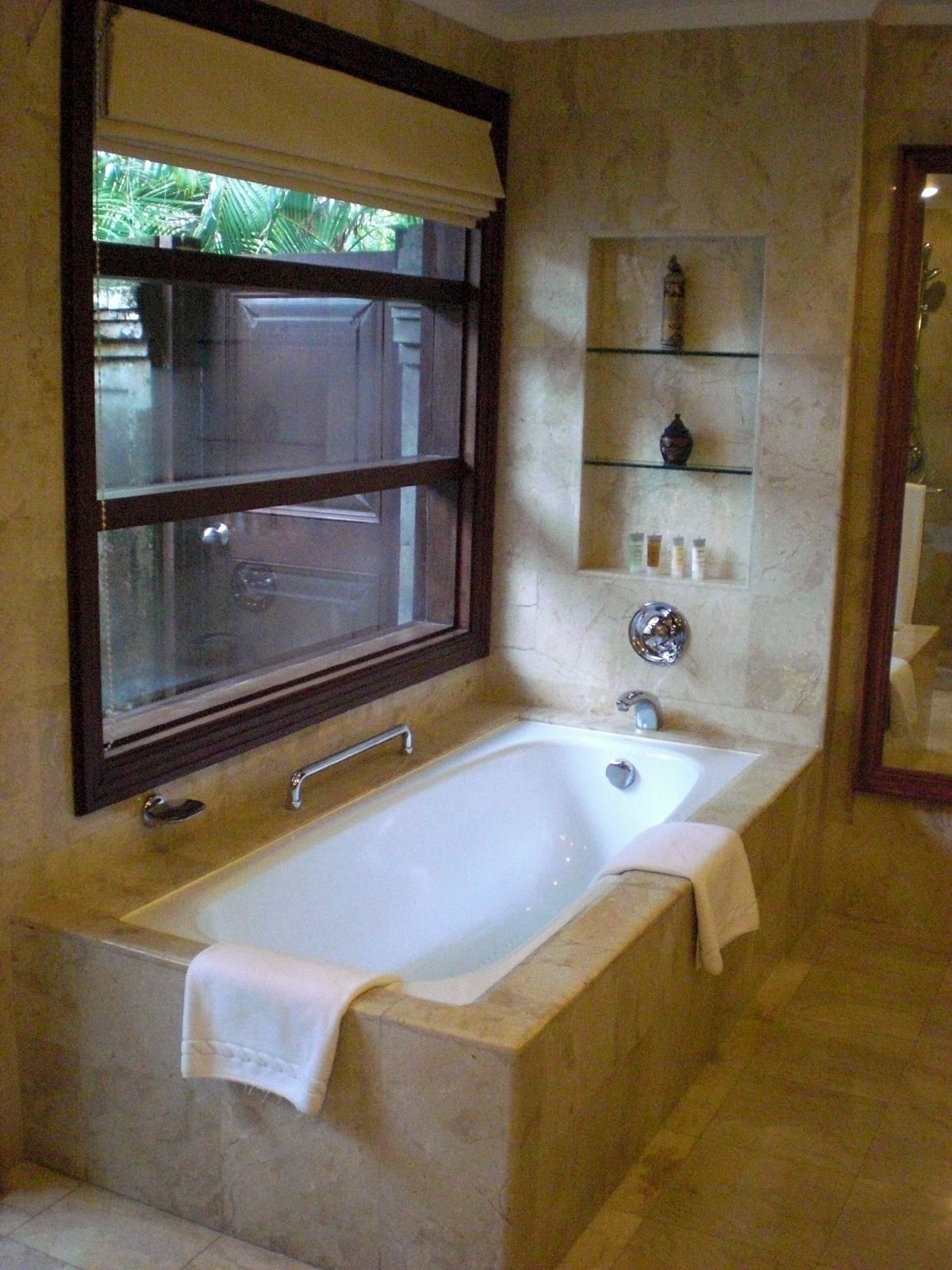
Ask someone what they remember most about a jungle stay and, surprisingly often, it's the bathroom. Not the bed, not the view from the deck — the shower open to the sky where they rinsed off under warm rain with a gecko for company, or the stone tub in a private garden where they soaked while birds moved through the canopy overhead. The open-air bathroom is one of tropical architecture's genuine gifts, a piece of design that turns the most routine part of the day into the part people photograph and describe for years afterward. This is a guide to why it works, the forms it takes, the honest realities nobody mentions, and where it's done best.
Why the bathroom goes outside in the tropics
The open-air bathroom isn't a gimmick invented for holiday photos — it's a sensible response to the tropical climate, and it comes from the same logic as the rest of jungle architecture. When it's warm and humid year-round, the hard line temperate buildings draw between "inside" (heated, sealed) and "outside" (cold, kept out) stops making sense. There's no winter to wall off, so walls become optional, and the tropical building tradition has always blurred indoors and out — open sides, deep verandas, courtyards, rooms that breathe. The bathroom, of all rooms, benefits most: a space that's usually cramped, windowless and purely functional gets to become a garden.
There are practical reasons too. A bathroom open to the air ventilates itself and dries out fast, which matters enormously in a humid climate where sealed rooms grow mould and hold smells. Water is easy to deal with when the floor can simply drain to a planted bed. And the privacy that would be impossible in a city — an outdoor shower overlooked by neighbours — is trivial in the jungle, where a screen of vegetation gives you total seclusion a few feet from wild forest. Put those together and the open-air bathroom is less an indulgence than the obvious tropical solution, which is exactly why it recurs from Balinese villas to Costa Rican lodges to African safari camps. It belongs to the same family as the wall-less bamboo house and the glass jungle house — all of them answers to the same question of how to live inside the climate rather than against it.
The three forms it takes
Under the umbrella of "open-air bathroom," you'll actually encounter three fairly distinct designs, and it's worth knowing which one a listing means before you book.
The garden bathroom
The fullest expression is the walled garden bathroom: an entire bathroom — basin, shower, often a tub, sometimes the toilet — enclosed by high walls or dense planting but open to the sky above, so it's a private outdoor room rather than an indoor one with a window. This is the Balinese classic, where you might shower beside a small pond, brush your teeth looking at a frangipani tree, and bathe under the open sky in complete seclusion. It's the most immersive version and the one people fall hardest for.
The outdoor shower
The most common and most adaptable form is simply an outdoor shower — a showerhead mounted on an exterior wall, in a private courtyard, or freestanding in a screened corner of the garden or deck. It pairs beautifully with a beach or a pool, doubles as the practical way to rinse off mud and salt before going inside, and delivers most of the magic of the full garden bathroom (rinsing under the sky, often under actual warm rain) with less commitment. Many stays that don't have a full open-air bathroom still have one of these, and it's often the detail guests love most.
The tub with a view
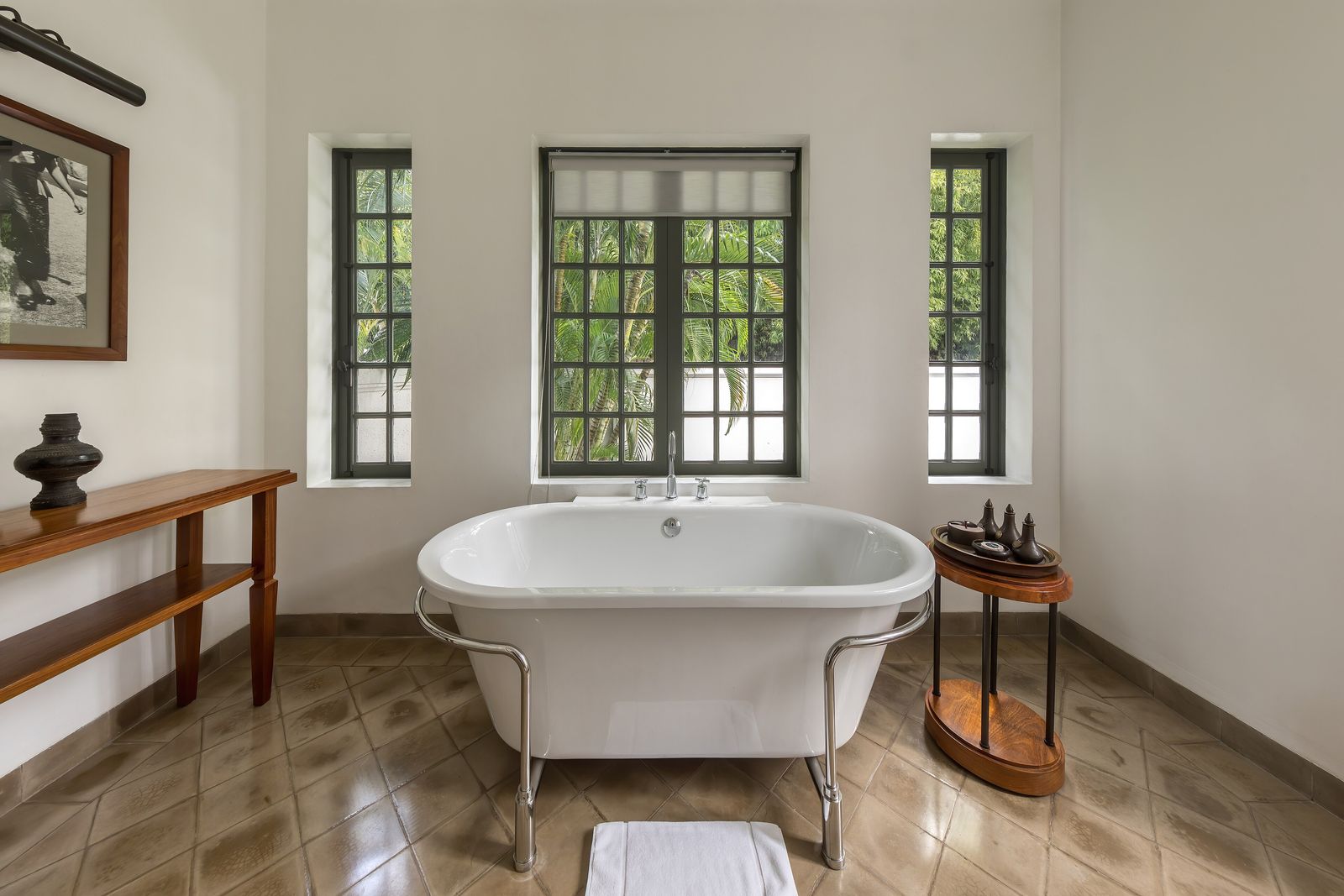
The third form is the statement bathtub — a freestanding soaking tub positioned for a view, whether fully outdoors on a private deck or set behind a wall of glass that opens to the jungle. This is the most photographed and the most weather-protected of the three: you get the bathe-in-the-canopy experience with a roof over your head and less exposure to bugs and rain, which makes it the easiest version for travelers who love the idea but are wary of the fully open reality. Our guide to jungle stays with the best views is thick with these.
The materials and the design language
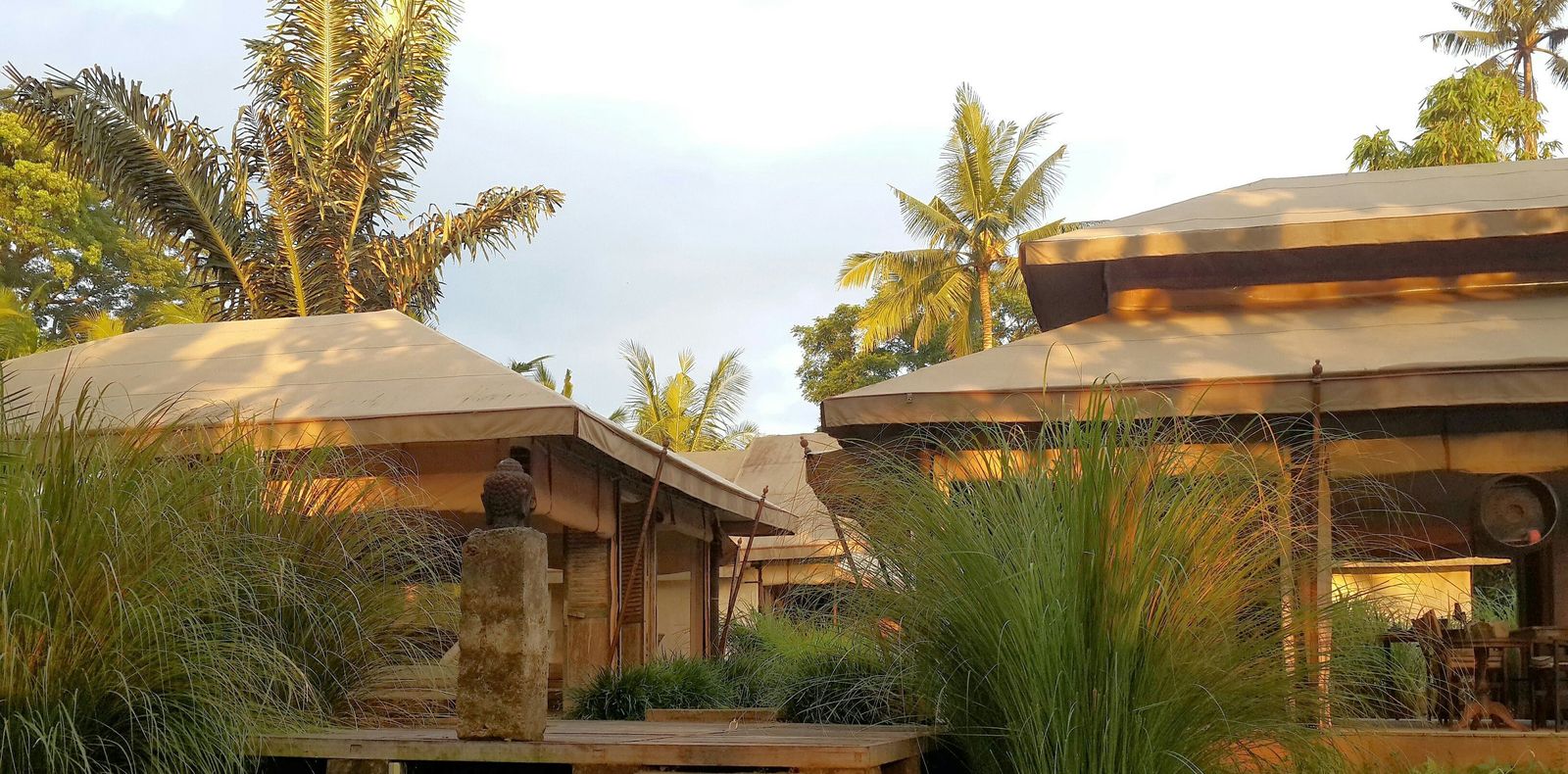
What makes a great open-air bathroom feel like part of the forest rather than a fixture dropped into it is almost entirely the materials, and the good ones share a palette. Natural stone — river rock, volcanic stone, cut local stone — for floors and walls, so the surfaces read as landscape; a pebbled floor underfoot that drains freely and feels like a streambed. Teak and other tropical hardwoods for decking, vanities and screens, weathering to grey and standing up to the wet. Bamboo, thatch and rattan for the structures that do have roofs, tying the bathroom to the vernacular architecture around it. And, crucially, living plants worked into the space itself — a tree growing up through the floor, ferns and orchids on the walls, a pond — so the boundary between bathroom and garden genuinely dissolves.
The fittings follow the same instinct: a wide "rain" showerhead that mimics the real thing, a freestanding tub rather than a built-in one, stone or copper basins, and minimal hardware, all chosen to disappear into the natural setting rather than announce themselves. The best examples feel like bathing in a grotto or a garden that happens to have plumbing; the weaker ones feel like an ordinary bathroom with the roof taken off. It's the same craft-led, material-honest approach that defines the finest bamboo houses and jungle villas — and it's why a genuinely good open-air bathroom is a signal that the whole property was designed with care.
A great open-air bathroom feels like bathing in a garden that happens to have plumbing. A weak one feels like an ordinary bathroom with the roof taken off. The difference is entirely in the materials.
What to expect
Open-air bathrooms are wonderful, and they come with trade-offs that the dreamy photos never show. Knowing them in advance is the difference between delight and a nasty surprise.
You share it with the wildlife
An outdoor bathroom is outdoors, which means the outdoors comes in. Geckos on the walls, the odd frog, moths and insects drawn to the light, spiders in the corners, and — depending on where you are — larger visitors like a curious monkey are all part of the deal. For most people this becomes part of the charm within a day; the gecko is a feature, not a fault. But mosquitoes are the real consideration, especially at dusk and dawn and especially in malaria or dengue areas, so an open-air bathroom raises the stakes on bite protection. Our guide to mosquitoes and bugs in the jungle covers managing that; the short version is that repellent, timing and any provided screening matter more when the bathroom has no walls.
The weather has a vote
Showering in warm tropical rain is genuinely one of the great small pleasures of a jungle stay. Toileting in a downpour, or finding the tub full of last night's leaves and rainwater, is less romantic. Fully open bathrooms are at the mercy of the weather in a way roofed ones aren't, and in the wet season that's a daily fact rather than an occasional one. It's part of why the tub-with-a-view and the roofed-but-open designs exist — they keep most of the experience while giving the weather less of a say.
Privacy, debris and hot water
A few smaller truths round out the picture. Privacy depends entirely on the screening — a well-designed garden bathroom is completely private, but check that a listing's open shower actually is before assuming. Leaves, petals and the occasional insect will find their way onto the floor and into the water; it's a natural space and reads as one. And hot water in an off-grid or solar-heated jungle property can be limited or timed, so the dream of a long hot soak may run into the reality of a solar tank — a point our guide to off-grid solar and rainwater homes explains. None of these are dealbreakers; they're just the fine print behind the fantasy.
Where they're done best
Bali: the world capital of the open-air bathroom
Bali is, without much competition, the global home of the open-air bathroom, to the point where a private garden bathroom is close to standard in the island's villas rather than a luxury extra. The Balinese architectural tradition of open, garden-integrated living, combined with a mature villa-design culture, means the island has refined the form further than anywhere — around Ubud especially, a jungle villa without some version of an open-air bathroom is the exception. If the experience is what you're chasing, Bali is where to chase it. See our Bali jungle guide for the wider picture.
Costa Rica, Thailand and the wider tropics
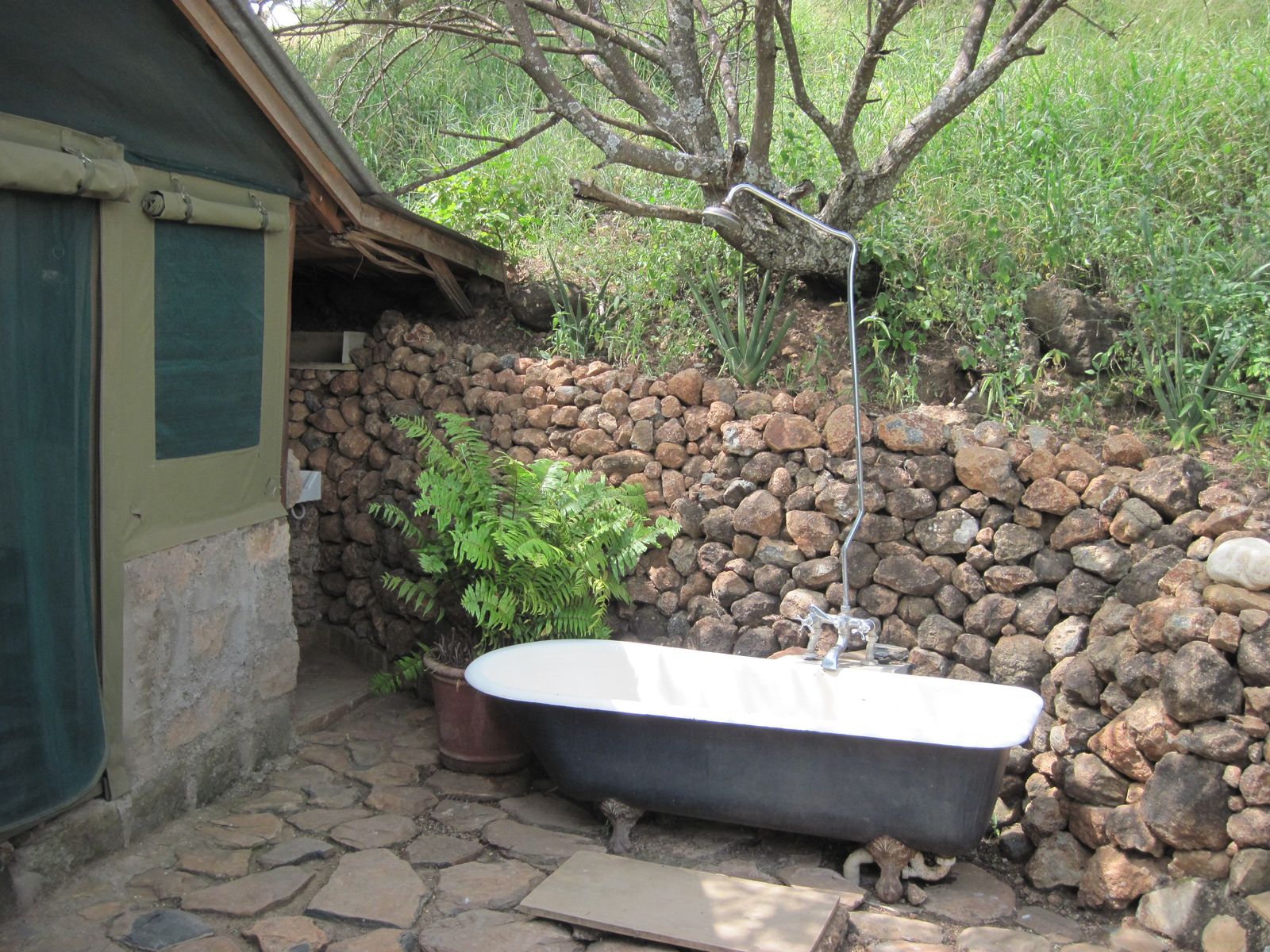
Costa Rica's eco-lodges and design-led rentals have embraced the outdoor shower and garden bathroom enthusiastically, often in a rougher, more rainforest-raw style than Bali's polished version — an outdoor shower against volcanic stone, a tub open to primary forest. Thailand's villas and the wider tropics carry the tradition too, and safari-style tented camps (including in tropical Africa and Asia) are where the fully outdoor tub-and-shower, screened by a reed wall under the open sky, reaches its most adventurous. The common thread is a warm climate and a design culture confident enough to put the bathroom outside.
Is an open-air bathroom for you?
For all their appeal, open-air bathrooms genuinely aren't for everyone, and it's better to know your own preference than to discover it mid-trip. If the idea of insects in the shower, a lack of solid walls, or a shower exposed to the weather makes you tense rather than delighted, the fully open garden bathroom may be a stretch — and that's completely fine. The good news is the spectrum: you can have almost all of the magic in a gentler form. A freestanding tub behind a wall of glass gives you the jungle view and the sense of bathing in the canopy with a roof, screens and climate on your side. A roofed-but-open-sided shower keeps the rain off while still opening to the garden. And plenty of superb jungle stays have a conventional indoor bathroom and a separate outdoor shower, so you can dip into the open-air experience without living in it.
If, on the other hand, the idea makes you grin — showering under warm rain, soaking with a canopy overhead, a gecko keeping watch — then lean all the way in and make the bathroom a real factor in choosing where to stay, because a great one genuinely is a highlight of the trip rather than an afterthought. Read the listing carefully to know which of the three forms it offers, check the privacy and the bug situation, and pick a warm, drier-season window if you want the weather mostly on your side. These bathrooms are, after all, some of the most photographed features in the whole world of jungle stays — for a reason.
Common questions
Are open-air bathrooms actually private?
The well-designed ones are completely private — that's the entire point of the high walls or dense planting that enclose a garden bathroom, and in the jungle a screen of vegetation gives seclusion a city could never manage. But "open-air" and "private" aren't automatically the same, so check a specific listing's photos and description rather than assuming. A good garden bathroom is a sealed private room that simply has sky instead of a ceiling.
Won't insects and animals get in?
Yes, some will — geckos, moths, the occasional frog or spider, and depending on location a curious monkey. Most guests find this becomes part of the charm quickly (the gecko is a feature). The one that matters for comfort and health is mosquitoes, so an open-air bathroom makes bite protection more important, especially at dawn and dusk in areas with mosquito-borne disease. Use repellent and any provided screening, and it's a non-issue.
What happens when it rains?
Showering in warm tropical rain is a genuine highlight; using a fully open bathroom in a heavy downpour, or finding the tub full of leaves and rainwater afterward, is the flip side. Fully open designs are exposed to the weather, which in the wet season is a daily reality. Roofed-but-open showers and glass-walled tub rooms keep most of the experience while giving the weather less of a say — a good compromise if constant exposure doesn't appeal.
Where are the best open-air bathrooms?
Bali is the world capital of them, to the point where a private garden bathroom is close to standard in its villas, especially around Ubud. Costa Rica's eco-lodges do a rawer, rainforest-facing version, Thailand and the wider tropics carry the tradition, and safari-style tented camps offer the most adventurous fully outdoor tubs. Any warm-climate, design-led jungle stay is a good candidate.
Is the hot water reliable in an outdoor jungle bathroom?
Not always. Off-grid and solar-heated properties may have limited or timed hot water, so a long hot soak can run into the reality of a solar tank's capacity. It's worth checking how a remote property heats its water if a hot bath is important to you. On the grid or at larger lodges it's rarely an issue; deep off-grid, plan around it.
Where to go from here
The open-air bathroom is one thread in the wider fabric of open, indoor-outdoor jungle design, so if it appeals, the architecture around it probably will too. Explore bamboo houses and glass jungle houses for the same philosophy applied to the whole building, and jungle villas with infinity pools for its wetter cousin. To find a stay with a bathroom worth remembering, browse jungle villas and houses and bamboo houses, or start from the region that does it best in our Bali jungle guide and the full destination directory.
- ArchDaily — Tropical architecture — the indoor-outdoor design principles behind open-air tropical living spaces.
- Encyclopædia Britannica — Southeast Asian vernacular architecture — the open, climate-driven building tradition of the region, including Bali.
- CDC Travelers' Health — Avoid Bug Bites — mosquito-bite prevention, relevant to any open-air bathroom in a disease-risk area.
- Tropical architecture resources — natural materials, ventilation and water management in humid-climate design.
More from the Journal.
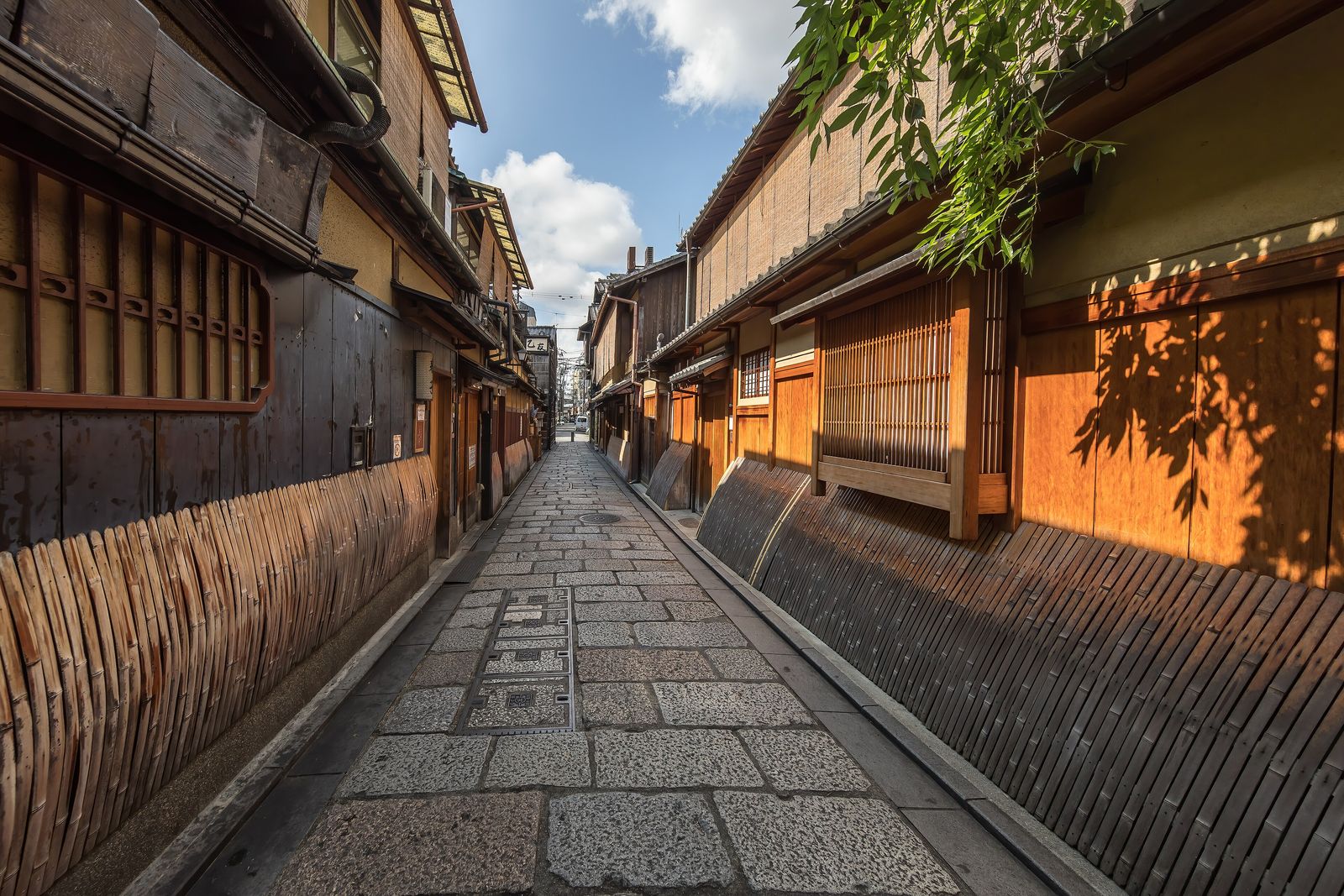 Photo: Basile Morin, CC BY-SA 4.0
What Is a Bamboo House? Bali's Bamboo Architecture Explained
How a fast-growing grass became the most beautiful building material in the tropics — the story of bamboo architecture and where to sleep in it.
 Photo: Vitus Wahlländer, CC BY-SA 4.0
Treehouses Explained: History & Modern Design
From childhood forts to seventy-foot canopy suites — how the treehouse grew up, and what makes a great one to stay in.
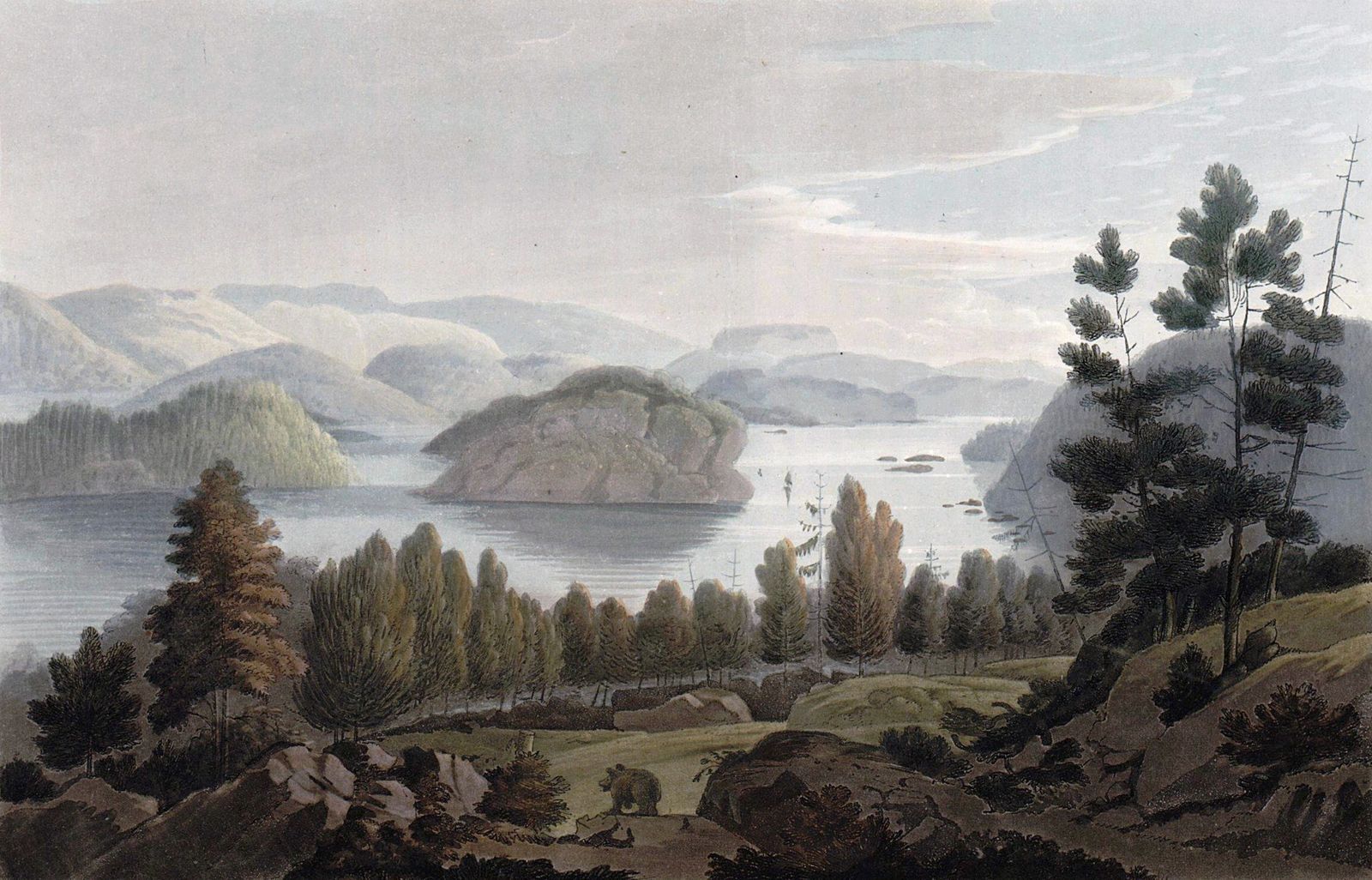
Overwater & Floating Bungalows in the Jungle
The room that floats — how raft houses and overwater bungalows are built on jungle lakes and rivers, and the best places to sleep on the water.
 Photo: Derek Ramsey (Ram-Man), CC BY-SA 4.0
Find your own piece of the canopy.
Treehouses, bamboo houses and rainforest villas across 17 destinations — found, vetted and written up honestly.
Browse all destinations